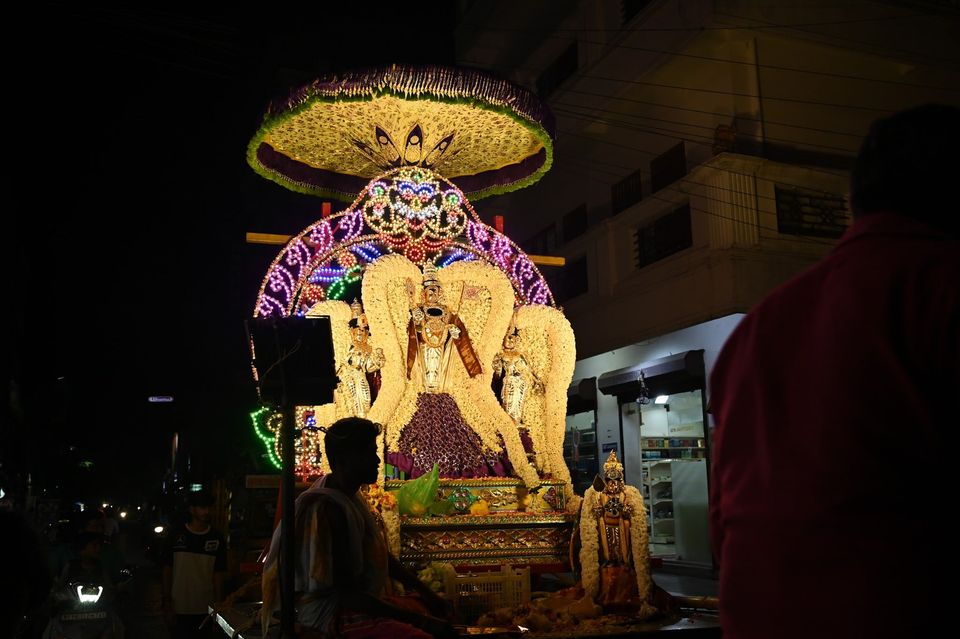
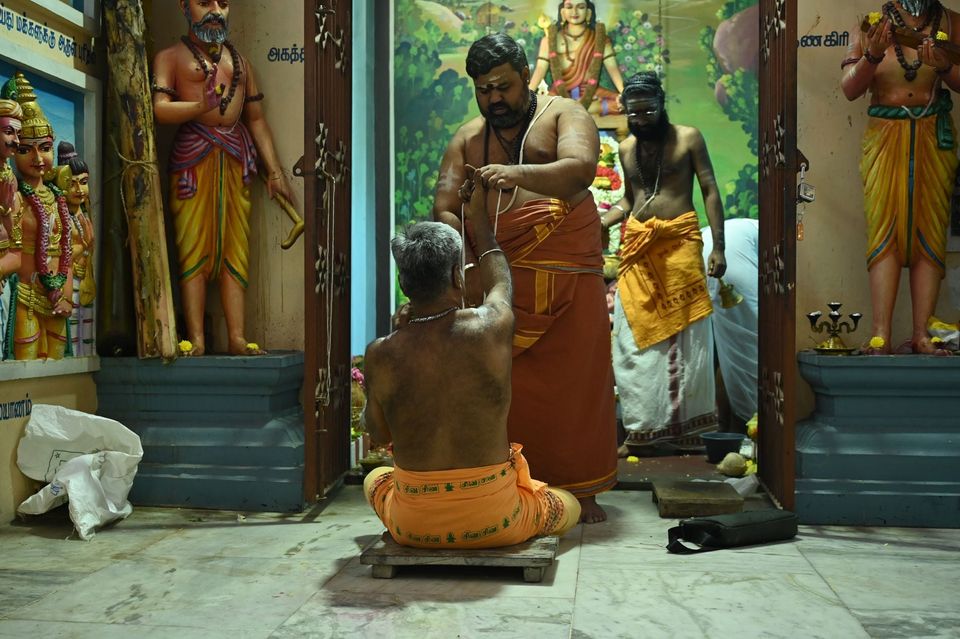
Dashed to Kamakshi Amman to find out the timings for the Rahu Ketu Peyarchi coming up, then to Ghousiga where again we had to come in through the side third door as the queues to the temple were long, long, long. We waited a long while for the curtain to open again, as the abhishekam was done and alankaram was going on inside. Alankaram also happening for the utsavar alongside – purappadu was supposed to happen at 8 or so, it was 1030 by the time that it seemed just about to begin. Rishabha vahana today, we noted this and did not stay for it.
But the time there was beautiful. The deeparadhanai was a little too quick to satisfy, but the younger priest chanting and singing more than amply made up for it. He repeated almost the whole sequence twice, for moolavar and for utsavar. It included a song, with this refrain: “Saravanabhava, Saravanabhava, Saravanabhava Pahimam–bhavasaravana, bhavasaravana, bhavasaravana Rakshamam.” I’ve a recording which I will try to transcribe and learn in the way I always did as a kid who found fun song recordings to learn.
This pattern of abhishekam, pujai and purappadu will repeat all the days of the festival.
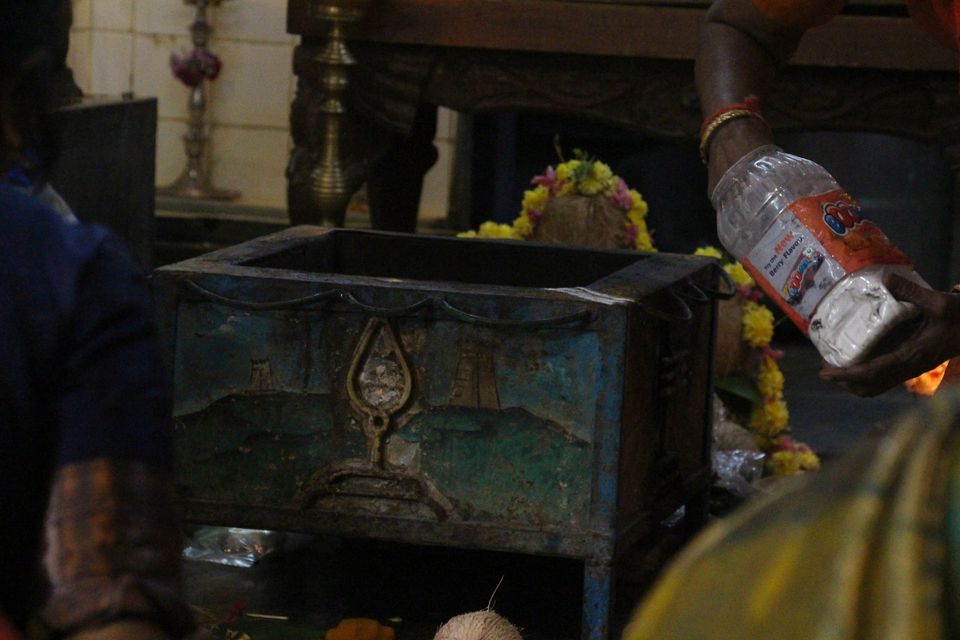
We made it to the Chetty Koyil as one priest (who is new, haven’t seen him since the start, but he’s been a regular for some time now) was doing the abhishekam for Murugan at the back sannadhi, and another (also a regular now, new, we met him first at the Angalamman temple in town where he did a nice Kali abhishekam one evening) started the utsavar abhishekam in the alankara mandapam, next to the palliyarai in which the Ambal was seated alone and a gorgeous Bhikshatanar stood by her side.
Nandhikeswara in the evening: alankaram for Murugan was as he is at Pazhamudir Cholai. This made us ask if the plan was to have alankaram from all 6 of the Arupadaiveedu, but no. The last day would be Sikkal Singaravelan. But of course–his is the shakti that carries the vel to Thiruchendur.