← Field notes

Sashti Mundraam Naal, or Sashti 3rd Day

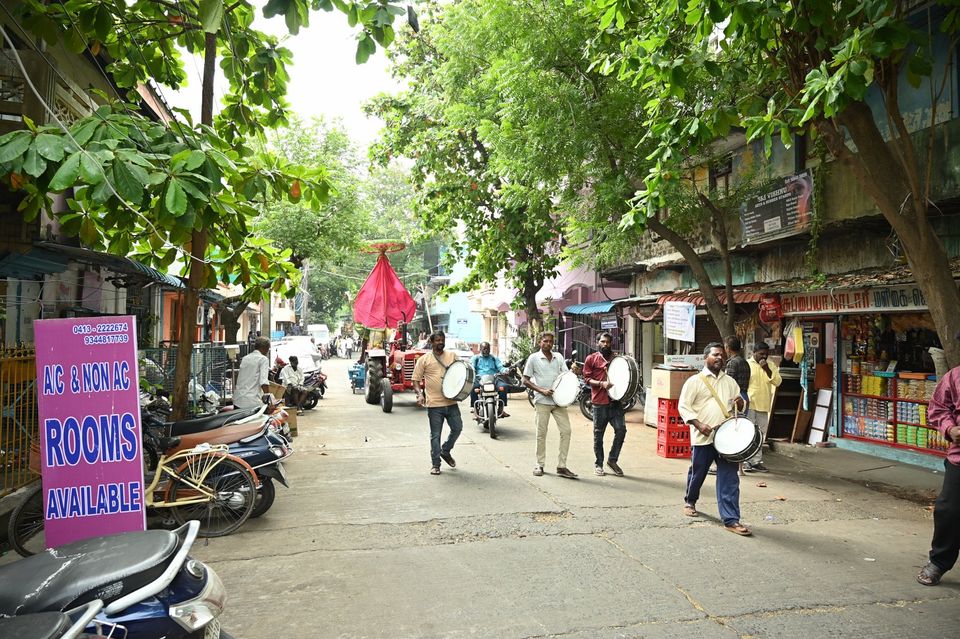
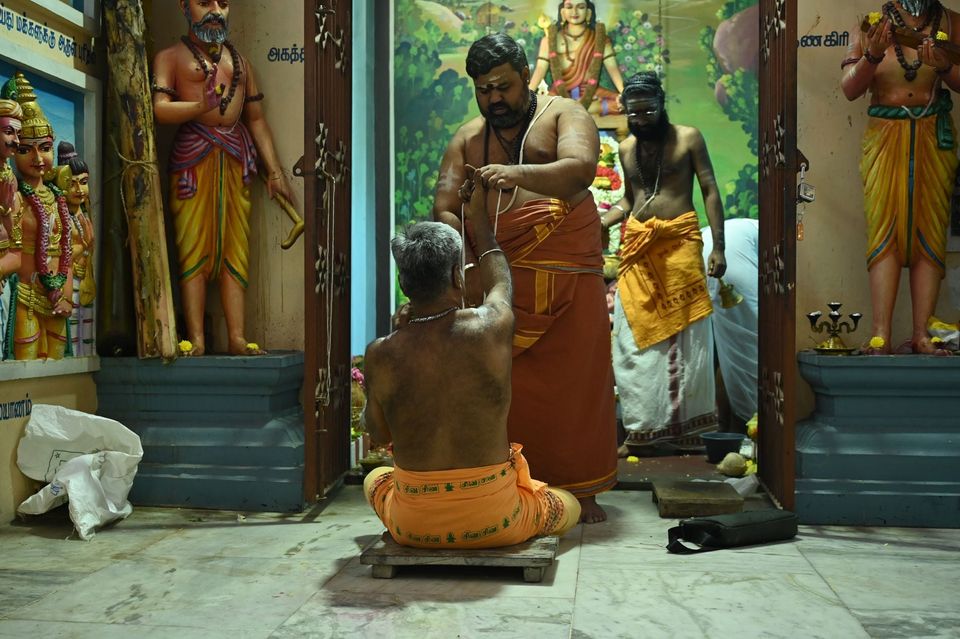
Somewhere around 10am, we’re in Lawspet. The day’s pujas are just beginning, the Veerangal group is there–they’re charged with doing the abhishekam to the Navaveerargal or the 9 brave ones who together comprise the army led by Veerabahu in the battle against Soorapadman and his sons. The Vel makes its rounds of the temple, stopping at all major shrines and not forgetting the yagasala where there are pujas happening morning and evening kaalams (we try a few times to record the full yagasala puja, in vain because they start late or there’s too much noise, or far too many interruptions in the process. It never seems as central an aspect as many other elements of the vizha). Following this, the Vel and the Veerangal go out on procession, preceding Murugan of course, and accompanied by Vinayaka.

Close to 11am, Ghousiga–and they’re just finishing the morning prayers and getting ready for the purappadu. Murugan has a veena in his hands, the son of Veenadhara after all. Arunagirinathar’s Puya Vaguppu verse 17, from Tiruvaguppu gives us a description Murugan’s arms: they are musically accomplished, they know the characteristics of delightful ragas and play Kaisikai, Gowda, Varali, Dhanasi, Desi, Bhairavi, Kujjari and Panjuram on the veena–

இசைதனில் இனிய கயிசிகை கவுட வராளித

னாசி தேசி பயிரவி குச்சரி

பஞ்சு ரந்தெ ரிந்து வீணைக் கிசைந்தன

Source: Kaumaram, and listen to the recitation by Revathy Sankaran

In the evening, we stop by the Chetty Koyil for the puja and ul-purappadu. It’s as most else happens at the Chetty Koyil with these internal events: utsavars in the alankara mandapam, puja happens there, the deities are hoisted onto a vandi which is pushed around the temple thrice, stopping at the Sivan sannadhi on the first round.

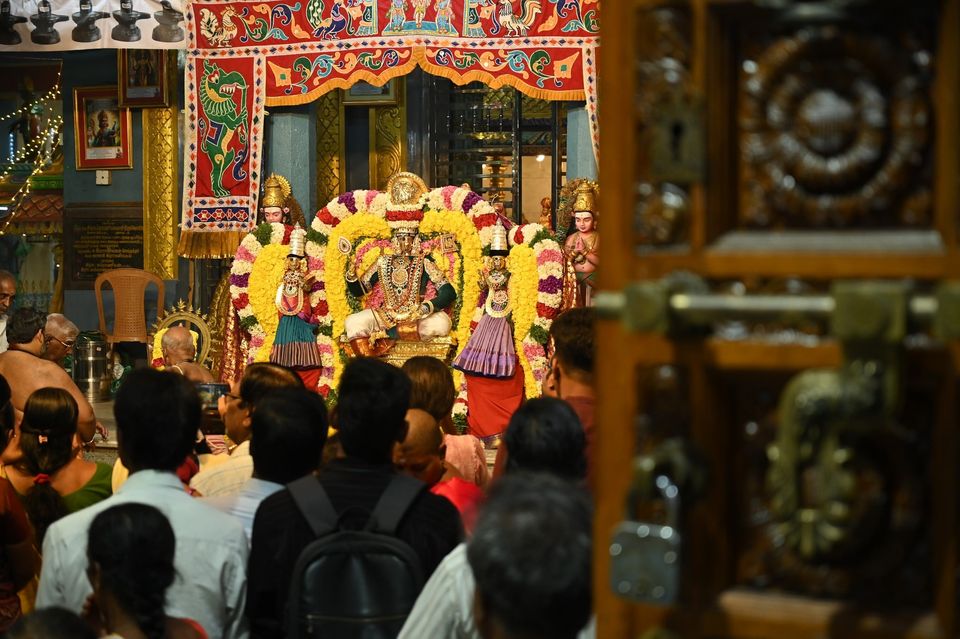
Nandhikeswara Alankaram today: not temple associated, Raja alankaram, as though He is sitting in his durbar, they said. Likewise, apparently is Ghousiga’s alankaram, always more delicate in the use of colours and noteworthy also today because of the malas. Brown malas are usually vettiver, but here they are almonds, cardamom and cloves–scented, precious, beautiful, ingenious. And signs of the Indian tendency to want to shower lavishly and extravagantly on the body of the divine all the precious things the earth produces.

The man who goes by “pannisai_deva” on Instagram is here, clearly invited to sing for these sashti days. We see him a few times, and hear him sing this once. Today’s song is “ஆடு மயிலே! நிர்த்தம் ஆடுமயிலே!” from the Manjaippaattu by Sengalvaraya Pillai, recorded on Project Madurai. It’s a lovely, rhythmic song, on my list to learn:

ஆடு மயிலே! நிர்த்தம் ஆடுமயிலே! - தணிகை
ஆறமுக நாதன் வர ஆடு மயிலே!
பாடுமடி யார் பரவ ஆடு மயிலே! - சம்
பந்தன்வர என்றன் முனம் ஆடுமயிலே!

தணிகைமலைத்தேவன்வர ஆடுமயிலே! - தமிழ்
தத்திம் தித்திம் தத்திமென ஆடு மயிலே!
பணியுமெனைக் காத்துவர ஆடுமயிலே! - பரன்
பாலகுகன் ஏறிவர ஆடு மயிலே!

நீல மயிலே! மந்த்ர ரூப மயிலே! - நிதம்
நித்தன் அத்தன் ஏறிவரு சித்ர மயிலே!
கோல மயிலே! நீயே ஓல மயிலே! - அண்ட
கூடமுழு தோடினவி சேட மயிலே!

துங்க மயிலே! நாகபந்த மயிலே! - சிகைச்
சூட்டு மயிலே கவலை யோட்டு மயிலே!
வெங்கண் மயிலே! கந்தர் தங்கு மயிலே! - அன்பன்
வெற்றி பெற வந்துதவு கொற்ற மயிலே!

நேச மயிலே! அரன் பூசை உமையே - திகழ்
நின்னுருவங் கொண்டு செய்தாள் முன்னம் மயிலே!
ஆசை மயிலே! எங்கள் அருணகிரியாம் - அன்பர்
அன்றழைக்க வந்து நின்றாய் ஆதிமயிலே!

வாகை மயிலே! மணி நாக மயிலே! - மலை
மாதுதரு நாதனமர் சோதி மயிலே!
தோகை மயிலே! தருமோக மயிலே! - சுகச்
சுத்த நிலை இன்னதெனச் சொல்லு மயிலே!

தேவாதி தேவ னென் றாடு மயிலே - திருச்
செங்கொட்டு வேலனென் றாடு மயிலே!
சாவாப்ர சாதந்தந் தாடு மயிலே! - தனத்
தந்தான தானவென் றாடு மயிலே!

வேலா விசாக என்றாடு மயிலே! - மலை
வேந்தா குமார என்றாடு மயிலே!
பாலா விநோத என்றாடு மயிலே! - மலர்ப்
பாதா குகேச என்றாடு மயிலே!

தத்திமென நிர்த்தமிடு பச்சை மயிலே! - குக
சண்முகனை என்முன் வரப்பண்ணு மயிலே!
சத்திமயில் வஜ்ர மயில் சண்ட மயிலே! - தனித்
தங்க மயில் துங்க மயில் எங்கள் மயிலே!

செம்பொன் மயிலே! சித்ரபைம்பொன் மயிலே! - திருச்
செந்தின் மயிலே! பரங் குன்றின் மயிலே!
அம்பொன் மயிலே! எங்கள் நம்பன் மயிலே! - பணி
அஞ்சு மயிலே! நீயே தஞ்ச மயிலே!

வள்ளி மணவாள என்றே ஆடு மயிலே! - வான
மங்கை பங்க துங்க என்றே ஆடு மயிலே!
கொள்ளுநல மின்னதெனக் காட்டு மயிலே! - கோழிக்
கொடிக்கரத்துத் தேவனருள் கூட்டு மயிலே!

ஆறு திருப்பதியானென் றாடு மயிலே! - மெய்
யன்பருக்குக் கதியானென் றாடு மயிலே!
வேறுகதி யில்லை யென்றே ஆடு மயிலே! - எங்கள்
வேல வேல வேல என்றே ஆடுமயிலே.

அந்த மயிலே! ஆநந்த மயிலே! - சச்சி
தானந்தன் பாட நடம் ஆடு மயிலே!
சந்த மயிலே! எங்கள் கந்தர் மயிலே! - பிர
சண்ட மயிலே! சிகைக் கொண்டை மயிலே!

வாசுகி எடுத்துதறு வண்ண மயிலே! - தெய்வ
வள்ளிமலை நாதன்வரப் பண்ணு மயிலே!
ஆசுகவி பாடியுனை ஓதமயிலே! - வரம்
ஆதரித்துத் தந்தருளு நீதி மயிலே!

கோடி நமஸ் காரமுனக் காடு மயிலே! - கோடிக்
கோடிநமஸ் காரமுனக் காடு மயிலே!
பாடியுனைப் போற்றுகின்றேன் ஆடு மயிலே! - ஆடிப்
பாடிப் பாடிப்போற்றுகின்றேன் ஆடு மயிலே!

எப்போதும் போற்றி செய்வேன் எங்கள் மயிலே! - என்னை
ஏமனிடங் காட்டாதே எங்கள் மயிலே!
முப்போதும் பூஜை செய்வேன் எங்கள் மயிலே! - திரு
முருகனருள் கூட்டிவைப்பாய் எங்கள் மயிலே!

O peacock, dance! O peacock, perform your dance!
Dance as the six-faced Lord of Thanikai arrives!
Dance as the devotees sing and praise him!
Dance before me as Sambandan comes!

Dance as the Lord of Thanikai Hill arrives!
Dance to the rhythm: thathim, thithim, thathim!
Dance as the Lord comes to protect me, who bows to him!
Dance as Bala Guha, the Supreme Lord's child, mounts you!

O blue peacock! O peacock who embodies the mantra!
O beautiful peacock, dance as the Eternal Father mounts you!
O graceful peacock! You are the peacock whose call resounds!
O peacock who ranges throughout all the cosmic worlds!

O exalted peacock! O peacock adorned with serpent-like patterns!
O crested peacock, drive away my worries!
O fierce-eyed peacock, the one on whom Skanda resides!
O victorious peacock, come and help your devotee triumph!

O loving peacock! Long ago, Uma, the consort of Hara,
took your very form and brought you into being!
O beloved peacock! When our devotee Arunagiri called you,
you came and stood before him, O primordial peacock!

O victorious peacock! O jewel-like, serpent-adorned peacock!
O radiant peacock, the one on whom the Lord of the Mountain's Daughter rides!
O plumed peacock! O enchanting peacock!
Tell me, peacock, what that blissful, pure state truly is!

Dance, proclaiming him the God above all gods!
Dance, proclaiming him the Lord with the Vel of Tiruchengode!
Dance, granting the deathless prasada!
Dance to the rhythm of the syllables: thanath thaana thaana!

Dance, proclaiming him as Vela and Visakha!
Dance, proclaiming him as the King of the Mountain and Kumara!
Dance, proclaiming him as Bala and Vinoda!
Dance, proclaiming him as the Lotus-Footed One and Guhesa!

O green peacock, dance the rhythmic dance to the beat of thathim!
Bring Shanmukha, Guha, before my very eyes!
O peacock of Shakti! O diamond-like peacock! O mighty warrior peacock!
O unique golden peacock, O exalted peacock, our very own peacock!

O golden peacock! O peacock of radiant, fine gold!
O peacock of Tiruchendur! O peacock of Tirupparankunram!
O beautiful golden peacock! O peacock of our beloved Lord!
O peacock before whom all bow, you alone are our refuge!

Dance, proclaiming him the bridegroom of Valli!
Dance, proclaiming him the exalted Lord who shares the heavens with the Divine Maiden!
Show me what is truly worthy of being sought!
Unite me with the grace of the Lord who bears the rooster banner!

Dance, proclaiming him the Lord of the six sacred abodes!
Dance, proclaiming him the refuge of his true devotees!
Dance, declaring that there is no other refuge!
Dance, singing again and again: Vel! Vel! Vel!

O beautiful peacock! O blissful peacock!
Dance as Saccidananda sings!
O rhythmic peacock! O peacock of our Skanda!
O mighty peacock, with your crest gathered into a tuft!

O peacock of the hue of Vasuki!
Bring the divine Lord of Valli of the Mountain here!
O peacock, I sing spontaneous verses and recite your praises!
O righteous peacock, graciously grant and uphold the boon!

I offer you a crore salutations, O peacock!
I offer you tens of millions of salutations, O peacock!
I sing and praise you; dance, O peacock!
I dance, sing, and praise you again and again; dance, O peacock!

I shall always praise you, our peacock!
Do not consign me to Yama, our peacock!
I shall worship you three times each day, our peacock!
Unite me with the grace of Lord Murugan, our peacock!
More from Lawspet Murugan Koyil

Lawspet Murugan Koyil · Kanda Sashti Vizha Day 8Lawspet Murugan · Kanda Sashti Vizha Day 8

Manjal Neer Utsavam

The month Karthikai began today, and Lawspet Murugan Koyil celebrated this with the Manjal Neer Utsavam. Although called an utsavam, it seems to exist today as a far more diminished event. We reached around 730pm and found the usual pre-purappadu aradhanai going on for the utsava murtis. At the end of this, apart from the two regular elderly odhuvars, song was offered by a young girl who seemed to be the ubhayakara’s daughter. Upon completion she was given reassuring smiles by the priests and elders. This was followed by an elaborate vadyam offering made by three nadaswaram and two thavil players. They played three ragas as Sriram Gurukkal announced them. One of them was the Aadu Pambe tune also played for the Thirukalyanam on the night before, which seems a real performer’s favourite at temple events – though now that we did not have the dancing priests to grab all our attention (!!) we could focus a little on the winding serpentine inflections of the song. With the music session then wrapped up, the purappadu began. One round of the prakaram, then out onto the streets. We were a little confused about the ‘Manjal Neer-ness’ of this all, and upon enquiry found that that was a small event before the aradhanai where manjal-water was sprinkled on the deities and devotees. So not much of an utsavam, but something nonetheless, perhaps remnant of a grander past existence which may have given it its name.

Read more
Lawspet Murugan Koyil, Vedapuriswara Koyil · Kanda Sashti Vizha Day 7Lawspet Murugan, Vedapuriswara · Kanda Sashti Vizha Day 7

The Sheer Fun of the Old India

The morning at Lawspet was a panchamurti abhishekam which we couldn’t make it to with all the weddings happening in town, but it happened there late (we were told) and the dhvajavarohanam also happened. One of the gurukkals told us to save our energies for the evening, which we rather gladly did. In the evening, Valli and Devasena (or Devayanai, Devyani), were taken to a house in a nearby street–where the family of Murugan arrived to “see the girl” (ponnu pakkaradu). Having seen and apparently liked them both, the procession carried the brides both back to the temple, coming around the madaveethi as usual. Arun followed them all the way, I met them near the small Vinayaka koyil on the main road where the Samharam had taken place. All the ladies accompanied as is the custom, and they had enlisted all the younger girls, including some very cute looking very young ones to help out. They all stood holding plates and trays filled with fruits and sweet things, weighted according to carrying capacity, the little ones especially looking so pleased to be included and their participation so sought. It was a lovely sight to behold. They waited outside the temple, brides behind them, until the priest’s wife, herself with an infant on her hip, did an arati, poured the red water under the pallakku being borne, and then everyone entered the temple. They went left to the back where the homa kunda and other prep for the wedding was set up. There was barely moving room anywhere in the temple.

Read more
Lawspet Murugan Koyil, Ghousiga Balasubramaniya Koyil, Chetty Koyil, Vedapuriswara Koyil, Angalamman Koyil · Kanda Sashti Vizha Day 6: SashtiLawspet Murugan, Ghousigabala Murugan, Chetty Koyil, Vedapuriswara, Angalamman Muthialpet · Kanda Sashti Vizha Day 6: Sashti

The Greatest Battle of Them All: Soora Samharam

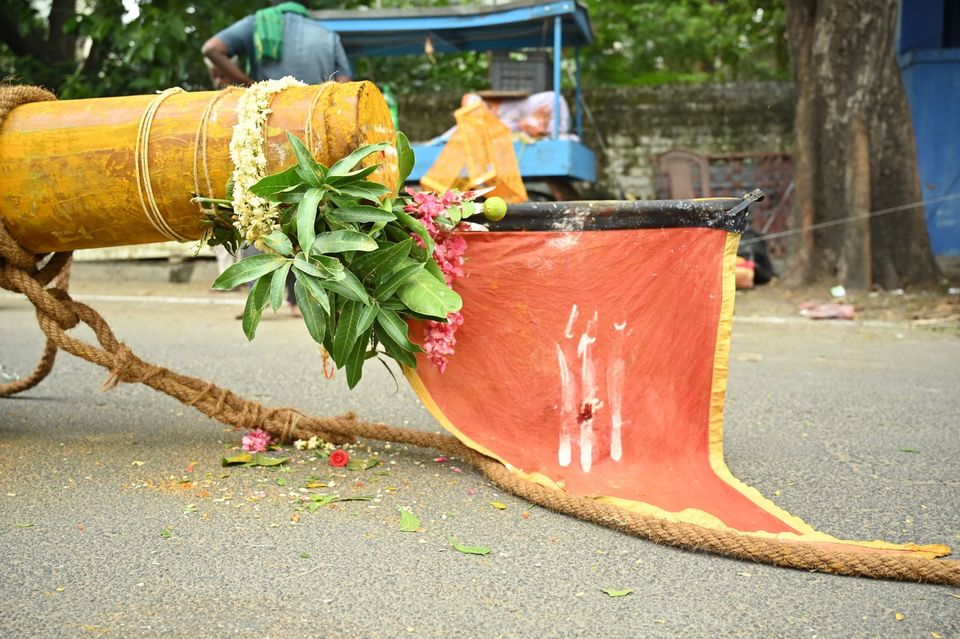
Many temples mark today in some form. Angalamman Koyil does a Murugan Abhishekam and maha deeparadhanai in the morning. Vedapuriswara, anticipating this day, does a 7am-5pm 36-time recitation of the Kanda Sashti Kavacham, on top of the daily 7am Balamurugan abhishekam, and later Murugan abhishekam, evening parayanam. We saw the arrangements made outside the Chetty Koyil for the samharam, and the bells still ringing at 11pm as we passed by en route to Ghousiga, but we have no images of these events. Our morning was spent watching the procession at Lawspet and the raising of the kodi that was the spine of Vajrabahu, on which the Navaveerangal would climb later in the evening to sing songs of Murugan, Siva, and Amman (Parashakti). For being the gigantic spine of an asura, this structure was treated with significant reverences. Turmeric was applied, vibhuti and kunkumam, flowers. A small bell at the head represented Vajrabahu’s skull. Flowers. I was told to be careful not to step on the ropes that would be used by the waiting crane to haul this into position. This sort of reverence had either got to be purification –or acknowledgement of Vajrabahu’s having now become one with Murugan. A smaller wooden piece was first placed in a waiting hole in the road (the hole must always be there, just closed up the rest of the year and opened again for the festival) – the hole was anointed of course, by Sriram Gurukkal, with turmeric water, milk, chandanam and the like. Then the short pole p

Read more
Lawspet Murugan Koyil, Ghousiga Balasubramaniya Koyil, Nandhikeswara Koyil · Kanda Sashti Vizha Day 5: PanchamiLawspet Murugan, Ghousigabala Murugan, Nandhikeswara · Kanda Sashti Vizha Day 5: Panchami

The Battle Continues and Murugan Gets the Vel

Crowds are slowly gathering as the festival tends towards Sashti. Though the day proceeds through some now familiar motions – abhishekam for moolavar and utsavars in temple, abhishekam for the Navaveerangal, the vel’s pradakshinam, the movement of the decorated utsava murtis outside to be seated on the vahanas, their procession through the madaveethi with so many houses alive and ready to meet them enroute. They arrive on the main road near the small vinayaka shrine that was perhaps once on the side of the road, but now finds itself in the middle. No matter, one side of the road is set up with keeth roofing at two ends – the Sooran Kottai as it’s called on one end, and the place near the temple for Murugan and the Veerangal on the other. I walk and talk with Siva enroute. He makes many interesting observations about how their group has built this temple’s traditions, or kept them going at any rate, starting from the time of the last Kumbhabhishekam in 2018. Prior to that, there was only Veerabahu as an utsavar, no moola murtis, and none of the other utsavar figures. Now their group of about 15, all of them from the area, many working elsewhere, return every year for this festival – they take care of navaveerangal abhishekam twice daily, and all matters involving the purappadu as well as the ritual enactments that happen. Siva doesn’t speak of a continuous lineage easily handed down, but one which they have had to wrest and claim as their own. Parents had other priorities, fin

Read more
Lawspet Murugan Koyil, Ghousiga Balasubramaniya Koyil, Nandhikeswara Koyil · Kanda Sashti Vizha Day 4: ChaturthiLawspet Murugan, Ghousigabala Murugan, Nandhikeswara · Kanda Sashti Vizha Day 4: Chaturthi

May the Battles Begin!

Yanaimukha Samharam at Lawspet. Our morning begins at the Yaga Sala where a new Veerabahu member, perhaps coming from afar and unable to join from day one, gets his yajnopavitam and kaappu. He then joins his brothers outside the Navaveerargal shrine from where they proceed on their routine Vel procession. Not needing to document this recurring procession once more, we drift towards the purappadu-ready deities sitting outside their alankara mandapam. The deities are the same processional ones – Vinayaka, Veerabahu and his brothers, and Murugan with Valli-Devasena. Also tentatively part of the formation is the astra murti no taller than a foot. Its Murugan is no taller than half a foot, and his two consorts are at most one-third. This astra murti only oversees the twice-daily bali offering. We also observe the serpentine form that adorns Vinayaka’s arching thiruvachi – two serpentine bodies beginning from either ends of the arch, joined by a single serpent head above and behind Vinayaka’s. We are uncertain whether it is indeed a serpent or mere adornment that suggests and invokes that resemblance – both of which find resonance with our earlier exploration of the Pavitrotsavam. The procession deities are soon lifted, taken around the prakara, venerated at the Yaga Sala where the concluding purnahuti is performed, and are brought out with a Gopura Darshanam to face Yanaimukhasooran who waits tall outside. The sooran is elephant-headed with four tusks capped with golden embellishm

Read more
See all field notes →