Writings
Everything recorded at the temples — notes written on the day, interviews, photographs, sometimes also video. This is all working material, only lightly edited: the impressionistic raw material of our day-to-day interactions, things as we first saw them, our first experiential and thinking material. In this, we share also some preliminary interpretations and methods, how we went about doing what we did on a day-to-day basis.
Drama at Kannika Parameswari’s Doorstep
We’d been noticing, on the way to-from Kannika Parameswari’s many Navaratri days, that this littlest of theruvu koyils which had featured in our very first video on the temples of Pondicherry had a keeth shelter built outside and were doing pujas all through Naaratri. Never to big crowds at all, but doing them nonetheless. And they were continuing beyond Vijayadashami so we stopped by one day and found, to our surprise, quite a long schedule of events that, indeed, extended well beyond Navaratri. In fact, Vijayadashami’s key event, which is the slaying of Mahishasura, happens at this temple days after Dashami. Nobody really could explain why – “that day is for putting the ambu,” people said, “this is for Mahishasura’s Samharam” – not for a moment considering that the two are in fact one. The swami purappadu would have started by 6pm, but we timed it to reach there at 830pm. It was perfect. A truck with a large cut-out figure stood near the temple, a distance from the cutting where the Utsavar was about to arrive, and was soon lit up from below. Amman as Durga, hair spread wide as though it was flying, hand on her trident, was in blazing red and coming down Kamatchi Amman Koyil St. just at the MG Road cutting. Two folk theatre performers came ahead of her, apparently gearing to go. A Thirunangai (transgender woman), and a man dressed much like Vallaraja at the Angalamman Mayana Kollai events earlier in the year. The pambaikarars arrive, and someone pulls a rope across the road
Read more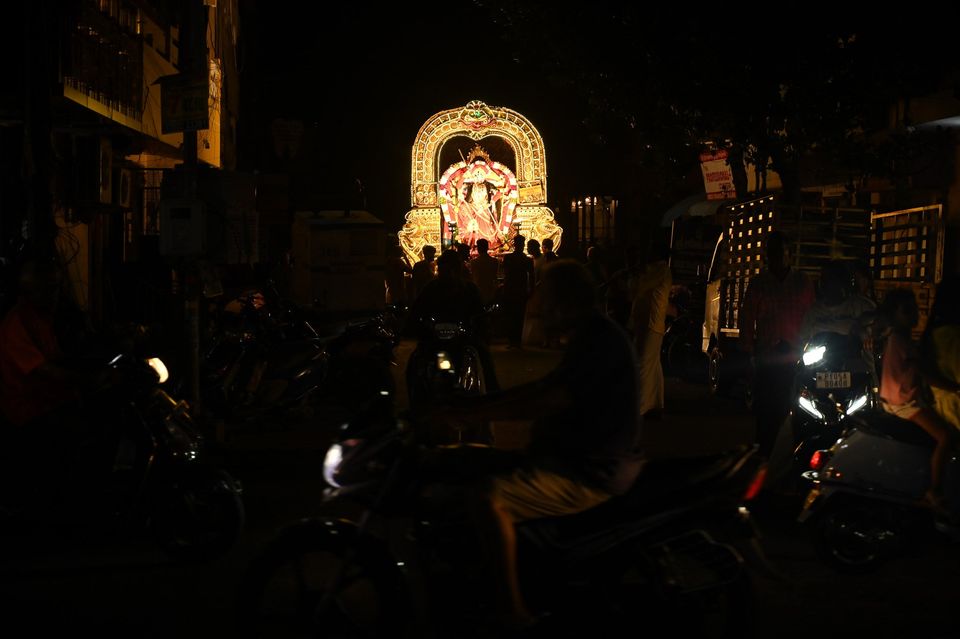
Arohara Sounds at Vedapuriswara
The Sivan Koyil krittikai process is Abhishekam for Murugan, and Pazhani Andavar. Did not seem like Vinayaka had an Abhishekam. But the deeparadhanai starts with Vinayaka, then Pazhani Andavar & finally an alankarified Murugan (whose face was white with vibhuti today). It’s all supposed to happen at 330pm, but then seems to finish in a rush at 530 when we get there. Meantime, utsavar is getting ready. Very simple and elegant alankaram (why not have this all the time?) with beautiful dhoti and saris tied. 7pm is the ul-purappadu, for which a decent crowd gathers. Oh, and it’s Tuesday, so the Rahu Kaalam Durga puja has happened, and the ladies are doing their parayanam in the evening as usual.
Read more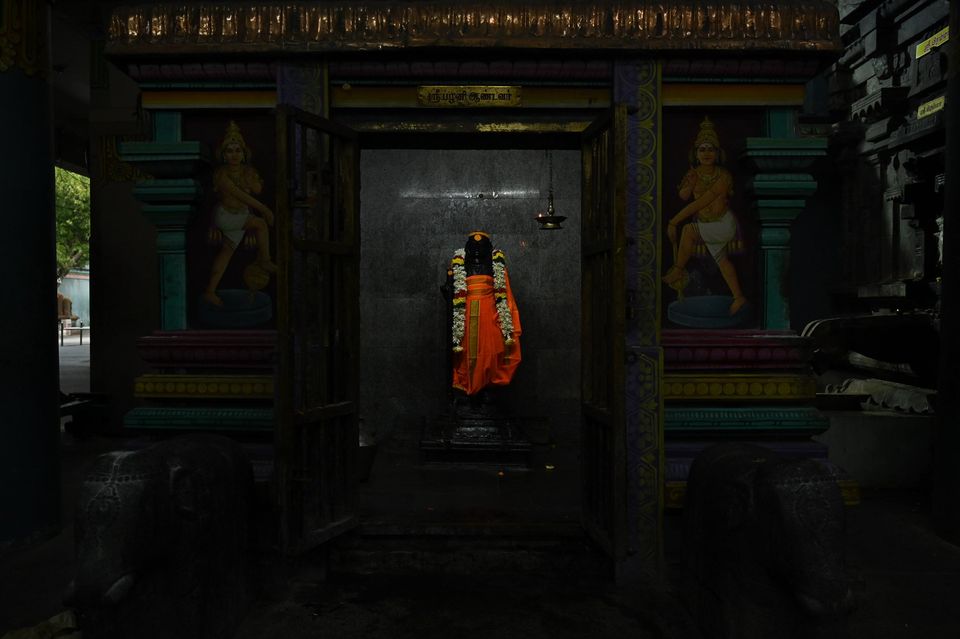
Murugan’s Day at Nandhikeswara
Not much to say about Nandhikeswara Krittikai except that it’s as well done as everything this temple undertakes! Abhishekam happens at 530pm, though this time may vary depending on when the nakshatram itself commences on the day. Alankaram takes a while, though it’s really simple and lovely, and you see the full brass figures dressed up. Then there’s an ul-purappadu, heralded by just the Nadaswaram and tavil.
Read more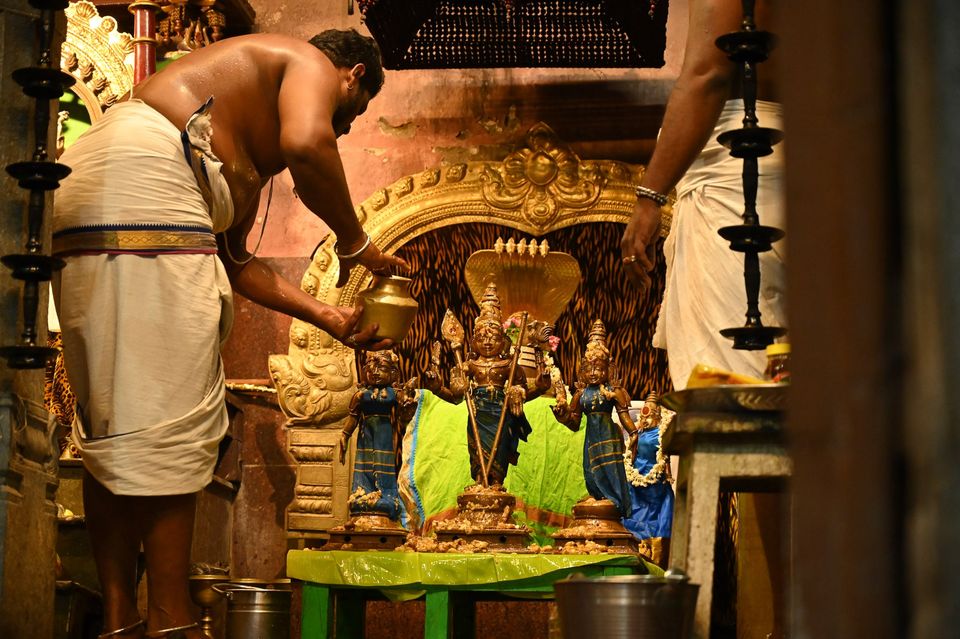
An Abhishekam (or Two) a Day…
We were the only ones aside from the single ubhayakara at this morning’s Kannika Parameswari Krittikai Abhishekam. The usual dravyangal—oil, water (lots of it), abhisheka podi, 2 litres of milk, curd, 3 elaneer, rice flour, chandanam to be mixed with rose water. The priest works alone as usual, and chants the Purusha suktam, as well as Durga suktam and other verses I cannot make out, though Arun hears “Hayagriva” at one point. The alankara is simple-velli kavacham and flowers. It’s much like the vinayaka Abhishekam I had seen for sankatahara chaturthi, with gomathi masi. A no fuss affair. Small puja after and thinal or foxtail millet payasam. Traditionally made for Murugan this time of year, said the Iyer, a little makes a whole bucket. As we are leaving, they are calling the ladies filling the garbage truck outside to come in and have some. In the evening is an arati thattu competition— to be fashioned out of coconut leaves. So all the women’s entries are being registered when we arrive at 645pm, between the Sivan and Nandhikeswara krittikais. There will be a judging later. The nirvagam head’s wife comes to explain to me the rules, as she has seen us there often. Today is the last vidaiyatri day, so there is an extra air of festivity and perhaps a sense of relief. 17 days!! 17 days you’ve also enjoyed — says the lady who is active at the mahila sangam, who is always kind to us. Indeed. There’s a second Abhishekam to Murugan going on. The morning one was early—Krittikai reall
Read more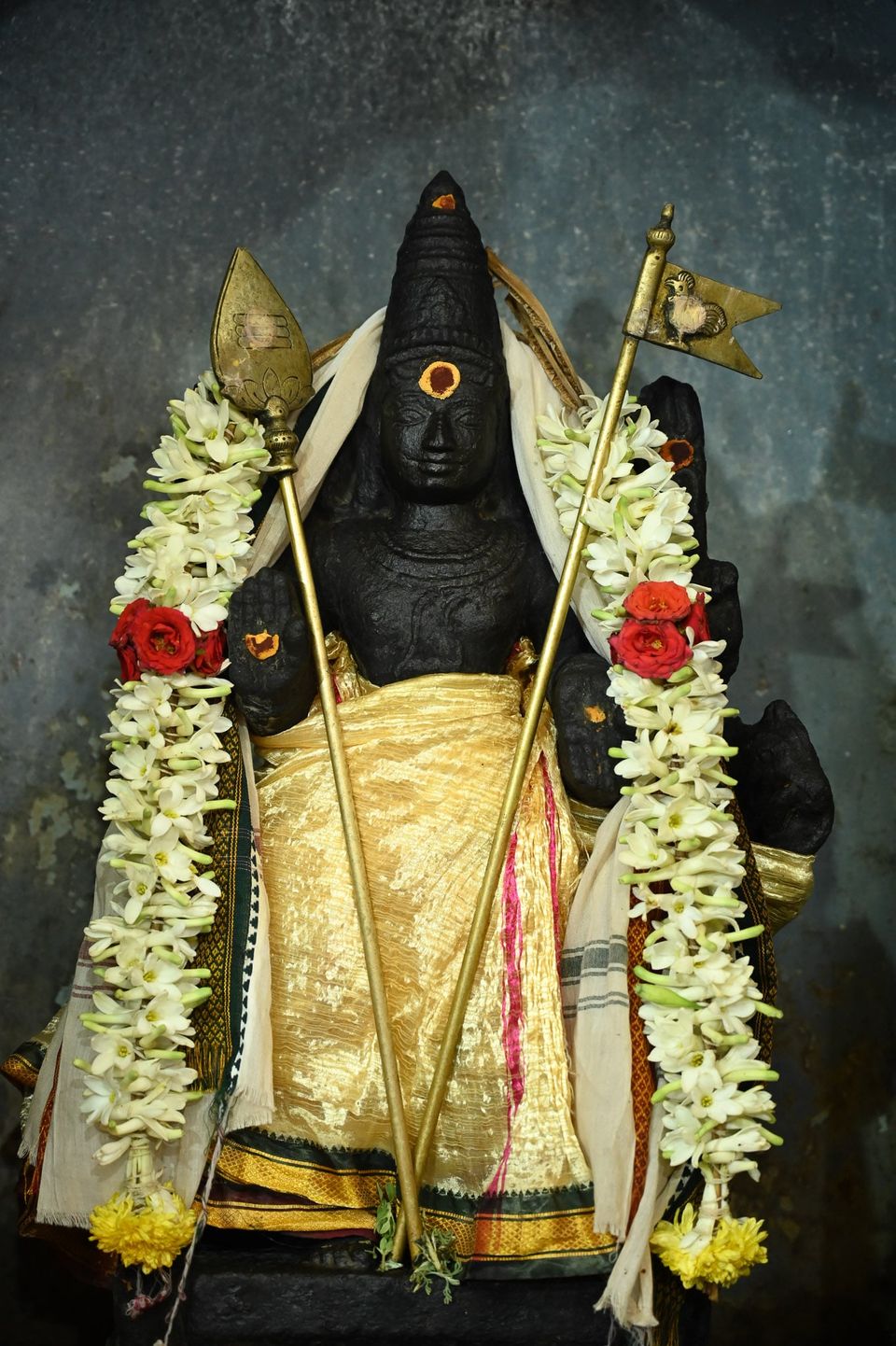
It’s Not Only Kannika Parameswari with the Long Navaratri …
The Naga Mutthu Amman Koyil just down the street from the Kanyaka’s temple started its Vizha on October 11 like all others, but continues it well past – with a Mahishasura Samharam scheduled for October 28th! We asked about the temple and why this Samharam didn’t happen on Dashami – and were told that there’s a difference between the samharam and ambu poduthal, though I couldn’t understand what this was. This is a theruvu koyil, but it’s been around a while. The last kumbhabhishekam patrikai was 1968, said the man whose shrine it is, and the temple has been there a hundred years before that. He’s the third generation of caretakers. From Navaratri’s beginning, they take the 3rd Friday and keep the Samharam event for the Wednesday just prior. There were a pambaikarar and a percussionist singing and telling stories, and nobody else present – even those whose houses adjoined knew little about the temple and were clearly having their own parallel conversations. We might check out the Samharam event, let’s see.
Read more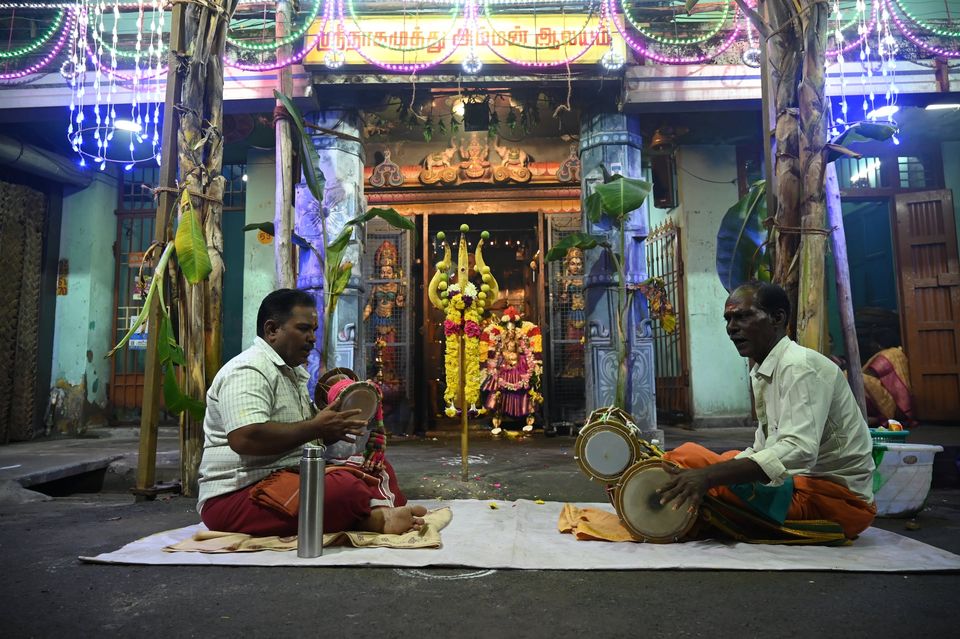
Thiruvilakku Decoration and a Lying Down Ambal Alankaram
The security guard saw us and called us in from the road, I kid you not! It was hard not to stop, because the lying down utsavar right in front there looked very pleasing. The usual bevy of ladies gathered, chatting, reading, chanting. The Iyer doing his chants apparently in parallel. And along the whole left prakaram, rows of benches with numbered decorated lamps. My favourites were the one with the lime head and the roses for hair (many had pre-made faces, this did not), and the one that used ficus leaves to make a vinayaka form. Not sure which got the prizes though!
Read more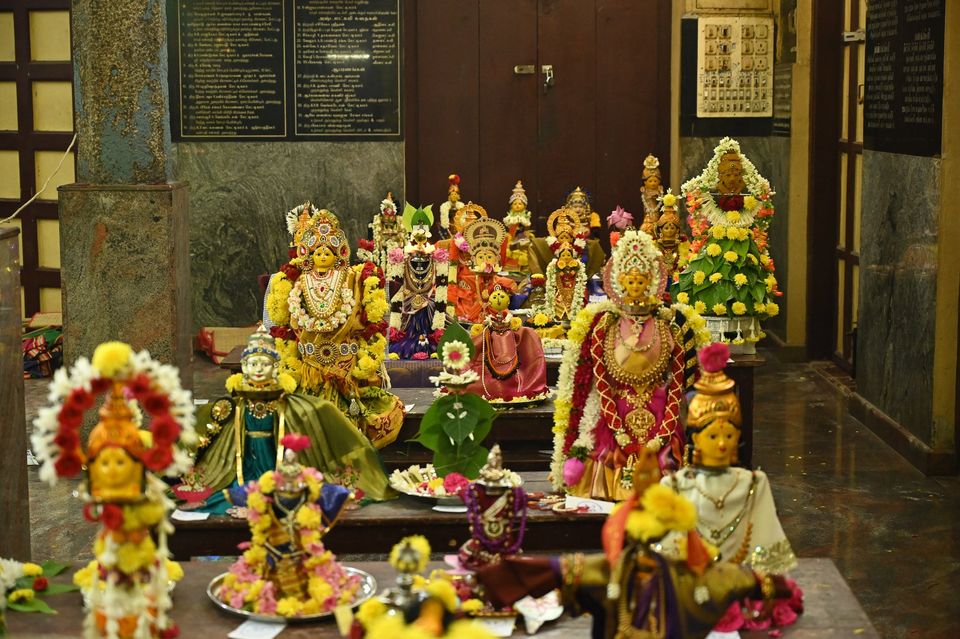
Ashwini Annabhisheka Vizha
I don’t think I’ve seen longer lines or crowds at the temple for a darshan event. Utsavams, yes, darshan not so much. But the mandapam was full even at 530pm, and the queue snaked around the temple to the back of the Murugan shrine. We were staking out a position when we bumped into Uma mami sitting at the side entrance to the garbhagriha, with her usual happy disposition, talking about how Arasoo mama (Chandramouli Gurukkal, actually) advised her to be there so that when the ubhayakaras finish, she can go in that way and see the annabhishekalankaram and exit sooner than the waiting crowd. “I’m waiting here trusting Siva, and if you wait with me I know I’ll have more power,” she said. She’s always one to call us out as being to so many temples, our darshan is as powerful as any deity–hilarious. But, tt didn’t quite happen that way. Arasoo mama came, indeed, and admitted all of us along with the ubhayakaras saying “this lady lives in the next house, these two are my neighbours, that lady lives on my street…” Also hilarious. We got in with everyone, and the temple doors opened, but we were then the closest. The Annabhisheka-alankaram was nice, but being in that space with everyone was nicer. Soon after, once the Ambal darshan and aradhanai were done, people queued up for annadanam and prasadam – another long, long line. The hot sambar rice being given out smelled fine, but we left without it. What we’d seen had been enough. The Vedapuriswara Koyil does this event a day after al
Read more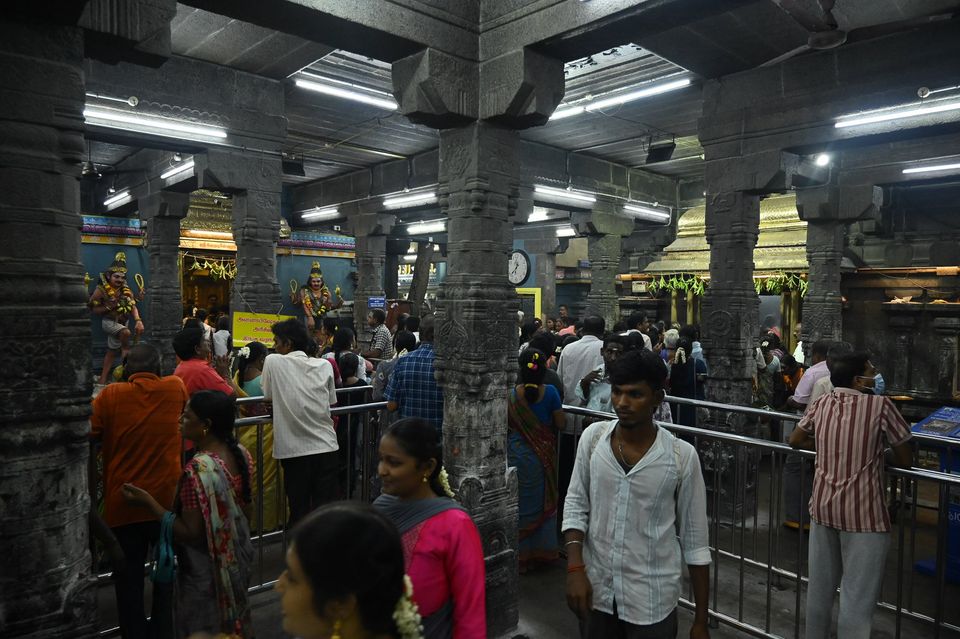
And the Alankara Prize of the Day Goes To…
Sundara Vinayaka Koyil has so far been a little neighbourhood temple driven by the family’s commitment and pure goodwill and devotion, but fettered by their own personal (and budget) limitations and the sheer difficulty of running what is a full-scale set of pujas without a dedicated priestly staff. Rani Ma’am is is always the one organising, Ravinder Sir is always in the role of priest. That was the case today as well, but it felt very different. The place was full, for one, with mostly women (as usual), reading prayers and songs. It’s all a little off-key as usual, but somehow the chorus manages to sound harmonious. The abhishekam seems to have started on time at 6, because when we get there a little while after, it’s over and the milk is being handed out. Bhavani Amman outside is already washed and bedecked, so that must have happened before. Alankara for the Siva-Parvati duo is nearly done, and we can see it from a slit in the curtain, cooked white rice pressed onto the lingam and into the form of a human face, which is very strikingly done. The curtain opens, the deeparadhanai starts, the women are singing and chanting. After all the “no photo!” scares at other temples (though we’ve followed guidelines as given in every single place, and never taken photos when/of what we weren’t supposed), it was a relief to have women make way for us to actually get closer and take the photos we want. To the point of asking others to move, a little bit to our embarrassment, but such ki
Read more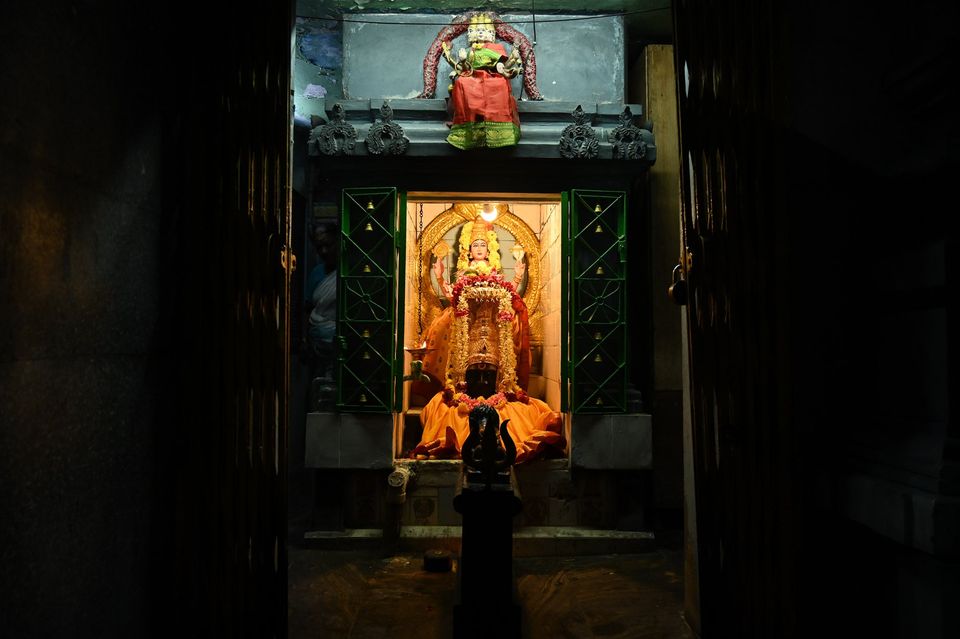
A Politician’s Annabhisheka Annadanam
Running between temples in the rain, we got to Chetty Koyil only after all the early abhishekams were done, and the alankara was on display. It was quite beautiful. What looked like a tiered stand was placed in front of Kalathiswara, and that was filled with cooked rice, and layered with more fruit than vegetables that had been there at other temples. There were pineapples, apples, and broken coconuts which looked especially beautiful. Looked also like there was a banana leaf at the base with some additional offering. I waited while others did their archanai pujas, and went out to the Ambal sannadhi, which looked completely bare in contrast. In the prakaram next to the Perumal temple were rows and rows of people sitting with not the usual mandarai leaves but proper banana leaves. Ok, I thought: big annadanam here! And a lot of the Chettiars were serving–so I thought, well, that’s a bit different, maybe that’s the nature of the puja today, but no. I noticed the photographer present before I saw there was this politician in white, doing the serving along with the Chettiars. And I thought: aah! It’s that sort of event! Kotiswarar gave us something else though, a prescription from the Kamikagama (he says, unverified): “तुलामासे पौर्णमीयुक्ते अश्विनी नक्षत्रे अन्नाभिषेकं कारयेत्॥” which means: “In the month of Tula, when the full-moon day coincides with the Asvini naksatra, one should perform the bathing of the deity with cooked rice.” Alrighty then.
Read more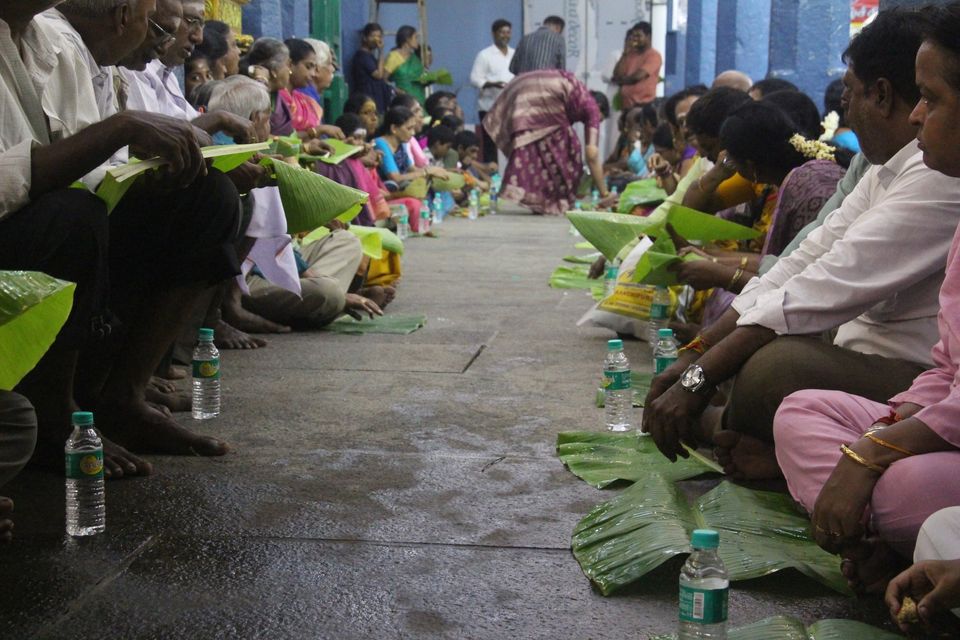
White Rice Raiments for the Kanyaka on the Night of the Full Moon
The whiteboard announcement said 3pm, but Pournamis are busy days at this temple–the Satyanarayana puja had wrapped up early morning, and the Ambal abhishekam was about to start. Kanyaka’s utsava murti was in the garbhagriha with her. What was it–the green drape on the deity, the posture of the utsavar, the light as it shone into the garbhagriha, the absence of any crowd or the sparse use of ingredients (dravyangal) – but this was a beautiful abhishekam. The Iyer here of course is one of few who works completely alone, and it’s a lot of work, but he seems to do it without complaint or pause or any shortcuts. When he was done he gestured to us to say that the other alankaras would be done by 5pm, so we could come back then. Kind man. When we come back (much later than 5), indeed the atmartha lingam on the side is dressed in cooked rice as is the Kanyaka Herself–and does she look resplendent or what. A piece of yellow pumpkin is the crescent in her hair, which is topped by grapes. Two more pumpkin pieces make her ears. The folds of her garments are indicated with avarakka, beans, carrots. There are patches of red (pomegranate?) on her abhaya mudra-extended arm. If the point of a well-done alankaram is to cause you to stare and stare and stare–this one sure did the trick. It helps that these alankaras are visible from the road outside, they just draw you in. The priest called in to do the alankaram is one we’ve seen at the Sivan Koyil, but he pays no attention to us. Kamakshi al
Read more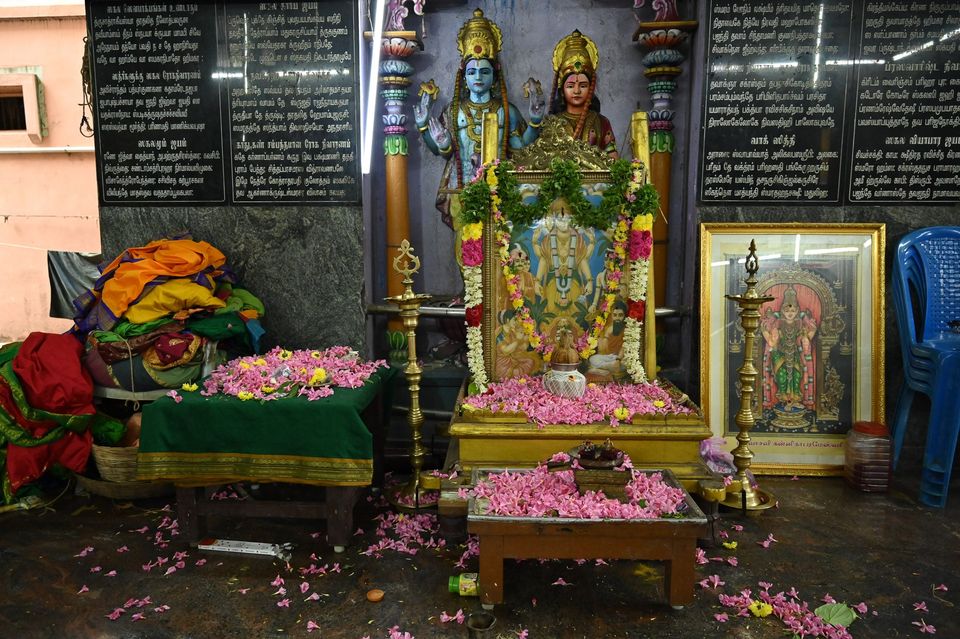
An Annabhisheka Vizha Like None Other
“We’re biased towards Nandhikeswara,” Arun declares. He couldn’t be more right, but for the fact that he didn’t add “unapologetically so.” It is possible that the more learned men are still primarily associated with the Vedapuriswara and Perumal Koyils, but Nandhikeswara with the stewardship of the Dewan has a rooted culture of its own, no less schooled or cultured. And the priests are just talented and skilled, as all our Navaratri videos have amply shown. Today there are not many present for the first abhishekam, which itself includes annam, cooked rice among the standard dravyangal or substances. I’m really glad we got to see that. Vrushabha has a darling garland of eggplants, the torana over the garbhagriha threshold is made of a raw banana bunch and other creatively hung vegetable maalas. The canopy over the moola murti is itself decorated with vegetables. Narttana Nandhi had a maala of corn and, was it ridge gourd? It’s all quite a sight to behold. We came back once for the main Annabhisheka Alankaram, which was as with all this temple’s alankaras, spectacularly done. The lingam had been enlarged and embellished with vegetables, and the deeparadhanai was going on with the usual graceful, almost choreographed method. The photos speak volumes here, though I had nearly to crawl to get them as the crowds by now were full and thick. And oh, oh, oh, that Kailaya Vadyam again, and what it does to my beating heart! On our third and last return for the evening, there was only a
Read more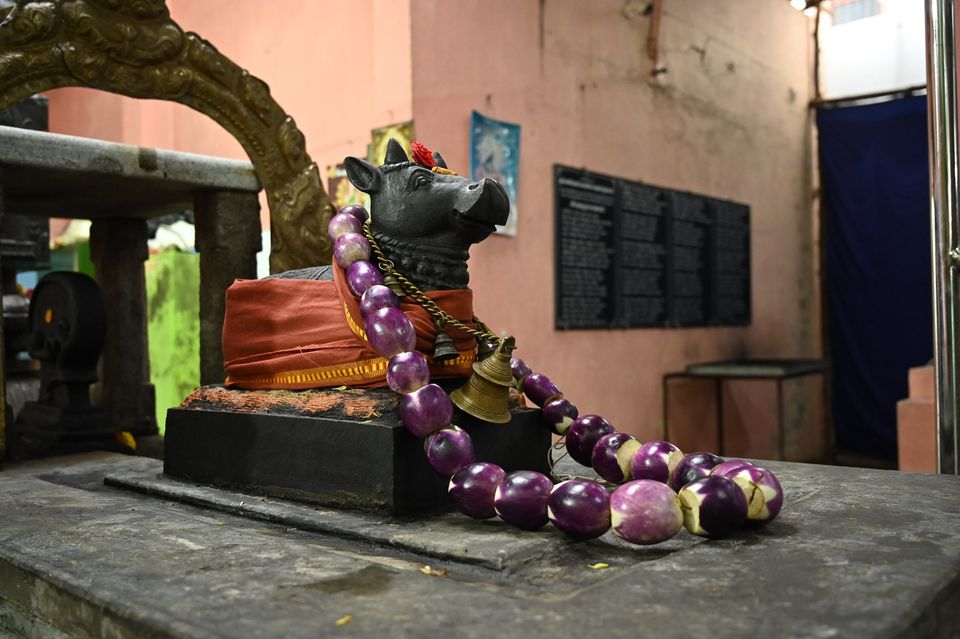
Two Non-Starters at Lawspet
Too much rain this morning, so we skipped the Gomata puja that happens every pournami. Evening we went at 545pm and the prep for abhishekam was just going on. Some lovely yellow flowers laid out on a plate, which the priest said was thanga arali–a wild plant, take a little of it and you will see vaikuntham, he said. That poisonous. We left intending to return, but never could with the rain and all the temples doing their annabhishekams at the same time. Schedule: 10am, Gomata Puja, this apparently happens every Pournami. 5pm, Aippasi Pournami Annabhishekam for Sivan
Read moreTwo Misses in a Go for Angalamman’s Annabhishekam
We had designs of focusing on Angalamman for the Annabhishekam as the only other significant abhishekam we’ve seen here has been the Theipirai Ashtami Kali Abhishekam and we’ve never seen the Sivalingam here worshipped, but clearly the Goddess had other plans for us. Patrikai time was 7pm, and we were undoubtedly late, but hopeful that this temple had been slightly delayed–but no, abhishekam was done, saris screens pulled while alankaram was going on. Okay, we thought, at least we can see the annabhisheka-alankaram. Rather than wait, however, Arun went home for a quick poori dinner and I did my runs to Chetty and Sivan Koyils. We reached back almost at the same time, a bare 40 minutes later – only to find it was all done, and the screens were up again, but not for the annabhishekam, more for the final alankaram and deeparadhanai. So disappointing! These weren’t even kept visible for a half hour, as they were at Chetty or Nandhikeswara. It was a lovely scene though, with mostly women and children in attendance, everyone in a neatly tied sari, and no pushing, rushing, everyone making room for everyone else (I love this town and these temples). Vasanth who runs the Angalamman Instagram page promised to send me photos, so at least a “digi-darshan” may be possible, though I shall have to pursue him for them as I’m yet to send him Navaratri photos myself. The puja itself was a simple one, prasadam was the kalachified annam turned into curd rice, and served with a side of what looke
Read more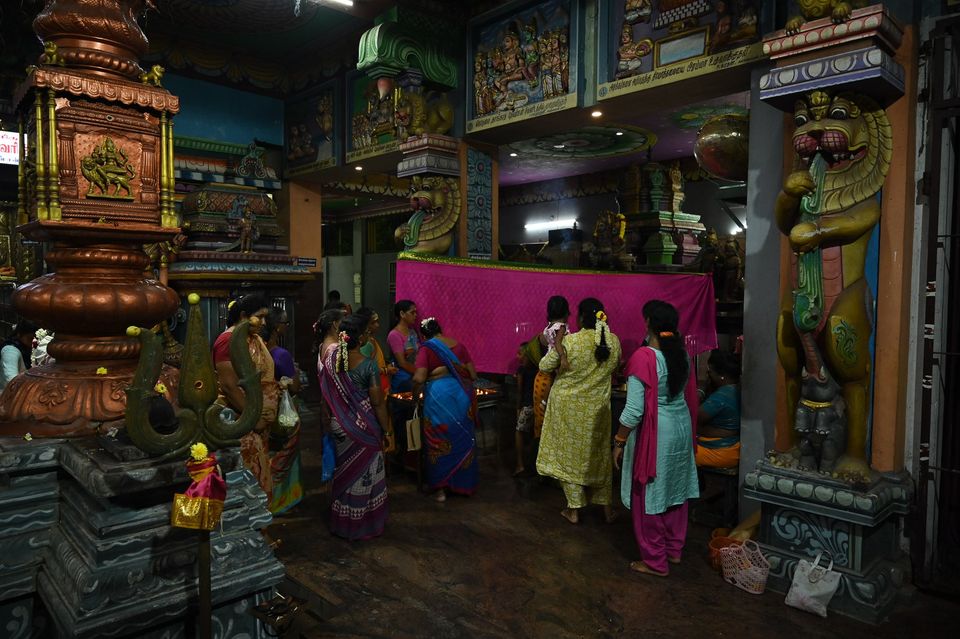
Annabhisheka Vizha Day 1
I caught but a glimpse of this pre-puja in between dishes to Chetty Koyil and back to Angalamman for the Annabhishekam (which was undone by the time we reached there anyway, so it wasn’t worth the dash but who knew?). The yagasala was locked, but there was a mandala on the surface usually used for kalasas, the homa kunda was still smoking, flowers by it were fresh still, as was the cooked rice on four corners always placed there towards the end of a homam. Some older kalasas were in front facing east, but to the north were the relevant ones, it seemed. Nothing much seemed to have been done for Vinayaka (the patrikai mentioned a Vigneswara puja, see below), but the queue to the garbhagriha was very long. I peered in while passing by the Nandi, from a point where one can get a view–and it seemed that the place was lit only by oil lamps, so looked mysterious and alluring even from afar. I couldn't stop, but I did wonder what Sivan looked like inside there, in that beautiful, smoky, dark chamber of His. Published Patrikai Schedule: Aippaci macam 8-am teti — 25.10.2026 — Tirumurai: Sunday, 6pm Vigneswara pujaiAnnabhiseka yagasala pujaiDiparadhanaPiracada viniyokam
Read more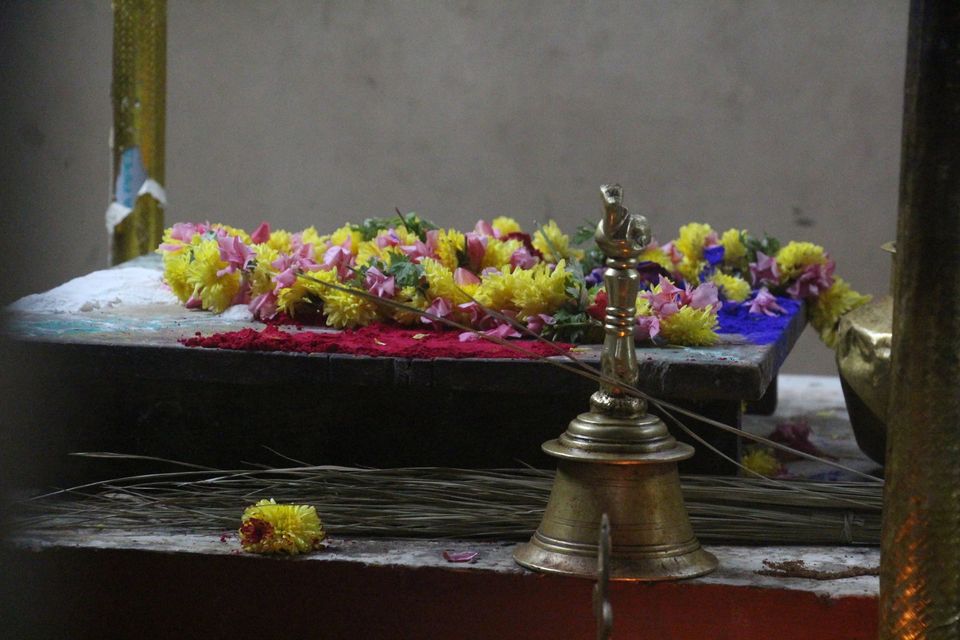
Atmartha Lingam Pradosham
Pradosham happens here also to the Atmarta Lingam that is in one corner, near the Ramar Sannadhi. The lingam has a beautiful Vasuki form over it, with red beads hanging one from each head. The alankaram today was Annapurni, seated cross-legged with a bowl in one hand and a spoon in another, and moola Kannika was in full chandana kaappu with what seemed like flared skirts. It was quite stunning even from the outside to see this. There was a large group of women doing singing and parayanam today. The day’s kolam was as usual outside the moolasthanam.
Read more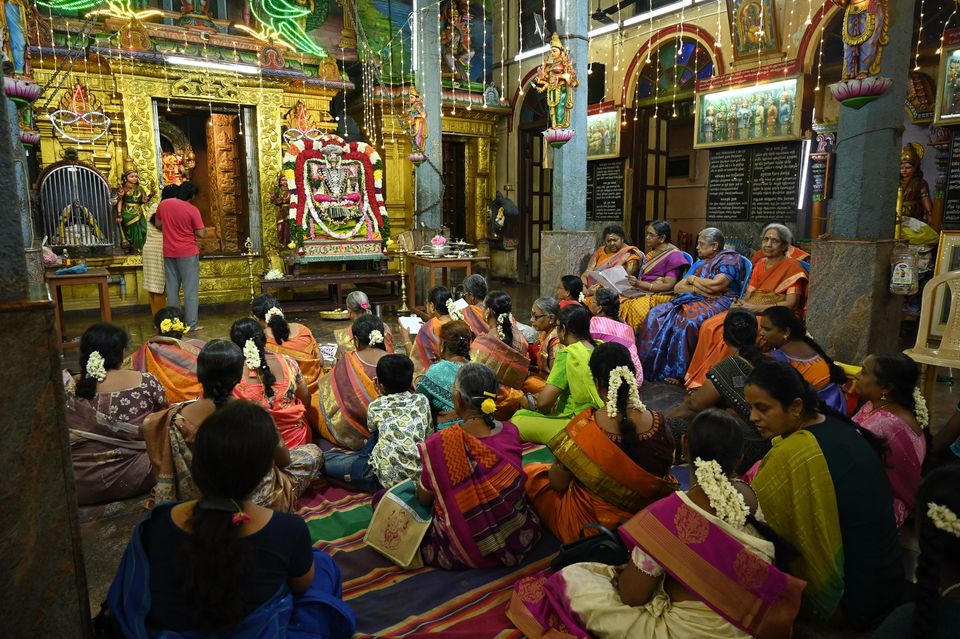
Pradosham
Bit of an adventure here. I got myself dropped at Lawspet Murugan temple for Pradosham. A group of women belonging to the Durga Mandali (100 members or so, said Ramanan Gurukkal) were there taking the sankalpam. The lamps and other dravyangal for the abhishekams were getting prepared, largely by a young woman in a pink kurta. I noticed because I’d never seen a woman doing that work in a big(ish) temple before. The utsavar was in the Sivan shrine, and that Pradosha murti was beautiful, so I went over to take photos, knowing well that by the time the abhishekam started, I’d not be able to get any view of him at all. Then was speaking for some time to Ramanan gurukkal about lamps. Here are the names he gave me: The maha deepam is also called an adukku arati. It has layers of 5, 7, 9, 11 etc places for wicks. It is also called the alankara deepam.There are deepams also named by the number of wicks they hold: Ottha deepam, Retta deepam, Moonru deepam etc.Then there are the ones with the specific figures or vahanas in front: Rishabha deepam (with a vrushabha in front), Purusha deepam, Naga deepam, Mayura deepam, Seval (cockerel flag) deepam. There can also be simha and gaja deepams, in different temple traditions.The plate deepams are called Pancha thattu. Ramanan Gurukkal seemed to suggest there is an element of alankara to the deeparadhanai, but I’m not sure I understood him well enough. Deeparadhana is ordinarily a form of upacara (உபசாரம், ritual service or offering), not a for
Read more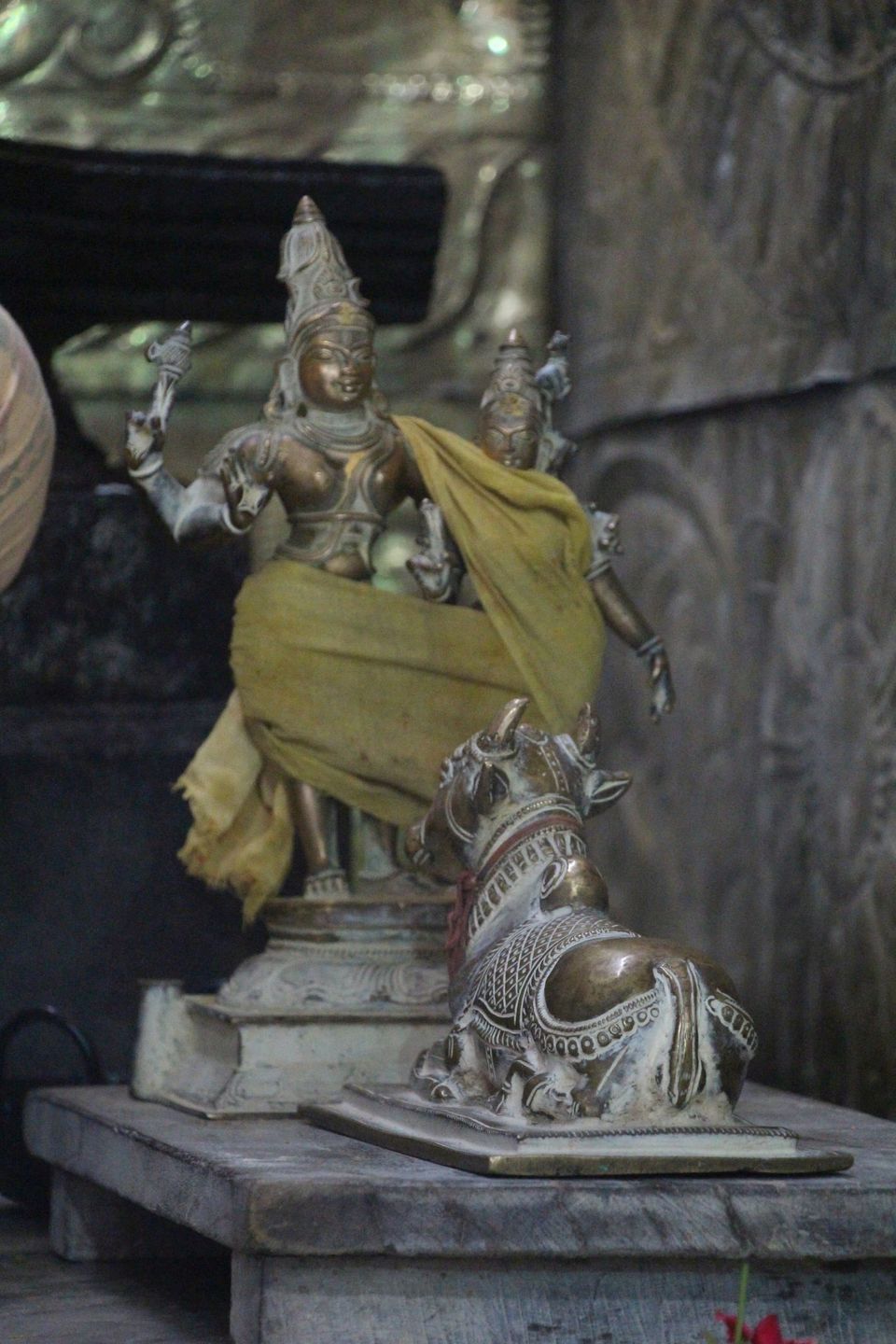
Navaratri Continues Here When It Has Ended Elsewhere
We went to Kannika after a longish day of working out illustration integration with Abhishek, and working on Sthalam’s website. Had a long chat with the Iyer, who was as usual affable and kind. I’ve updated Kannika Parameswari’s ritual calendar with further details. As usual, there was a new alankaram for the utsavar, and Ambal in full Chandana kaappu with 3 heads, mirroring the utsavar–a Muppidari form, or mumukha, I don’t recall which. The Iyer was explaining what we do to others around, and it was warming to hear him affirm our efforts. He’s a kind soul. The day after Navaratri is Ananta Sayana, he said, for this temple–a rest day. After this, in this temple’s tradition the Vidaiyatri continues a full 7 days. This makes Kannika Parameswari’s Navaratri celebration a 17 day vizha, which almost no other temple does. The printed patrikai posted by the door affirms this, along with providing a schedule for various competitions and community events.
Read more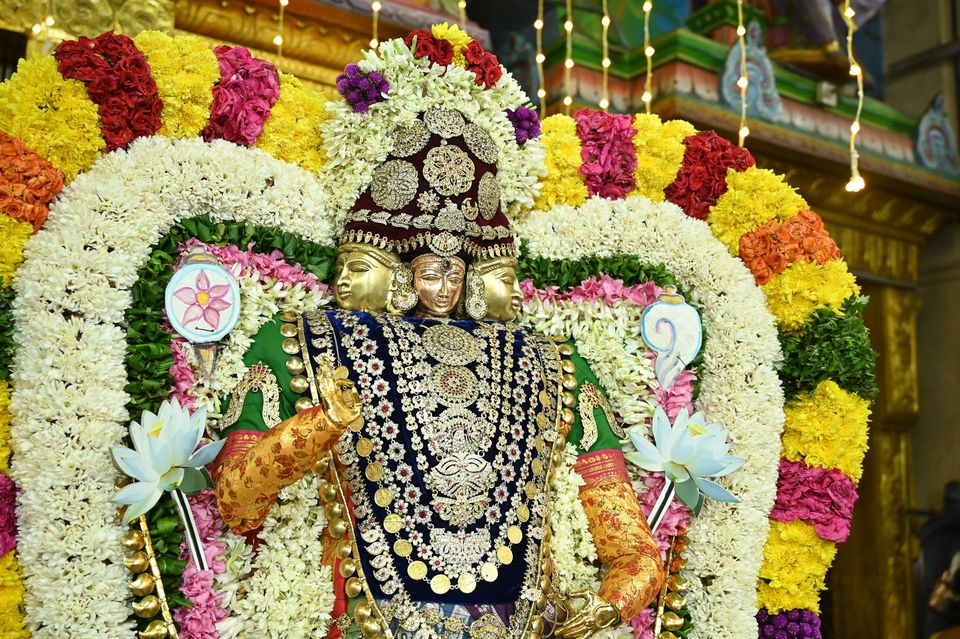
Over Before We Know It
Today was the last day of the Vaishnava Navaratri utsavam, and we thought we’d not miss the ambu poduthal here for sure – but we were wrong. The patrikai said 7pm, but for some reason nobody could fathom, Ramanan Bhattacharya decided to finish it off at 530pm, so by 6 they were all done. The cut banana plant was in the corner by the mirror and the Alvar sannadhis. Perumal had done a 3-round ul-purappadu looking very grand on a golden horse with a new kireetam which looked a little like a jaunty little hat. It was new, we learned, so Arun was deputed to take photos of it, and the objects in Perumal’s hands. The alankaram was kept in the maha mandapam. We stayed for prasadam since there was not much besides we could do anyway. Many people complained that they’d missed the evening’s event, so it wasn’t just us. It was entirely unlike the priests to do something so early and without warning. Incidentally, this is the only temple that had some Vanni Maram (Prosopis cineraria) branches around, along with the banana plant. The ritual is frequently performed near a Vanni tree because the Pandavas once hid their divine weapons in a Vanni tree during their exile, so the tree becomes a symbol of their victory. Some people were also collecting the twigs “from the spot where the arrow landed” (or close enough anyway) as a charm bringing good luck, prosperity, and protection.
Read more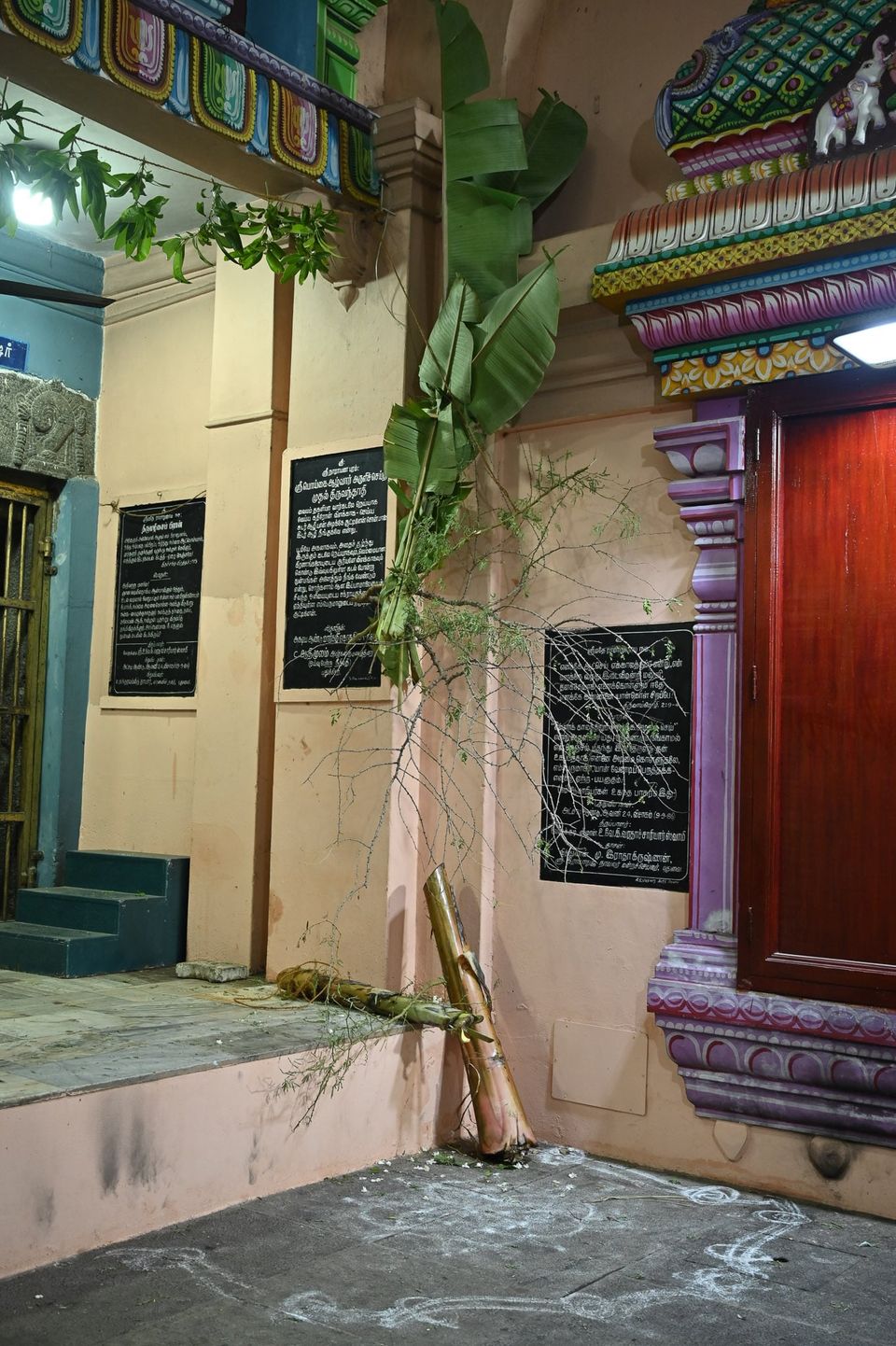
The Vel in Jnanavel Swami’s Charge
We didn’t think we’d make it here in time for the Ambu Poduthal (அம்பு போடுதல்), but delighted to arrive and find the puja barely starting, following the usual movements, much like in the other temples. It’s not Jnanavel Swami’s charge of the temple these 15 days, but he was there nonetheless, as he is traditionally given this task. He brought the spear out with a focused and purposeful look, dashed towards the plant, stabbed it, moved back and repeated the process thrice. On the third time, he slit the banana plant down the middle. The tree was cut and made to fall. The Vel was returned to the deity. We left soon after as there was no sign of a purappadu here or any movement outside, to try to catch Ghousiga’s Murugan also in the act. *Technically, the ambu is an arrow–but most temples have a spear or a trishulam in the place of arrows, or they use both as with Nandhikeswara.
Read more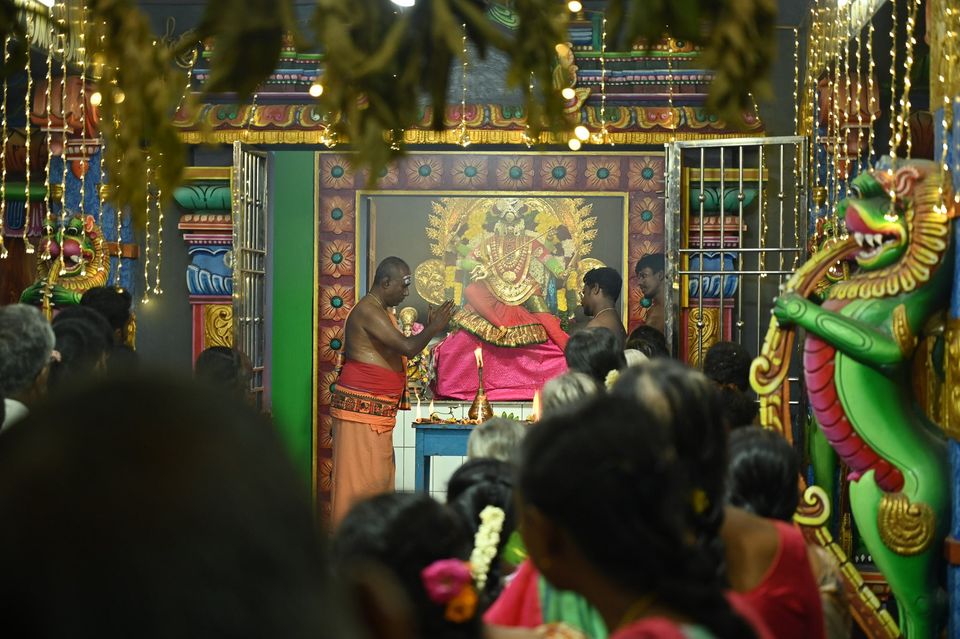
Kannika’s Ambu Event
We’d checked on the start to this puja a couple of times. The first time (on the way to Angalamman), we saw the Iyer doing his usual Sahasranama prayanam to the utsavar, who was ready and waiting on the side prakaram, in front of the Kuberan yantra, instead of her usual spot just outside the garbhagriha. The second time we passed by on the way to Nandhikeswara, it seemed like they were getting ready, but not yet there. When Arun finally got there after Nandhikeswara, the banana plant had just barely come down, Kannika Parameswari was facing it (standing on the road facing west). She then moved in a long circle up into the middle of MG Road, and then U-turned back into the temple. She was carried around the whole prakaram once, and brought back in through the main door. Then, of course, her victory dance! Arun left soon after that started so as to be at the Sivan Koyil in time.
Read more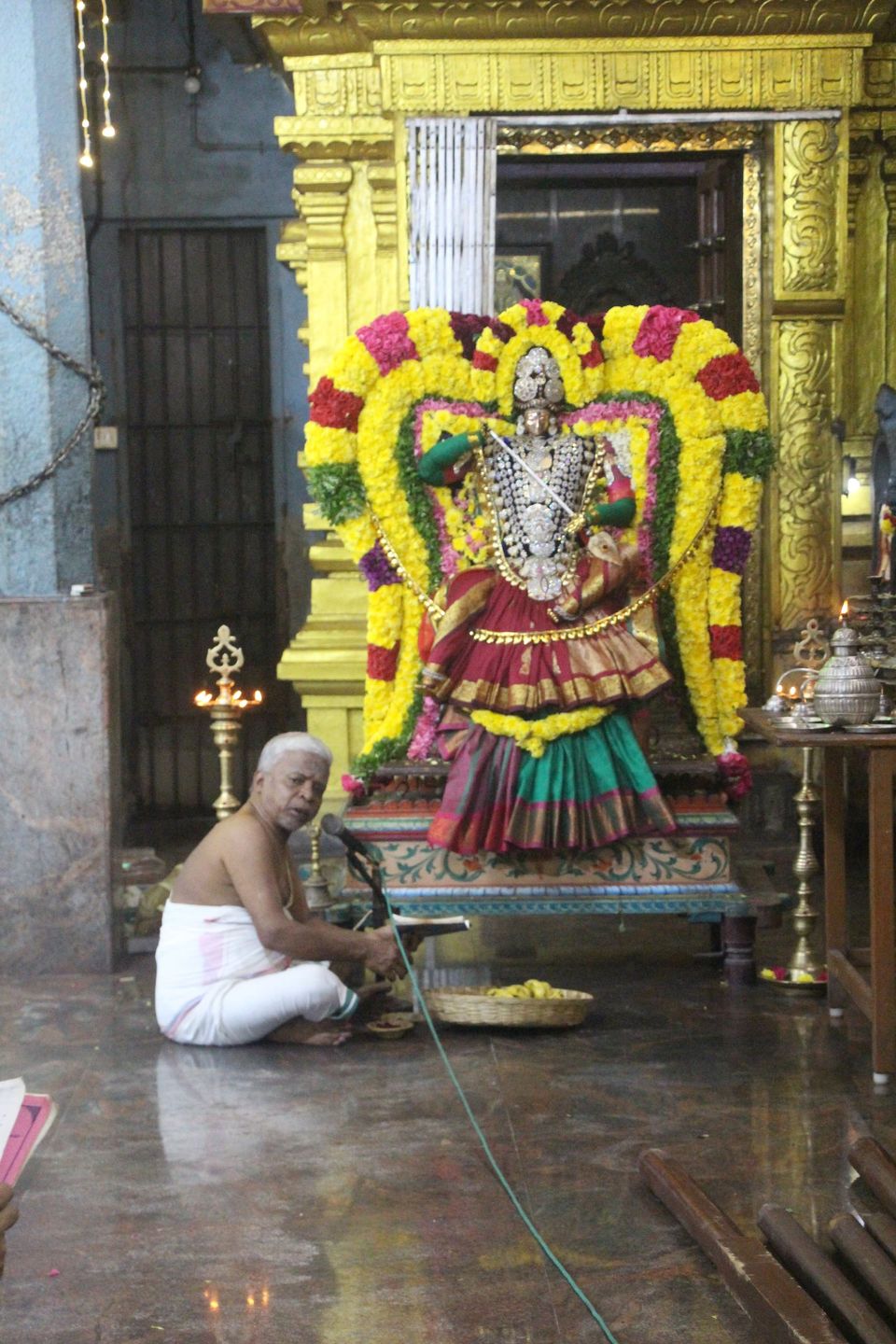
A Small Event to Mark a Great One
I found my way to Draupadi amman where the ambu poduthal had just finished – I was late. If I had any doubts, the men seated there affirmed it: “You are too late!” they said, in chorus. But by the looks of it, however, it was just a small affair. The next day was another neyi kulam alankaram, Rangaradjou swami said, but we couldn’t make it to that.
Read more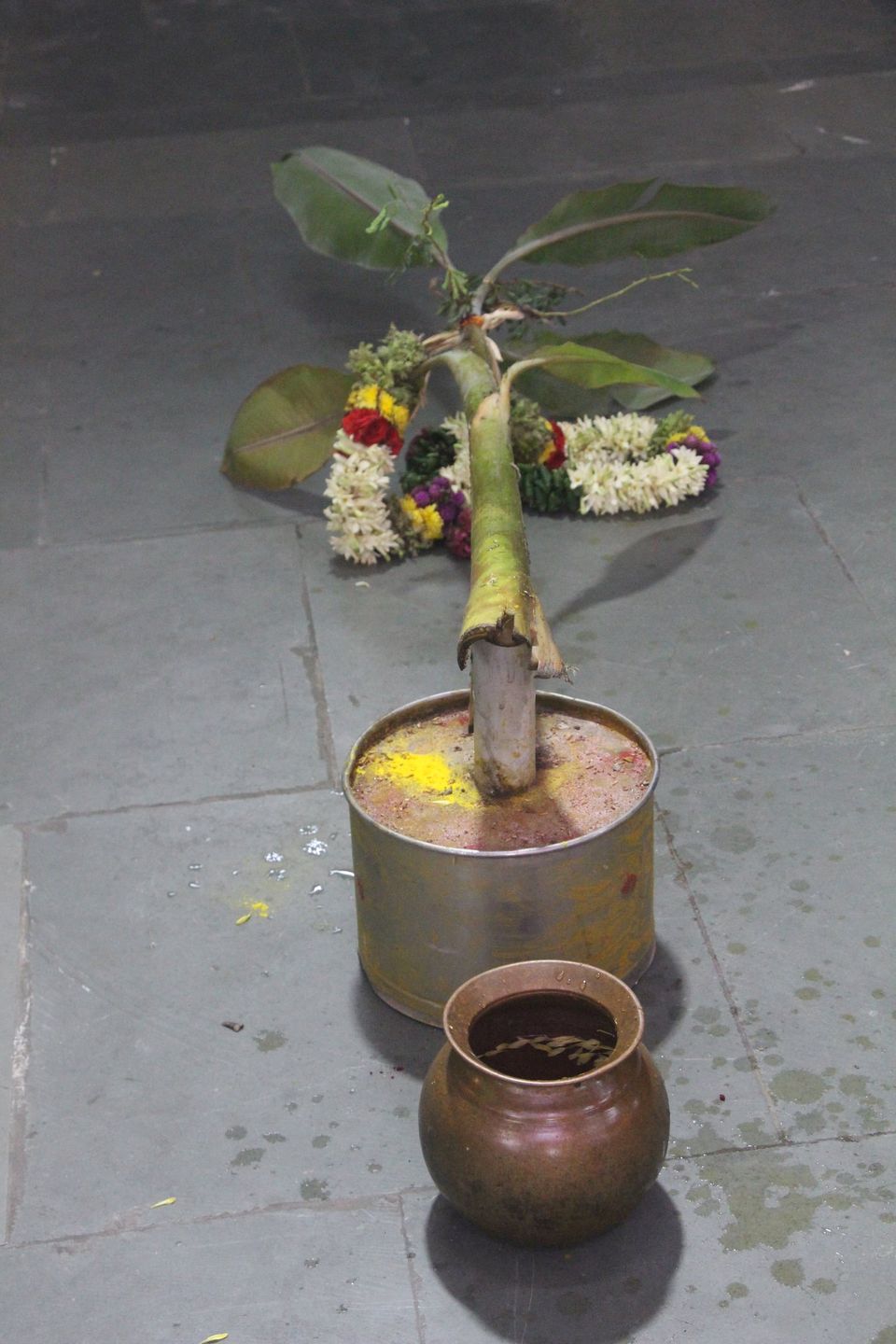
A Time to Propitiate Bhavani Amman
Saw the end of the 5pm Abhishekam to the Bhavani Amman, after which there would have been a Navaratri puja. Usually Durga gets an abhishekam and alankara. The group of women who assemble here sing, then an arati is done to the golu with a “Jaya Jaya Shakti” song set to the tune of “Jaya Jagadisha hare.” It is usually a quiet neighbourhood-like atmosphere and affair.
Read more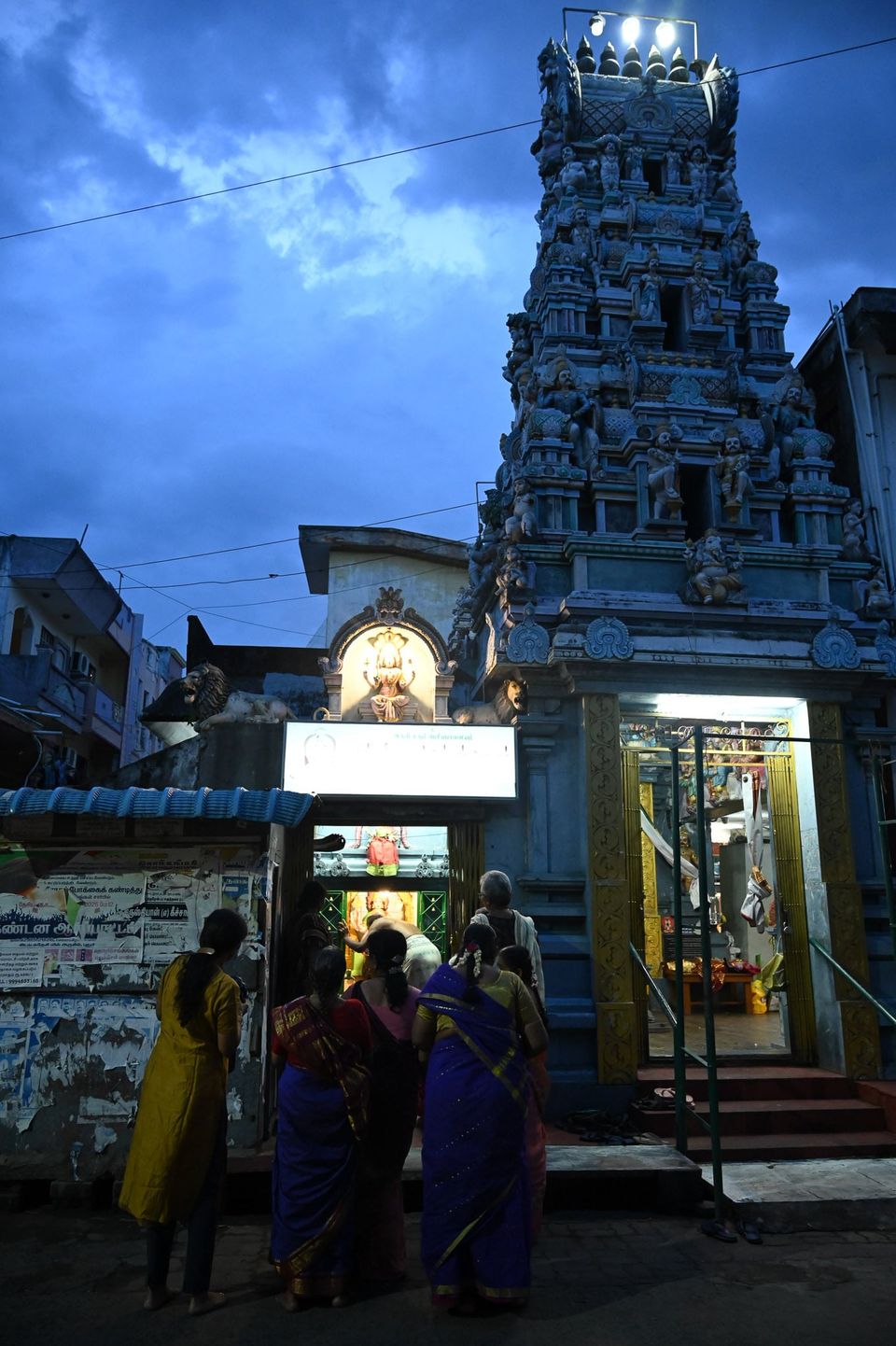
The Headiest Victory of Them All
This place knows well how to mix ritual devotions with music, sound, and a good measure of street theatre. The Kaiyala Vadyam was on in full swing when we reached, and the deity was being brought out of the garbhagriha. This time Siddheswari’s own face and the classic temple alankaram, with Her seated on a lion, bow in her hand, trishulam by her side, which is itself dressed in a small sari like she is the Goddess in miniature form, and with jasmine maalas. Banana plants tied everywhere as decorations. Very festive atmosphere, like street theatre about to begin. And what theatre it was. The Dewan later sent out a message on WhatsApp that said this among other things: “Vijayadashami marks the occasion when the Goddess, through her gracious and merciful gaze, destroys from their very roots the five great inner afflictions within us: kama (desire), krodha (anger), lobha (selfishness or greed), mada (pride or arrogance), and matsarya (jealousy or envy).” So, there were 5 arrows which the priest held in a flower-strung bow, and he held it and stood in front of the Goddess, and swayed to the beats of the vadyam or the nadaswaram, which played alternatingly, and then took each arrow (ambu) in turn towards the hapless, waiting banana plant and stabbed it with it. Durga moved from left to right twice in this process. Two arrows from the right, two from the left, and the last from the right again. Then the banana plant is cut, once, twice, with a large knife. The other priest comes ove
Read more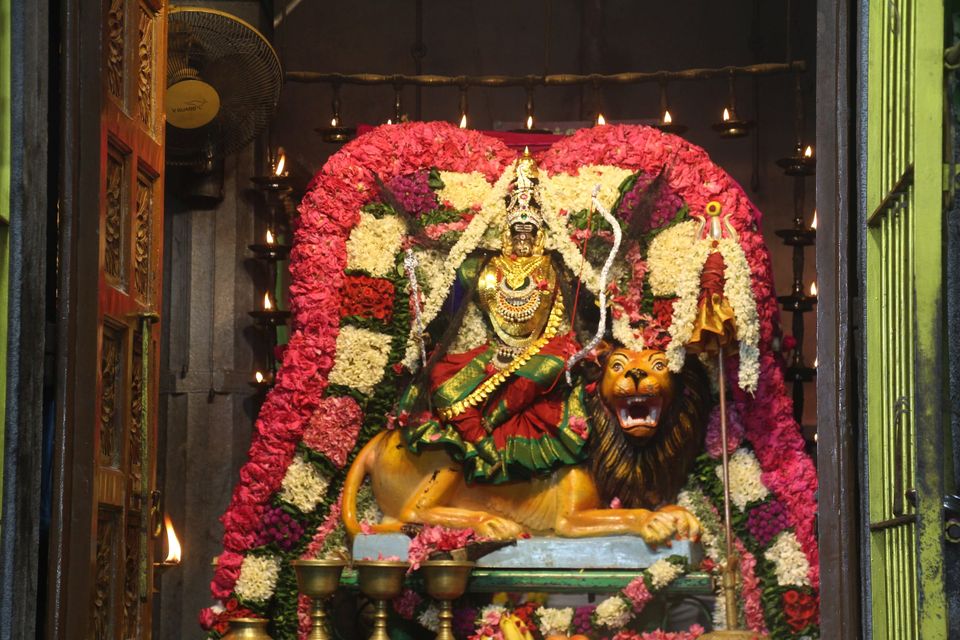
Dashami’s Only Purappadu
The puja here was to start at 730pm, by the time we came there it was past 9pm so we had missed the ambu event for sure. The place was calm enough, felt like a regular Tuesday with the regular devotee crowding. We went in search of the purappadu, which we found on Bharati Street. I don’t believe any other temple did a purappadu on this night. But here was Ghousiga’s signature little red tractor was pulling the deity along. They were stopped at the doorstep of another temple (it’s courtesy or convention to do so when another deity passes by, presumably) where the ambu event was already over–we saw the “dead” banana plant across the street. We had kesari prasadam there, got photos and went on our way. We could never get to Lawspet that evening. No purappadu there for that other Murugan temple in our set, but they would have had the ambu event just outside the temple in the street.
Read more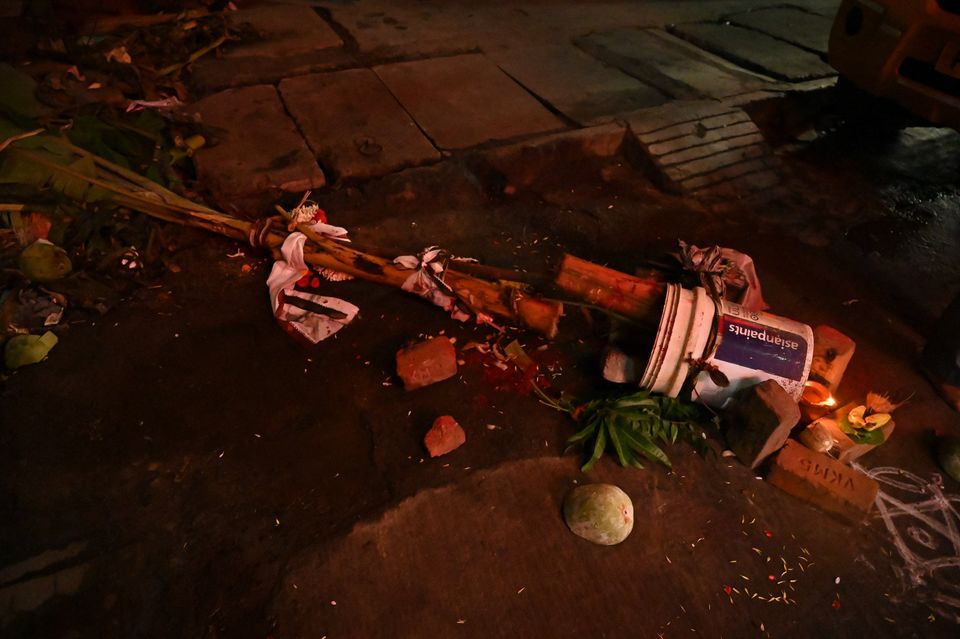
The Gurukkal’s Dash-ami
Gurukkal said they were ready to do the Ambu Podudal, which properly should happen around 630pm, I learned, perhaps based on the tithi timings. It roughly did. Alankaram still going on when we reached, though moola murti was ready with ambu in hand. Once the utsavar was ready, she was brought out into the street. In the ground across the temple was a banana stem, dotted with kunkumam and chandanam. Sriram Gurukkal brought out the Kalasam from the main sannadhi, water from it was sprinkled and the area sanctified along with all of us standing there. Utsavar in the form of Durga watching. Then the elder Gurukkal went into the garbhagriha, pulled out the ambu and came running – running – down with it, to stab the vazhai maram and cut it down. It all was very dramatic, unexpected, and happened in a flash. The Durga utsavar circled the cut banana plant once. Then the priests and crowd went back into the temple and we left so as not to miss the event at any of the other temples we were chasing that evening. But as we did, Durga had her victory dance around the prakaram of the temple inside. The next day we saw @yenpondy’s video on this very event, from exactly our angles and perspectives, and we did wonder how that footage had been procured without us noticing a thing–until Arun pointed out that there’d been a woman there taking video… Another instance of Yen Pondy being at every place, at every moment. Not sure how they do it. But they did capture the senior Gurukkal’s wild dash e
Read more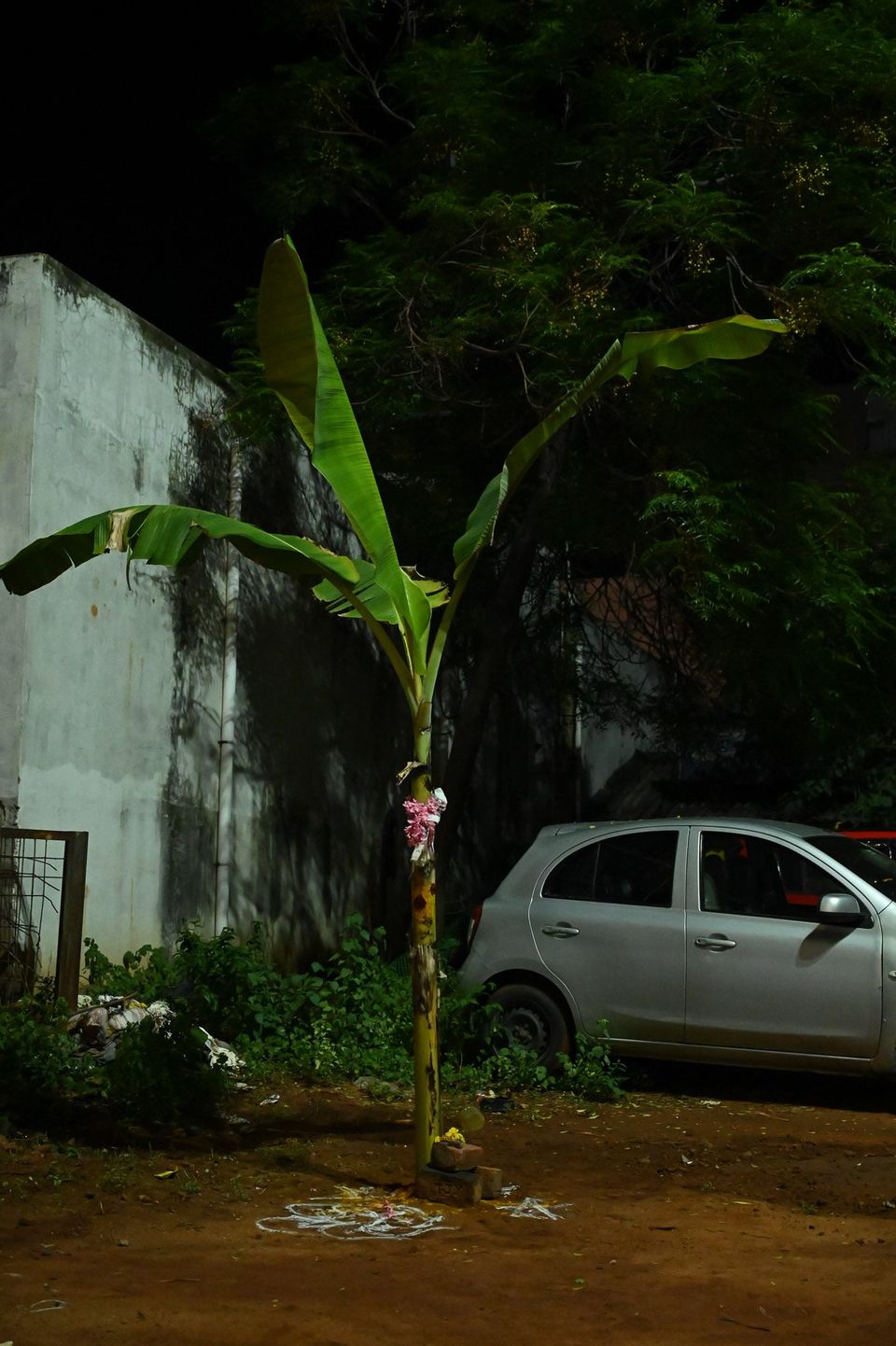
Rare Visions of Reflections
Neyyi Kulam, or a pond of ghee. We’d seen this presentation darshanam once before, in the Draupadi Amman Koyil – a pond of ghee on a base of chakkara pongal catches the face of the Mother like a mirror, and you see it there. Except the effect there was not so evident or impressive. The Sivan Koyil, as ever, does it differently. Two large vessels of pongal went into the Ambal sannadhi. Arasoo Mama came out to say that they were low on ghee, and could we get 2kgs more from Vijaya Ganapati next door. We did. The line was already long for this darshan. When the doors opened, we realised that there’s no electric light in the garbhagriha, only a line of oil lamps to Ambal’s left. Wait, said Arasoo mama, I’ll take you in later. So, we waited. When the Maniyakkarar and EO went in for darshan, so did we. Waited till they left, and had our moment in solitude with the great Lalita Tripurasundari. I’m not sure what we expected to see or feel. Was it the darkness? Was it the scent of ghee and camphor? Was it the line of flickering lamps? I was deeply moved. And, indeed, there was Lalita Tripurasundari’s face visible in the neyi kulam. What was the point of seeing her there when she’s there to be seen right in front of you? But the question did not matter. Something about the clarity of that ghee surface in that light, in that closed, still, airless room. Something about seeing differently. Something about moving so that you can see only that face in only that stillness. It was like Arasoo
Read more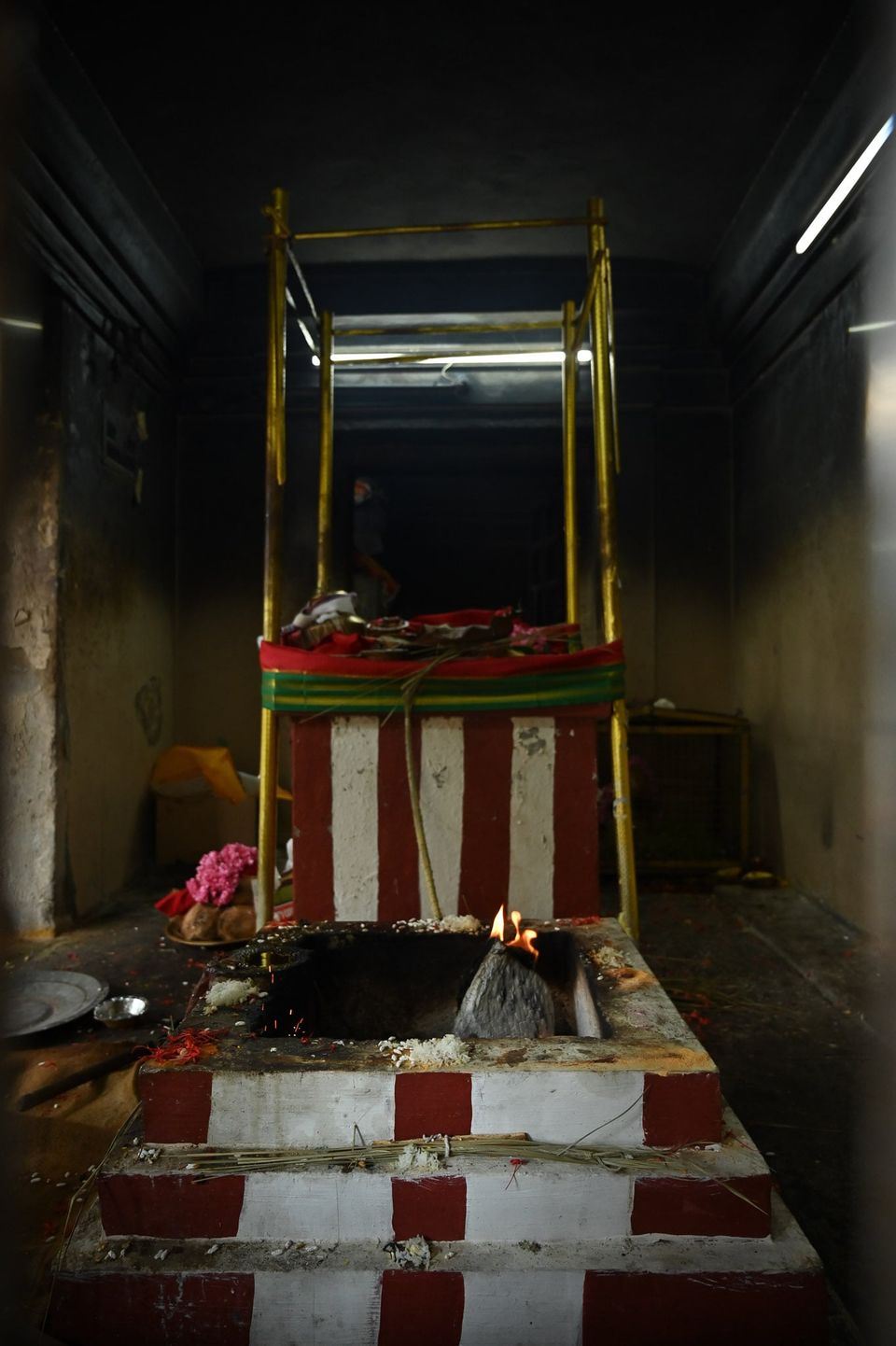
Everywhere You Look, Saraswati
Today’s alankaram at Nandhikeswara is Saraswati as today is Saraswati puja, but this alankaram is done by the old priests of the temple since they came on hard times after leaving this place so as a support and continuity for them this 9th day remains theirs. Consequently, this is a more conventional alankaram with even a paper veena. At Kannika Parameswari: again Saraswati alankaram, Amman in gold kaappu. The temple is abuzz with kids in costumes, there’s a sort of fancy dress competition going on. The priest gestures to us to take photos of the kids, some of whom look just very adorable as little Murugans or Ganeshas with paper pink trunks. We joke about how the rains happened today so that tomorrow’s ceremonies will happen in the clear. The Iyer laughs. Mutthumariamman: Narayanaswamy was aiding the second Muraikarar (Jnanavel swami’s “turn” finished a day or two prior). Moola Amman was in gold kaappu, the utsavar was of course Saraswati. Same at Angalamman, Saraswati with a veena that has been fashioned out of cloth. Usual crowd of women doing kunkumarchanai, followed by a Deeparadhanai. At Vedapuriswara Koyil, Durga was in Chandana kaappu, this is the last day of puja to her and the crowd for naivedyam was big. It was Visalakshi who became Saraswati (with an actual, beautiful wooden veena). 2nd kaalam homam was going on. We’re told to return 11am tomorrow for the neyyi kulam (ghee pond) alankaram.
Read more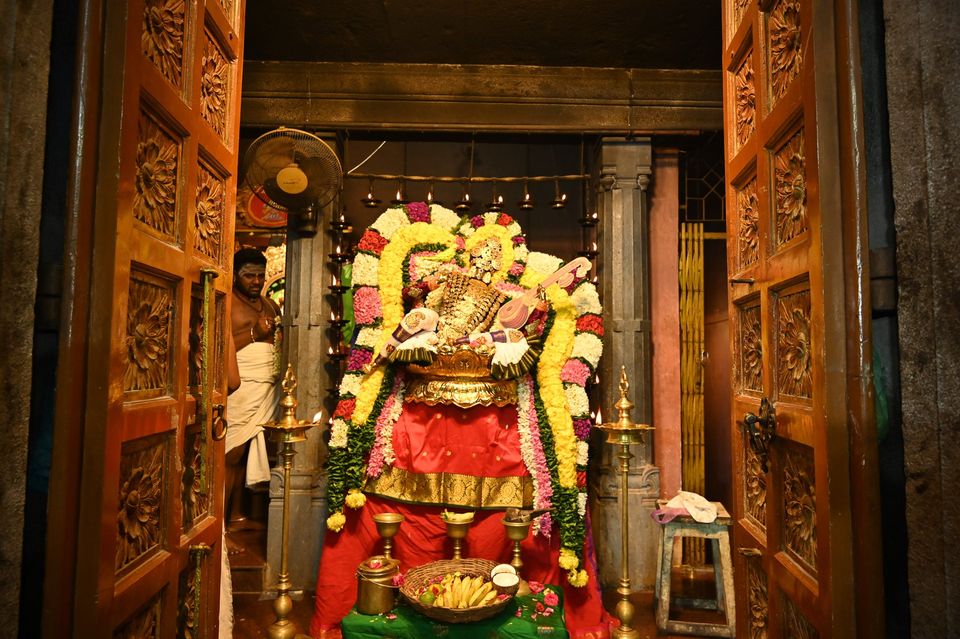
Pujo a Pondy
The Bengali community in Pondicherry–sizeable due to the presence of the Sri Aurobindo Ashram–has been celebrating Durga Puja here for several years now. It is mainly organised by the Bangabharathi (Bengali Association of Puducherry), and takes place at the at Saibaba Thirumananilayam (Sri Sai Baba Marriage Hall), located at 8th Cross Road East, Thiruvalluvar Nagar, Puducherry. We were given to believe there are now three such in town, but this one is the oldest, initiated by several women we know, including Arun’s own grandmother. The pandal is set up on Sashti and remains until Vijayadashami; it features (sometimes very short) religious rituals like the Sondhi puja, cultural programs, music, and community meals. We made a quick halt here to get photos and take in something of this wider religious atmosphere. But we went in the morning, when hardly anyone was around and the mood was preparatory–priests readying things for the day’s rituals, men and women cutting vegetables, among others directing curious photo-takers like us to “document it well.” PS: Pandal is a Tamil word that has not become “Pandal” (pan like saucepan+dal) in Anglicised pronunciation. But Mandap would be the more common descriptive term.
Read more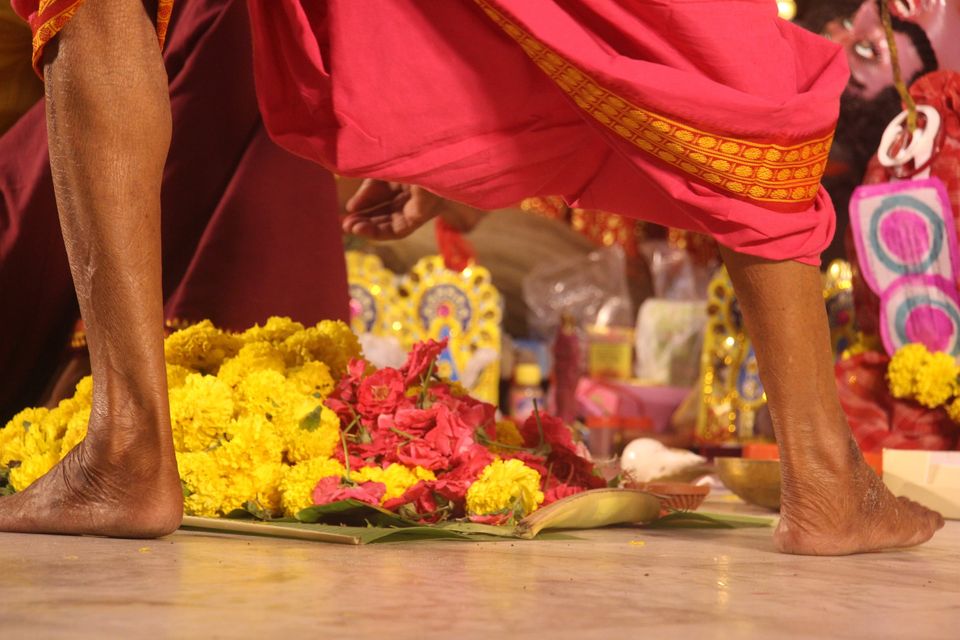
Navaratri Ashtami
Pratyangira Kali alankaram. We followed it almost all day. The difference between this and other alankaras is twofold: this is a Kali alankaram to announce Ashtami, and the evening deeparadhanai was accompanied by no less than Kailaya Vadyam which makes it quite the dramatic spectacle; and the “build” was with kalimannu or clay gathered from riverbanks and ponds usually, where it has become fine and wet and malleable. So the priests use kalimannu for the Kaali alankara, to give the largeness of the face some stability. The fearsome face emerges almost effortlessly, though Sivavijay takes his time to finesse and perfect. A blue maravalli kizhangu or tapioca flour paste is applied over top. Teeth added, eye sockets filled with bulging balls, lined red, flames painted around the face, hair spread over her shoulders. Her body is bedecked and full of all the usual allure, but the face–well the face makes you think twice, the absence of her usual lion mount notwithstanding. Arun’s mother came for the evening Deeparadhanai.
Read more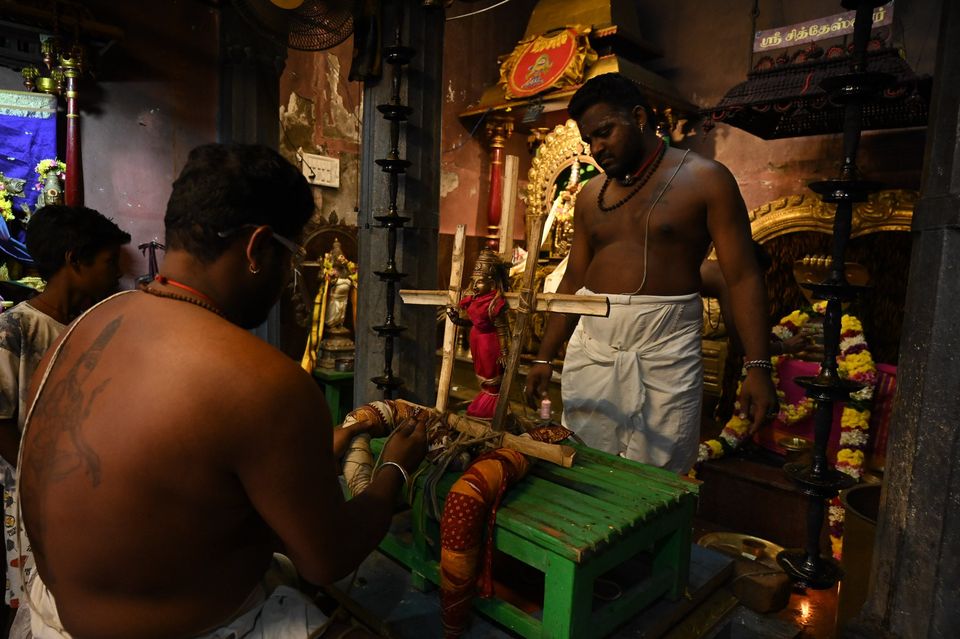
Navaratri Ashtami
The Sivan Koyil was abuzz–as usual. I ran up to Arasoo Mama and told him I was going to catch him again when things were more free to sing that Abhirami padhigam I love so much. He said we could take golu photos, so we did. Durga puja ends tomorrow (Monday, Navami) we were told. Visalakshi alankaram was Ardhanariswara, quite well done. Homam going on, with the main kalasam in a beautiful new blue sari with a green border–very mayil-like. The group of women from the Durga puja were at the yagasala entrance, doing one more parayanam. This morning there would have been an abhishekam and aradhanai for Swami-Ambal, and in the evening Ambal Herself was in Chandana Kaappu. The usual 430pm Durga abhishekam, aradhanai and parayanam was over, too–probably why the group was free to sit now by the yagasala. Following a quick stop at Varadaraja Perumal (where the shodadasha upacharam was still going on) we headed to Angalamman. Today’s alankaram was most certainly Santana Lakshmi, Arun said – money, child on lap and all. The usual fairly large group of women doing their kunkuma puja while the priest chanted. It was drizzling outside when we left. Missed Mutthumariamman this evening, will have to go again tomorrow for her Saraswati swaroopam final day. Kannika Parameswari utsavar alankaram today was “Veda Saraswati”: she holds a scroll & jasmine maala & rudraksha in her right hand. Tomorrow will be Saraswati proper, says the priest. Moolamurti Vasavi Kannika has chandana kaappu today. Lamp
Read more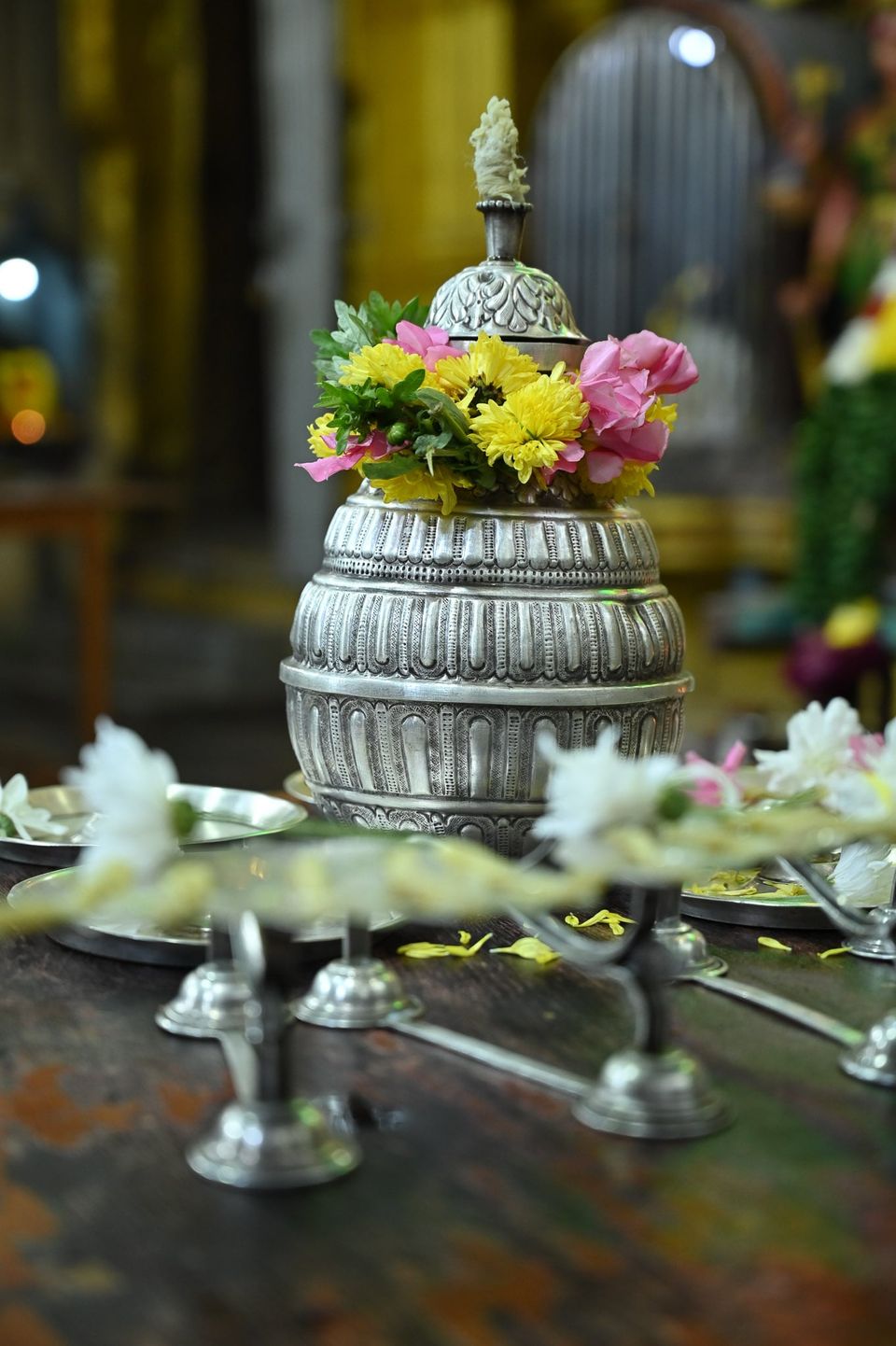
Early Morning at Ghousiga
Finally: Ghousiga: Morning opening movements here, too. Thulasi Mariamman priest doing the rounds at the back, milk and water mostly; we caught him doing the abhishekam to the Pillaiyar, Vishnu, and Siva lingam (Vaidyanatha swami). Another man was pouring water on the other murtis. Prep. for a big abhishekam to the moola murti was going on; fruits being cut and all. But they were waiting for the Ubhayakara. How are there sponsors for the early morning awakening abhishekam/pujas? It was barely 8am when we decided to leave.
Read more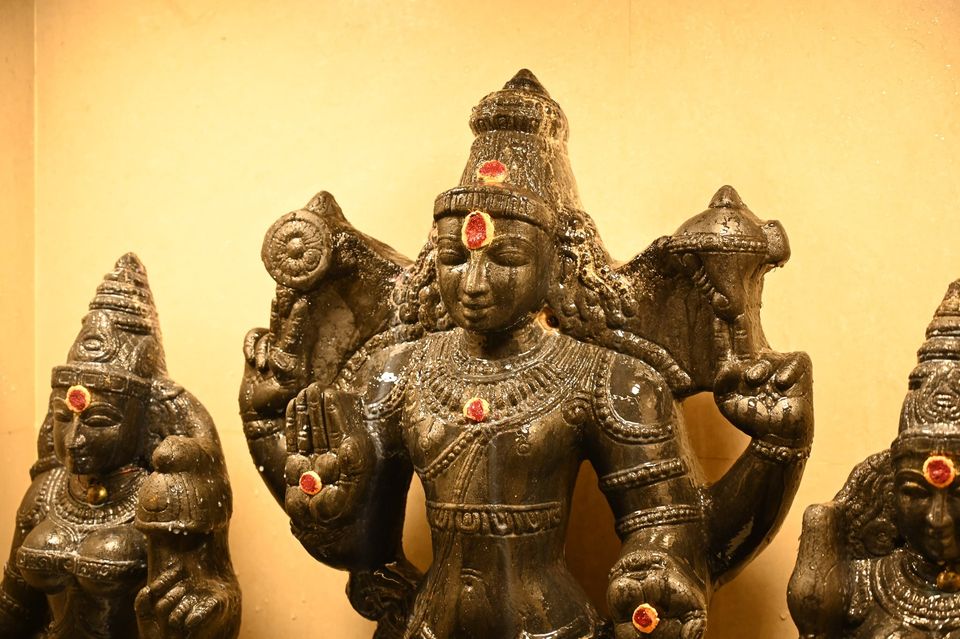
The Last Purattasi Saturday
We went next to Perumal – it’s the last Saturday of Purattasi, and the last of his major alankarams. Moolasthanam just opening. Hanuman in a charming embroidered green suit. Wondering now when the Maa Munigal Utsavam will begin, and what it will be like compared to all the others … Sekar mama has told us that while the Desikar Utsavam is largely upheld by Iyengars, the Mamunigal Utsavam is done by Naidoos, which makes them each qualitatively different utsavams.
Read more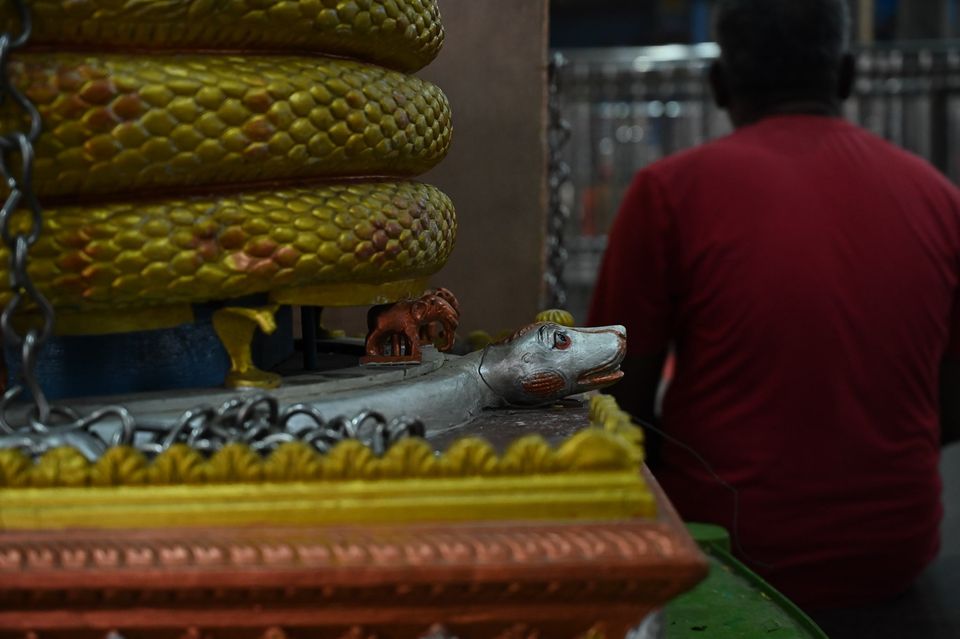
Navaratri Saptami
Next stop: Chetty koyil, where the Palliezhucchi has already happened, and also Swami abhishekam. Ambal looked like she was waiting for one. JayaShankar Gurukkal at the main sannadhi, another priest at Ambal’s. Gurukkal told us that this business of bringing Ambal from the palliyarai was started only a few years ago by a bhaktar, that usually there’s no such practice (I mentioned that the Sivan Koyil does this on Mondays, and he said “oh” and nodded). Anyway, he continued, there is no need, Ambal remains in the palliyarai. For utsavams it’s Chandrasekara and Uma who go out. The Ambal figure who is always just outside the sannadhi is Nilayambal or the “Ambal who stays in the Nilayam (house)” sort-of-thing, also called Bhoga shakti. The palliyarai swami sits opposite her, on a pedestal.
Read moreNavaratri Saptami
Went early morning 6am for the Durga abhishekam. Temple slowly waking up. Ramanan Gurukkal also was there, but not doing much. All sannadhis open, including the lovely Shanmukha who sits in front of a mirror not so he can see himself, but so you can see his 6 heads, including the ones at his back). Venkatesa Gurukkal (the older priest) was directing the younger priest with the stutter doing the abhishekam, which was just jalam and paal. The “gundu gurukkal” (koncham gundaa iruppare? Said the priest aid) would do the alankara later, maybe starting at 8am. He wasn’t there yet in any case. Moolamurti abhishekam about to happen, but not in a major way. The alankaram lineup:... Varahi (Tuesday, when we went), Mahalakshmi (Wednesday), Santana Lakshmi* (Thursday), Gajalakshmi (Friday), Annapurni (Today) *Santana Lakshmi (also spelled Santanalakshmi) is one of the Ashta Lakshmis—the eight divine manifestations of the Hindu goddess Lakshmi, who collectively preside over different forms of wealth and prosperity. Santan (or Santana) translates to "progeny" or "offspring". Thus, Santana Lakshmi represents the wealth of children, family continuity, and the protection of future generations. But the alankaram didn’t have 6 arms, as Santanalakshmi does - and the Murugan koyil didn’t put baby Skanda on her lap? (says Arun). It does seem somewhat odd. Maybe we got the name wrong.
Read more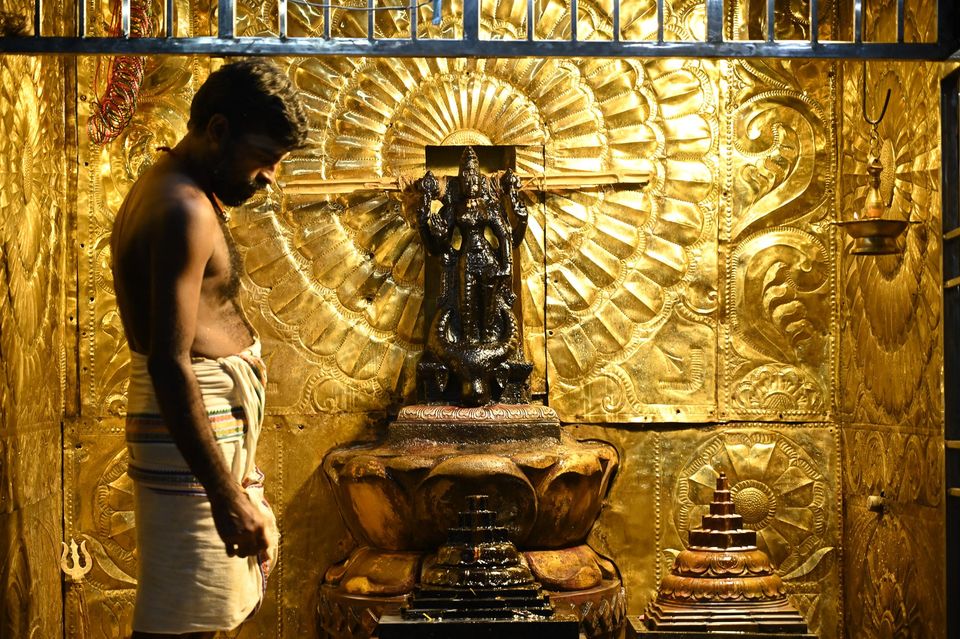
Kannika Koyil Creates a Community Hub
Andal alankaram today maybe? She’s with a parrot and a side-kondai, so must be. 3pm today there’d been a kolam contest in the temple, and the inside area beyond the columns on left and right, as well as the outer prakaram parts were filled with interesting kolams. 3 winners had already been chosen. This says so much about the community focused nature of this temple–games and activities are part of the temple culture of keeping the community close knit. The patrikai for the 17-day Navaratri Utsavam lists many such events (see below), though not all seem to happen within the temple itself. Possibly they take place in the mandapam next door, which also belongs to the community and is an extension of the temple’s ritual life. One elderly woman tells me she’d seen me before because I’d come home. What? She’s seen me at the temple for sure, many times, and maybe got that confused with home! (from Bulletin board) Navaratri 6-aam Naal Kaalai 7.30 Manikku Ammanukku Abhishekam, DeeparadhanaiMaalai 6.00 Manikku Utsavar Ammanukku Sri Lalita Sahasranama Kunkuma Archanai, Kanni Puja, Shodashi PaarayanaiMaalai 7.00 Manikku Sri Soundarya Lahari Paarayanam *NOTE that the bulletin board announcement says nothing about a kolam contest which happened today, but it’s there in the Navaratri patrikai, which I’m coping out below: Navaratri Competitions 2026 organised by Sri Vasavi Kannika Parameswari Devasthanam: 11-10-2026 (Sunday)Competitions / Programmes: Drawing competition; Devotional songs (Ag
Read more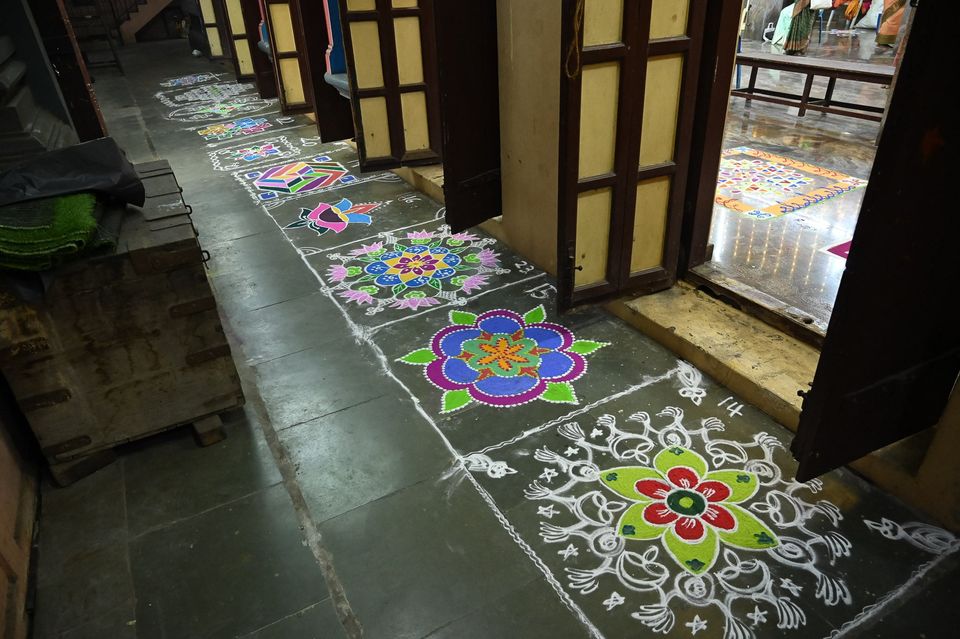
Navaratri Sashti
Sashti so of course Alankaram is Skandamata. We go in between just to say hello and take some photos. Sivavijay swami has hurt his eye and has a bandage around – in spite of that, doing the full alankaram, but in a simplified way so he has just the faces to build with flour. We were lucky to have been able to photograph the previous 2 alankarams when he had no such troubles. We went for the evening puja but late, after it was over. Dr Sankaradevi was speaking, about Daksha and Sati and relationships, but we didn’t catch it all. The Dewan sent the links to the recording later: HERE IS THE FIRST, and THE SECOND
Read more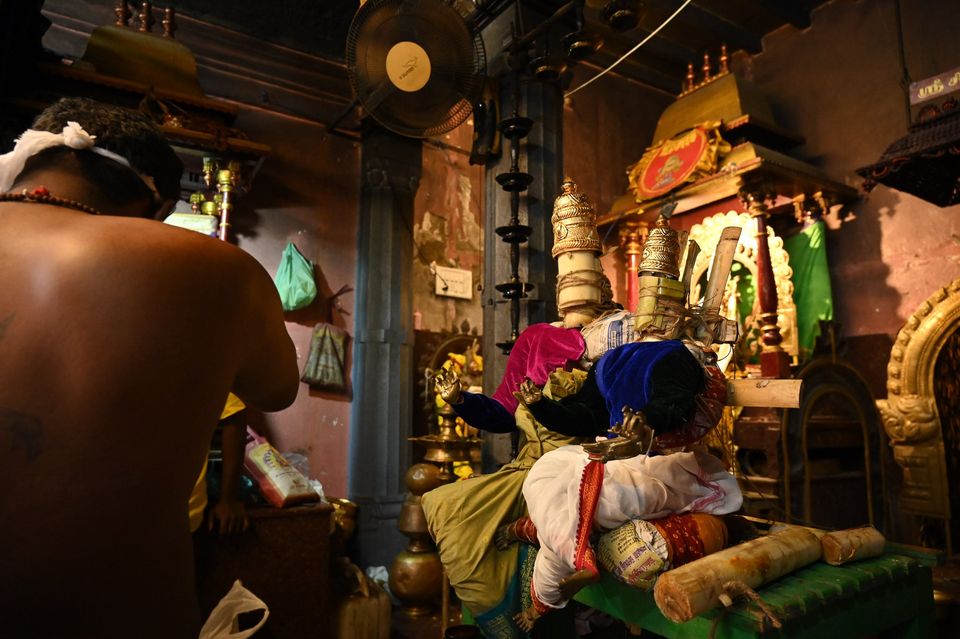
Navaratri Sashti
Same kunkuma archanai puja going on. Many women doing it. Alankaram today is Angala Parameswari! Need to check against Arun’s photos – one of the prior days, she was Raja Rajeswari, on account of her holding a sugarcane branch. From the chalkboard outside: Kaalai 6.00 Manikku Sri Angala Paramesvarikku Abhishekam Udan Deeparadhanai Maalai 6.00 Manikku Sri Lalita Sahasranama Deeparadhanai Nadaiperum
Read more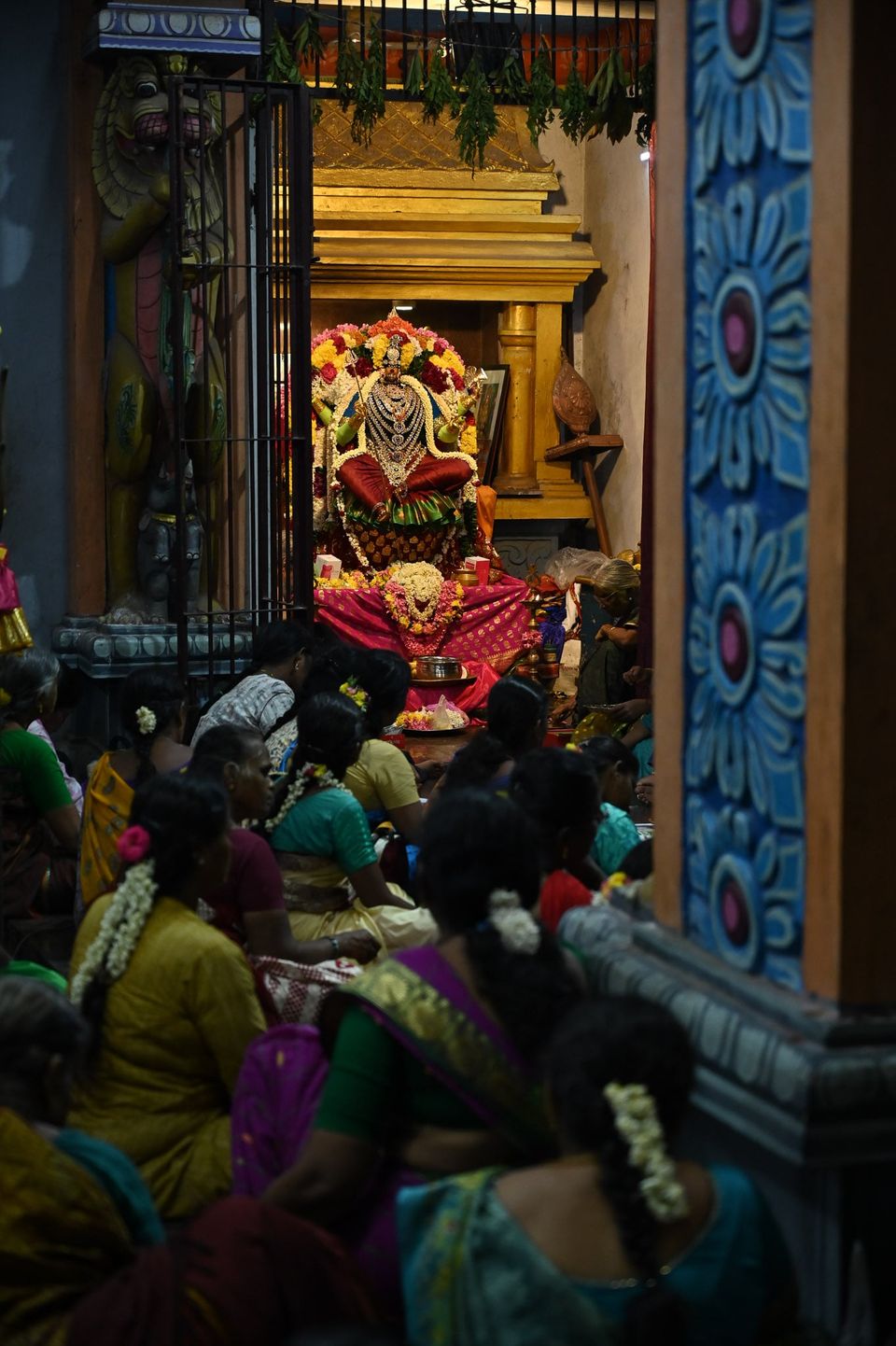
Sivan Koyil Cooking & Kaasu for Kasi Visalakshi
So much going on here! Abhishekam and alankaram in the main sannadhis. Lots of crowd there. Saw a woman in full black burkha today, face flap open, she had probably come with friends. I caught her eye and smiled. She reciprocated. Wonder what her impression of the temple was. Durga puja and parayanam by a group of women. There are a few groups, clearly. This is one. They also do the parayanam in the main mandapam at times. Another goes over to the Kashi Viswanathar sannadhi – that’s a separate group, I think associated with the Siruthonda Sabhai (who also do Nayanmar related pujas every Sunday). Today’s alankaram had her in green. While the group chanted, the priest threw flowers… Lalitamma came and pulled me down to sit. It was so sweet. Then she told me I could learn music and sing, too, it’s never too late. I was laughing. Indeed. And then we chanted the Mahishasura mardhini stotram together. Delightful. She’s such a small-figured lovely person with an incredible voice. Mahalakshmi sannadhi: a small group, and the Goddess bedecked. Not much more than an aradhanai for Murugan today, it being sashti! The sannadhi was even locked. Kashi Viswanatha and Visalakshi, today dressed as Mahalakshmi: another group getting ready to do parayanam, and the Goddess all dressed up in … kaasu, money. It was strangely attractive, and certainly creative. The source of riches, after all. But a little literal? Mutthumariamman also had a bowl with cash flowing out in a maala form, which felt a l
Read moreA Private Golu Mandapam
We have kind permission to share private golu photos from the home of Shankaranarayanan and Madhavi, whom we know from years ago, and whom we’ve seen among the Ubhayakaras at the Sivan Koyil. They keep a large golu at their house on Eswaran Koyil street! Many pieces which they proudly show, collected by his grandmother and then his mother. Lovely sets, including Ravana sabha, vilakku puja, even the Abhirami bhattar story. I forget how many padis, but it well near went up to the ceiling. Beneath was green turf and so many more pieces, of lesser importance, but many personally irreplaceable beadwork pieces made by his mother. My golu at home is absolutely nothing in comparison! The green turf should have been mud brought from outside but who does that sort of thing any more? (I overhear them saying). It makes me think that golu practices themselves must be changing so much, and must have become far less ritualised and embedded in local ecologies.
Read more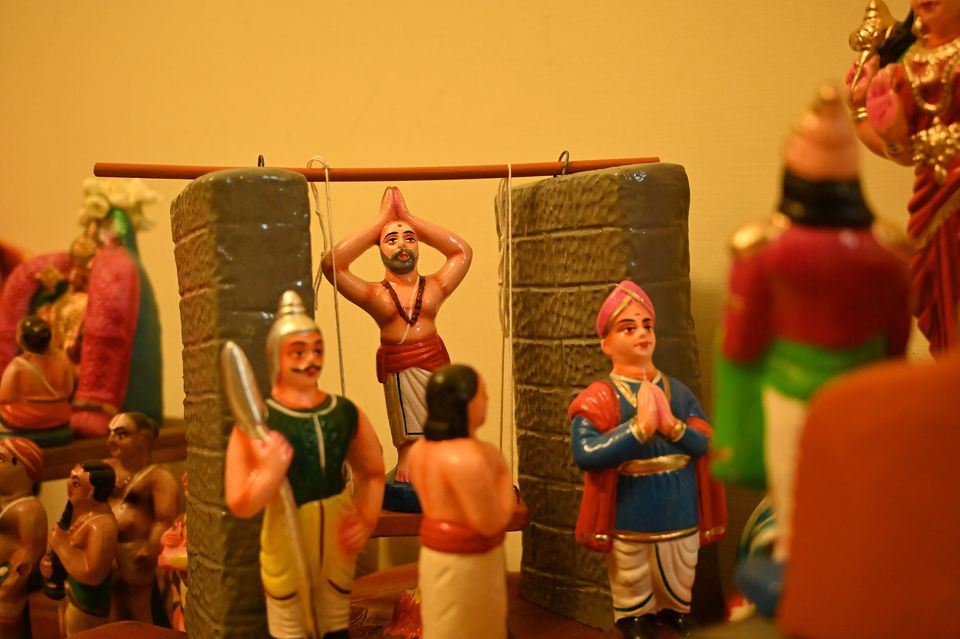
Navaratri Panchami
Kunkuma kaappu for the moola murti today. Mixed only with panneer or scented rose water, said the priest. It got a little brown though, should have been a bright red. Perhaps the commercial panneer water had some acidic or alkaline properties that interfered? Navaratri 5-aam Naal Kaalai 7.30 Manikku Ammanukku Abhishekam, Deeparadhanai Maalai 6.00 Manikku Utsavar Ammanukku Sri Lalita Sahasranama Kunkuma Archanai, Kanni Puja, Shodashi Deeparadhanai
Read more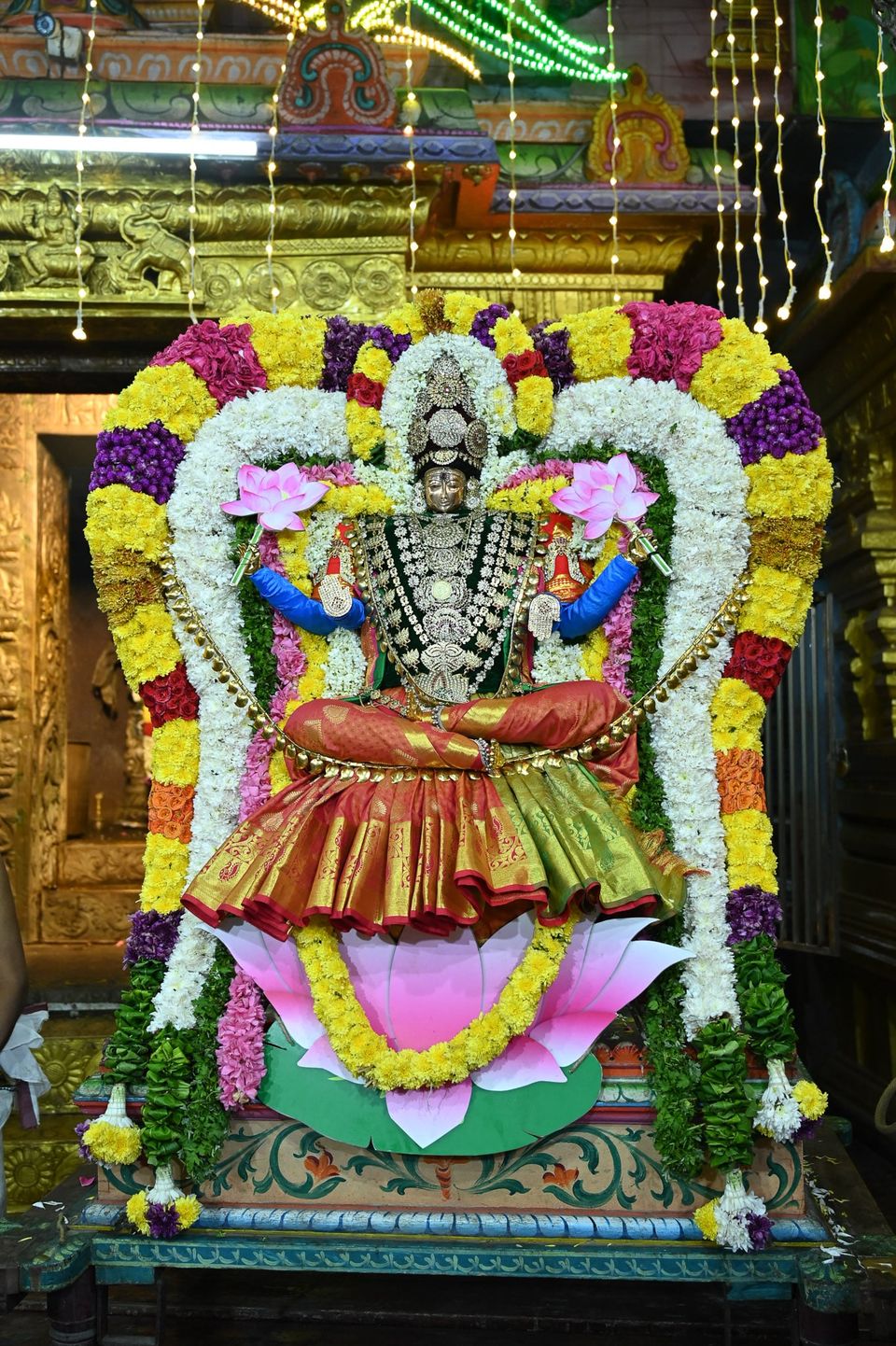
Navaratri Panchami
Not much different here than the last few days. Ambal in a different sari, 2 dolls placed in the golu mandapam by a devotee who came to pray for a good marriage.
Read more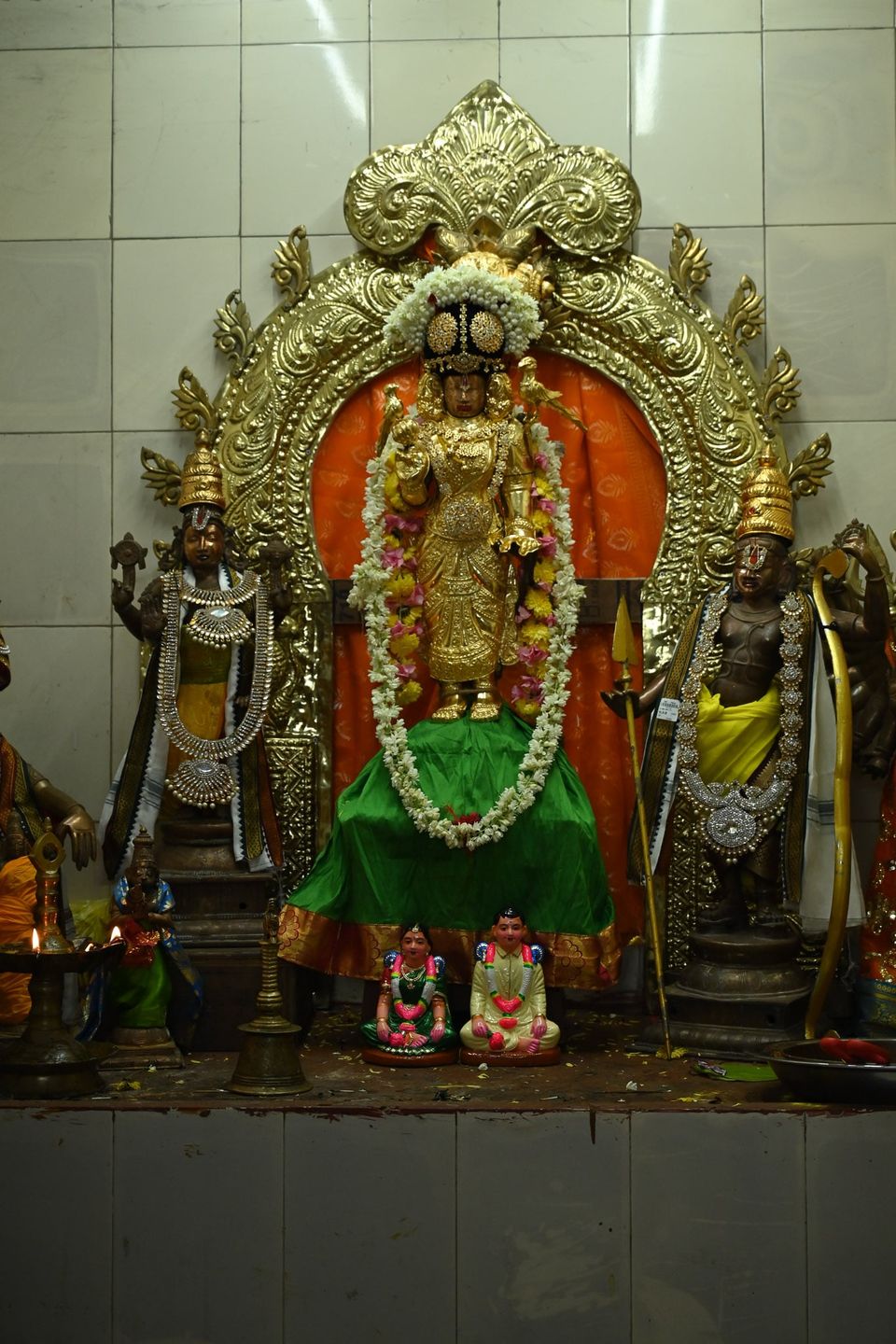
Navaratri Panchami
Today’s Alankaram is Ardhanariswara, for Navaratri Panchami. We hadn’t planned to be there the whole day but once we got there, there was no leaving – something about the process by which this form was built almost entirely out of the cloth-formed limbs and then banana stem pieces – banana stem “pattai” or flat pieces or the stem core “thandu” pieces – was so mesmerising, we couldn’t bring ourselves to leave. The process also went well, in the sense that the priests got the proportions right from the start and didn’t have much undoing and redoing (but for the arms which were originally tied to the frame and brought out front more later, so that they didn’t seem like they were growing from the back of the body). The whole form was then covered with maravalli kizhangu maavu, tapioca flour, made in two colours: blue for Uma, a mustard yellow for Siva, பச்சை நீரம் and செந்நீரம், said the priest, green and red-hued. The colours made for some fine photos and videography. Having filled my phone (again), I switched to camera videos which were so much more alluring I wished I’d done this from the very start. Arun’s been taking on camera from the get-go (smart). Then the face was shaped and body was painted over – what an alankaram this was. The inspiration: Ardhanariswara from Thiruchengode, who is shown holding a sengol in exactly the way he is in the alankara. Sivavijay said he always wanted to go to this temple, but had never had the fortune to go. Thiruchengode is a hilltop temple
Read more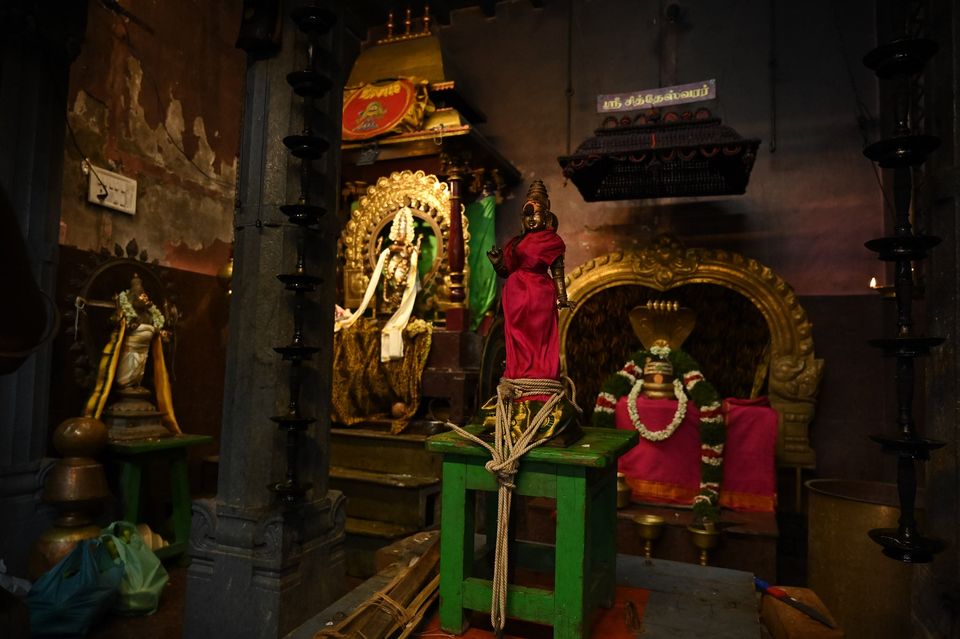
Navaratri Panchami
Mahalakshmi Alankara second day, when we see it. Seems like the alankaras are kept for 3 days each (Durga, Lakshmi, Saraswati), and only the maalas changed daily. The moola sannadhi is decorated with fresh flowers, the utsavar is in a Gajalakshmi form. Brass lotus below, two elephants poised on the tall kutthu vilakkus on either side. Here the puja is mainly the aradhanai, which follows the usual sequence of lamps – the mahadeepam or Adukkut dipam first, then several decorative others, then the plates with wicks that look like cigars, followed by the kumbha deepam. In this, we see Jnanavel swami picking petals and propitiating the lamps rather more than others at other temples. It’s beautiful, no doubt, but different. Curtain closes, prasadam offered, curtain opens, archanai happens and everyone gets to touch the flower basket that’s brought by, short puja, nakshatra deepam aradhanai – and then of course the kunkuma distribution.
Read more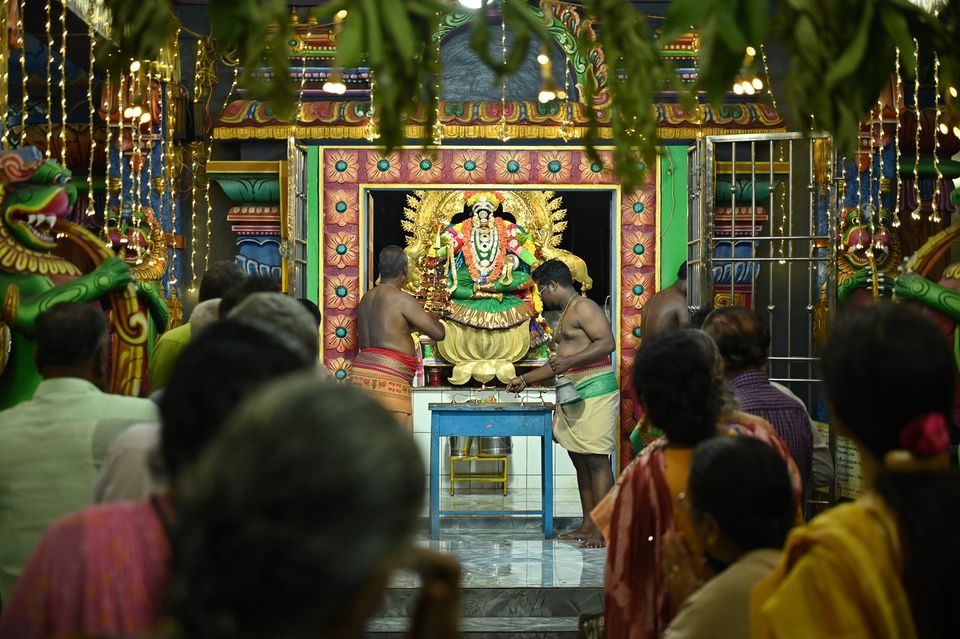
Navaratri Panchami
Same kunkuma archanai navaratri puja going on. Alankaram today is Annapurni.
Read more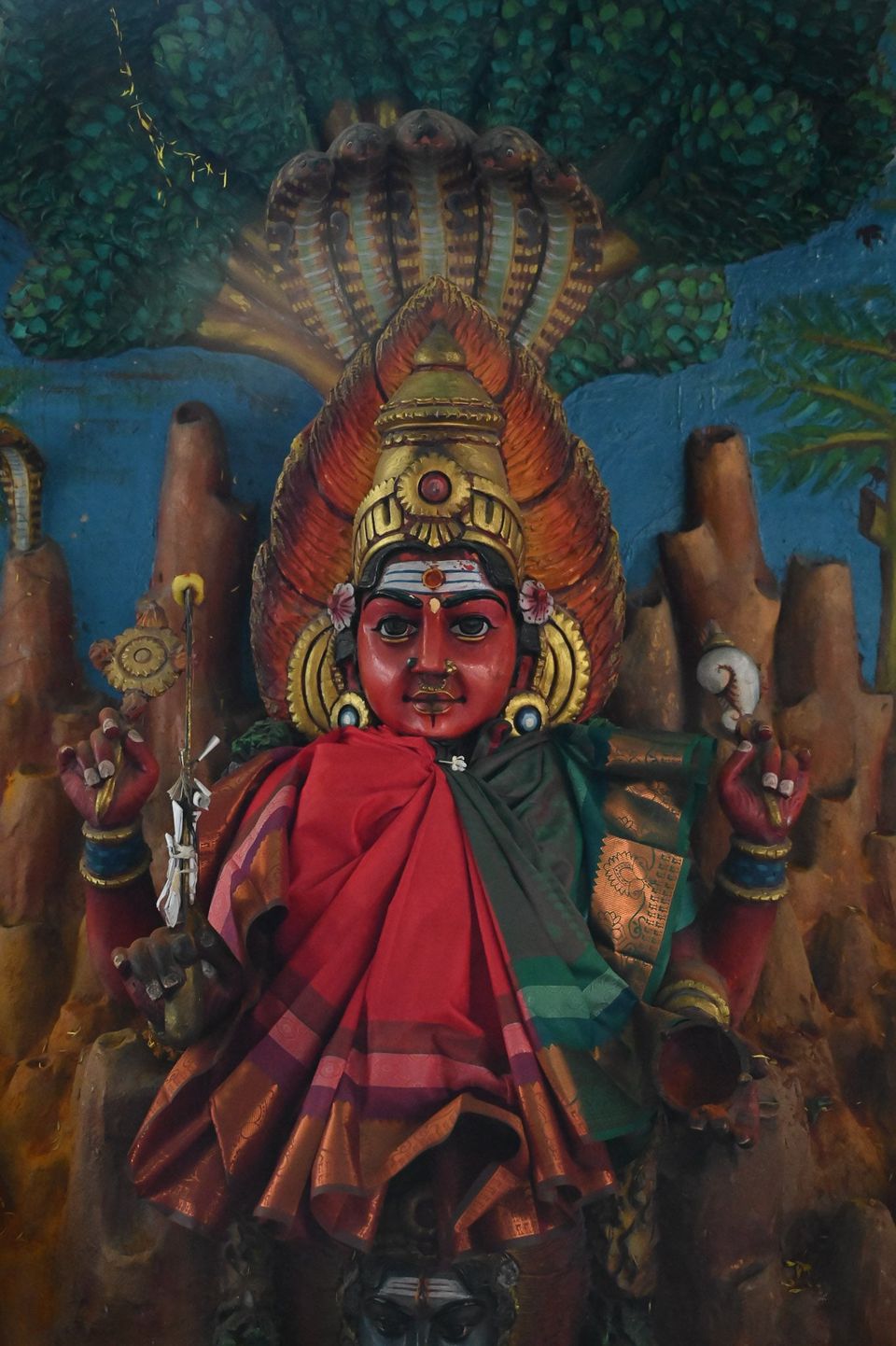
Navaratri Panchami
Caught the end of the evening puja cycle. Shankaranarayana Chettiyar said: “you both are so busy running temple to temple, you never come here any more! Panchami so you’re here, and you don’t know what you’re missing!” He understood our predicament perfectly, and is such a kind man in spite of all the many dynamics he clearly has to manage all the time. Puja to Kalatheeswarar was just over, Ambal puja happened, then we went over to Parashakti in her golu mandapam where the process repeated (curtain opens to a short aradhanai, curtain closes for prasadam etc., curtain opens again for more lamps, archanai basket brought around, puja happens, then the final aradhanai and kunkumam distribution).
Read more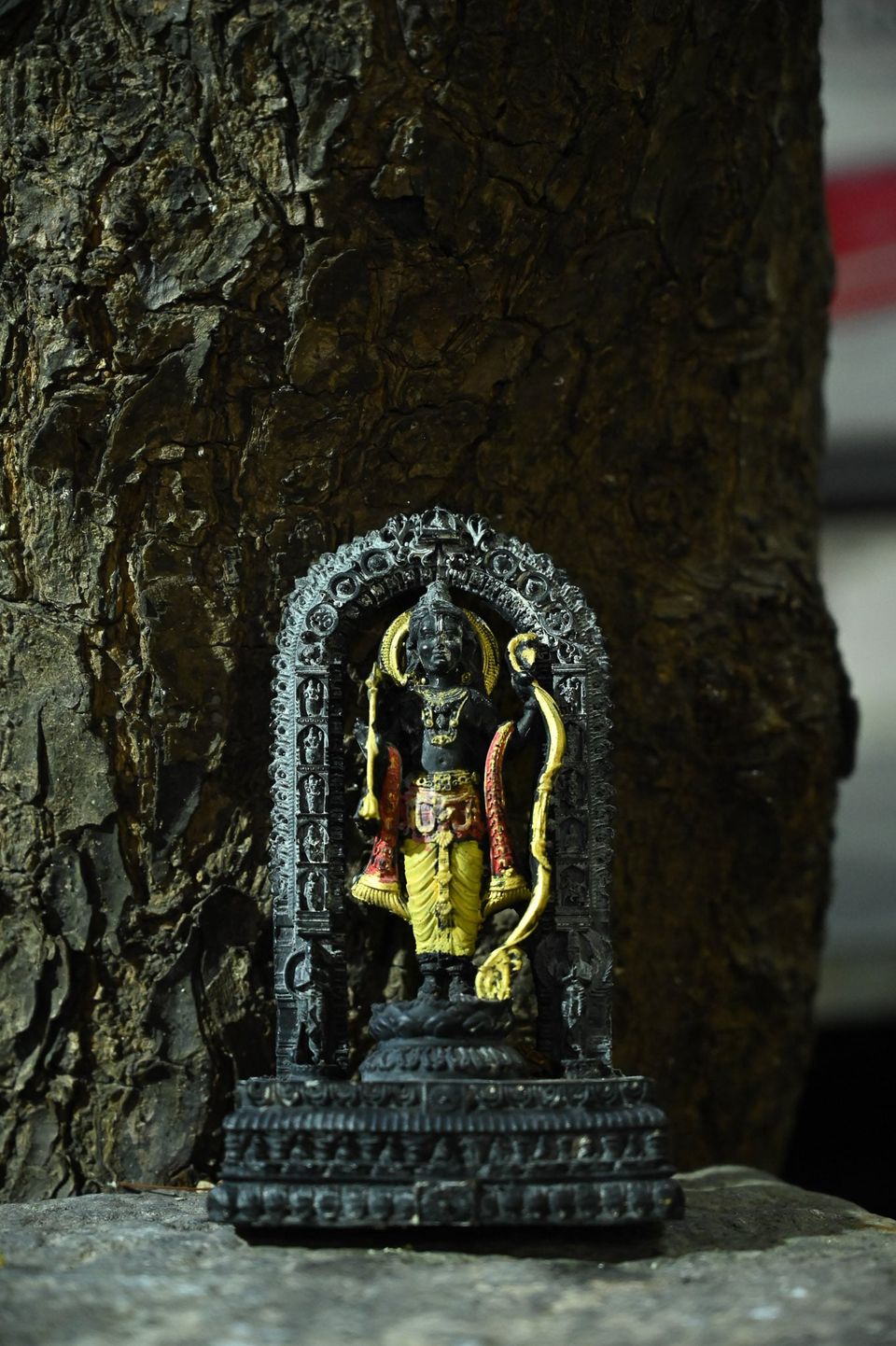
Ganesha Alingana Shakti
It’s Navaratri Chaturthi, therefore today’s alankaram is Ganesha Alingana Shakti (गणेश आलिङ्गन शक्ति) or “the Shakti who embraces Ganesha.” We spent 8 long hours with barely a break for lunch and a quick tea in between to watch the Nandhikeswara priests Sivavijay and Sivakadhir create this form. They had already prepared the form of Ganesha using a metal frame, covering it to create the required body and trunk shape with thengai naar (coconut fibre). All this was held together by jute string, and then a surface smoothened with the aid of a little plaster of paris (because it dries quickly and it allows them to keep and re-use the form). On top of this Ganesa is chandana-kaappu, which is then painted. The PoP inside allows for a degree of moisture-absorption, so the process is smooth. Ambal’s form is given more with the use of pre-prepped cloth-covered limbs (with their brass hand and foot “endings”), and then enlarged with newspaper. She is then dressed in a sari, with jewels and maalas while Her face is done and the body of her son. Hands and feet are eventually done with maravalli maavu (tapioca flour) as that is less “wet” and easier to work with than chandanam. The priest does the Ambal’s face with chandanam at first, and then discards it entirely because it does not dry fast enough (no PoP beneath, only banana stem and pattai pieces), and hangs and droops and distorts. He repeats the process with maravalli kizhangu maavu. At the end, shaping hands and feet also with maav
Read more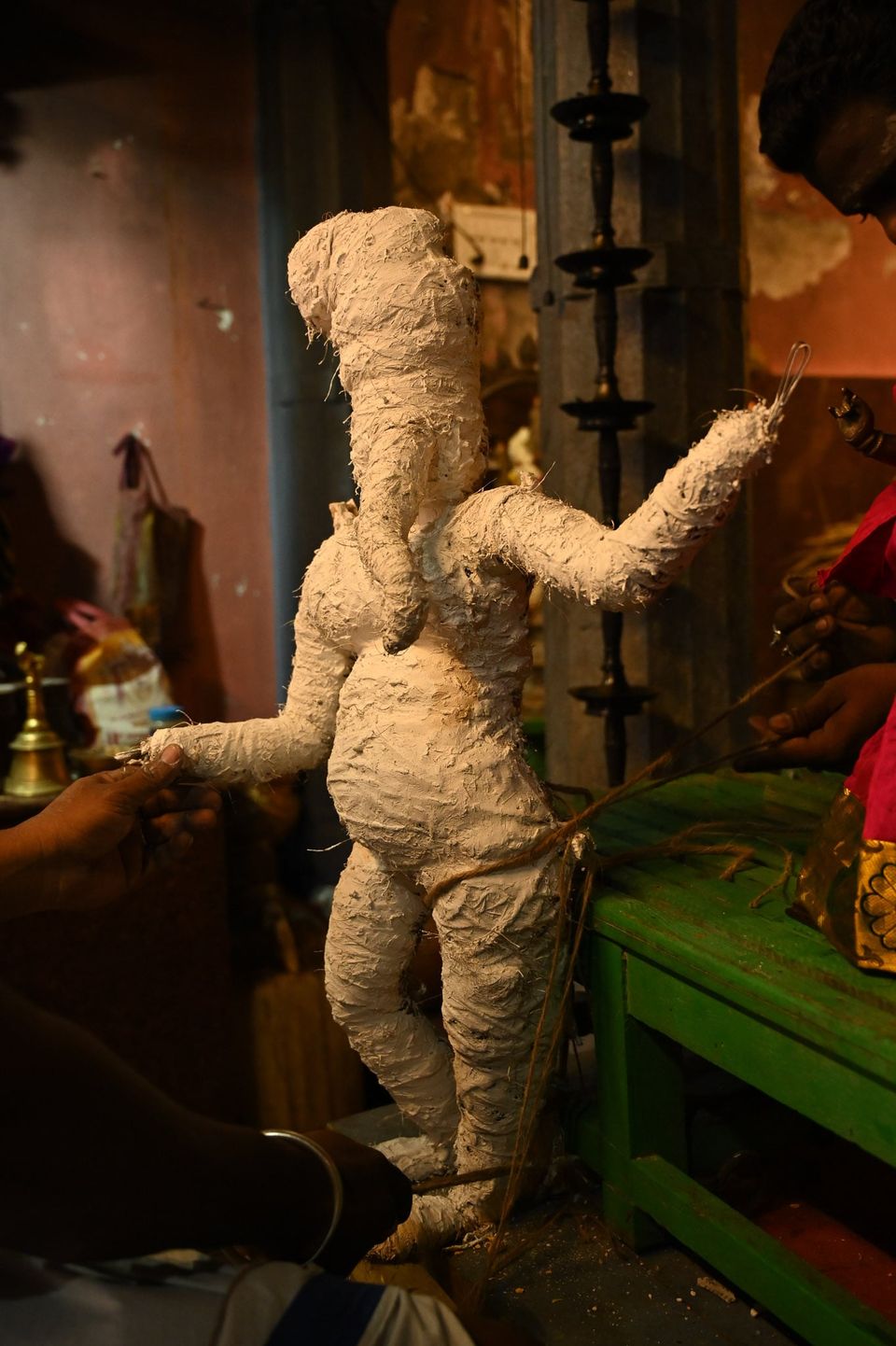
Navaratri Chaturthi
Alankaram today was Rajarajeswari, on account of the sugarcane stem she was holding in her hand. We saw this on the early morning of day 5, when the morning temple-opening rituals were going on – mainly jala abhishekam, and changing the vastrams. All the sannadhis open, many deities bare or just with “undergarments” (it felt like), just the two priests going about their work. Sriram Gurukkal going next door to the Vinayaka temple he also tends to, with some people and then coming back to tell us to come in the evening.
Read more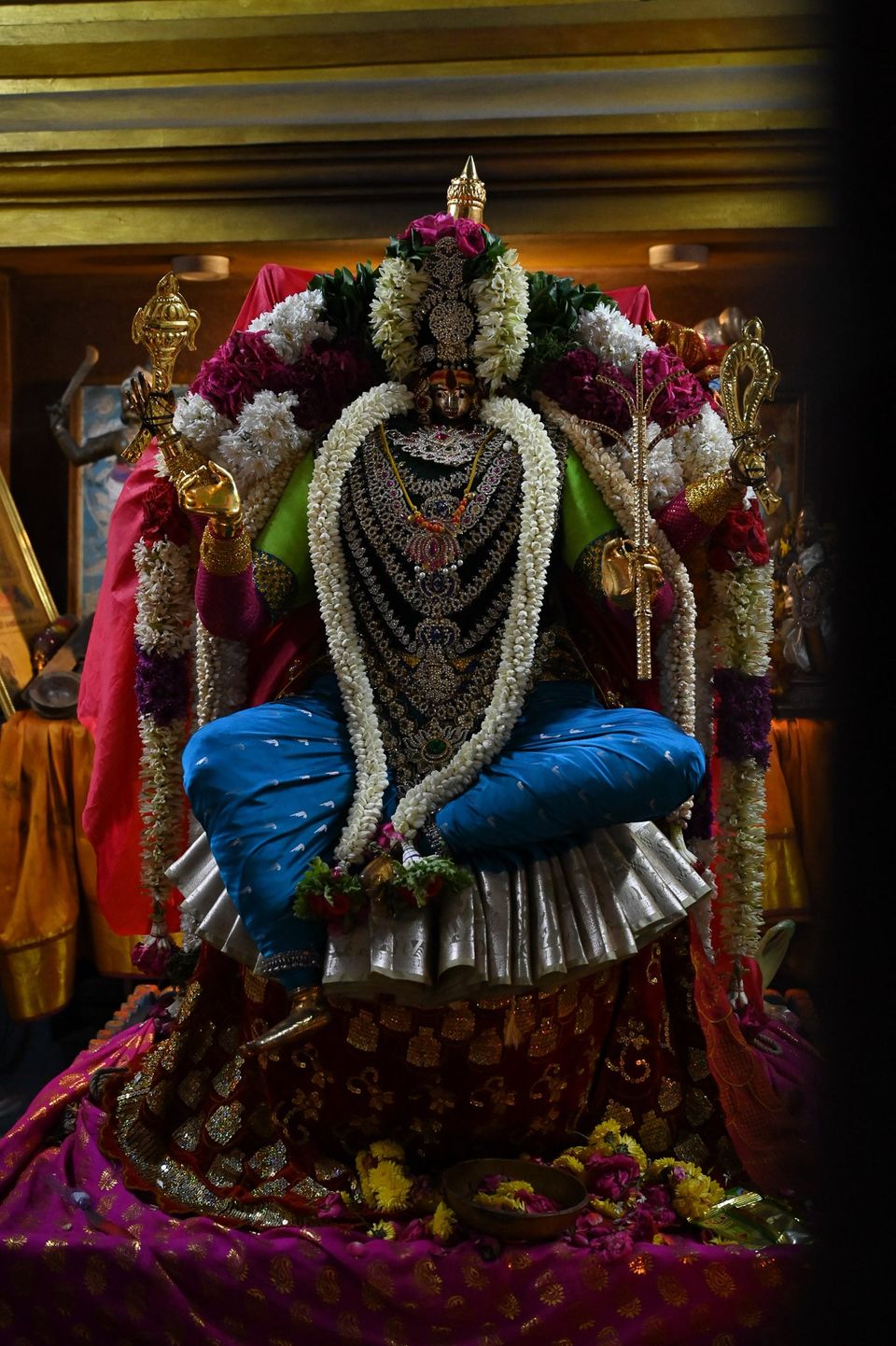
Today’s Schedules and Alankaras
Just schedules and Alankaram names today – At Mutthumariamman, today marks the end of the Durga Alankaram and the start of the Mahalakshmi one. From the Vedapuriswara whiteboard: 14/10/2026 Navaratri Pudhankizhamai Kaalai 9.00 Manikku Swami Ambal Abhishekam, Deeparadhanai Nadaiperum.Athanaai Thodarnthu Maalai 7.00 Manikku Santhanakaappu Alankara Deeparadhanai Nadaiperum.Maalai 4.30 Manikku Thurkkai Ambal Abhishekam Deeparadhanai Nadaiperum.Ubayathaarar: Thiru. Bapukathirvel Kudumbasthinar.
Read moreMohini Alankara on Tritiya
Day 3 Alankara is Mohini – reclining, eyes half closed. We watch the form-making, which the priest is not happy with so he undoes and redoes it before we come back for the face-making, which we document fully. Lots of talk today about body proportions, how to bring them about, what shape of face with what posture works best, and so on. Face colour was achieved with kesari colour today! The regular tints etc. are not satisfying. Ambal remained more visible and therefore more present in the alankara process today, thanks to the side-leaning posture of Mohini:”Aadhara shakti aa nikkaraa, Ambal” said the priest. Video of Meenakshi alankara went up today, too. Thought of including the priests’ names in the view as they are the ones doing the alankaram. But remembered Arasoo mama from the Vedapuriswara koyil. I asked him one of those Aadi Fridays when Ambal is all decked up in chandana kaapu alankaram, who had done this beautiful alankaram. But he replied, while going down the aisle with the kunkumam: "when you ask a question like that, we will always say that 'we have done it.'" Authority and attribution just work very differently in temple spaces. One tends to attribute the only authority to the Divine presence there–He called me so I came, She told me how to wrap this thread, He gives me guidance to make this alankara. This transferral makes common acknowledgements focused on the individual and his or her specific skills or achievements ill-fitting, and even problematic.
Read more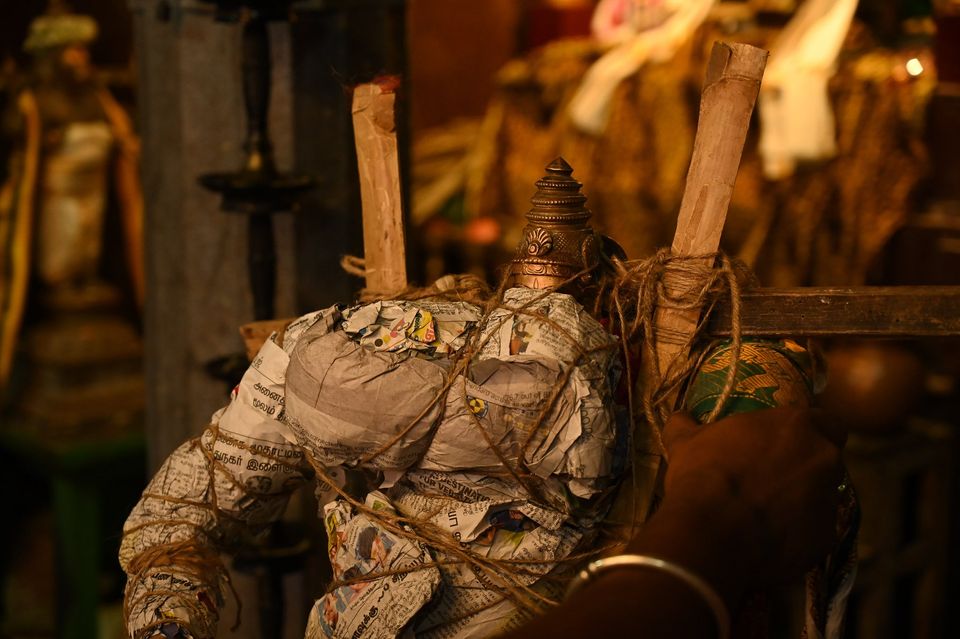
Late Birds Get the Scoop
Reach here when all is over! But this means quiet time with the deity, and the priests. We’re asking about this detail or that, and the priest mentions the Balatripurasundari temple – Oh, is that where the Melmalayanoor Angalamman stays when she comes for Masi Maham? We ask – and he replies that that practice isn’t at all ancient, it’s just from a few years ago and is largely a monetary exercise. What he says is continued by another man (devotee) present who explains how it feels to go to that temple, when it is so focused on money. Another woman comes by and says: I thought you must be talking about Tirupati since I head “kaasu koyil”! But they affirm that temples in Pondicherry are generally not this way, and that you can go to most of them without hesitation. Manakkula Vinayaka used to be very bad, they say. Someone who worked there would put some long tweezer-like apparatus into the hundi and get money out all the time. He’s gone, so the problem is gone, but the damage done to the temple and its reputation–well, that stays. In general, temples here don’t function this way. There’s also some talk about how the renovations were done for the Mutthumariamman koyil, and how they changed many things but never the main sannadhi which still retains its old uneven stone floor. The take-home for us was that some of these integrative traditions may not be so old at all, and that some (though not all) are driven by modern monetary concerns. Angalamman temples in general seem to be pl
Read moreGetting the Lawspet Alankara Lineup
Short visit here, to see the golu, Durga alankara (as Varahi today). The priest gave us the alankara lineup: Prathamai (Sunday): ChandrakanthaDwitiya (Monday): MookambikaTuesday, today: VarahiWeds, will be something in the Perumal amsam, says the priest.Thursday: Siva Linga Puja, with one hand bent gracefully downwardsFriday: Mahalakshmi (See the entry for Oct 17 for details) To make time for the alankaram and to allow it to dry and then be visible to devotees all day, the priest does the abhishekam early at 6am. Pulls the screen and does the alankara himself or his son does – it’s quite impressive, painted. He tells me how he does it is a “rahasyam” like the Chidambara rahasya. We stop by the Bala Mutthumariamman temple which is locked because the same gurukkal tends to that also. This temple is unique for having both the small head of Mariamman and the Parashakti figure behind her in black stone. An Annadanam will happen at the temple at 11am today, as it always does on Tuesdays. (from the chalk board) 3-aam Naal / 13.10.26 Chevvaikizhamai, Chevvaai Pagal 11 Mani "Annadhaanam" Nadaiperum Maalai 7.30 Mani Golu Mandapa Deeparadhanai Nadaiperum.Ubhayadhaarar: Sivathiru Satchithanandam Avl, Thirumathi Thamarai Avl, Illasuppettai Navaratri Alankaram "Sri Vaaraahi Amman"
Read more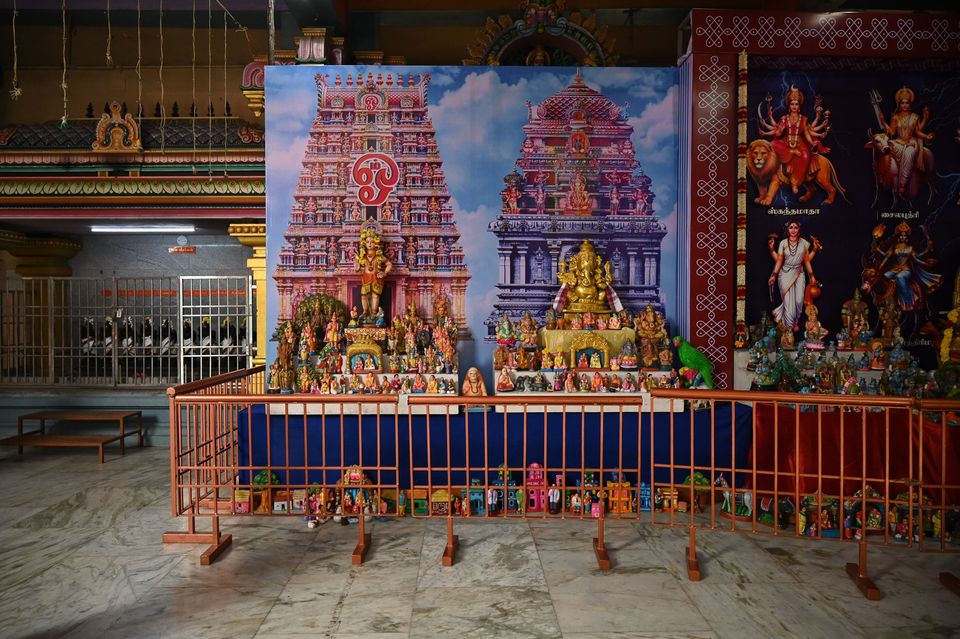
Navaratri Tritiya
Vedapuriswara Koyil would have done a Murugan abhishekam today along with the morning Swami Ambal and Durga abhishekams. We note that things for the Navaratri time are apparently very driven by bhaktas/ubhayakaras. If they will it, it happens, otherwise the temple as such does not undertake the full length of festivity.
Read moreA Much Understated Amman
Kannan sir who did all the Aadi masam alankaram sent me photos of Navaratri day 1, so we went on day 2 to understand this temple’s Navaratri traditions. Simple and understated. But Draupadi amman’s utsava form stands in her gold kavacham in the Golu mandapam which is where the utsavas are all usually kept. The Kavacham looks best in the ther festival, the priest says, and he plans to change her attire a few times in this period. Moolamurti meantime is in orange, with a vettiver maala creating an angular shape behind.
Read more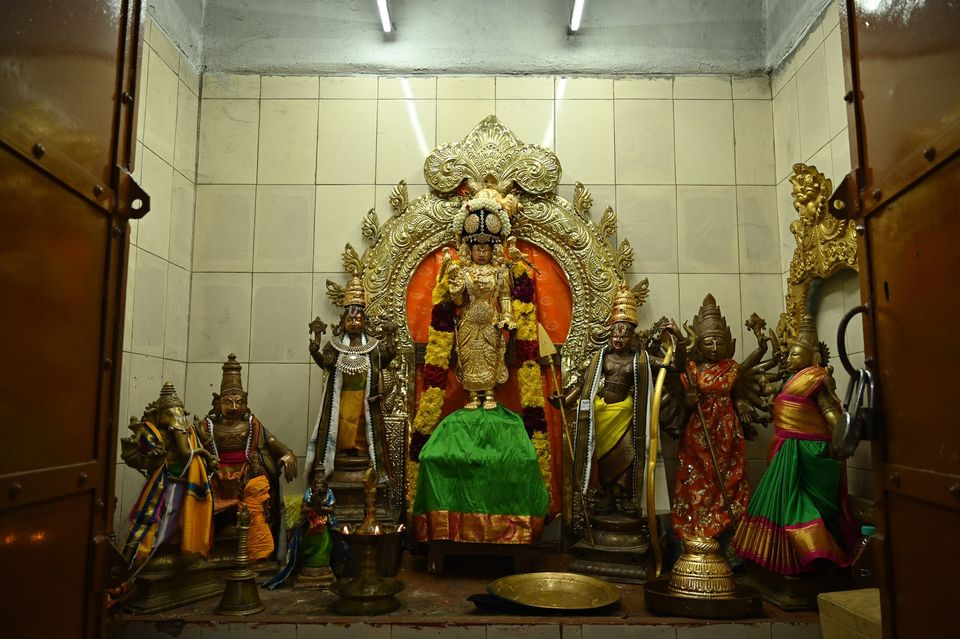
Navaratri Dwitiya
630ish, coming from Ghousiga, we see Sundara Vinayaka with a golu set-up and about to start puja. Ravinder Sir is about to do an abhishekam to Durga, the Sivan in the main sannadhi and the moolamurti Vinayaka. Presumably after this will be the Navaratri parayanam and puja. A handful of ladies are around as usual, setting things up.
Read more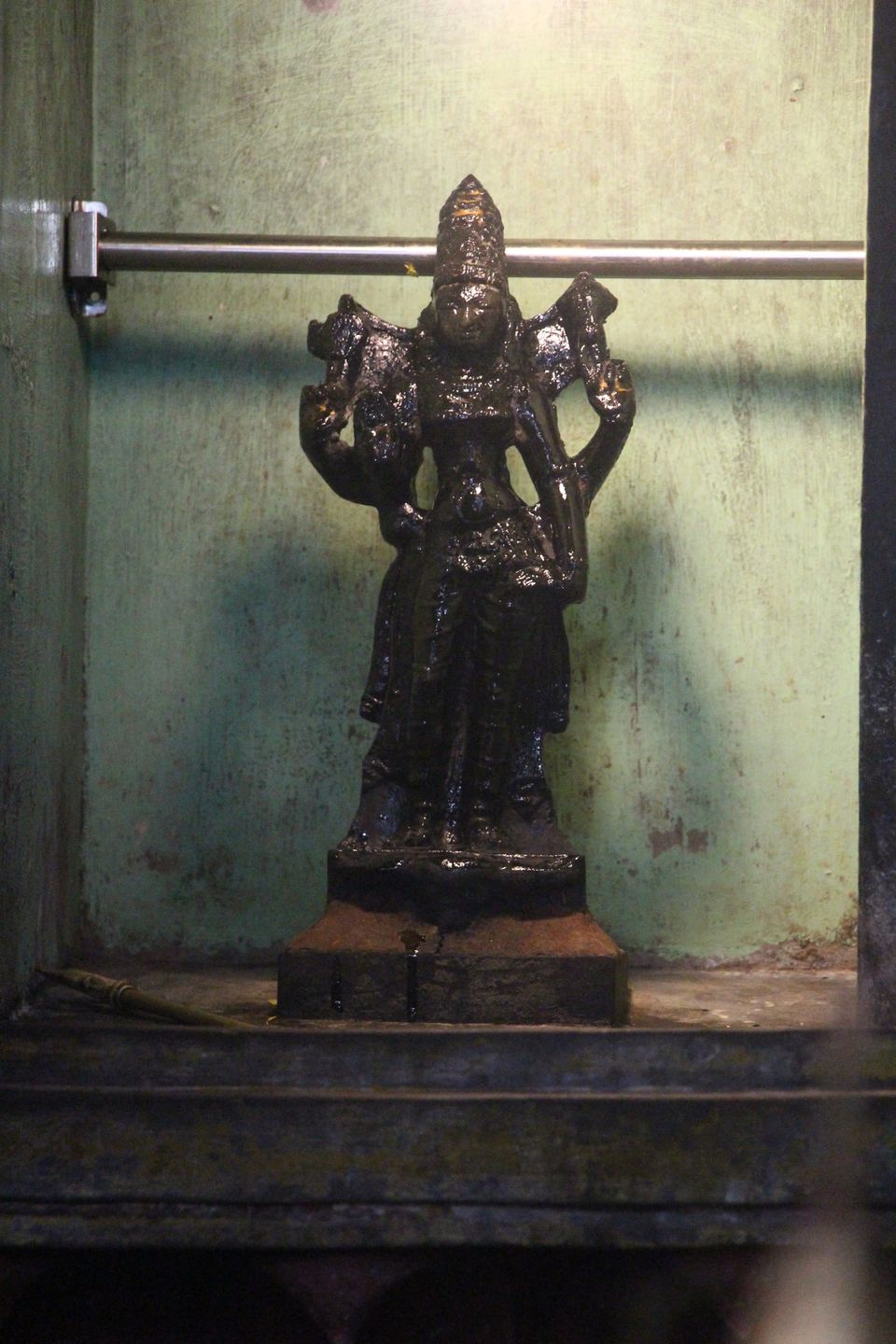
Maalas of Devotees
Velli Kavacham for the main murti (following abhishekam), utsava murti sitting alongside, deeparadhanai. In the evening, Ambal is in Durga-like form, with parijatam maalas that have been hand-made by the woman sitting now and making pink arali maalas, and white vetchi poo tucked in behind her ears. The Iyer tells me he has done the alankara himself, maybe with the help of another priest called in–he starts at 2, has to finish by the time of the evening pujas, then finally undo the alankaram and prepare the temple for the next morning’s abhishekam. He’s not done before 11pm, and is up again in the temple by 6. These are long, difficult days for the priests, especially those without added helpers. In the evening, too, women are gathered and both them and their children are standing to tell stories of the Goddess. From the whiteboard: Navaratri 2-aam Naal Kaalai 7.30 Manikku Ammanukku Abhishekam Deeparadhanai Maalai 6.00 Manikku Utsavar Ammanukku Sri Lalita Sahasranama Kunkuma Archanai, Kanni Puja, Shodashi Deeparadhanai
Read moreTavakola Yoga Nidra
She is in Tavakola alankara today–a yoga nidra posture of penance, meditation, peace. Her face has been made in blue, eyes closed, a bright checked sari to match. We’d stopped in earlier to see the building of her form, but ducked out to get other work done and somewhat regretted it when we went back in the evening to see her in finished form–utterly beautiful, with a yellow and blue flower maala. The priests had asked for vadamalli to match her sari better, but they got this instead which perfectly matched her face. The puja was as usual a dramatic event, perfectly choreographed. Both brothers sang after, and recited the Kamakshi ashtakam (so there is some Sanskrit that comes in after all). (This was the day we went with Riddhi Shah, who tagged along with us to Ghousiga, Sundara Vinayaka, and here).
Read more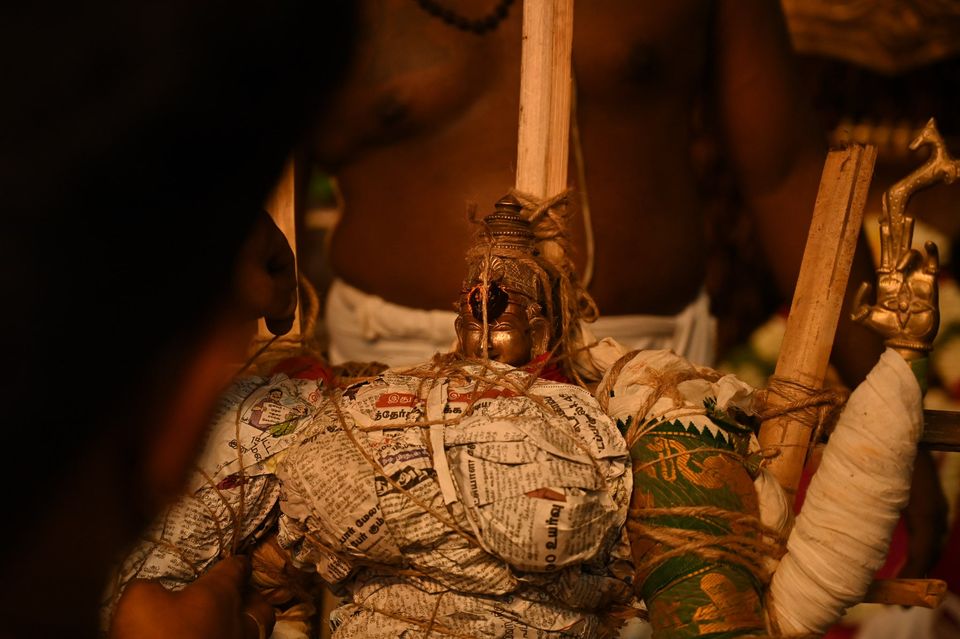
Navaratri Dwitiya
830pm and the utsava mandapa doors are not yet open. Tharakkara neram thaan, one lady says, it’s the time when they open. Puja inside the moolasthanam is as much to the lamps as it is to the deity, who is shrouded in dhoopam smoke but decorated with row upon row of simple flower maalas, floor to ceiling almost. The utsavam mandapam, when it does open next, has what is a Durga Alankaram. The priest’s plate brought around for the devotees to touch with hands before puja is a bowl of red kunkuma plus…. damanam again, tossed on her while the priests chant their mantras. How is this merely a coincidence of season and nothing more? There seems to be quite an excess of damanam around today.
Read more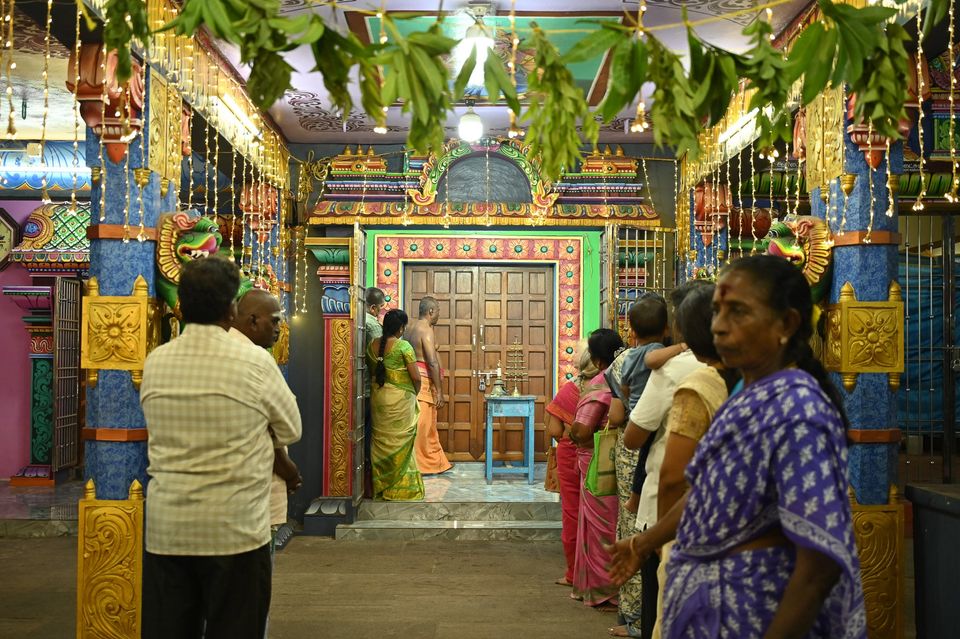
Navaratri Dwitiya
We go at 530, only to find the Parashakti (Thaiyal Nayaki, actually, Vaidiswara’s consort) abhishekam mostly over. Not sure how elaborate this was, no signs of fruits or milk even, though the priest helper asks me to take the bowl of chandanam over to the moolasthanam–so we know they’ve used it for sure. Parashakti sits in a shrine to the left of the golu, which occupies the right half of this long utsava mandapam. She’s given a gold kavacham, there’s a very quick puja for her and the Thani Ambal who sits in the middle of the golu arrangement. All done in 15 mins or so, while the dancers and singers for today’s performance are getting set up on the stage just outside. Ghousiga has performances like these outside, all Navaratri days.
Read more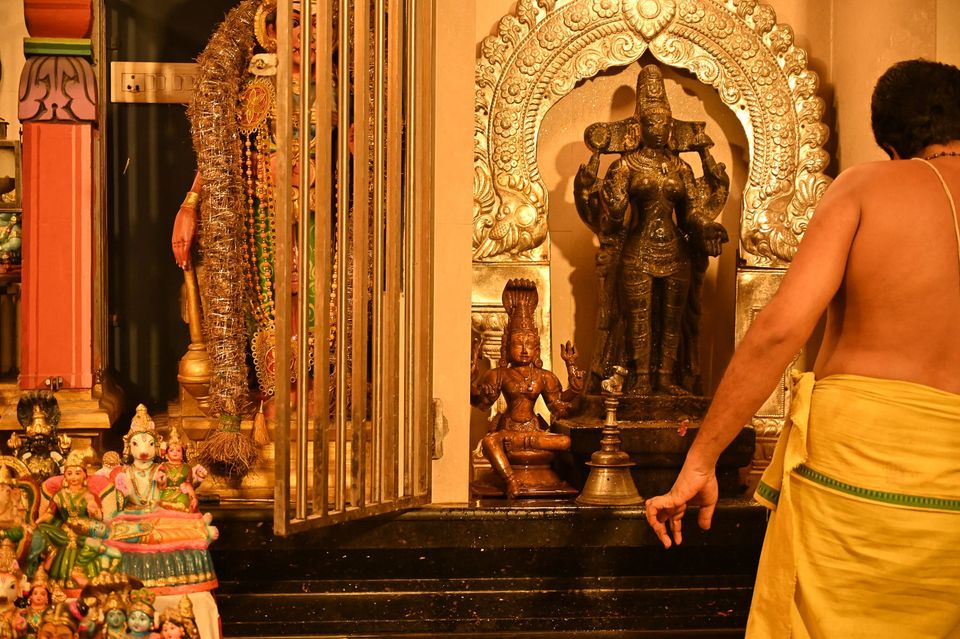
Navaratri Dwitiya
Around 8pm, there are two lines of ladies sitting outside the utsava mandapam, watching the puja. In the main sannadhi mandapa, men are doling out prasadam on plates in anticipation of the puja getting over. The priests make some time for women to sing. Then the Navaratri puja continues with kunkuma archanai. There will be a deeparadhanai after and of course the viniyogam though we don’t stay for that. Perumal calls, and we don’t want to miss his emergence from Thayar’s chamber!
Read more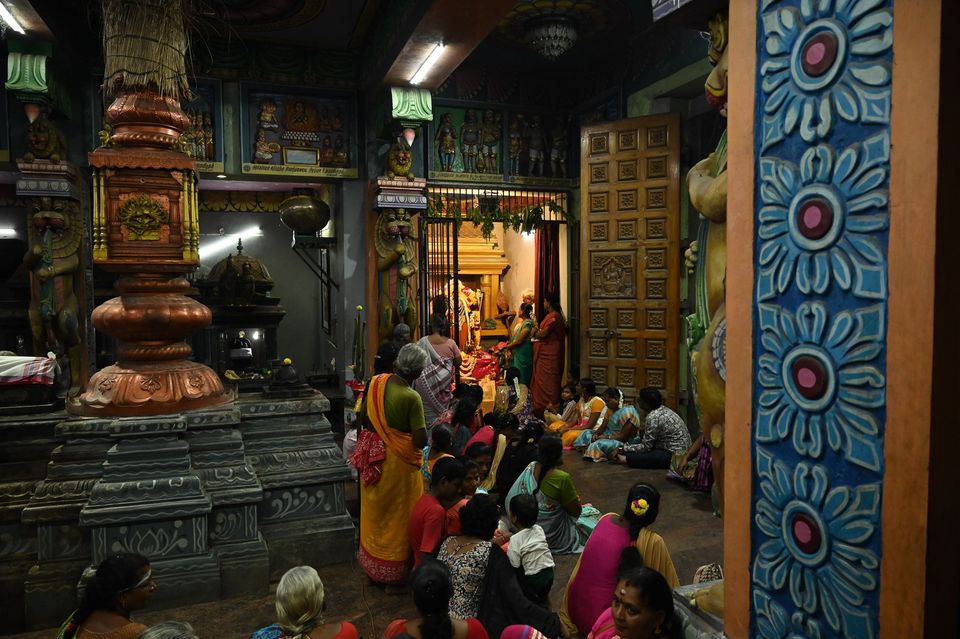
Dwitiya’s Tritayam at the Sivan Koyil
There are three things going on at the Sivan Koyil when we enter at 830am: the yagasala homam (Sri Mahavidya Tripura Sundari homam, being done by Arjun Gurukkal who officiated at the Vaikasi Brahmotsavam and another who is a scholar at IFP), a Durga puja (abhishekam and alankara done before we get there, prasadam viniyogam/distribution about to start), and a Gopuja. Morning kaalam homam has Damana in a basket which they offer to the kalasams. We are intrigued by this presence of Damana for the Tripurasundari Homam, trying to make connections of the Kama story relevance here. But we are told by Arjun Gurukkal that they used Damana only because there was spare, not because of ritual prescription or necessity. There is a lot of spare damanam around this time of year, as we are soon to find. The Durga puja is being done by the Bhaktar sabhai, if the yellow sign that usually signals their events is any indication. Ladies are in a crowd doing their chanting. The morning’s event is followed daily in the evening by a puja and further parayanam. Yesterday, the group was in the maha mandapa, many in the day’s colour (orange), and somewhat unconcerned with the Parashakti purappadu when it happened. Next, Gopuja. There is a lady who comes to the Sivan Koyil daily to do a trishathi puja– 300 holy names (Trishati) of Tripura Sundari. For the 9 navaratri days, the daily early morning ubhayam for the temple’s Gopuja is also hers. The IFP priest is the one who performs the Gopuja, and it is a
Read more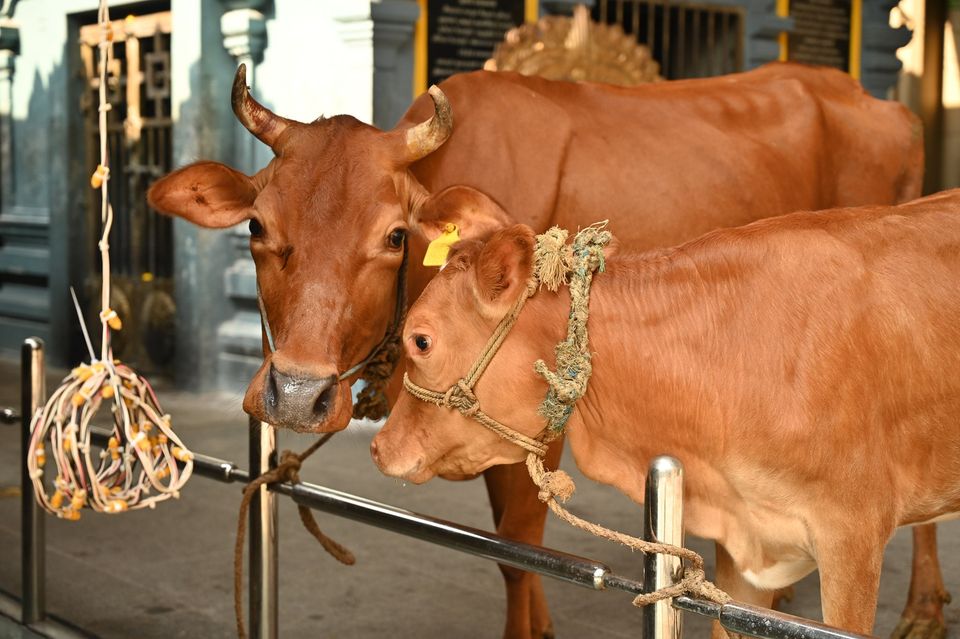
Sri Vaishnava Navaratri Starts a Day Later Than Everyone Else’s
Perumal Koyil starts Navaratri on Dwitiya, unlike everyone else–we cannot figure out why, since amavasya (associated with pitru karma) is long over by the time of sunrise. We reach Perumal Koyil just as He leaves from the garbhagriha–alone, hand resting on his gada or mace, noticeably without Sridevi and Bhudevi as he is about to go have his annual time with Thayar. 3 times pradakshina, and then Perumal is taken backwards to his seat beside Thayar, in her sannadhi. Door closes for what feels like an eternity. It opens to a long deeparadhanai and sodasha upachara. It is by now after 8pm, so we leave to make sure we get to other temples on time (have been out since 530pm, temples close at 9 or so), so we plan a return by 9. When we come back, the puja in Thayar sannadhi is finishing. No sevai, no adhyapakas around. Perumal has a big bunch of damana in his hand though–a sight that makes us laugh, as that’s a sign of Kamadeva on him, just as he’s come to see Thayar. Are people just not telling us what they know about this plant and what it represents? Are they assuming we know already and don’t need telling because it’s a matter of some shyness? Anyway, the door closes again, and opens with Perumal robed in a veil and damana knocked out of his hands and left with Thayar. Aiyo! The veil, we’re told, is to cover His shyness after having spent this time with Thayar. So there is this human-humorous dimension to Sri Vaishnava practice, too. He goes around the back of his own shrine (c
Read more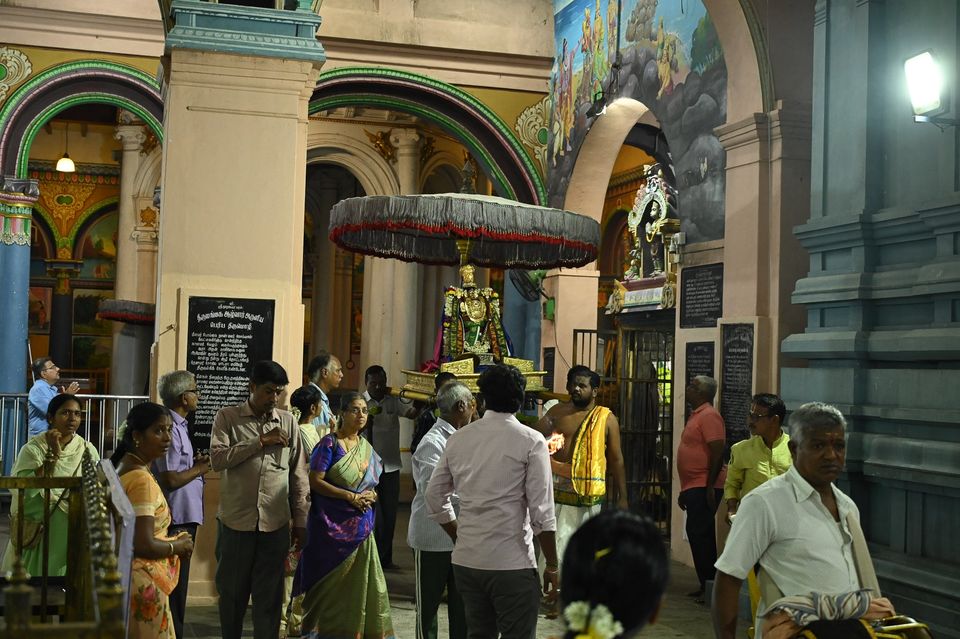
Maravalli Meenakshi
We follow the alankaram-making from 11am up to its completion around 2pm. Amman is given the form of Meenakshi today. The utsava murti is the core, around which additional bronze limbs are added as extensions, and the rest of the body is skilfully enlarged and shaped with newspaper and rope. The original utsava murti is hidden entirely by the torso of the now enlarged Meenakshi. Her head is not crafted with newspaper, but with banana plantain stalk instead – “Vaazha Mattai” as they say. These are cut to size and layered to provide thickness. The body is then draped in a sari, meticulously passing though the legs and around the back multiple times as required. Maavu is then prepared with maravalli kalangu – tapioca flour, mixed with green paint and water to create the dough that is to be Meenakshi Amman’s face. The priest applies the maavu to the plantain stalk and within a few moulds and presses of his finger, there emerges a beautifully proportionate face. His fingers move with a sculptor’s adeptness and the rough shape of the face is ready within minutes. The rest of the hour is spent in detailing the nose, lips and eyes. Another hour after that goes into painting the cheeks, lips and eyes, placing the crown, bejewelling the deity and adding any final touches before the evening puja. At the end of this long afternoon, only the flower-garland is left to be placed, which will be brought fresh just before the evening puja. In the evening, we meet Dewan Kandappa at the temple a
Read more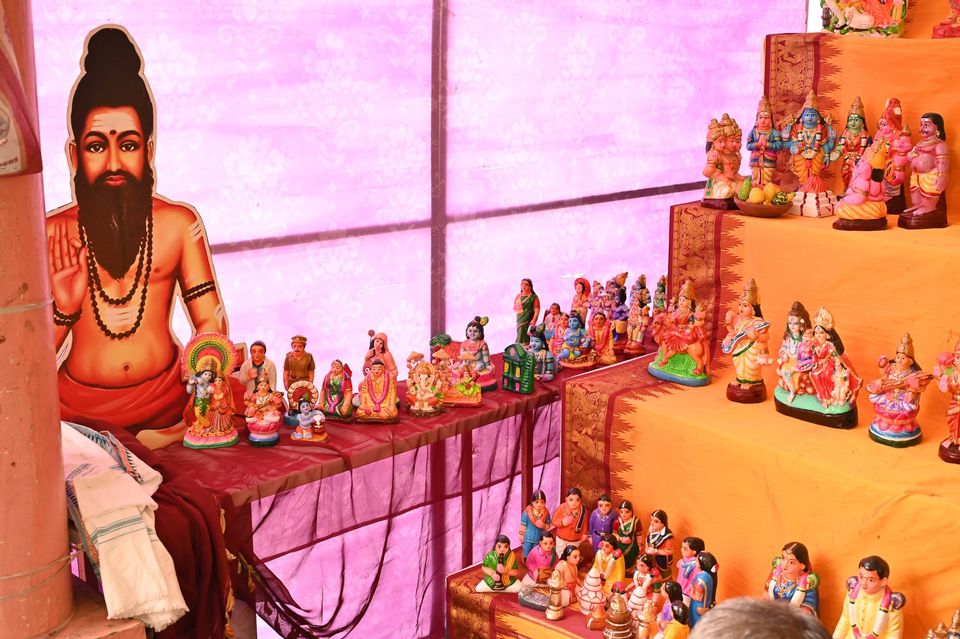
A Balalayam Navaratri for Kamakshi Amman
Since the Kamakshi Amman Koyil has done its Balalayam, no major festivities or utsavas will take place. Navaratri is therefore not marked this year with any degree of grandeur, but is marked only by daily abhishekams and aradhanais in the evenings. There’s a patrikai posted outside the temple with the daily schedule and the names of the Ubhayakaras.
Read moreNavaratri Prathamai
We go a little before 9, and temple is rather empty. There is a dance program going on outside on a makeshift stage. Inside a Golu has been set up. It is very elaborate with Ambal on the central top-most step with a maala or prabhavali of peacock feathers, garlanded with jasmin. On either side of her are Kathavarayan and Siva-Parvati respectively, below whom extend the two rich arrays of Golu bommais. There are a lot of Krishnas! Almost a whole few padis of them. And some swanky modern dwellings sit at the very base.
Read more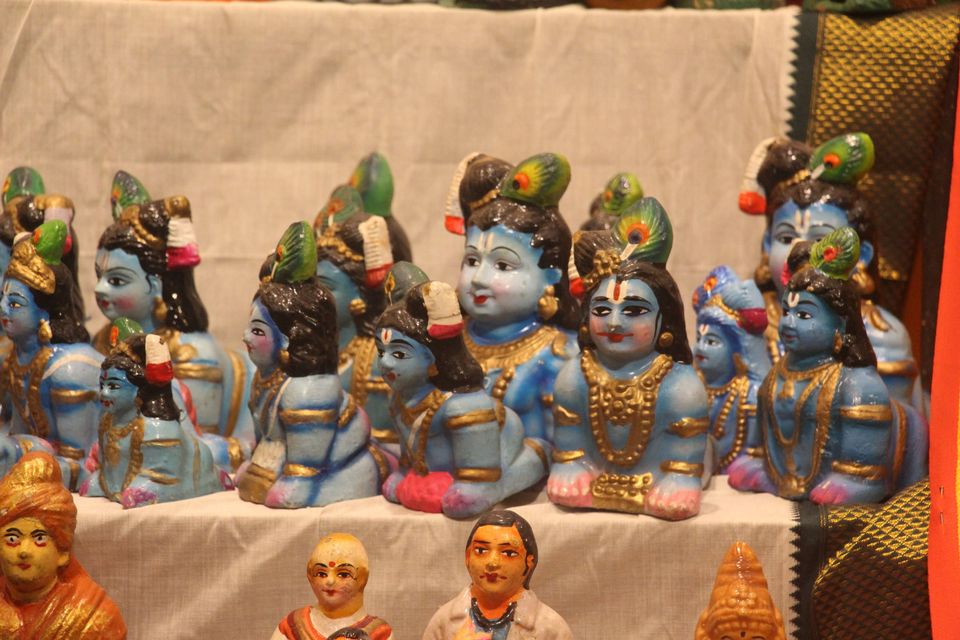
Navaratri Prathamai
We go at 9pm when the temple is on the verge of closing. The lights begin to go off as we stand there, the moola Ambal has her curtain drawn and Sriram Gurukkal briskly walks multiples times around the Pecchayiamman-Madurai Veeran shrines with lemons in hand – perhaps a closing rite involving a mouna vratham which we have not observed before? Angalamman is right there in her alankara mandapam, today in the form of Meenakshi – the same alankaram as Nandhikeswara’s. Behind her we notice the Ardhanariswara murti, which turns out to be the same murti used yesterday for the Harihara alankaram on the Amavasya Unjal.
Read more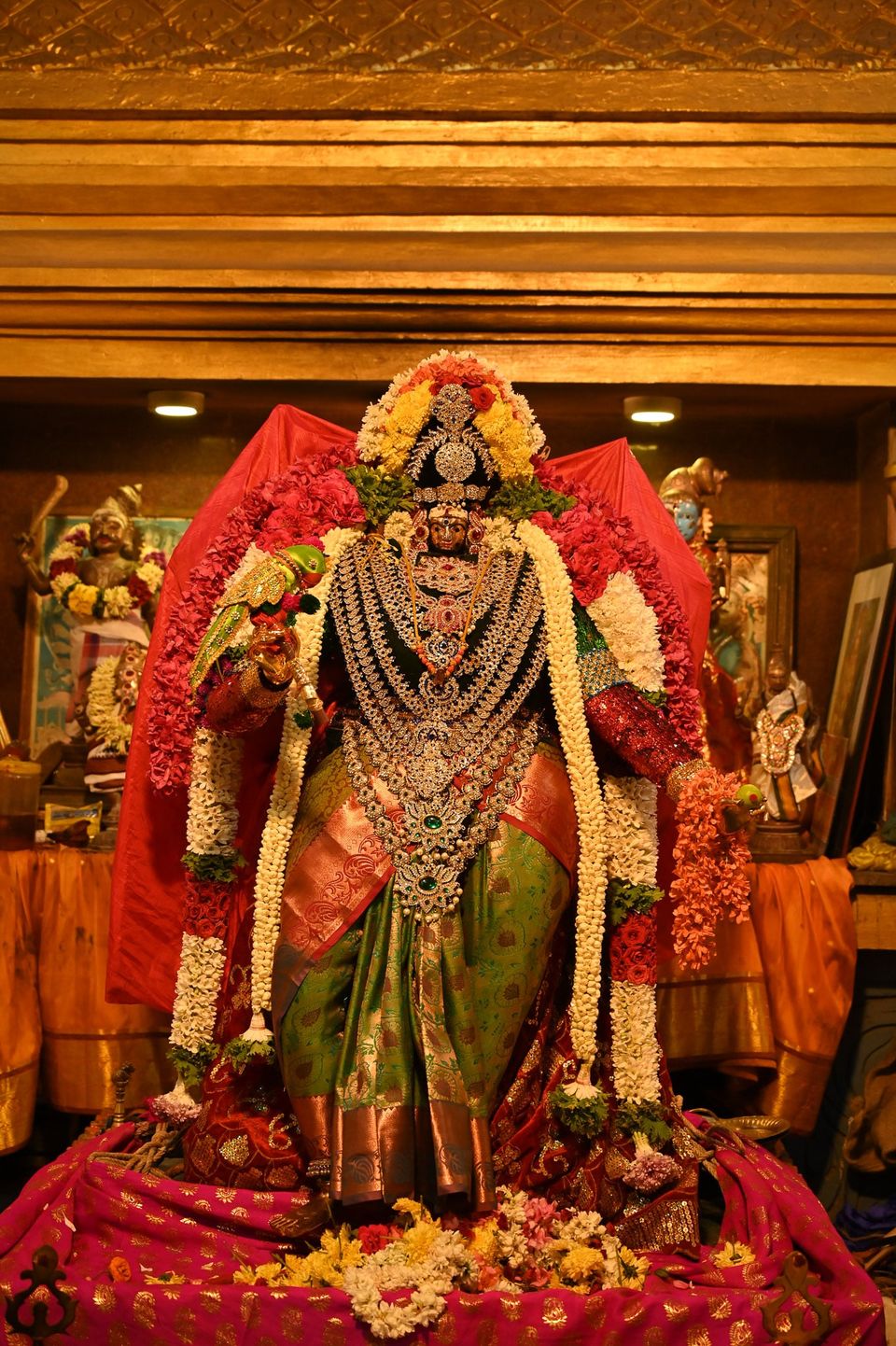
Starting Navaratri Before the Sri Vaishnava Navaratri
We go after 9pm. Dance in the makeshift mandapam outside, invoking the Dashavataras. Temple doors only left slightly ajar as everything closes down inside. We are called for the final closing prasadam – warm milk and ghee-laden kesari. The dancer groups outside, along with their own utsavar alankaram and pujas which go on daily, have no formal connection with the Perumal temple as such. This is all organised by “Hindu Munnani” says Prasanna, though the signs say it’s VHP. Some of the performances are very good.
Read more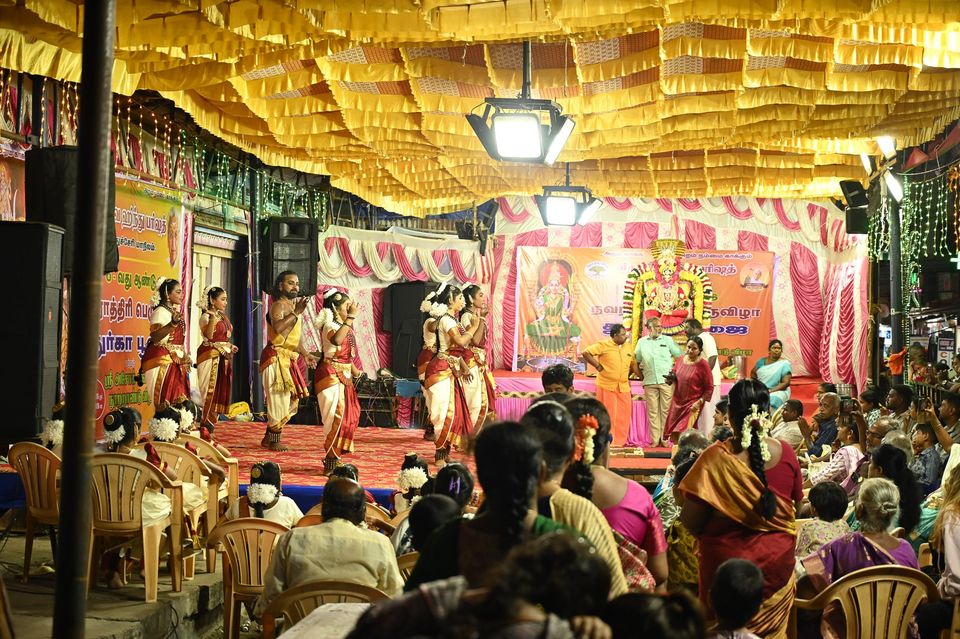
A Slow Start to a Full-Tilt 10 Days
The schedule for the day indicates early morning abhishekams for several deities (see below), but none happen early at all. I (Arun) am around for a while, and nothing is going on. Not sure when it did get done. In the evening, in the Yagasala, the Sri Maha Vidya Lalita Tripurasundari Homam is being performed by Arjun Gurukkal who was there for the Brahmotsavam in Vaikasi, and the other IFP scholar-priest who was there for the Ekadasha Rudrabhishekam in Chithirai. The homam consists of flowers in all aspects – the kalasams are decorated with flowers, with lotuses for every kalasam. There is an additional basket filled with flowers along with the usual dravyam-filled baskets. The homa kundam has flowers marking all directions. Parashakti ul-purappadu – stopping by Yaga Sala as they perform the purnahuti for the homam and offer deeparadhanai and flowers to the goddess. The Day’s Schedule: 7AM - There is an abhishekam for Kashi Viswanatha (sponsored by the Siruthonda Nayanar Sabhai), and later also for Vinayaka, Swami, Ambal, then Parashakti. Alankaram on Visalakshi is Rajamatangi PM - Durga Puja with aradhanai and viniyogam.
Read more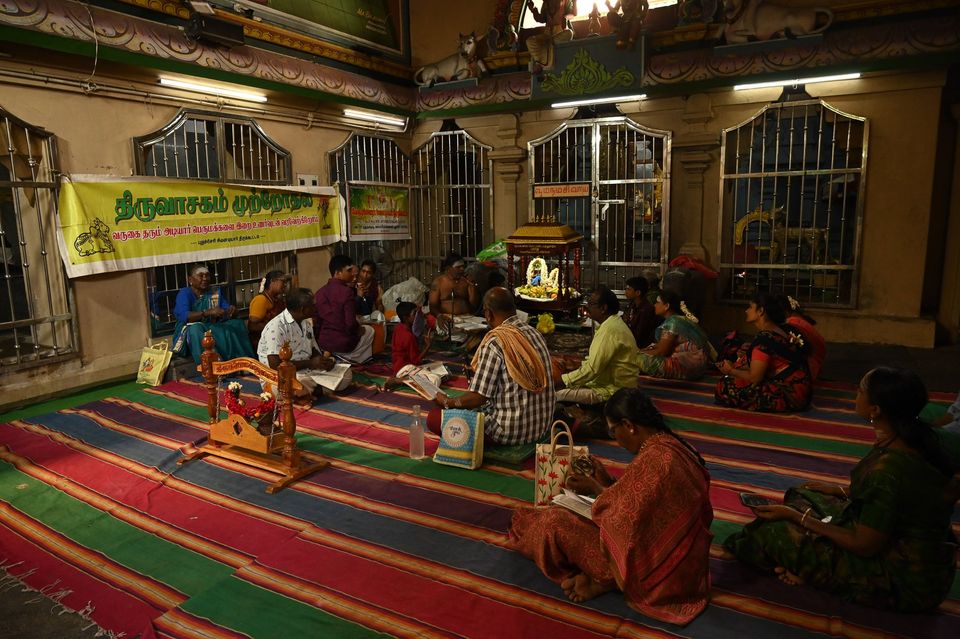
Navaratri Prathamai
In the morning, there is abhishekam for Vinayaka, Swami, Ambal, then Parashakti (all of which happen in a jiffy, as I am there before and by the time I (Arun) return a short while later they’re all done). There was also an Anjaneyar Puja done by a lady who apparently works at Auroform (we see her entering there later). She tells me that performing this puja has been on her mind for the last fifteen years, and was able to materialise only today. Fifteen years is a long time for circumstances to align, but she says, “it is His wish and His decision; and look at how fortunate that it finally comes together on the first day of Navaratri.” In the evening, there is the Parashakti ul-purappadu: bringing her to the Golu mandapam in the north east corner, where she will stay for the next nine days.
Read more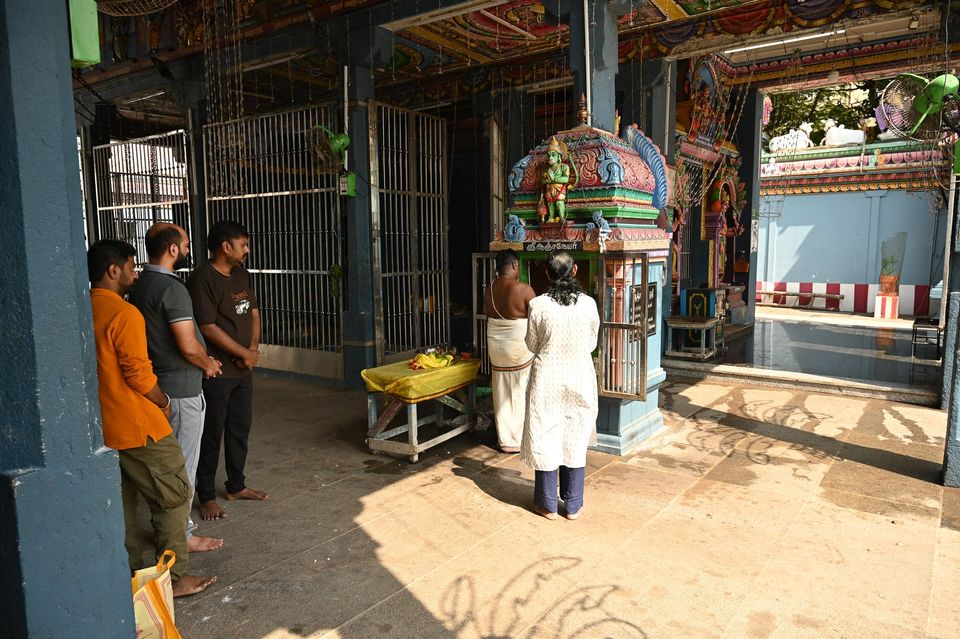
A Special Amavasya Samadhi Abhishekam
This is an important Amavasya for Nandhikeswara – the temple does a samadhi abhishekam for the “piranda dinam” or birth day of Nadu Shanmuga Velayuda Swamigal, followed by an annadanam. We could not attend, but Dewan Kandappa sent photos which we have used by permission here. (From the whatsapp chat Saturday October 10 morning).
Read moreAn Unjal Utsavam Like No Other
Angalamman’s monthly Amavasya Unjal Utsavams are of known importance and assuredly pull great crowds. On the auspicious night of Mahalaya when the goddess descends into her great worldly abode – maha-aalayam – it becomes an occasion for greater celebrations. Across the hall, beyond the throng of devotees, Angalamman swings on the unjal; though not alone. She sits to the far left, and on the far right, with her Kiridam tilted right, sits the Vaishnava poetess-goddess Andal. In between the two, bridging the Saiva-Vaishnava split of the goddesses, is Harihara – Vishnu and Siva. A performance of folk song with the pumbai drum distinguishes tonight from other regular Amavasyas. The singing is conversational much like it was on the day of Vallala Kottai, although it seems more structured than that. The singers stay on the topic of the deities’ stories and don’t interlace them with colloquialisms. It seems to be done more meaningfully rather than purely entertainingly.
Read more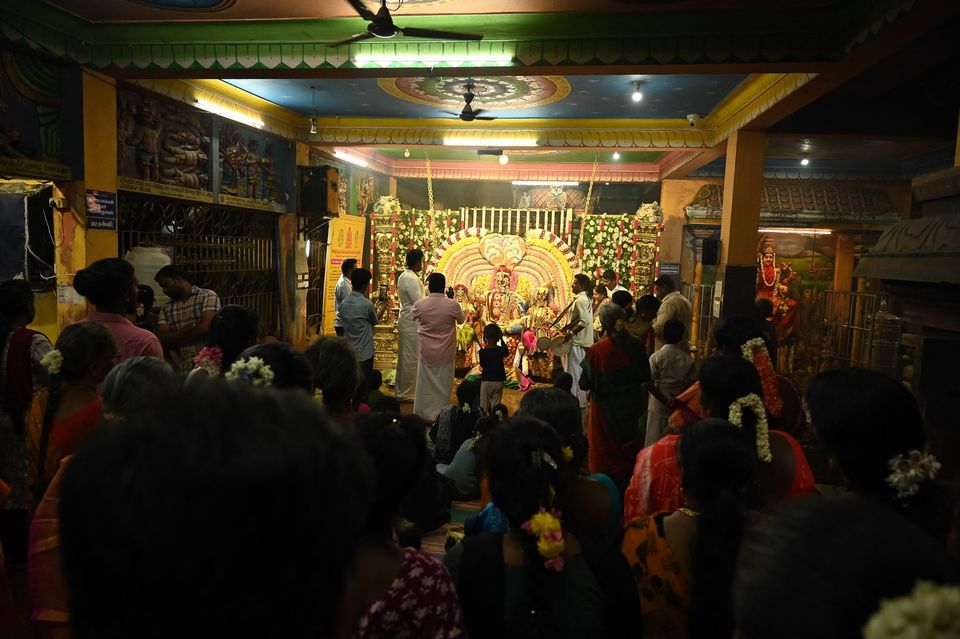
Rites for the Dearly Beloved
We went in the morning to see the private pujas of those who are honouring their ancestors–this is Sarva Pitru Amavasya, dedicated to honouring and seeking the blessings of departed ancestors, marking the final day of Pitru Paksha. Several such were happening on the steps of the kulam at the back of the temple, with of course just a tonne of plastic waste everywhere (which I started collecting and soon had a big bagful, and there was more to go but I didn’t want to be reaching into people’s puja areas just to get them all). Apparently Kalyana Sundara Gurukkal pointed out my plastic picking as a model of exemplary service to the cleaning ladies in attendance. We are told about a Marwadi practice of Lakshmi Puja that happens on this day in the evening, but we aren’t there to see it. It is true that there are many visibly non-Tamil devotees who come and do their own abhishekams to the Sivalinga that is beside the naga pratishtha. They count among the migrant populations that have made Pondicherry home, and who seek to find their spaces of worship in the public monuments that are here, too.
Read more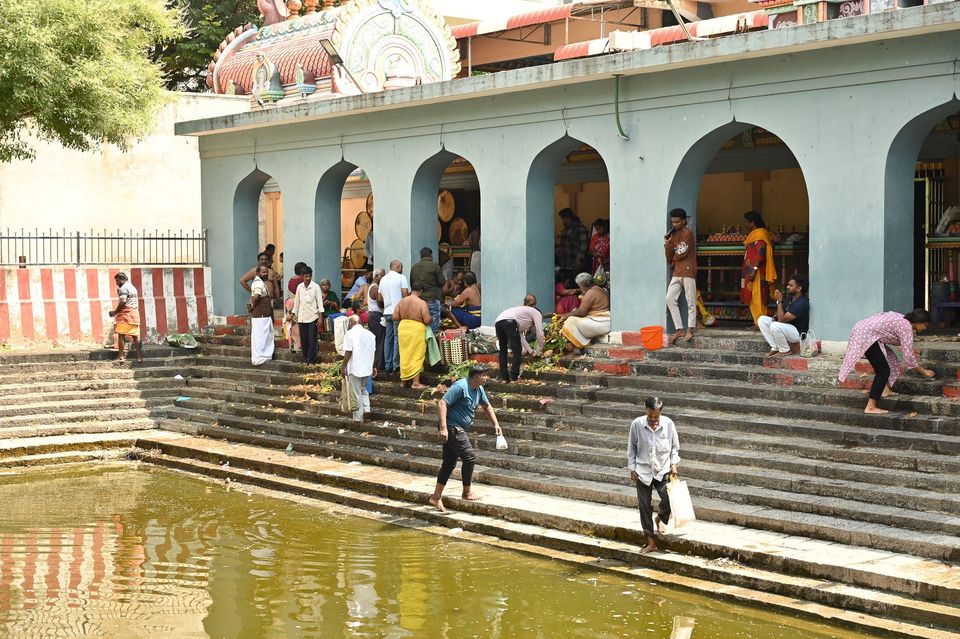
A Chaturthi with Gomathi Masi
Sita Venkateswar’s mother is in town, and she and a friend (Veda) accompany me first to the Vedapuriswara Koyil where there’s an abhishekam to the Polla Vinayaka going on, presumably to makr this day, and then to the Kannika Parameswari monthly Sankatahara Chaturthi Abhishekam, which I’ve never seen. It is a simple, soulful affair. Just the Ubhayakaras and a few others present, a very congenial atmosphere with the Kannika Iyer of course doing it all. I saw the Velli Kavacham go on Vinayaka for the first time, and it was grand (even if the pieces did make him seem somewhat rhinoceros like!). The photos speak for themselves. The vettrilai malai and the banana malai are unusual – I’m told this is offered for those who have very specific wishes. From the whiteboard: Sankatahara Chaturthi Maalai 6.30 Bala Vinayagarukku Abhishekam, Deeparadhanai.
Read more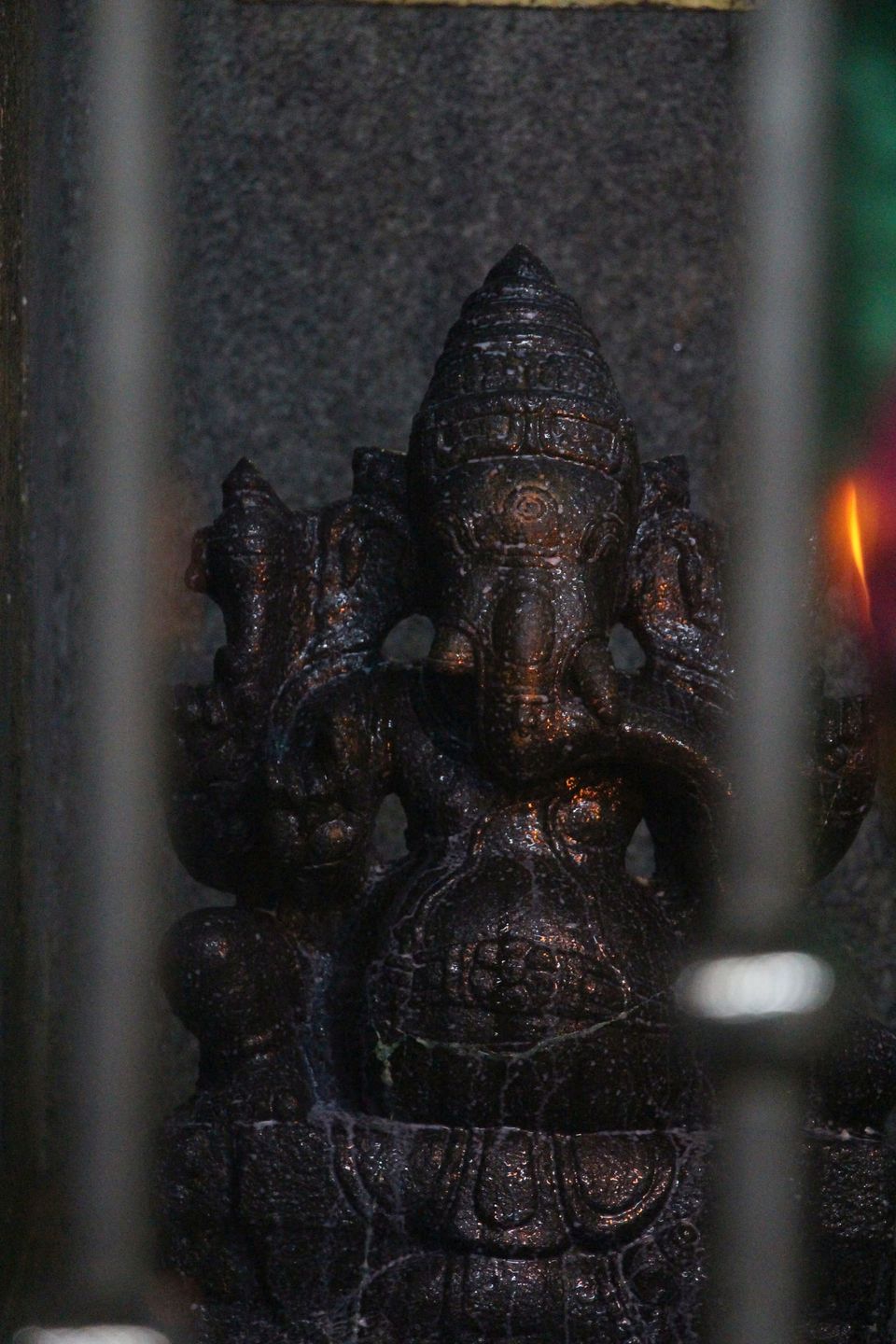
Learning Flower Tossing
AM: Rama abhishekam, alankaram, Deeparadhanai PM: 4pm Satyanarayana puja and Amman abhishekam We spent the day at the Kannika Parameswari temple, would be one way to describe the day. We were there early, for the 730am Rama abhishekam that we’d seen announced and that the Iyer had told us about. Purattasi Sani (Purattasi Saturday), after all, so His presence must be marked. The silais themselves, four together with Hanuman, are utterly beautiful–delicate features and holding bows whose curvatures match in fluid lines the more regal postures of the figures and the straightness of their arrows. The Iyer recites almost the whole Vishnu Sahasranamam while bathing them, and he’s the only priest we know who speaks each first line of each Mantra Pushpam verse, not just the first and last verses as most tend to do, prior to the conclusion of the puja. It is an unhurried, but quick affair. Not many are around, except the morning’s ubhayakaras, a few other devotees, and us. Prasadam is a simple chakkarai pongal, aval uppma (which is delicious), and panchamrutam. The lady beside me remarks: “that’s aval uppma.” I nod, because I know. “Oh you know?” she says. I nod again because my mouth is full, and after I’ve swallowed: “We make it at home, too,” I offer, “though at the temple it’s always tastier, I don’t know how.” The lady laughs. “That’s the effect of worship,” she says. I nod again, because I cannot deny the magic. Were it not for her we may not have returned just today for the 4pm
Read more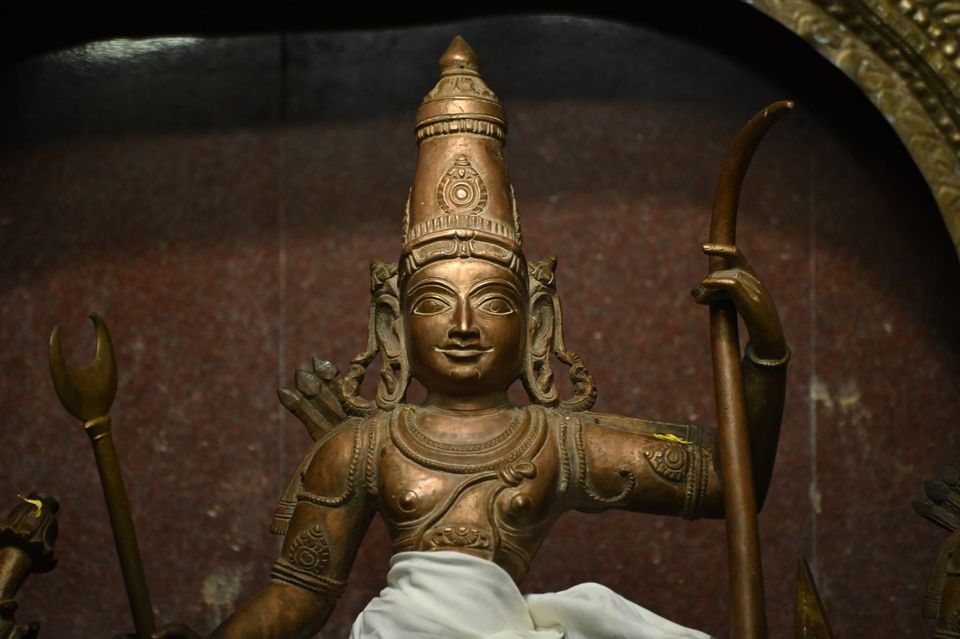
Vedanta Desika on the Two Seas
It is the second Saturday of Purattasi, and the temple is thronging. When I reach the temple around 730pm, Desikar was on the first round of his ul-purappadu. He was rounding the north-eastern corner at the Anjaneyar Sannadhi, which seemed to take an eternity. The procession was slow, perhaps deliberately, perhaps due to the crowd. Either way, whenever Desikar did move a few steps, he was sailing over a sea of people, much like the street procession last week. I go home and return later in the night to find Desikar on his unjal. He was carried earlier by a sea of people, and is carried now by a sea of music. The unjal is on the northern prakara, right outside his sanctum, facing East. Facing him, a little distance away, is a troupe of musicians, with a Veena at the centre. The music is electric, and reaches consummation at the end of a jugalbandi by the percussionists. It is a beautiful closing to the Desikar Utsavam, before the final Panaka Puja tomorrow.
Read more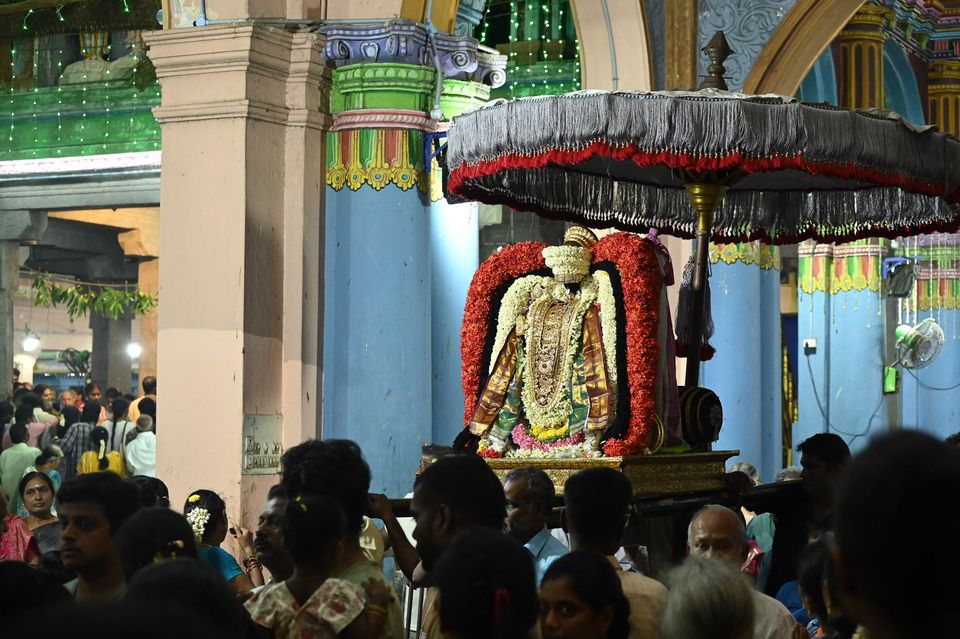
Purattasi Chaturdashi, First Friday of Tamil Month
Today’s Schedule From the whiteboard: Maalai 6.00 Manikku Mahalakshmi Puja, Deeparadhanai Anantha Vratha Nonbu (அனந்த விரத நோன்பு) is an observance dedicated to Sri Anantha Padmanabha, a form of Lord Vishnu reclining on the serpent Anantha (Adishesha). It is also known as Anantha Vratham or Anantha Chaturdashi Vratham, undertaken to seek divine protection, relief from difficulties, prosperity and family well-being. Usually falls in Bhadrapada Shukla Chaturdashi.
Read more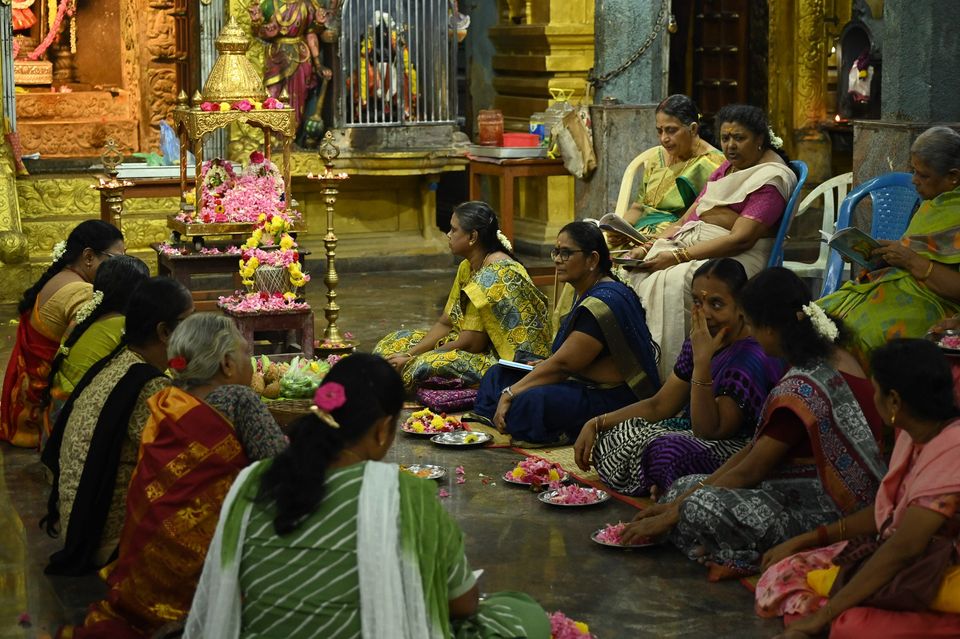
One More of Six Annual Nataraja Abhishekam Days
Today is one of the 6 annual Nataraja Abhishekams, this one tithi-based. Here are the full 6: Margazhi – Thiruvathirai (Arudra Darshanam)Masi – Shukla Paksha ChaturdashiChithirai – Thiruvonam (Shravana nakshatra)Aani – Utthiram (Uttara Phalguni nakshatra, the day of the Aani Thirumanjanam)Aavani – Shukla Paksha ChaturdashiPurattasi – Shukla Paksha Chaturdashi Of these Arudra Darshanam and Aani Thirumanjanam are the most prominent, but the others get marked well, too, typically with a Nataraja abhishekam and puja. At the Sivan Koyil, the procedure is interrupted just slightly by a parallel Guru puja happening for Narasimhamunaiyaraiyar Nayanar. We saw the Maniyakkarar and one of the regulars in the bhaktar sabhai (whom I will later meet working at a petrol pump as an attendant) take the Narasimhamunaiyaraiyar Nayanar utsavar out on a full inside circumambulation, going into the garbhagriha for a moment when the lights are turned completely off. The Maniyakkarar sings, the statue exits and returns to the Nayanmar utsava mandapa. We see this happening often at the temple, with the Bhaktar group almost acting in parallel to the main temple, and being sometimes quite unconcerned with that may be happening in the garbhagriha. The lights go out at Sundara Vinayaka Koyil, and while that makes the proceedings harder for the priest, it results in surprisingly stunning photographs using just the plain old phone flashlight. Nandhikeswara has no Nataraja, but the Narttana Nandi stands in
Read more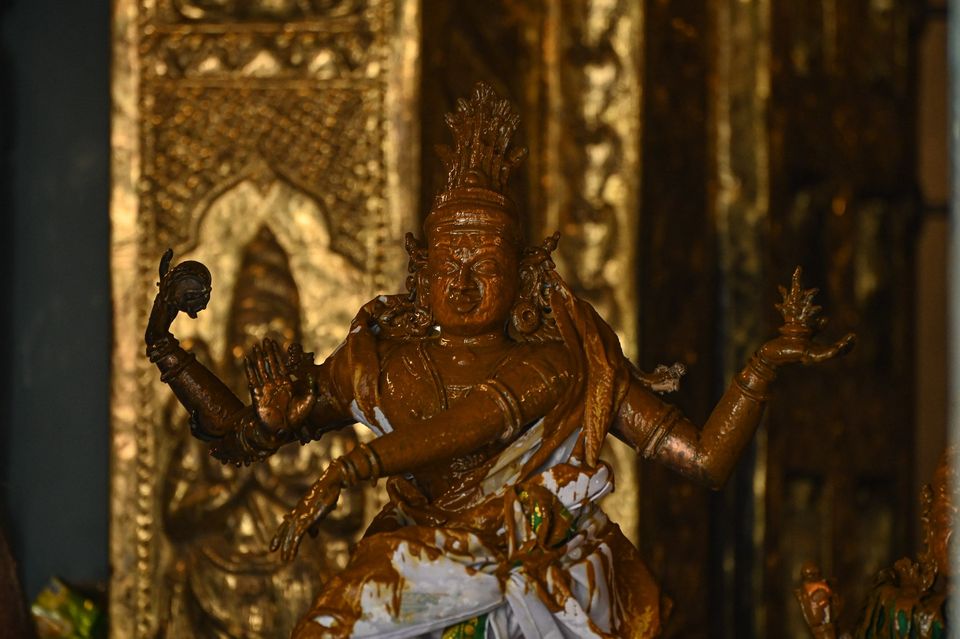
A Most Gracious Pradosha Nayakar
We go for Pradosham not expecting much from this little temple. But the abhishekam begins with a beautiful Alingana Uma-Chandrasekara murti who stand on a Nandi utsava murti. It is surely one of the most gracious Pradosha Nayakar murtis we have seen. We relish every second of the abhishekam. The whole temple’s ambience is much more pleasant than other days, and we wonder whether it is just the magnificent utsavar who made it so for us. The Vinayaka utsava murti is also on the floor, still donning the Unjal Utsavam alankaram from 20th September. We later go upstairs to take pictures of the gopuram and vimanas.
Read more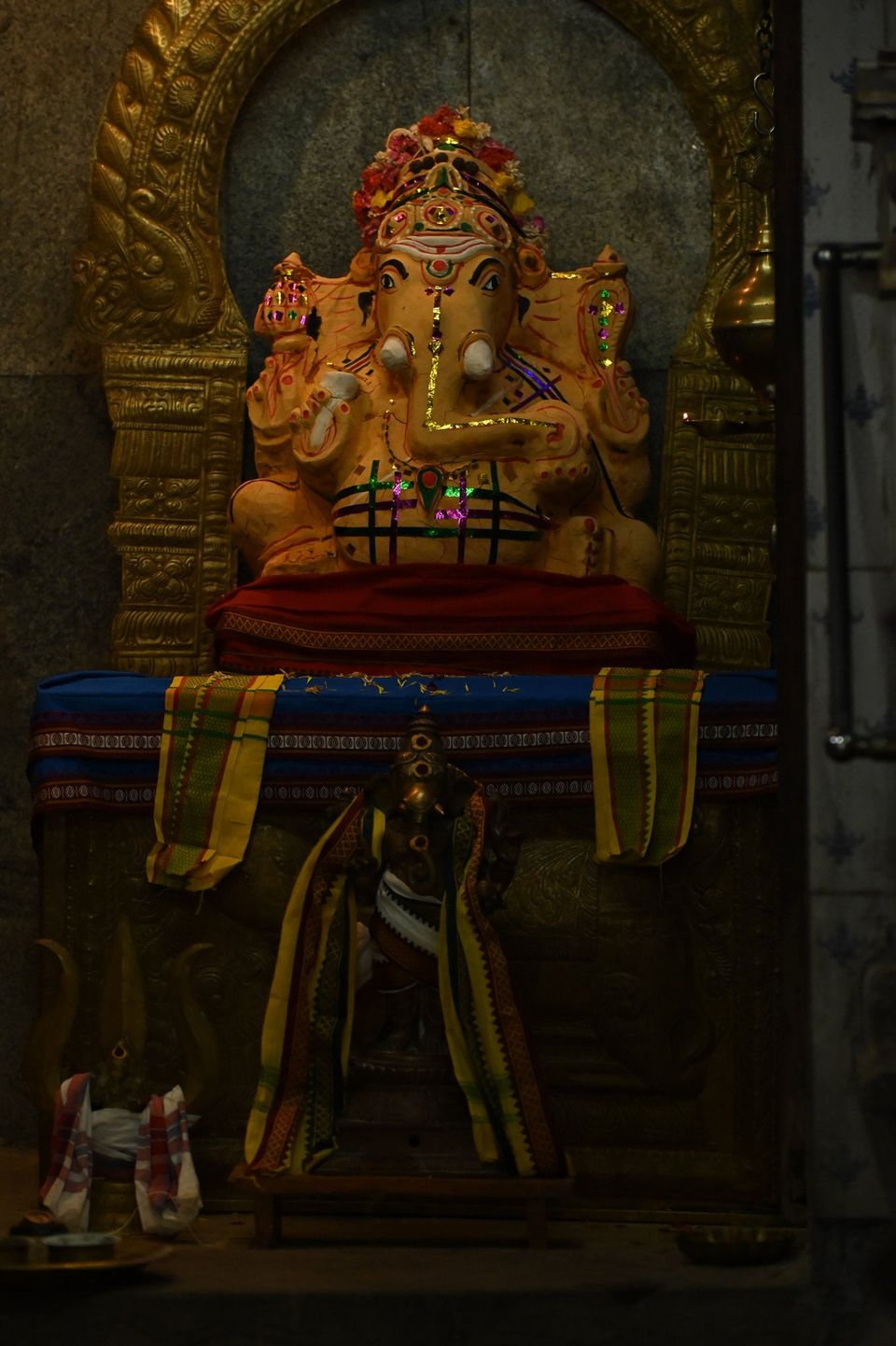
Desikar Rears from the Front
We returned to Varadaraja Perumal after a long day at Thiruvahindrapuram. Desikar here was also dressed in studded stone, and also carried pavitrams hanging at his base. He stood before Perumal outside the Mahamandapam, awaiting His emergence. Perumal arrived soon alongside Sridevi and Bhudevi, and Desikar led the purappadu – or rather reared it? – all the while facing his Lord. On the third round, one of the devotees carrying Perumal reached out to me saying: “Look! Perumal is sweating! Get a close up picture!” And so I did, and indeed Perumal’s whole face was covered in unnumbered droplets.
Read more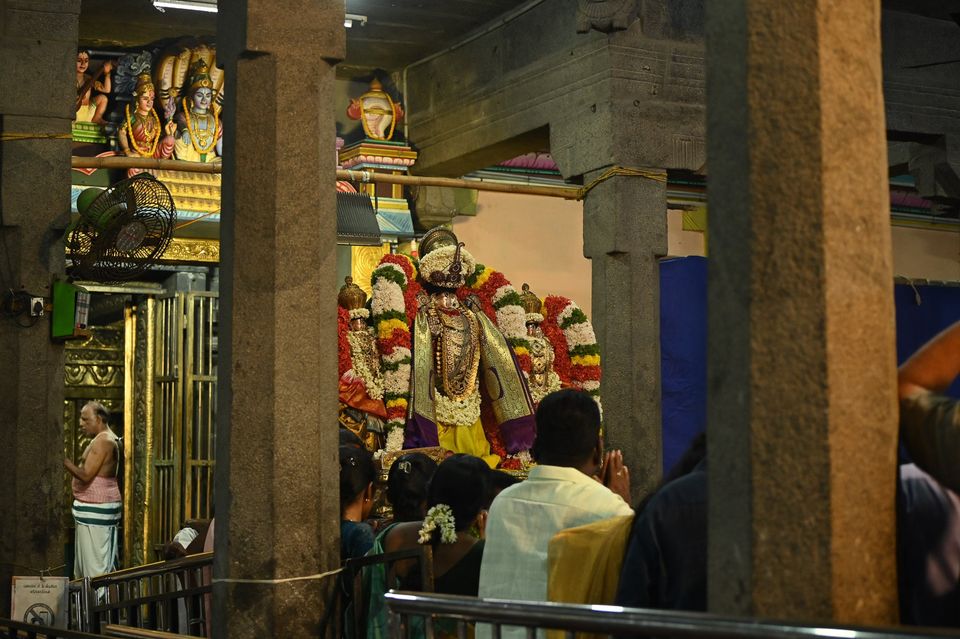
The Ruby Robed Poet’s Rathnangi Sevai
It felt as though we were called to Thiruvanthipuram. We’d been thinking, watching an evening’s purappadu at the Perumal koyil, that our work would benefit from seeing these same utsavams carried out at other temples, when we found ourselves in a knot formed by the temple Bhattacharya, a staunch temple devotee named Venadavaradan, and Rajagopal Thathacharya. What you see here, they all said in more words or fewer but with equal urgency and enthusiasm, compares little to what happens at Thiruvanthipuram. Go there. Details about the Desikar utsavam there were elaborated; images of a stately procession up and down a hillside conjured. The Devanathaswamy patrikai was fished out of gushing streams of temple-related WhatsApp chats. Driving distances by various modes of transport were computed, for our benefit. The directive couldn’t have been clearer. We had to go to Thiruvandipuram. The town we saw on the morning of September 22, the last and crowning day of the Desikar Utsavam, was a town breathed with new life. It was our first visit to the temple-town of Thiruvahindrapuram. Having been dropped on the Northern face of the complex, it was a short walk to the corridor that leads to the east-facing Perumal. We passed the Manavala Mamunigal shrine which we were not too surprised to find located definitively outside the temple complex. [The Desikar shrine, as we would soon find out, is located within the temple complex in a manner that seems to place it as though in front of the Mamu
Read more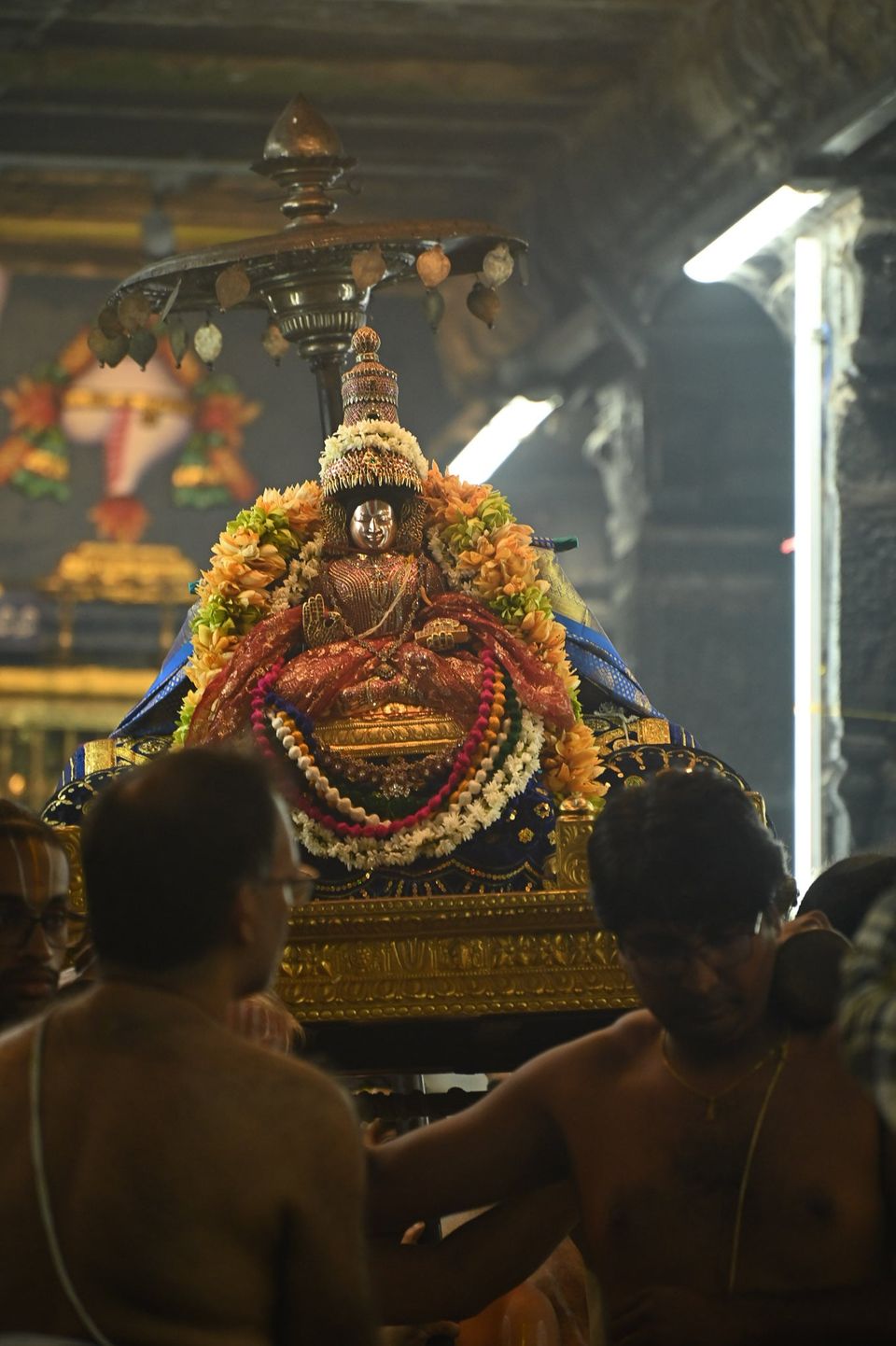
Conversation with Venkatesa Archakar
Met and spoke with Venkatesa Gurukkal at Lawspet. He has been at this temple for 22 years now and is the senior-most priest there. We enquire about their ritual year and get a more or less complete ritual calendar. Some interesting pointers from him which need to be further looked into: Monthly special pujas are also known as “Erupadi”?The Vedapuriswara Koyil Palliyarai Swami is Sokkanathar?The Pradosha Nayakar murti is also called “Kaatchikuduttha Nayakar”? After speaking, we also view the Ucchikaala puja done to the Sphatika Lingam. The little crystalline Lingam is given a simple abhishekam, with the highlight of annabhishekam. The Lingam is covered in cooked rice and shown deepam.
Read more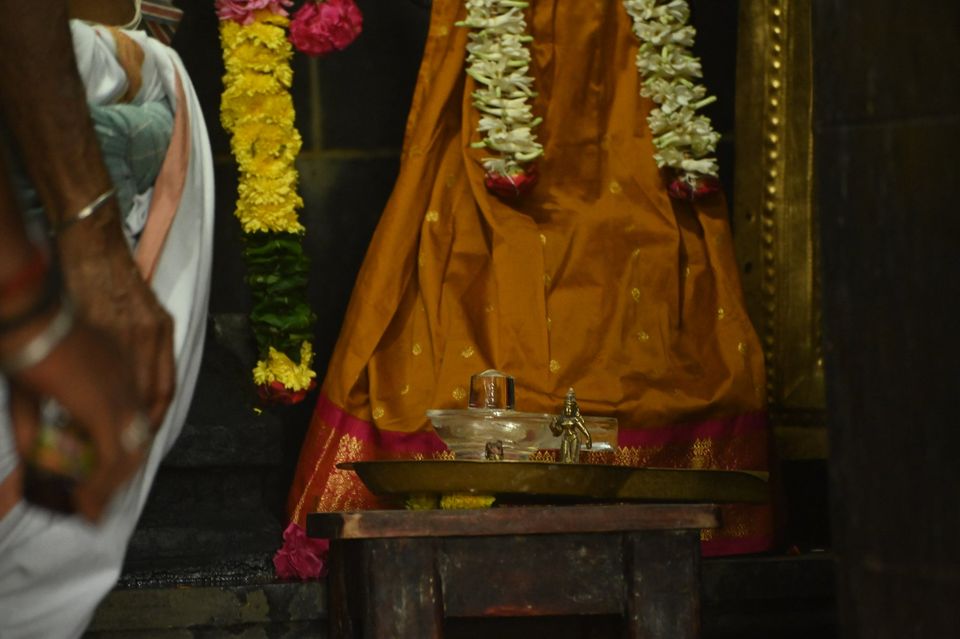
Desikar Utsavam Day 8
AM Arun went by: Nothing new at Perumal koyil today; regular desikar sevai and ul-purappadu.
Read moreA Sealed Chamber and 30rs to Vaikuntham
Desikar Patrikai reveals vidaiyatri from 23rd to 27th. Perumal had thirumanjanam at 5am. The temple is very crowded. The winding path to and out of the sannadhi has been flanked by barricades. A quick darshan is available for just 30rs! The Maniyakkarar, when asked about the book on temples of Pondy, reveals some history about a room/hall beneath the main Perumal idol which he's heard has been used for storing statues during times of crisis. The passage to it was apparently sealed entirely in 2018. Thought: the nitya-presence of adhyapakas and its significance – observing how their presence affects the impression of devotees leaving the temple after seeing Perumal; they leave a temple that’s enlivened by chants, not bare and stagnant. During Mangalasasanam, Thathacharya asks Deepa di not to recite the Purusha Suktam along. One of the adhyapaka’s wives, a lady who’s always around, notices this and comes later to offer commiserations. Sounds like the age-old issues of gender and purity etc. haven’t yet found a happy balance. Pm — Desikar veethi purappadu. I go at 630, but it is clearly delayed. I had to park a block away near Vedapuriswara Koyil due to traffic. The purappadu leaves only around 725, and soon after comes the heaviest downpour Pondy has seen in a long time. The atmosphere is surreal. I rounded the corner as Desikar began to glide forward. Calm chants of OM Namo Venkateshaya echoed across the streets from the temple speakers. The thavil and nadaswaram were faintly
Read more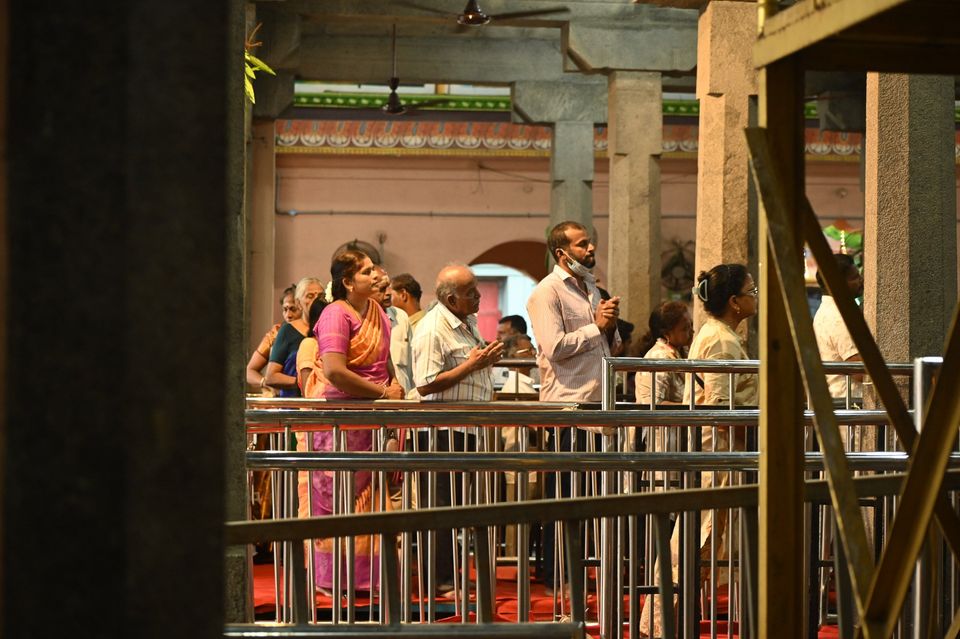
Vinayaka Pandal Visits
The last of our morning Vinayaka Pandal visits was to the one at the very end of Vanniar St, one block from the seashore. We are told that it is the oldest pandal of town, 47 years old. This year they have Vinayaka in gym-going demon-slaying form, called by everyone the “Six-pack Vinayaka”. And indeed not only Vinayaka, but the demon and the not-so-little Mushika all display a most chiselled physique. At the pandal, we find two boys playing with a small clay Vinayaka, applying vibhuti and kunkumam on Him. Reminds us of playing with choppu sets. We reflect on how these are ways in which the neighbourhood supports and brings up its children, even if nobody from the neighbourhood is always present. It seems, and one indeed hopes so, that these events have the effect of firmly grounding and rooting the kids. Not just by bringing the neighbourhood together, but by giving the boys a focal point in religion – albeit with plenty of liberty to adapt the deity to the boys’ own natures and inclinations. It remains nonetheless a distinct connection of the boys with the religious and cultural tradition. The total cost of Vinayaka is based on footage (2000/- we heard?). The Vinayaka pandals and the journey of pujas and rituals outward from temples to streets is much thanks to Bal Gangadhar Tilak. We had some thoughts about how the temple would have been the centre of social and economic life back in the day. How values emanated from the temple, shaped the social life around it, and came ba
Read more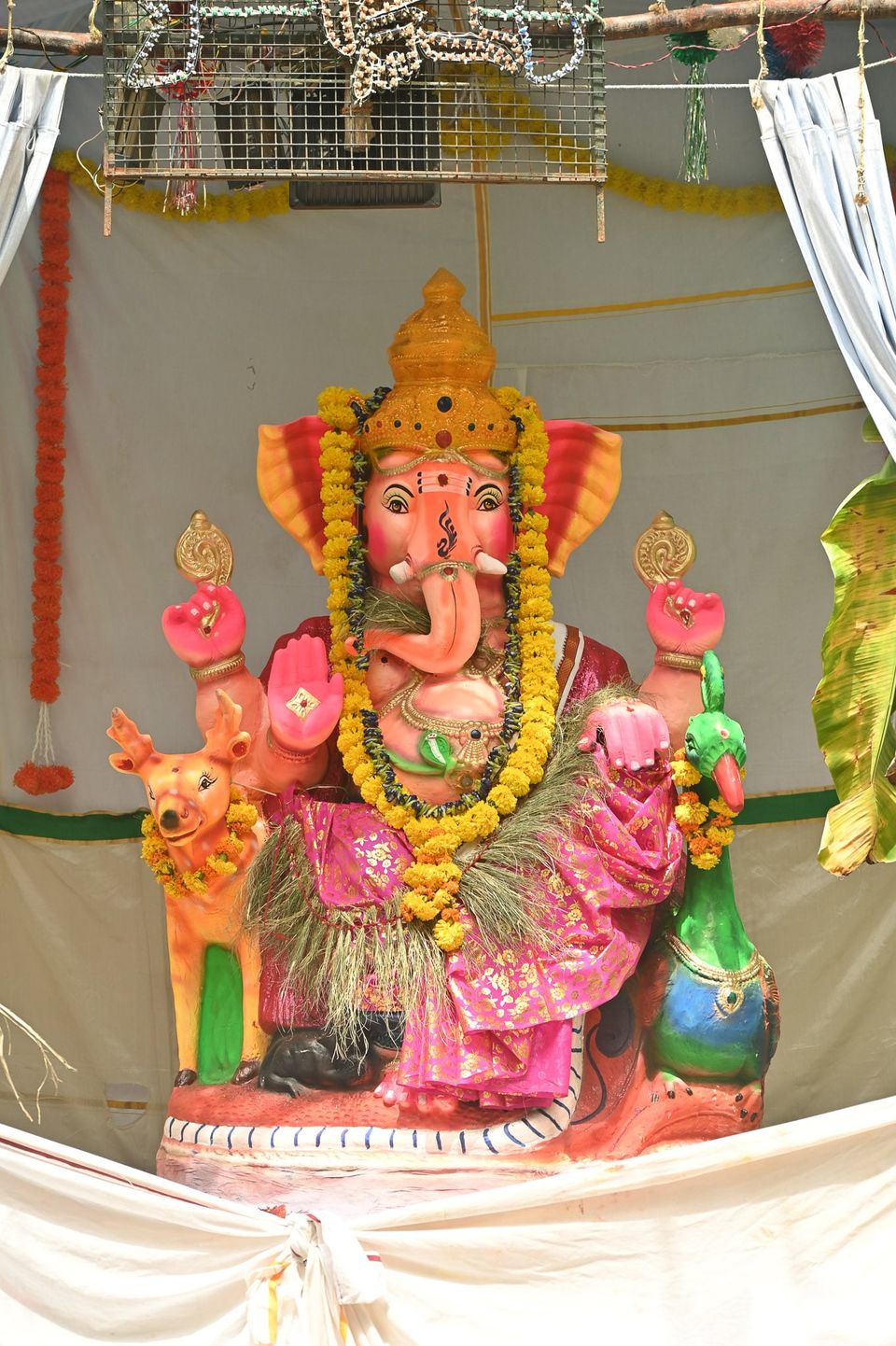
Conversation with Natarajan Periyavar
Missed It Went to Kamakshi Amman in the morning to try to salvage the error of missing Vishwakarma Jayanti yesterday! Some notes gathered [and placed on the ritual calendar document] after speaking to Periyavar: The Vishwakarma Jayanti did happen on Sep 17 – we missed it. It was the classic abhishekam-alankaram-deeparadhanai for Vishwabrahma and Gayatri. Dr. Sankaradevi was there as well, and spoke of the history and origin of the Vishwakarma community. This was followed by a meeting among members, possibly about the Kumbhabhishekam proceedings. Periyavar goes on to tell us about Dr. Sankaradevi’s maternal grandfather, Subburaya Chettiar, owner of Valli Vilas, who was the one that made Periyavar join the Tevaram Pathasala in Cuddalore, and eventually appointed him at this temple. The afternoon and evening were reserved for visits by MLAs and the CM. We observed today’s conversation to again demonstrate the recurring pattern of people or institutions placing themselves within a broader network, as seen with Periyavar rattling off Chettiar names and familial connections and how he was groomed by them.
Read more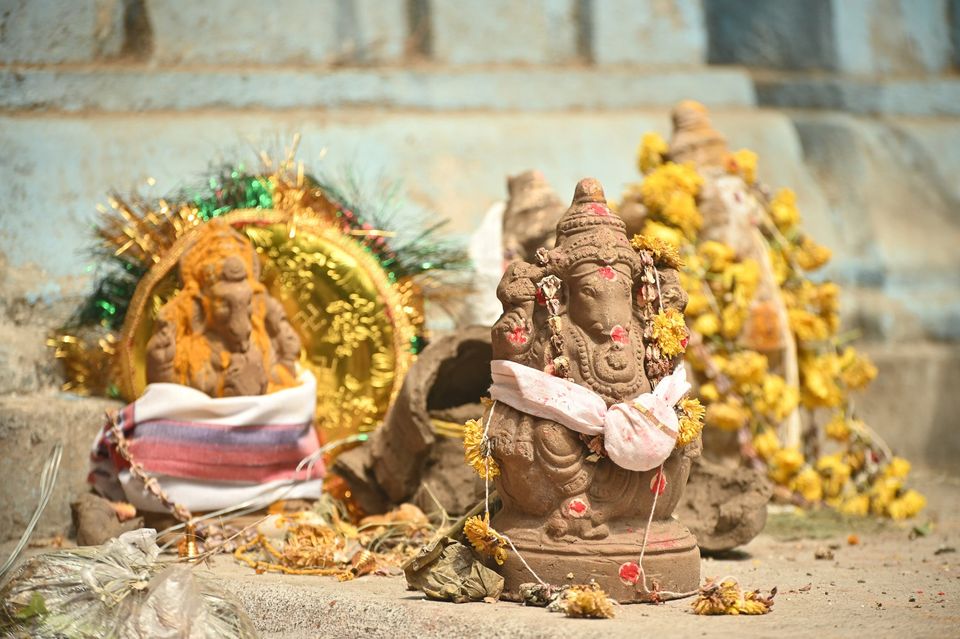
Vinayaka Chaturthi Pandals
Vinayaka pandal hopping. Most were closed, only saw the Vaithikuppam Beach and Ambedkar St ones. Both are run and organised by young boys of the neighbourhood. It was surprisingly wholesome to see these boys invested in putting up the pandals.
Read more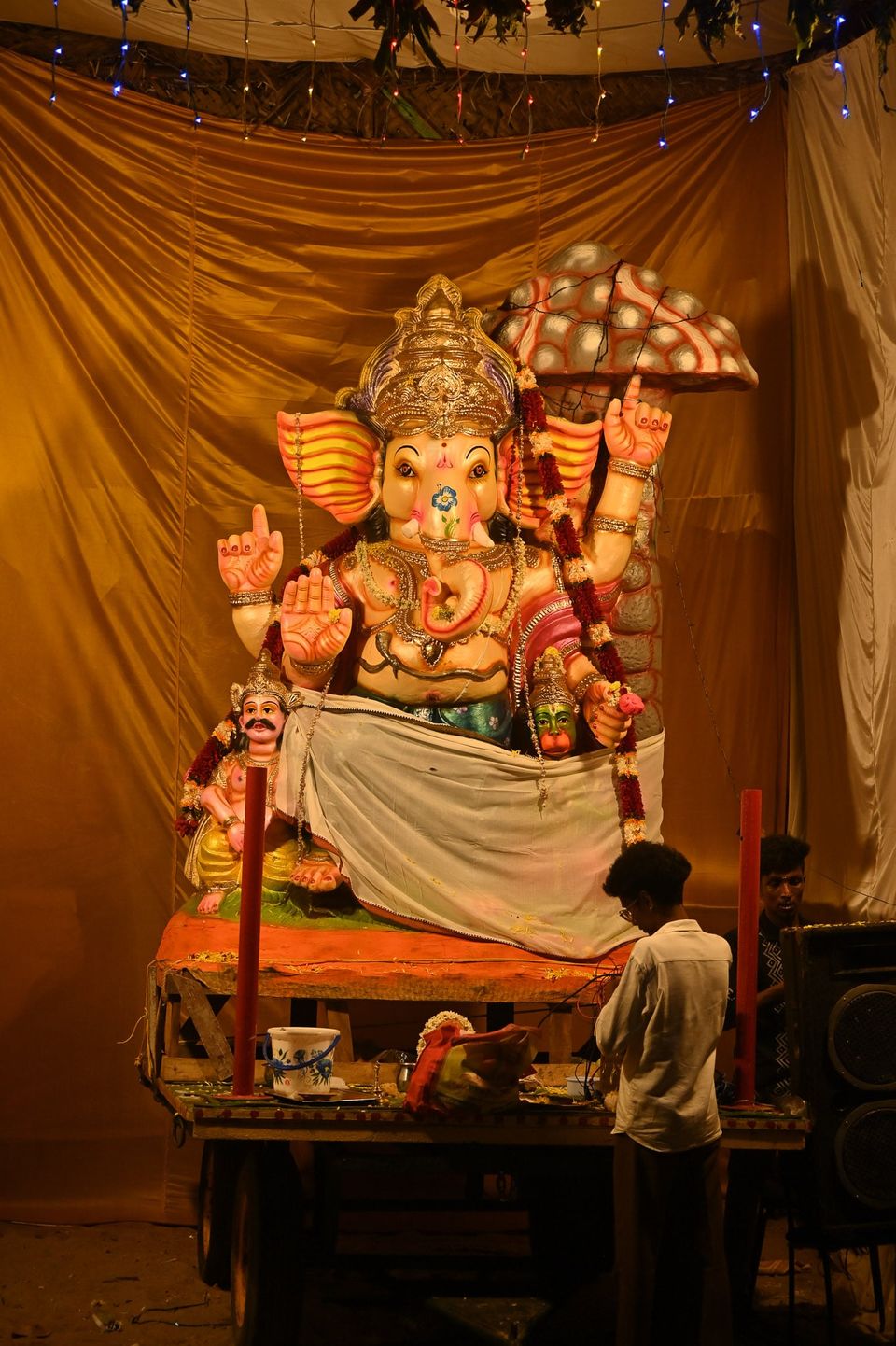
Brahmotsavam Day 5
Sundara Vinayaka’s Brahmotsavam ul-purappadu was an uneventful affair. A few ladies from the neighbourhood are there. Unclear what the pusari officiating knew or could do. Rani Madam sitting and reciting Potri with the ladies and something similar during the purappadu. But the ther they have for the inside rituals is charming.
Read more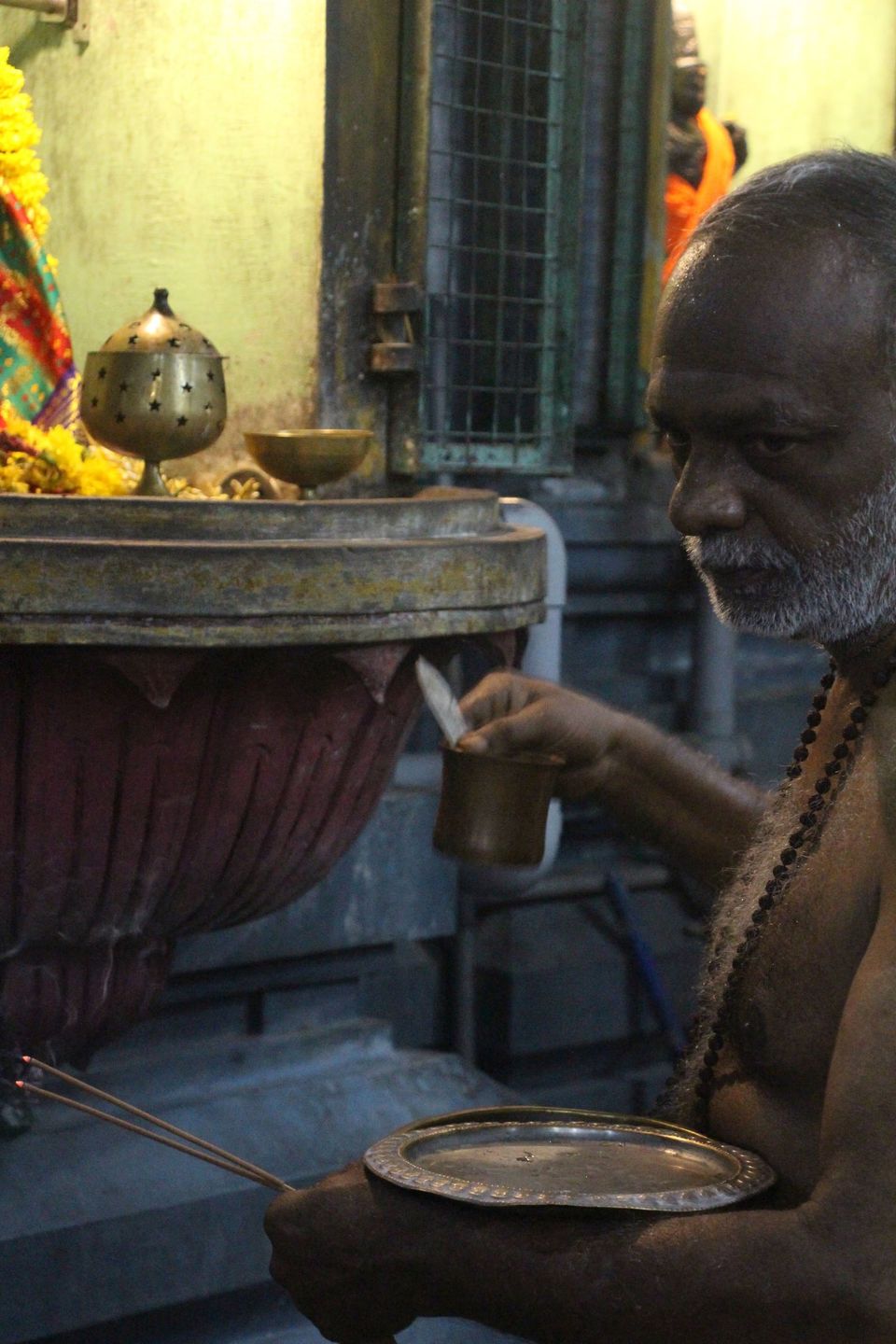
Desikar Utsavam Day 5
Desikar sevai and purappadu in the evening. There are 7 adhyapakas singing, while Krishna Yajurveda parayanam goes on outside Andal sannadhi. Purappadu begins around 730pm. Desikar comes outside the ardhamandapam, facing and awaiting Perumal’s blessings. Thathacharya loudly announces the coming of Perumal, and Perumal's Sadari comes out to bless Desikar. Desikar goes on three ul-purappadus after, stopping at all corners every time, and once in front of the mirror on the first round. There are no interactions with any other shrines. No blessings to be got from or given to the alvars, Anjaneya or Manavala Mamunigal. Shekhar Mama says that that happens only for Perumal or Thayar’s purappadus. So when they stop like so, is it Perumal receiving or giving blessings? At the end of the third round, outside his shrine, Desikar is offered aradhanai with a kumbham, presented food, and made to dance before returning to his shrine. This is followed by some more singing for the saattrumurai marking the end. Hayagriva Koyil Venkatesa Bhattacharya’s wife tells me: Perumal’s nakshatram is hasta. Revathy for Ranganatha. Thiruvonam for others. She also talks about the composition of the Paduka Sahasram following a competition. Krishna Yajurveda Parayanam: the one man who asks me to take video is from here, but the others have come from Chennai for this. Krishna Yajurveda, samhita bhagam? Mantras are related to yaga. Krama Parayanam, recitation done in arithmetic progression—1-2, 2-3 etc. They a
Read more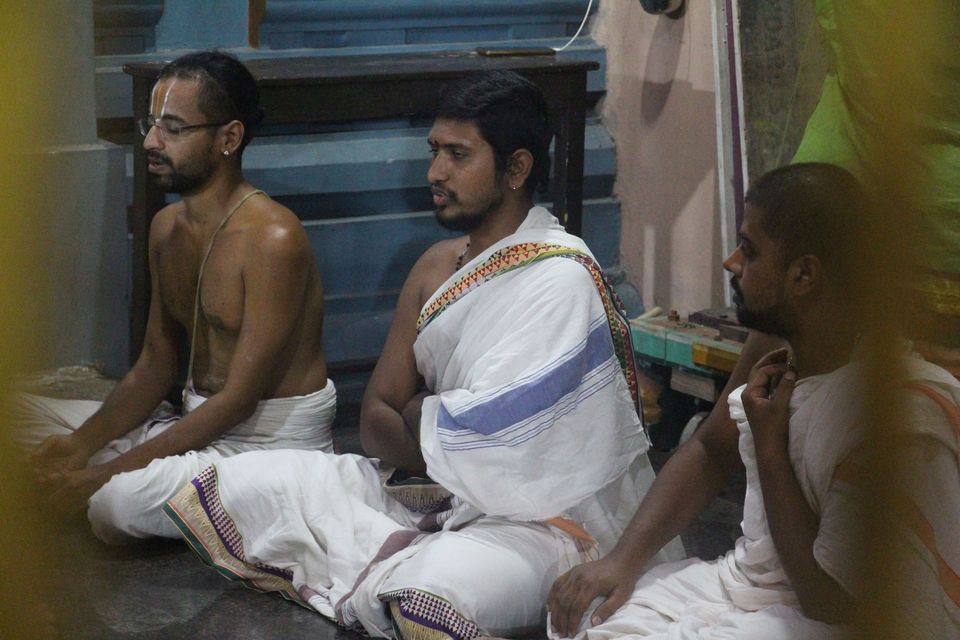
Shukla Panchami Perumal-Thayar Thirukalyanam, Desikar Utsavam Day 3
Aavani Shukla Panchami is the fixed tithi for Perumal and Thayar’s annual divine marriage. We go around 930am to check the state of affairs. We were puzzled to find a Desikar aradhanai going on as we came in. We were entirely unaware of the Desikar utsavam having begun already. We hear that it apparently began on Sunday the 13th. We are also startled by the large stage built on the Southern prakaram for the Thirukalyanam. The startle was largely because when the patrikai mentioned thirumanjanam for Perumal and Thayar, we assumed it would be two separate thirumanjanams for the two moola murtis, and consequently had not brought our cameras along. Instead we found this large stage, with the Perumal and Thayar utsava murtis being prepared for the anointment. Of course! How did that not come to our minds? We rushed to fetch our cameras. Upon returning, as we waited for the thirumanjanam to begin, we were briskly called for help. Tagging along behind the man who reached out to us, we soon found ourselves sitting outside the Pandarinathar shrine, knotting manjal (yellow) threads which will be distributed after the kalyanam. Fair to say that we gladly allowed ourselves to be ‘roped’ into the work, and become ‘threads’ in the organic fabric of the temple’s functioning. It is only around 11am that the Thirumanjanam begins. It is very extensive – the substances never end! Milk especially simply kept flowing, and the assortment of fruits came down on the deities like an avalanche. PM – e
Read more
Brahmotsavam Day 2, Vinayaka Chaturthi Vizha
Abhishekam was at 9am, and we reached only after it was done. Alankaram being done by a local pusari. He was also doing the alankaram – a simple one – for the utsavar, a Vamamukhi or Idampuri Vinayaka to mirror the form of the main murti. Got good pictures of the beautiful bronze. The form of an elephant pervades all of Vinayaka, not just his head. Noticed that other than the pot-belly and stout arms and fingers, his legs are also very elephantine, thick like tree trunks, supported by broad sturdy feet. Alankaram done for moola and the two utsavars - and we saw the aradhanai. It was rather deserted, with Rani madam herself not present. There was cooking to be done at home, so we left. The ul-purappadu should have happened soon after then.
Read more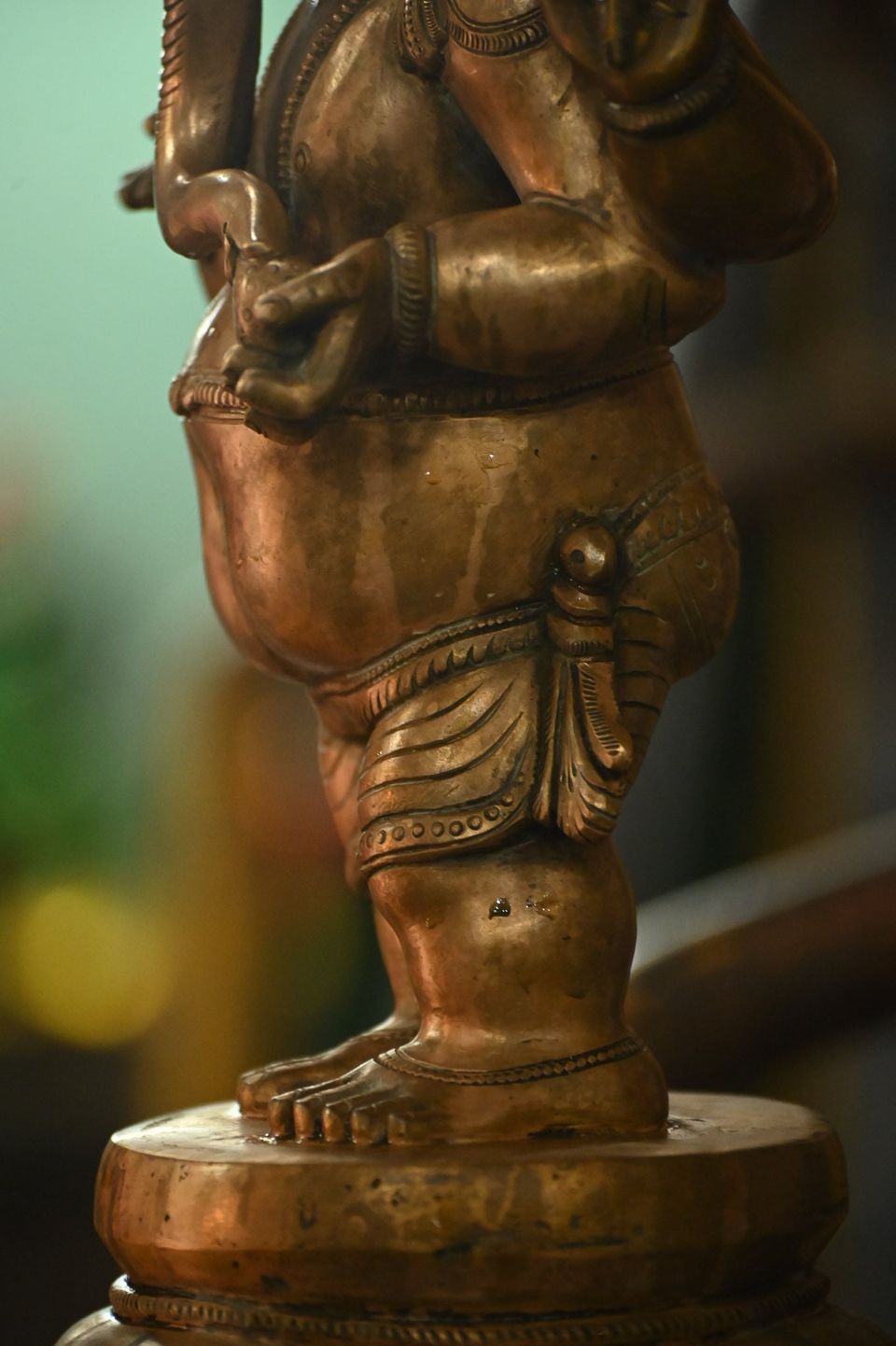
Vinayaka Chaturthi, Gangai Vinayakar Thirumanjanam, Alankaram and Veethi Ula
6am Thirumanjanam 9am in special decorations [சிறப்பு அலங்காரத்தில்]6:30 pm street procession [வீதி உலா உற்சவமும்] We walked into the Gangai Vinayaka Temple just as the puja was going on. Vinayaka inside was in chandana kaappu, right leg crossing over his left, with an arm resting on it. He also has an erukkam malai hanging at his base. In the evening also we reached there just as the utsava murti alankaram was about to be offered puja. The alankaram was beautifully done with a lively selection of colours, although Vinayaka’s body seemed a little long for his proportions – something we hardly see with Nandhikeswara priests’ alankarams. There was a rather precarious loading moment! but all went well.
Read more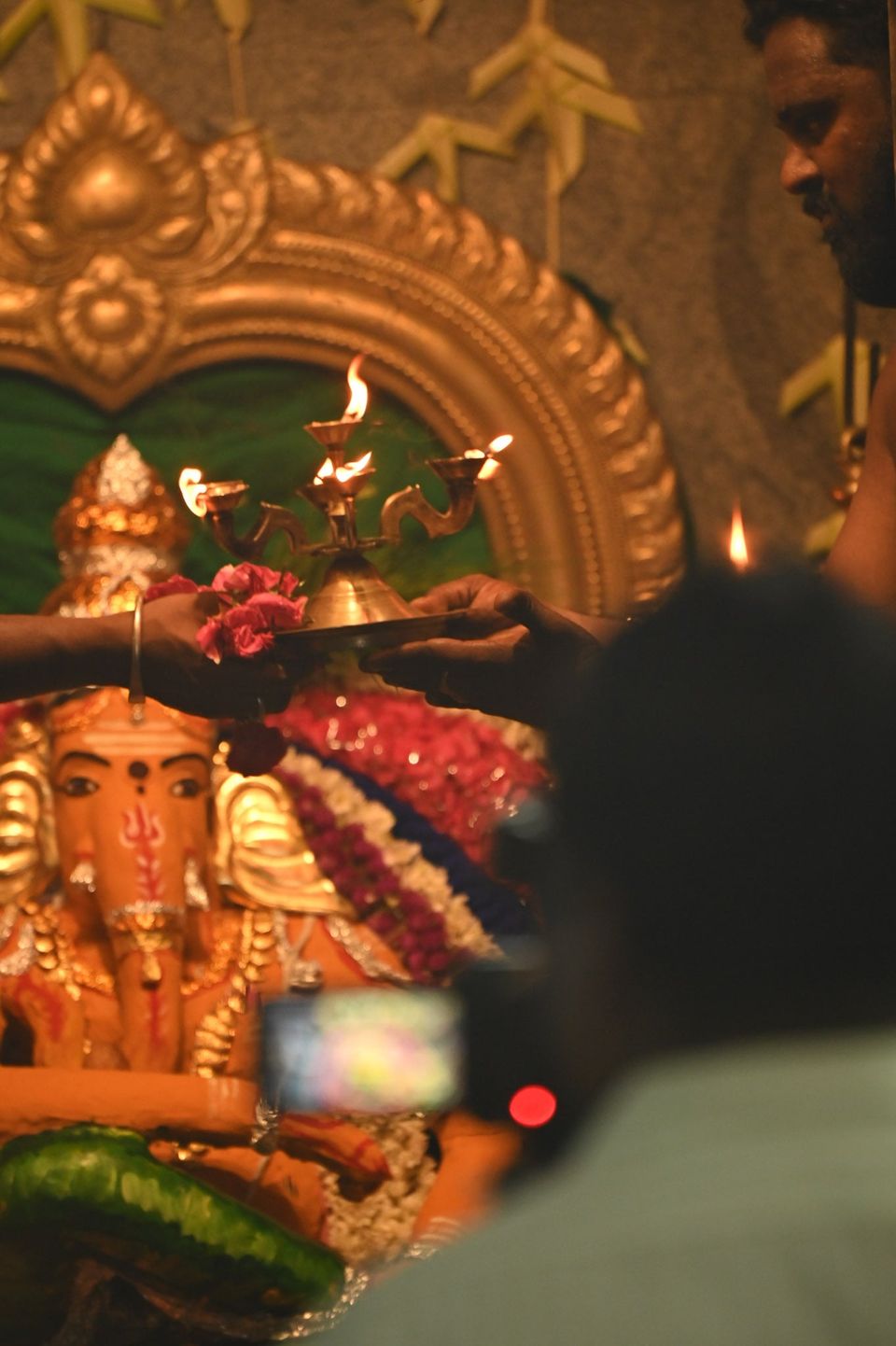
Vinayaka Chaturthi
We could not go, but this is the information from their notice board: “Abhishekam Kaalai 9.30 Manikku Sri Moolavar Karpaka Vinayaka, Sri Vayirathu Vinayaka, Sri Siva Vinayaka, Sri Shakti Vinayaka, Sri Pollapillaiyar, Sri Nrithana Vinayaka, Sri Somaskantha Vinayaka, Sri Balaganapathi, Kasi Viswanatha Vinayaka, Matrum Sri Sithi Budhi Vinayaka Udan Deeparadhanai” How does Angalamman have 10 Vinayakas?! We can think of just two from all of our visits during all these months! “Iravu 7.00 Manikku Sri Sithi Budhi Sametha Vinayaka Veedhi Purappadu Ubayathaarar: Namasivayam Chettiyar Pandu Devasthanam”
Read moreThe One Chaturthi to Rule Them All
We did not go because of excessive crowds and photo-taking restrictions. But this is their event schedule from the patrikai: “On the upcoming Monday, 14.09.2026, on the occasion of the Sri Vinayaka Chaturthi festival, the temple doors will open at 4:00 AM in the early morning. On behalf of the temple administration, special Abhishekam (ritual bathing), Dhoopa Deepa (incense and lamp offering), Neivethiyam (food offering), and Deeparadhanai (worship with lit lamps) will be performed for Sri Manakkula Vinayaka. After performing the Deeparadhanai (light offering ritual), "Moolavar Sri Manakkula Vinayaka" will bless devotees adorned in a gold armour (Thanga Kavasam).” Livestream (Thanthi TV) of the entire event on Britain Tamil Bhakti
Read moreNine Bathing Vinayakas
Nine Vinayakas of the temple got a full abhishekam, with singing and chanting. The nine are: one outside and to the left of the gopuram, two inside, on either side of the gopuram, Narttana Vinayaka below the mahabalipeetham, another Narttana Vinayaka on the Southern Koshtha, Polla Pillaiyar with the Nayanars, Bhaktapuriswara shrine’s Vinayaka Sthalavrishka Vinayaka, Adigu Vinayaka (the moolavar), and the Vinayaka utsavar. We stayed only for the first 4 abhishekams, which alone took an hour or more. We noticed that the Nayanars were all unclothed, presumably to get new vastrams today. The young priest doing the abhishekams is thorough with it, not rushing through any of the substances. We leave as the abhishekam for the Narttana Ganapati on the southern koshtha begins – it is perhaps the first and only time we watch an abhishekam take place there. The evening procession begins at 9pm as we reach there after Chetty. A simpler, smaller alankaram, with Vinayaka alone. He looks rather slim. We notice a little Nataraja pendant on his chest.
Read more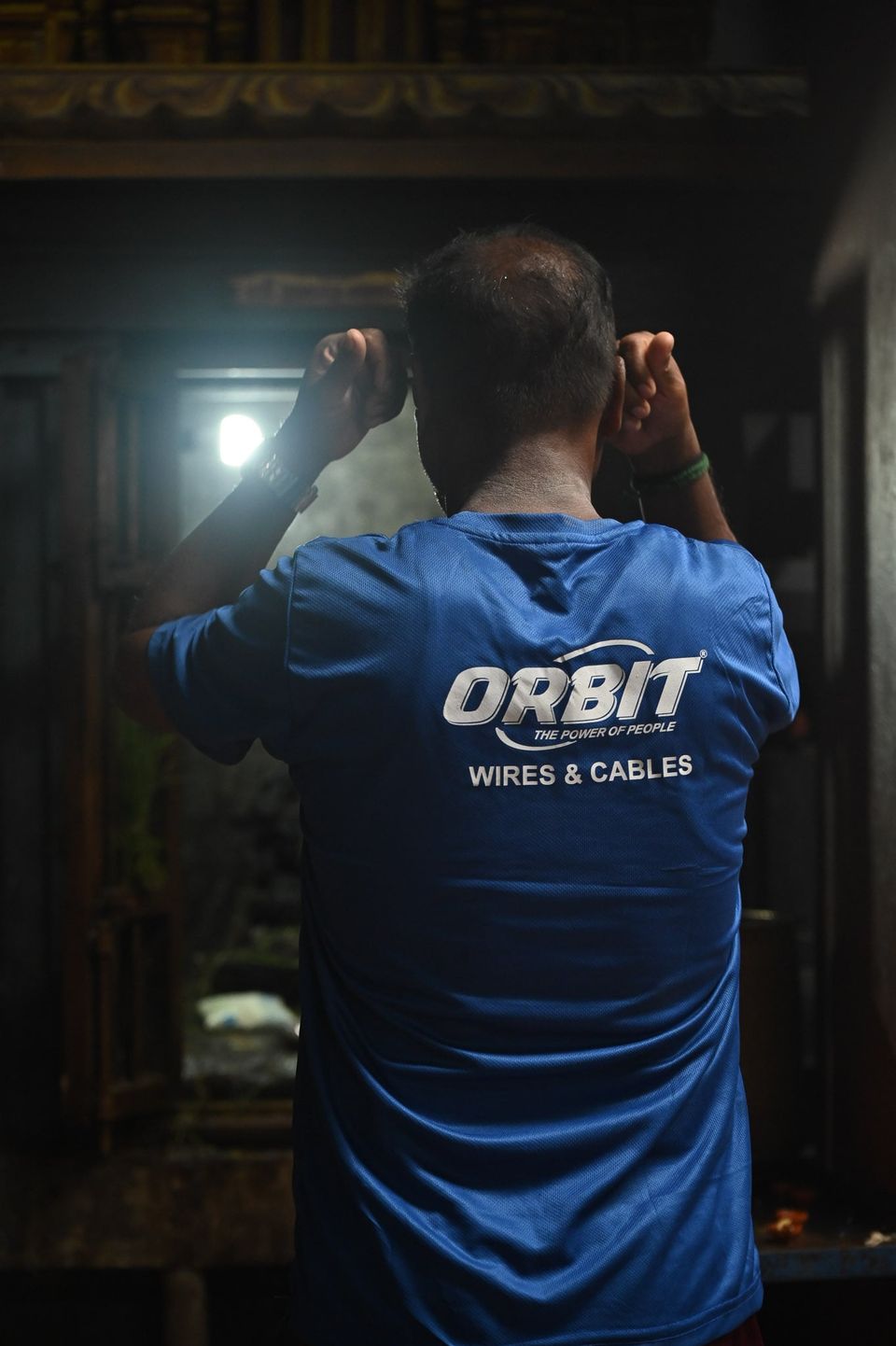
Vinayaka Chaturthi
A local artist has been called in to draw a photographic kolam of Balavinayaka. Nine Vinayakas get abhishekam here: Karpaka Vinayaka, Vaayir Vinayaka, Siva Vinayaka, Shakti Vinayaka, Polla Vinayaka (who is said to have revealed the tevaram manuscripts to Nambi), Narttana Vinayaka (koshta), Somaskanda Vinayaka, Bala Ganapati (outer prakaram, back), Kashi Viswanatha Vinayaka, Siddhi-Buddhi Vinayaka. The evening procession begins just as we get there. One ul-purappadu then out and away. Perhaps the most beautiful Vinayaka procession alankaram of the day. The colours are bright and vibrant, but not extravagant and flashy. They’re as though subdued, yet rich and deep. His proportions are very well balanced. And adding another layer of charm and puzzling curiosity is the elephant vahana on which this elephant-headed-one is carried!
Read more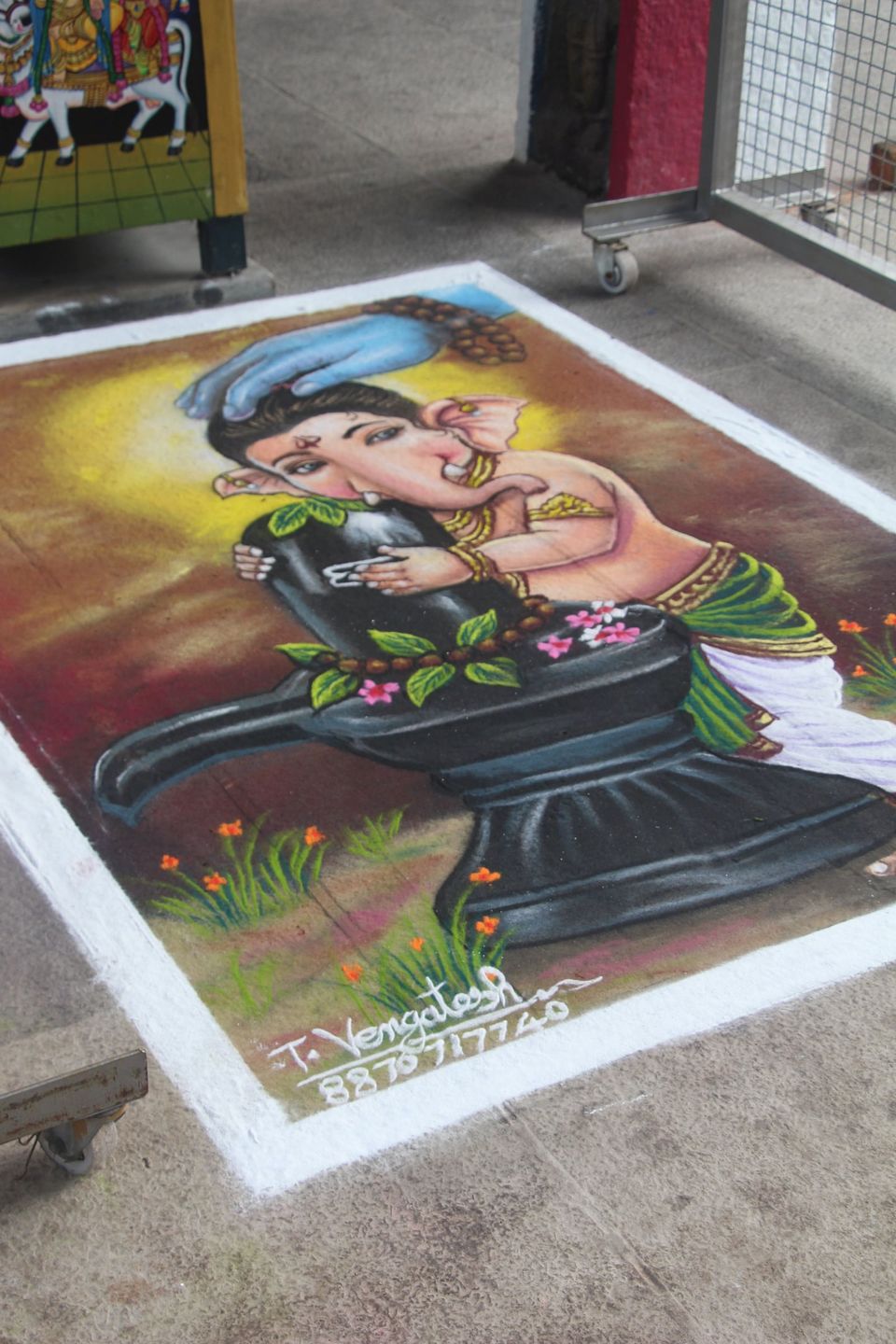
A Little Big Day?
Big day for Sundara Vinayaka as their Brahmotsavam begins – one would think. But perhaps not, given the air of laidbackness that permeates. The time given on patrikai: 6am to 9am. I get there at 630am to find the temple still locked from the previous night. It takes me three back and forth trips over the next 2 hours to finally catch them – not beginning the puja – but beginning to prepare for the puja. At 9am. That’s a three-hour delay. At 9am the priests begin to settle in, tying thread around the kalasas and pulling out packets of manjal, kunkumam, etc from their bags. The two utsava murtis of Vinayaka are taken into the garbhagriha. This preparation goes on for two hours, while some odhuvars and assistant priests trickle in. Finally, at 11am, five hours after the scheduled time, the homam begins. The abhishekam inside also happens simultaneously, saving a handful of minutes after the 5 hour delay – “the economical Indian”, I thought to myself. As the homam and abhishekam are completed, kalasas are carried by Rani madam and her husband for three rounds of ul-purappadu. Kalasa abhishekam is done inside, and the flag is raised. This happens rather unceremoniously, with one bell tinkling, and nobody really paying much attention. The moola Vinayaka and his two utsavars are seated without any alankaram after their abhishekam. Once the flag is raised, everybody waits for the alankaram which is done by a rather young priest-boy, maybe 13 or 14 years of age. Once done, he is prais
Read more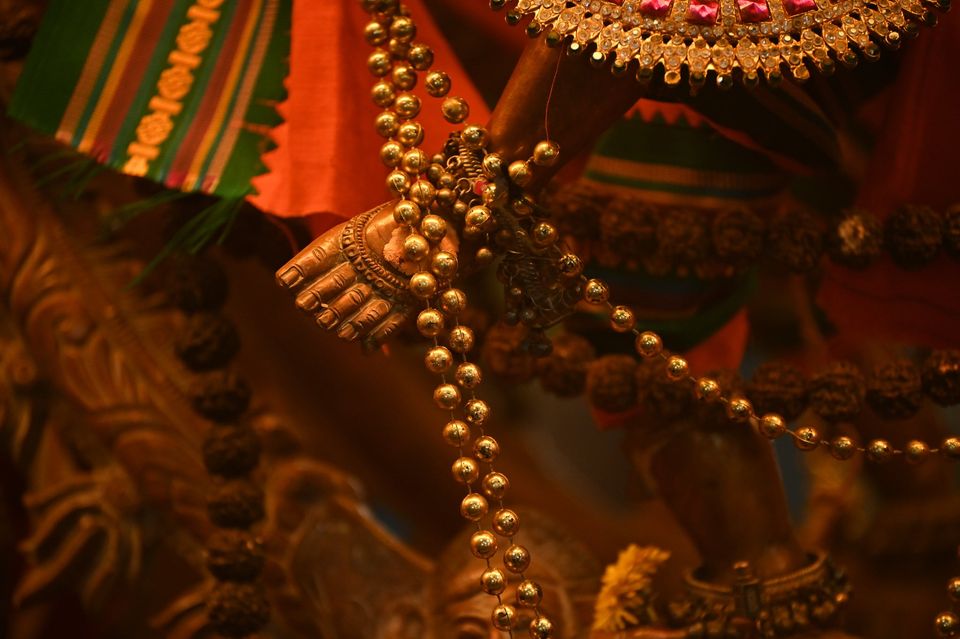
Telugu Observances in Tamil Country
We found from their whiteboard yesterday: Sarva Amaavaasai (Polaala Amaavaasai), but we could not go for it. Polala Amavasya (also known as Polamba Vratham or Shravana Amavasya) is a traditional Hindu festival observed on the new moon day (Amavasya) of the Shravana month in the Telugu calendar; Dedicated to Goddess Poleramma (or Pochamma).
Read moreThursday Kubera Yantra Archanai
Their unique Kubera yantra archanai happens on Thursdays and has been very elusive for us. Even today we are unable to go for it. The Kuberan Yantra was apparently present on the building site when the temple was constructed in 1921, and identified as such by Kanchi Periyavar (or someone allied). A fitting presence for a community of merchants, many in the precious metals and fabrics trade! An Abhishekam to the Yantra happens monthly once on Poosa nakshatram. Archanais are a weekly affair.
Read moreBrahmanda Set Up for Periyandavar
This was actually a private tonsuring and ear piercing ceremony done on temple premises, as a ritual activity for those who see Periyandavar as their kula deivam. Jnanavel Swami invited us to be there, for “coverage” and to spread awareness about these sorts of pujas. He’s also walked us through the stone inscriptions at the back of the temple – his own name appears on several occasions. Deekay enterprises is another big donor – they’re an import-export company, Jnanavel Swami tells us. The pusari who is hard of hearing is the “specialist” called in specifically to create the periyandavar temple-in-temple. He uses semmannu to fashion all the deities; they are just semi-conical structures with a flat base on which to stand. Lingam, by any other form. Kolam lines mark out where they stand and delineate the sacred area as a whole. It is a devar sabhai. Outside this delineation, facing the devar sabhai is Mutthalarajan – alcohol consuming, bread-eating, meat-eating Mutthalarajan [though it remains to be verified who it is]. Outside to the right is Puttru/Poothamman – and she’s made in the anthill form, too, in accordance with her name, and is eventually dressed in a sari and decorated with neem and jasmine. To the left is a figure who must be Vinayaka, though a man we meet (a photographer, curious about our orientations and work) tells us that that place was occupied once by a rural/folk being or divinity that has now merged and become associated with Ganapati. He didn’t sound dr
Read more
Perumal’s Four Point Uriyadi Utsavam
8am - Venugopala and Navaneethakrishnan come out of the shadows of the Ramar Sannadhi for their single annual appearance. One would expect this one-off emergence to be a great crowd-puller, but the temple is surprisingly empty. Perhaps the keenest of devotees had their fill past midnight last night, when all the Krishnas had an aradhanai under the moonlit sky. The two Krishnas are exquisite in their yellow-red adornments and their emergence is splendid. Albeit only an ul-purappadu, watching Navaneethakrishnan joyfully dance butter-in-hand on the morning of the uriyadi utsavam was very sweet. After 630pm - the uriyadi utsavam’s purappadu began. It was Perumal – in the form of Krishna climbing up a ladder towards a butter-pot – who came out. Once on the street, He stopped along the southern madaveethi to allow for dances followed by the uriyadi. We can’t tell if the dances with the sticks are South Indian or Garba-Dandiya inspired. The Gopis nonetheless had the effect of urging Krishna to reach and smash the butter-pot. The uri itself was merely decorative paper or plastic, with tiny pots hanging at the bottom. Once the boys stepped up with their sticks, it was all drama and excitement. The uri hanging from a pulley was pulled and controlled by a gentleman who kept it teasingly out of the boys’ sticks’ reach. To add to the stimulation, bucket after bucket of water was splashed on the boys’ faces as they reached out to smack the uri. After a significant back-and-forth, the uri w
Read more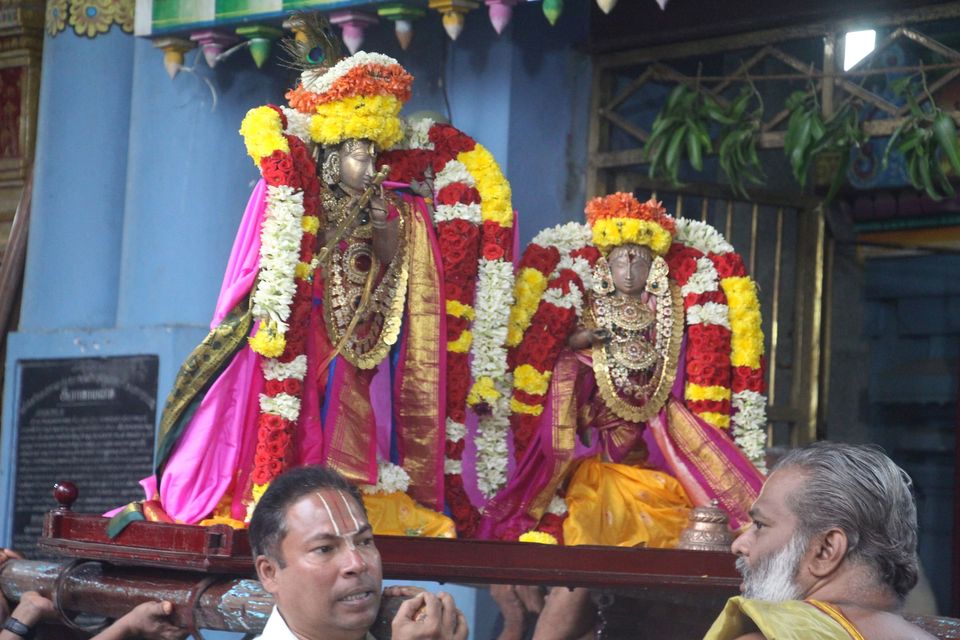
Chetty Perumal’s Two Point Uriyadi Utsavam
Uriyadi Utsavam only at two points. First South gate, then North gate. We catch them briefly as they complete the uriyadi on the Southern street. Unlike Perumal Koyil which begins uriyadi on the Southern road, Chetty ends on the Southern road because the Perumal comes out of the North and completes the uriyadi there first. We notice the splashes on the Northern road as we pass by a little later. உரியடி உற்சவம் – the words are உரி and அடி – the strung-together pots used to keep butter and curd out of the hands of mischievous, hungry children (and “foraging” animals), which are then beaten (adi!) with a long stick while the task is made more complicated by the showering of water by “screeners” on the sides. A decorated triangular “flag” that’s meant to stand in for an earthenware pot (filled with curd, turmeric water, milk, or sweets/coins) along with murukus, athirasam and other treats strung alongside is suspended high above the ground using a rope-and-pulley setup. A man controls this, making it go up-down, while young folks hit with a long stick to try to get the prize. The imaginary pot is of course venerated as an extension of Perumal, whose utsavars stand and watch the show. Likewise, the young men participating in the Uri-Adi are in yellow veshtis, with just banians or bare-chested. A gamefied sevai, perhaps!
Read more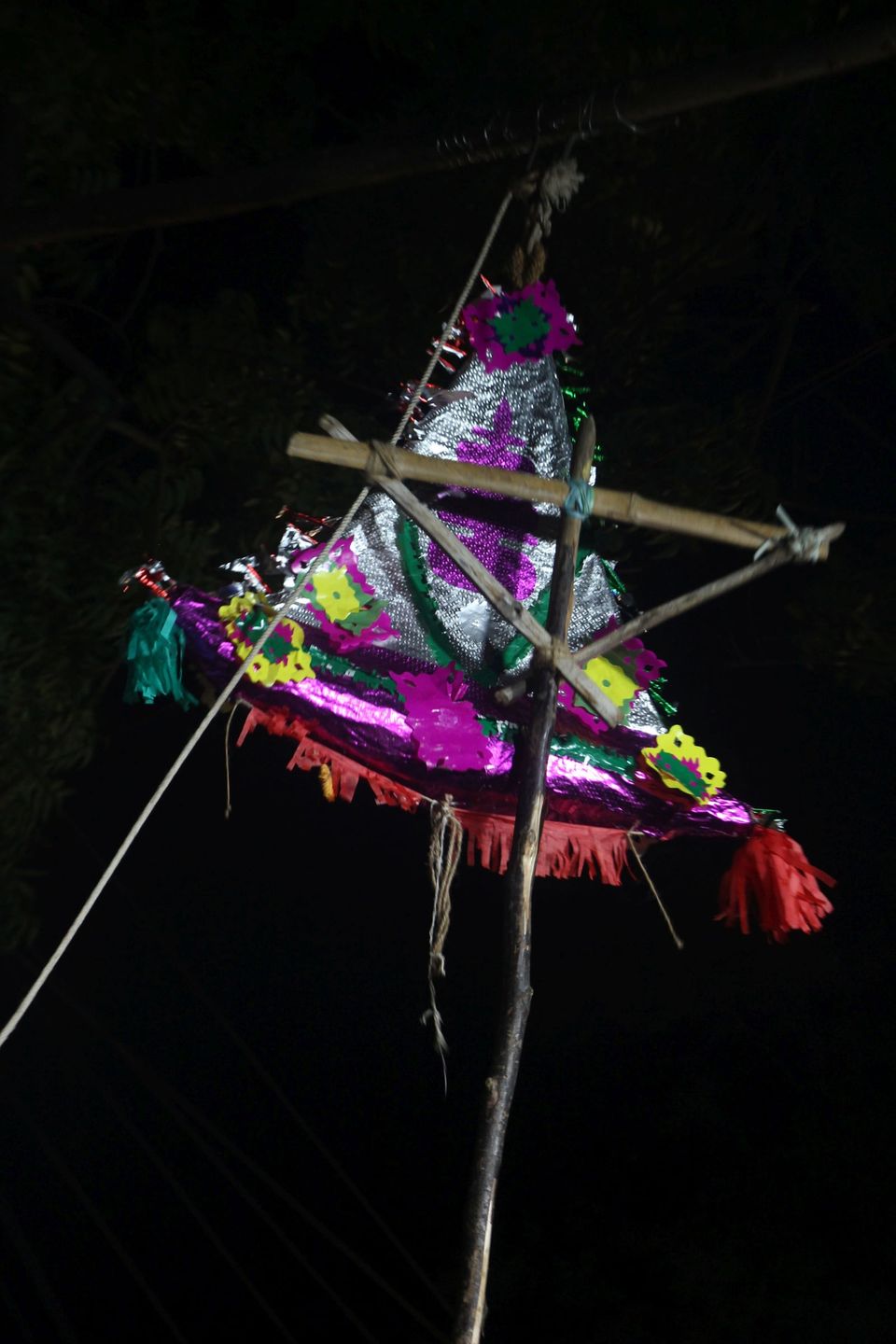
A Temple Grows from a Temple
There is a Krishna shrine just outside the Sundara Vinayaka temple, which turns out not to be the temple’s own at all. A neighbourhood group used to rent a statue and do their Jayanti pujas, but over time this became a proper physical shrine which shares physical space (the position of the shrine itself, the use of the road outside, the use of the temple space itself for alankaram) – and I’m not sure whether to read this as compulsion or cooperation. During Jayanti, they are doing a Sudarshana homam, Krishna Abhishekam was supposed to start 1030, but hadn’t begun by noon. We took a few representative photos. We didn’t want to appear to support a temple that was a bit at odds with the family’s temple which we were following for this project. The priest performing Homam was from Chetty Koyil, also the helper and the nadaswaram-thavil players. How can sivacharyas perform sudarshana homas? We ask him. Vaishnava priests only for Perumal, but Krishna was Yadava so anyone can do, was the reply. In the evening, we came again, to see some kids there dressed as Krishnas as there are many yadavas in the neighbourhood; alankaram for the Krishna being done (to make him look like he’s eating butter). Actually, we came to try to see the 4pm Kalabhairava abhishekam – but hadn’t started by 5, Rani ma’am calls me at 6, but I’m unable to go then. They’re having trouble keeping up with the demands of the temple and are in search of a priest to do regular nityapadi pujas. Her atthai installed the
Read more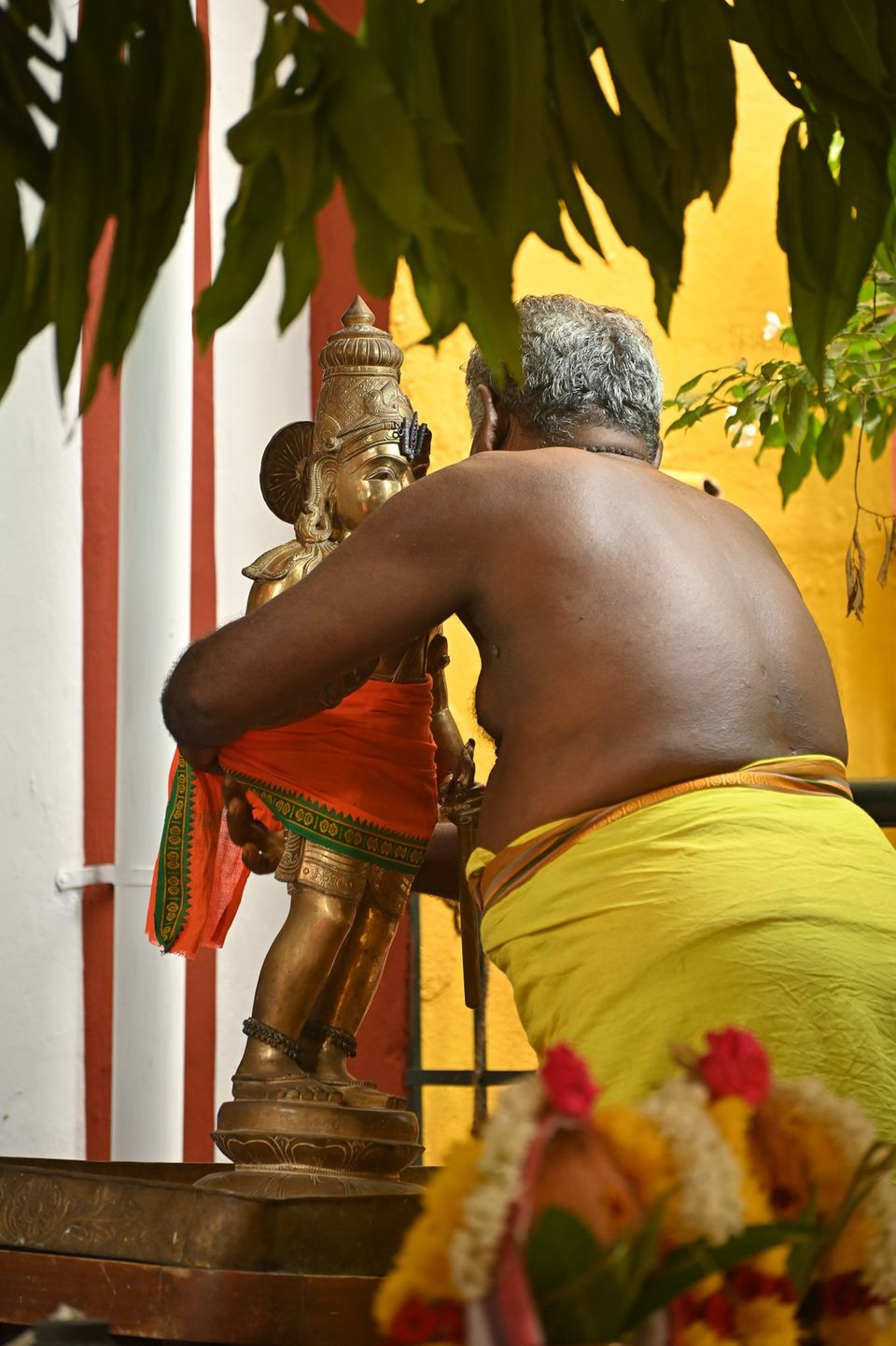
Bhairava Abhishekam
In the morning, there was an abhishekam done for Bhairava, sponsored by the lady who seems to carry so much at this temple – the trishati archana, the Sankatahara chaturthi homam, the Navaratri gopujas. But this was not the theipirai ashtami abhishekam! This happens in the evening around 6pm.
Read more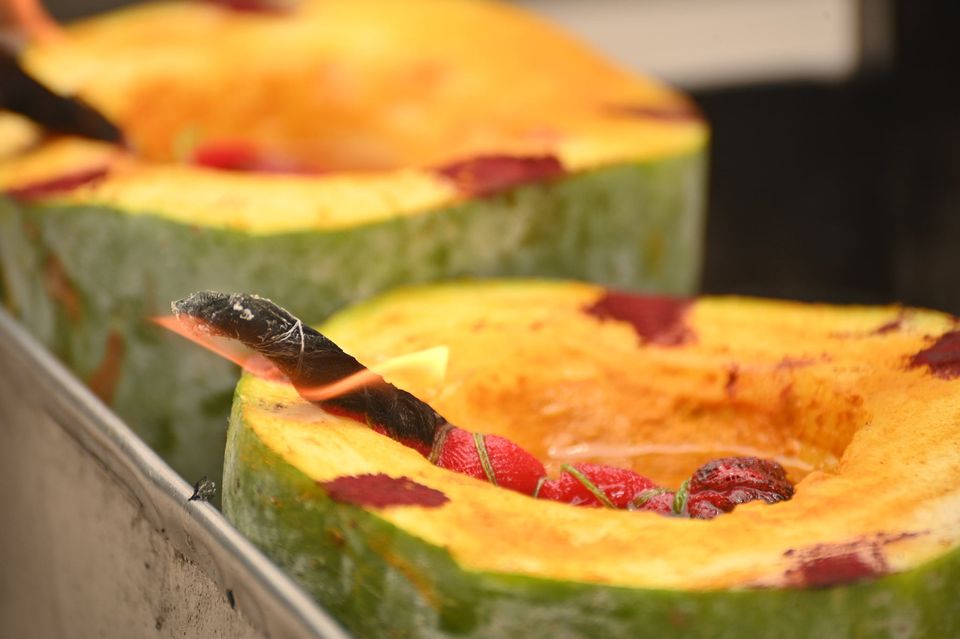
Pandarinatha and Krishna Utsavar Thirumanjanam
The Pandarinatha Thirumanjanam happens in honour of His nakshatra naal, which is Rohini nakshatram. At 930pm (supposed to be)/ 1045pm (when it actually begins) there was a Perumal, Venugopala, Navaneethakrishnan and baby Thavazhum Kannan Thirumanjanam. Finishes by 1145. We leave by midnight as the rest wait on for the moon to grow visible as it is only then that the puja will be completed. Observation made by the Draupadi Amman temple priest at a different moment but relevant here: Gokulashtami and Krishna Jayanti fall this year on the same date. So that means that some years they fall on different dates? How? The explanation is that people observe the moment differently. Most observe the ‘tithi’ – the ashtami (eighth day of the month) of the month Shravan/Aavani, in which case it is by its very name associated with the tithi, Gokulashtami or Janmashtami. But there are others who observe the Aavani birth star which is Rohini, and they call it Krishna Jayanti (or Sri Jayanti).
Read moreThanga Ther Ul-Purappadu
Lawspet Murugan Koyil puja begins with Vinayaka (pattern: Venkatesan gurukkal chants, then 2 others sing thiruppugazh in Tamil, there is a small aradhanai – this is repeated grandly in the main sannadhi, where there’s the full deeparadhanai, then the priest goes around all the other shrines while people follow, ending up at the utsavar where the full puja happens again including all lamps. Nadaswaram and Thavil throughout. Then someone brings the thanga ther, the utsavar is brought on and 3 of the ubhayakaras are turbaned [with the silk parivattam] [Shesha-vastra honour (Parivattam, பரிவட்டம்)] and they pull it once in the prakaram. Followed by another puja and the utsavars are returned to starting position (but still in the ther) while all the ubhayakaras present are given madaryada. The ther itself is a bit too gold and lit up but this feels right for this community’s expression of its aspirations and aesthetic sense. The point is more that this is done to their taste and according to their means, it’s neither too grand nor unnoticeable. And no compromise on the pujas, which are well done and feel complete. There’s a crowd but a quiet one, not unbearable, pushing etc. [*the parivattam is connected with the head being prepared to receive something belonging to the Lord. The person receiving the honour is being marked as one occupying a position of reverence before the Lord.] Murugan utsavar has a very simple alankaram. Satrified with gold, and one white malli garland. The up
Read more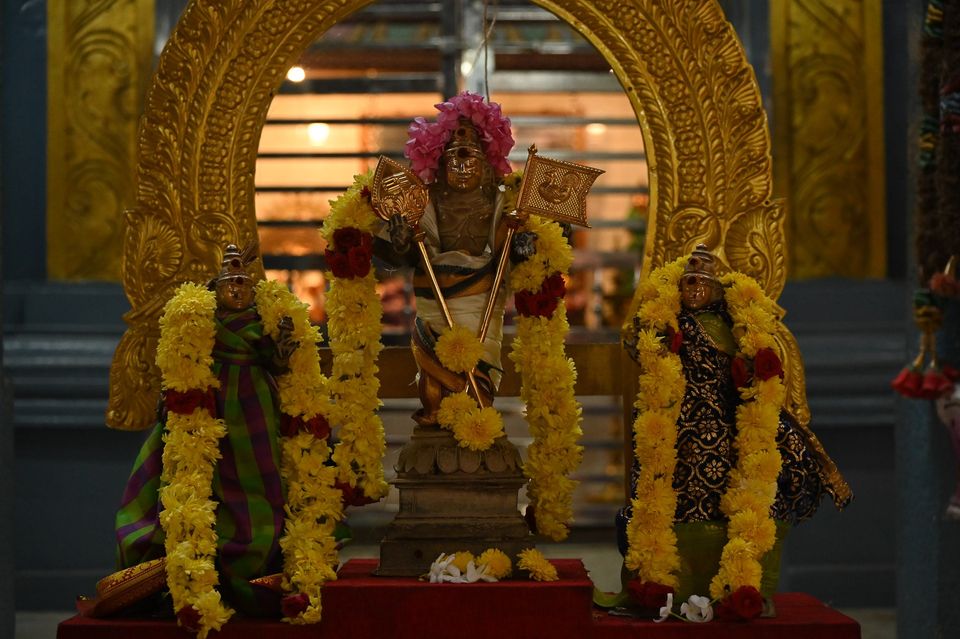
A Quick Stop and a Not-So-Quick Chat
Utsava murti abhishekam earlier in the morning. Crowd at Balavinayaka. Spoke for some time to a Gurukkal we know there about the growing impatience of the temple-going crowds with long rituals that are in fact more important than some of the others most often seen. For example, the Panchasana puja is supposed to be done along with kaalam pujai. Is it being done? It will take ½ hour, with the screen closed. Who wants this? Deeparadhanai and Alankara is what constitute “puja”--another instance of a movement in a devotee-centric directions that displace the full array of agamic/tantric ritual practices. What changes will this thiruppani bring? During a prior kumbhabhishekam, they broke the wall separating the temple from the current mandapam area. Per agamas, temples should have a closed inner prakaram (as it is in Perumal koyil); the circulation of devotees in this prakaram is part of what gives the power to the deity. But here that’s gone for the sake of a free open environment and convenience. He spoke also about Sanskrit and Tamil, so often pitted and in tension if you read the newspapers or listen to all those Periyar pethis out there: to see “mudra roopam” you need Sanskrit, but to rouse emotions there’s no language other than Tamil. He spoke for the place of each, placing emphasis on the former for visualising and on the latter for connecting. We thought it an interesting, integrative, and balanced perspective.
Read moreAll These Ways to Call to Vinayaka
Single woman ubhayam (the same lady who comes daily to do the Lalita Trishati archanai). Kalyana gurukkal and the other priest whom we’ve seen before doing the puja. Hardly anyone present at first, some doing circumambulations needing to be told not to cross the puja area. Slowly a group gathers, but it’s never very big. At the Chetty koyil, the crowd is bigger but the proceedings are not much different. Modakams are given as offerings to Agni! The priest who does the Durga abhishekam for them is officiating. A bit later in the afternoon, Nandhikeswara priests are at the Gangai Vinayaka temple, which is of course the Vinayaka shrine that pre-dates and was open long before the Nandhikeswara. The schedule here: Sri Gangai Vinayaka Maha Sankatahara Chaturthi: (31/08, Monday) 3:30 PM - 4:30 PM – Homam4:30 PM - 5:30 PM – Sakala Abhishekam, 108 Shankhabhishekam (Conch Abhishekam)6:15 PM - 6:45 PM – Deeparadhanai, Archana And as ever with this temple, the aesthetics are just absolutely perfect. We’ve by now seen so many Shankhabhishekams, but none where the conches are laid out this beautifully, in almost a perfect grid. They were laid out by the well, and the afternoon light streams in from behind there, so perhaps that had an effect as well. The agni kundam was just in front of the conches, and the priests sat on the N-S ends. They had books open and were reading Tamil script as all the pujas here are done in Tamil, but we forgot to ask them what specifically the recitations are.
Read more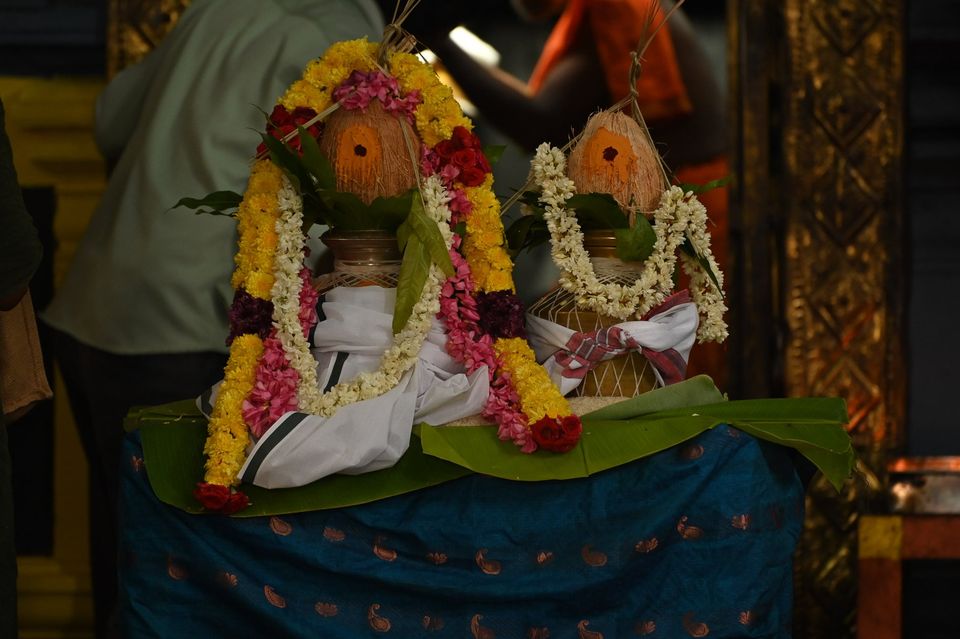
Aandu Vizha Day 2
Today is Mutthumariamman’s big day, with an early morning Gopuja, a second homam kaalam, a 108 Kalasa Abhishekam and finally this evening a Muthu Pallakku Veethi Ula Morning after 7:15 AM 2nd Kaala Yagam: Go Puja, Ashtothara Satha Kalasa Pujas, Special Mantra Puja.10:15 AM: Special Abhishekam for Sri Mutthumariamman, Homam, Purnahuti, and 108 Kalasa Abhishekam 11:30 AM: Maha Deeparadhanai, Prasadam & Holy Water (Teertham) distribution. 12:15 PM: Annadanam (Grand Food Offering) Deeparadhanai. 730PM: Special Chandana Kaappu Alankaram (Sandalwood Paste Decoration) and Street Procession (Thiruveethi Ula) of Sri Mutthumariamman in the Muthu Pallakku (Pearl Palanquin). Gopuja. Cow seems new, not used to this. Cow represents/contains all 33cr gods.The back is Mahalakshmi, front is her sister Moodevi (whose name should not be said), so the puja is always at the back and not the front. I heard a lot of “Kama” in the recitations, but maybe it was always Kamadhenu so the priest probably thought my question about this rather foolish. Kamadhenu is also well-known through its other five forms: Nanda, Sunanda, Surabhi, Susheela and Sumana. Also Kamaduha, Surabhi. 1030am - northwest and southwest kalasas used for koshtha murtis abhishekam. From southwest all, northwest 8. Ganapati and Pecchayiamman Kalasas used for respective shrines. Astra homam, done by Arasoo mama after the conclusion of the other abhishekams–while the other priest attended to the homam. A recording is on drive. Arasoo al
Read more
First Kaala Yagam
The biggest event we’ve seen at the Mutthumariamman Koyil so far, with Gurukkals brought in from outside to facilitate. We see some of the helpers from Vedapuriswara, and are told that Arasoo mama will come tomorrow, though today another priest we’ve not seen before is chief. Chettiars we see all the time at the Chetty Koyil are here, as ubhayakaras. THe evening schedule: After 6PM: 1st Kaala Yagam: Sri Ganapati Puja, Susthi Punyahavacanam, Panchagavyam, Ankurarpanam, Rakshabandhanam, 1st Kaala Athivasa Ashtothara Satha Kalasa Pujas, Special Mantra Pujas, Homams, Purnahuti, Deeparadhanai, and Prasadam distribution. Centre - Amman kalasa Around her - 9 Northwest - 23 kalasas Northeast - 28 Southwest - 23 Southeast - 25 1 kalasa in front of homa kundam - Varuna Kumbham Ubhayakara ladies lighting Kamakshi vilakku and tall vilakkus After Ganapati and Moola Ambal aradhanai, Varuna invoked, prayed to, and sprinkled all around on all kalasas, all around the temple, and all bhaktas present. Then put back in place, with coconut and maala as they were. Kaappu tied for Jnanavel and another pusari.
Read more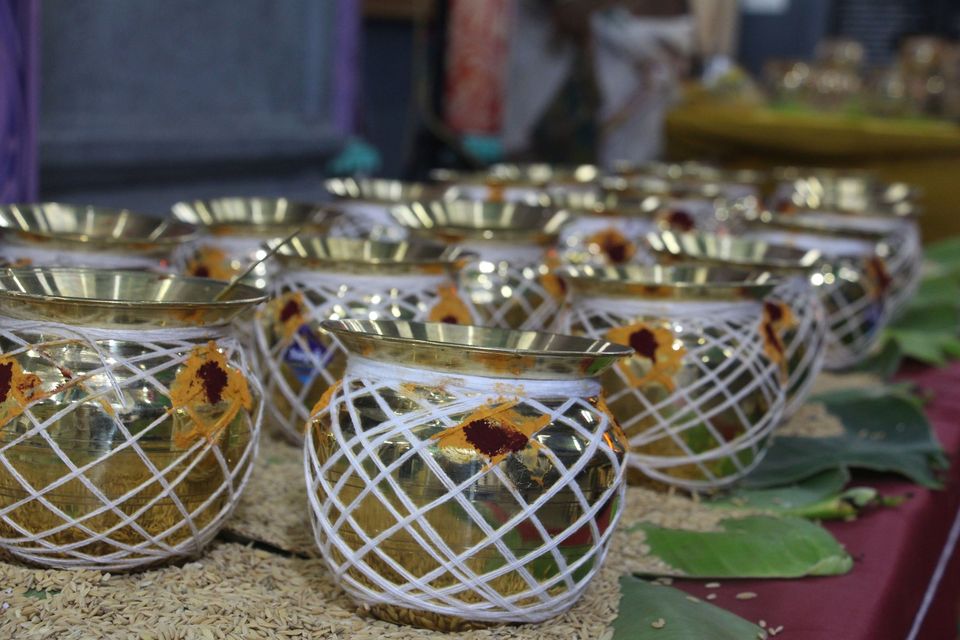
Karaga Vizha and Alagu Sevai
Ramanan Gurukkal alerted us to this event. We went to Lawspet Murugan Koyil around 9am, and found the whole group from the Veerabhadraswamy Chowdambika temple there with Karagam, and from there the procession wound through the town and returned to the Murugan temple and then “home” via the main road (going past the temple in the middle of the road). This is a festival of the Devanga Chettiars, who are originally from parts of Karnataka and Andhra, but long settled as weaving communities in parts of Tamil Nadu. A group of dancers from Salem leading the way, along with musicians. A hollow-sounding thavil and Nadaswaram greatly out-sounded by other instruments and sounds. Priest was Panrutti Krishnan, coming alongside the Shakti Karagam, which was guarded by two men holding long knives in an X across the front. Traditional body flowers are also X across front and back, as in the Draupadi Amman tradition, too. Many stops along the way, either at homes (archanai thattu) or otherwise, while veera kumaras (who had had their kaappu tied at the Veerabhadra temple early am) took swords and made their promises to Amman, while hitting themselves a lot (or a little) with knives. Someone holding a tray with pandaram (a turmeric mixture though I only saw turmeric) to sprinkle on the wounds. Dancers may have been a paid team, but they were often hitting and bleeding, too. And they all had kaappu tied. Priest “spoke” to the deity multiple times, a particularly dramatic style of prayer that ad
Read more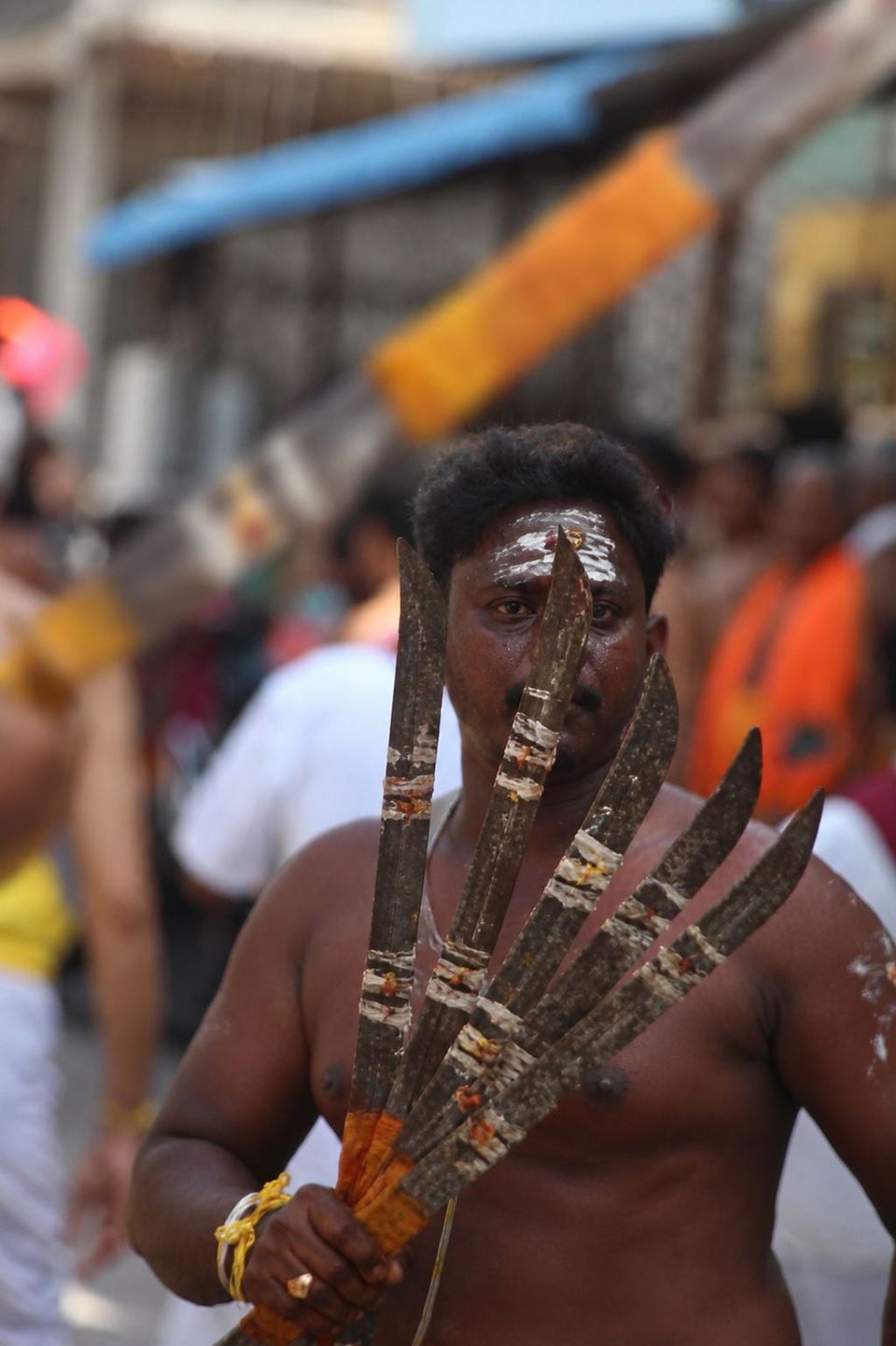
Pournami Theerthavari
66th Brahmotsavam (started August 18) daily abhishekam-alankaram, was livestreamed here (Britain Tamil Bhakti).
Read moreA Day of Tying All New Loose Ends
Aavani Avittam, it being pournami. Men at the kulam at the back – puja at home, bath in the kulam being auspicious as Thathacharya said, it’s completed here and the poonal changed. The poonal as we know is yagnopaveetam. Yagna + upaveetam which is “covering”. I wonder if there’s a link between this and the “chattaradu”/saattrumurai/ saatthupadi. On Yagnopaveetham On Yagnopaveetham as being a Pavitram Ganesan sir later tells us there is no particular need to change poonal on this day, but it’s to do the Kanda Rishi Tarpanam that this is done – and the Tarpanam is a prayascitta, like the Pavitrotsavam. This is also the period of “veda arambham” so closing one learning cycle and opening another. Morning homam only on the two square kundams, unlike yesterday which was only in the circular one. We leave and intend to return for the theerthavari which is happening by the time we return. The Utsavars from the yagasala brought to witness, the thirumanjanam here for the little perumal who also came to the kadal theerthavari. He’s then placed by the taller 3 to their right, and the group returns to the yagasala but faces it. Homam re-commences. Long “spout” into which ghee is poured, the offerings include fruits and vettiver are walked around the andal sannadhi and then one by one “touched” to the spout and offered. The final yellow cloth in fact is just soaked in ghee and offered. Roaring, beautiful fire. After this, Perumal and entourage return to the garbhagriha and doors close. By
Read more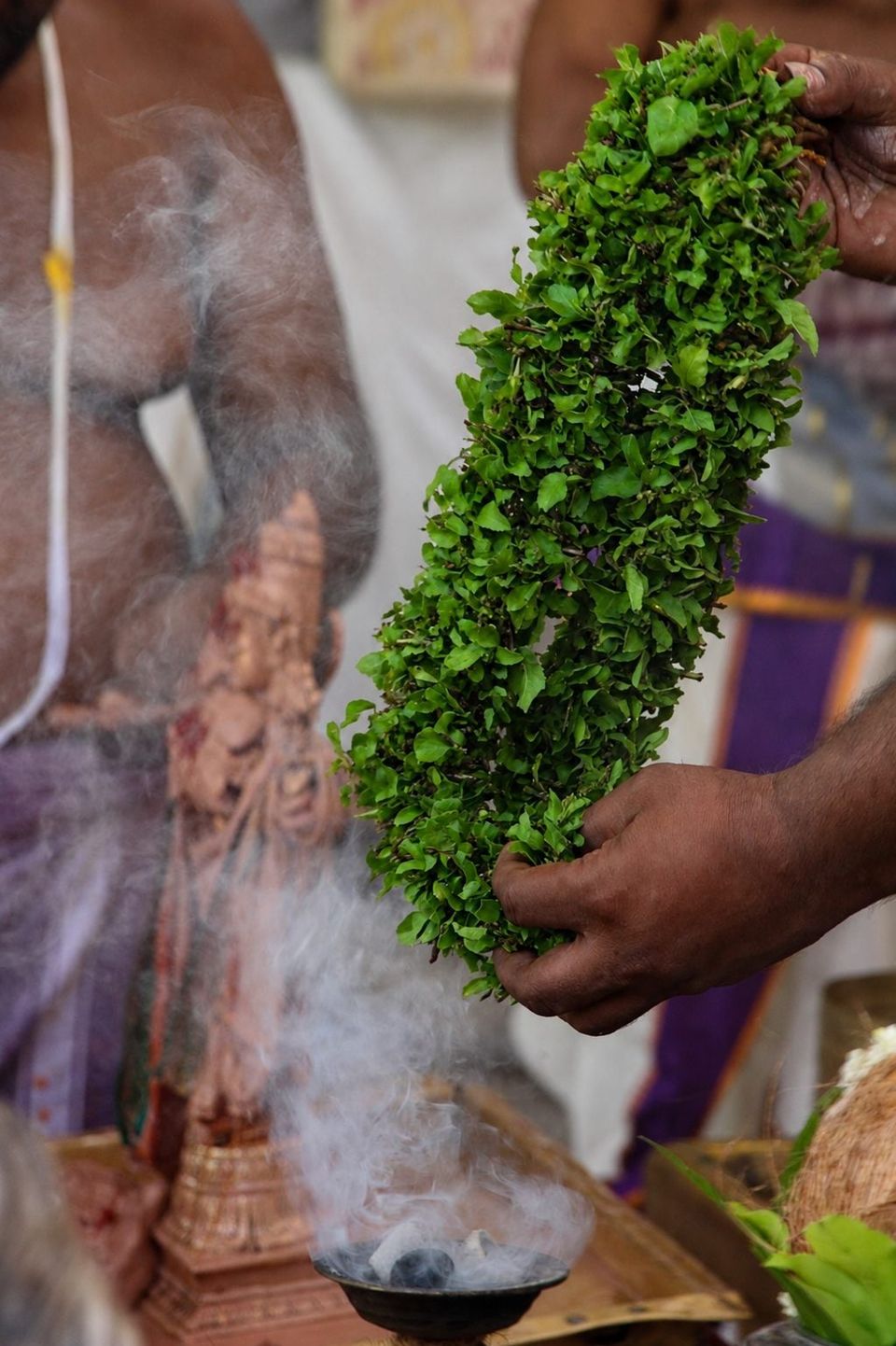
Mahashanti Thirumanjanam
Mahashanti Thirumanjanam for Perumal started at 11am. Thiruvonam would have been Thirumanjanam for Desikar usually, but this was overridden by Pavitrotsavam. Unclear why Pavitrotsavam needed to pause today to do a Perumal Thirumanjanam though, unless that’s also a way to mark the Vamana jayanti – because after all this is THE Thiruvonam of the year. (Varadaraja’s nakshatram is Hastam, I believe). Morning Pavitrotsavam Homam only on the circular homa kundam. Perumal thirumanjanam is done as part of Pavitrotsavam, as Prasanna confirms. The day’s published schedule: 8:00 AM — Continuation of Homam 10:30 AM — Mahasanti Thirumanjanam; Purnahuti; Saattrumurai 7:00 PM — Homam; Purnahuti; Saattrumurai
Read more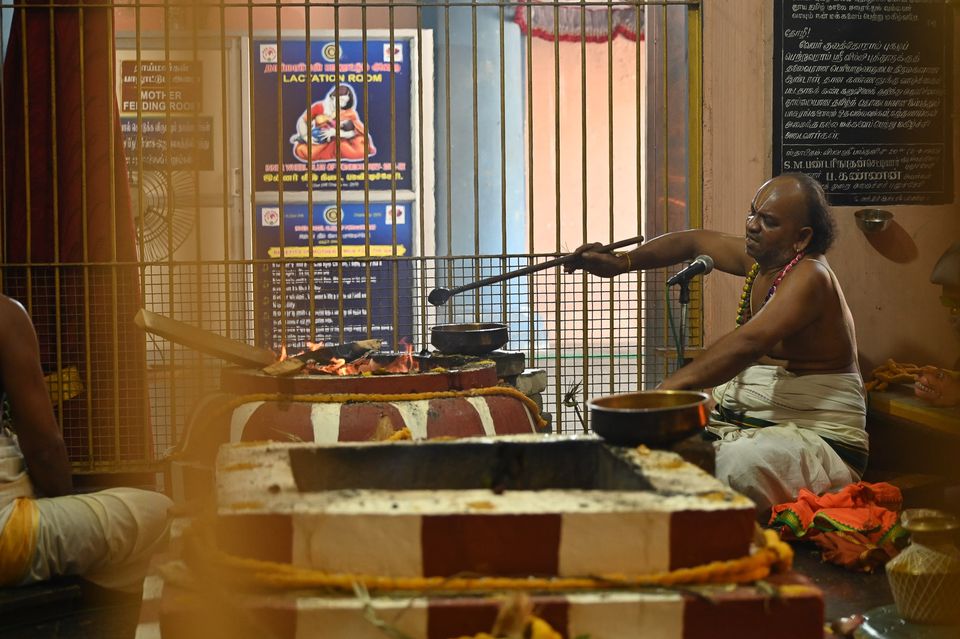
Aavani Thiruvonam, Pavitrotsavam Day 3
Nataraja Abhishekam, which happened very quickly early morning to mark Aavani Thiruvonam–THE Onam of the year. When there are bigger pujas going on (in this case Pavitrotsavam), even events like these are somewhat unceremoniously completed. Pavitrotsavam proceedings took most of the morning. Homam started, only Venkatesa Gurukkal around. Deities lined up for abhishekam. Pavitram removed from the main kalasa and put in a basket for Guru mama. Siva Ambal abhishekam happened. Then the pavitram was taken into the main garbhagrihas and put on the main deities. Abhishekam for the utsavars happened. After that, the kalasa purappadu – carried by Thirukumaran and the other spectacled priest who’s usually around the Durga sannadhi. Thirukumaran went into the Siva Sannadhi, the other went to Ambal. Since the abhishekam and alankaram had already happened, kalasa water was poured mostly on yoni and ambal’s feet (it looked like). The main table kalasas went first and then the others as well though we didn’t see them being moved in spite of being right there. Utsaavars had a simple flower alankaram and clothing, deeparadhanai for them after the final one in the main sannadhis. We left just before this finishing. Mesmerising purappadu energy at night. Colourful pavitrams worn only by the purappadu Swami and Ambal. All other deities and murtis have yellow pavitram, except the utsava murtis who were out for 3 days. Those have none. This was the very first Sivan Koyil purappadu which was a shou
Read more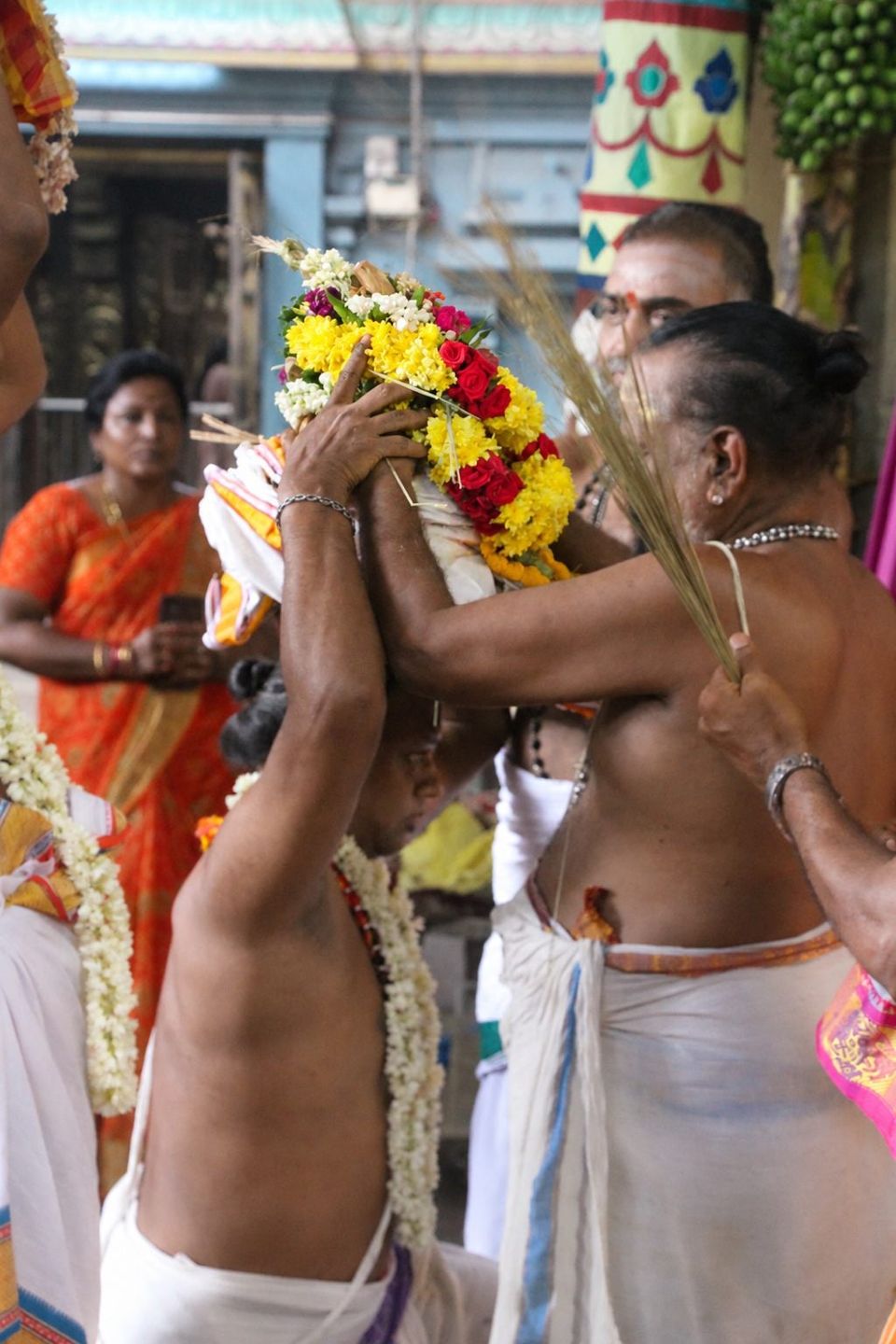
Pavitrotsavam Day 3
Two homa-kaalams today, that seem to proceed without the need for an audience. Similar patterns as days before. Today is not the visesha naal, said a (somewhat grumpy-seeming) Ramanan Bhattacharya. Ok, we said, and made plans to return the next day. 8:00 AM — Homam; Purnahuti; Saattrumurai 7:00 PM — Homam and Purnahuti; Saattrumurai
Read more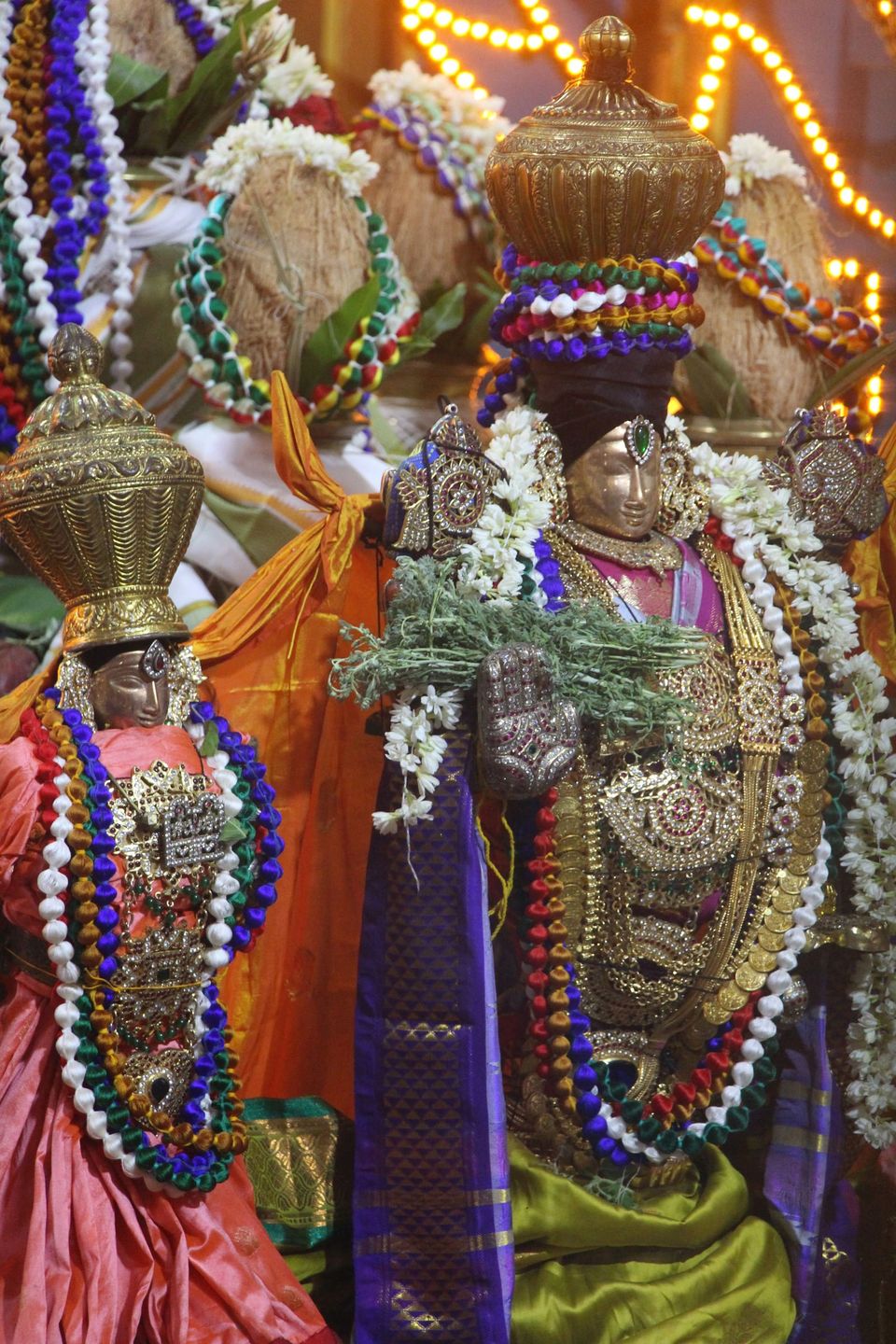
Perumal Pavitrotsavam Day 3
Tuesday so Durga abhishekam and Palani andavar abhishekam also, which we caught part of. Perumal abhishekam finished, alankaram was going on, but the purappadu taking way too long (also Pradosham today, which jostles with all else) so we skipped out and caught the procession on the street as it was turning back from Bharati cutting. This was the concluding homam and festivities associated with this Perumal Koyil’s pavitrotsavam. Published Schedule for the day: After 9AM: Punyahavacanam, Akkinipranayanam, Sri Devi, Bhu Devi sameta Sri Varadaraja Perumal Thirumanjanam, Homam, Maha Purnahuti, Yatradanam, Kumbha Proksanam, Pratishtha, Aksatasirvadam, Brahmotsavam? / Saattrumurai, Tirtha-Prasada Viniyogam 7PM: Sri Devi, Bhu Devi sameta Sri Varadaraja Perumal Thiruveethi Purappadu
Read more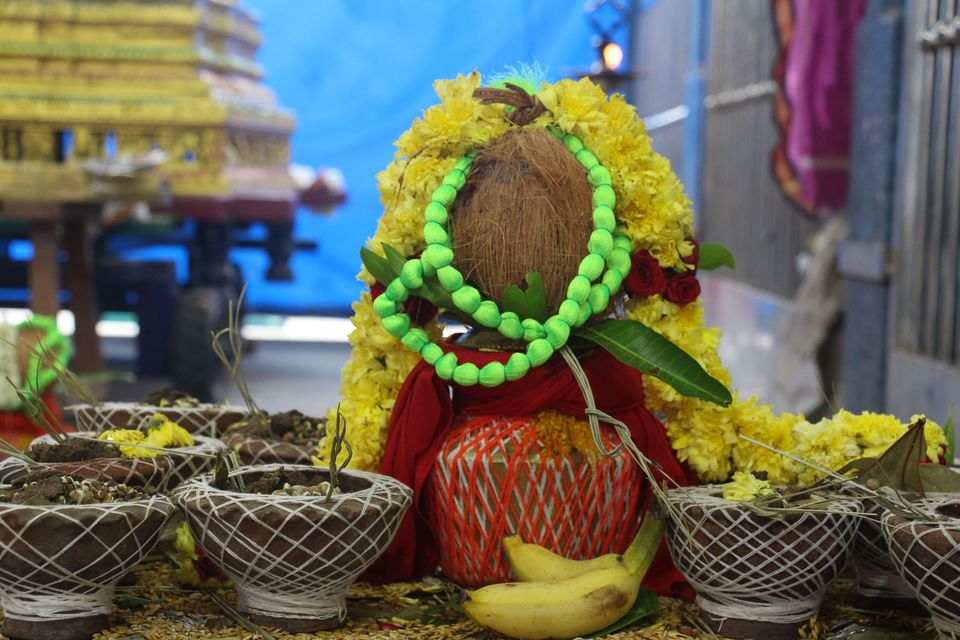
Pavitrotsavam Day 2
9:00 AM: Pavitra Puja Commencement, Adorning Pavitram to Deities, Purnahuti, Pavitra Adhivasam, Morning Pavitra Offering. 7:00 PM: Puja Commencement, Pavitra Offering, Deeparadhanai. Pavitram adorned in the morning, but in the evening they were off again (why? Because this is in the outside space and not secured or some other ritual reason?). The chattrifying with pavitram didn’t seem to follow as elaborate a sequence as with Perumal, though the main deities got it first and then Vinayaka, Murugan. Kayana Gurukkal all over the place putting the yellow pavitram all over, along with ayyappan and other helpers. We were a little frazzled following them in a dozen directions, and missed photographing the pavitrams on the navagrahas.
Read more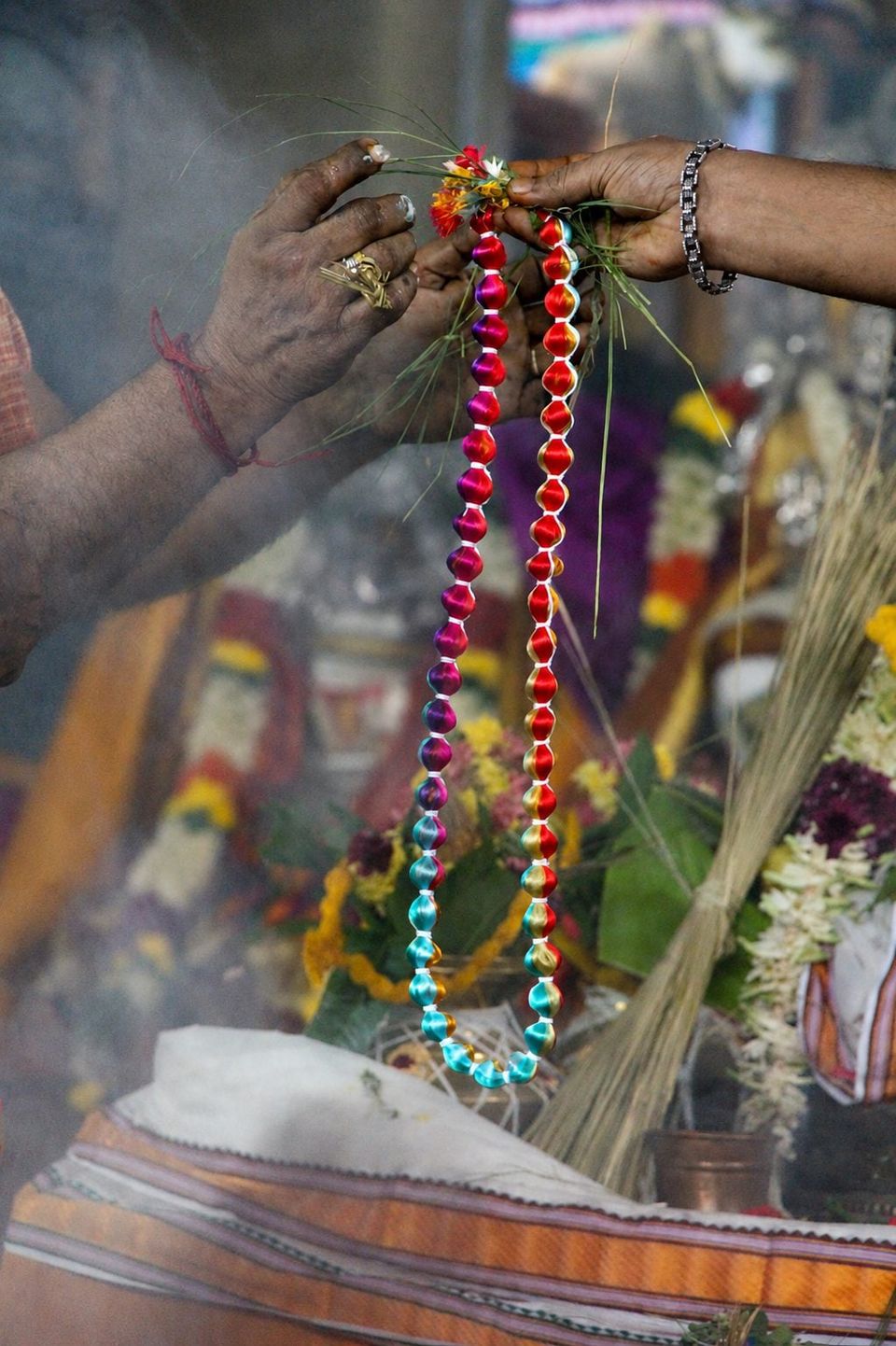
Brahmotsavam Day 6
66th Brahmotsavam isn’t happening in full because of the planned Kumbhabhishekam, but the abhishekam is livestreamed here: Manakkula Vinayakar Temple 66th Annual Brahmotsavam Abhishekam Decoration
Read morePavitrotsavam Day 1
Vastu Puja beginning as I come in. Utsava Murtis brought from alankara mandapam to the temporary pavitrotsavam mandapam. In a while we see the priests, including Thirukumaran, making/adding to the colourful Mandalam kept before the Kalasas. Thirukumaran also makes a four-legged Meru-like structure with kusa grass and covers them with flowers. This flowery meru-like koorcham is kept at the centre of the Mandalam, with 4 legs extending to its 4 corners. Effigy burnt in Vastu homam fire and taken round. Northeast corner has 9 little kalasas. Northwest corner has 7 little kalasas + 3 more little ones on a stool at a height. Southeast corner has 6 little kalasas Southwest corner has 8 little kalasas New elderly priest gets things going at the main puja. Goes from kalasa to kalasa, sprinkling some water, presumably from the vastu homam, and beautifully tossing flowers as well. Mandalam and Central Kalasas get chandanam, and mudras for puja. Homam begins around 9pm. Perhaps the most captivating of homams I have watched. Something about the scene and flame within that scene made it very potent. We leave before its completion. Published Schedule for the Day: 6:00 PM: Anujgnai, Vigneswara Puja, Vaastu Shanti, Mrtsangrahanam. 7:30 PM: Sthandila Mandaleshwara Pratishtha, Yagasala Puja Commencement.
Read more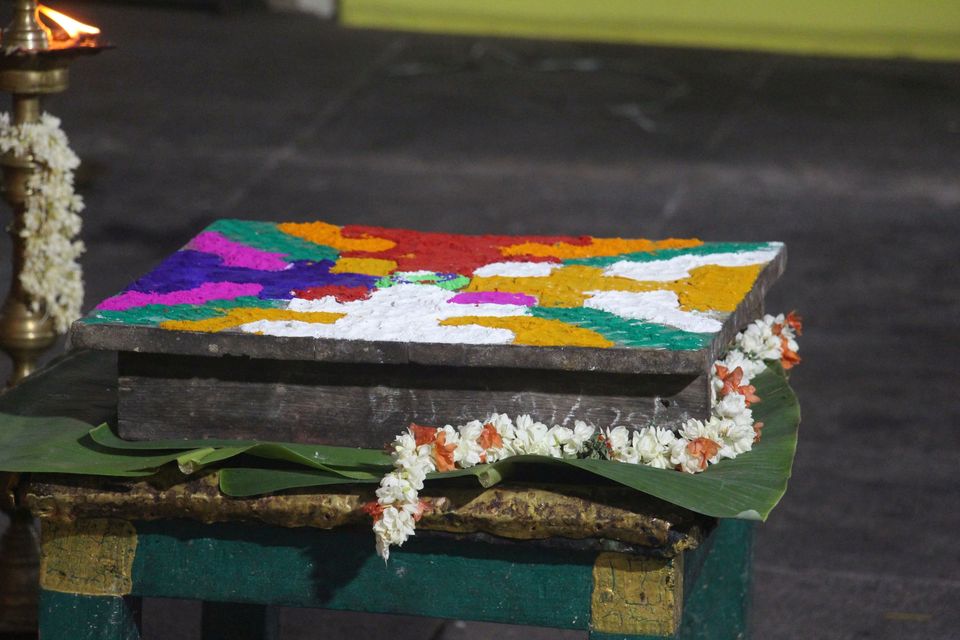
Pavitra Pratishtha
Came in to all 3 priests performing homam, recitations broadcast on microphone. Then off Mic, they each go to their respective agni kundams & chanting continues with the koorcham. Hard to make this out. Curtain closes presumably for prasadam which prasanna brought in long before & bells ringing, more chanting then there is a dhoopam deeparadhanai Once the homam is done, the head scarf/turban is tied for the main pavitra priest, then coloured pavitram is taken and chaattrified for the main murti, then Narasimha, Kodanda Rama, then Panduranga, Thayar, all the kalasas in the Yagasala, Andal, Alvar sannadhi, Garuda, finally Hanuman. After this the plainer yellow pavitram is tied to all the main temple stucco figures, gopuram, vimanam, dhvajastambha etc. Naresh bhattacharya did a surprising amount of climbing. Arun noted his dancer-like feet. (The priests were joking about putting the pavitra maala for the “Thamarai”--an oblique reference to the BJP). At some point before the colourful pavitram is tied, the thin yellow pavitram is taken to the main shrine and tied as a maala and esp on the hands of the main deity and utsava figures. With all the bells and whistles. I think this happens before the priest wears the green turban and not after. Then, swami purappadu, and the murtis are brought into the yagasala to witness the next homam One more homam kaalam follows – pancha suktams – Purusha suktam, Narayana Suktam, Vishnu Suktam, Sri Suktam, Bhu Suktam/Durga Suktam + whatever other
Read more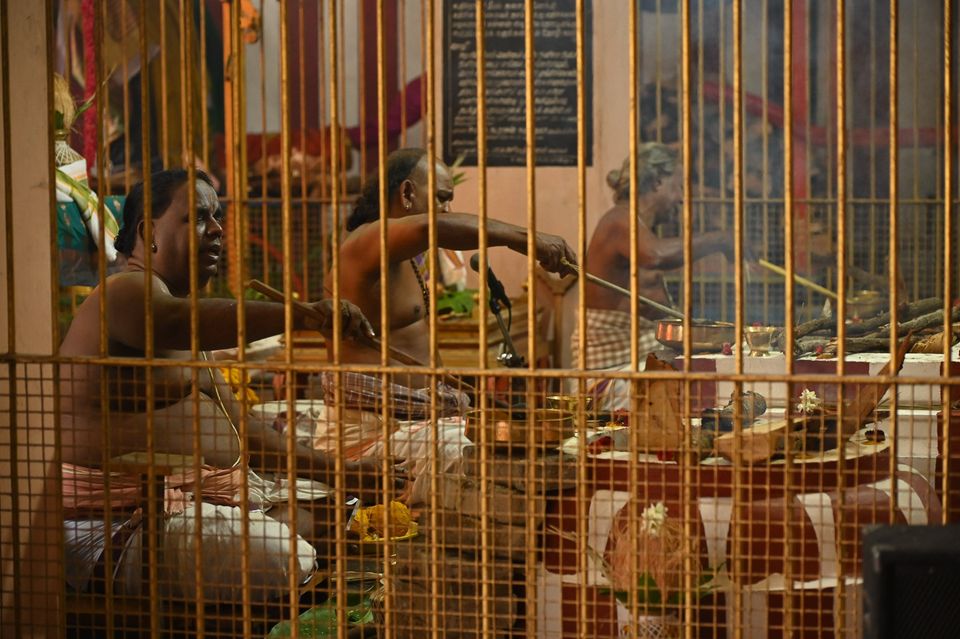
Perumal Pavitrotsavam Day 2
Chetty Koyil has, apart from other radium-like bright colours, a great many neon green pavitrams which makes the entire scene look like a toy shop. The priests wear those very neon green ones. Today’s Schedule: 7AM: Punyahavacanam, Akara Homam, Kumbha-sthapanam, Hotrgam, Ella Murttigalukkum Vimalanettiram, Pavitra Rohanam, Homam, Purnahuti – Saattrumurai 6PM: Punyahavacanam, Akkinipranayanam, Homam, Purnahuti – Saattrumurai
Read more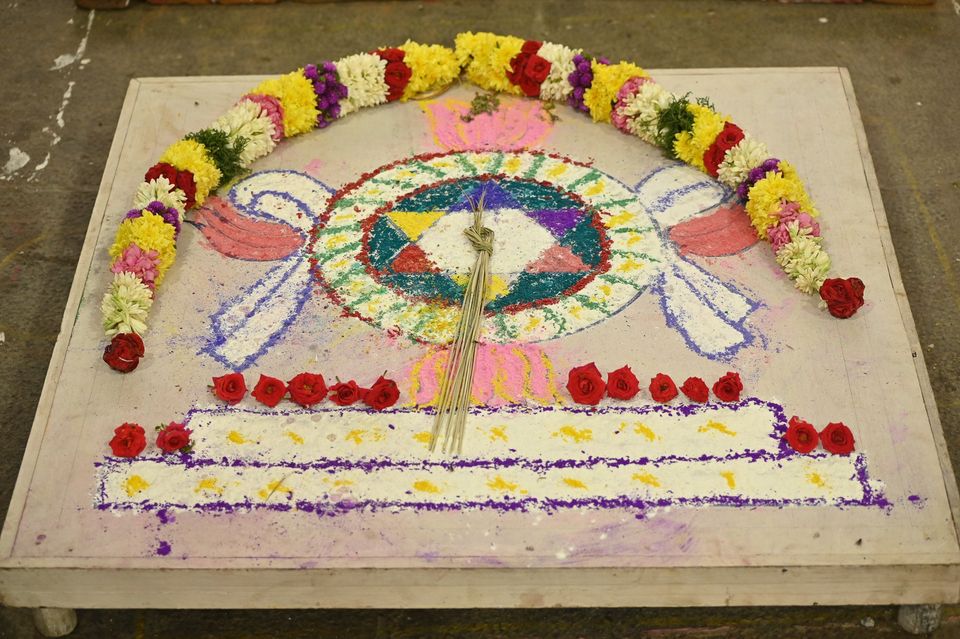
Brahmotsavam Day 5
66th Brahmotsavam didn’t happen thanks to the planned Kumbhabhishekam, but there is still an abhishekam-alankaram daily, which started on August 18 today’s event was livestreamed here (Britain Tamil Bhakti).
Read moreAll the Usual Preparations
Patrikai for 2026-08-23 indicates Manavalamaamunigal thirumanjanam and clothes distribution in the evening. Saw the clothes distribution, Segar mama said it was for Pavitrotsavam only, not any other function (as the sivan temple had clothes distribution also in the morning). We snag 3 pieces for Rs 500, only to realise they’re polyester. What are our Gods wearing these days? We see the beginning of the Mrtsangrahanam. Deepa di goes to Chetty to find nothing going on there. After Mrtsangrahanam is over, I bring Deepa di back around 8 as homam preparations going on. We see ankurarpanam right as we enter, milk and soil being poured into the ankur chalices. Vastu Shanti effigy burnt from homam fire and taken around the temple prakara. Goes out of the temple and is left near the public bin. No madaveethi circling with the fire as it was during Brahmotsavam.
Read more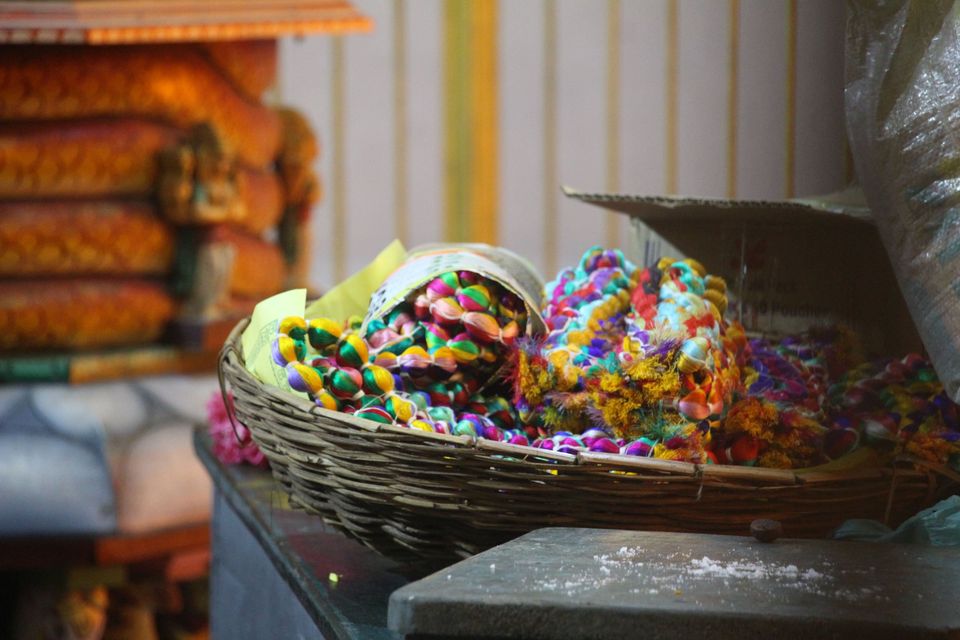
Aavani Moola Utsavam Plus Pavitrotsava Prep
Chetty Kalattisvara Koyil also has Aavani Moola Utsavam going on as we come in at 630PM. Swami and Ambal utsava murtis are out on Nandi Vahana. Priest, Shankaranarayana Chettiar and Ubhayakara take turns to shovel sand into a bowl, which Jayashankar carries on his head in a basket for the ul-purappadu. The Perumal Vastu Shanti begins late, we go to Perumal Koyil by then. Deepa di returns to Chetty to find nothing going on still. Chetty Koyil has Chakrattalvar as a kolam-like Mandalam on a board, in front of the homa kundam. The day’s schedule: 6PM: Bhagavata Kshetram, Yajamana Sankalpam, Punyahavacanam, Mrt-sangrahanam, Ankurarpanam, Vastu Santi, Pancagavya Pratishtha, Pavitra Pratishtha, Ekanta Japyam, Sayanadi Vasam
Read more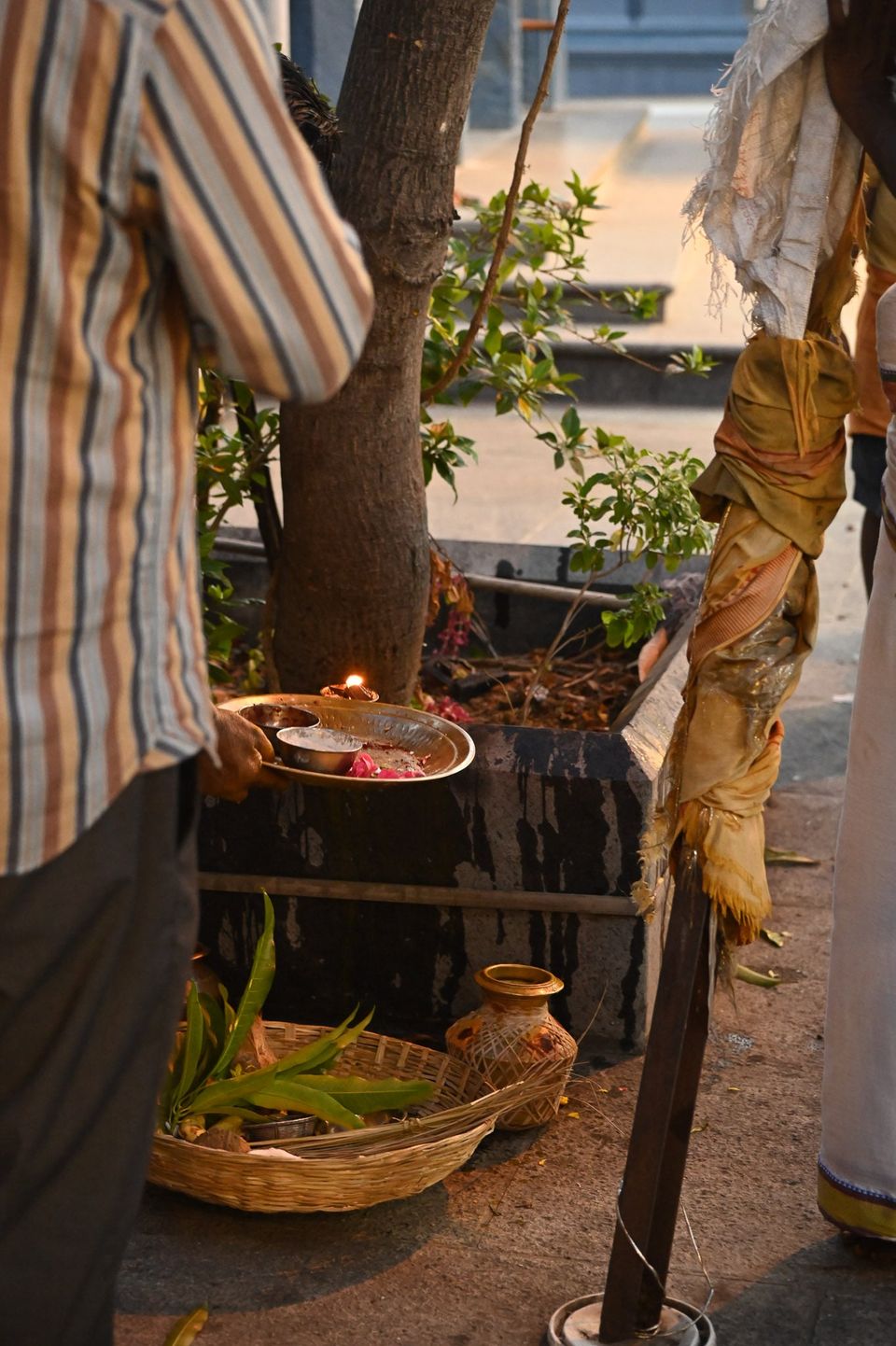
Aavani Moola Utsavam, Man Sumanda Thiruvilayadal
This is Narayanan’s family utsavam. The schedule is as follows: 7AM Abhishekam Swami, Ambal, Chandrasekara10AM Offering clothes to temple priests and servants (We didn’t see this, but saw the clothes there, names marked out for distribution)1030AM Deeparadhanai, Chandrasekara puja/ carrying soil to Chandrasekara11AM Theerthavari, performance of Sri Sokkanath Peruman carrying earth and mahadeepa pradhana at the temple kulam – this is the Man Sumanda Thiruvilayadal They’re late to start. We spend the time singing with Subramani. Utsavar comes out with Sokkanatha alankaram, taken to the kulam, abhishekam happens – then Guru mama introduces, the Maniyakkarar tells the story sings (Here’s part of what he sang), and there’s a ceremonial filling mud in the pot on sokkanathar’s head. This is a tradition from Madurai, brought into this temple. பண்சுமந்த பாடற் பரிசு படைத்தருளும் பெண்சுமந்த பாகத்தன் பெம்மான் பெருந்துறையான் விண்சுமந்த கீர்த்தி வியன்மண்ட லத்தீசன் கண்சுமந்த நெற்றிக் கடவுள் கலிமதுரை மண்சுமந்து கூலிகொண் டக்கோவால் மொத்துண்டு புண்சுமந்த பொன்மேனி பாடுதுங்காண் அம்மானாய் But he sings more, yet to transcribe. “Pann-sumanta song” means a song containing musical modes (pan); “He who bestows a fitting reward” means the one who graciously grants an appropriate reward; “He who has a woman occupying one half” means the one who possesses a form in which a woman abides on one side; “the Lord” means the Supreme One; “He who dwells at Perunturai” means the one who resides at Tirupperunturai
Read more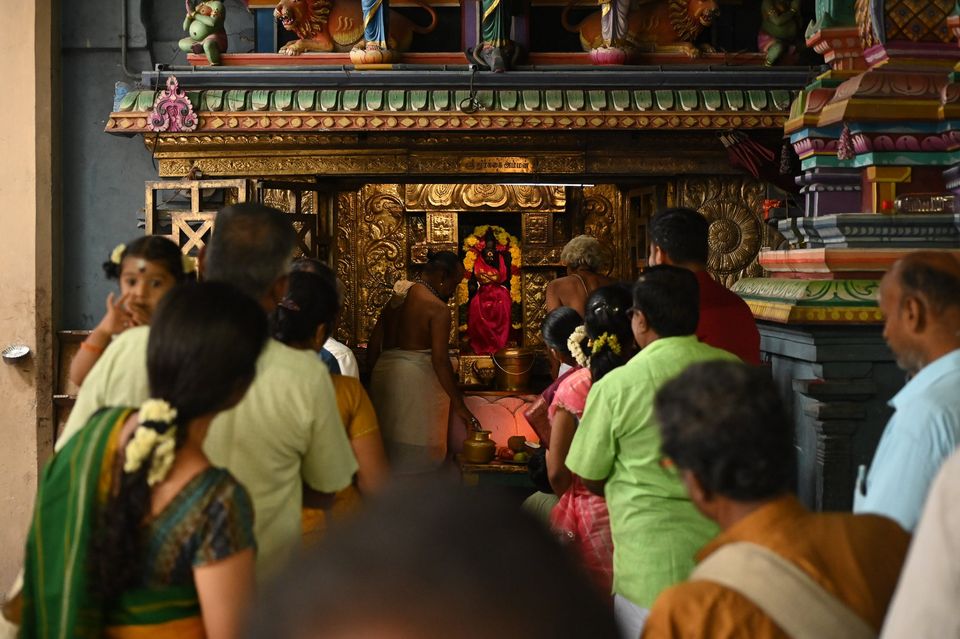
Brahmotsavam Day 4
No homam or purappadu clearly. Only ubhayakara puja in front of the utsava murtis, aradhanai, prasadam and over. Shankarnarayan Chettiar and another moustached person are here among the ubhayakaras. The event is live-streamed daily, for today it’s here (Britain Tamil Bhakti). Sridhar Gurukkal is in this video, chanting at about 6 minutes in. Poster outside the temple reads: Sixty-sixth Annual Brahmotsavam (18.08.2026 முதல் 10.09.2026 வரை) On the 21st of the month of Aani, 05.07.2026, on Sunday, Panchami tithi, Sataya Nakshatra, and Siddha Yoga, the installation of the Moolavar Vimana Balastapanam, the installation of the Parivaramurthigal Vimana Palastapanam and the inauguration of the temple were held smoothly with their great support from 10.00 am to 11.30 am. Therefore, as per the rules laid down by the priests, we would like to inform you that in this year's (66th) sixty-sixth Brahmotsava festival, the Swami Veedi Utsava will be omitted and the Swami will be anointed and adorned with incense and worshipped. The Brahmotsava festival will be held for the sixty-sixth year from Tuesday, 18-08-2026, on the 1st day of the month of Aavani in the Parabhava year, to honour the Lord who has graced the temple with the divine name "Arulmigu Sri Manakkula Vinayaka" and has bestowed blessings upon the devotees who come and worship him. We request all the devotees who are witnessing this to come and have darshan of Sri Vinayaka and receive his blessings. Temple priests: U.K. Ganesh Siva
Read moreThiruvilakku Puja, a Week Late
6PM Thiruvilakku puja, postponed from Aadi Pooram which was last Friday. Simple puja, ladies buy a ticket, come set up lamp on banana leaf, rice, with vettrilai-paakku, banana, vatti, flowers to suit their tastes, oil, wicks, a little turmeric vinayaka bangles, kunkuma, pasupu. Bell, arati thattu. Coconut. Puja done first to vinayaka (nirapeksha murti, which refers to his formless, temporary status, gone after visarjanam), and then a kunkuma archana to the lamp while the priest reads the Lalita Sahasranamavali. Deeparadhanai to the utsavar, who is decked with thazhampoo today, and the puja is done. Kunkuma taken home to apply on aathukarar’s nethi.
Read more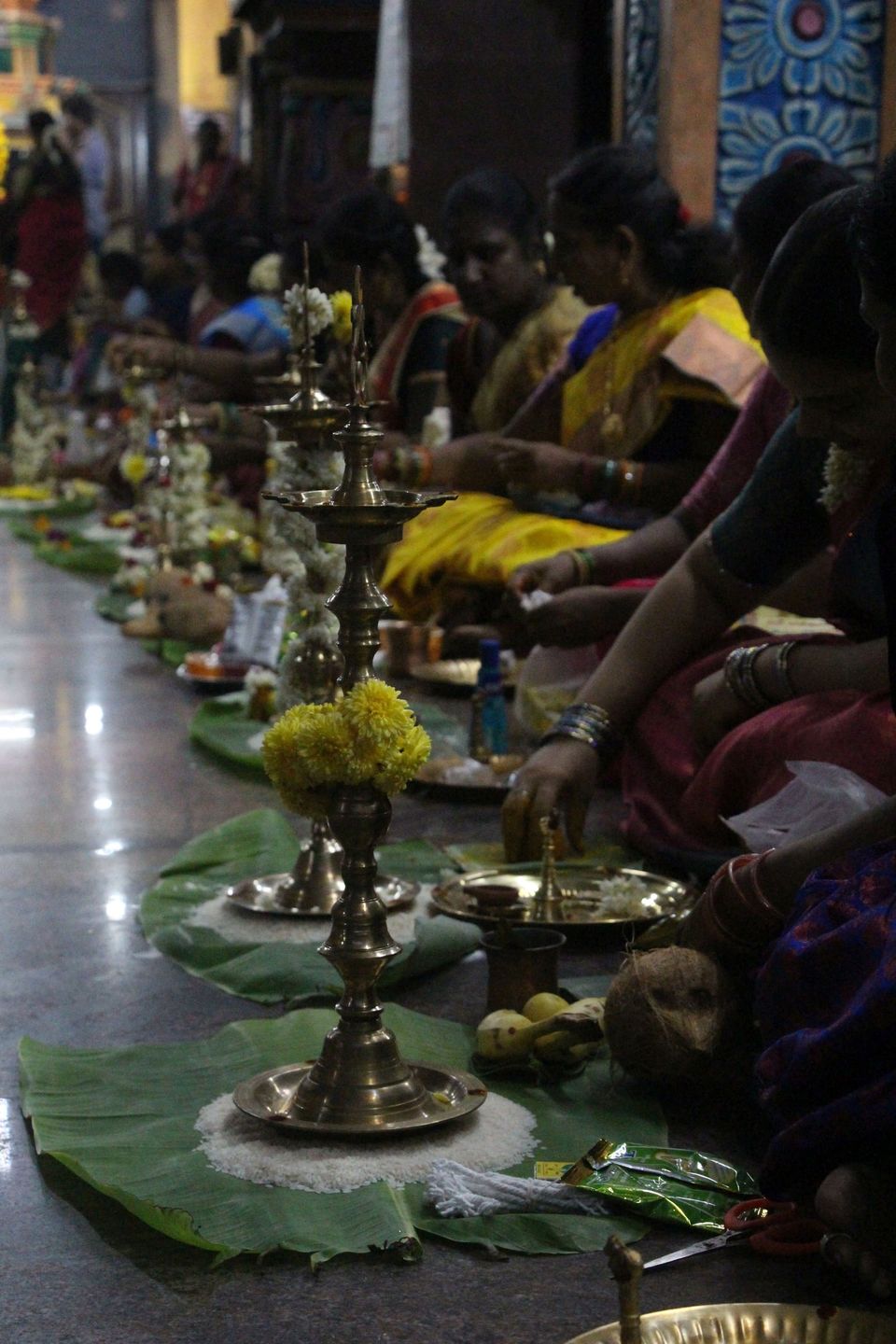
Brahmotsavam Day 3
Today’s Brahmotsavam alankaram and aradhanai livestreamed here
Read moreManakkula Livestreams
66th Brahmotsavam didn’t happen thanks to the planned Kumbhabhishekam, but there is still an abhishekam-alankaram daily, which started on August 18 today’s event was livestreamed here (Britain Tamil Bhakti). Livestreamed here
Read morePondicherry’s Oldest Amman Koyil
We met Satish Gurukkal at Ellaiamman, to get some broad context on the temple even though it’s under construction and no utsavam is happening. He spoke a great deal about the once-importance and then decline of this temple, due to corruption and loss of land and property. He also keeps the existing ubhayakaras in play, by doing the pujas they have committed to and sending them photos, prasadam etc. It’s the only way that continuity gets maintained. Temples going through Thiruppani like this face existential risks of the loss of their established bases of support.
Read moreBrahmotsavam Preparatory Pujas
66th Brahmotsavam didn’t happen thanks to the planned Kumbhabhishekam, but there is still an abhishekam-alankaram daily, starting today August 18 (would ordinarily have been the day of preparatory pujas) and livestreamed here (Britain Tamil Bhakti).
Read moreConversations
Went to Draupadi Amman, need to collect pen drive and give photos to priest. He gave us a lemon from the karagam, kept in a near-perfect fresh state from 10 days before. Claimed it had cured his daughter of incessant menstrual bleeding. Lemon as a thing with “uyir” which protects, absorbs negative/evil eye forces. Not used in this temple as a “head” of the deity. Talked again about his bypass, how he survived it and needed more procedures which they (family) rejected. Do you have faith in God, asks the physician (Kadavul mela nambikkai irukka) – to which Rangaradjou laughs and says “why I have a God who has faith in me!” (Yenmela nambikkai veccha kadavule irukkale!)
Read moreLada Chinna Amman’s Aadi Pooram
In the morning, the lady with shop outside Manakkula was there doing abhishekam (simple, water, milk) and flower alankaram. She spoke about how people of all castes and religions would come for the elephant Lakshmi, but since her passing that has changed.
Read more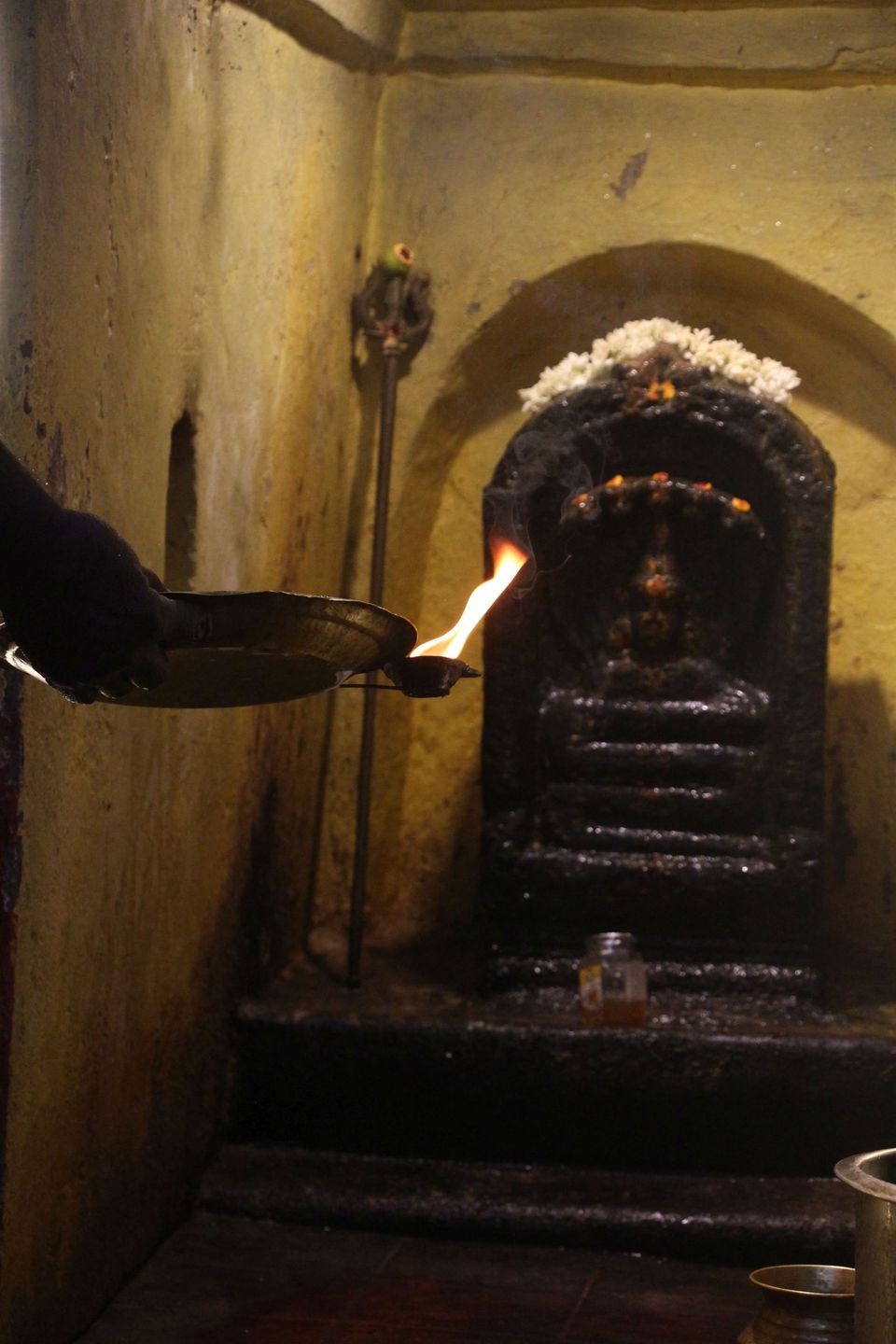
Aadi Pooram
We arrive around 730 and find the curtain closed, with a bunch of people standing outside. Curtain opens and the boy priest hands out valayal to the ladies. Small archanai. Over. Alankaram looks very impressive for such a little place. All done by the boy. He seems to be very sensible and perceptive. One of the ladies hands him a sari, which he places across the headdress of the amman very well, keeping harmony with the rest of the alankaram.
Read more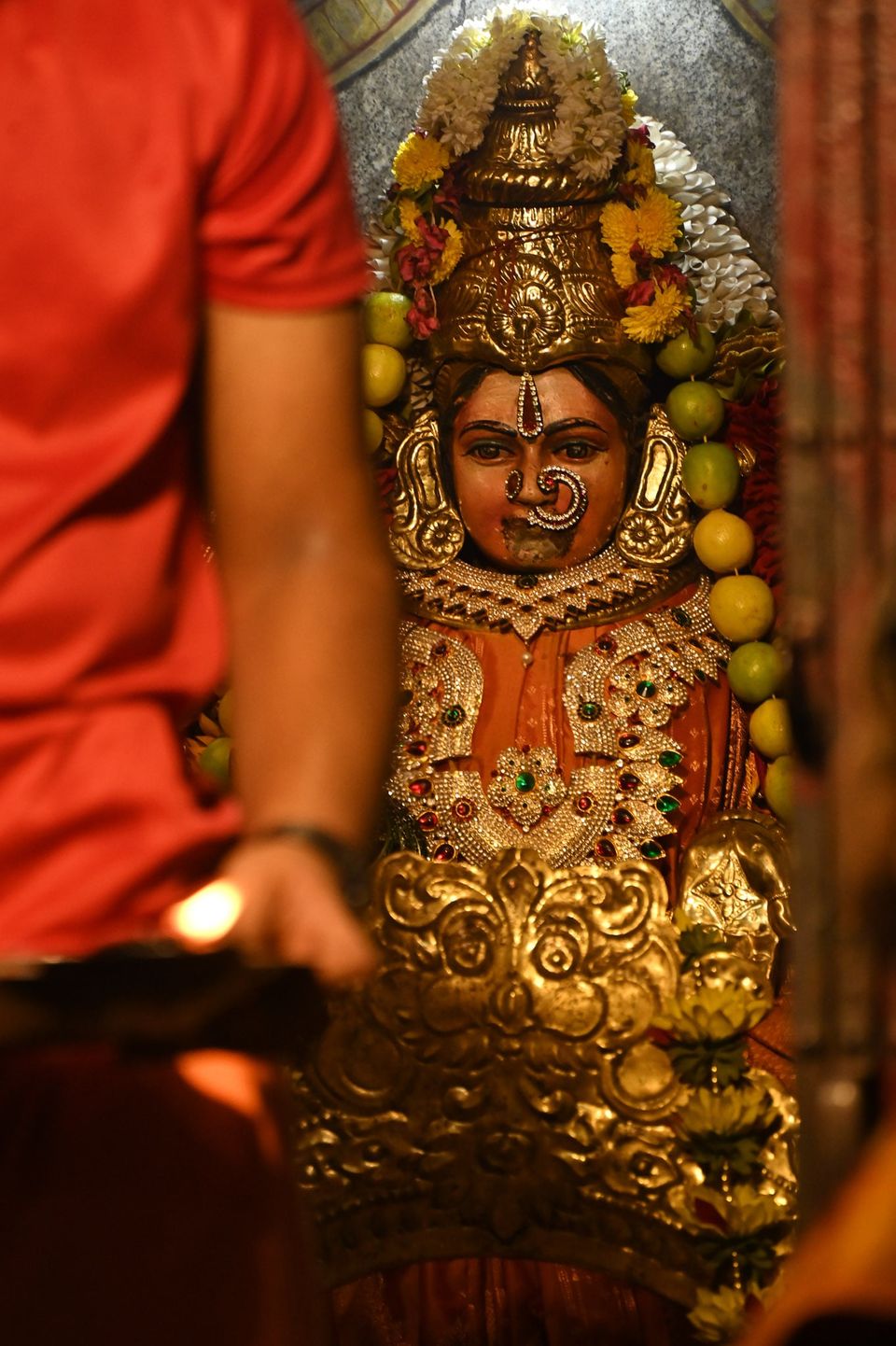
She Is Manonmani on Pooram
Sri Siddheswari gets a special alankaram for Aadi Pooram. Most beautiful alankaram figure I’ve seen. Seems to have been made entirely from scratch, which is quite the process worth documenting in itself. Followed by a puja, done with utmost elegance and conscious intent by the priests. Very gratifying there, as always. There’s even a little Meru, covered in tossed kunkuma and flowers–a navavarna puja. Manonmani alankaram (the priests tell us later) with head tilted slightly and body at an angle, legs coyly placed – superb. Done in-house, using chandanam to create correct face proportions so that the body can look correct, unlike the typical alankara we see elsewhere. Kunkuma Abhishekam. Seems to be a combo of Sanskrit And Tamil? (name of devi + “Om haam” & after that Tamil and potri vasippu).
Read more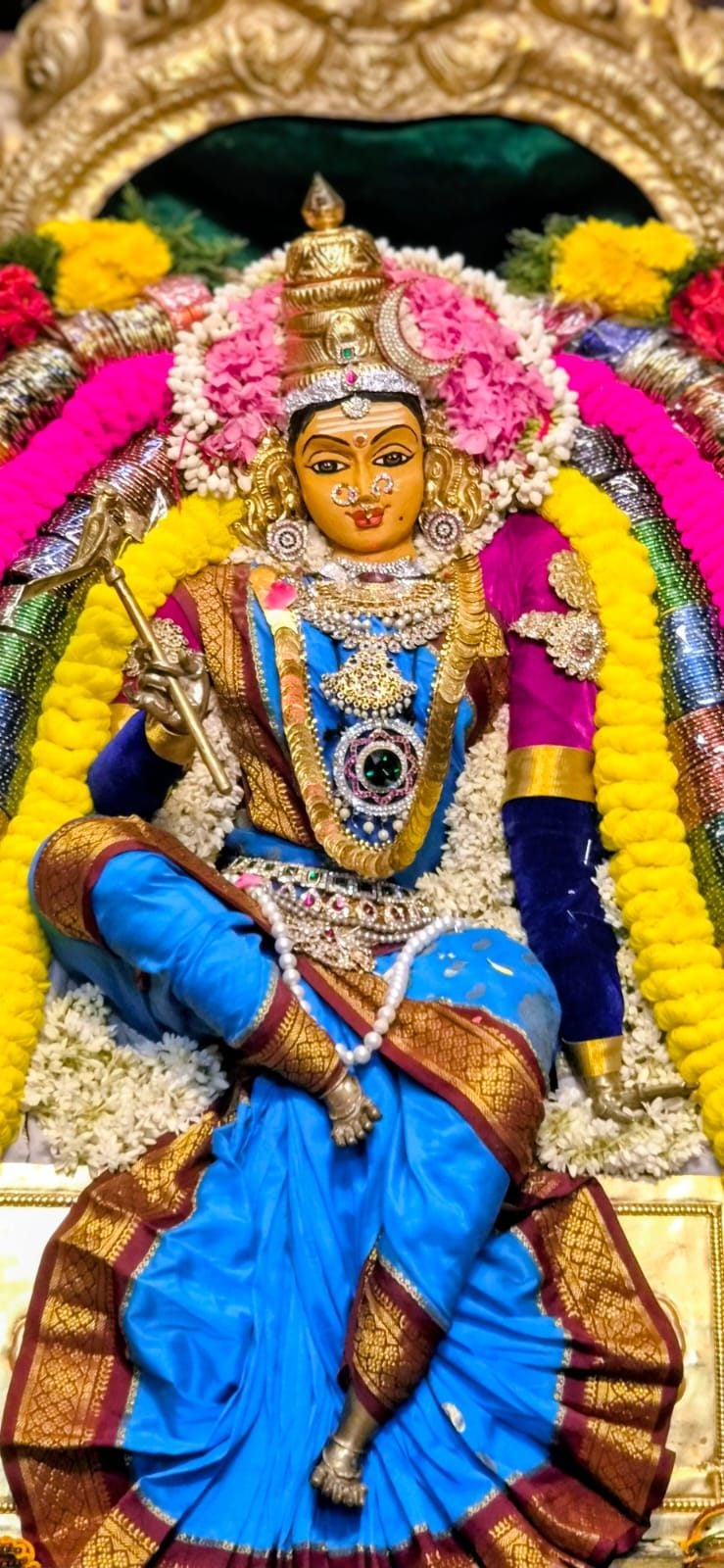
Aadi Pooram, Andal Utsavam Day 10
This is Andal’s Janma Nakshatra naal, of course. The scheduled 7am purappadu begins around 8. Simple affair, Perumal and Andal walk out and left, straight towards the Mandapa on Sankardas St. Once there, aradhanai and curtain closes. 1030 abhishekam, done by 11. We stop by a little past noon, hoping to see the aradhanai. But it has still not begun, so we decide to let it be and come back for the 7pm aradhanai. Thathacharya spots us and calls us out later for not coming to the aradhanai! Oops. Little did we know that Perumal and Andal would soon be shifted back to the temple due to a suicide down the road, thanks to which the deities cannot remain there anymore. The aradhanai happens around 8 at the temple, with everything else after that being delayed as well. By the time we are finished with the prasadam, which was given in meagre quantities because prepared only for the small crowd that would have been at the mandapam, it is already past 830pm. We decide drop into the Sivan koyil for the unjal utsavam (which we miss) and catch Perumal and Andal on the road again. We notice that everything at Perumal had been slow today, including the purappadu itself, stopping for a significantly longer time at the houses where people come out with archanai thattu.
Read more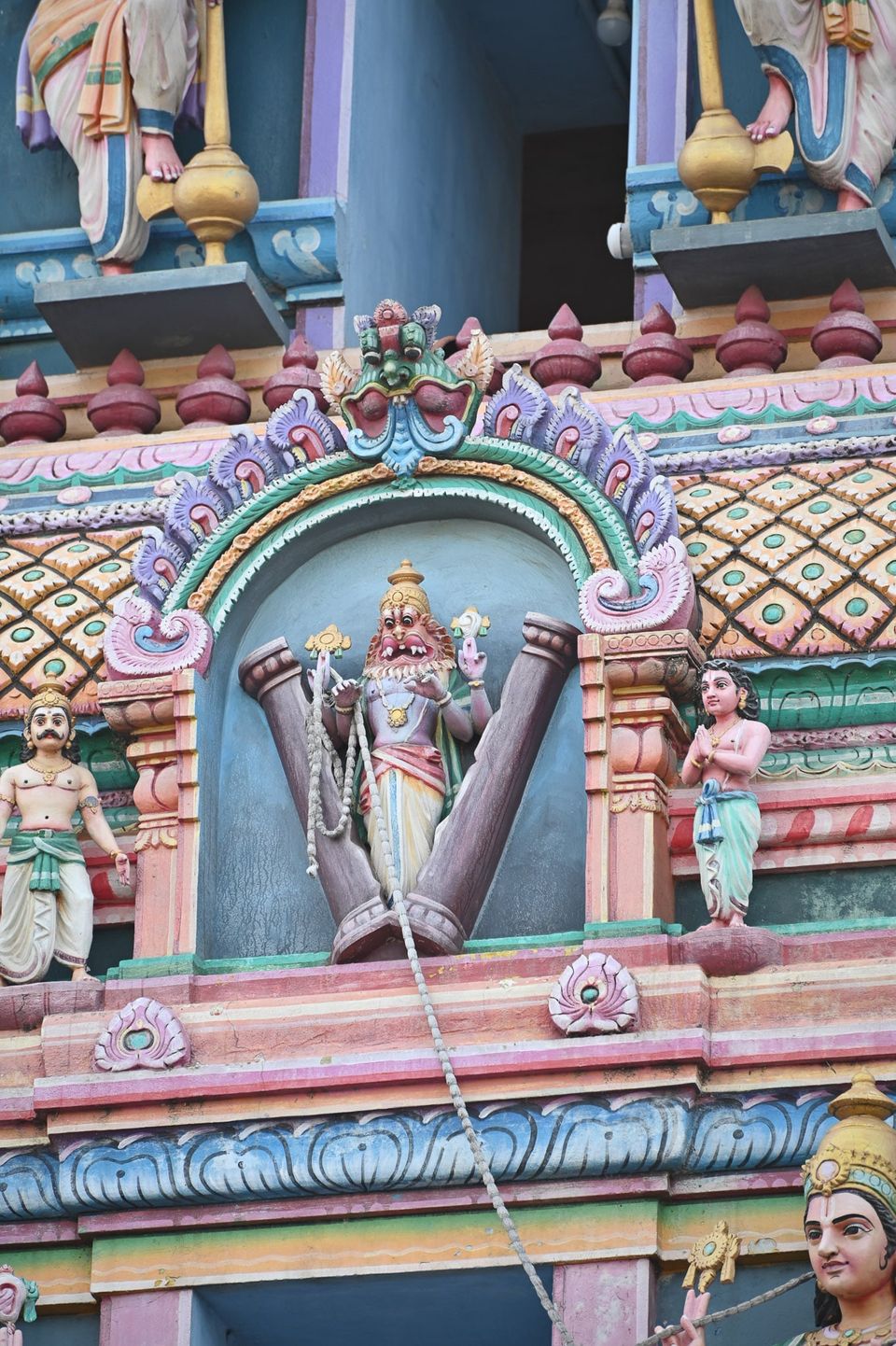
Parashakti Valayalkaappu and Theerthavari
Vedapuriswara: Valayalkappu; Morning around 10 am abhishekam will be performed for parashakti amman and theerthavari will be held for her. Later the deity will be taken for procession inside the temple and will be made to stand straight to face the moolavar Tripurasundari. Deeparadhanai will be performed for both the main deity and utsavar deity. The bangle offering ceremony to utsavar will happen, offered by ubhayakaras, Evening unjal utsavam will be performed for utsavar amman, bangle offering from devotees (info from Narayanan at Vedapuriswara, who turns out to be right.) We miss the unjal in the evening thanks to Perumal holding us back, but see the very last tail end return of Parashakti to her chamber. Mahalakshmi sannadhi at the back has a puja going on. Chandana Kaappu for her, presumably in connection with Andal, with women queueing up for Archanai. The shrine is beautifully lit, with just vilakkus. Surreal sight.
Read more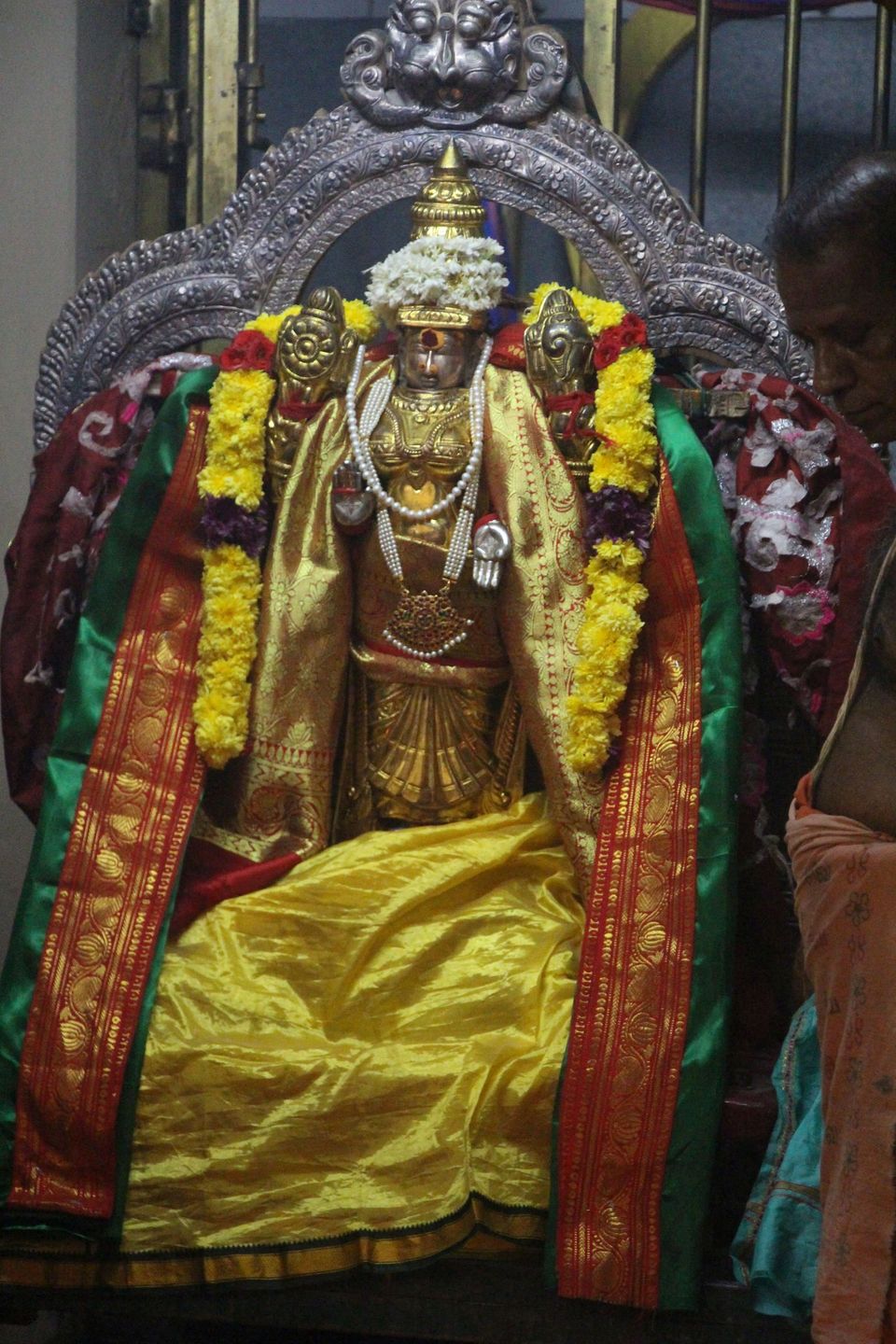
Aadi Pooram; Aadi Fifth Friday
Fabulous Valayalkaappu alankaram. The sheer scale of it blows one away. Not allowing photography of it is a crime. We only managed photos of the bangles that had been assembled a day before at the vahana mandapa at the back. At Kamakshi Amman, usually there is a Valayal thiruvizha, during which the astra murti goes to the temple well, then is adorned in bangles. But not this year. Only abhishekam was done, followed by deeparadhanai. Very crowded around noon, as we pass by.
Read more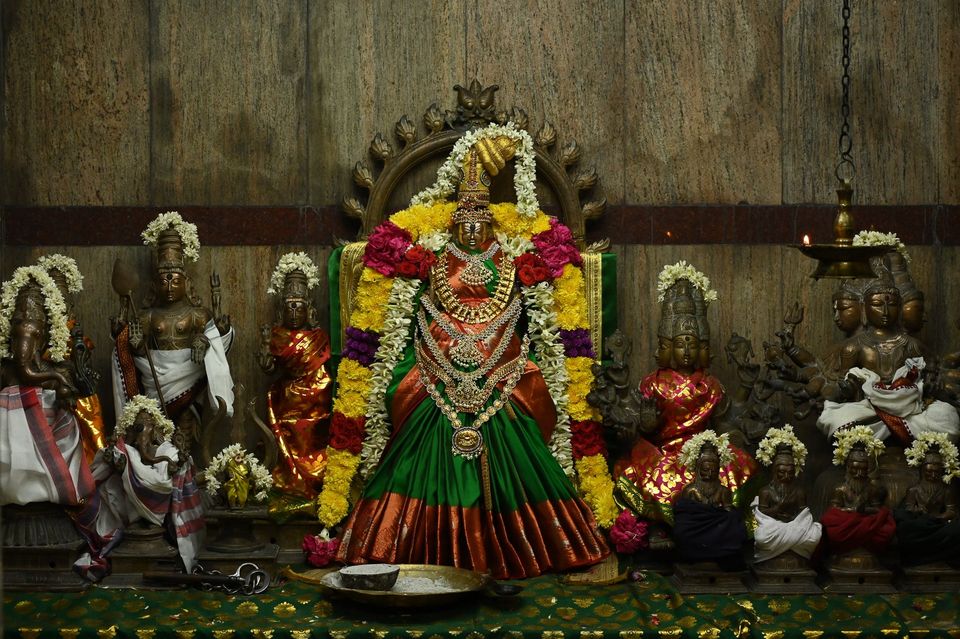
Thiruvadi Pooram Abhishekam and 108 Shankhabhishekam
6AM Thiruvadi Pooram Special abhishekam 6am, no signs of an abhishekam. All quiet. I go back at 730, and it’s all done. Seems to have been a simple special abhishekam. 10:30AM 108 Shankhabhishekam I go after seeing Perumal-Andal abhishekam. Shankhas being given out to ladies as they line up to enter the moolasthanam. Sriram Gurukkal fills water and a blade of dried arugampul (I think) into every conch. The homam kundam is to the left and in front of Nandi, with the Kalasa at its head to the West. There is also the large and final Shankha, already prepared and kept. 6PM Thiruvilakku pujai–this is supposed to happen, but postponed to next Friday!!
Read more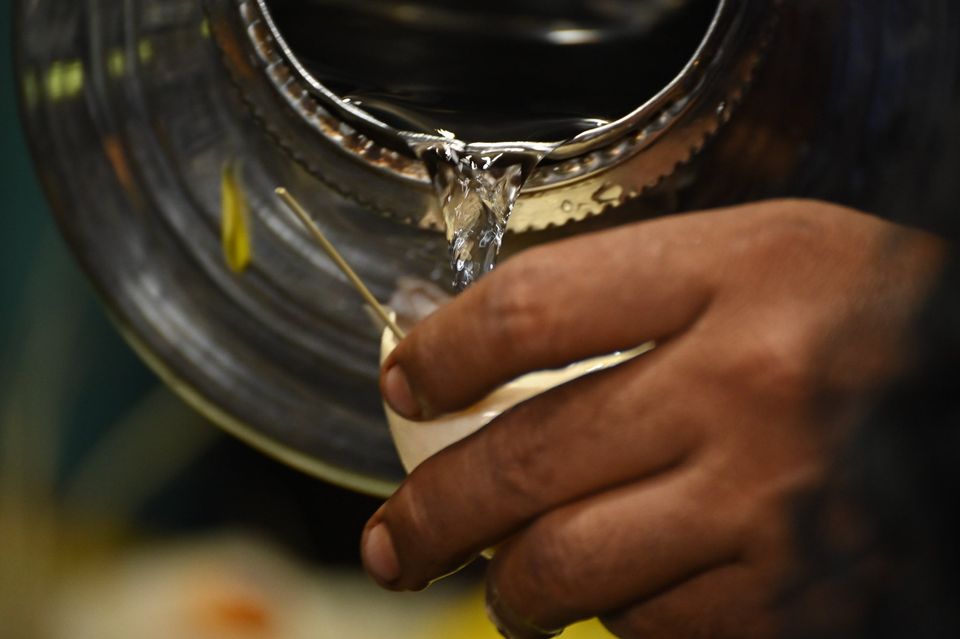
Aadi Pooram Abhishekam
Aadi pooram is Kannika Parameswari’s Nakshatra naal, so at 730am she gets an abhishekam. We go around 830. Post-abhishekam alankaram done. Ladies setting up the Mandapa – there are dozens of hanging bangles and birds made of coconut leaves–this is their take on the valayal kaappu alankaram. The woman in red is the creative genius behind this. A photograph of Andal is in the middle of it all; after all it’s her nakshatra naal, too. We have prasadam and leave, but the remainder of the puja will happen no doubt in the same pattern as other Kannika pujas – with women sitting with plates of flowers while the priest chants, or doing their own parayanam while he does his. This initiative is of the World AryaVysya Mahasabha Mahila Vibhag.
Read more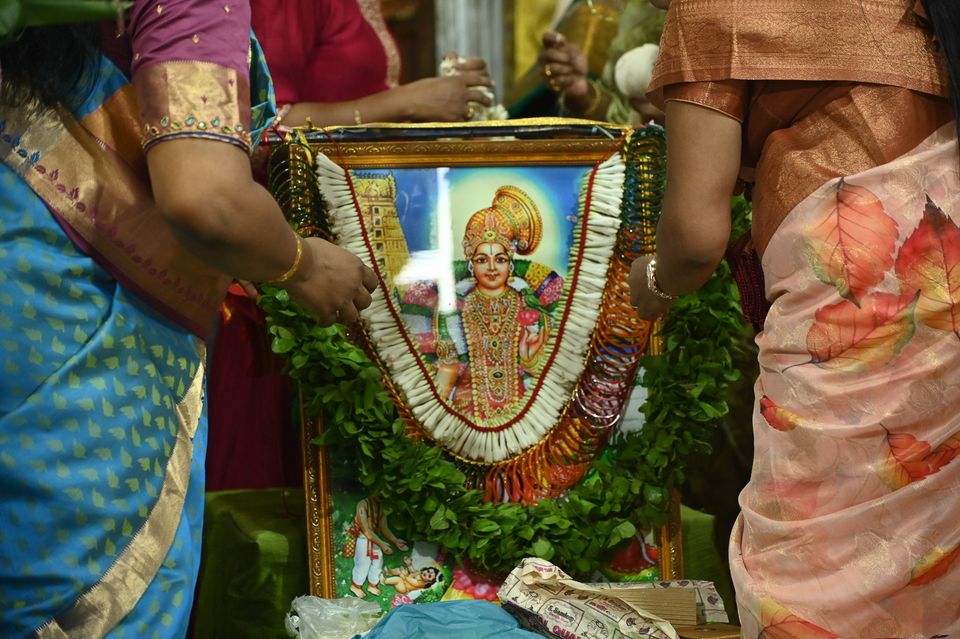
Parashakti and Mutthalarajan Share a Padayal Day
It was supposed to happen like this: Day 24: Parashakti Amman Padayal Day 25: Mutthalarajan padayal But the Parashakti event was postponed from yesterday on account of it being Pournami or because everyone is at the end of their tethers, I’m not sure which. But it happened in the course of the day. Kannan sent photos. Around 830pm, food was laid out for Mutthalarajan. Parashakti Padayal was finished in the morning itself apparently, we didn’t know. Six banana leaves heaped with steamed rice, then covered in a variety of nonveg kuzhambus – seemed to consist of fish and chicken, then decked with boiled eggs. And of course, beer and some other kinds of alcoholic drinks placed at Mutthalarajan’s feet. An array of new faces at the temple. People thronging for the food. There is a bhajanai group singing. My intentions of asking them about what was being sung after the puja got washed. Chaos broke loose the moment the aradhanai was over. One entire band of people rushed towards the padayal with buckets and dabbas in hand, while another band rushed to find seats at the dining service arranged at the back. Some who couldn’t make it to the chairs, grabbed banana leaves and settled on the floor. Through all the shouting and commotion, I also manage to hear the alankaram-priest and another of his helper-priests arguing over the alleged disappearance of the “big bottle of beer”. I exit.
Read more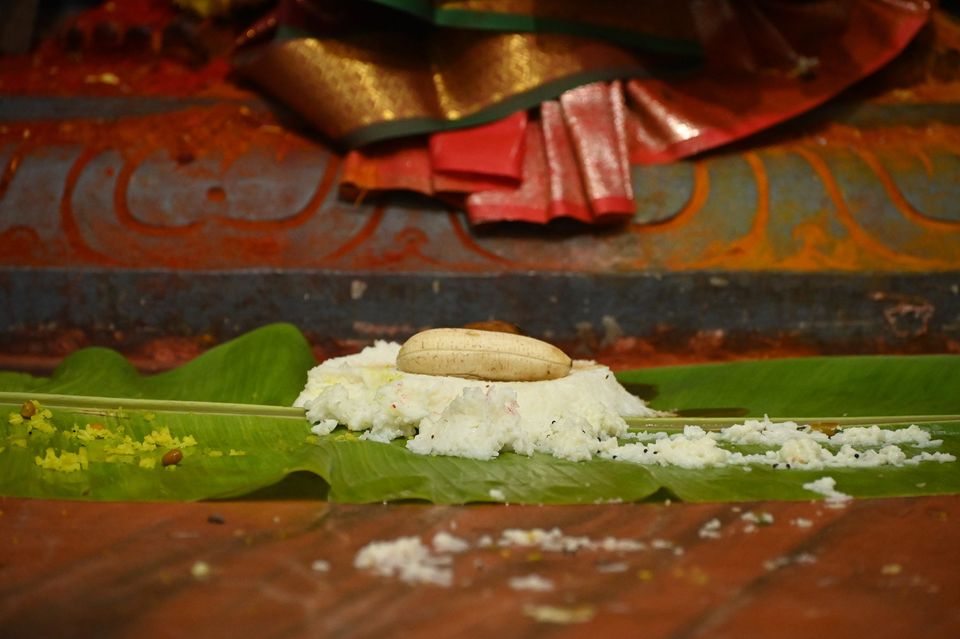
Kadal Theerthavari, or Great Gatherings
We went bright and early to Angalamman, and found the priests doing rounds with 2 boys, washing all the deities with water, getting them new clothes, flowers etc. Older priest doing the moola murti. Purappadu finally happened at 7:30am after circling the prakaram and a deeparadhanai outside, all supplies tucked into a bucket at the back of the vandi. On the eve of August 15, there were major marching drills happening at the Gandhi statue. All the deities assembled at the far corner, closer to tennis ground. Angalamman from town was already there. The rest of the list Arun compiled: NandhikeswaraGangai VinayakaLawspet SubramaniaswamySaram SubramaniaswamyAngalammanAngalamman townShakti Vinayaka SubramaniaswamyPerumalSivanSundara vinayakaVarasiddhi VinayakaMettupalayam MutthumariammanSri UlagamutthumariammanThandamutthumariammanMutthalammanChetty – was supposed to come, according to Govindarajan who came with the Lawspet priests instead – but they hadn’t arrived by the time we left, close to 10am. The process was the same as for a koyil abhishekam, including kalasa preparation, initial pujas, recitation during the pouring of substances etc. Each temple did this to their means, some of the amman koyils seemed to include kunkumam as the ground was red but I didn’t see this for myself. After this, the nadaswaram players accompanied the astra murtis being carried by priests to the water – the point is to immerse, but the waves are very rough, and though there were lifeguards present
Read more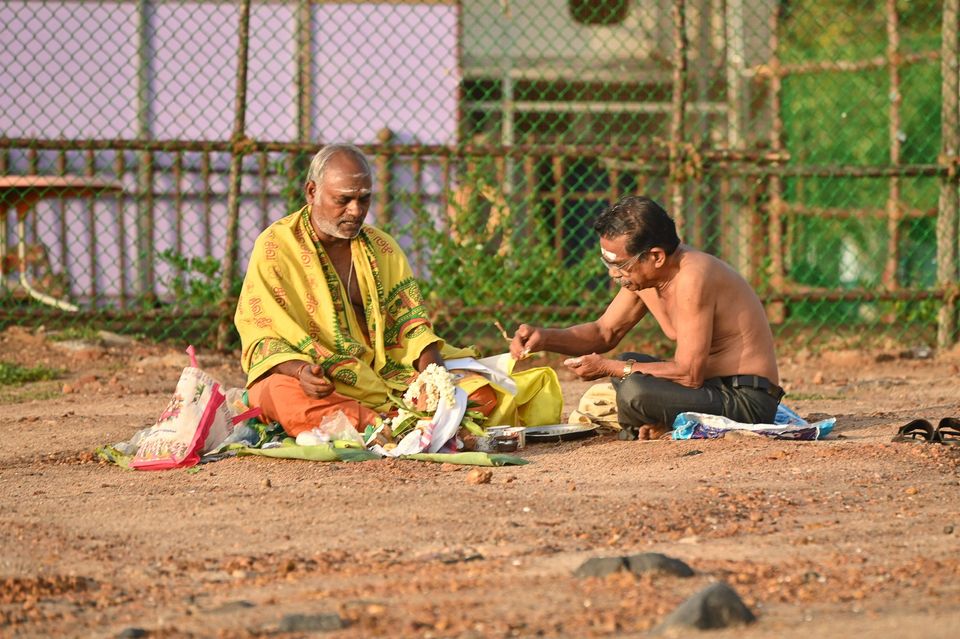
Unjal Utsavam
They don’t call it Vidaiyatri, but that’s what it is after the Kodi comes down. There were dance performances which caused the nadaswaram player Venkat some annoyance, as the unjal time is meant to be for nadaswaram but he said the priest’s right hand man is the one organising such events. Amman alankaram sitting and her new husband lying beside her, as though just off her lap. Lots of ceremonial mariyaadai happening, starting with the Bhagavatar (naturally). We left midway as it felt increasingly like an acknowledgment event. Schedule: Day 23: 730pm to 930pm unjal utsavam
Read more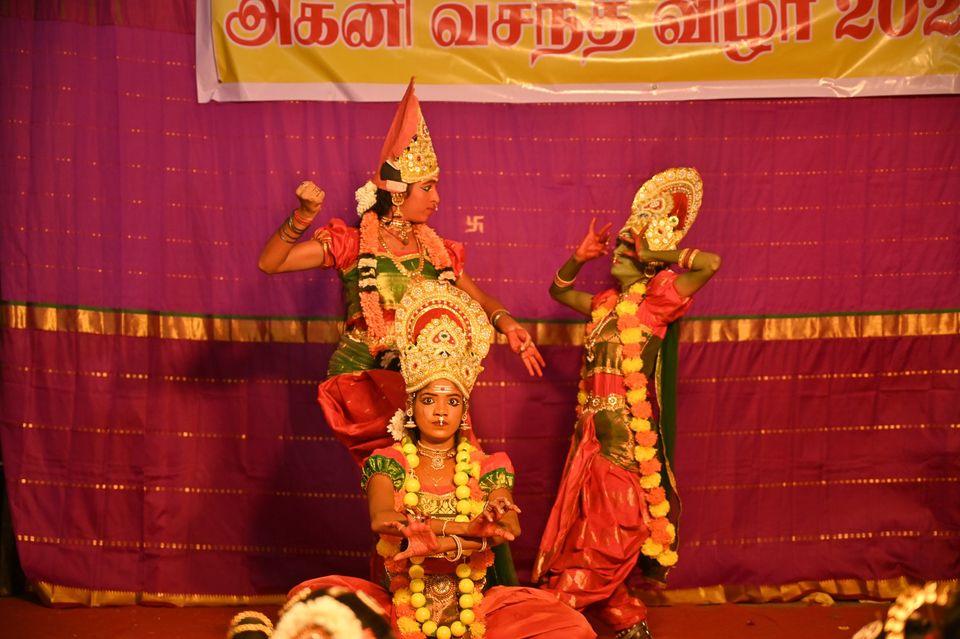
Rahu Kaala Durga Puja
There was a 430pm Durga Puja today, Ram Murkoth’s Ubhayam. Every Tuesday lighting lamp to Durga is a vaaram utsavam at this and the Chetty Koyil. We didn’t go, but the process is the same as the first Brahmotsavam preparatory puja, which was to Durga in the same fashion.
Read moreAndal Utsavam Day 7
Arun went in the morning, and saw the singing/chanting during Thirumanjanam: Andal Pasuram (Neeraattal Pasuram– but this is not Andal, so that’s confusing) and Panchasuktam of the Veda. After Thirumanjanam, while Alankaram going on: Thiruppavai. Evening event was as usual, Thiruvaimozhi saattrumurai and 3 times circumambulation.
Read more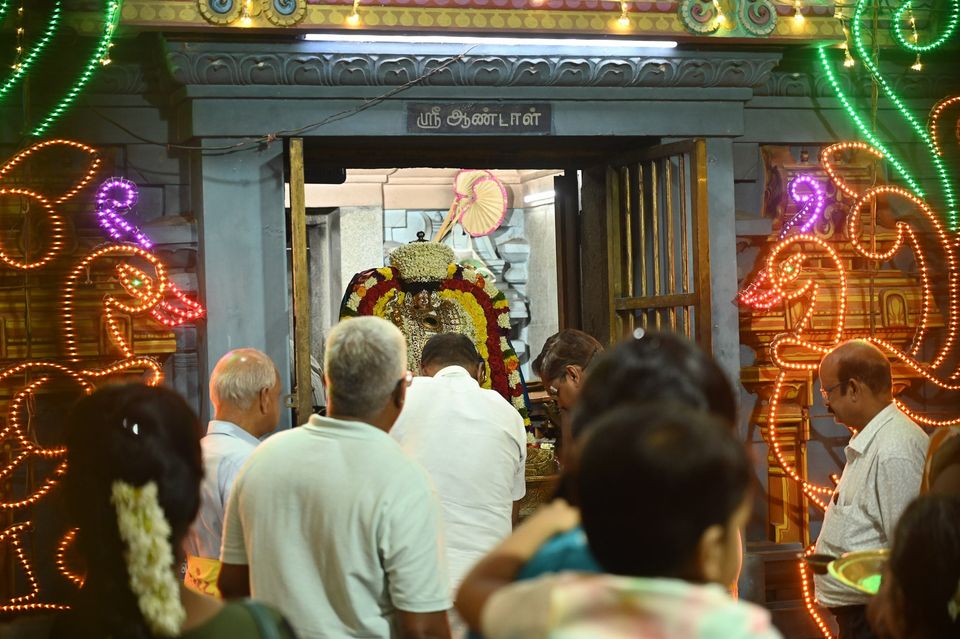
Dharmar Pattabhishekam
Day 22: Aadi 25: 730pm to 930pm Arattin Adi Arambham, Dharmar Pattabhishekam The simplest Pattabhishekam I’ve ever seen. Dharmaraja was in the ardha mandapam, got a crown there, and another one for the alankara murti who was Dharmar himself. No major ritual, only a little chanting.
Read more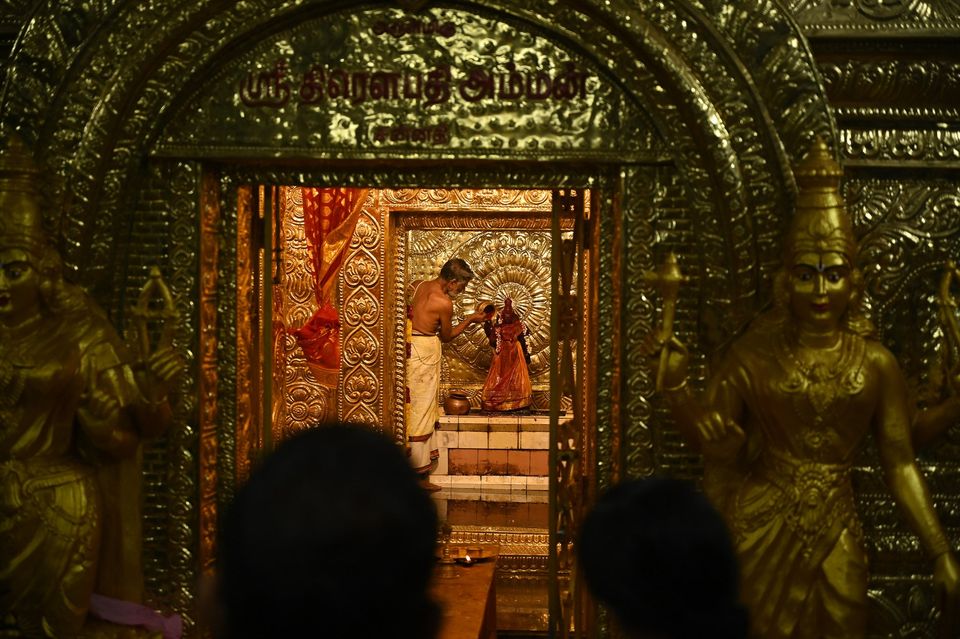
Manjal Neer Utsavam
Day 21: Aadi 24: 9AM Manjal Neer utsavam, arava bhupati moksham After what must have been a long and rain-washed night of procession, the ther returns to the temple at around 8 in the morning. I’m told that the deities will leave for the aravan moksham at Muthialpet by 930. Perhaps it’s here that the Manja neer utsavam gets its name, from the abhishekam? Because nothing else in the day’s events explains it. 930 arrives, but the post-abhishekam alankaram still going on for Draupadi Amman in the sanctum. Another hour goes by. 1030 arrives, when Bhagavatar sir calls me and says nothing will happen until evening. He is very kind and offers to call me when the procession begins. The priest tells me the same as I take leave. My phone rings at 415pm. Bhagavatar sir informs me he is leaving for the ground. At 430 I go to the Ajanta signal and unfailingly find the purappadu on their way. They reach the ground by 445. Once in the ground, the vandi placed so the deities face South, towards the temple’s side entrance. There’s a naga shrine alongside a stone figure with a hand-drawn face who I’m told is Pidari Amman. Potthu Raja is placed near Aravan’s head, and Bhagavatar takes his seat next to Potthu Raja. He recounts the story of Aravan’s birth through Arjuna and Uloopi, his watching of the great war, and his subsequent rebirth and slaying of Kutasura (who is born of the ashes of Kama). A final Aradhanai for Aravan, Potthu Raja, and Draupadi-Perumal-Arjuna. Aravan’s head is taken off a
Read more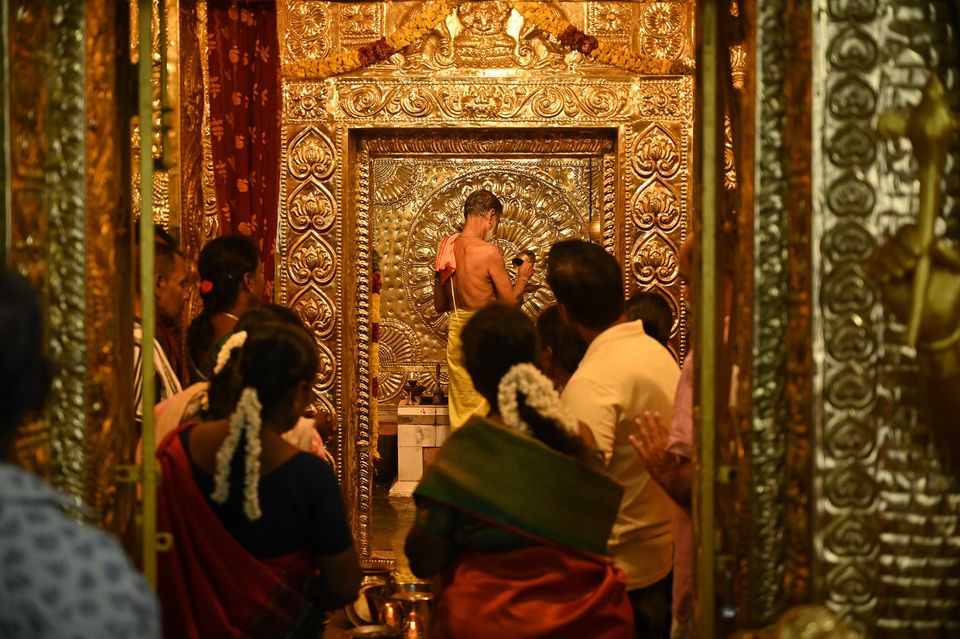
Gendhapadi Utsavam
The day after the Ther vizha, Draupadi amman’s chariot comes to roost at a small makeshift pandal near the Perumal Koyil. It remains there till the next morning. Then, this is the schedule: Day 20: Aadi 23: Kenthapadi/Gendhapadi Utsavam: At Thiyagaraja Street, erecting a pandal for Abhishekam, flower decoration, and Prasadam distribution. The Chariot procession departs at 7:00 PM. There is a very quick abhishekam for the 4 deities – Draupadi, Perumal, Arjuna, Pothuraja – which we missed, that’s how fast they did it. Needed to get it done so that they’re ready with alankaram by 7pm said the priest. I guess nobody wanted the delays of the previous day! Simple alankaram. Full meal prasadam comes from the Perumal koyil madapalli. Boys on this street are the ubhayakaras, and they’ve organised it. They seemed in charge the whole time, and came by at the start of the deeparadhanai for special blessings from the priest. *why only kunkuma abhishekam for this amman? We have some time to talk to Ramradjou swami. He has seen the Kamakhya yoni being given a kunkuma abhishekam in the temple in Assam. Asked there if it could be done for any amman. Was told there was nothing wrong, it could. So he does it now only for the moolavar, never for the utsavas. So this is a practice not randomly brought in on a whim but on the authority of the practice in Kamakhya, and a sign of how these customs evolve and change in “conversation” with each other. *priest and a helper talking about the ther route
Read more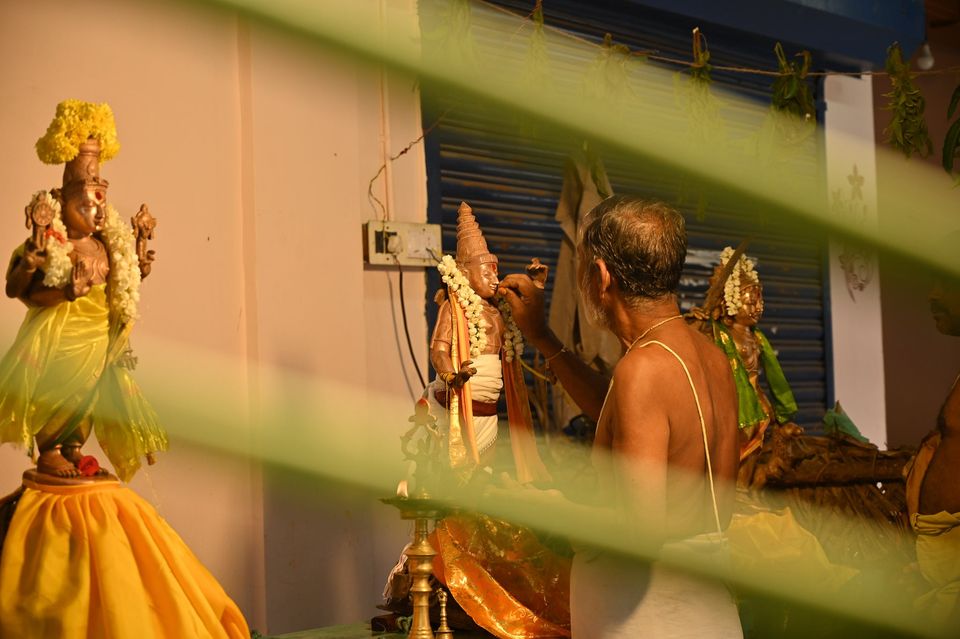
A Homam That Wasn’t
Shodasha Lakshmi homam, Sahasranama recitation typically and with a vilakku puja in the evenings. (In the model of the Candi Homan, something to do with vegetables.) We didn’t see it, since it appears it wasn’t done at all. Priest told us on 6th August that they would do nothing.
Read moreRathotsavam and Theemidi, the Day for Which We’ve All Been Waiting!
What a day. Got there am when pongal was being made, and people were coming for sedal and veeraa jati. Archana happened, annadanam outside. Vahanas were out – one for Perumal, one for Arjuna, the ther for Draupadi amman. While all this is happening, we talk for a few minutes to Veerappan Bhagavatar, and record him on video as he tells a story that involves the emergence of Kootasuran from the ashes of a burned Kamadeva. He quotes Alf Hiltebeitel’s From Senji to Kurukshetra (takes me a hot minute to recognise that it’s in fact this work he’s quoting). Saying this is how he understood some of the connections in the Villu Bharatam. (Were there not just two vahanas in the am? The two that went to Muthialpet. One with Dharmaraja, Arjuna, Pothuraja and [Sahadeva perhaps?], and the other with Draupadi on the lion?) 1030am or so, the ther with the minor figures (Pothuraja + 2 others?) plus one with the wooden figure of Draupadi amman go to the Mariamman temple ground near the Muthialpet clock tower. The ground had become a “legal issue” said the priest and asked us to take video of the crowds, even giving Arun permission to climb on the Draupadi vahana. Someone else had parked their ther there, and had only moved it to one side because they went and complained the night before. This is the scene of the battle when the sons of the 5 pandavas are killed. Aravan’s head witnessing the Mahabharata is in one corner. Rudra chor or Rakta chor is prepared and shown to him, mixed with the aid
Read more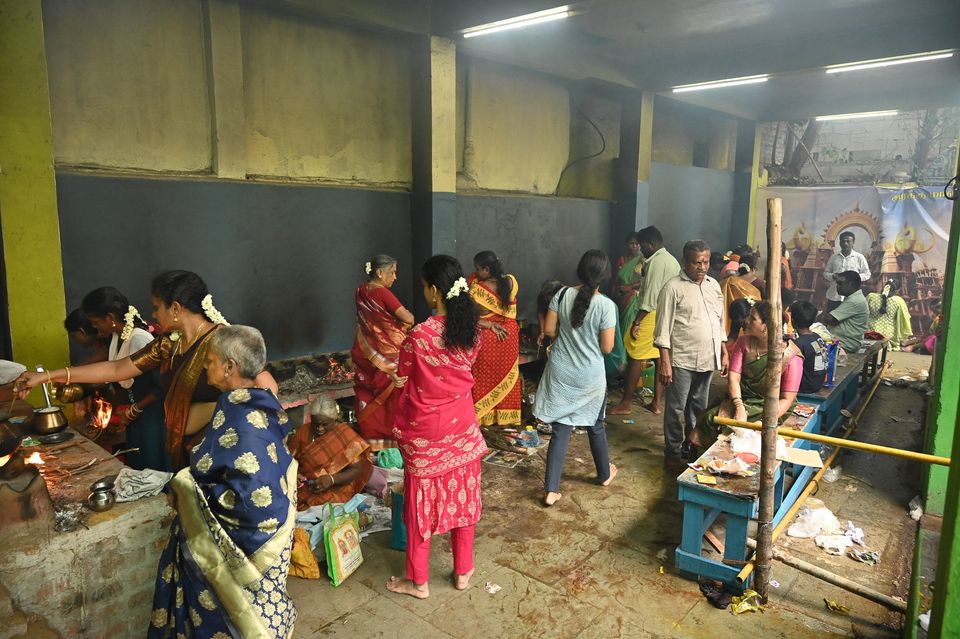
Pecchayiamman 1008 Limes Archanai; Murugan Abhishekam and Purappadu
1030AM Murugan Abhishekam was a simple affair, on the occasion of Krittikai. We went and Arun got photos. Lawspet and Ghousiga also marked this, morning abhishekam and evening ul-purappadu, and Ghousiga probably did a veethi purappadu, with Aadi Krittikai being one of three special Krittikai celebrations. Mutthumariamman Alankaram was on a Mayil vahana, with a lime malai. In the evening is a Lalita Sahasranama and 1008 lime archanai for Pecchayiamman. When I go, there is an anda full of limes in front pf Pecchayiamman, plus piles of limes at her feet, it is a namavali recitation and ½ hour puja after which the limes are distributed. No photos allowed there, so I got an idea of the puja and ran fast as I could to Perumal – to catch the karagam coming out from the sannadhi and leaving to the theemidi ground from there.
Read moreVirata Parvam and Kuthirai Vahanam
Today’s schedule was Day 18: Aadi 21: Nal-utsavam, Virata Parvam (Madu Pidi Sandai), AM abhishekam, (Puducherry Yadava Marabinar) It rained this afternoon so we went and saw the alankaram (Veera Panchali on the horse vahana, sitting sidesaddle, all ladylike) and left but didn’t return. Today’s stories would have been from Bharatam Book 4, about the Pandavas hiding in disguises in the kingdom of King Virata, the Kaurava raid on his cattle, Arjuna revealing his identity, the completion of the year incognito. No enactment of it, it seems. Veerappan bhagavatar said he sang the mangalam and the nadaswaram played along very well – and it was special, but I missed it. Heartbreaking for me. I hope I get another chance. The Nadaswaram players have complained that their music is often drowned out by the sounds of the mechanical drums – odd that both are played simultaneously, creates a bit of a din. But at times like this when they voice their complaint, it is taken into account and that’s nice. The schedule lists a noon Annadanam, but no sign of it having happened.
Read more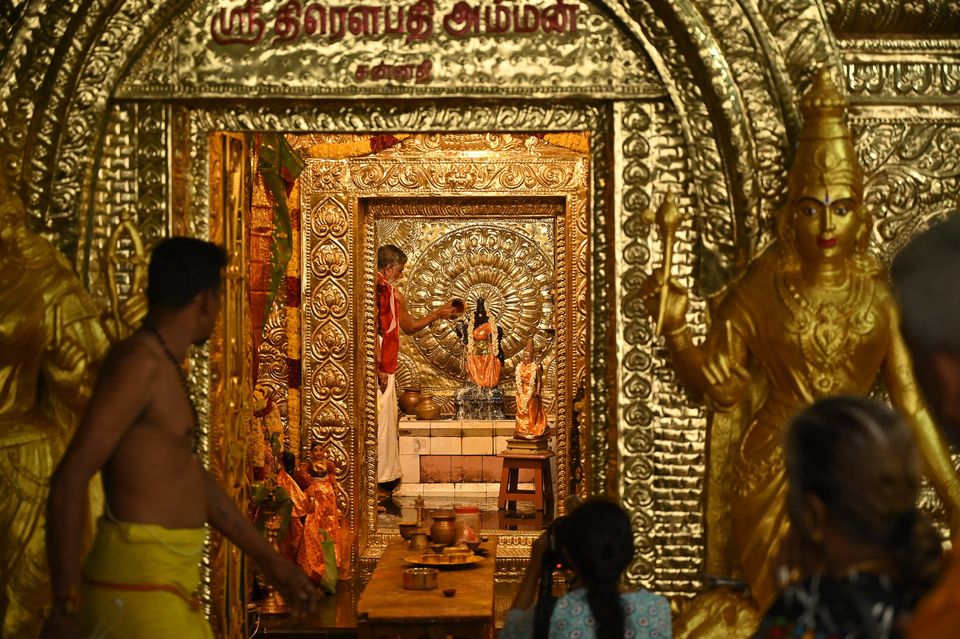
Arjunan Thavasu and Simha Vahanam
I’m not sure what I missed today, but I was told to take photos of the little Arjuna standing atop a tall spoke. That showed up later at the crossroads where the bow was kept. Some of these ritual events are better enacted than others, suffice to say. Alankaram today was Durga of course, on Her Simhavahana. Day 17: Aadi 20: Nal-utsavam, Arjunan davasu (penance), Singhavahana Mahishasuramardini
Read more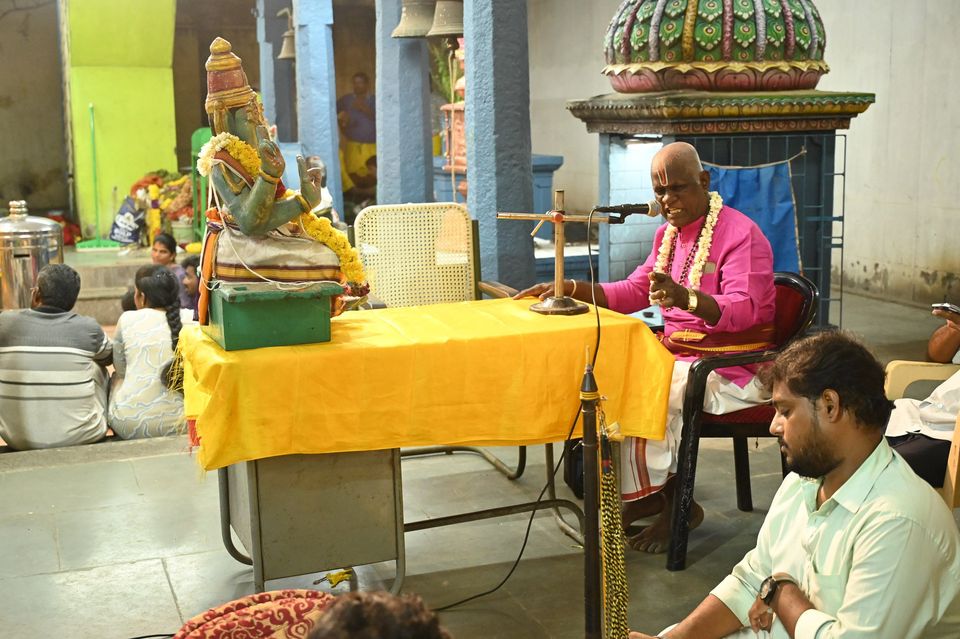
Andal Utsavam Gets Going
This will continue until Aadi Pooram, for 10 days. (Andal shares the birth date of Kannika Parameswari?) Adhyapakas recite Andal pasurams only in the AM after thirumanjanam, evening none after 6pm. They only recite from Thiruvaimozhi. 3 times pradakshina, once mallari, twice keerthanas.
Read more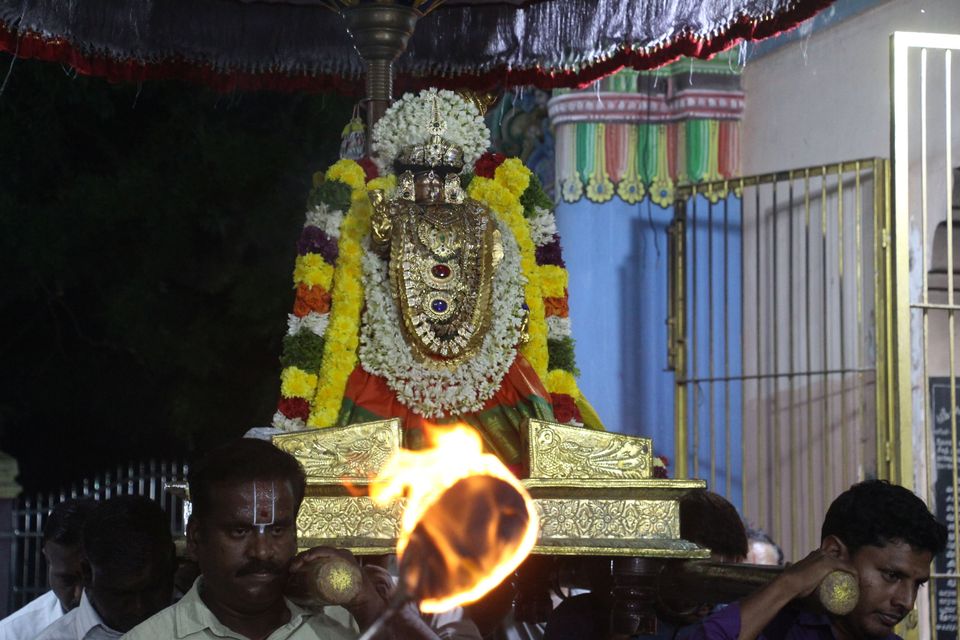
Offering Pongal, 108 Times Over
(Rahu kaalam): 108 Pongal offering 2pm onwards cooking, after 3-530 or so puja. Very delayed. Arun went. The first pot of pongal that’s set to cook seems to be the temple’s own. It is placed in front of the maha balipeetham. Neelakantha Gurukkal lights the fire himself and lifts the pot onto the stove. Bhaktas trickle in after 4pm and pongal stations prop up along the western and northern prakarams. By 5pm, the cooked pots begin to arrange themselves in the Gayatri mandapam, awaiting the late arrivals’ completion. By the end there exactly 11 batches of pongal, including the temple’s own pot and another one in the temple’s madapalli. Once completed, the priest collects a ladle of pongal from every pot into a single bucket. After this, the helping priest takes another pass, this time collecting coconut water from the bhakta’s coconuts and returning the two halves. Soon after, an aradhanai and archanai complete the puja.
Read more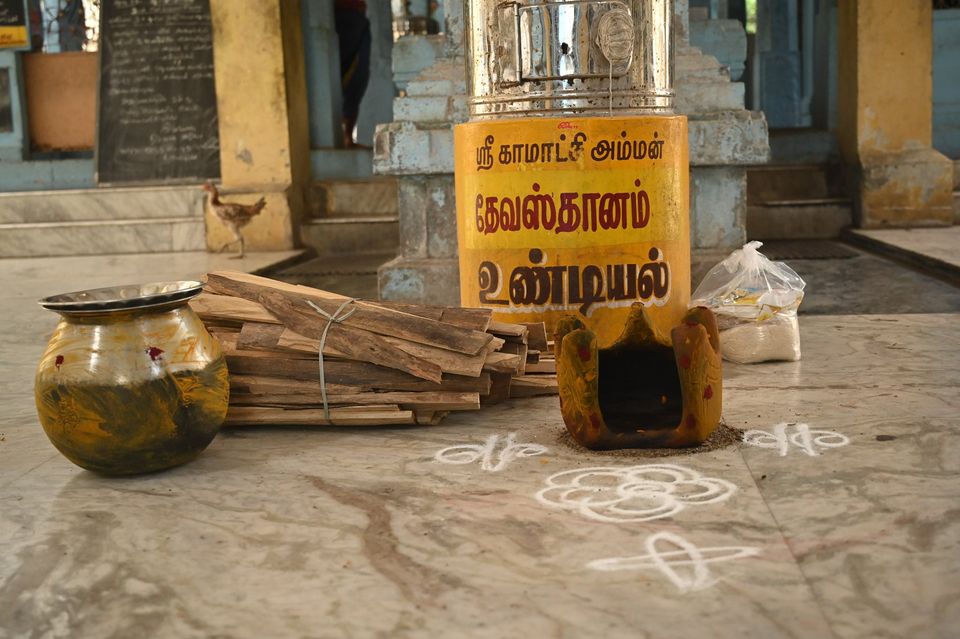
Vil Arangettram and Thirukalyanam
The day’s schedule reads: Day 16: Aadi 19: 930 vil arangettram, 1030am to 12 thirukalyanam for Draupadi and Arjun – but that title hides so much! Wedding notes: a large crowd, a very interesting morning. Amman’s wooden figure goes on procession with the big bow. They stop at the corner of Bharati and Iswaran, and along comes Arjuna, dancing. Meantime Veerappan bhagavatar is telling the story of the wedding and the contest with the bow – absolutely splendid, see the recording. We clap when Jarasandha, Karna, Others fail to string that bow, he says, because their success makes more room for Arjuna who is the rightful groom. The bow bending by Arjuna could be more dramatic, but once that’s done, the deities move back to the temple and the wedding proceeds. It’s a splendid community affair. Many women in attendance, and what a scramble for bangles at the end there. The new ther finally arrived at 6pm, clearly with some fanfare, which we missed. Priest remarked on it later. Kalasa was kept in the garbhagriha when we saw it. Hoisted a day later in the evening. Thanks to the Bhagavatar and his storytelling, this was easily my favourite day of this whole vizha so far.
Read more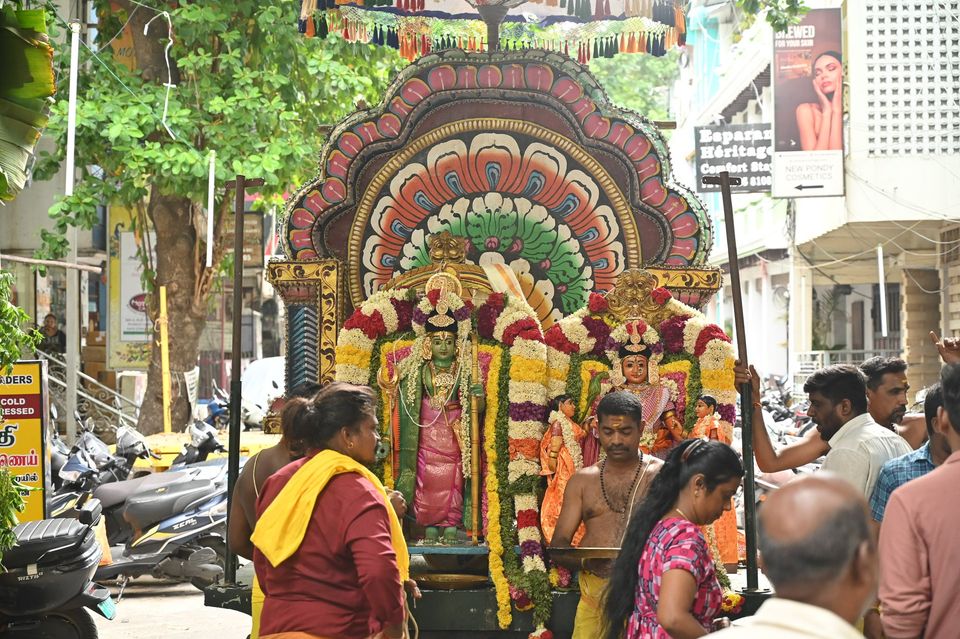
Karaga Thiruvizha
Day 15: karaka thiruvizha, malaiyidu alankaram The new chariot the priest has been speaking about was to have arrived today at 3pm but didn’t there was a death, so it got delayed a day. Alankaram is மாலையிடும் (Maalaiyidum) – because she’s a new ponnu getting married tomorrow she has a garland for her groom. Sweet! Karaga thiruvizha – I photographed the karagam making process extensively. It’s a copper pot with spokes and a frame that allows flower maalas to be strung on it in a particular way. One done, it was carried by Prakash accompanied by the other men to the Sivan koyil kulam – there they bathed, get ready there by smearing chananam etc., wear sacred thread, Rangaradjou swami ties the kaappu, then there’s a puja and aradhanai, and the veera jati session happens in the back prakaram near the entrance to the kulam. 3 whips per man. Priest then picks the karagam, dances with it, returns it to Prakash who carries it out and back to the temple. It’s all quite the scene for the otherwise very sedate Vedapuriswara Koyil.
Read moreBakasuranukku Annam
Day 14: Naal utsavam, Carrying annam to bakasura (bakasuranukku annam kondu porkkuthal) *Sunday Aug 2 Panchali alankaram. Usually it’s Angala Parameswari on this day but it was decided otherwise this year. Partibhan’s mother said Andal alankaram but that wasn’t so even though it’s recorded as such in photos. *5-6pm Veerappan Swami was doing his daily storytelling but at the Mariamman temple near the clock tower in Muthialpet. Stories of Bakasura. Right when he was done, you could hear the approach of the procession from Droupadi Amma, led by the man with the Parai and the Sunddu Kucchi-Adi Kucchi. No other instruments. Everyone came walking except the priest’s teacher friend (I think they returned together). The women at the temple had clearly been waiting for this. Big drums of sambar saadam and everyone had dabbas and bowls to take some. Chaos. Fight broke out between local boys, threatened to get big — fitting, for a bakasura feeding. I got scolded for not caring about that and taking photos. All the ladies were very kind and posed when I asked to take photos. The men doing the doling out, too. Simple little deeparadhanai, and then the doling continued, this time off the thattu vandi. When it was done – it was done. I walked back home with the thattu vandi.
Read moreAadi Masa Brahmotsavam Day 3
Manimutthu mariamman had another bath this morning, in anticipation of the noon Annadanam and evening Unjal utsavam. I went at 11ish, the alankaram was with nool malai for amman, tables set up for a major sappaadu. Cooking had happened since early that morning, applams fried on spot. A wide range of people, from the destitute to the certainly undeserving, sat waiting. A clearly impoverished and sick pair of women came, one of the temple nirvagam people applied vibhuti on their faces when one claimed to have found all in the Amman – a gesture of some kindness as it was a physical touch. There was a muslim man there I think with his wife. I think this was the Ubhayam of the lawyer A. Rajarajan, who’d also been there from the start. I left after the deeparadhanai at 12:30 for Ojas’ grandmother’s 13th day shrardha chaappaadu. Kasturi mami called me to come for lunch, but how could I possibly, today. In the evening, Dyuman drove me to the Unjal Utsavam. Some of the men who’d been around all through were there, one looking like he might be slightly drunk–others were ignoring him. I got my photos and left. The request for photo-sharing is quite intense in this group! I’ve had to say I’ll send them to one representative, and they share.
Read more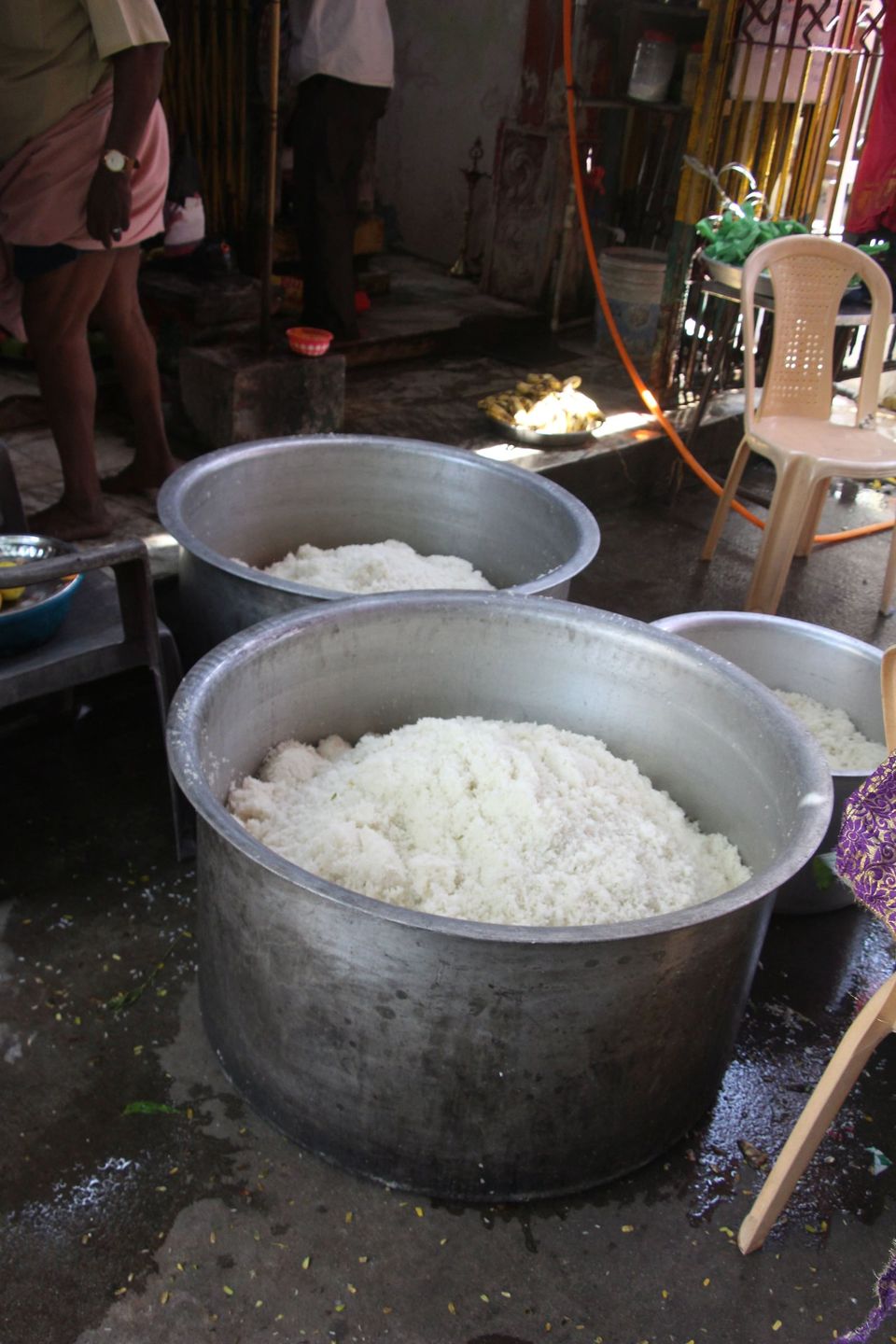
Arakku Maligai Eritthal
Day 13: Naal Utsavam + Arakku Maligai Eritthal, or “the burning of the lac palace”--which refers to an Bharatam episode in which Duryodhana and plots to kill the Pandavas by trapping them inside a palace made of highly flammable materials. This happened after the Purappadu returned, though, so I wasn’t around to see. It took place at the cutting of Bharati, on the way back to the temple at 1030pm. Kannan sent me the photos you see. Today’s Alankaram was Rajakumari.
Read moreAmman Pirappu Utsavam
It’s day 12, and today Draupadi Amman’s birth from fire is celebrated, so it’s called a pirappu utsavam, or Agni kundathil pancali, Panchali who emerges from the Agni kundam. Moola Amman is also in chandana kaappu, showing her birth in fire, and there’s tamarind rice, sweet pongal covered with ghee to make a mirror in which Amman’s reflection can be seen in the middle (neyyi kulam, not so effective though maybe too much light?), lemon rice on the right, curd rice dotted with pomegranate on the top. Different team did alankaram. Happens again on Tuesday before Thirukalyanam, I’m told. Draupadi was out in two forms – the utsavar ready for purappadu, and the wooden Amman. Fire, too, was of 2 sorts – electric lights and a red cloth blown to look like fire, also a real fire in the homam clay “pot.” Pothuraja lifted twice up and down from the fire. Then Amman – the wooden utsava – with lights out, twice. It was quite stunning. Crowded today, with many offering maavu vilakku and pongal. All of it took very long, nearly till 845pm, but was well worth the wait.
Read moreAadi Masa Brahmotsavam Day 2
There’s a special abhishekam at 10am, and a Karaga vizha just after. The family that had undertaken this pledge was present, 3 boys, plus a lady who must have been the grandmother of at least the littlest boy with the beautiful face, and a young girl, likely his sister. The grandmother was given an Amman form with a trident across her tongue, and she almost instantly went into a trance. Pambaikarar was a man like Senthil pusari at Angalamman, who accompanied the family carrying the karagam the whole way, all around the block, bare feet in blazing heat, too much to bear in spite of wearing socks and several people pouring water to cool their feet. The pambaikarar priest did the lime dhristi in quite a dramatic way several times. The photos capture that somewhat well. After their return, karagams brought down again, and this time the granddaughter in purple got into a trance-dance. Then koozh and kanji were distributed, and all wiped clean, the rush was incredible. This evening is a kumbha padayal, followed by a veethi ula which started around 9. Not sure what the alankaram was, She had a trident. The kumbha padayal was… masalamasala and strange. Ramanan gurukkal gave me a big pot to take home and I have to return the plastic vessel. It had been set up on several long tables beforehand which were being washed and cleaned when I got there – so much rice on the road, gasp. The woman who had been part of the karagam group asked me if I had been “called by amman only this year” or
Read more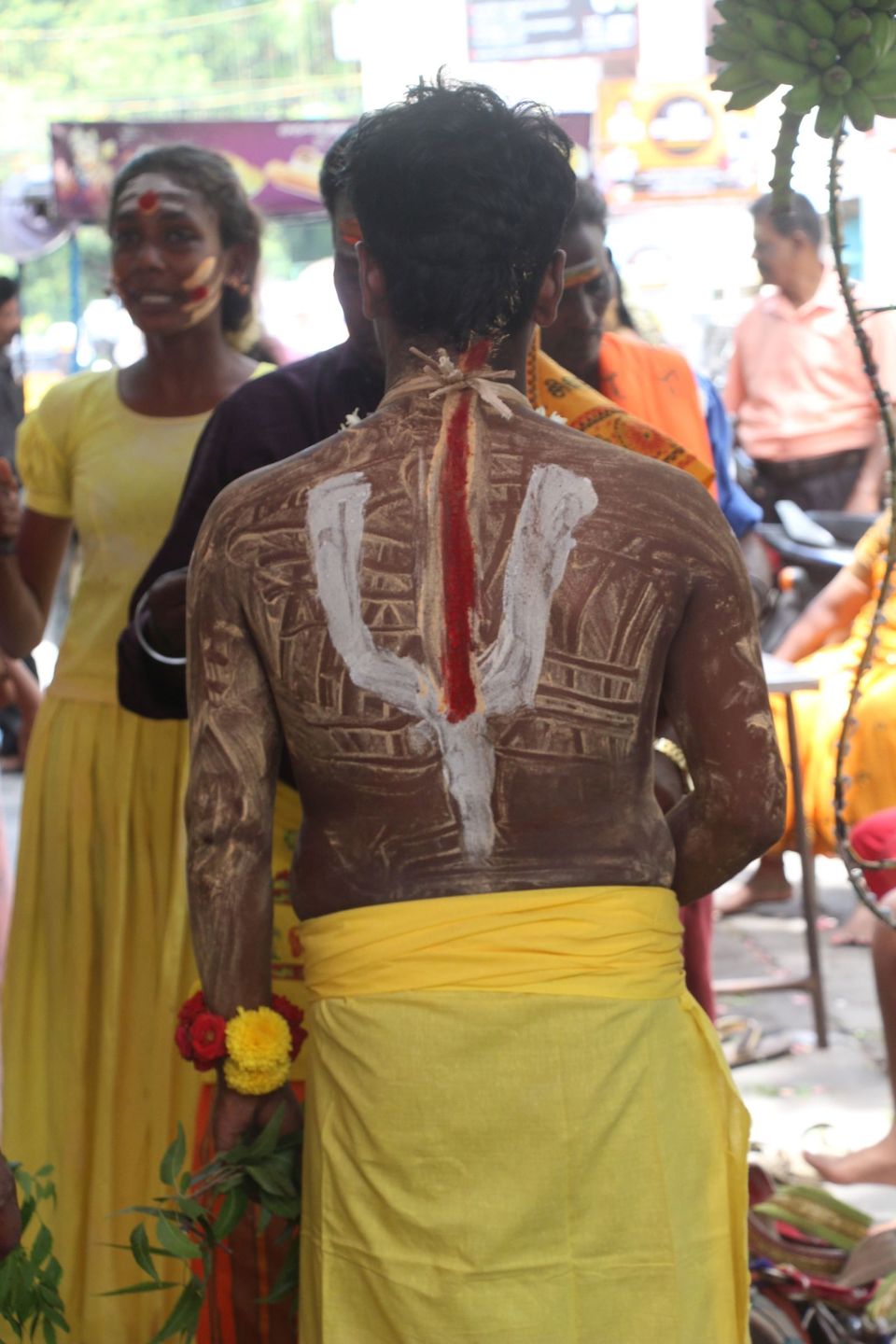
Ekadina Laksharchanai
Ekadina Laksharchanai (100X Sahasra), Archanai going on in 3 different kaalams spread through the day for the utsava murti (7-9AM, 9-11AM, 5-7PM); the older priest reads Lalita Sahasranamam. I (Deepa) got to angalamman 730am. A moola mantra japa homam is just finishing in advance of the laksharchanai to the very alankarified utsava murti. Plastic maalas and all. Pongal making is also happening simultaneously at the back of the temple. Utsava murti is alankarified and sitting out, so the kunkuma archana happens there. Elder Gurukkal reads from a sahasranamam, Lalita namavali he tells us later. Following this – deeparadhanai, shodasha upachara, more chanting+archanai, a lovely moment when the nadaswaram plays just for Her (the players were good today), and a final deeparadhanai.
Read more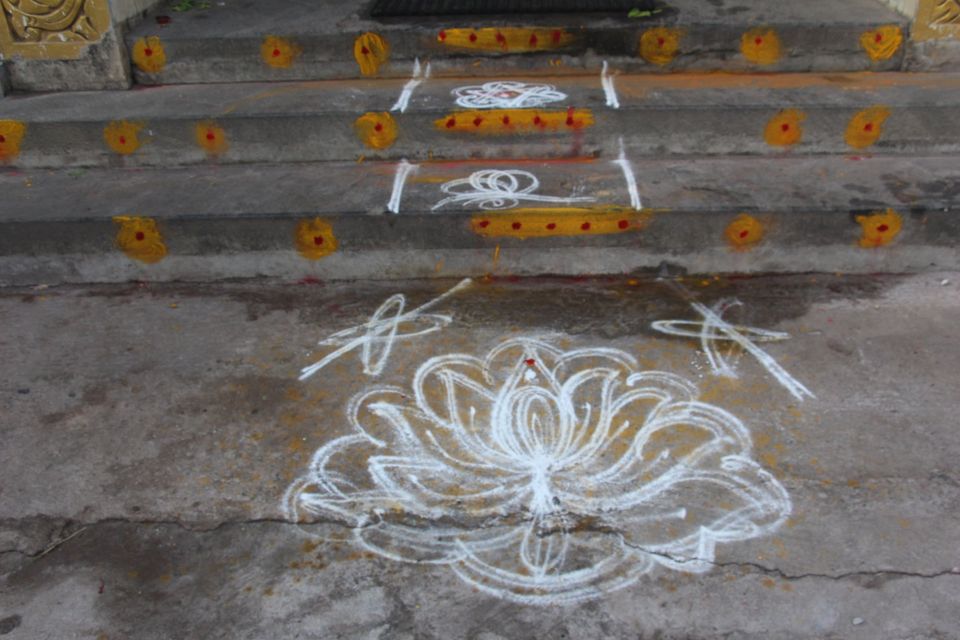
Somewhere Between Craft and Ritual
10am-noon is Sapta Kannika puja at the Kannika Parameswari temple. Seven Kannikas were prepped the night before by the Mahila Sangam, readied for today’s prayer. 8 committee members all there, evidently pleased and proud of their work. The ladies were all taking so many photos the priest scolded them and reminded them that rahu kaalam would soon be upon us. Then there commenced the usual floral puja. The temple was full by 1145am, when I left. All ladies. The old sweet lady I sometimes see there may not be from the community as she said “I only take flowers if they give me” – but many made an effort to give me as usual and to include me. They’re sweet and tight and generous.
Read more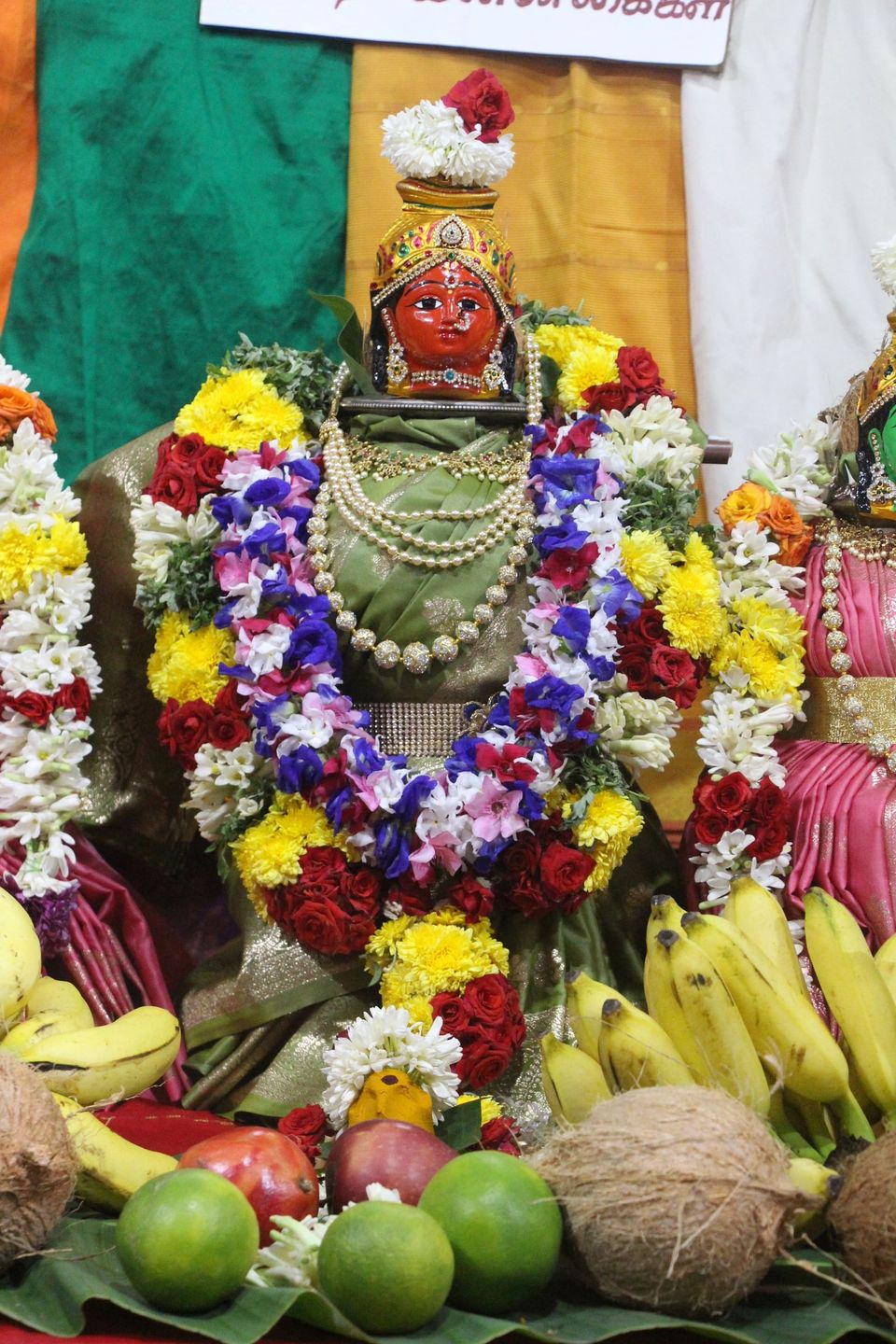
Naga Puthalam Alankara for the Whole Garbhagriha
Abhishekam for Mutthumariamman would have happened the night before, but now the morning is here and the whole garbhagriha space has been used. Vinayaka utsavar is standing in front, all covered with flowers. Anthills with snakes on the ground. Amman in full chandana kaappu, with a big Maala of limes on top, Thazhampoo “petals” like spikes over her, neem leaves to cover any last space on top. Quite something. Took them till 5am, Jnanavel Swami said. Naga putru or puthalam (sacred anthills)--a reference to the emergence of Shakti forms from the Naga worlds beneath.
Read moreA Theruvu Koyil Has Its Brahmotsavam
20ஆம் ஆண்டு ஆடி மாத பிரம்மோற்சவம் for the Manimutthumariamman Koyil near the Kamban Kalairangam. Ramanan Gurukkal had told me the schedule, but I thought it was an 8pm start and was getting ready for a day of writing when he called and asked if I was coming, so I dropped all and went. They were just getting started with the Ganapati homam, so that worked out well. 2 priests from outside plus the Gurukkal, who did the homam. The road was blocked off (with a cord and a small piece of cloth that looked like an Amman dress on either end), a pandal set up, large set up for homam. Actually beautifully done – Ganapati homam, Mahalakshmi homam, Mariamman moola mantra japam, Astra homam (can be a few types, Pashupatastra being done for Siva pujas, in this case Shakti astra homam which brings about samharam of bad/evil “black magic” influences – priest said. The um-phat was emPHATic). Very participatory process, after the basic swaha offerings were made, then the homa plate went around and every one put in the fire a little. The gurukkal’s mudras were a delight to watch; he does have very long and elegant fingers. The general Amman Koyil setup was interesting to witness. A yellow cord connects the Kalasas with the agni kunda. There are three kalasams, and the central one with the face of the Goddess. Gurukkal goes between the agni kunda and the kalasas, there appear to be rather more mudras repeated than we see at other temple homams. At times, he’s acting in sync with the other priest
Read more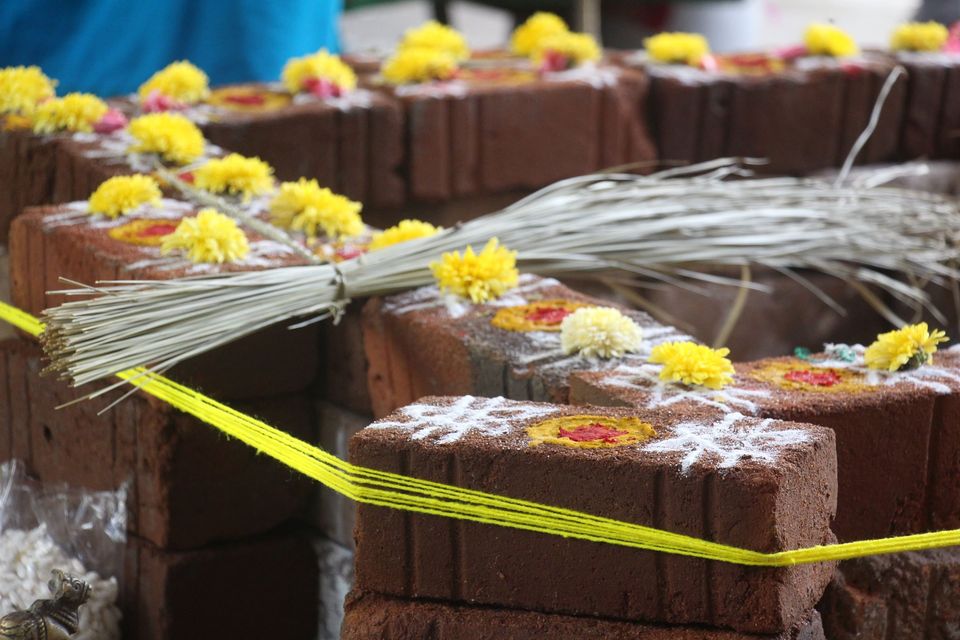
Rajarajeswari Alankaram
Day 11: Naal Utsavam. The alankaram tonight is Rajarajeswari.
Read moreParashakti Alankaram
Day 10: Naal Utsavam. Not much going on here apart from the ordinary. The alankaram tonight is Parashakti.
Read moreGajendra Moksham
In his previous birth, the elephant king Gajendra had been King Indradyumna, a great devotee of Lord Vishnu. Thanks to a sage's curse, he had been born as an elephant. One day, he was with his herd in the water when a crocodile grabbed a hold of his leg. A great fight ensued, but the elephant was not equal to his adversary. As he faced almost certain death, he remembered Perumal and raised a lotus flower with his trunk. He called out to Vishnu, offering Him the lotus and praying for refuge. His prayer is known as Gajendra Stuti — the hymn of Gajendra. This story gets ritually re-enacted in the temple–this is pretty much the essence of Gajendra Moksham, as much as we can tell. Perumal comes out of his sannadhi and goes around after the usual pujas to the kulam at the back of the temple, where the remainder of the puja takes place. I don’t realise the interest of this event, so I wind up there late when the place is already crowded and the best vantage points taken. I have no view at all, so finally manage to squeeze into the other end, much to the amusement of Sekar mama, who chides me for my lack of fore-planning. The puja as such is a simple affair. There are two brass forms of the elephant and the crocodile with his mouth open. The lotus is on the elephant’s tusk. He gets a small abhishekam along the way. At one point, the priest signals and there’s a burst of firecrackers on the far side near the washrooms. And that’s really all there is to it. Perumal goes back, people go
Read more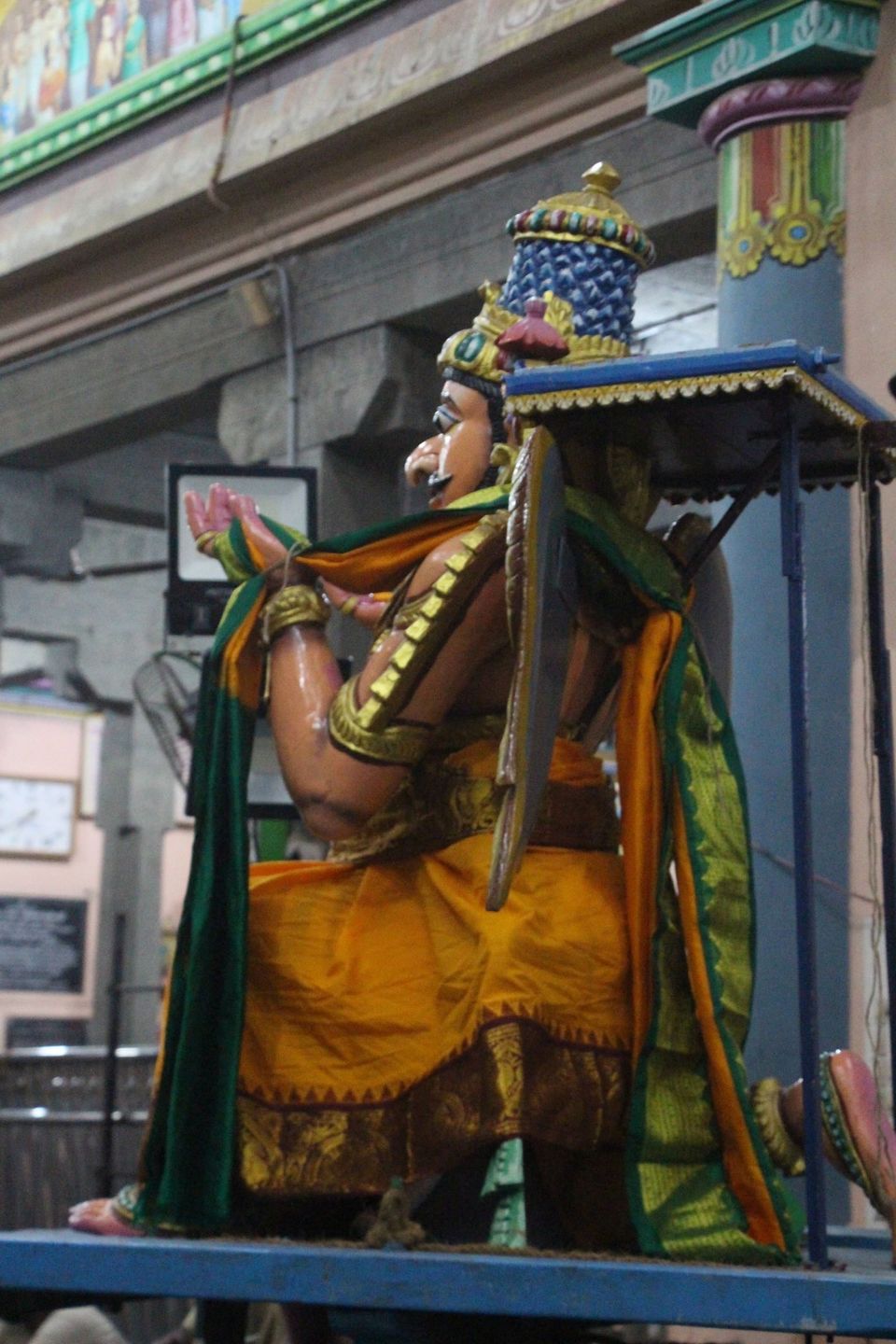
This Time, Annapurni on Video
Day 9: Naal Utsavam. Done with the photo-taking yesterday, not done with the fascination of the alankara process, I went to take video today of Draupadi Amman being transformed into Annapurni. Not much to say except that we had a hundred clips, played at 5X speed and turned into a 3-minute video, which became this high-grossing thing on Instagram, ha ha ha.
Read moreThe Alankaram Transformation
Day 8: Naal Utsavam. After so much chasing, we finally managed to sit with the men doing the alankaram for the utsavar of Draupadi Amman for the four-odd hours they worked today. They turned Draupadi Amman into Mariamman today. It was fascinating to see the addition of limbs, body, chest– even if body proportions do get a little bit sacrificed. Not sure when these alankara traditions came into being or how they evolved. But this is about taking a small utsavar form and enlarging her so that She is ready for her vahana, which is usually many times her size. And it’s about creating recognisable forms, pathways by which the divine presence becomes accessible to those who can then know Her, at least outwardly like this.
Read more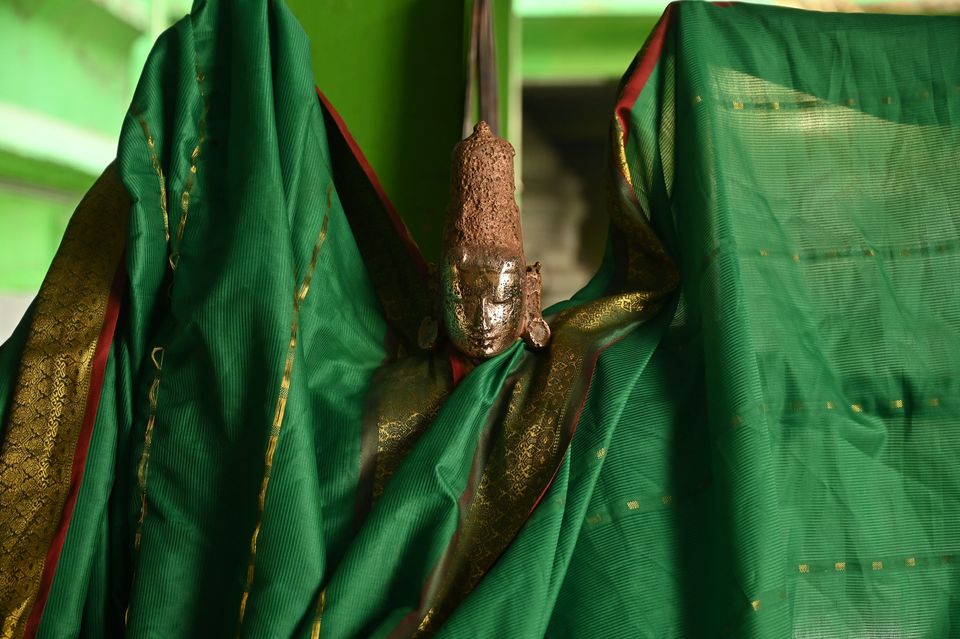
Dhanalakshmi Alankaram
Day 7: Naal Utsavam. Morning abhishekams happen on all days, but without much ceremony. The evening’s alankaram is Dhanalakshmi.
Read more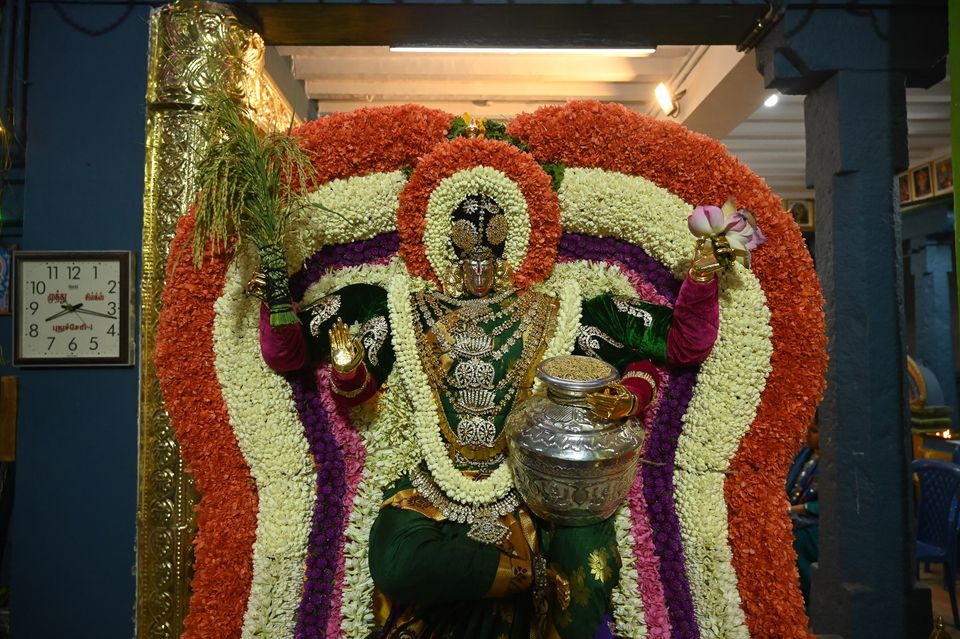
One Unknown Alankaram!
Draupadi amman’s alankara figure is standing in a pink sari today, but I cannot tell what her alankaram is. It’s day 6: Naal utsavam, and she will ride out on a Yaanai vahanam (elephant)
Read more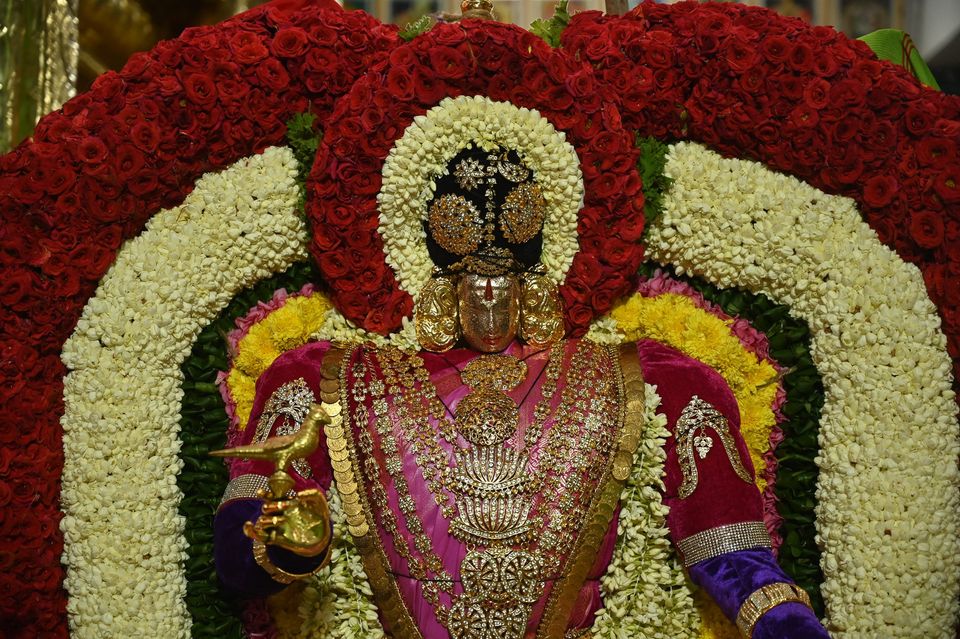
24 Hours of Song
I’m not sure we do justice to this event with all the other running about we’re doing but the Panduranga Bhakta group has 24 hours of bhajanai outside the Panduranga Sannadhi starting today: Akhanda Divya Nama Bhajanai. We cannot help but notice the sponsors for this are the Vasavi Kannika group: Arya Vysya Kommati Chettiars whose kula deivam is Kannika Parameswari.
Read more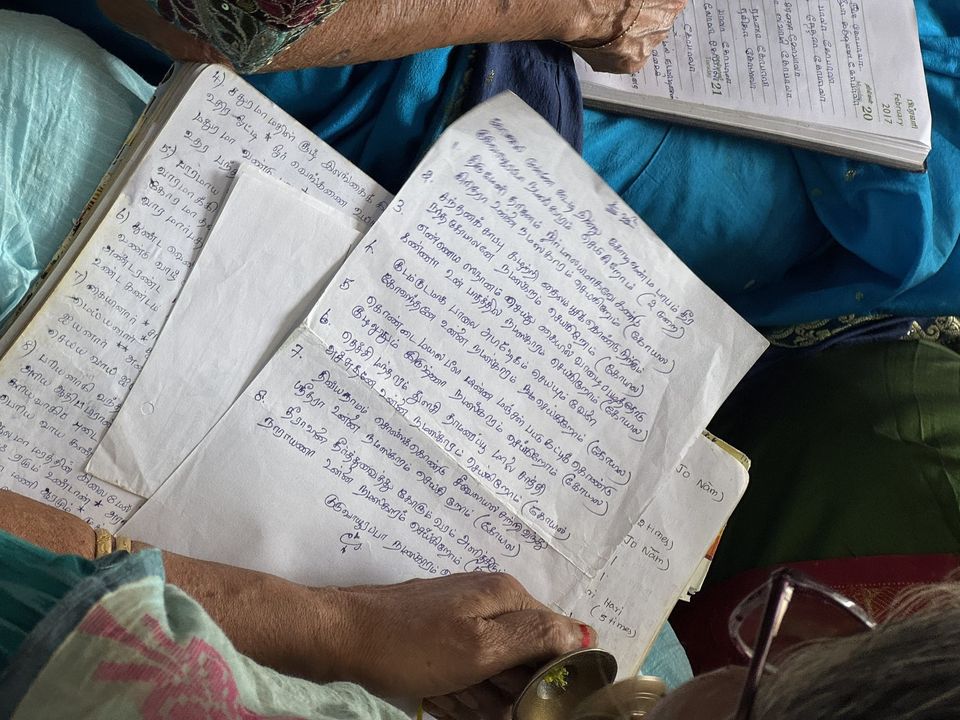
Vizha Wears On
Amman is in a green sari holding shankha-chakra: She is Narayani most probably or Vaishnavi and tonight her purappadu is on a naga vahanam. Some tension in the air today because the alankaram man wasn’t keeping to timings, and the priest was threatening to have him replaced with another. This man doing alankaram was trained by another, older man whom we saw at the Sivan koyil – I think he said his name was Rajasekaran. The present alankarar isn’t his son, but has learned from him for long and it’s been in this “lineage” for long. Some women making pongal, off and on through the day. Not as many as we were told there’d be, but a steady flow.
Read more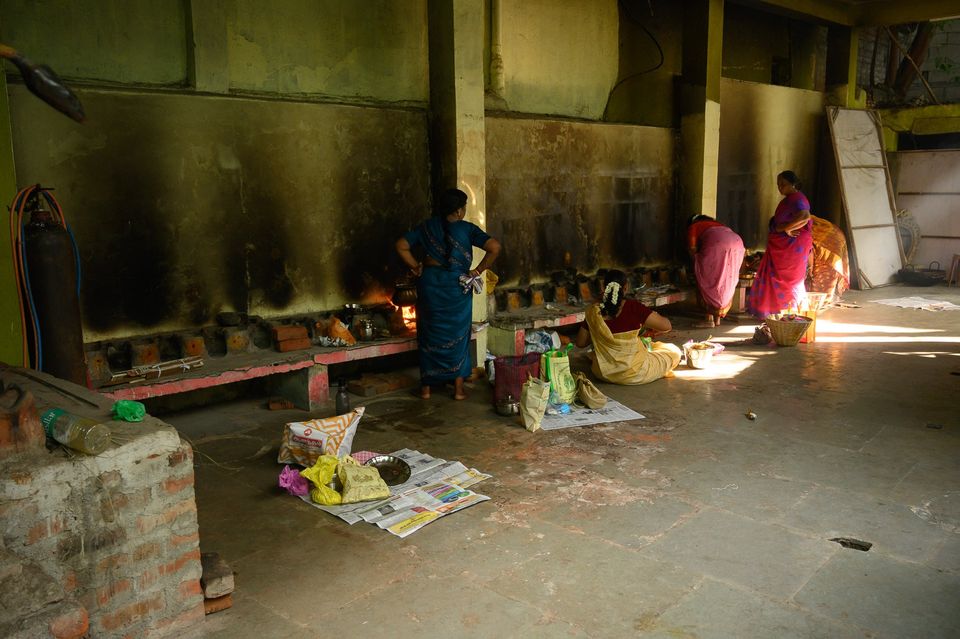
108 Paal Koodams for Angalamman
There are a few women making pongal in the morning, none at night. Several bringing what they made at home + the maa-vilakku from home – in all the Amman temples today. 10AM 108 paal kudam abhishekam: Not sure 108 were used, but you’ve to buy a 100rs ticket and then you get a koodam of milk – we saw women pouring the milk, so perhaps there could be more added. Then the koodams are decorated with turmeric and kunkumam, and their necks tied with neem leaves. They’re placed outside the Calcutta Kali shrine, a small puja with a kalasam happens there, and the women with tickets pick each one and the priest gets the one with the kalasa – they go out in procession, zig zagging through the streets. Before they depart and as they return there’s a deeparadhanai, and then the women (all chanting “Om shakti Parashakti”) come in via the central passage marked by guardrails, and the milk is poured over the deity. Soon a group gathers outside near the pranala (கோமுகை (Gomukhai) or நாழி (Naazhi) / நாளம் (Naalam)) to catch the milk that falls there. The pranala has been cleansed itself with turmeric and kunkuma, though the priest does have to stick a bar through its opening at one point. There’s an aradhanai. Then the alankaram in the evening is just silver kavacham, nothing like last week. There are some young women like Charu who will ask me for photos, and who are participating in events like this for the first time. I see her at many pujas after this. Being at the temple and a part of its
Read more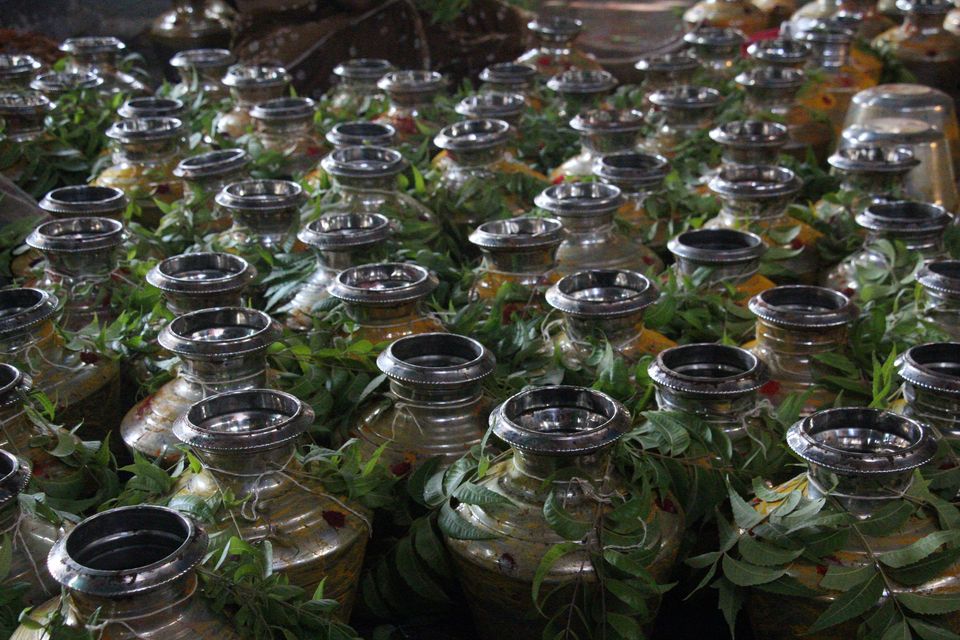
Amman Shrines Come Alive on Aadi Fridays
We stopped in at Senkazhuneer Amman koyil, whose kitchens for pongal are HUGE, and by the kulam at the back. Sedal vizha today, full nadaswaram orchestra, but we didn’t stop to see it. Ther chasing in the evening on the way back from Angalamman, the place was a mini-mela. The phat-phat-phat-coconut breaking was interesting and happened once the ther had turned onto the main Vazhakulam road. Full nadaswaram and the Kailaya vadyam group leading the way. Over at the Manonmani Theruvu Koyil on Canteen street, the grandson was there doing a simple alankaram which he decides with his mother, now that he has slowly taken over from his father’s passing away. We took photos and left. (Update, Navaratri time: we see an Iyer doing a single kaalam puja there, maybe the family has found someone to take care of the place more regularly than the grandson can? They don’t do much for Navaratri).
Read more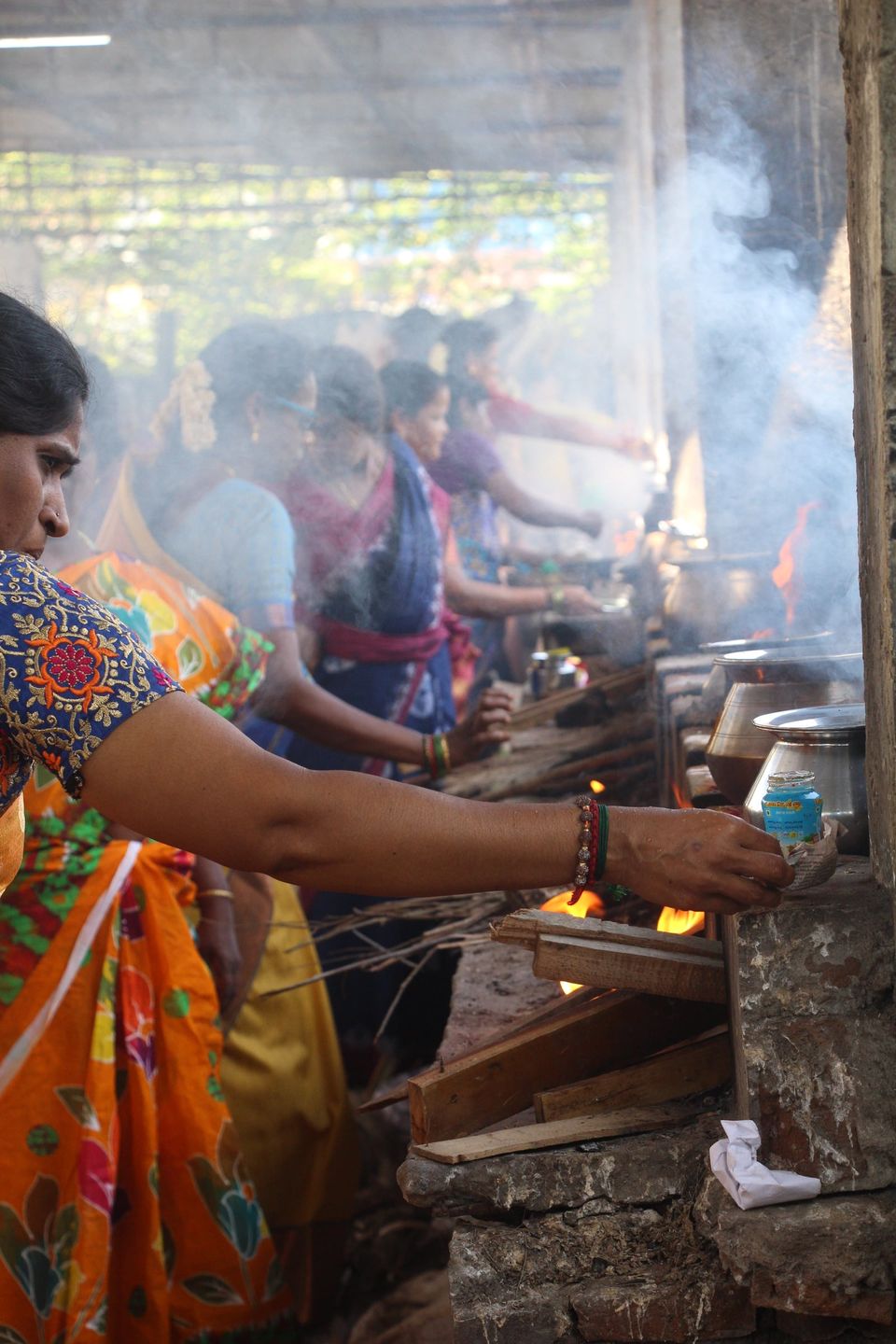
Surprise, Surprise, It’s Annapurni in Rice Flour
8AM Alankaram is ANNAPURNI, done with rice flour, the sari details marked out with almonds along the length and to show creases, walnuts and atthi or dried figs to show decorative and border details. Mutthumariamman had a spoon in her hand and a small pot with foil bunched in it to show pongifying rice I suppose. Sari beneath the rice flour alankara sari, border colour matched. Quite creative and ingenious. Jnanavel Swami had refused to tell us the alankaram the night before, it’s meant to be part of the early morning awakening darshan. Suspense and surprise. There’s also a vibrant alankara tradition at Vedapuriswara, but not nearly as creative as at Mutthumariamman. Chandana kaappu today in orange, but with pink glitz – Tripurasundari’s blouse was pink, sari details in the same shiny pink material.
Read moreAlankaram-Abhishekam in Preparation for Aadi Velli
We stop by Mutthumariamman to ask about tomorrow’s alankaram, but are asked to stay for the evening’s abhishekam instead. This temple has a practice of finishing the abhishekam that typically precedes an elaborate alankaram the night before – then Jnanavel Swami’s son works through the night getting the deity ready for the next morning. Tonight, he says the Ubhayakaras are coming in from Chennai and won’t mind if we stay – this isn’t a private temple, but many families have this as their kuladeivam, so it feels often like it’s the shrine of a specific group. The abhishekam happens late, close to closing time.
Read moreYoga Shakti Alankaram
Day 4: Nal-utsavam. The alankara today is Yoga shakti. We’ve been chasing the alankara crew, but timings have proven unpredictable. Will have to keep at it.
Read more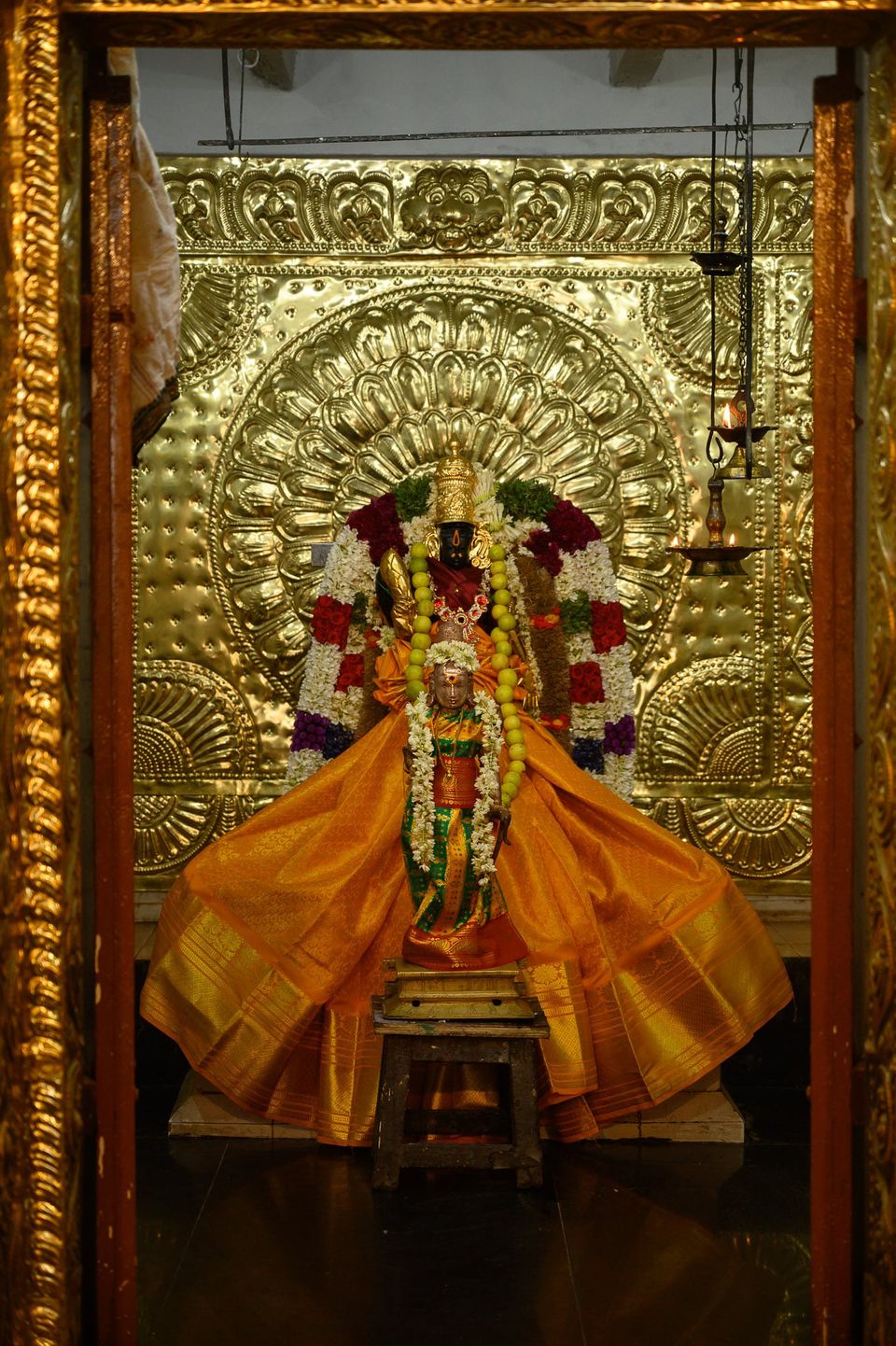
Conversations
We sat at last with Thathacharya in his Saram house for some three hours this afternoon, hearing him tell stories, quote insightful lines, and generally guide us through both temple history, practice, and the Sri Vaishnava world of ideas. He asked about us, and couldn’t place either of our “Tamil-ness.” I couldn’t tell if I was devastated by that or not. He and his wife run a strict Iyengar household. Sipped coffee cups were kept on the dining table, not brought into kitchen. Thathacharya has a meditation hall upstairs, and is a great admirer of Srisri Ravi Shankar. Thathacharya started chanting prabandham in the temple past 50. He’s one daughter in Chennai, with a grandchild who’s 4 (whom we will meet on Aavani Avittam day).
Read moreBirthdays in the Perumal and Sivan Koyils
Panduranga Bhaktotsavam Day 2; Garuda Jayanti; Sundaramurti Nayanar Guru Pujai Panduranga Bhaktotsavam continues as ever, but the big event is Garuda’s birthday! This falls on Aadi masam, Swati nakshatram. There is a 530pm Thirumanjanam, followed by an 8pm Sahasranamapujai, where the reading is done by a single priest called in for this, while Naresh Bhattacharya does the pushparchanai. Next door in the Sivan Koyil, Sundaramurti Nayanar’s birthday also falls on Aadi-Swati. Guru pujas are simple affairs, all organised by the Siruthonda Nayanar Thiruthonda Sabhai. A simple abhishekam for utsavar and moolavar happens at some point in the day – if the evening is busy with other things, it will be in the morning. If not, it will happen in the evening. Then the utsavar is taken in procession around the temple, and brought to the garbhagriha for moksham or union with Sivaperuman. Then he is returned to the utsavar mandapam. At some point in the day, a group sits outside the Nayanmar sannadhi and sings songs–often in parallel with whatever else may be going on in the temple. But this is Guru puja, and it happens on all the Nayanmar birthdays. There is a poster out front today announcing an auction of the deities' clothes in the coming days...
Read more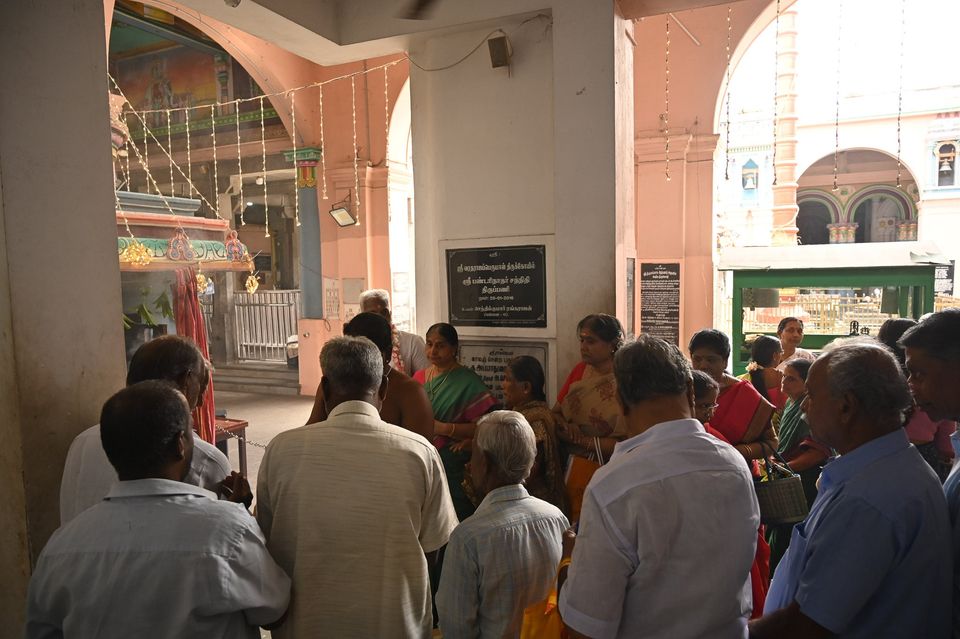
Lakshmi Alankaram
Alankaram today was Lakshmi. The schedule: Day 2: Nal-utsavam, Tirumathi (Mrs.) K. Sitalaksmi Tirumani, Karuvadikuppam. No. 116, Paratitasan Street, Puducherry–3.
Read more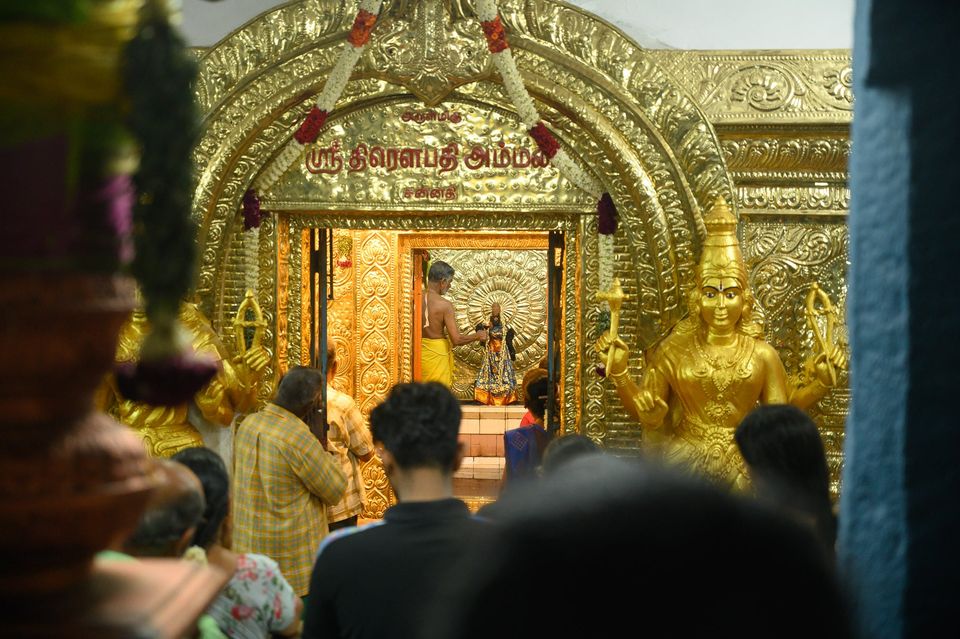
The Yellowest Dravyam of Them All
3pm on the 1st Tuesday of Aadi Masam is a Manja neer/Kuzhambu Abhishekam at the Kamakshi Amman temple. The dravyangal or substances used in all the thousand abhishekams happening in this town need better reflection and treatment than we can offer here, so for now just the process. One lady from Kannika who is here also instructs us to buy “gopura manjal” from the shop next door. We do. It’s given to a man who is preparing the kuzhambu by vigorously mixing all the received turmeric with water – turmeric isn’t water soluble, so this produces at best a thick suspension (a point which becomes relevant later, as you’ll see). Too much liquid, and the suspension won’t feel like a kuzhambu at all. “Kuzhambu” because of its kozhai-kozhai “slippery-thick” texture. Then the Iyer comes over and chides the group for using water instead of paneer or rose water for fragrance. So, two bottles of rose water go in. Now the kuzhambu isn’t so kozha-kozha, so more turmeric goes in. It’s plentiful anyway, with many bringing packets in. This whole gundaan was carried into the garbhagriha, where the abhishekam began. Visibility here was a little challenging, so I positioned myself outside, by the pranala, where the yellow liquid was eminently visible and strikingly so against the temple walls’ light blue. A group of men soon came over with a red cloth and a patram to catch the falling turmeric. Once it had flown over the deity’s body, it was sacred of course. It took several men and many more than s
Read more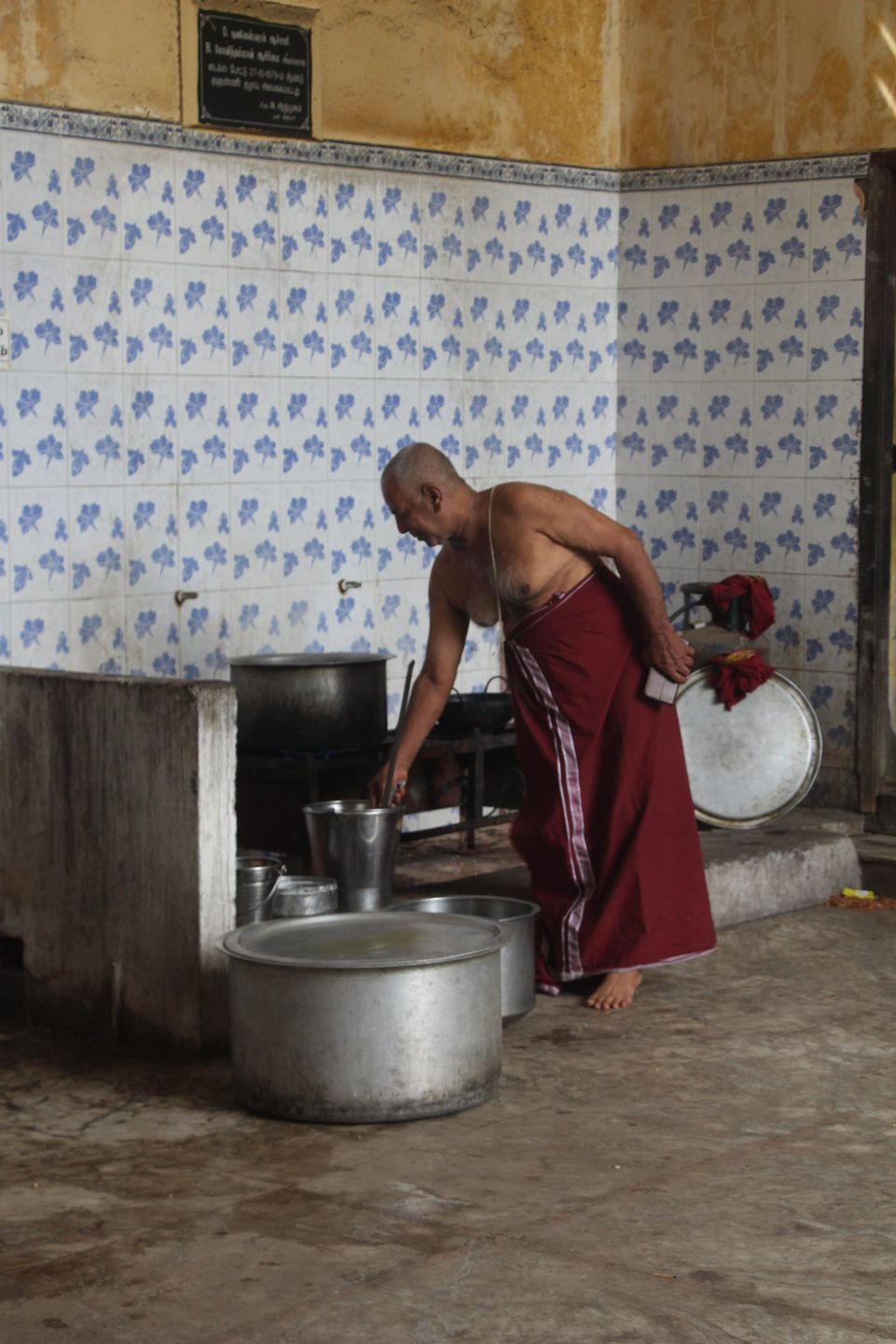
Five Days of Singing to Panduranga
Panduranga Bhaktotsavam starts today and will continue for 5 days. Each day morning is a thirumanjanam, followed by evening bhajanai. The alankaram in the evening was Krishna. The full schedule for the coming 5 days is: 21 July to 25 July 2026 Daily: 10:00 AM – Thirumanjanam for Sri Pandaripiran.7:00 PM – Sri Pandarinatha's special service, bhajans, worship, and other observances. Daily thirukolam listing Tuesday, 21 July: Udupi Sri Krishnan thirukolam (alankaram)Wednesday, 22 July: Sri Parama PandanathanThursday, 23 July: Sri GuruvayurappanFriday, 24 July: Sri KodandaramaSaturday, 25 July: Sri PandaripuranatharSunday, 26 July: Morning Dwadashi Aradhanam at 7:00 AM, followed by Panaka Puja at 7:00 PM. Daily from 21-07-2026 to 24-07-2026 (6:00 PM to 7:30 PM): Sri Vittal Panduranga Divyanama Bhajanai will take place at the Sri Pandurangar shrine. On Saturday, 25-07-2026 starting at 6:00 AM: On the auspicious occasion of Ashadha Ekadashi, a 24-hour non-stop "Sri Panduranga Divyanama Abhanga Bhajanai" will be held for global well-being, concluding on Sunday, 26-07-2026 at 6:00 AM. Many of the arrangements and a key organiser in this is the Vaithikuppam Sri Venkatachalapathi Bhajanai Koodam – the same group we saw singing once here on April 12, 2026.
Read more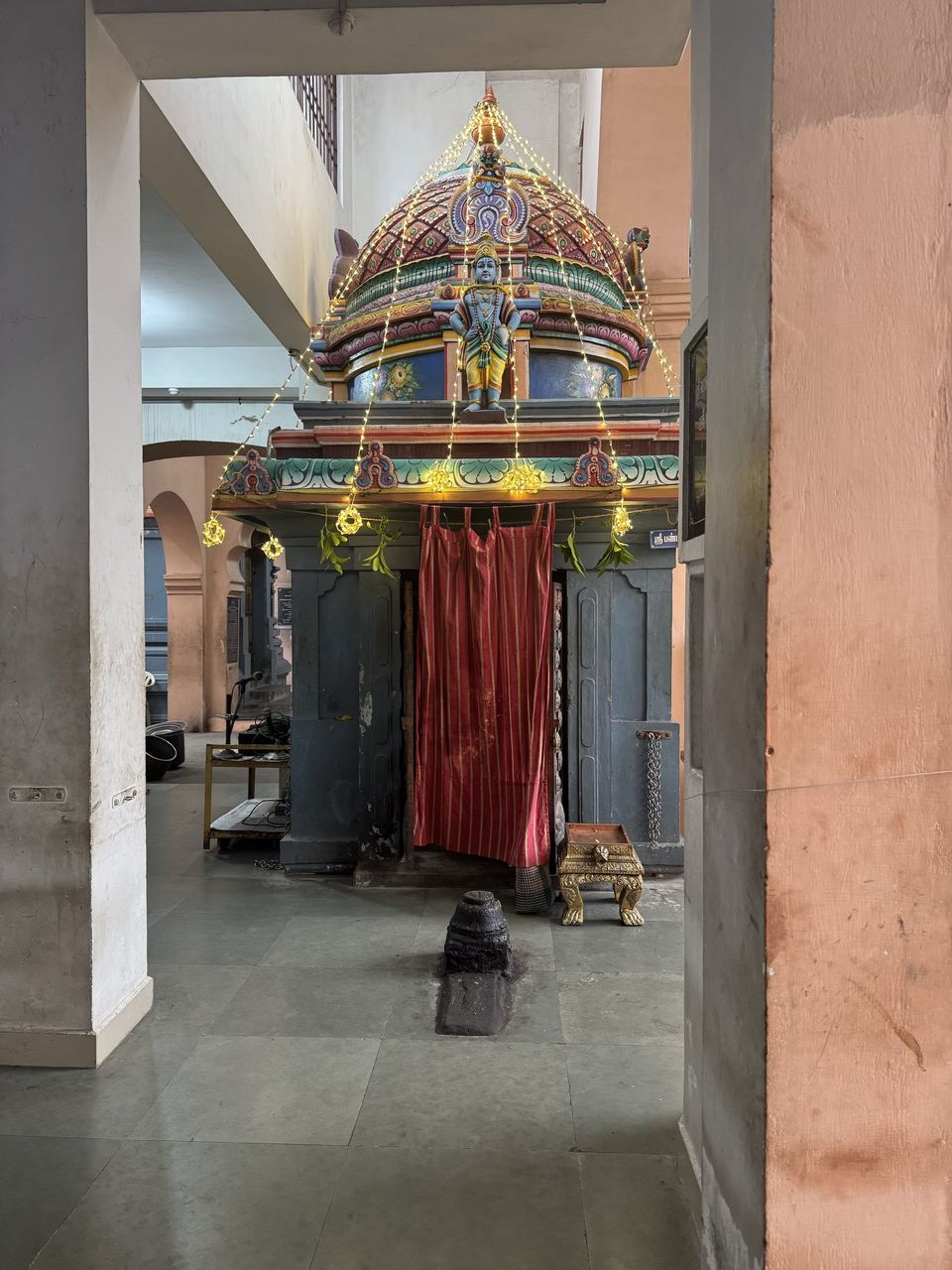
Draupadi Amman’s Bright Yellow Flag Raising
The temple calls 2 Iyers for this event and the Thirukalyanam, and does all other days’ rituals independently. The two Iyers present have been associated with this Vanniar community and this event for a long time, it’s a mutually supportive relationship. The Arohanam as such, as a result, follows a familiar pattern. Draupadi Amman is out with Perumal and Arjuna, wooden and brass forms of Pothuraja out in front, the flag cloth is simple yellow-dyed, and a mud pot is prepared like a kalasam with threads. The priest carries the pot, and then he and a small group walk to and into Vedapuriswara via the south entrance, and go straight to the Kulam. The Amman’s trident strung with jasmine precedes them, as does the wooden form of Pothuraja, leading the way with the Nadaswaram player Venkat and the tavil. They placed the kalasam just at the entrance of the kulam. The priest goes to the water to bathe, with two others who help him. He wears a new yellow garment (dhoti, but tied at knee length like a pair of shorts), his body is strung with jasmine maalas making an X across his chest and back, and his arms anointed with the Vaishnava namam. Then they collect water from the kulam as theertham in the one mud pot. They do an aradhanai for the pot right there, and walk out of the temple by going around the main shrine and out the front entrance, rounding the corner, and back onto the Iswaran Dharmaraja Koyil street. When they come back to the temple, it’s one pradakshina round here, too, t
Read more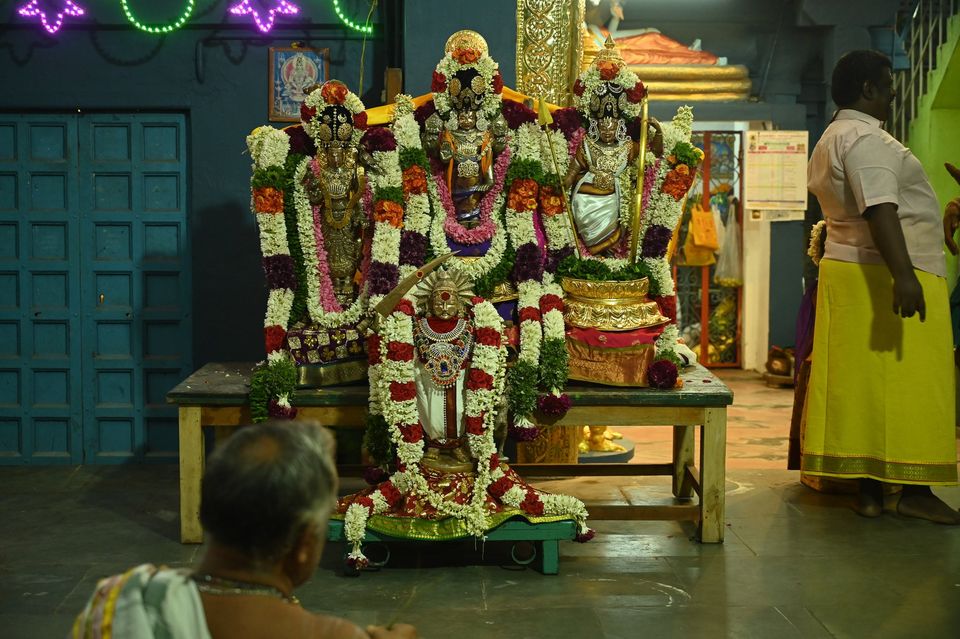
The Great Festival of Draupadi Starts Modestly
Very small puja. Not more than a dozen in attendance, including us. Abhishekam is just milk and water – we arrive midway. No elaborate rituals, all conducted by priest and the teacher whom we’ve met at the temple, who serves as his assistant. No adambaram for me, says the priest – and the simple alankarams reinforce this. We’re given maalas and fruits etc – like ubhayakaras! It’s “our festival" thanks to the small contribution made for this event. Day 0 or: Vinayakar Puja (Worship of Ganesa) Sri Vedavyasar & Group,No. 136, Kamaraj Amman Temple Street, Puducherry. Also went to Lalit’s garden to see Vadivelou Sir dance. The program started unforgivably late, so we only caught the first item (Bhavayami Gopala Balam) at 730pm before we had to leave for the temple.
Read more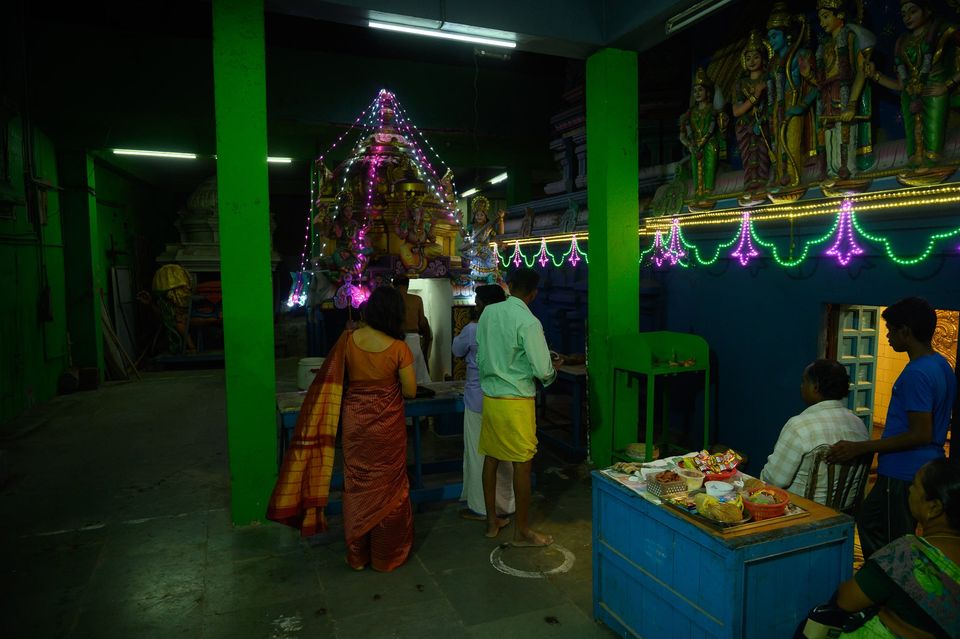
Chandana-Chandana-Chandana!
Chandana kaappu for Angalamman that made her look like a little bommai (doll). The gurukkal later sent us photos, which you can see. At Mutthumariamman, too, chandana kaappu. At the Iswaran Koyil, too, chandana kaappu, but done in green (no photos here) so it did not look like chandanam but like a garment. I asked Arasoo Swami who had done the alankaram, and he replied “when you ask like that, we will always say that we did it.” One of many lessons for me in the deflection of self and ego that happens in the temples. There is no “I” as such (thaan-gara ahambhavam, my Amma used to say), there is perhaps a collective “we” and the certainly of a HIM or a HER. A little like the Ghousiga temple has its Thulasi Mariamman, the Lawspet Murugan Koyil has a Balamutthumariamman koyil about a block away, and considers both shrines “one.” Balamutthumariamman should have had a vizha starting today, but we only heard of it and weren’t around to see for ourselves.
Read more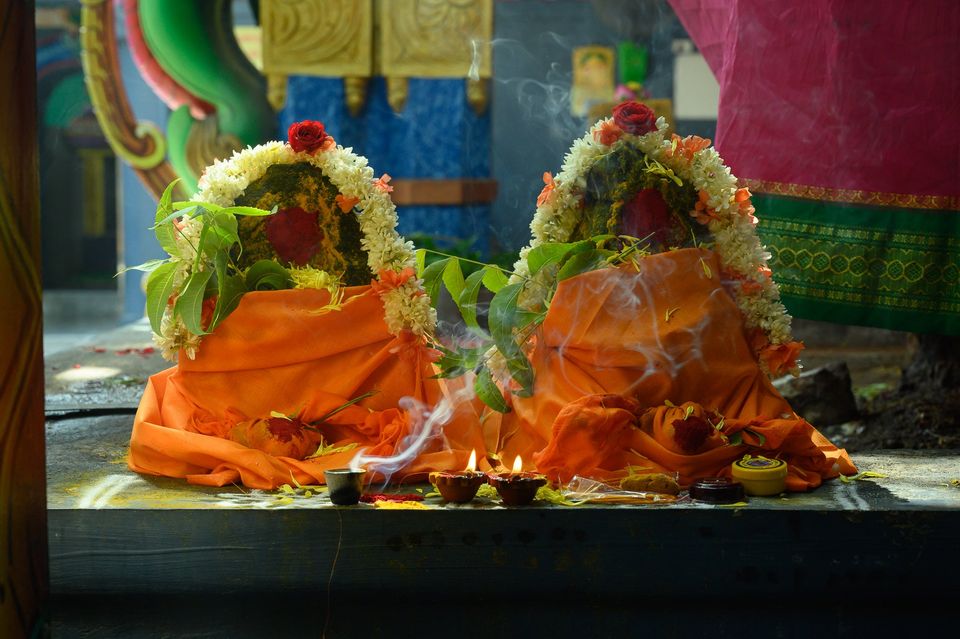
The First Time We Were Called to Thiruvahindrapuram, We Didn’t Go
Went to Perumal koyil – had a quick chat with Ramanan Bhattacharya about damana utsavam – He says it happens in a few Perumal temples, including Kanchi. Mostly in Masi, but here they do on Chithirai pournami as that’s otherwise a “low” month. Not a masam utsavam though. Can be done any month when damana is plentiful, and that’s Masi /Panguni /Chithirai. No burning of damana, no question of it. But he seemed less interested in our questions than in re-directing us to Thiruvahindrapuram. There they do a Danavanthiri alankaram, he said: they take all the mooligai and make powder and distribute as prasadam. If we leave by 3 get back to Pondy by 4, then we can come to Perumal for Ramar ul-purappadu, because it’s Punarpoosam, his birth nakshatram. It was our loss not to heed his directions, as we would later find when we went there for the Ratnangi Sevai during the Desikar Utsavam. We reached the Perumal Koyil for the purappadu late, too, and the Bhattacharya remarked on that.
Read moreSearching for Damana at Goubert Market
We went to Draupadi Amman for their Aadi masam vizha patrikai, Kamakshi amman to clarify Aadi masam pujas (found a new young cockerel there), Mutthumariamman to get Jnanavel Swami’s number, Ellaiamman to get Santosh Gurukkal’s number. Went to market for Panneer elai, found Masi Pachai (மாசி பச்சை), only [scientifically known as Artemisia vulgaris (commonly called Mugwort or Common Wormwood], Davanam, Maruvam and வெட்சிப் பூ / idli poo/ Ixora. We also got photos of the statues strewn around – bits that had presumably been part of the Genji/Senji temple ruins, brought to Pondicherry as “decor” in French times, much like the tall pillars that once surrounded the Dupleix statue and now thankfully circle Gandhi thatha on the beach–with one stray one in fact placed close to the clock tower in the market. There’s a Vishnudurga and a Bhairava (hidden by a tomato vendor), two Lingodbhava statues, and some others. The plaza in the centre is the market’s bell tower or periya mani gundu, given to the city by one Diagou Moudaliar (Thiyagu Moudaliar), a descendent of Lazaro de Motta Tanappa Moudaliar, who became the first Dubash of Pondicherry in 1674. He became Christian, presumably to further his own fortunes, and was appointed the chief agent of the French East India Company. He was instrumental in facilitating the arrival of French officials and native migrants in Pondicherry in January 1674. In 1686, he was appointed the head of the Tamil merchants, gaining full authority over the com
Read more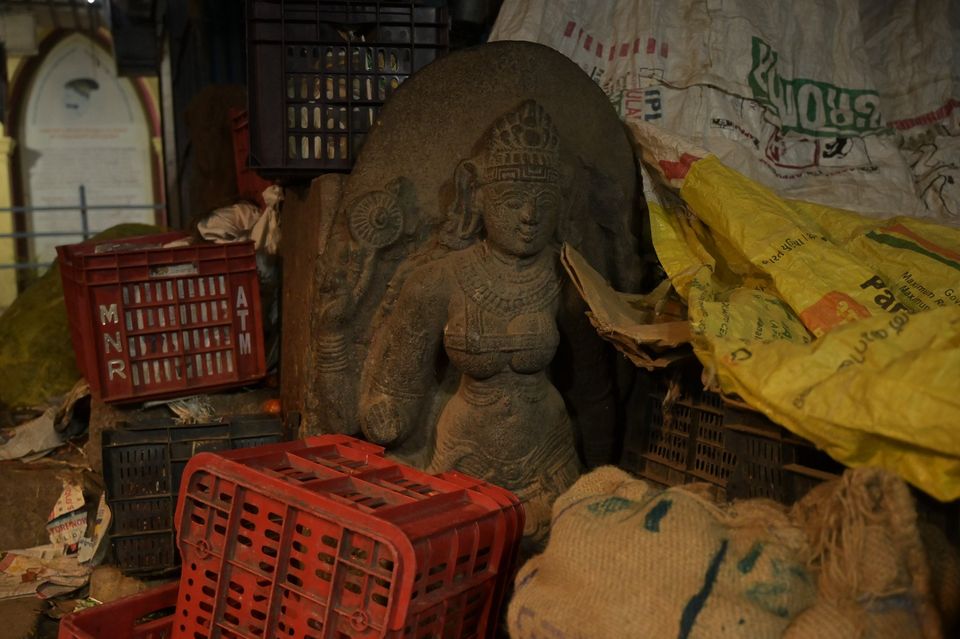
Balalayam Homams Continue
Homam going on as I (Arun) walk in. Kalahasti priest was in front of the big kumbham again. Goes on for about half an hour. Then deeparadhanai for the main kumbham, very well done. All five kumbham/kalasas are carried by the respective priests for one ul-purappadu. The governor and an mla are there, so everybody seems to flock towards them and not the kalasas. After ul-purappadu, kalasas all go into utsava mandapa and are placed there to remain until the end of thirumeni. One last deeparadhanai from there, and balalayam concludes. I try to reach out to the kalahasti priest. Complimented him on how beautifully he did all the mudras. He walks on before I can ask for contact details.
Read moreSignalling the Start of a Temple Renovation
We hear of this by total coincidence, while in pursuit of Sridhar Gurukkal for a conversation. To our dismay (because otherwise the utsavams would have proceeded in full force), the Manakkula Vinayaka temple is preparing for its next Kumbhabhishekam, and a Balalayam has been scheduled. Literally, this is the designation of a temporary, ritually consecrated place in which a temple deity's presence is maintained while the main shrine undergo renovation, repair or ritual renewal – Bala (child) + Aalaya (abode), Balalaya is the temporary shrine; balalaya-pratishtha or balalaya-kumbhabhishekam refers to its ritual establishment. Technically this is scheduled for July 5, but the preparatory pujas and first Kaalam happen on July 4, starting with abhishekams in the morning and shanti pujas in the evening. We were there till around 830pm, caught the tail end of the Vastu shanti pujas, saw rakshai being tied for rakshai for several priests, several agni kundams set up, each with a requisite number of kalasas each, the main agni kunda with kalasas on all four as though marking an ellai or boundary, with a leaf with jaggery piece in front, 2 pictures each of the dashabhujas (Mooshika, conch, chattram, sword, and several others including a small male figure on the south west side). 4 priests were anointed, 1 for each of the murtis: Balavinayaka, Murugan, Chandikeswara and the Moolavar. Pujas happened at each place, with 2 cords, one red like erukkam twine connecting the kalasas at the top
Read more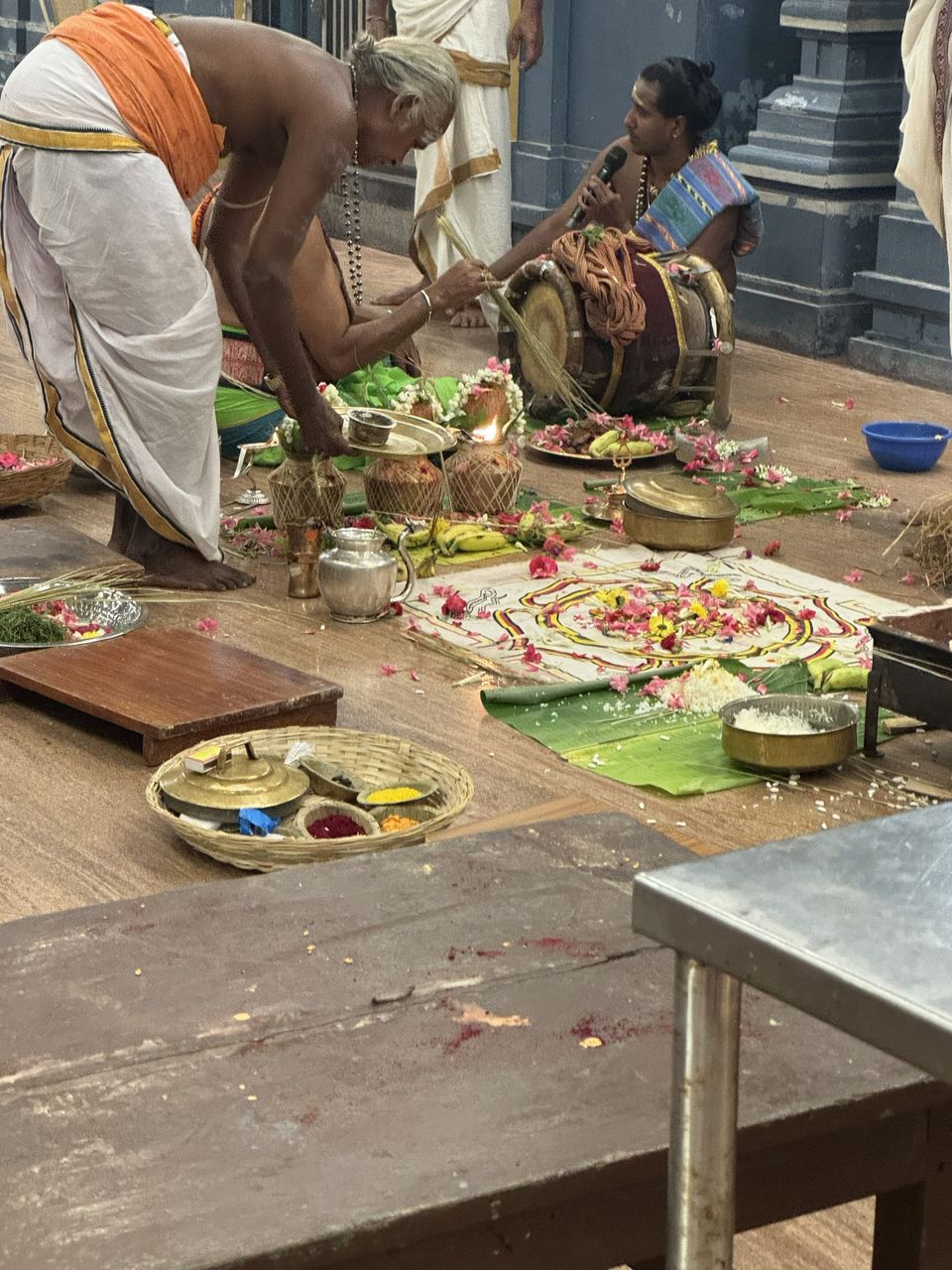
The Utsavam, Classifications, Changing Compulsions and Forms
Spoke to one of the temple Gurukkals about Damanotsava (Davanotsavam), but the name did not at all appear familiar to him, let alone the ritual. Instead he classed utsavas according to Siva’s 5 great cosmic acts, which we presume is in alliance with the Siva Purana: Vidyesvara Samhita, Adhyaya 10, Shloka 2 given below: सृष्टिः स्थितिश्च संहारस्तिरोभावोऽप्यनुग्रहः । पंचैव मे जगत्कृत्यं नित्यसिद्धमजाच्युतौ srstih sthitisca samharastirobhavo'pyanugrahah | pamcaiva me jagatkrtyam nityasiddhamajacyutau Creation, preservation, dissolution, concealment, and grace—these five alone are My cosmic acts with regard to the universe; I, the Unborn and the Imperishable, accomplish them eternally. Srsti, Sthiti, Samhara, Tirobhava and Anugraha. The Gurukkal mapped each of these onto specific temples: Anugraha is Mayiladuthurai; Samhara is Thiruchendur and Mylapore-Kapaleeswara; Vedapuriswara is a Srishthi utsavam temple, which means that the more shanti-giving rites are less important. Not sure if this is his own interpretation or some wider understanding. Later, he mentions Pacchai saatthupadi /பச்சை சாத்துப்படி அலங்காரம் as a version of what he called damanotsavam – decorating with marikozhunthu and vettiver, for their calming and cooling effects. But this has no resonance with anything we’ve read so far about the Damanotsavam, which appears to be all but lost from local Saiva practice. The Gurukkal spoke a lot about the idea of the bhaktostavam as the definite type of ritual at Vedapurisw
Read moreLet the Games Begin!
One of the regular ubhayakaras in the Chetty community asks us specifically to come for the morning utsavam, as it’s his ubhayam and he promises it will be like no other. You see Perumal now done with all his Brahmotsavam responsibilities apparently decides to go out for a night on the town, during which he marries (with Mahalakshmi’s permission) the Lady of Uraiyur. When he finally returns home and tries to sneak back indoors, Thayar shuts the door in his face, for she cannot take what she takes to be his philandering. Perumal faces a shut door, and what follows is a ritual enactment of a pranaya-kalaha, a lovers’ quarrel. When Thayar admits Perumal, He tries to justify his red eyes, scratch marks on his body and his tiredness by saying he was out hunting, but Thayar isn’t falling for his usual charms. Mattaiyadi (மட்டையடி) happens here: literally, a blow with a fibrous stalk or husk; here it refers to the ritual throwing of banana-stem strips at the Lord's palanquin. Some temple folks (us included) take sides. Those for Thayar are the Talattar, those for Perumal are the Tondukulattar. Finally, Nammalvar comes to the rescue with consolations and arguments that make Thayar’s heart melt… All this is ritually enacted by the Bhattacharyas, via a recitation of the “Mattaiyadi puranam” .. but the priests need to be more active and youthful animators to make such an utsavam come to real life, while this one was more entertaining in concept than in execution. Nonetheless, it brought
Read more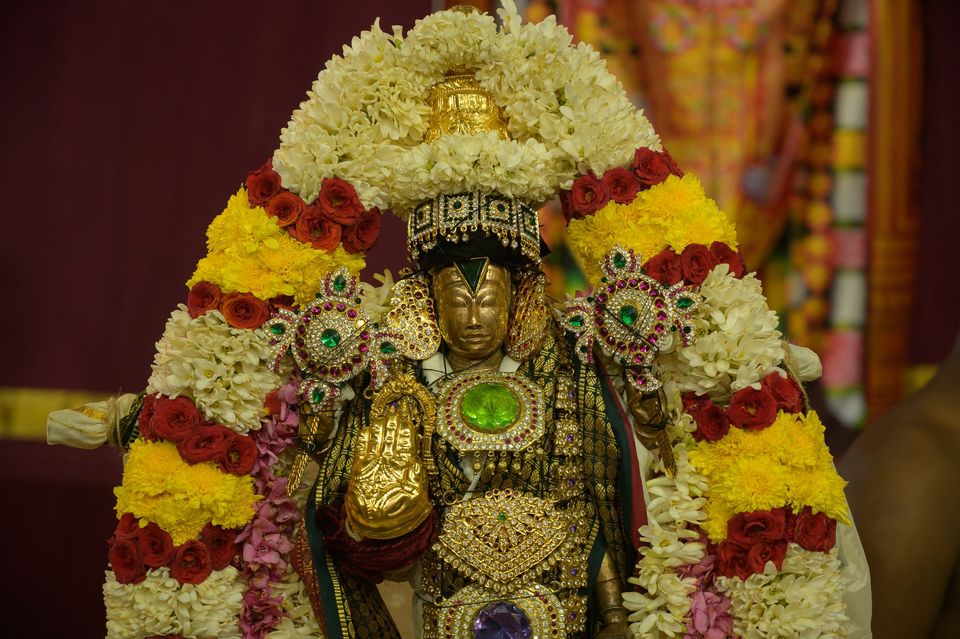
Vasanta Utsavam Concludes with Garuda and Hanuman
It is the conclusion of the Vasanta Utsavam today, and we’re going between the final pujas of the Chetty Koyil Perumal Brahmotsavam and this event at the big Perumal temple. Perumal comes out on a wooden Garuda Vahana for a veethi purappadu in the morning (we see Him until the house with the wild pattai pirandai growing out front, from which I take a cutting to root at home). We see the wooden Garuda Vahana for this and perhaps one other purappadu–otherwise, the golden Garuda is for the Brahmotsavam and the silver is for the Periyalvar Utsavam conclusion–otherwise he has no other work, says Thathacharya. In the evening the process repeats, except that this time Perumal is Rama on top of the Hanumantha Vahana. Mamunigal Thirumanjanam: Today is also Moola nakshatram, so there’s a 1030am event for Sriman Manavala Mamunigal. The patrikai says: “Thirumanjanam (Sacred Bathing Ritual), Sevai (Darshan/Viewing), Saattrumurai (Recitation of Sacred Hymns), and Theertha Ghosti (Distribution of Sacred Water & Prasadam).”
Read more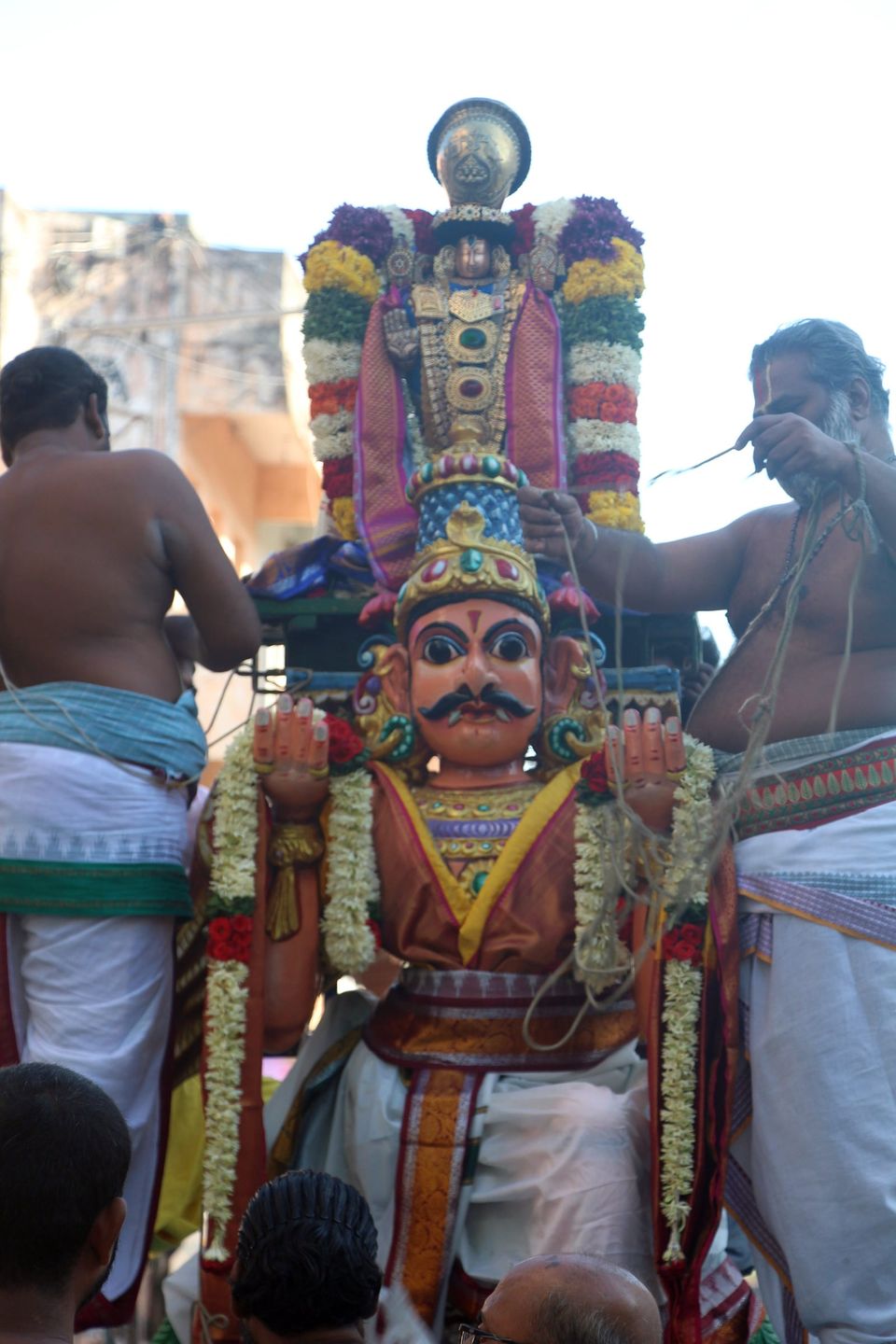
All the Major Events on Pournami!
We made it to the morning’s rathotsavam, or ther vizha. The pulling of a deity in His chariot is always a major event, and the crowds spoke for it. The Chettiar community is welcoming enough that Arun is given a parivattam or small thundu tied around his head, and a pavitram on his right ring finger–so he’s officially now anointed as a participant in the process. It’s a loving gesture of acknowledgment and affirmation. In the afternoon, the theerthavari happened although at the well we were told and not at the sea as it did for Kalathiswara earlier in March/Panguni. Then finally in the evening, with bowls of vigorously growing sprouts on all corners, the flag finally came down. As it turns out, the Chetty Koyil has a Chandran abhishekam on all Pournami days, so that was going on at the far end, too. It was just getting over as we came for the Dhvajarohanam. A small puja would have happened there after alankaram was done, but we have no photos of that. Way over yonder by Kenikulam where the Chetty Koyil’s Lada Chinnamman lives, an abhishekam must have happened for Her, seeing that that’s their pournami practice, too. It would have been a simple one, just water and maybe milk, but it happened, too. It was all a lot to pack into a single pournami! The Day’s schedule: 9-10AM Simha Lakkinathanil Ratharohanam Noon: Thirumanjanam & Theerthavari 7PM Avarohanam and Kadaporushanam* saattrumurai ul-purappadu *The Koodapoorushanam (Koodapurasanam / Kadaporushanam) is a specific phase of
Read more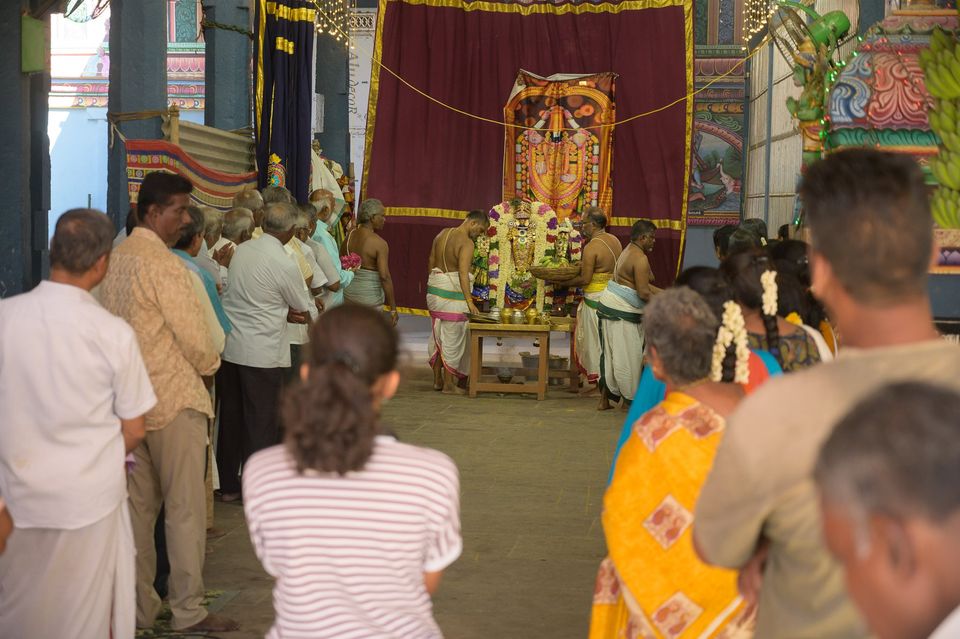
Karaikkal Ammaiyar and the Festival of Ripe Mangoes
Organised by the Siruthonda Bhakta Sabhai, this festival is in honour of Karaikkal Ammaiyar. At the Vedapuriswara Koyil, a whole Chariot top is made with mangoes, and mangoes are hung (in unfortunate plastic sleeves) or tied into every possible location. Meanwhile, Karaikkal Ammavar and her utsavar figure get an abhishekam, while a large group of women sing her songs outside the Nayanmar sannadhi. It is unfortunately not very attuned singing, and there’s a noticeable difference for the short time Lalitamma takes the microphone. I borrow one of their booklets and make a PDF out of it for the files. Ammavar meanwhile gets a full alankaram with flower maalas and a crown of manoranjitham – she’s almost made to look attractive, and I’m left wondering what a woman who consciously gave up her beauty for the visage of a ghoul in her self-offering to Siva would say about this latter day re-transformation. There’s a mad crush when the alankarified utsava murti is brought out into the mampazha ther–for the first time, I hear a priest saying “this whole event is all about taking photos and not about seeing Ammavar with bhakti!” We can barely catch a glimpse in between and behind all those with cameras and phones, except via their LCD screens. The mangani ther goes around the prakaram thrice, and it is quite a sight. Some have organised for water to be poured in places where the stone is heated by the mid-day sun so that priests and devotees can walk without being scorched. The mangani th
Read more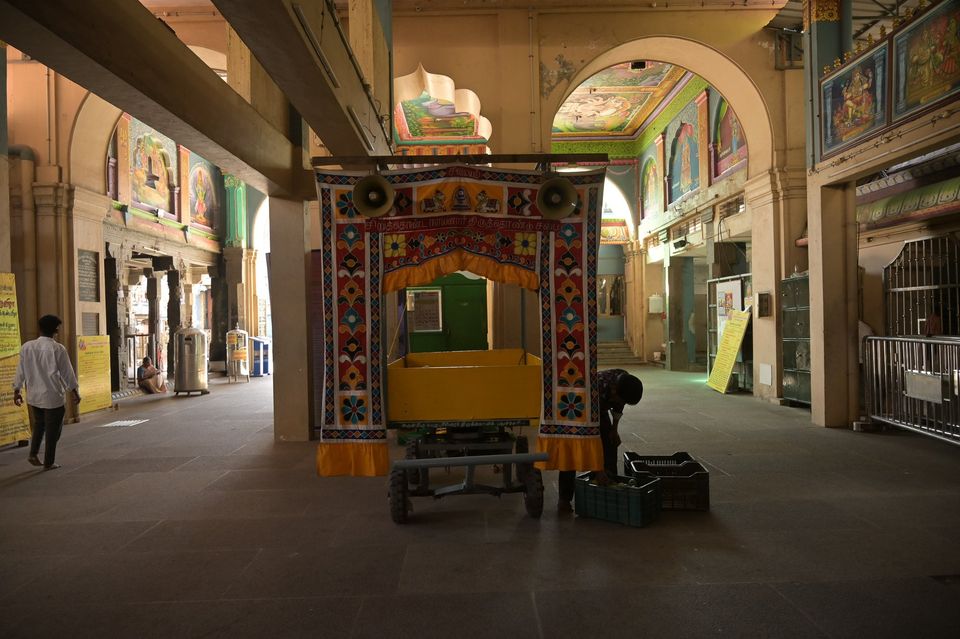
One Perumal, Two Thieves
The Vennai thazhi Thirukolam is always a sweet one, Perumal as Krishna with his butter pot, and usually with some special attention to his pin-alankaram as well. But we miss this morning at Chetty Koyil. The evening is on a Kuthirai Vahana, so the alankaram is Thirumangai alvar as usual, but Perumal is accompanied this evening by a far more simply dressed saint, who is also Thirumangai alvar but now in utsavar form. He is presented a sack full of things from the Perumal utsavar (see the story below). Then the two proceed in a ethir sevai, with the alvar facing Perumal as He proceeds to travel his madaveethi processional route. The story: Kaliyan (Thirumangai Alvar) performed thadiyaradhanam (offering prasadam to devotees) during his lifetime. At one point, he ran out of wealth and began robbing wealthy merchants and other travellers passing through the forest. Since he was already devoted to serving Sri Vaishnavas, Emperuman, wishing to enlighten Kaliyan fully, assumed the form of a wealthy, newly married Brahmana and travelled through the forest where Kaliyan routinely carried out his robberies. Kaliyan, wishing to make the most of this opportunity, surrounded Emperuman with his soldiers and began robbing him. Emperuman offered all his ornaments and jewels to Kaliyan. In the end, one small ring on Emperuman's toe proved difficult to remove. Kaliyan bent down, bit it off with his teeth, and forcibly removed it. Astonished by Kaliyan's bravery, Emperuman exclaimed, “Nam Kaliya
Read more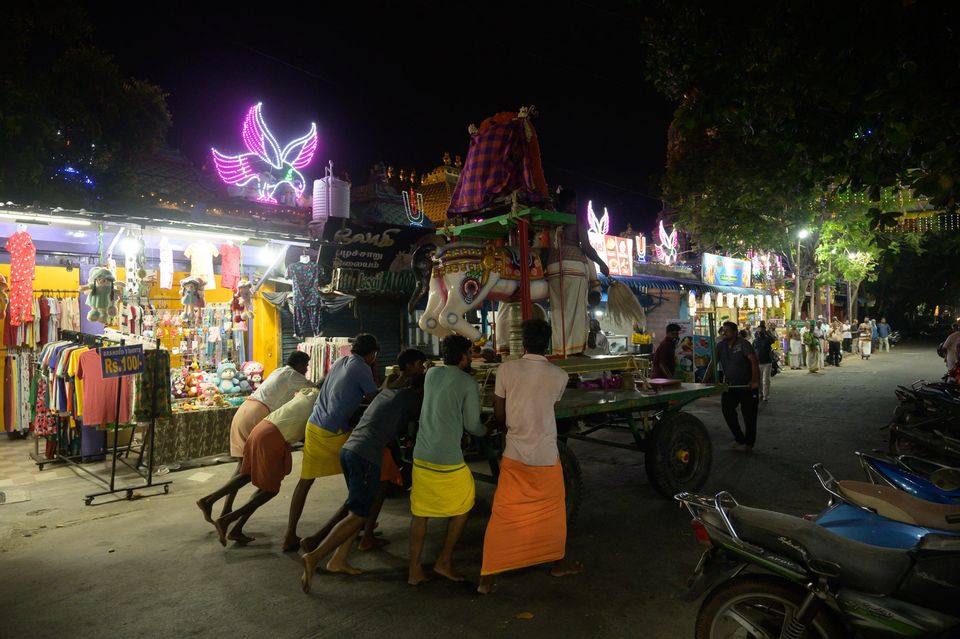
What’s the Big Deal If Pradosham Falls on a Saturday?
When Pradosham falls on a Saturday, it’s a qualitatively different event. When Trayodashi coincides with Saturday, the observance is called Shani Pradosham. Shani is Saturn of course, and from him the name Shani-varam or Saturday comes. Shani (சனி) is not simply a malefic deity who causes misfortune, but he is a dispenser of justice who compels people to confront the consequences of their karma. Since Pradosham itself is a period when one can worship Siva to wipe away the doshas or faults of past actions, the coming together of Pradosha with Shani-kizhamai is considered doubly auspicious or potent. Incidentally, this is not just a coincidence of Pradosham and Saturday, it is the specific occurrence of trayodashi during the twilight hour, based on tithi and sunset calculations. Here’s the process: 330pm abhishekam for Vrushabha and Siva (and Ambal, usually), 6pm ganapati puja, 630pm ul-purappadu with Pradoshanayakar, who circles the main temple three times in its prakaram, first to Vadyam, then to Vedam, and finally to Tamil recitations of Sivapuranam, Tevaram etc. Those last are always a chorus of devotees' voices. At Nandhikeswara the process is much the same, except that Pradosham is always accompanied by Kailaya Vadyam–and that makes for a very different atmosphere. Plus of course, the readings here on second and third rounds are all in Tamil, women are given a chance to carry the deity and there’s a fair bit more dancing!
Read more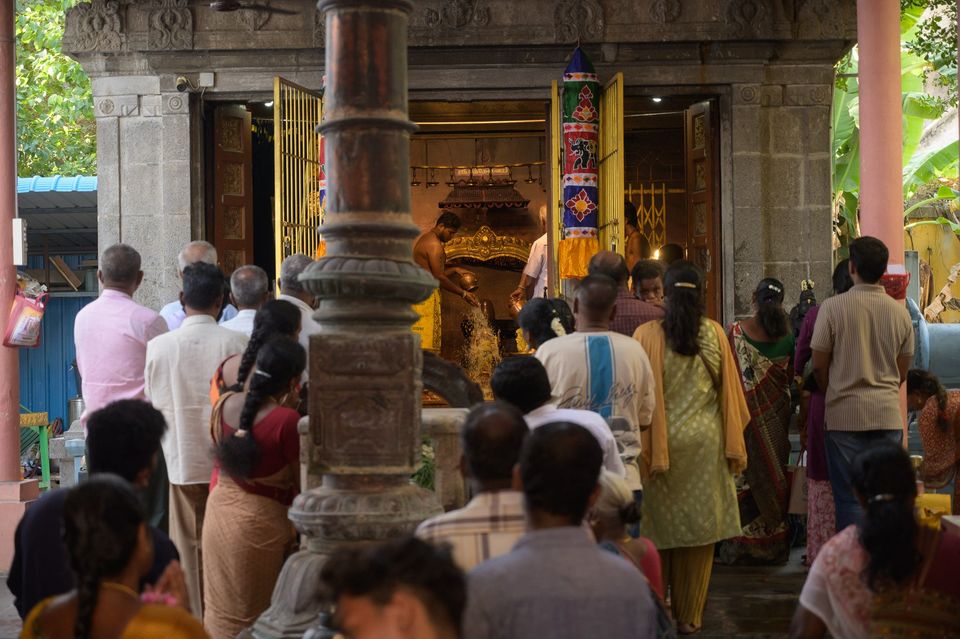
Mohanavataram Again?
Couldn’t figure out why there was a Mohanavatara (Nachiyar Thirukolam) redux, maybe just that this time it’s in a pallakku with a mirror, but there you have it. In the evening Perumal was seated as grandly as a Perum-aal could be, for his evening purappadu on Garuda. Schedule for the day: 8AM Mohanavataram, Pallakku veethi purappadu, 10AM Thirumanjanam 7PM Garuda Sevai veethi purappadu
Read more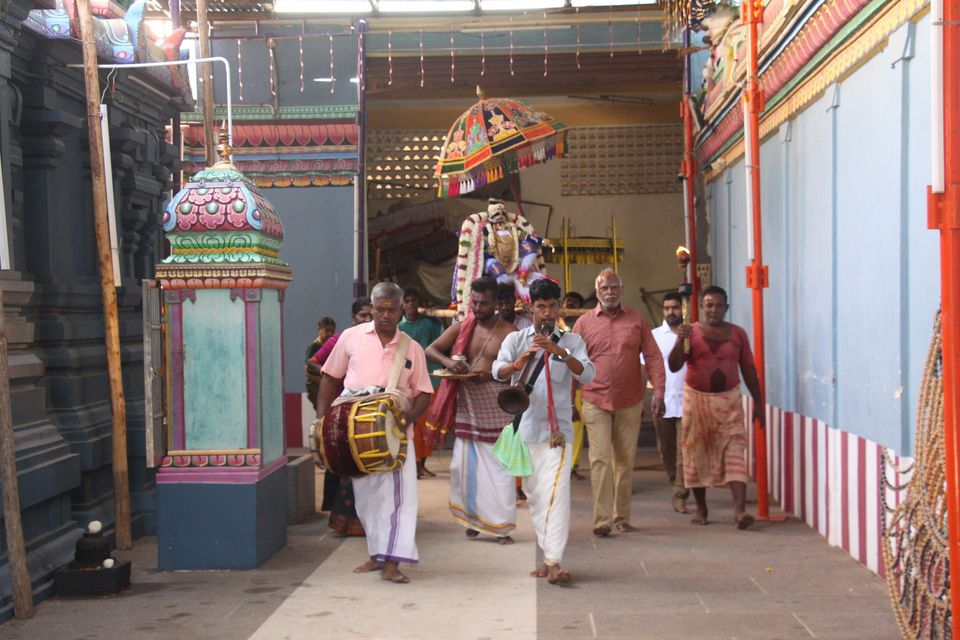
Into the Vasanta Mandapam
We went for this, particularly to see the purappadu from the moolasthanam to the Vasanta mandapam. (Periyalvar Utsavam had wound up by then.) Perumal emerges from the moolasthanam and then does the usual circumambulation, stopping at various sannadhis (where the priests take his satari into the other sannadhis, touch them onto heads, shoulders, then brings them out to devotees before finally returning to the waiting Perumal). The final stop is at Hanuman, and then He enters the Vasanta Mandapam, does one round of the place, sits on his swing. The channel is filled with water and floating flowers–a sad simulation of a garden, but still: grand!
Read more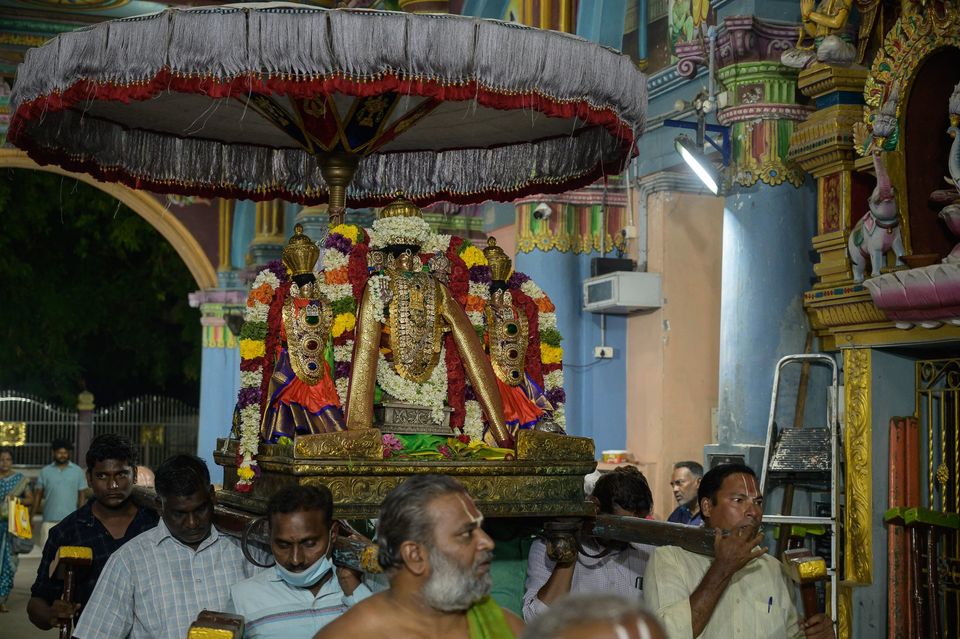
A Thirumanjanam to Mark a Cosmic Moment
Aani Thirumanjanam is but a moment in a wide cosmic scene— when the Sun transits through Mithuna ubaya rasi (constellation set), and its placement in Siva’s own Thiruvathirai nakshatram comes into alignment with the movement of the moon into the Sun’s star, Utthiram— when Siva blessed the Nayanmar Saint Maanikkavasagar with his divine upadesha (instruction or illumination)— when we mark these movements with Mahabhishekam (sacred bath) for Nataraja, Thillai Koothan, the Great Dancer of Chidambaram— and yearn for illumination and grace. Much, much more mundanely, we watched the Thirumanjanam in the outside mandapam at the sivan Koyil, wondering why this particular abhishekam is called a thirumanjanam when none others are. It was done by Kalyana Sundara Gurukkal. We made a video with the footage collected at this scene, largely because the video was actually so much better than the photos! Patrikai had said: “Aani Thirumanjanam Abhishekam (sacred bathing ceremony) for Lord Nataraja will take place, followed by Deeparadhana. At 7:00 PM in the evening, Swami Ul Purappadu (inner temple procession of the Deity) will take place.” Thirumanjana Abhishekam may be a common phrasing, made to emphasise the complete, grand ritual bathing ceremony, but it feels a touch like a redundancy or (deliberately) an excess of expression. In any case, we were there also for the evening’s purappadu.
Read more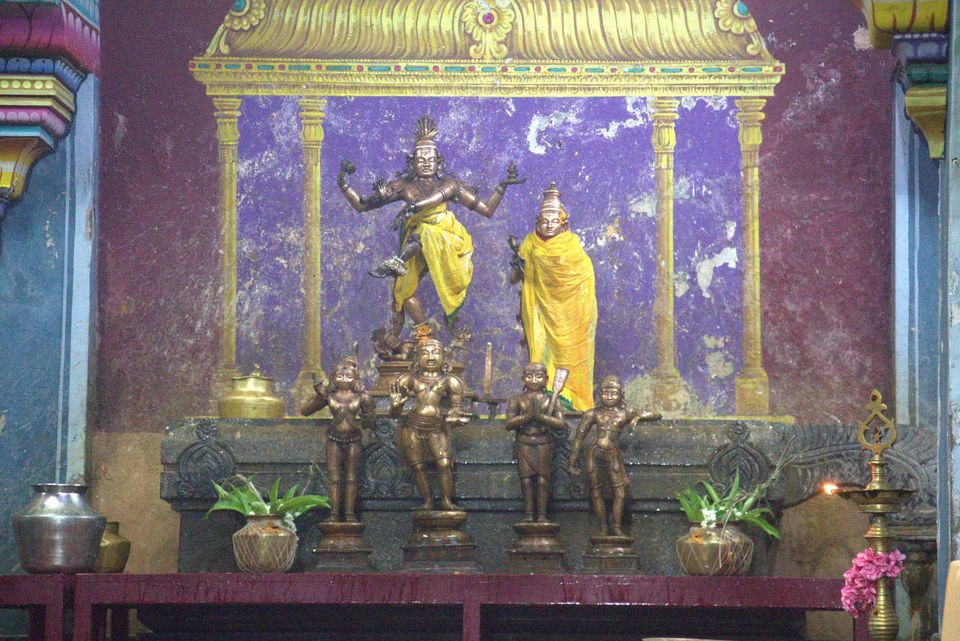
Perumal as Surya, in a Blaze of Orange
We were there for the Surya Prabhai purappadu beginning, Perumal came out into the sun with two large orange kudais shading him. Very bright and cheery and sun-like. In the evening, He’s on the Lion vahana. Arrangements are made also for the Aani Thirumanjanam abhishekam here, but we only see those as we’ve to get to the Sivan Koyil for the full event this time. Today’s schedule: 8AM Surya Prabhai, 10AM Thirumanjanam 7PM Simha vahana veethi purappadu
Read more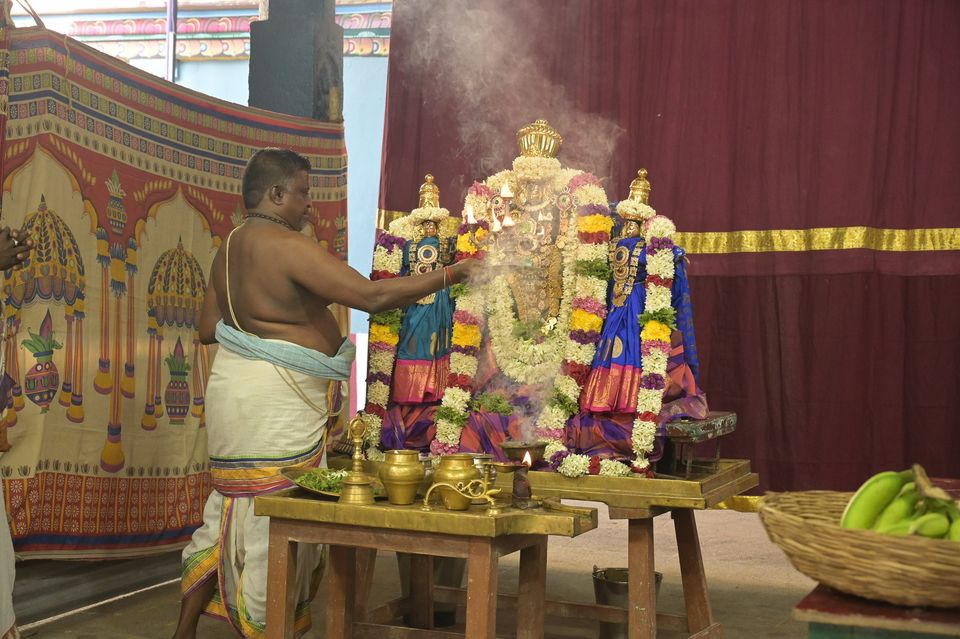
An All-in-White Nataraja on the Eve of Aani Thirumanjanam
AANI UTTHIRAM. Saw the ardhajama puja at the Sivan koyil, and Nataraja in vellai saatthupadi. The koyil Patrikai had announced that “There will be a Vellai Saatthupadi (white attire) decoration for the festival deity Lord Nataraja, followed by Deeparadhana (lamp worship ritual) and Ul Purappadu (inner temple procession).” But we missed this, thinking of Aani Utthiram as just the next morning’s event.
Read more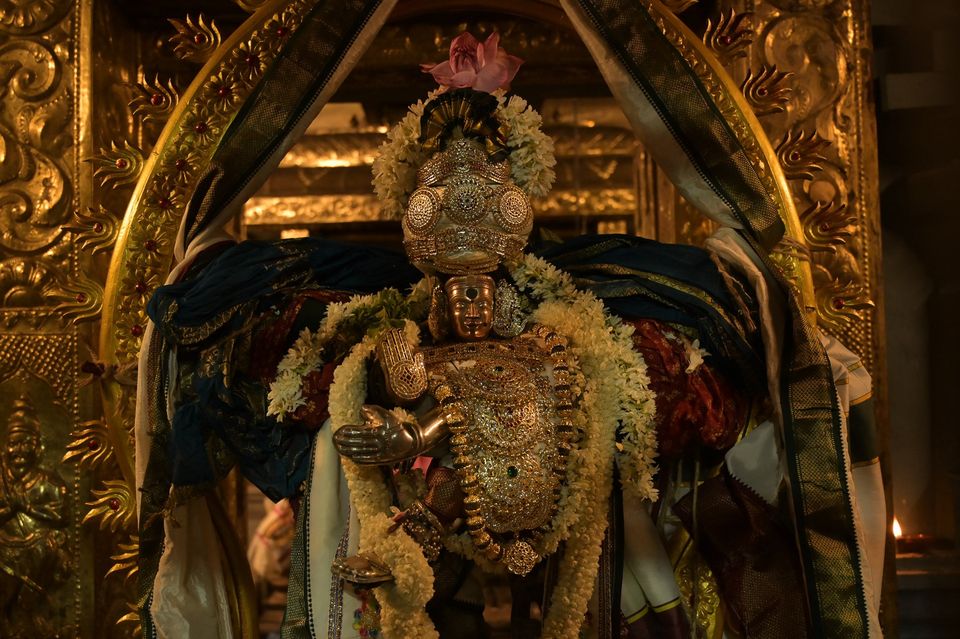
Out of the Vasanta Mandapam
Stopped by the Perumal temple, when the Vasanta utsavam was just rounding up. Prasanna remarked we’d got there late! But we got to see the return of Perumal from the Vasanta Mandapam back into the garbhagriha. Ubhayakaras included Sasikala whom we see often at the Kannika temple, who said her sister in law was the actual ubhayakari, but couldn’t be there so she came in her stead. I believe this was the day when the security guard shooed me away from the Vasanta Mandapam for taking video of Perumal ever so gently swinging and looking very grand. I’d like to understand this festival better though. Is it really just a kind of divine pastime? Do the Gods get tired and need such recreation?
Read more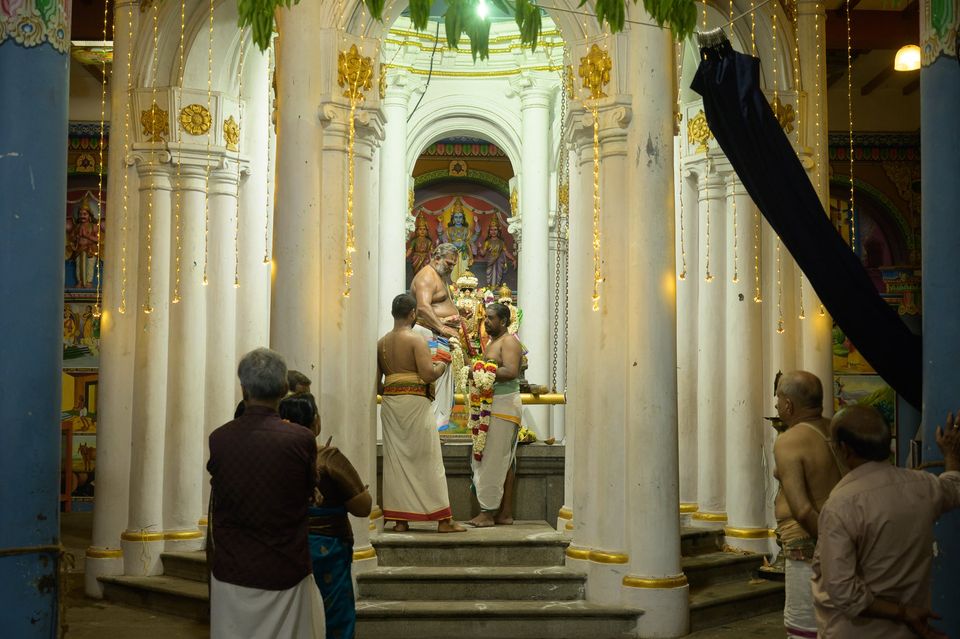
The Kodi Gets Raised at the Chetty Perumal Koyil
Arun went in the morning, and reported a slow process, but Perumal’s flag was finally raised on the smallish kodi maram. In the evening, we both were there; the priests looked slightly frazzled, clearly dealing with some unease between priests and Ubhayakaras, quickly assuaged by the very skilful manner of Sankara Narayana Chettiar. Perumal was Mohana that evening, or perhaps it’s better to call this Nachiyar thirukolam as Thathacharya from Perumal Koyil would say, with a veena. Veethi purappadu happened but with a fraction of the interest and fanfare that’s typical of the Perumal koyil. The day’s schedule: AM: after 730 & before 9am – Dhvajarohanam, Perumal Vimana veethi purappadu PM: Hamsa vahana Veethi purappadu Mohana /Nachiyar Thirukolam
Read more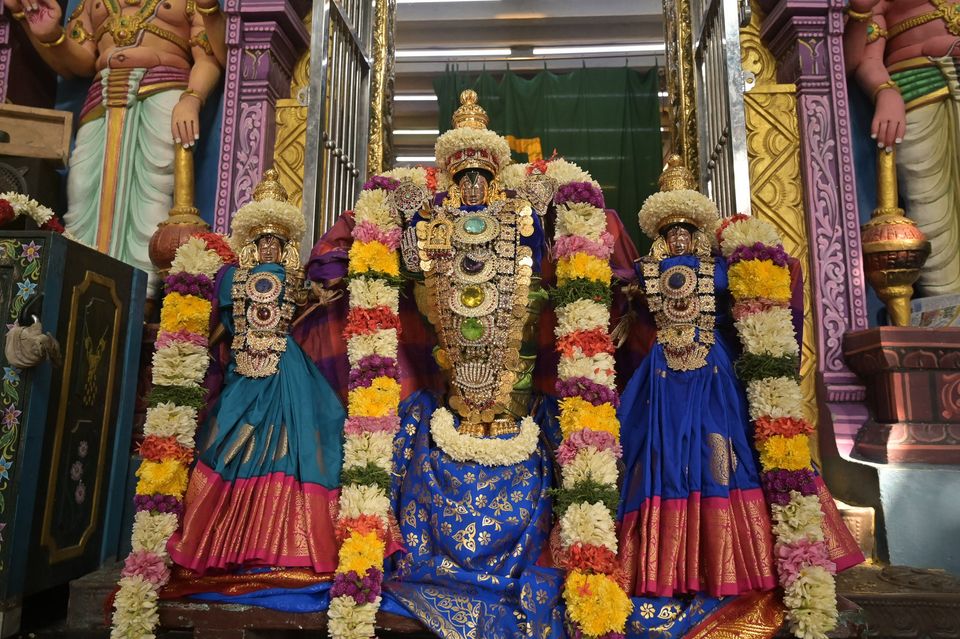
Vasanta Utsavam Begins as Periyalvar Is Still Being Feted
I (Arun) came here directly from Chetty Koyil. Perumal was already in the Vasanta Mandapam, with nobody looking at him! Rope tied at the first 2 pillars, so you couldn’t really get to him, and there stood a security guard for good measure! All attention at that moment was at the Periyalvar Sannadhi – a large crowd there, perhaps had come for Vasanta Utsavam, but moved to the Alvar Sannadhi because Aradhanai was happening there. The patrikai announced the following for this and the next 10 days: From Saturday, 20 June 2026, to Tuesday, 30 June 2026, the festival will take place daily. The procession will begin at 7:00 p.m., followed by the Lord's appearance in the Vasanta Mandapam, the ullancal sevai (swing service), and the distribution of tirtham (thirtha prasadha ghosti) and prasadam.
Read more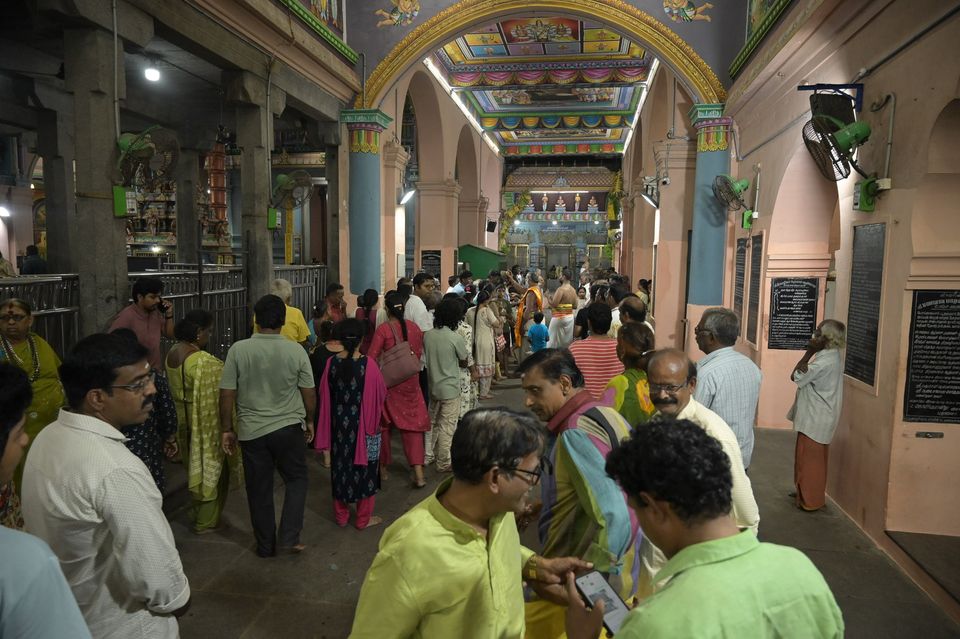
Perumal’s Preparatory Pujas
Arun was there for this, as Deepa wasn’t around. One priest called in from outside for this, along with 3 helpers. With Sridhar Bhattacharya also around, this made 5 total. Yagasala in the usual spot beside the Perumal Koyil. The person deputed to carry the sand collected for Ankurarpana or the seed sprouting is Sridhar Bhattacharya. Milk and water are poured over, there is an aradhanai, and then of course the Vastu purusha effigy is burned and carried outside as part of the Vastu Shanti puja process. THe tiny utsavar of Vishwaksena then has his ul-purappadu. 1030AM: Thirumanjanam 6PM-730PM: Mrtsangrahanam, Ankurarpanam, Vastu Shanti, Sri Vishwaksena ul-purappadu
Read more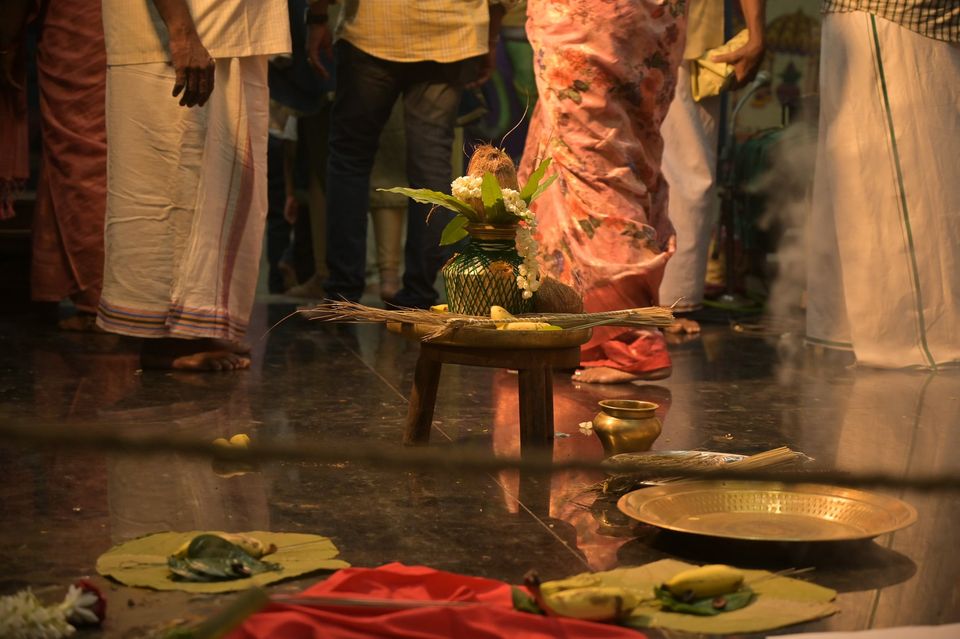
Thirupalliyezhucchi, Redux
I went again. Pretty much same-same, but I could absorb and understand it better. Song set included beautiful renditions of Thiruppugazh 110, Yeru mayileri (1328), and Vilayaada odi vaa muruga – by 3 ladies who stayed till the end, the best of whom was Lalitamma. Also tevaram maybe from this set. Or was it Thiruperunthurai [Thiruvasagam (திருவாசகம்) composed by the saint Manikkavasagar at the Athmanatha Swami Temple (also known as Avudaiyarkoil), most probably, but not sure. Will need to go again to confirm].
Read more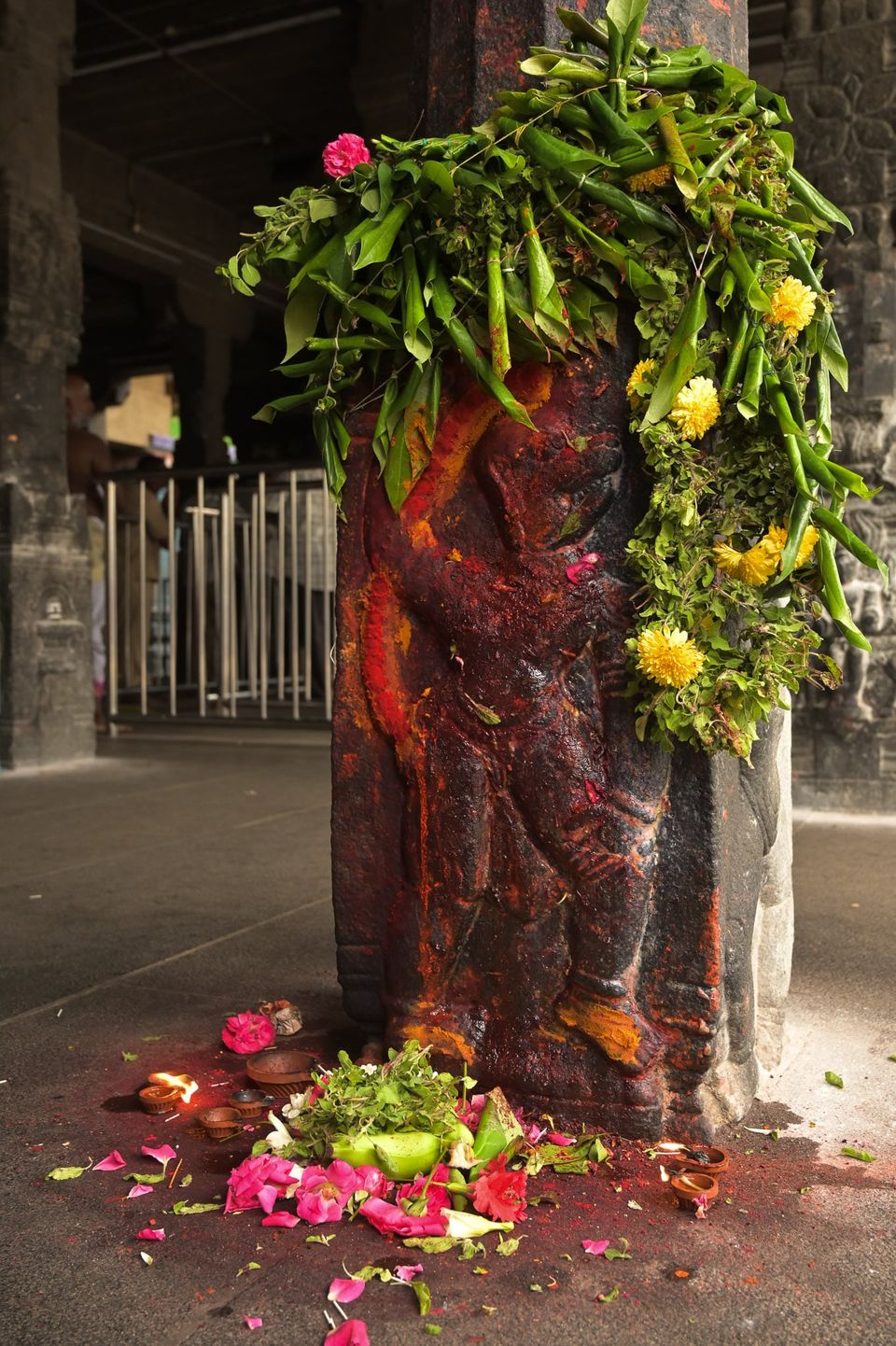
Sivan and Ambal Return to the Palliyarai Together
Finally get to see the Palliyarai utsavam here, with both Sivan and Ambal going to the Palliyarai. It all feels a bit abrupt and fast, but the process is roughly the same as in the Sivan Koyil, sans the crowd of bhaktas each playing an instrument or singing a song. There appears to be less of a culture of this at the Chetty Temple.
Read more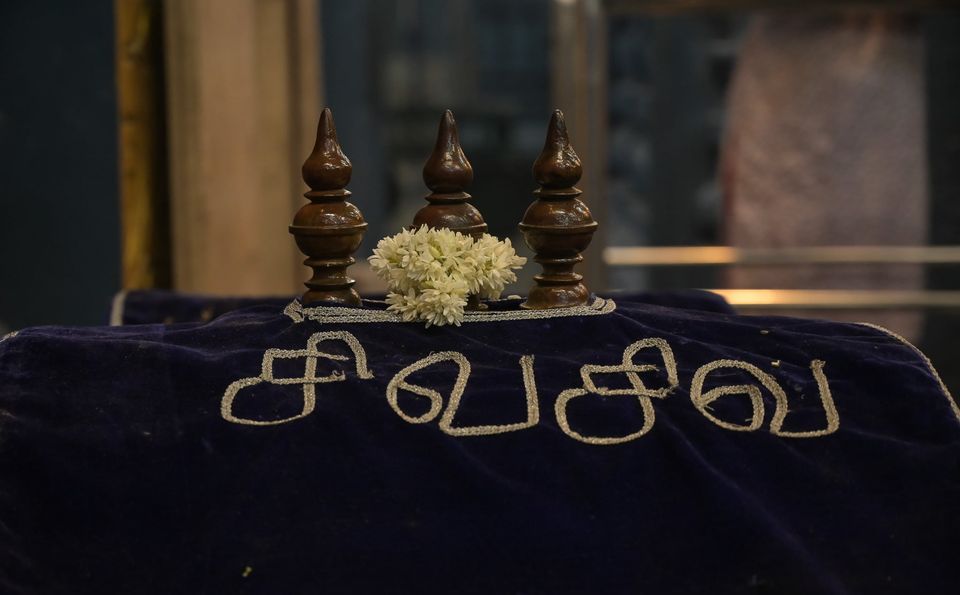
Twin Pujas on the First Friday of Each New Tamil Month
We both went – milkman brings the cow and this time a calf. Puja consists of alankaram for the cow and calf, then priest chants while every one present feeds them both bananas, agathi leaves, and then places flowers on them – a number of pradakshinas, which everyone performs. Then the cow and calf are led around the temple once, and out the door. There they wait patiently, are fed some aval pori, the day’s prasadam (kesari, mercifully, not thairsaadam), and the man milks the cow. This milk is quickly boiled and offered to Vasavi Kannika, with a little jaggery added, then to us all. The cow herd leaves, as do we. Gopuja happens on the first friday of every tamil month, we’re told, if the Iyer is busy it may become the 2nd Friday. Deepa goes back in the evening, 630. Just in time for the Mahalakshmi puja which is an abhishekam for a kutty vinayaka and Lakshmi, set up in the main hall. Milk, turmeric, and what I think is rose water are poured via a conch. Ladies from the community are present, though not all from the start. It’s the Mahila Sangam that does this, and all are ubhayakaras, all are asked by the Iyer to take a sankalpam. No elaneer etc. but other abhishekam is done. After, the alankaram etc. are a simple affair. Statues dressed and lifted into the small golden mandapa that’s set up outside the main shrine, dressed with flowers. Baskets of flowers are distributed, and 2 plates for those sitting away or on chairs –one with flowers, one to place flowers. Priest chants,
Read more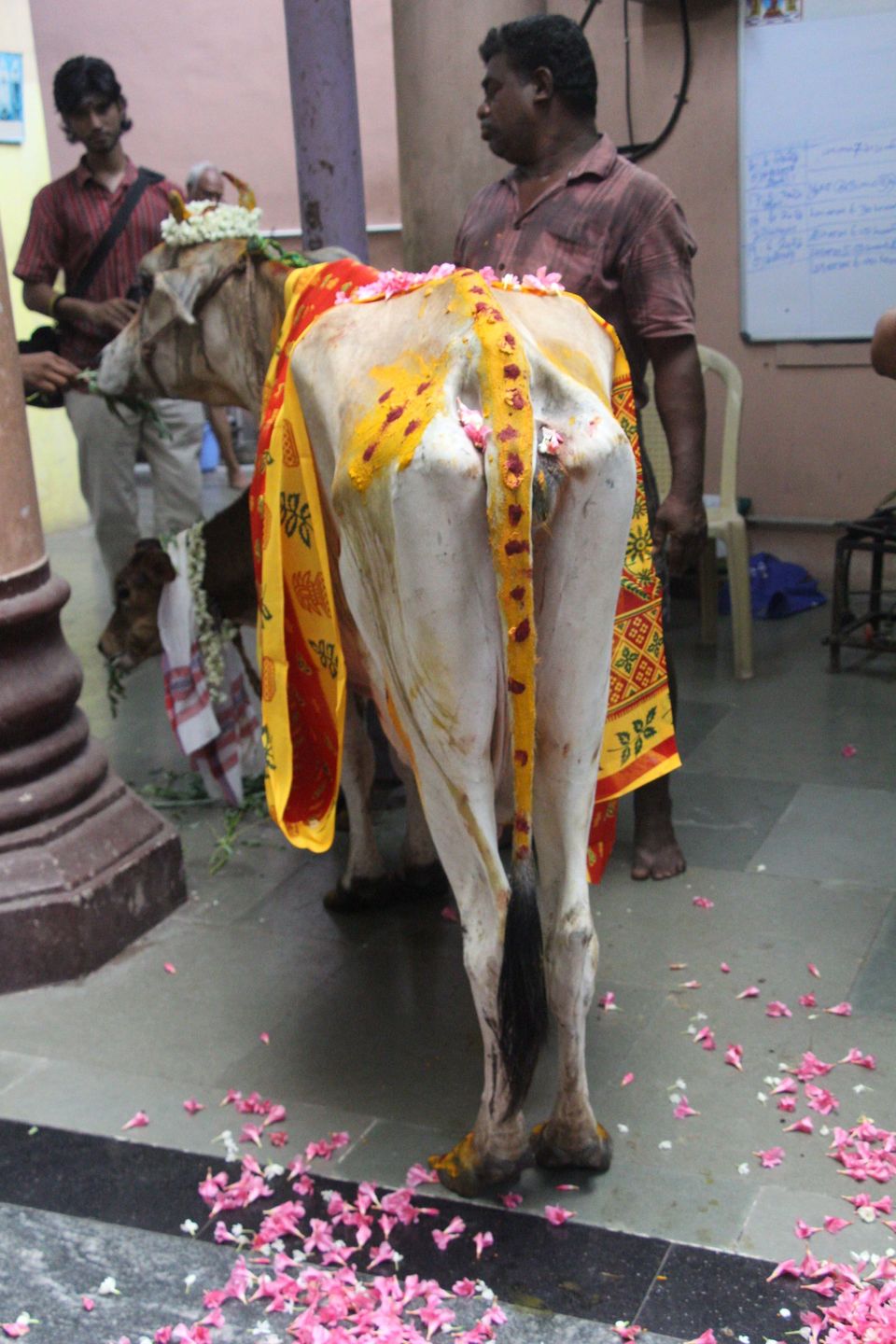
Waking Up Siva
The intent is to go to the Chetty koyil, but it’s not open at 6am, nothing is happening at Kannika, so we wind up at Vedapuriswara. We’re wandering the Nandavanam with the gardener when the sounds call us back to the temple. Quite the process. It’s Friday but the Ambal figure stays in the Palliyarai unlike in the Chetty temple (She comes out on Mondays at this temple). All done by the two younger priests, who seem to do a lot of grunt work and speak very little to anyone. There’s a group of about 15 who sing regularly, a man to play the damaru and sound the conch, someone to play the murasu for siva and another for Ambal (though he is less adept). The song set appears to be standard offerings from Manikkavasagar Thirupalliyezhucchi, Pancha Puranam, plus some smatterings from Abhirami Anthathi, Thiruppugazh (including Kaithala niraikani) and so on. Abhirami stotram sung by the inimitable Lalitamma whose voice and projection are like gold. An older man leads the “Om nama sivaya sivaya nama om”. Lalitamma sings two songs composed by Abhirami Bhattar (the first one Arasoo Swami sings beautifully also, but more on that later): First Abirami Ammai Padhigam of three such sets, this is the most well-known. கலையாத கல்வியும் குறையாத வயதும் ஓர் கபடு வாராத நட்பும் கன்றாத வளமையும் குன்றாத இளமையும் கழுபிணியிலாத உடலும் சலியாத மனமும் அன்பகலாத மனைவியும் தவறாத சந்தானமும் தாழாத கீர்த்தியும் மாறாத வார்த்தையும் தடைகள் வாராத கொடையும் தொலையாத நிதியமும் கோணாத கோலும் ஒரு துன்பமில்லாத வாழ்வும் துய்ய ந
Read more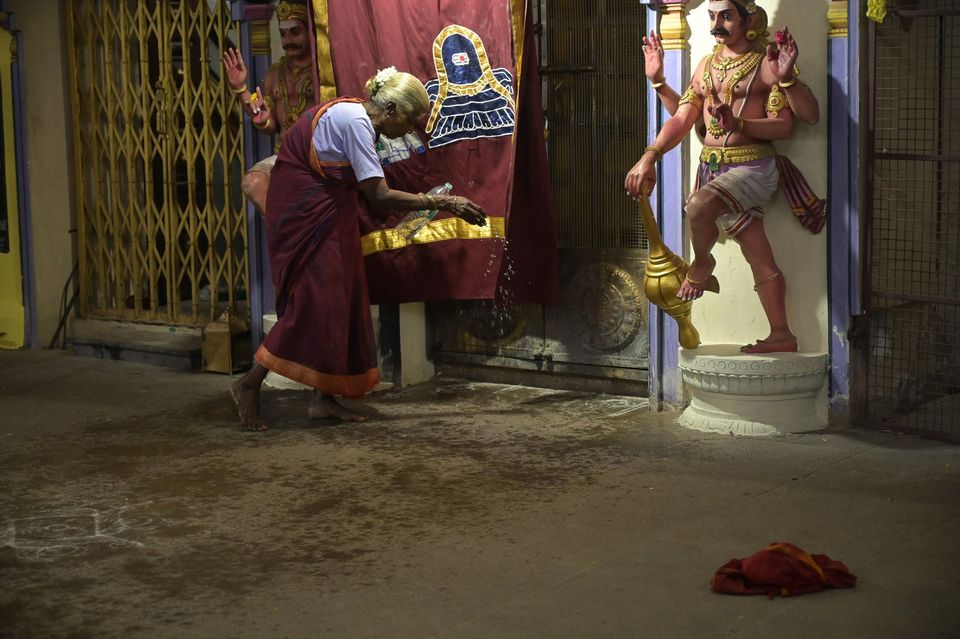
The Start of the Utsavam for Periyalvar
This starts today and will continue for 10 days. The process is usually this: morning thirumanjanam for the Alvar utsavam. Alankara is done, and in the evening the adhyapakas recite specific verses from the Alvar’s repertoire (mangalasasanam). This is followed by an ul-purappadu, and saattrumurai. On the last day, there may be variations – Perumal gets an abhishekam, there is an ethir sevai, a special alankara etc. We’re not there for the beginning though.
Read moreMapping Modern Images onto Older Maps and Drawings
We’d been working on synthesising historical stories about the arrival of the French, the temples that were documented in this town at the time, the maps in which we see them, and so on. In the process we came across temple images of those times, drawn by travellers and others who found Pondicherie such a curiosity. One was an image of what looked to us like it must have been the Perumal Koyil, so we took a break to go ask about this. But, no this was a non-starter: Dinesh Bhattacharya at main Perumal Sannadhi said the gopuram was constructed in 1998 and that the Sivan koyil gopuram is older. So what’s in our image cannot possibly be the Perumal Koyil. All these colonial era images are so much more about typecasting than they are about identifying monuments at specific places.
Read moreAmavasya Unjal Utsavam
Angalamman’s Amavasya tradition is not in tune with her fierce and forbidding form–she comes out instead and sits on a swing. One can go nearby and move her, as many take joy in doing. There is something gentle and loving about this marking. You don’t fear Her, though she often sits there with astras in her four hands. Thalaattu paattu or lullabies are sung to her. Her fierceness is soothed on this night. I guess after She frees Siva from the brahmahatya dosa (the sin of killing a Brahmin), her anger does not abate that easily–this understanding is so realistic, the anger needs to be specifically quelled and subsided. Because it persists, Amavasya is when she is ritually calmed and soothed. One can do this, on this night. It’s not a reception setting as we see at the end of a Brahmotsavam. Unjal utsavams for Devi are of a different character altogether. Some of these traditions come from Melmalaiyanur, whose Angalamman is the most important in the region (and which site has a specific relation to this temple). Maybe also from Samayapuram, though that is a Mariamman temple (and our Mutthumariamman only marks Pournami, with a small puja for utsavar and ladies coming to read Lalita Sahasranamam).
Read more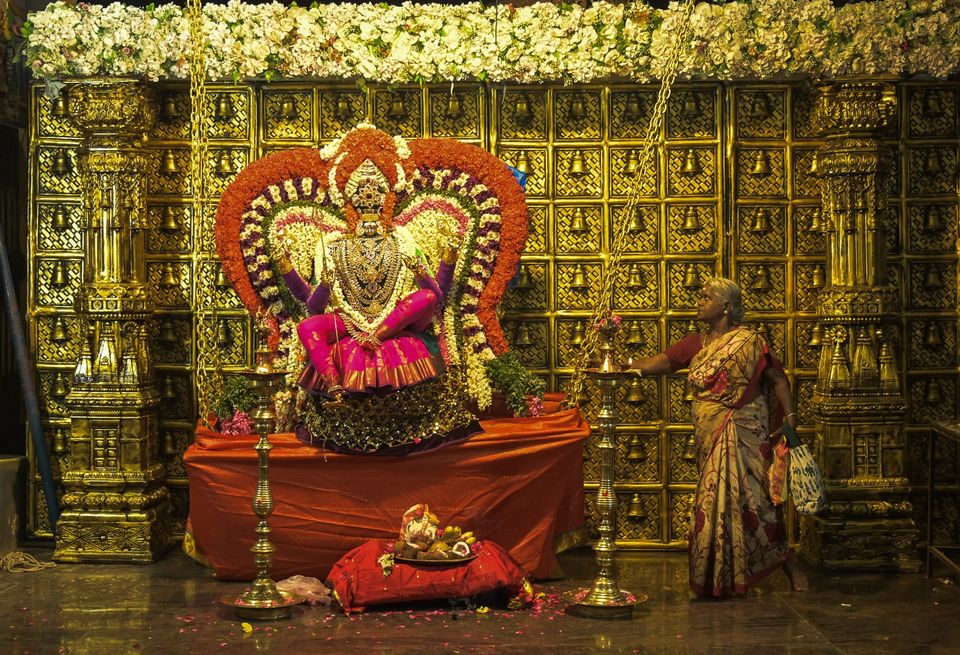
Pradosha Nayakar Ul-purappadu
The Chetty Koyil also has its Amavasya tradition of morning abhishekam taking its Pradosha Nayakar (and Nayaki!) for an ul-purappadu on Amavasya nights–one of the 5 days of the Pancha Paruva Utsavam which include these days: Amavasya (New Moon) Pournami (Full Moon) Ravi Sankramana (Masa pirappu or new solar month beginning) Krishna Paksha Ashtami (or Theipirai Ashtami, 8th day of dark fortnight) Krishna Paksha Chaturdashi (Sivaratri, 14th day of dark fortnight). Abhishekam in the morning is to the respective deities, need to be confirmed. We catch the tail end of this observance in the evening, just the ul-purappadu. When Pradosha Nayakar is returned to the main sannadhi, there’s a small puja, and then prasadam. No nadaswaram players, only the Brahma talam being kept by Govindarajan. Of course, Sankaranarayana sir is present, as he unfailingly is.
Read more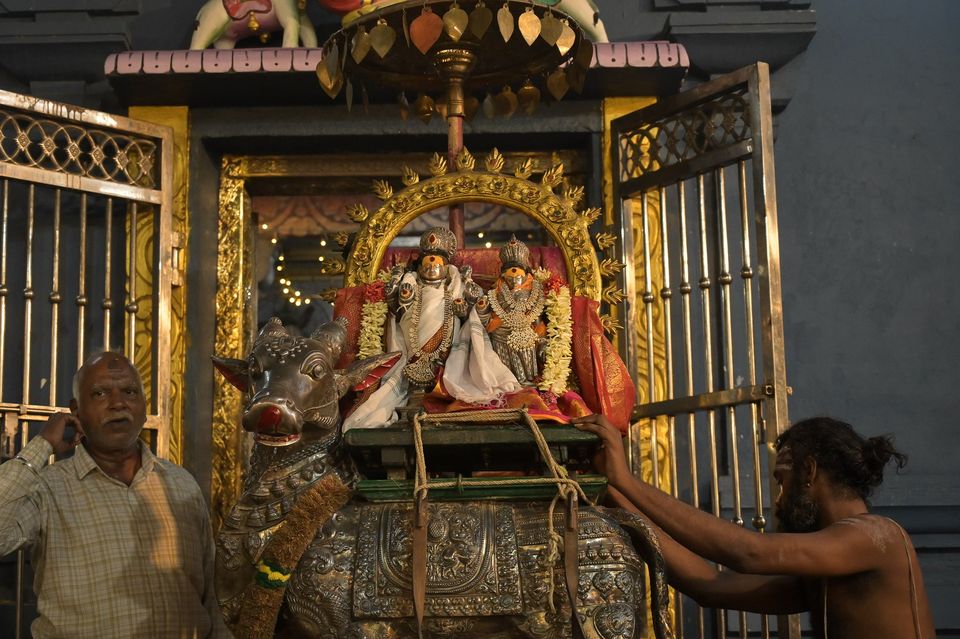
Nandhikeswara Koyil Samadhi Abhishekam
This is an Amavasya practice at this temple. The samadhi of Sri Jnana Velayudha Swami (Naadu Shanmuga Velayutha Swami) is bathed, sanctified, and readied as with any other abhishekam. A small group of us are at the basement samadhi of the temple. It is humid and stuffy in there, but nothing to be done about that. Murugan’s vel is present. Abhishekam proceeds at its usual pace, with the usual dravyangal or substances. When it is done, we are asked to go upstairs and wait for the alankaram to be completed. It doesn’t take very long. Puja happens then back in the basement. The two priest brothers sing Thiruppugazh, Karuvur / Karur (கருவூர்). As usual, lovely to hear. I take a photo of their phone later, which shows these verses; they sing from this set: 923 — மதியால் வித்தகனாகி (Mathiyaal Vithaganaagi) 924 — இளநீர்க் குவட்டுமுலை (Ilaneerk Kuvattumulai) 925 — தசையாகிய மலவூறல் (Thasaiyagiya Malavooral) 926 — நித்தப் பிணிகொடு மேவிய (Nithap Pinigodu Maeviya) 927 — முட்ட மருட்டி (Mutta Marutti) 928 — சஞ்சல சரித பர நாட்டர்கள் (Sanjala Saritha Para Naattargal) 929 — முகிலள கஞ்சரி யாக்குழை (Mugilalaganjari Yaakkuzhai)
Read more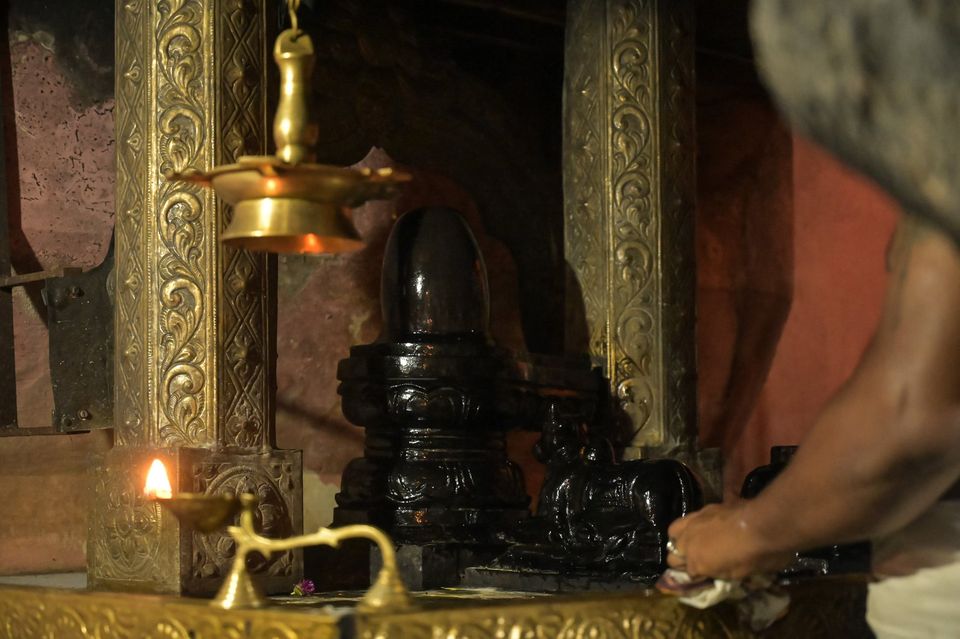
Pradosham
Dr Sankaradevi’s talks after the bi-weekly pradosham pujas are over at the Nandhikeswara temple are always so rich and full of insight. We can rarely sit through them all, but that is no indication of their importance and value to the revitalisation of both the Nandhikeswara temple practice and to the community as a whole – keep in mind that this temple sits on the edge of what was once the Sankaran kulam, where all the brahmin communities who were associated with the old, un-destroyed Vedapuriswara Koyil once stood. This history is indicated now only by the remnant that is the Shankara Vidyalaya school; all else including the Periya Paarpan and Chinna Paarpan (big and small brahmin) street names are gone, replaced by ostensibly more modern and certainly deracinated ones. Anyway, this evening as we are waiting for prasadam, Dr Sankaradevi recites these lines from Thirumoolar, which reverse the relationship between things–the elephant hides the tree, the elephant is hidden by the tree (in a sculpture). And so on, for Param and this world. Lovely explanation here by G. Sither, who is the very Sither sir I met in Thanjavur once, investigating heritage rice cultivation. மரத்தை மறைத்தது மாமத யானை மரத்தில் மறைந்தது மாமத யானை பரத்தை மறைத்தன பார்முதல் பூதம் பரத்தில் மறைந்தன பார்முதல் பூதமே The great furious elephant concealed the wood; Within the wood, the great furious elephant disappeared. The elements, starting with the earth, concealed the Supreme (Param); Within the Supreme
Read more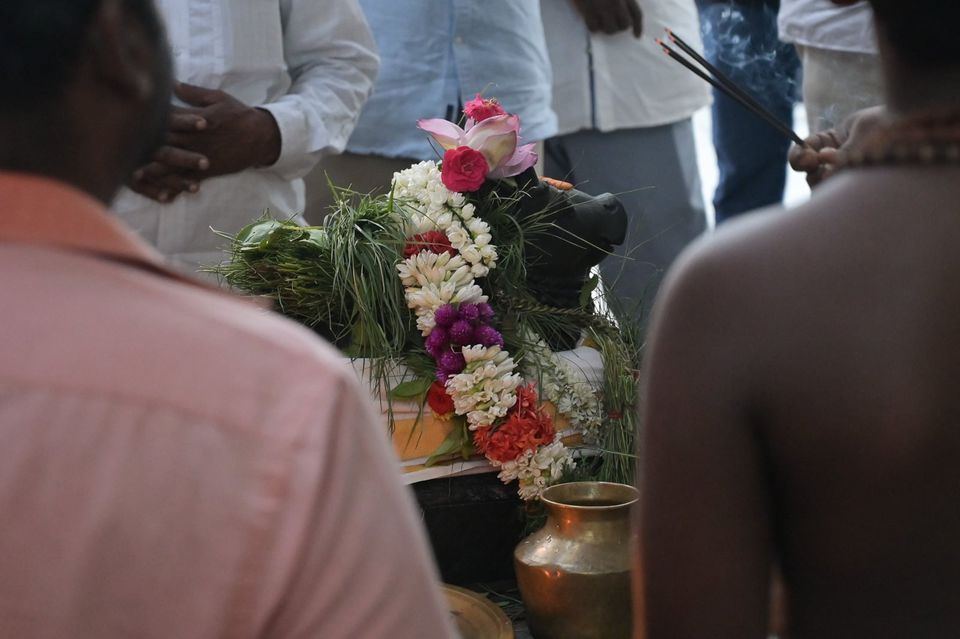
Conversation with Dr. K. Vadivelou on temple cultures of music and dance
I (Deepa) meet Vadivelou Sir at his footwear shop close to the Nandhikeswara temple. Conversation ranges widely from his own research on dance and literary forms, the devadasi tradition (and what the loss of the tradition has meant for temple cultures generally), to panchamukha vadyam and the rules of its use as a ritual instrument (each face for separate jatis), to various facts and details about the Nandhikeswara temple, and to music in general. This note is not a summary, but an acknowledgement that things he said he woke me to (1) the importance of music and dance in temple cultures as creating not merely atmosphere but auspiciousness (therefore, indeed, the term “mangala vadyam” or the instrument which generates mangalam)--and the integration of nadaswaram traditions with dance, which also aspects destroyed by the abolishment of the devadasi tradition; (2) likewise the roles of odhuvars and araiyars (offering araiyar cevai) using mudras in their enactments of hymns and songs – they are not merely recitations, but enactments – so should we think of tantric puja forms similarly then, as enactments?; (3) I had a picture of the temple as coming alive in the evenings, with devadasi groups resident nearby, dedicated to specific temples, dancing and “gesturing” during sayarakshai and palliyarai sevai. Picturing it thus, I could see the clear harmony between the mudras used as part of “common” tantric ritual, and the mudras and gestures used in dance by the devadasis of old. The
Read moreKali Abhishekam for Theipirai Ashtami
We’d not seen this one together so went together. Quiet temple evening. Climbed up onto the terrace to see the Parashakti figure being attended to by some lads who were grouped there–the temple gives them this work and these socialities. Below, the two main priests prepare for and conduct the entire abhishekam. No additional helpers. They’re swift and efficient. Alankaram does not take hours. Invariably there’s a kunkumarchanai with namavali chanting (is this the same as a Navavarna puja?). The temple always has a distinctly open community feel, it’s like a place where people gather to learn and be together. They accept the tutelage of the Iyers, who are avuncular figures to them. It’s just a very nice, almost intimate atmosphere here always. Sriram Gurukkal sends us photos and videos from time to time, and we share with him. too. The casual, easy nature of these things extends that feel of place.
Read more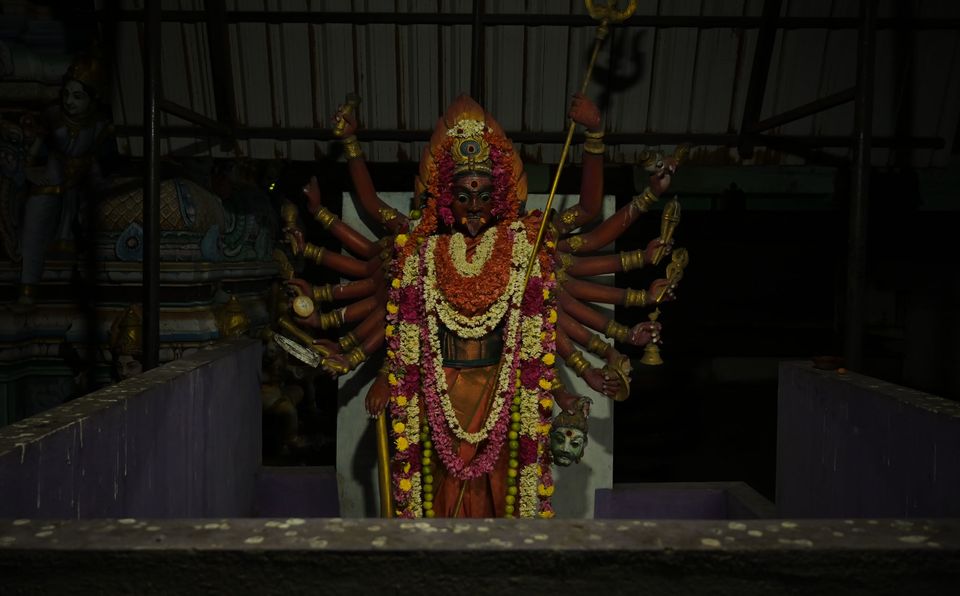
Panaka Puja to Close it All
5:00 PM: Panaka Puja Brahmotsavam Day 15. Ramanan Bhattacharya said there will be a Vizhithikaappu, washing with venneer or hot water— afternoon puja not for public viewing, followed by Panaka Puja.
Read moreUtsava Shanti and Shankhabhishekam
Brahmotsavam Day 16, Shankhabhishekam. Went for this at 10:30am. Homam going on, Arjun Gurukkal (who was the main priest during the whole Brahmotsavam) leading. Abhishekam was happening, we caught the tail end of it. Homa finished, the 2 kalasa were taken by Arjun and Kalyana Sundara Gurukkals one round about the prakaram, coconut phat near the dhvajastambha, and then the main kalasa into the moolasthanam – Presumably 108 shankha for abhishekam, done one by one unlike Chetty Koyil where it was being done a few at a time – then shift over to Amman sannadhi for the second kalasa pour – simple alankaram and deeparadhanai. The day's schedule: 9:00 AM - Utsava Shanti, Shankhabhishekam (Conch Abhishekam).
Read more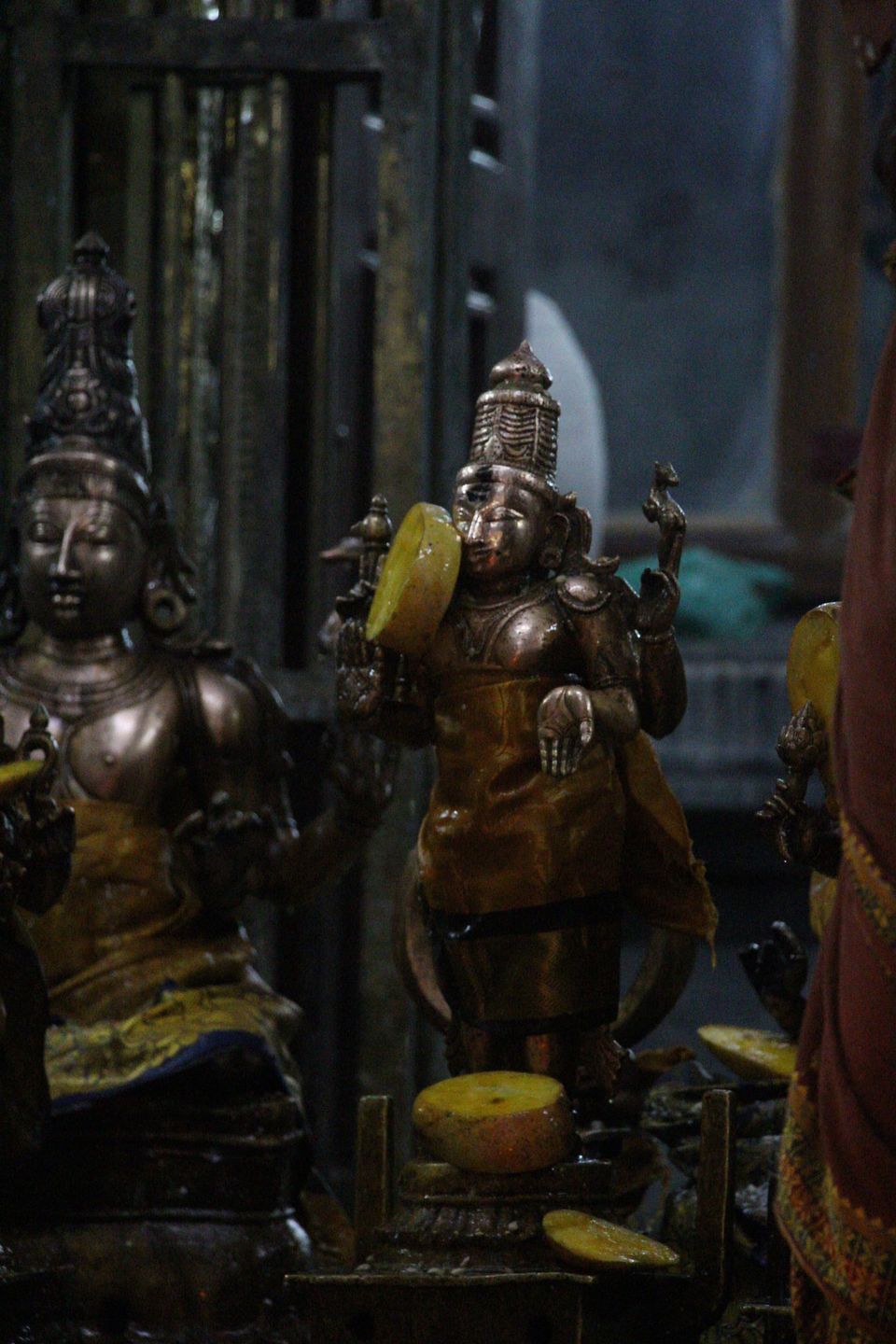
Perumal's Unjal Utsavam
10:00 AM: Thirumanjanam 07:00 PM: Unjal Utsavam (Swing Festival) Brahmotsavam Day 14, Vidaiyatri Day 5. We arrived super late to this, thanks to the delays in the Thirumurai utsavam, expecting to see Perumal in the Vasanta Mandapam swing as it’s been before. But no. He had other plans! When we reached the ardhajama puja was basically concluding. Nadaswarams playing Annamayya’s “Brahmam okate!” Perumal was nicely ensconced in an embellished kannadi-AC room with lovely Thanjavur paintings on either side, deep within the chamber next to the Kodandarama shrine. Sitting to the left of his 2 consorts, typical raja style, instead of between them, as usual. I guess after all the work he did, he gets to relax a little! We saw the last aradhanai just before closing. Perumal’s utsavar already back in the moolasthanam from earlier in the day, Ramanan Bhattacharya said.
Read more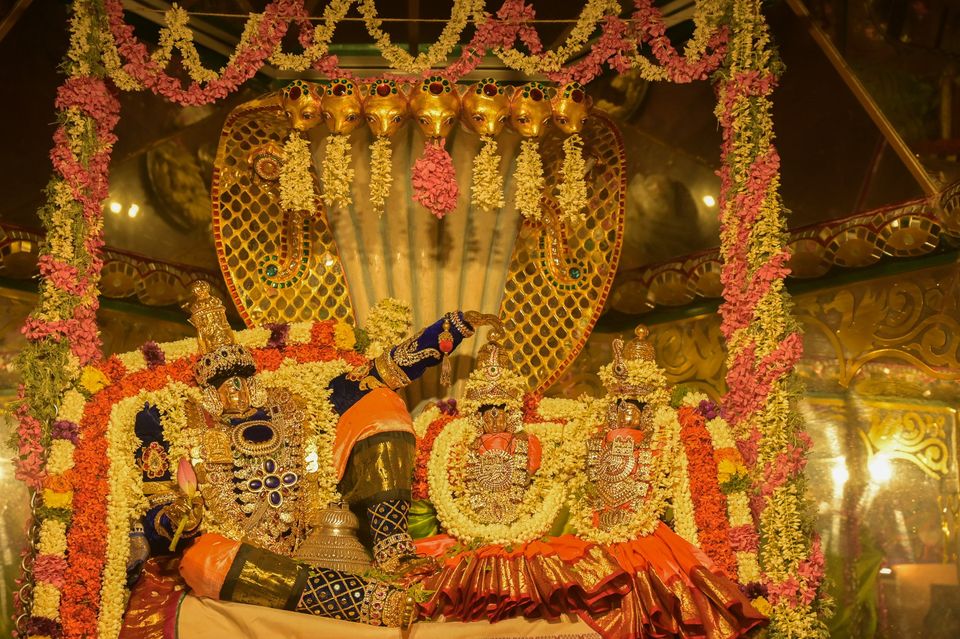
Thirumurai Utsavam
Brahmotsavam Day 15, Vidaiyatri Day 5. More special than we imagined. Ayyappan swami had said in the morning when I went with Dyuman that today Gurumama would be the Instagram star (ha ha ha). Indeed, it was special. 12 Thirumurai all dressed up to look much like a siva lingam. Naalvar abhishekam in the morning, and they’re propitiated and taken out in procession (ethir sevai), followed by the thirumurai, and finally Chandrasekara and Gauri. Pushpaka vimana alankaram for Siva on Vrushabha. The Naalvar got a chariot, as did the Thirumurai. Each year a group is called in to sing Thirumurai songs – a mixed bunch this time, not at all all from the Thirumurai. Yennappan allava, from the Nandanar Charitram by Gopalakrishna Bharati. Naada Bindu, which is Thiruppugazh’s last song. Nadaswaram played முத்தைத்தரு பத்தித் திருநகை – which again is Thiruppugazh. “Thodudaiya Seviyan” is a favourite, but I’ve only heard it sung once at the Chandikeswara abhishekam deeparadhanai. The group this time were young girls from Chennai led by a teacher. Each year there’s a different group to sing. I guess it’s a way of encouraging the classical arts and singing in general, which is for its own sake lovely. The day's schedule: 9:00 AM - Vidaiyatri Abhishekam 7:00 PM - Thirumurai Utsavam
Read more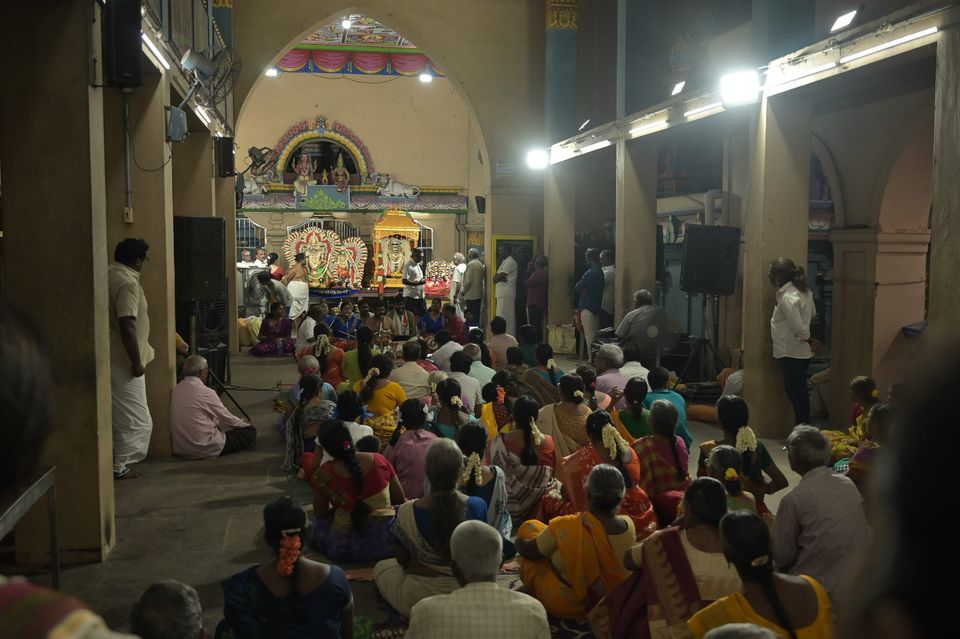
Chandikeswara Utsavam and a Floral Procession
Brahmotsavam Day 14 and Brahmotsavam Day 13 respectively, for Sivan and Perumal; Vidaiyatri Day 4 for both. You know things are really closing up when there’s a whole utsavam to Chandikeswara– he’s the last to be offered food before closing the temple at night, the one who follows the processional parades, the great devotee who sits nearby, but outside. And the Perumal Koyil holds grand court as Rajagopalan with a sengkol in his hand, peacock feathers in his hair, and cows at his feet, Sri Devi and Bhu Devi turn into Rukmini and Satyabama. One has a sense of peace, justice and plenty descending on the world. It’s perhaps fitting that Rajagopal Thathacharya give us some apt closing lines – as he often does, he calls us aside with twinkling eyes and a deeply happy smile because such is the way he takes delight in stories of the Lord, and recites (of course at a moment when the nadaswaram makes it hard to hear anything, even if we are listening with rapt attention) Pasuram 1.1.9 of the Thiruvaimozhi: உளன் எனில் உளன் அவன் உருவம் இவ் உருவுகள் உளன் அலன் எனில், அவன் அருவம் இவ் அருவுகள் உளன் என இலன் என இவை குணம் உடைமையில் உளன் இரு தகைமையொடு ஒழிவு இலன் பரந்தே. ulan enil ulan avan uruvam iv uruvukal ulan alan enil, avan aruvam iv aruvukal ulan ena ilan ena ivai kunam utaimaiyil ulan iru takaimaiyotu olivu ilan parante. If it is said "He exists," He exists, and all these forms are His forms. If it is said "He exists not," He is formless, and all these formless things are His formlessnes
Read more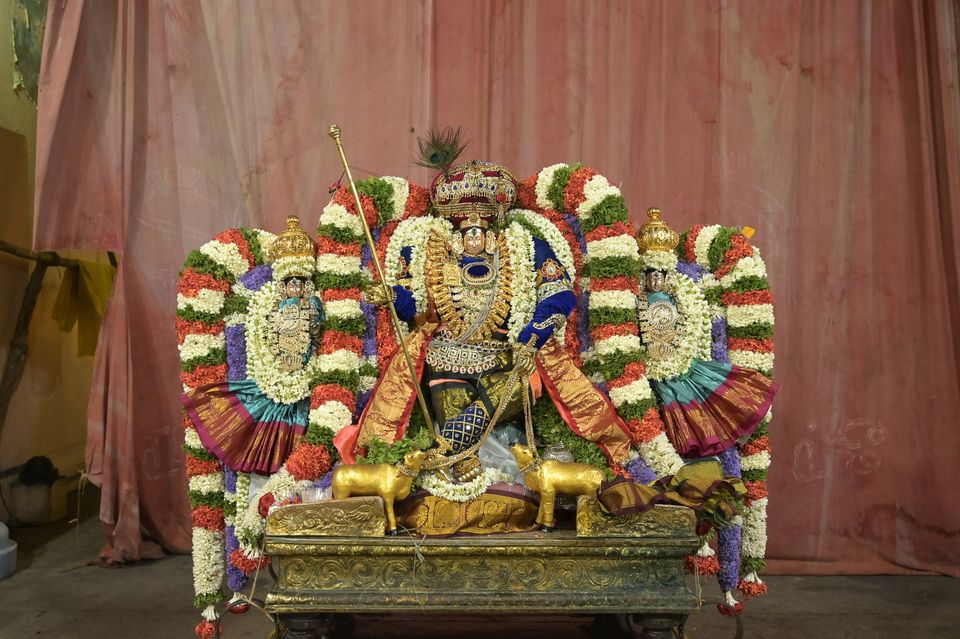
Vidaiyatri: Of swings and pearl carriages
Brahmotsavam Day 13 and Brahmotsavam Day 12 respectively, for Sivan and Perumal; Vidaiyatri Day 3 for both. Already we have a sense of the festivals coming to a close with these reposed finales. Umamaheswara sits on a swing in the warm night air, a Mutthu Vimanam simpler by far than the one we saw for the Ramar Utsavam some months before carrying Perumal out with his consorts. These are scenes of beauty, the pastimes of the Gods, their slow withdrawal from the peak intensities of the festivals carried out in their own names. VEDAPURISWARA SCHEDULE 10:00 AM - Abhishekam. 7:00 PM - Unjal Utsavam (Swing Festival) VARADARAJA PERUMAL SCHEDULE 10:00 AM: Thirumanjanam 07:00 PM: Mutthu Vimanam Purappadu
Read more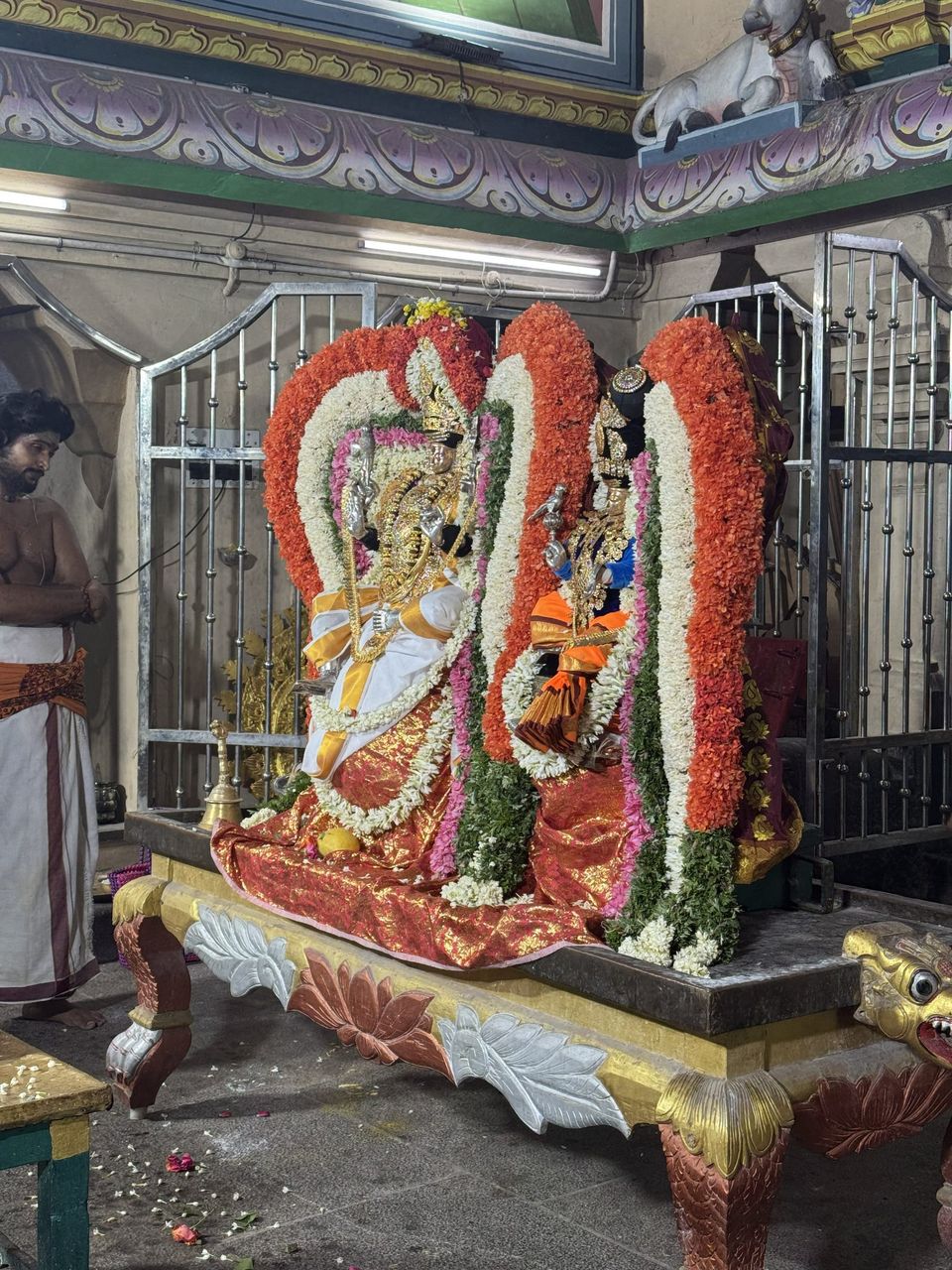
Perumal's Foot on Kaliya's head at his Theppotsavam
Perumal is in Kaliyadamana alankaram for Theppotsavam. Here too, as in the Sivan Koyil, the Theppal alankaram is always in an ugra form. The theppal’s circular structure creates a halo, inside which Krishna dances taming the serpent. His right foot planted firmly on the centre of the hood, left foot aloft in dance, left hand grasping Kaliya’s tail and right hand holding the flute – the form is indeed befitting for a scene in the waters. Brahmotsavam Day 11, Vidaiyatri Day 2 schedule: 10:30 AM: Thirumanjanam 07:00 PM: Theppotsavam (Float Festival)
Read more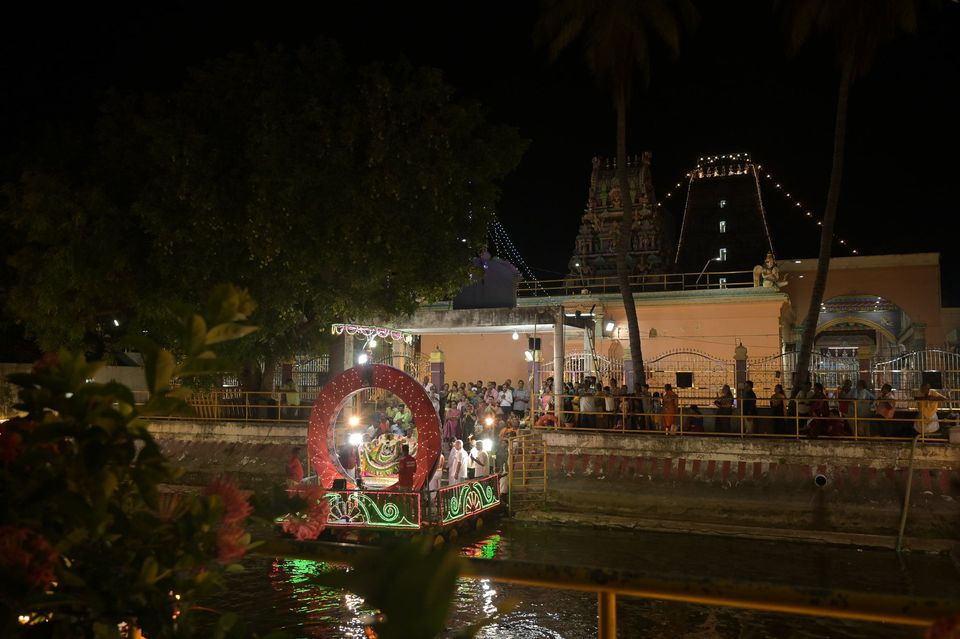
Thirugnanasambandar Utsavam
Today is Vaikasi Moola Nakshatram, which marks Thirugnanasambandar’s mukti-day. Thirugnanasambandar’s utsava murti, identifiable by his index finger pointing towards Siva and Parvati in the heavens above, is brought to the Naalvar shrine. They are given a fairly long abhishekam, following which Thirugnanasambandar moves out and straight across to Natarajar Mandapam, where he will be dressed and adorned. With him also moves the modest crowd present. Once ready, he is presented an aradhanai, taken on a purappadu around the prakaram, and then taken straight into the sanctum of his Lord. There’s a woman we see often who is telling me about this – he will receive now the jnana paal, or the milk of wisdom from the Divine Mother. He first faces his Lord, and then diagonally faces the Ambal murti there who gives him the milk of Siva’s wisdom – Siva Jnanam. Lights go off completely for this. The Garbhagriha is filled with lamplight. It’s one of those unforgettable moments, which is unforgettable because it’s there and gone in a blink. Brahmotsavam Day 12, Vidaiyatri Day 2 Schedule: 9:00 AM - Naalvar Abhishekam, Thirugnanasambandar Festival 7:00 PM - Indira Vimanam Procession.
Read more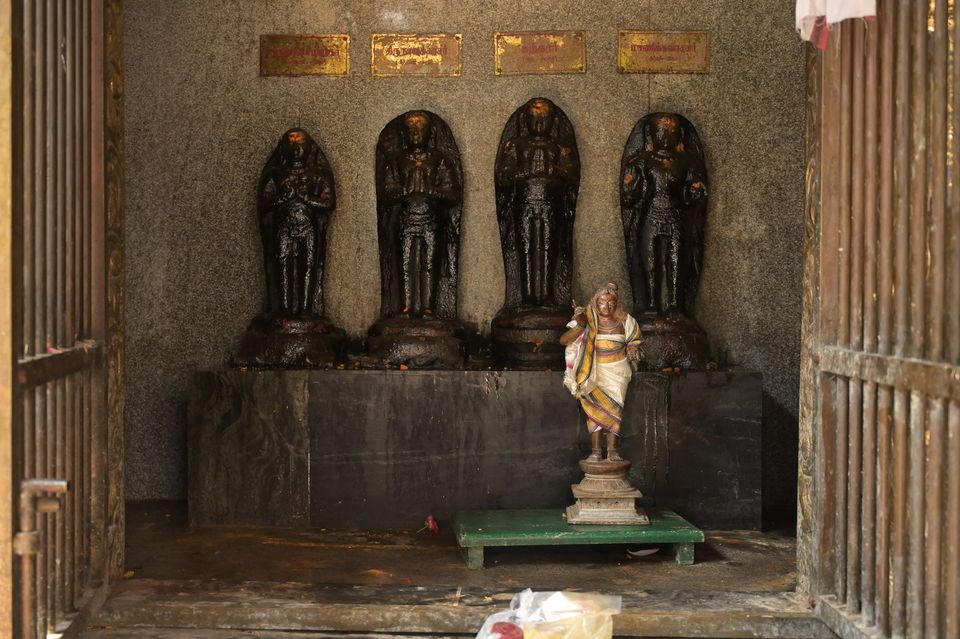
108 Kalasa Thirumanjanam and Dwadasa Aradhanam
The kalasa thirumanjanam happened in the morning for the moolavar. Later there was a dwadasa aradhanam, with the showing of twelve lamps. The Saptavarana Puranam recitation was by Ramanan Bhattacharya after the return of the procession. The Saptavarana Puranam/Saptavarana Puranam is a traditional devotional text dedicated to Lord Surya, focusing on his 21 names and attributes that remove sins, overcome illness, and bring prosperity. Saptavarana, Saptavarana: Seven square enclosures, one within the other, the innermost containing the central shrine, as at Srirangam; கோயிலைச் சுற்றி அமைந்த ஏழு பிராகாரங்கள்/ koyilais surri amaintha ezhu piragarangal. Brahmotsavam Day 10, Vidaiyatri Day 1 Schedule: 10:00 AM: 108 Kalasa Thirumanjanam 04:30 PM: Dwadasa Aradhanam 07:00 PM: Chandra Prabhai Procession and Saptavarana Puranam recitation
Read more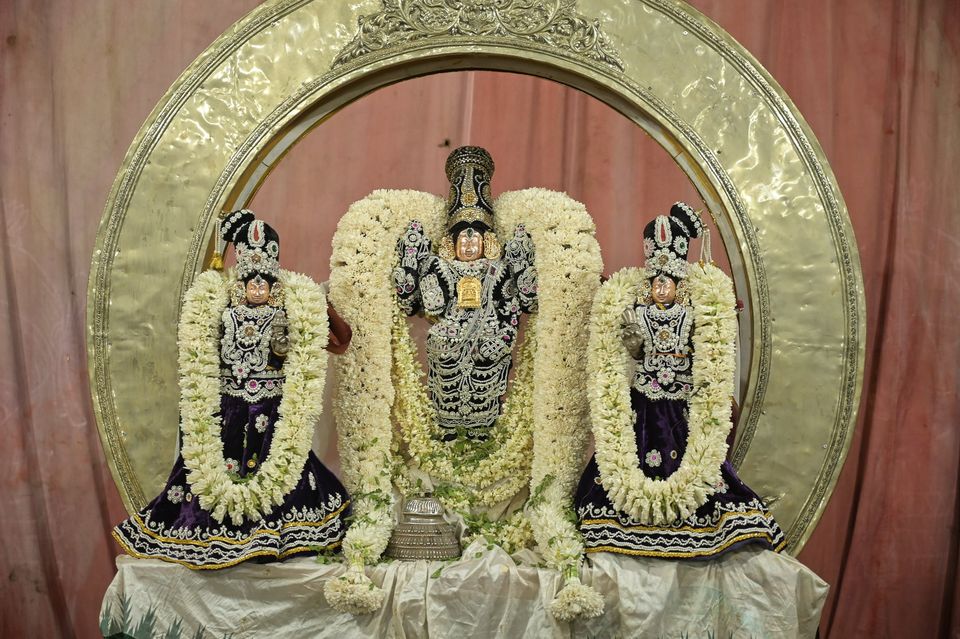
Theppotsavam for the One who Absorbs all Time
Kalasamharamurti alankaram for Theppotsavam. For the Vedapuriswara Koyil the iconography on the theppal is always a samharam or tandavam. Arasoo Swami makes sure we get a ride on the theppal, too! We feel like kids who have been given extra lollipops. We meet the man who has cleaned the kulam. The junior priest acknowledges this and asks him to come for a ride, too, though he demurs. Another priest speaks to us about two kinds of bhakti – morattuthanamaana bhakti and “silent” bhakti. He observes that the former is growing more prevalent these days. Brahmotsavam Day 11, Vidaiyatri Day 1 Schedule: 10:00 AM - Abhishekam – led by Arasoo swami, who kindly allows for a screen to be placed so that the mirrors at the back of the utsava mandapam are blocked and our cameras can feel happier taking photos! 7:00 PM - Theppotsavam (Float Festival)
Read more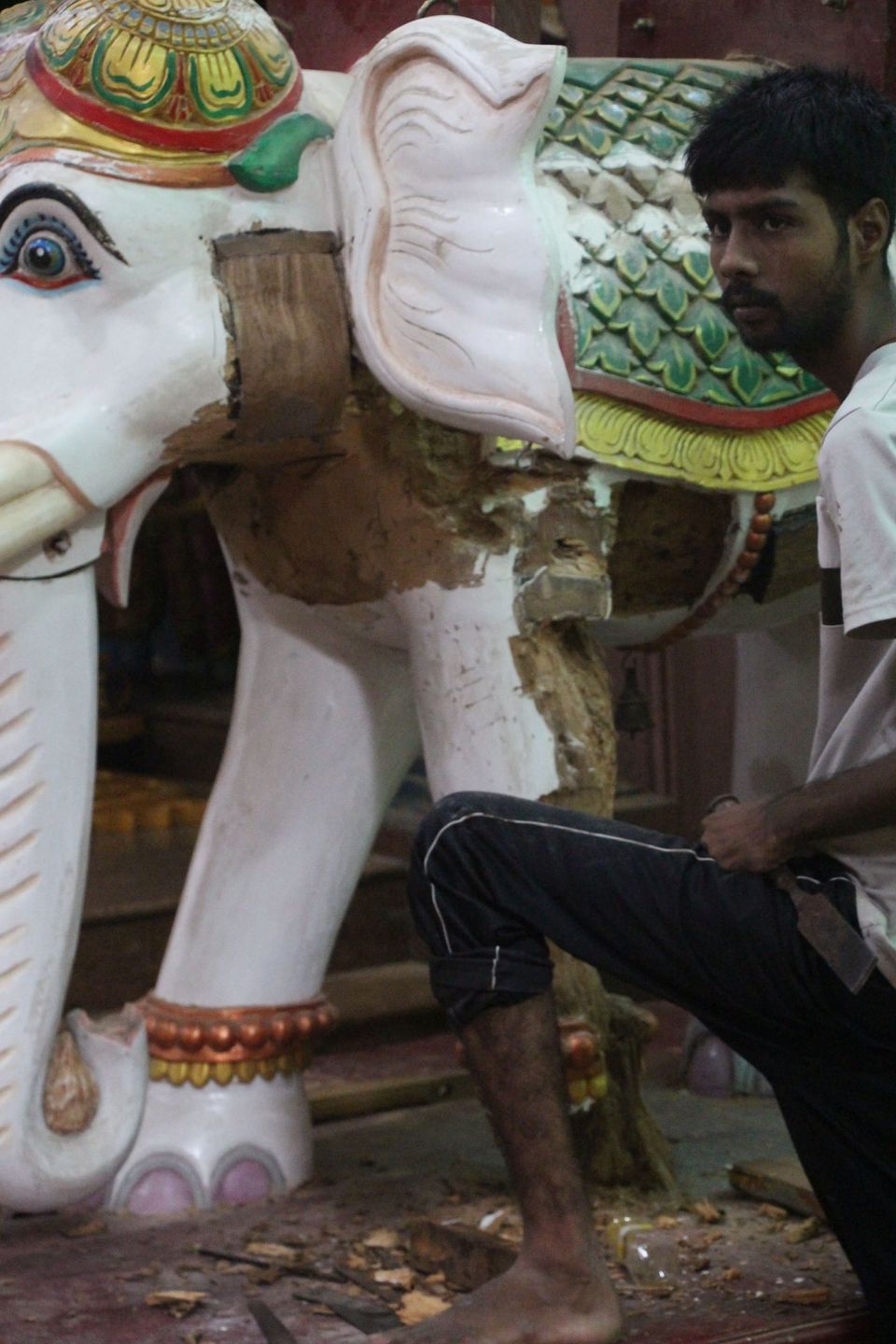
Pancha Murti Purappadu
This is a continuation of the utsavam that started with Vishakam, Day 4. The pancha murtis are Vinayaka leading the way, but with Chandikeswara unusually placed next to him rather than bringing up the rear, followed by Murugan with his consorts looking grander than grand (His festival after all), though the consorts are almost hidden by Murugan’s grand swirling garlands, Somaskanda, and finally the Thani Ambal. The pusari we often see in the temple accompanies. Some kids ride along. It is no doubt a grand but somewhat distracted procession. It passes through commercial areas and markets where it seems to meet with reverence and indifference in equal measure.
Read more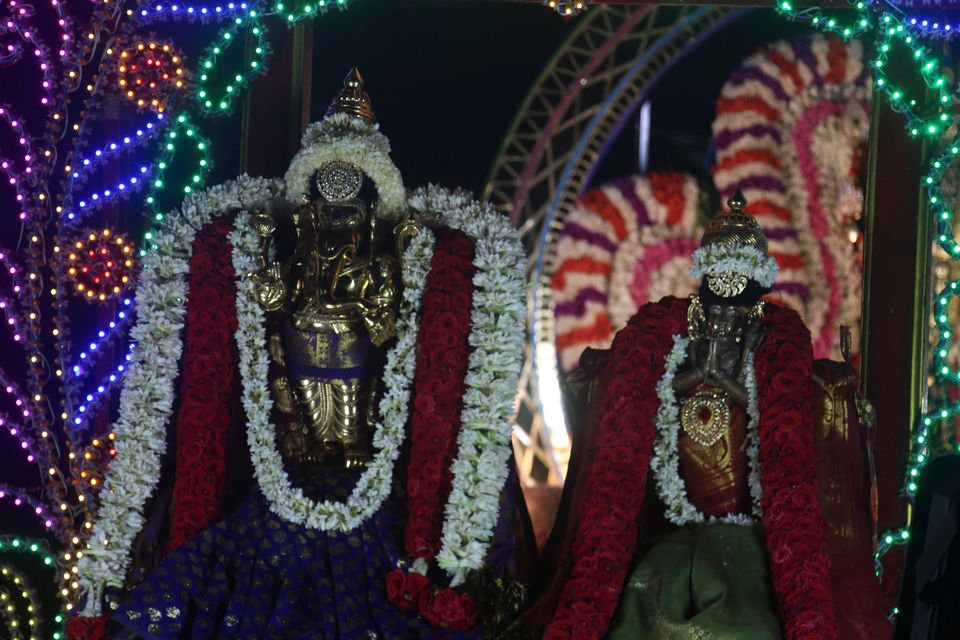
A day of Brahmanda Brahmotsavam Events
Vedapuriswara Brahmotsavam Day 10 and Varadaraja Perumal Brahmotsavam Day 9. — The ther at the Perumal Koyil is considerably larger than the Sivan Koyil’s. The wheels are of stone and metal, not wood; Vishwaksena draws the chariot, not Brahma. Perumal is hauled up a flight of stairs and placed in the heart of the chariot. A few moments of preparation, a final aradhanai, and the ther sets off rolling. Perumal is grand and magnificent, but the streets struggle to accommodate him. Tree cover amply obstructs Perumal’s giant chariot. Internet cables running across the road wrap around the ther’s kalasa and kodi. The procession is slow and arduous, inching forward in the gaps of laborious clearance. One great tree on Thiyagaraja Street had to be almost entirely felled so Perumal may pass. We almost miss the Nataraja Theerthavari at the Sivan Koyil because of this, but manage to catch its tail end. The returning half seemed to pass quicker, and it was soon time for the theerthavari in the late afternoon. Perumal’s and his two consorts’ utsava murtis were set on steps that go down to the kulam. In front of them was also the “astra murti” equivalent – who is perhaps Vishwaksena? Perhaps Perumal himself? [TBC]. Upon completing the thirumanjanam, this astra murti was taken down the steps and, with the priest standing ankle deep in water, was given the Sahasradhara Abhishekam. The conch and chakra shaped vessels poured manjal-neer onto the Sahasradhara plate, showering the murti. In the
Read more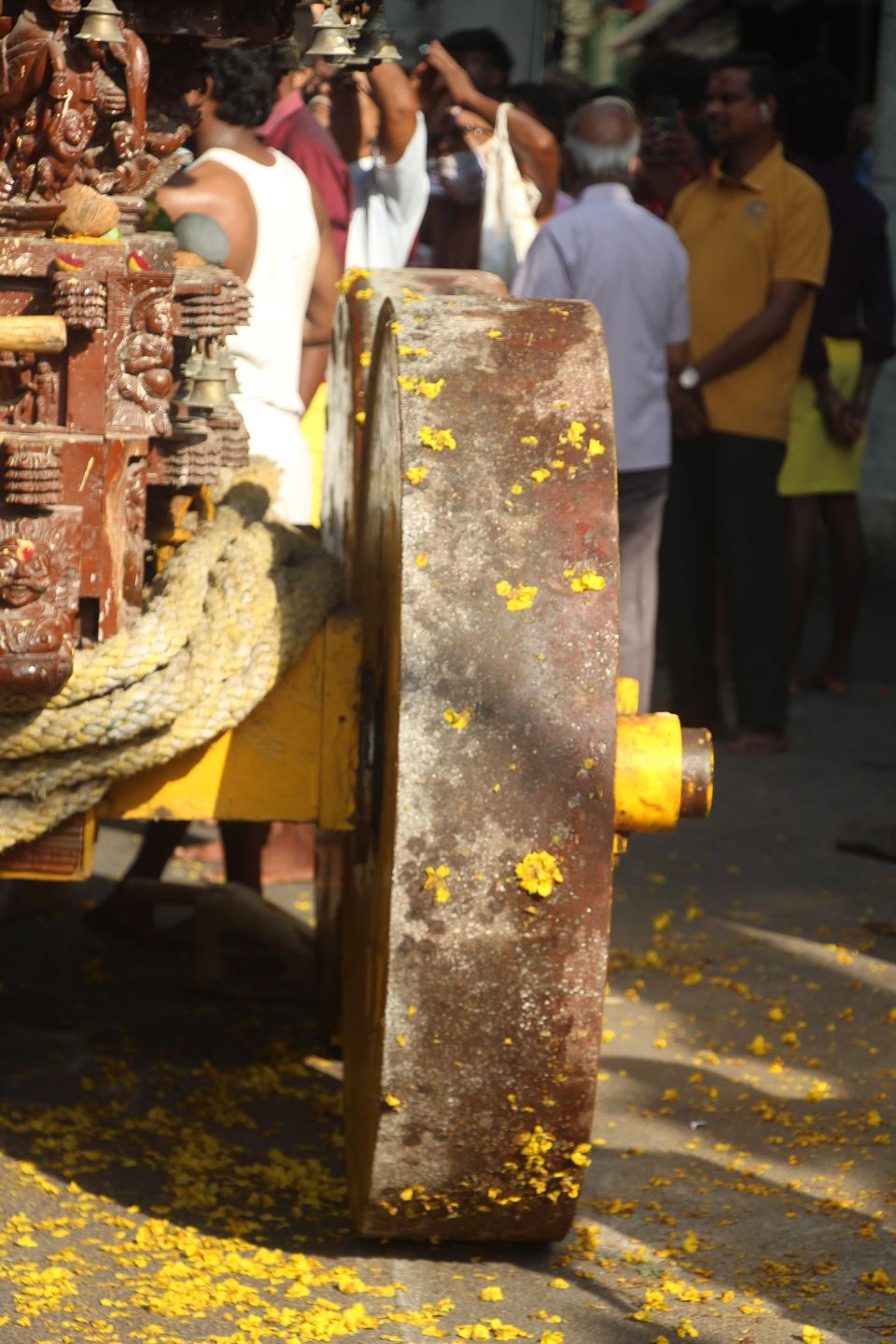
Nakshatra Naal Purappadu
This is Murugan’s birth day or nakshatra naal, the day of the great processional Mail-aattam! I’m not sure how we come by earlier and do not register that the whole set up to carry and dance with the utsavar on a peacock vahana is being fashioned out of bamboo. Ingenious. There’s a big dance with a matching music (how to describe it in words? It anticipates the sashaying of the peacock tail) at the purappadu point which we do not see. Kadir tells us about it later. But we follow the procession mid-way until it returns to the temple and all deities move indoors. And it’s quite something. The peacock sashays, the kudais dance. The music matches. On return, the Kailaya Vadyam is something else – maybe even too intense for the small spaces this temple occupies. No respite, crowds inside, almost nowhere to move, and music loud enough to burst eardrums but so addictive. The moolasthanam is closed for the night; the utsavar here seems to have a life of His own! I guess it’s his birthday, so he deserves a romp around town in full form.
Read more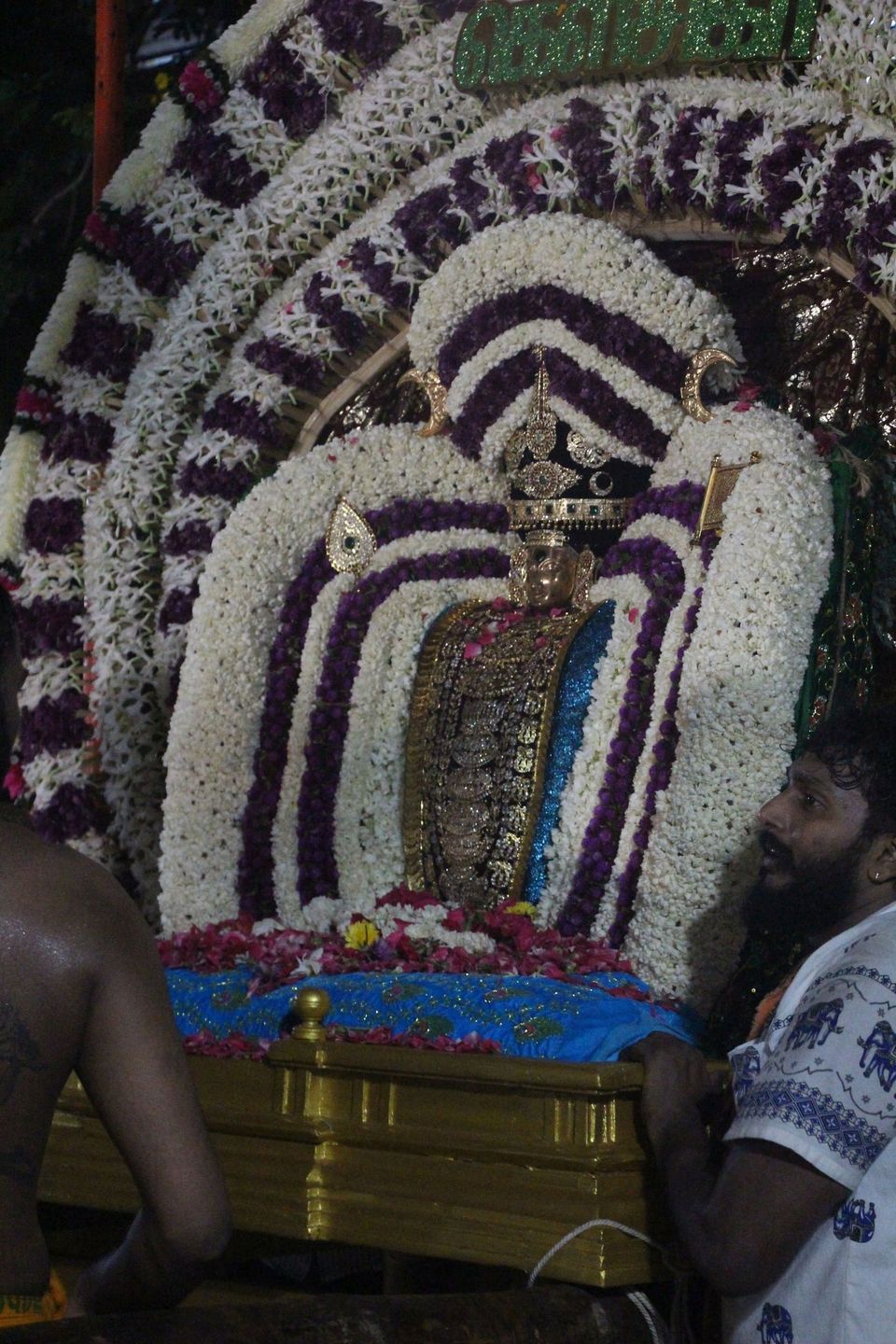
Murugan Abhishekam to mark Vaikasi Vishakam
The Murugan abhishekam is a simple but beautiful affair. Not too many in attendance, but it’s done jointly by Gurukkal (for Murugan) and Periyavar (for the Mayil and vel). A family of the ubhayakaras is sitting on the jamakalam outside and watching us. We tell them about the green tint on the Murugan evident only during paal abhishekam – it’s something they did not know. Enchantments are everywhere. We come back later for a small prasadam. Schedule: 8-9am: Murugan Abhishekam (but always happens a little late)
Read more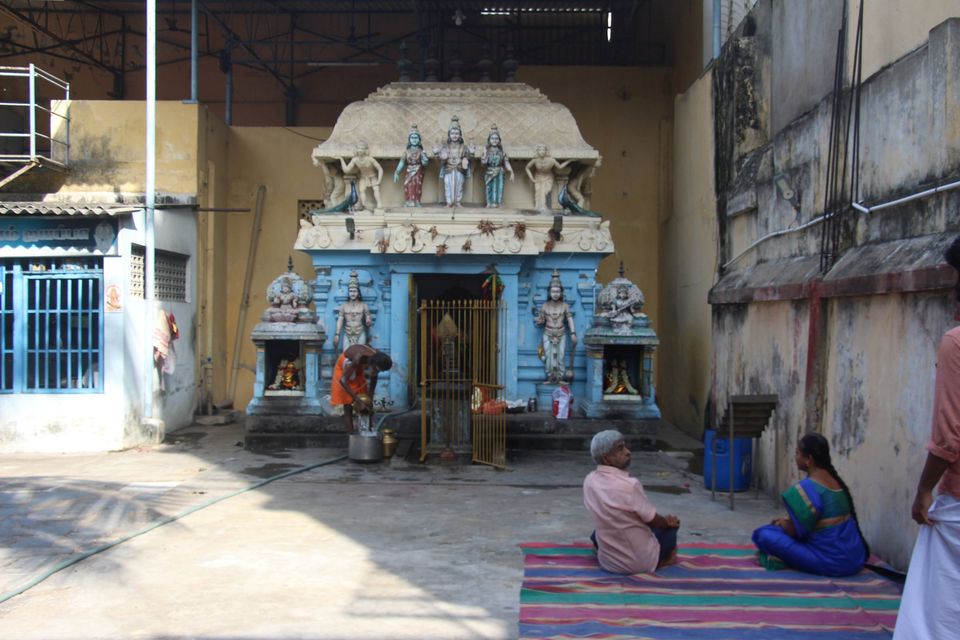
A beautiful backside and an appearance on a horse!
It is Nammalvar Jayanti, but abhishekam only to mark it since it comes in the middle of the Brahmotsavam. Brahmotsavam Day 8 Schedule: Vennai Thazhi and Horse Vahana in the evening; Nammalvar Jayanti Abhishekam. 07:00 AM: Vennai Thazhi (Butter Pot) Appearance Procession – with the cutest chaatrified baby backside – Munnilum Pinnazhagiya Perumal (முன்னிலும் பின்னழகிய பெருமாள்), as they say of Namperumal, the processional deity of the Sri Ranganathaswamy Temple in Srirangam. 10:30 AM: Thirumanjanam 08:00 PM: Procession on Horse Vahanam–Thirumangai Alvar sits on the horse named Adalma who carried him across various regions as he travelled to visit and sing praises of the 108 Divya Desams.
Read more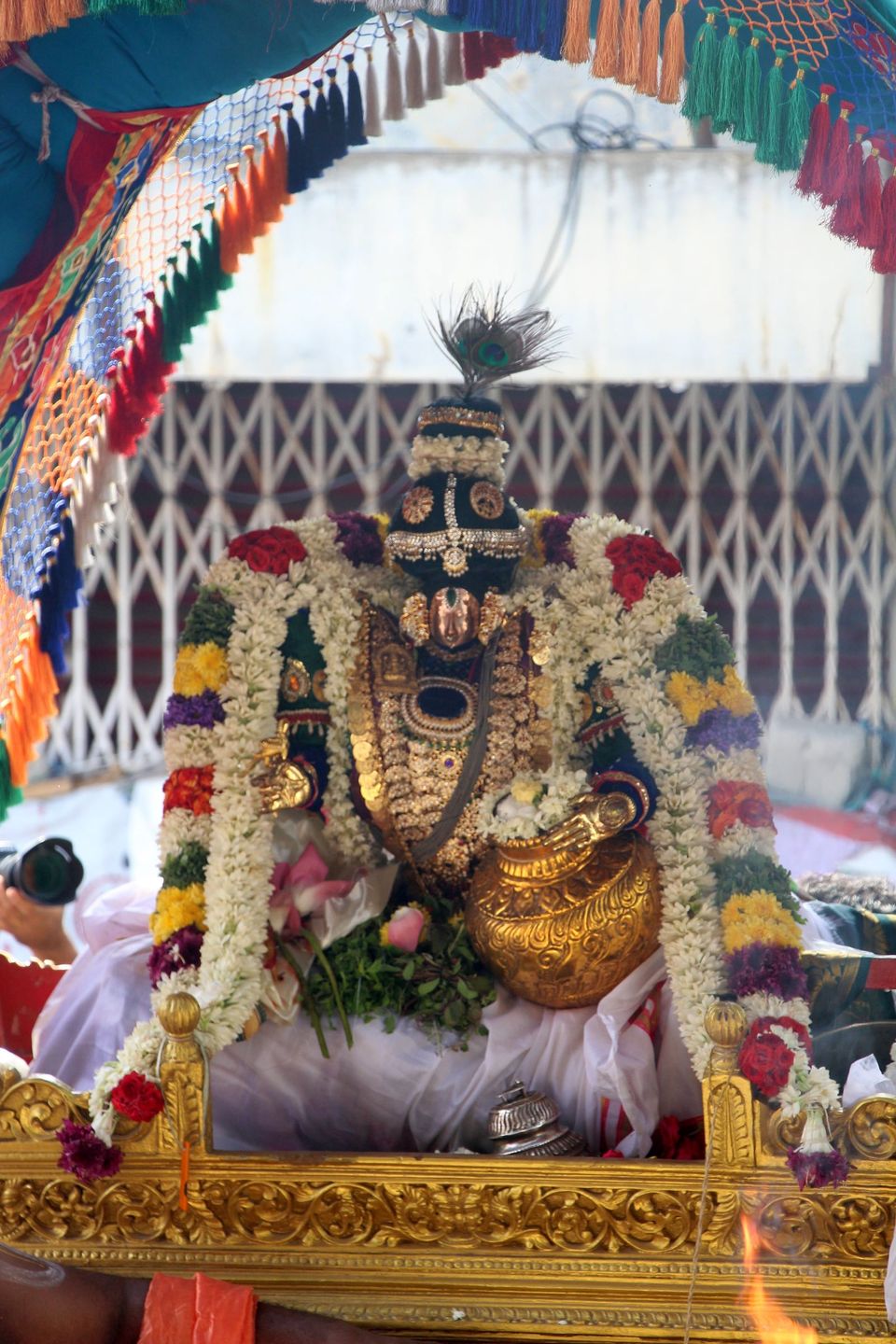
The Thiruther Vizha (or Rathotsavam) on Vaikasi Vishakam
Brahmotsavam Day 9, the day of the chariot! Is it a coincidence that the Chetty Koyil had its Thiruther vizha on Panguni Utthiram (also special for Murugan) and the Vedapuriswara Koyil has it on Vaikasi Vishakam (Murugan's nakshatra naal)? We arrive as the homam concludes. Even before the deities board the ther, there is magic in the aradhanai that preceded it under the rays of the rising sun. The utsava murtis are kept outside the library-mandapam. We see the completion of the homam; and piercing this sacrificial smoke are the rays of the morning sun meeting the flames of the aradhanai. The deities proceed to an ul-purappadu after which Somaskanda is raised and seated onto the ther. The ropes are grasped, the wheel-blocks are removed, and after the last of the aradhanais – pull! The ratha of Somaskanda rolls ahead. The ther’s journey around the madaveethi lasts long, and is significantly obstructed by cables and trees, which necessitate immediate chopping and slashing. Later in the day we do a recording with Thirunavukkarasar Odhuvar. He spoke about the Malaimatri padhigam, malai-matri or the malai of words that stays the same when turned around or recited forwards and backwards–effectively a palindrome: யாமாமாநீ யாமாமா யாழீகாமா காணாகா காணாகாமா காழீயா மாமாயாநீ மாமாயா This first line read backwards makes the second line. Discourses can be given on these lines and their poetic construction, but here is a rough translation: “Are we gods? No. You alone are truly God—yes, indeed
Read more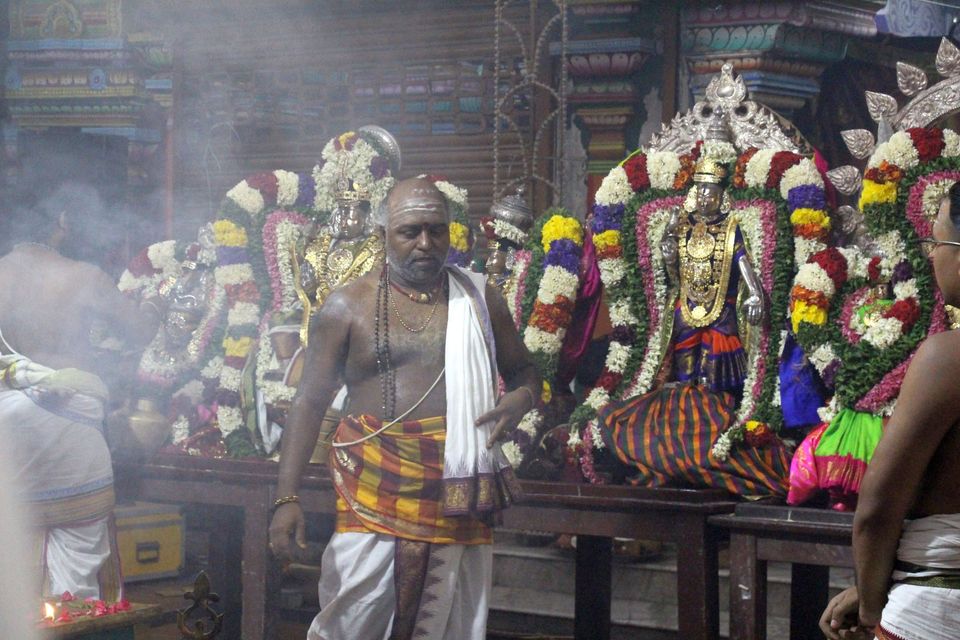
Satru Samhara Trishati Homam and Laksharchana in Lawspet
We could not attend the Rathotsavam on the night before, there was just no way, so it’s on our list for the next year. This morning begins pretty much on time at 530am with a kalasa puja to three kalasas, presumably Murugan, Valli and Devasena. All 6 priests present stand by the kalasas which are arranged on a stand behind the agni kundam, and it’s quite a sight when all six do deeparadhanai, though only one priest holds the classic aradhanai lamp which is brought around to devotees, all else just have the thattu vilakku (plate lamp). The homam begins next and is performed simultaneously by the six priests, including Narayanaswamy from Mutthumariamman who has been called in to help (He is as amused to see us as we are to see him; tells people at other times: “Avaa Lawspet verraikkum chenthutangaa! They’ve gone as far as Lawspet!) and he asks for photos of course. This is then followed by the Laksharchanai for which the young priest takes lead, supported by six others. We are aware of a moolavar abhishekam that will have happened, but we miss it since we have to rush back to town to see the Sivan Koyil ther. We return in the evening around 5 just to see the Murugan moolavar alankaram and to ask about the day.
Read more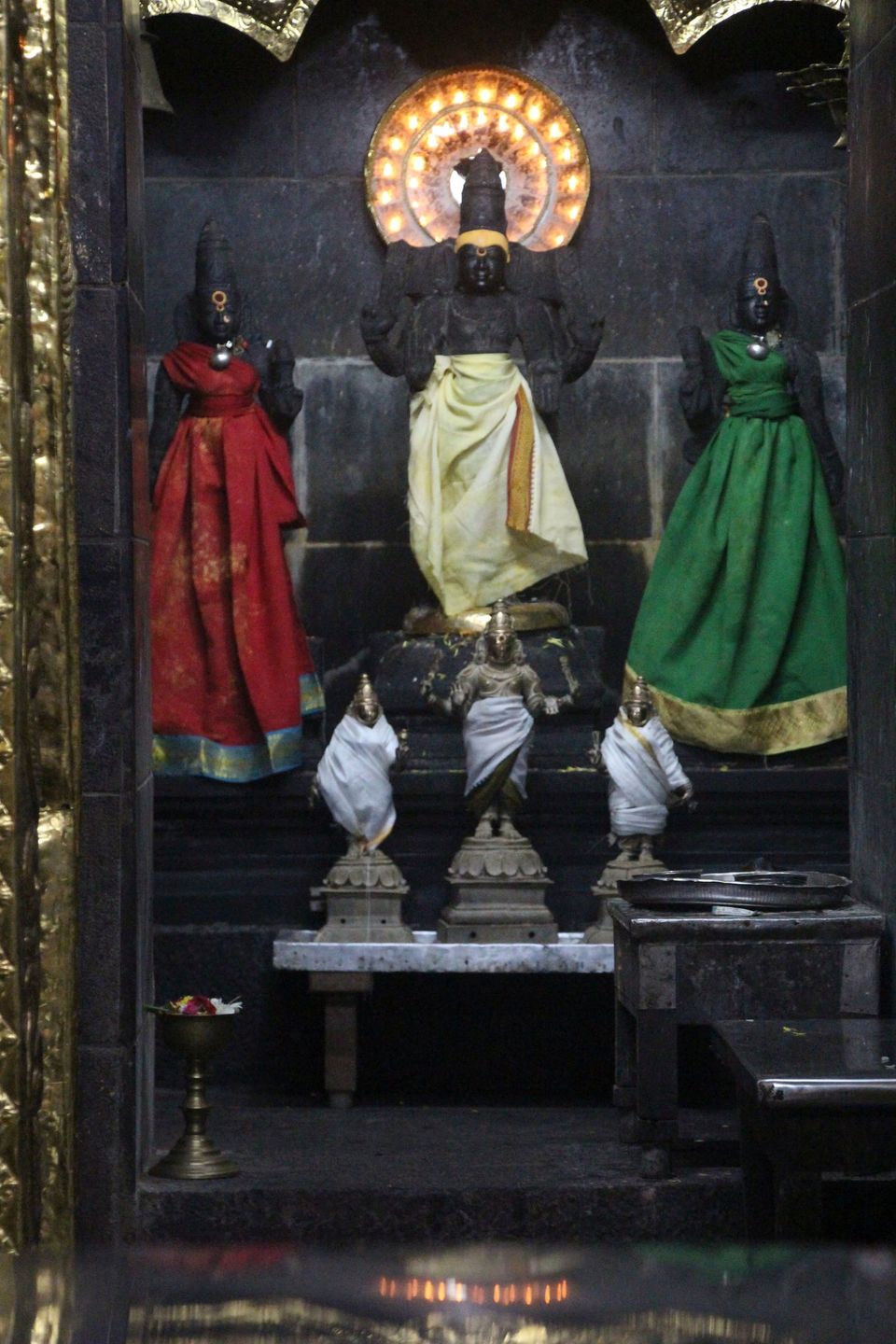
Vaikasi Vishakam
Dewan Kandappa sent us a notice for Vishakam observances at Nandhikeswara: 4:30pm onwards: Special Thirumanjanam for Sri Jnana Velayudha Swami, accompanied by Sri Valli and Devasena 6:00 p.m. onwards: Peroli (the great light) worship in a special decoration, followed by the recitation of Thiruppugazh. 7:00 p.m. onwards: a spiritual discourse on “The Marriage of Sri Valli and Murugan,” delivered by Mrs. Dr. V. Sankaradevi. The Dewan kindly shared the temple’s recordings of this session here. Vaisaki Vishakam starts 10:38am onwards, until May 30,1:20 pm
Read moreGhousiga led us to Sundara
The Ghousiga procession (always with the name "Ghousiga" on the goes past Sundara Vinayaka, and we get pulled into the koyil, run by Rani Ma’m’s family whom we met at the Vastu puja at the Sivan koyil. Cannot help but feel the Murugan brought us here. Cutest place with a little ther of its own to do ul-purappadu. Sapta Matrikas, Hanuman – Nataraja and mini-Naalvar all. She’s the 4th generation in charge of the place. Ladies and their children mostly running the place. Felt like we were called there. Very simple, homey, low-key puja.
Read more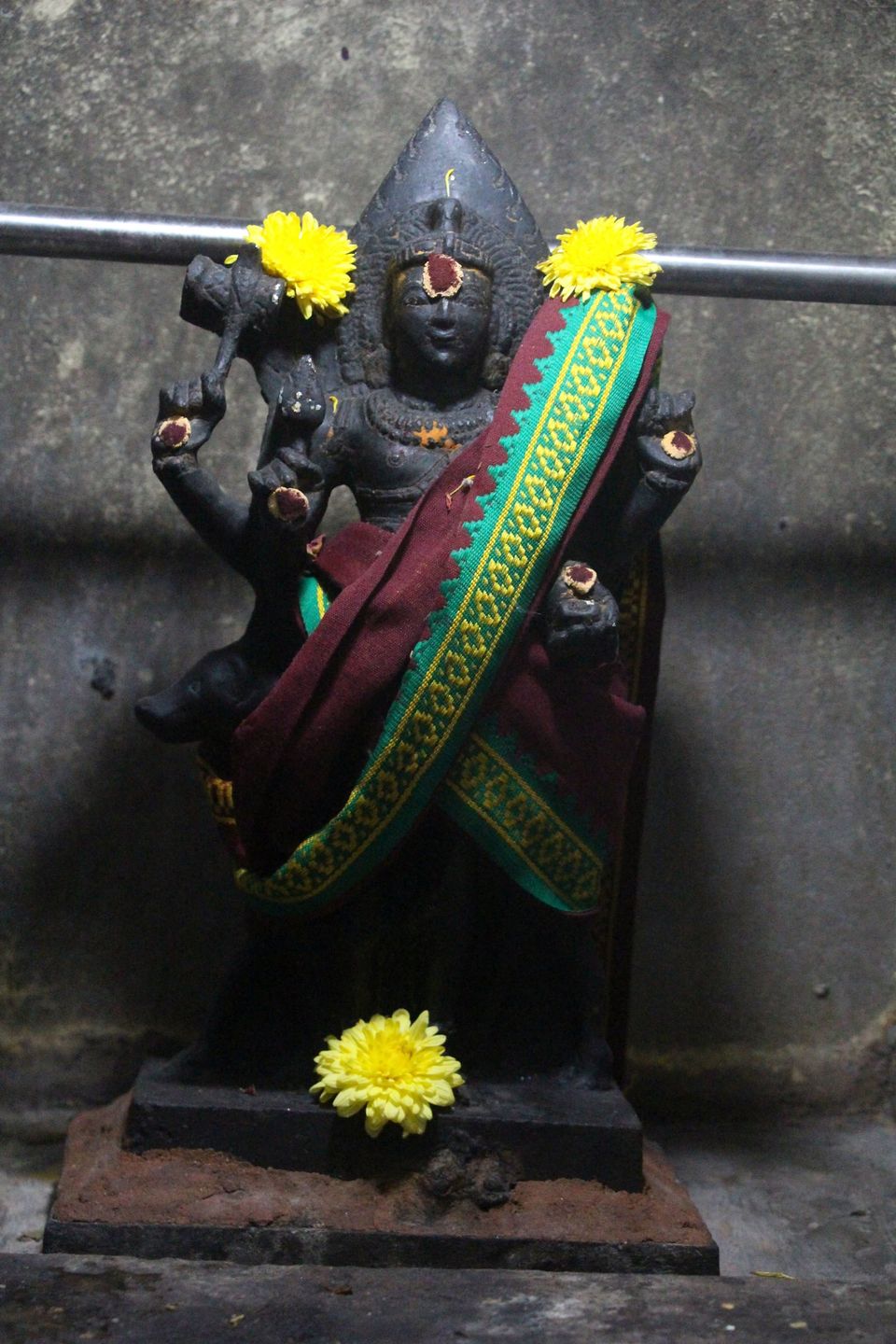
Shanmukha on the Streets
We went to this but caught the Shanmukha Purappadu on their way. The route is down the road next to Ghousiga, then Nehru St., then back on MG road. A bit of a lonely procession. Through market areas with no houses or people coming out with archanai thattu. Pulled by a temple-owned tractor! With some fairly uninterested looking men. Shanmukha without a thousand mukhas to greet him along the way...
Read more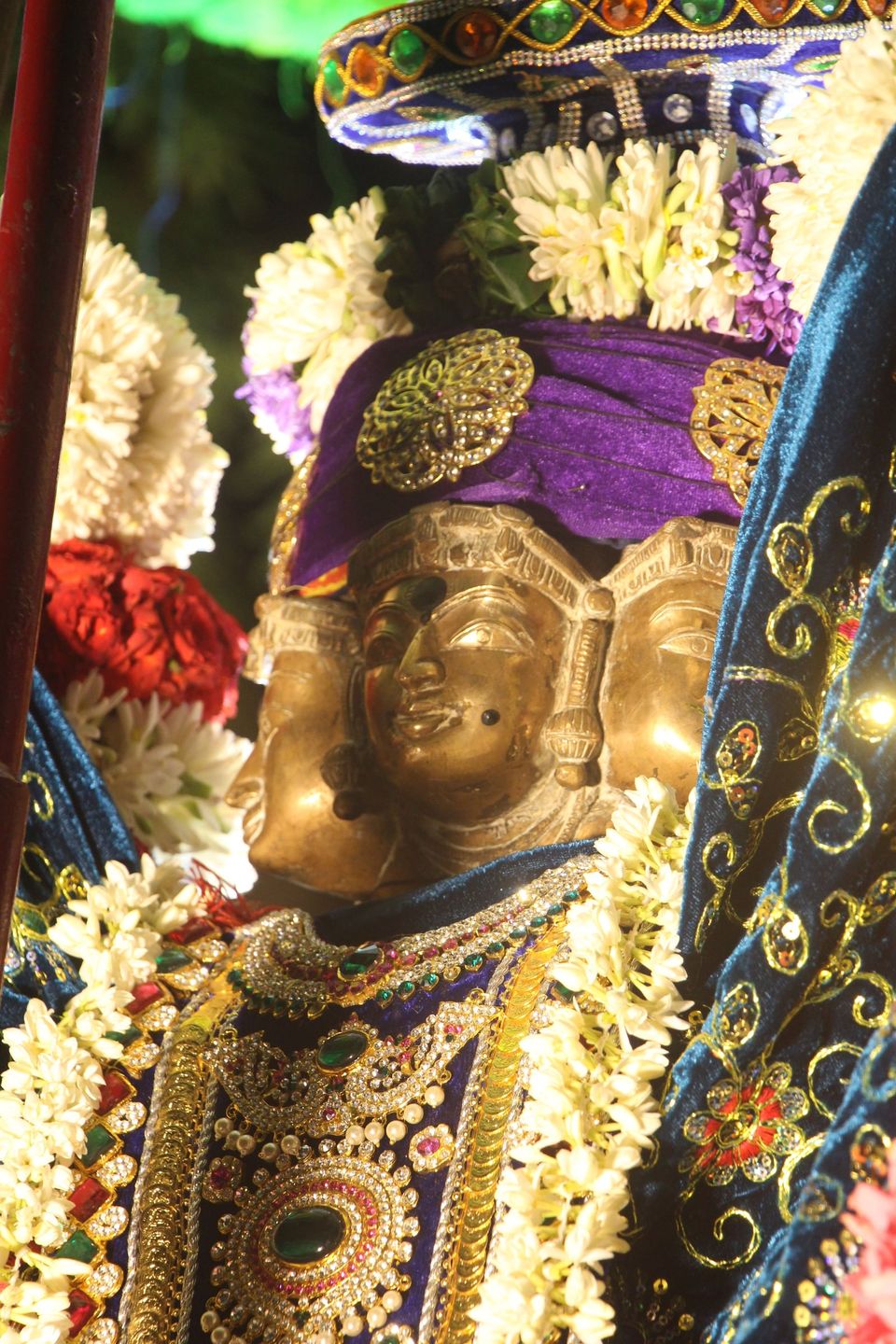
Yellow Churnotsavam and a Blaze of Indra
We’re a bit late coming to the Churnotsavam, and have missed the turmeric pounding part. This is a ceremony that brings Perumal and Thayar together, so it happens notably after the Thirukalyanam. Turmeric powder (the auspicious among auspicious powders) is prepared and ceremonially offered or exchanged (to celebrate an auspicious union among auspicious unions!). No playful throwing or sprinkling of the turmeric powder happens here, though that may have been a little holi like. Next, there appears to be a Nel Alavu sevai. We think this is a Mudaliar community ubhayam event as we see Raja sir there (who often comes to our aid in making sure we have access and permission to photograph in several temples we see him in, not to mention making sure we get our share of prasadam). Later in the evening, Perumal comes out all dressed in white and enters a golden chariot--my, my does he blaze! Brahmotsavam Day 7 Schedule: 10:00 AM: Thirumanjanam 04:30 PM: Churnotsavam (Procession) 08:30 PM: Procession on Indra Vimanam – Thathacharya said: what is different about him tonight? He has no shankha chakra. He is Indra! Narayanaad indro jayate" (नारायणाद् इन्द्रो जायते)
Read more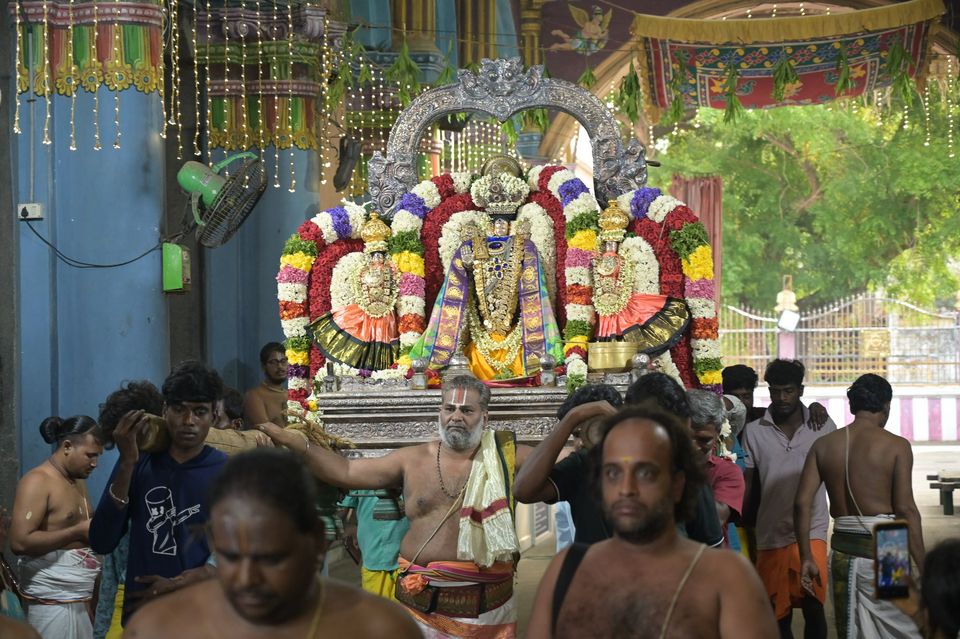
Bhikshatanar Utsavam and Kuthirai Vahana
Bhikshatanar Purappadu was also accompanied by the Kailaya Vadyam. We met them near the Mutthumariamman Koyil entrance, which had signs for Agni Nakshatram elaneer abhishekam. Another steal-your-heart show. Put me in mind of the descriptions of Bhikshatanar as being so lovely, the women of the town come out full of desire to fill his empty bowl–but their hands and bodies have such heat, the rice they wish to give him turns to ash… Before the evening’s Purappadu, we sat a while to listen to the Odhuvars sing. We've included the videos here so you can hear along, too. What they sing: Appar (Thirunavukkarasar) Tevaram (4th Thirumurai, Padhigam 4.062), Thirualavai (Madurai Meenakshi Sundareswarar Temple). I take a photo of their phone where an app displays the lyrics which they are following, though they seem to know this by heart anyway. That is what appears as transcription below: திருச்சிற்றம்பலம் வேதியா வேத கீதா விண்ணவர் அண்ணா என்றென் றோதியே மலர்கள் தூவி ஒருங்கிநின் கழல்கள் காணப் பாதியோர் பெண்ணை வைத்தாய் படர்சடை மதியஞ் சூடும் ஆதியே ஆல வாயில் அப்பனே அருள்செ யாயே. நம்பனே நான்மு கத்தாய் நாதனே ஞான மூர்த்தி என்பொனே ஈசா என்றென் றேத்திநான் ஏசற் றென்றும் பின்பினே திரிந்து நாயேன் பேர்த்தினிப் பிறவா வண்ணம் அன்பனே ஆலவாயில் அப்பனே அருள் செயாயே. ஒருமருந் தாகி யுள்ளாய் உம்பரோ டுலகுக் கெல்லாம் பெருமருந் தாகி நின்றாய் பேரமு தின்சு வையாய்க் கருமருந் தாகி யுள்ளாய் ஆளும்வல் வினைகள் தீர்க்கும் அருமருந் தால வாயில் அப்பனே அருள்செ யாயே. செய்யநின் கமல பாதஞ் சேருமா தேவர் தேவே மையணி கண்டத் தானே ான்மறி
Read more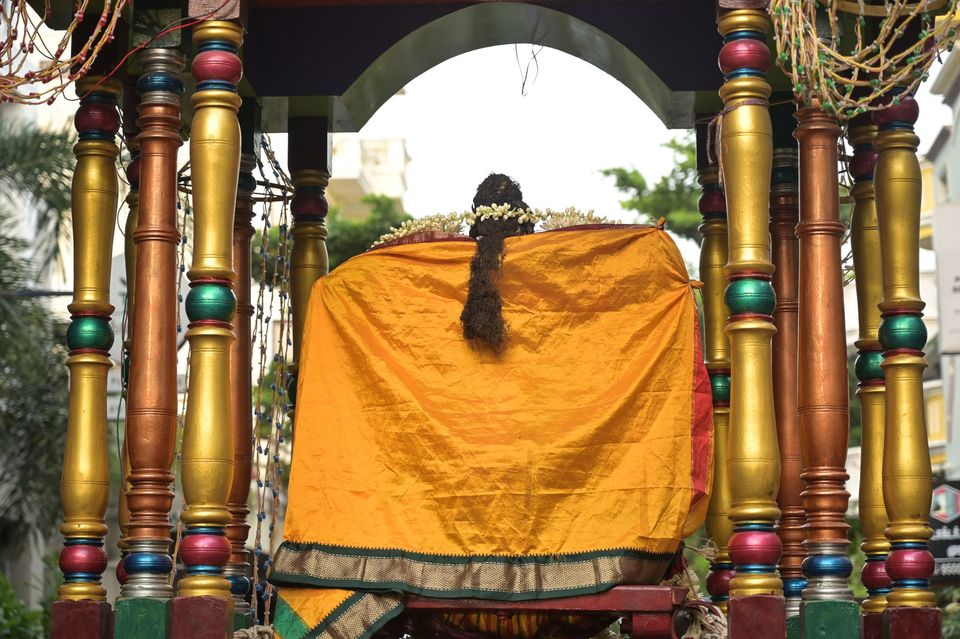
Elaneer baths as Agni Nakshatram Antidotes
1030am is a elaneer abhishekam, aradhanai in the ucchikaalam (after noon) – we went, but did not stay long. This is for the end of Agni Nakshatram, and the abhishekam is for the mula murti. Followed by Alankaram and deeparadhanai. Elaneer is cooling for human bodies, and so is the liquid of choice to cool deities, too, at the end of Agni Nakshatram! And why ever not? Several Amman temples have such cooling rituals, the form of the Mother being somewhat given to great ferocities as much as to immense compassions.
Read moreThe New Mappillai comes out on his Golden Elephant
He’s a groom today after all, and so the nadai matches that. “Nadai (Srirangam), Kudai (Kanchipuram), Vadai (Tirupati)”, said Thathacharya! My friend Chandra confirmed the place associations, each one keeping its own speciality, and spoke of how her mother would tell her stories of nadai-kudai azhagu or the beauty of these large umbrellas shading the deities on their way. We awoke to such details at this point. I’ll never look again at one of those kudais in the same way again. They’re magnificent, and not merely accessories, but fully protagonists in this street pageant. The men who serve as the Sri Padam are also animators, they choose to walk in a few different ways to bring to life the deity form that they bear. Today is a wild charging elephant, with all the might, force, and energy of a new groom (mappillai), but a purposeful, fast, direct walk is “Raja nadai,” but of course. Brahmotsavam Day 6 Schedule: 07:30 AM: Pallakku - Srinivasan Appearance Procession | 10:00 AM: Thirumanjanam 04:00 PM: Thirukalyana Utsavam 09:00 PM: Procession on Golden Elephant Vahanam – with elephant nadai on the streets!
Read more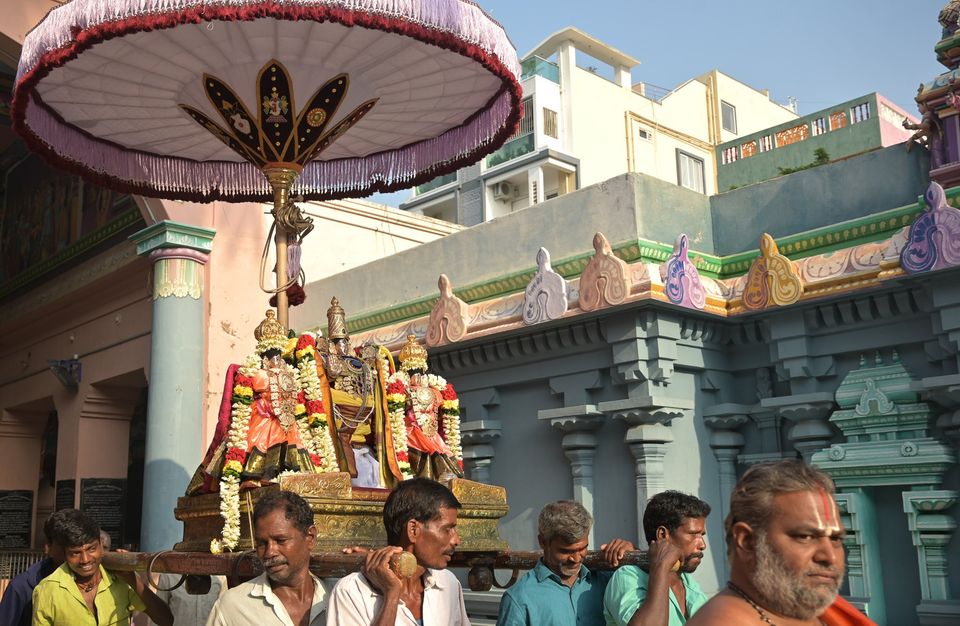
Brahmotsavam Day 7
Today's Brahmotsavam Day 7 Schedule: 7:00 AM - Procession. 10:00 AM - Abhishekam. 7:00 PM - Karpaka Vriksham (Wish-fulfilling Tree) Procession
Read moreOf Motherly Love and Garuda's Grandeur
The Patrikai lists “Mohini avataram” as today’s alankara, but Thathacharya corrects us. Wrong to call it that, he says, it’s more correctly Nachiyar Thirukolam. He pauses on his way home after the morning’s responsibilities, and pauses to talk to us at the end of the street, across from the (independent) Naalvar mandapam that is at the corner. He speaks about a few things, but this is a key point, so here’s the story: Kurathalvan was one of Ramanuja’s principal disciples in Srirangam; he and his wife Andal had two sons, Parasara Bhatter and Vedhavyasa Bhatter, both named By Ramanuja himself. Both grew into learned and accomplished devotees. Parasara Bhatter had profound devotion to both Sri Ranganatha (Namperumal) and Ranganayaki Thayar, but a particular affection for Thayar. He trusted her compassion above all else because he regarded her as the mother of the entire universe—one who never abandons her children, overlooks their faults, and continually pleads for them before the Lord. Curious about Bhatter’s unusual preference for Thayar, Namperumal one day asked him why he was so much more affectionate toward her. Bhatter explained his devotion, and that he therefore could not regard Namperumal as equal to her in this respect. Displeased, Namperumal challenged Bhatter: he too could equal Thayar in appearance and qualities. The following day, he ordered his attendants to bring Ranganayaki’s garments and ornaments and had himself dressed and adorned in the manner of Thayar. He
Read more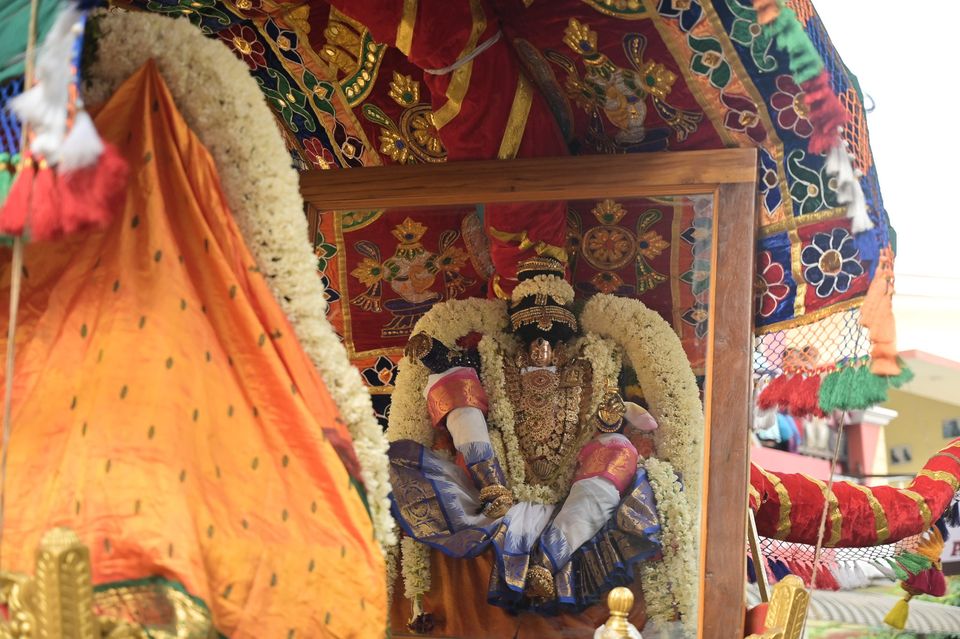
Brahmotsavam Day 6
Today's schedule, Brahmotsavam Day 6: 7:00 AM - Silver Palanquin Procession. 10:00 AM - Abhishekam. 7:00 PM - Yaanai Vahanam (Elephant vahana).
Read more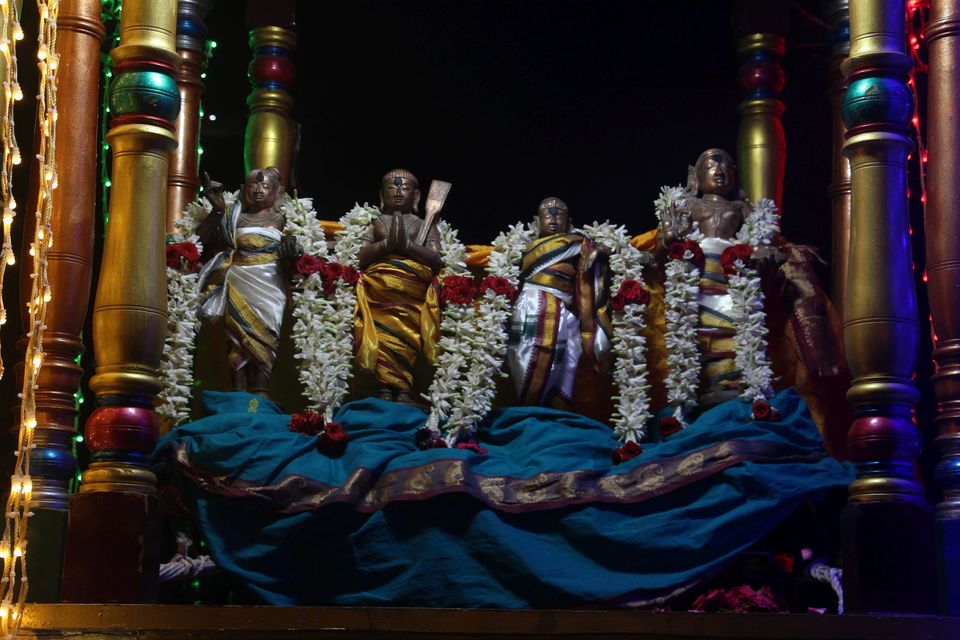
Guru Peyarchi at two Amman Koyils
Guru peyarchi today, so Kamakshi had an abhishekam for Dakshinamurti and the navagrahas, so did Vedapuriswara, and Angalamman. Arun stayed at the Siva temple, Deepa went to the Kamakshi until the end of the abhishekam. Nataraja Periyavar was doing the Navagraha abhishekam, and Gurukkal for the beautiful Dakshinamurti there. Arun saw the deeparadhanai at Kamakshi. Don’t recall seeing any special or specific alankara for Guru. Angalamman was only the deeparadhanai and puja, homam etc. over by the time I reached [Kalasa Avahanam, Ganapati Homam, Guru Moola mantram, and Guru Abhishekam – Angalamman’s usual puja sequence]. There was a queue of people waiting to give Sriram Gurukkal some coins, placed in water, prayers said, and the coin returned. I wonder if this was some sort of shanti parihara, in which the coin participates in the ritual and then becomes an auspicious object. Guru Peyarchi is routinely used as an occasion for shanti/parihara at temples that are not principally Guru temples. Perhaps Angalamman has some specific shanti pujas as part of its Guru Peyarchi observance. Need to ask. Some videos of the Angalamman puja are alongside Meantime, Guru himself was all white and yellow, with the usual offerings associated with Guru: yellow flowers, turmeric, chickpeas/kondaikadalai, yellow cloth and flowers, ghee, honey.
Read more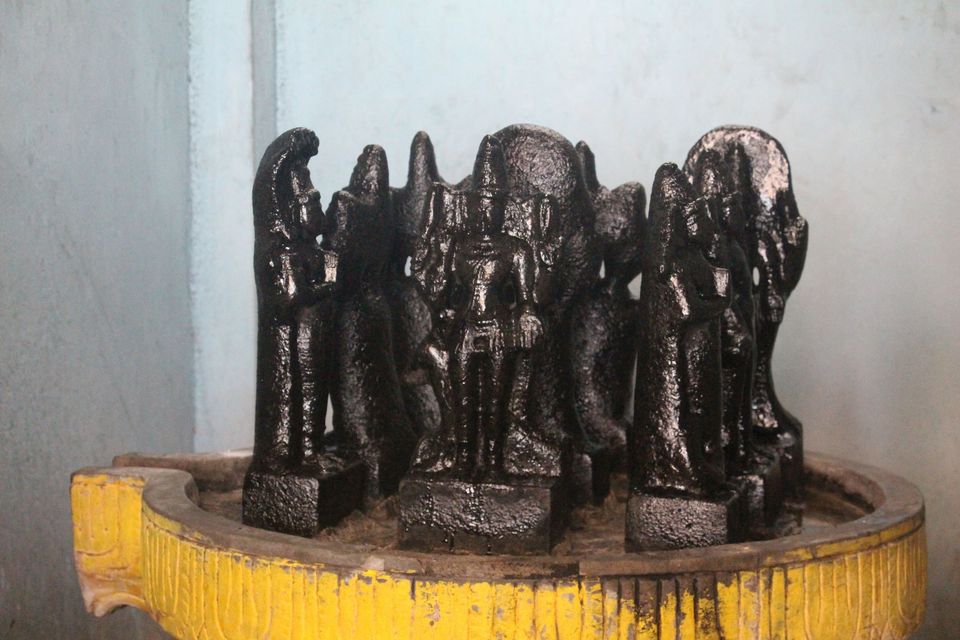
Brahmotsavam Day 4
Today's Brahmotsavam Day 4 schedule: 07:00 AM: Pallakku (Palanquin) - Sri Venugopala Appearance Procession 08:00 PM: Procession on Sesha Vahanam – not sure what alankaram, he’s standing with his two consorts.
Read more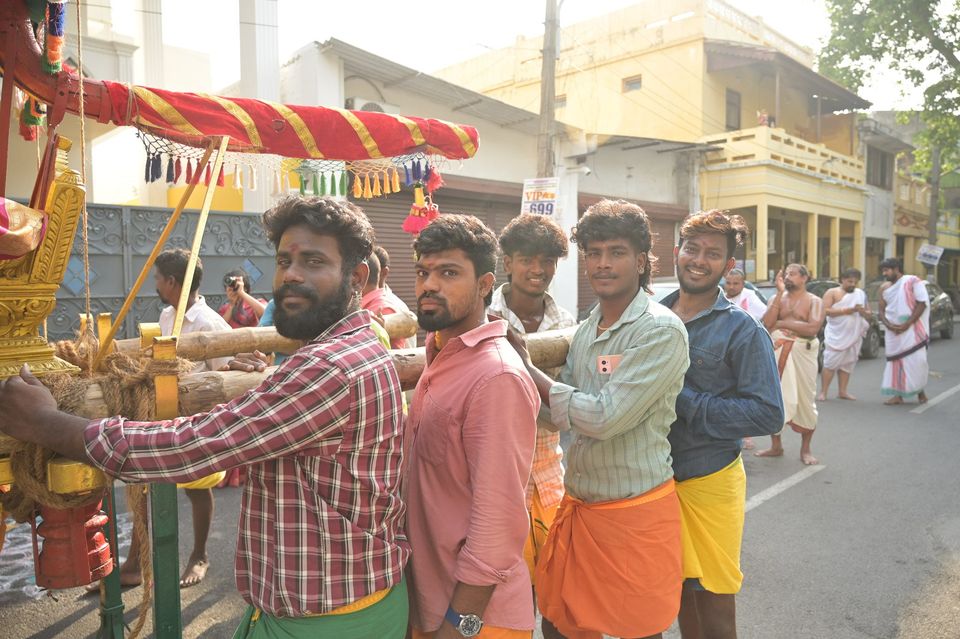
One Divine Wedding, Two Guru Pujas, and 63 Nayanmar Utsavam
The combination today of Guru Peyarchi with Nayanmar Abhishekam and the Thirukalyanam is hectic madness. We decide Arun will stay put at the Sivan temple (where Dakshinamurti is propitiated as Guru as much as the Guru of the Navagrahas is) while I (Deepa) will move to other temples for shorter periods and return. The hope is to catch the essence of everything, but this means timing it all perfectly. And God knows with delays all over, that’s as tricky as it gets. Thank goodness Pondicherry is small though, and the temples are clustered. I catch only a portion of the Nayanmar abhishekam and One of the Odhuvars enjoying a rhythmic session with the Thavil player before heading out. I miss the miss the Guru Peyarchi Abhishekam for the Sivan Koyil’s Dakshinamurti and Guru himself, but Arun gets that. When all the scramble is done, it’s Thirukalyanam today, another ladies’ event! They seem to know when to come, where to sit, what to look for, and what to take away. It’s like a jolly outing! Photos speak for themselves. The event happened in the ardhamandapam, spilling out into the area right of the dhvajastambha. Saw Ghouse’s son Kadir come pick up some decorations from the Sivan Koyil; he stayed for the Thirukalyanam. Thursday (tomorrow) starts the Vishakam event at the Ghousiga Balasubramaniya Swami temple (Thursday May 27 to Sunday May 30). Friday is the Laksharchanai. Saturday is Murugan’s nakshatra birthday, Sunday is Panchamurti purappadu 7pm In the evening is the Nayanmar pr
Read more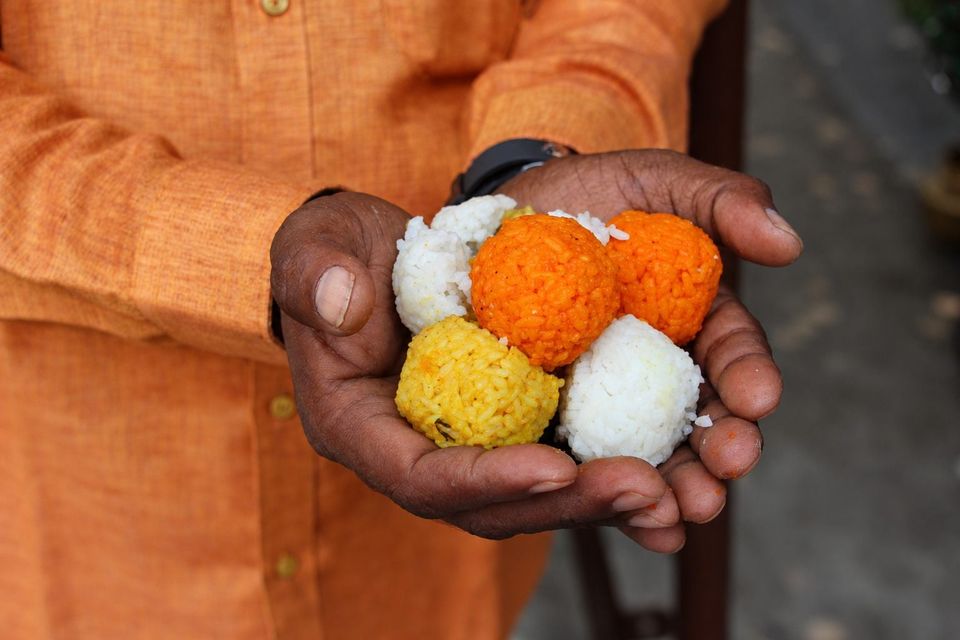
Brahmotsavam Day 3
Today's Brahmotsavam Day 3 Schedule: 07:00 AM: Yali Vahanam Procession 10:00 AM: Thirumanjanam 08:00 PM: Procession on Hanumantha Vahanam – Alankara as Rama, but of course!
Read more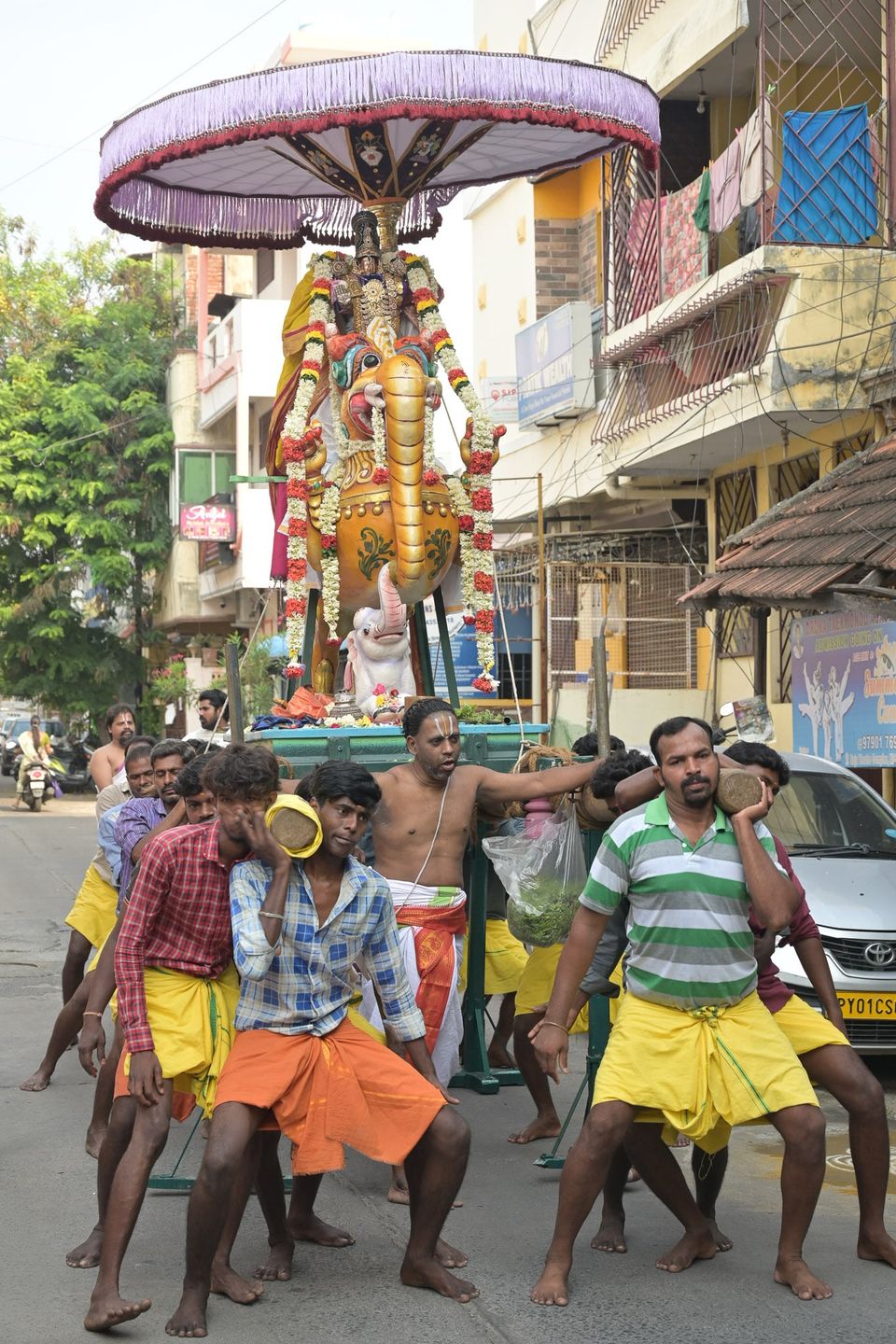
Brahmotsavam Day 4
Brahmotsavam Day 4. We saw the night sesha vahana procession. Far fewer Kailaya Vadyam performers in the evening so it’s not as dramatic as yesterday. Pity, looks like we have to wait a whole year for a show like that again! Today's schedule: 7:00 AM - Chandrasekara Silver Palanquin Procession. 10:00 AM - Abhishekam. 7:00 PM - Naga Vahanam (Serpent Carriage).
Read more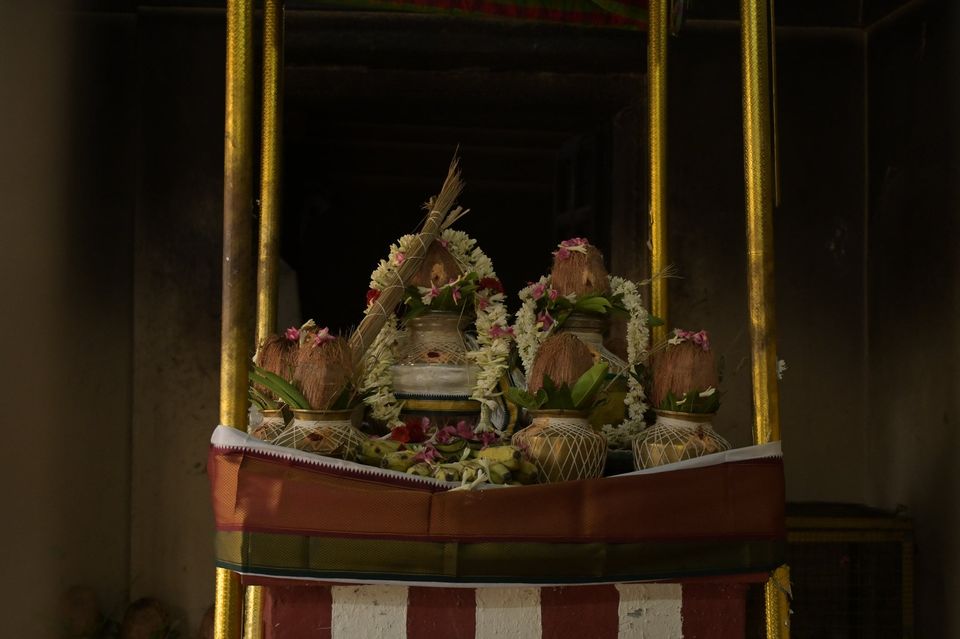
Perumal in Yellow and Gold
The same day that Vedapuriswara had the Bhoota vahana veethi purappadu, Perumal matched it coming out grandly on a golden Simha Vahana. To match him and accompany him befittingly were saxophone players dressed in yellow with golden instruments, playing a fine street concert (with all the yellow-yellow flowers of the African copper pod tree fallen on the ground where they played). They’d been called in for this. He was indeed gorgeous and grand on his great golden lion–but today Siva next door stole the show. Perumal's Brahmotsavam Day 2 Schedule: 07:00 AM: Golden Surya Prabhai Procession (Alankaram was Surya-Narayana apparently) | 10:00 AM: Thirumanjanam 08:00 PM: Procession on Golden Simha Vahanam (Arun’s photos, this was the day of the dozen kombu players at the Sivan koyil)
Read more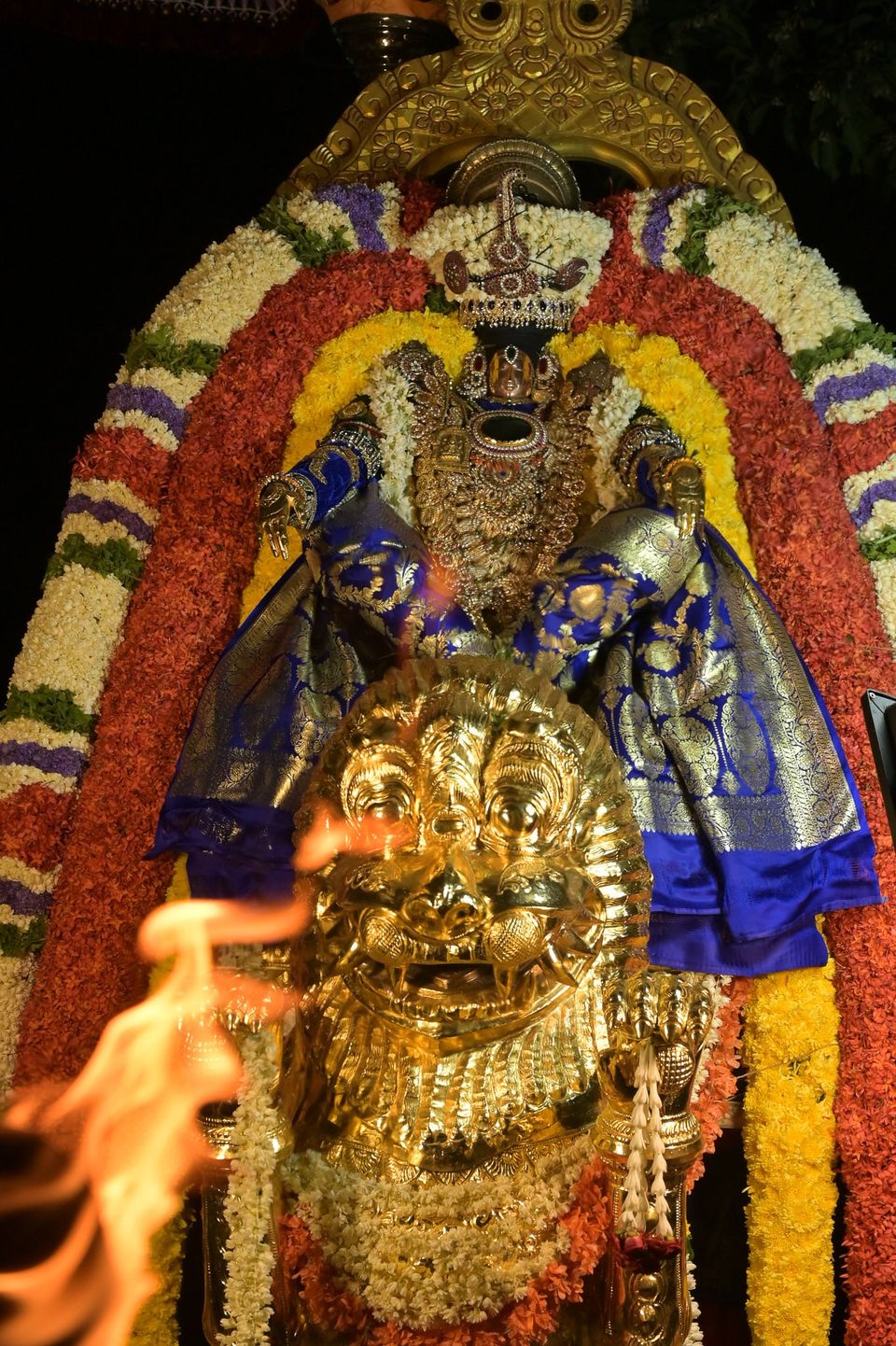
Sivan on his Bhoota Vahana
Missed the morning, but came for the evening, and what a show it was. Sivan’s bhootavahana demanded Kailaya Vadyam. They don’t enter the temple, but wait outside. And when He emerges–they take over. There were lines of drummers and kombu players with their large curved instruments; it was a nothing short of a spectacle, meant to steal your heart away and make you follow this strange man. The moment recalls the brahmacharin’s questions to Parvati, whose heart is given to Siva in Kalidasa’s Kumarasambhava (Canto 5, verse 66 onwards): ...करेण शंभोर्वलयीकृताहिना सहिष्यते तत्प्रथमावलम्बनम् ॥ ५.६६ ॥" त्वमेव तावत्परिचिन्तय स्वयं कदा चिदेते यदि योगमर्हतः । वधूदुकूलं कलहंसलक्षणं गजाजिनं शोणितबिन्दुवर्षि च ॥ ५.६७ ॥ चतुष्कपुष्पप्रकराविकीर्णयोः परोऽपि को नाम तवानुमन्यते । अलक्तकाङ्कानि पदानि पादयोः विकीर्णकेशासु परेतभूमिषु ॥ ५.६८ ॥ अयुक्तरूपं किमतः परं वद त्रिनेत्रवक्षः सुलभं तवापि यत् । स्तनद्वयेऽस्मिन् हरिचन्दनास्पदे पदं चिताभस्मरजः करिष्यति ॥ ५.६९ ॥ इयं च तेऽन्या पुरतो विडम्बना यदूढया वारणराजहार्यया । विलोक्य वृद्धोक्षमधिष्ठितं त्वया महाजनः स्मेरमुखो भविष्यति ॥ ५.७० ॥ द्वयं गतं संप्रति शोचनीयतां समागमप्रार्थनया पिनाकिनः । कला च सा कान्तिमती कलावतस् त्वमस्य लोकस्य च नेत्रकौमुदी ॥ ५.७१ ॥ वपुर्विरूपाक्षमलक्ष्यजन्मता दिगम्बरत्वेन निवेदितं वसु । वरेषु यद्बालमृगाक्षि मृग्यते तदस्ति किं व्यस्तमपि त्रिलोचने ॥ ५.७२ ॥ निवर्तयास्मादसदीप्सितान्मनः क्व तद्विधस्त्वं क्व च पुण्यलक्षणा । अपेक्ष्यते साधुजनेन वैदिकी श्मशानशूलस्य न यूपसत्क्रिया ॥ ५.७३ ॥ How will this hand of yours, with the wedding thre
Read more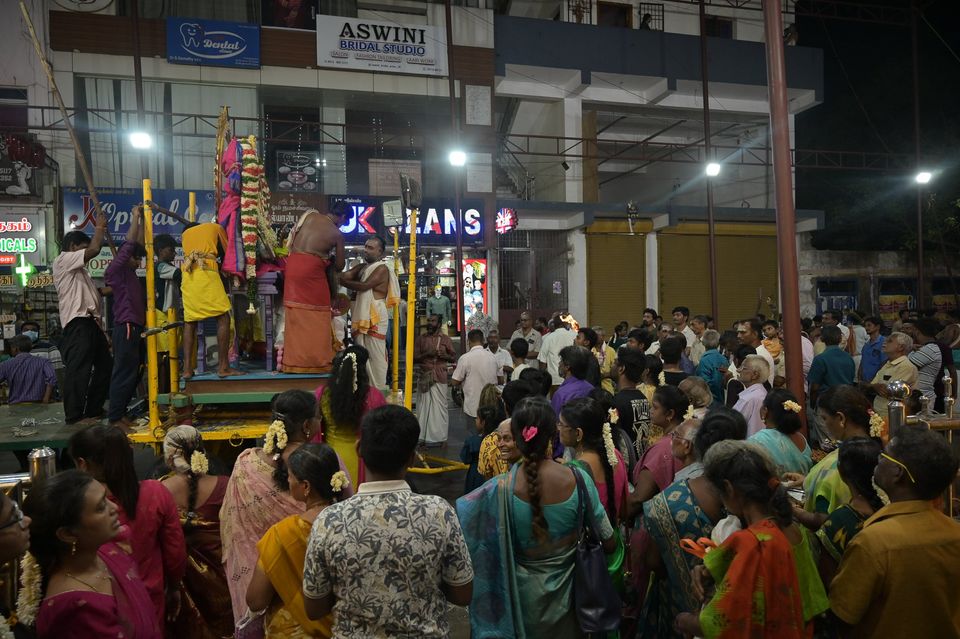
Perumal's Flag Goes Up
Up and out by 4am for this! On the surface, I cannot tell too much significant difference between the Vedapuriswara and the Perumal Koyil Brahmotsavams. At the one they sang Ganapati talam, at the other it’s Garuda talam. Perumal veethi purappadu always has a ghosti behind, reciting vedam. There was no prabandham ghosti in front. On all days Perumal has a thirumanjanam, but utsavar abhishekams (beyond the nitya puja procedures) are not the norm for the Sivan Koyil on all Brahmotsavam days. We didn’t go for the evening purappadu--but of course he emerged gracefully on a swan... Brahmotsavam Day 1 Schedule: 03:30 AM: Commencement of Dhvajarohanam (Flag Hoisting ceremony) 04:00 AM - 05:30 AM: Dhvajarohanam in Mesha Lagna, followed by Street Procession on Mangala Giri 07:00 PM: Commencement of Puja 08:00 PM: Street Procession on Hamsa Vahanam
Read more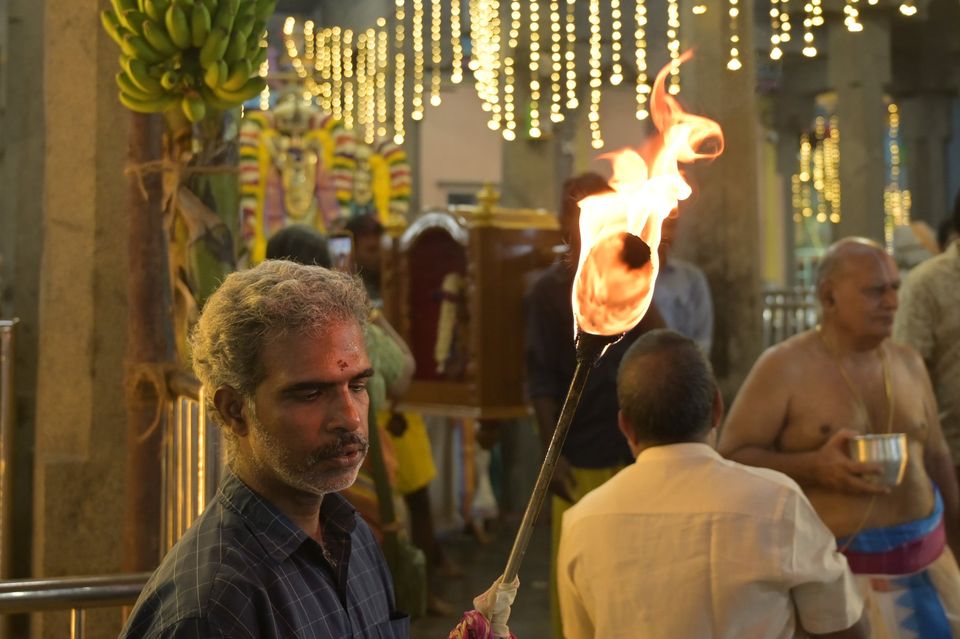
Brahmotsavam Day 2
Today's Brahmotsavam Day 2 schedule: 7:00 AM - Sri Chandrasekara Street Procession in Silver Palanquin. 10:30 AM - Abhishekam 7:00 PM - Surya Prabha Procession
Read more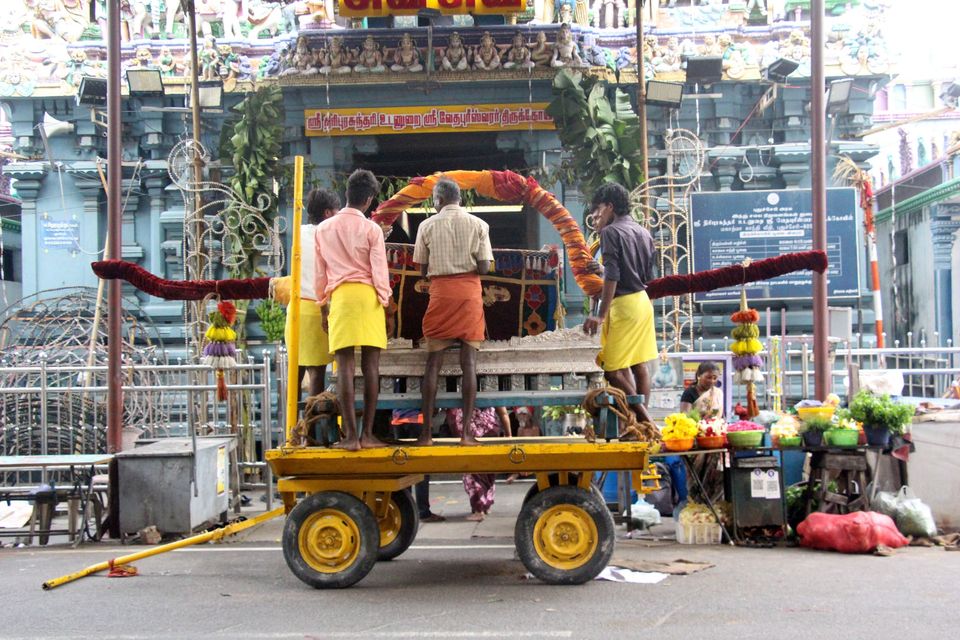
Next, Perumal's turn to the Brahmotsavam
The Brahmotsavam preparatory pujas (Mrtsangrahanam, Ankurarpanam, Vastu Shanti) at the Perumal Koyil start this evening, a day after the Vedapuriswara. The rites happen in the Vasanta mandapam entrance. A small figure, Selvar presumably, is brought out in a pallakku from the main shrine and he stops in the Vasanta Mandapa. Once the pujas there finish, Prasanna is the one deputed to carry the sacralised mud into the yagasala for the Ankurarpanam. The priests take over there once again. The vastu shanti puja is very similar to what we see at the Vedapuriswara Koyil, but without the mandalas, notably absent from Vaikhanasa worship traditions. We’re also not sure of the significance of the little bommais kept around, prior to the mud collection. Today's schedule: 10:00 AM: Thirumanjanam 06:00 PM: Bhagavad Anugnai, Mrtsangrahanam, Ankurarpanam, Vastu Shanti, etc. (Procession of Selvar Deity)
Read more
Vedapuriswara's Dhvajarohanam
We reach around 6am. Homam is already underway, kalasas all set up. Some of the Ubhayakaras object to our use of “professional cameras” in the mahamandapam, so we lay off. Rest of the time with no incident. The man from Ellaiamman puja tells us to go upstairs and zoom to take photos. Another who helps carry the vahanas takes me further upstairs for roof level images of the gopuram etc. (he is one of a handful who comes to do the Sripadam work, if that is what it’s called in a Sivan Koyil context, of his own accord). All the murtis are out and dressed for the event, sitting on tables in the area to the left of the dhvajastambha. The astra murti is on a small stand in front and to the bare left of the dhvajastambha. Eventually this area is cordoned off, so only the priests, players and odhuvars have access. Once the flag is up, there is a long bali peetham process. At each peetham the priest declares a ragam to be played by the Nadaswaram, and a talam to be played by the Thavil. These are followed by a few chants seemingly in praise of the deity, and concluded with the odhuvars singing a partial verse. Only then are each of the ashtadigbalis presented rice-balls. Somaskanda and all the panchamurtis sets out on a veethi purappadu. I have to leave in between as it’s my mother-in-law’s birthday and we’ve to go carry a cake to her. We’ll have to let our photos do the talking until we have time to sit and write full notes about what the Brahmotsavam is and means in Pondicherry. Morn
Read more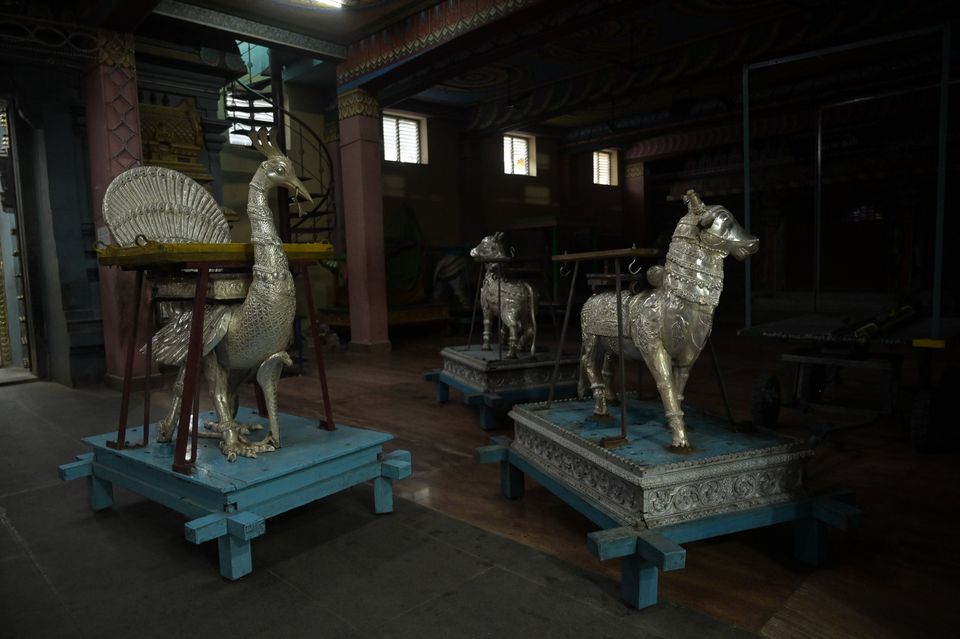
Vedapuriswara Koyil gets ready for its Brahmotsavam
We happened to be at the Vedapuriswara Koyil this morning, and noticed the ongoing preparations of an all-utsavars-abhishekam. The patrikai did not include this, but we were lucky to be present at the time – or rather exceedingly before time since the delayed ubhayakaras kept everyone waiting, as happens at so many temples all the time. The abhishekam itself though, once it begins, is greatly exciting. The presence of the Somaskandamurti is majestic and vast – one that cannot go un-acknowledged. At 530pm the Adigu Vinayakar abhishekam was already underway and nearly complete. Arun was unable to come. The Vinayaka utsavar was brought outside the Vinayaka shrine and dressed up for the evening purappadu. All the other vahanas in dazzling silver were on the other prakaram. A Thiruvasagam group sitting before the Nayanar sannadhi continued singing as the Vinayakar puja carried on. It’s Thursday, so Dakshinamurti is also being propitiated nearby. Ayyappan Swami calls me over and gives a mango and a flower from the Murugan sannadhi during the sayaraksha naivedyam rounds. After Vinayaka’s deeparadhanai, the vastu puja begins right in front of the dhvajastambha, conducted by Venkatesa Gurukkal who had done the Chetty Brahmotsavam. He calls two younger sivacharyas over to chant the Brahma suktam, Rudra suktam, and the Vastu gayatri - "Om Vaastunaathaaya Vidmahe, Chaturbhujaaya Dheemah, Tanno Vaastuh Prachodayaat". By the northern entrance, on the floor, is a form of the goddess made i
Read more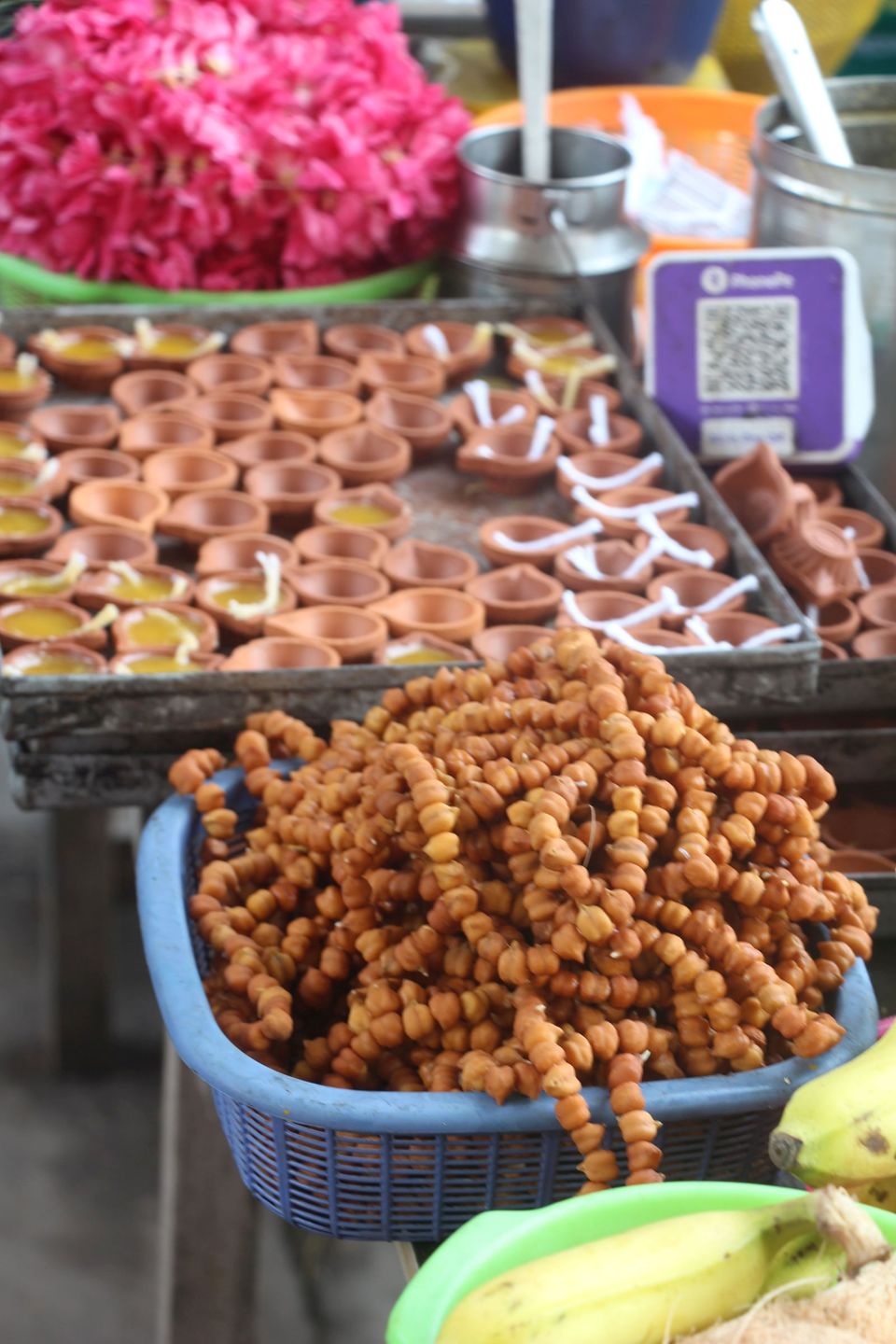
Vedapuriswara comes to Ellaiamman
Sri Ellaiamman Puja. We’ve been waiting for this puja, as we’ve been hearing of it ever since the first visit to Ellaiamman–that time when we went in search of one temple, and were led from there, to Mutthumariamman, Kamakshi amman, Ezhai Mariamman and to the big Sivan and Perumal temples in town, all of which are connected to and by Ellaiamman, who was the ellai or border deity for this town. Her temple is marked on early maps–or a “Pagoda” is marked in an area which cannot but reference this shrine. But the place and presence of this temple in the “network” that is Pondicherry’s ritual life has diminished, and the long Thiruppani or the delayed kumbhabhishekam is not helpful in that–it’s a risky time because such hard-won positions can diminish in prominence or be lost altogether. The Patrikai says 430, but puja doesn’t start till nearly 630 when it’s already getting dark. A man who we will befriend at the Sivan Koyil comes here, and tells us that this puja continues because the family who supported it have bequeathed a property (Rainbow Nagar 3rd cross) or bequeathed the rental income from that property to the temple for this purpose. The elderly lady whose home it was would come herself, but now she is gone and only the money comes. At least that, so the tradition continues. The Perumal Koyil has a similar relationship with Ellaiamman, but they give the money and leave the puja as such (prasadam is delivered to them). The temple is dark by the time the puja starts. It’s t
Read more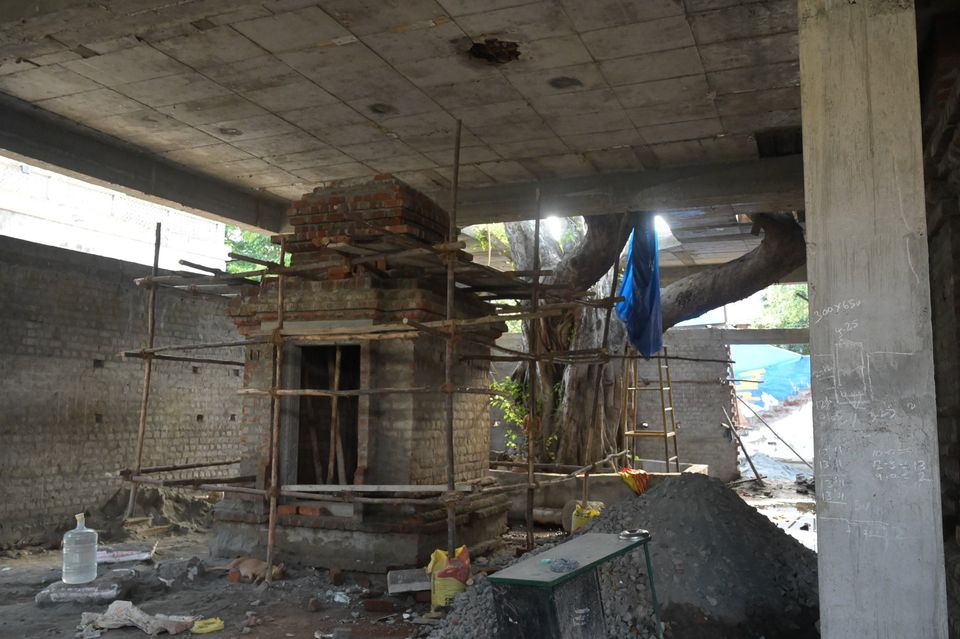
Propitiating the Mother to Begin
We are hardly known at this temple, so we’re being cautious, but the elder priest (Gurumama) doing the abhishekam doesn’t seem bothered by our presence with cameras at all. There is a small stone inscription near the Durga shrine which tells us who the ubhayakaras are–the family is in attendance, the lady tells me this was her father-in-law’s bequest. The puja follows the usual motions: kalasa, sankalpam, abhishekam, aradhanai, a group of women sit and sing after this for a long time (presumably they come on all Tuesdays for regular rahu kaala Durga abhishekams, and today is no exception) while the priest continues to drop flowers at Durga’s feet. Aradhanai after this. Schedule: 4:30 PM - Sri Durgambal Puja. This is day 1 of the Brahmotsavam preparatory pujas at Vedapuriswara Koyil.
Read more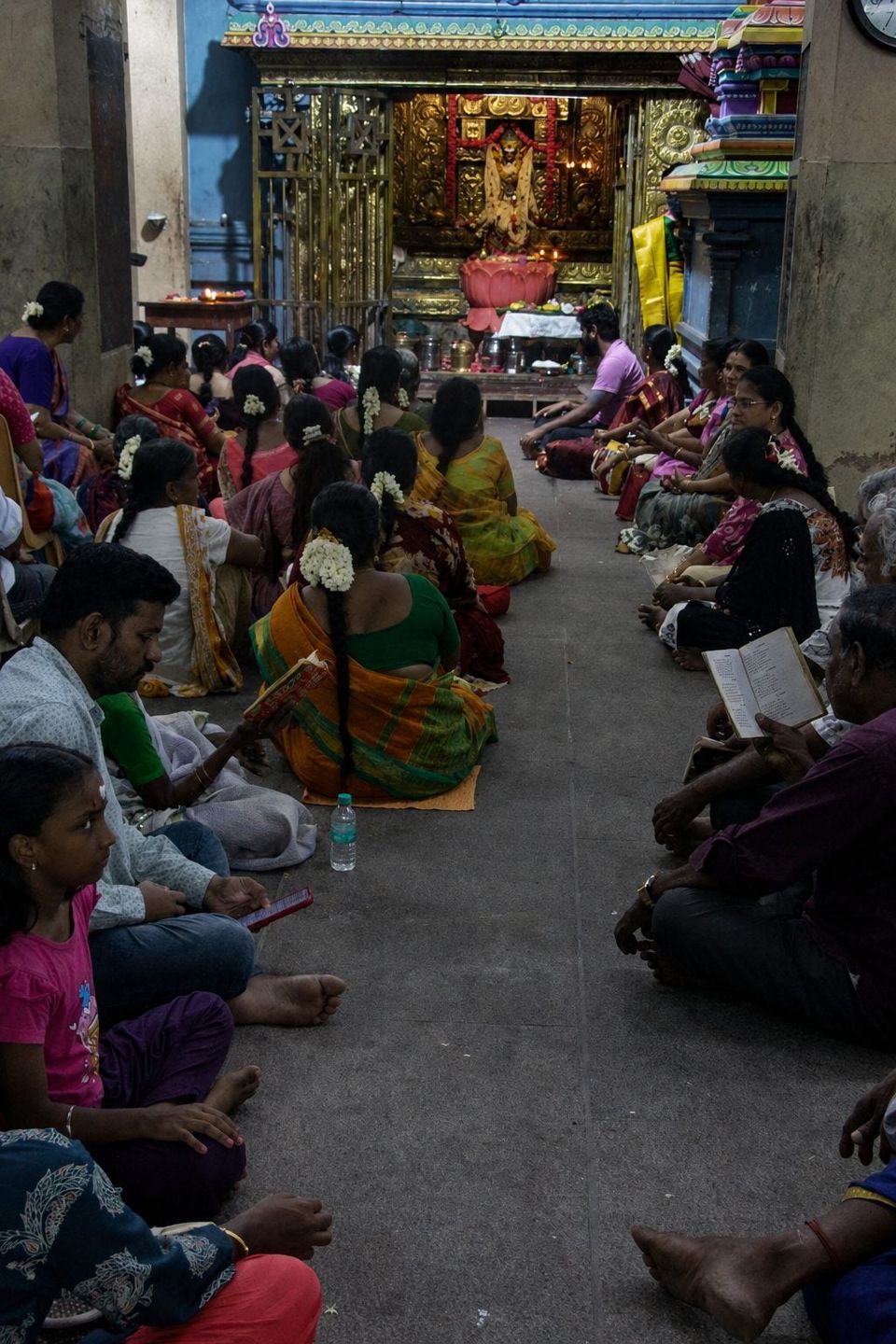
Dancers Dance for the Dancing Nandhikeswara
Evening bharatanatyam performance at the Nandhikeswara temple. This temple seems to want to make room for all those up and coming and established in the arts to perform. Dewan wanted to introduce us to the man who runs a shop and teaches bharatanaytam (as someone who could help us understand history etc. better) but we had to leave. We end up meeting Vadivelou sir later and seeing him dance at Lalit’s Garden on “Day 0” of the Draupadi Amman temple’s Vizha, some months later. His work and research are on dance forms and motifs. There are amazingly grounded, rooted, well-informed and researched people in all corners of Pondicherry. He runs a footwear shop on MG road close to the temple.
Read moreThe coincidence of Amavasya and Krittikai
Today's line-up: Amavasya – Nadu Shanmuga Velayutha Mudaliar samadhi puja. Then: Krittikai – Murugan abhishekam. Both of these are usually held at 5:30pm, but since Amavasya and Krittikai fall together today, samadhi puja was held at 7am. We went at 7am, Arun battling a cold, and saw Gangai Vinayaka’s opening jala-abhishekam and alankaram. Then walking round the corner, Sivakadhir Swami opened the Nandhikeswara temple. After washing some vessels and bathing the Nandi at the dhvajastambha, he headed downstairs to the chamber directly beneath the garbhagriha and performed the Amavasya abhishekam for the small lingam on the samadhi. We realised then that the preponing of the abhishekam meant it got combined with the regular jala-abhishekam rather than being a dedicated event. The only speciality for the occasion was the use of paal in the abhishekam, and a coating of Sambal on the little lingam before it got its alankaram. Coming up, he did the jala-abhishekam for the OM stone and the little Vinayaka before the balipeetham. The moola lingam and Ambal also got a jala-abhishekam. Finally there was a deeparadhanai, first at for the samadhi downstairs, then for the moola murtis. All deities were then offered naivedyam of shuddhannam and ghee. We hear from him that initially Nandhikeswara was the moola murti of this temple, until the Dharmapuram Adheenam advised them that one cannot keep Pashu (in this case Nandi) without the presence of Pati (Siva). The moola lingam and Ambal were t
Read more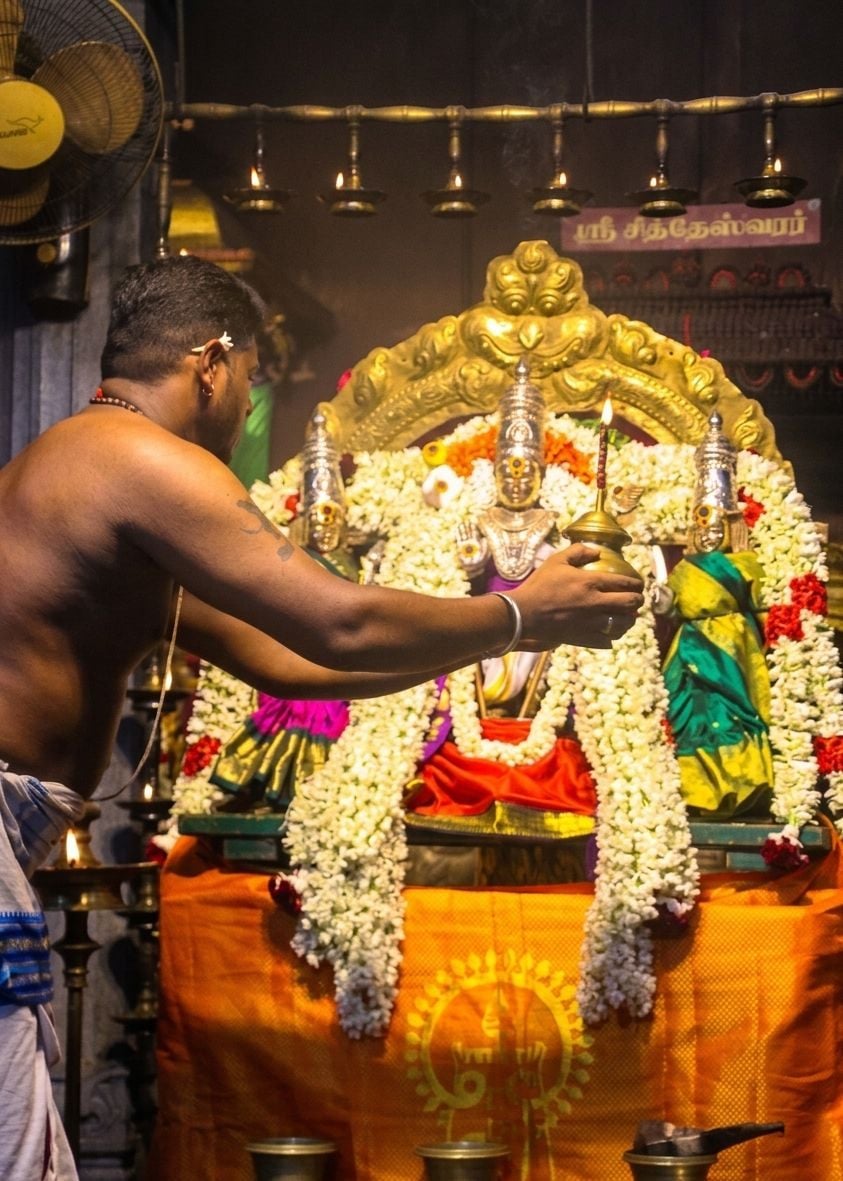
Thayar's Friday Ul-purappadu
I went for this in the evening. Simple affair–Thayar brought out in simple alankaram around 5pm, 3 times pradakshina, taken in and placed on the swing (accompanied by Lalli paattu on the nadaswaram: lalli is a type of ritual/ceremonial composition, often played or sung when the deity is being put to rest, especially toward the conclusion of a temple or domestic ceremonial sequence). Sat down for prasadam, and appear to have left my umbrella there. Lost Umbrella Stories #1.
Read more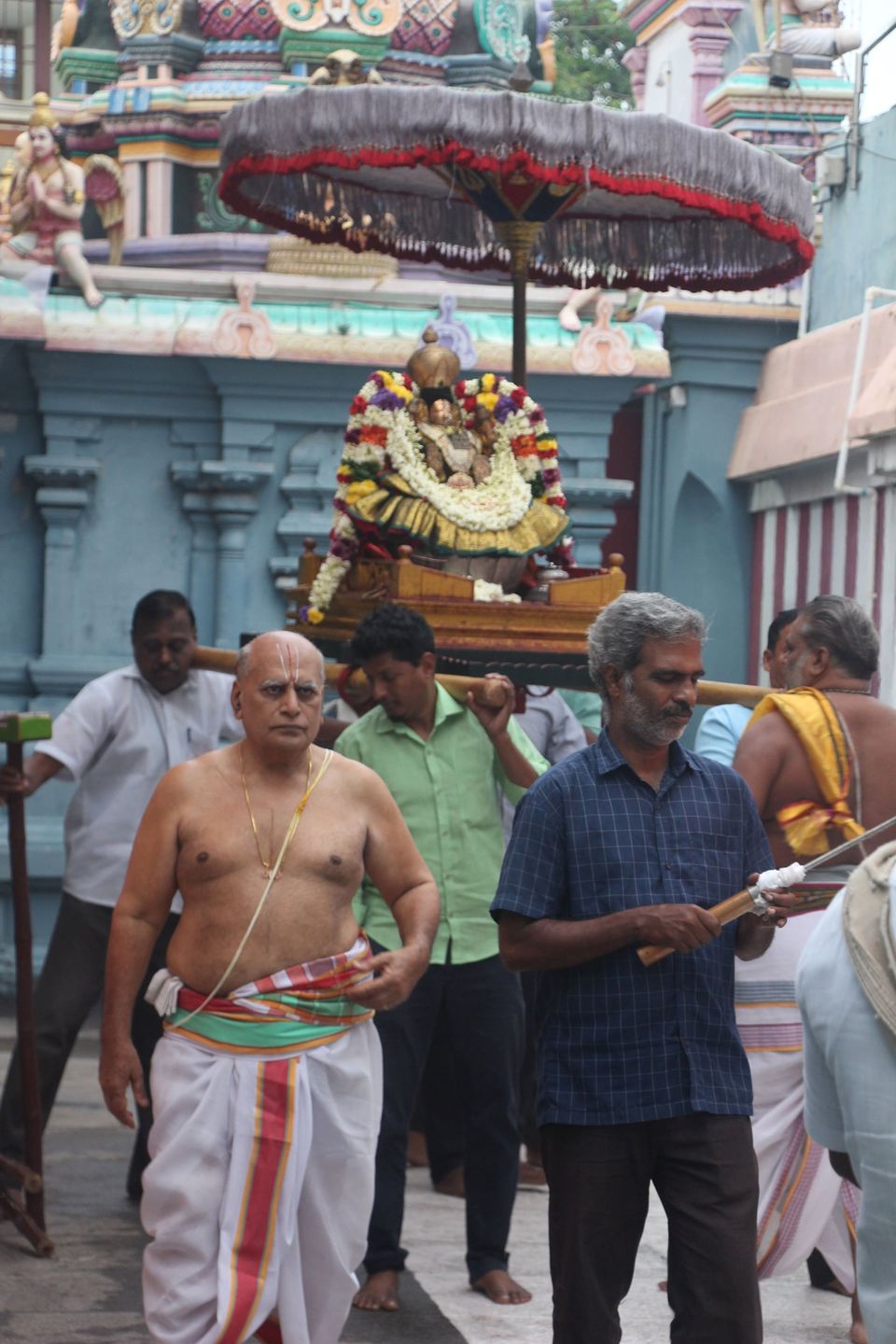
Rainy Friday Abhishekam at a Theruvu Koyil
Friday Masam Pirappu: 12pm: Manimutthumariamman Friday abhishekam. Went to Manimutthumariamman on Chinna Subaraya street, with rain pouring down. Ramanan Gurukkal was delayed because of this but Kasturi Mami showed up diligently. She lives 2 streets down “in a house with a blue no parking sign”. She tells us that this is a deity with powers because all her prayers here have been answered, including the one for her daughter who needed a job and got one. Another gentleman also tells his story being unwell, needing surgery, but miraculously sitting up well again after his grandmother prayed here.
Read moreNandhikeswara Koyil Conversations
Went to Nandhikeswara in the morning, met the younger brother of Sivavijay swami, Sivakathir swami – mostly to compliment them on yesterday’s Pradosham. They were trained under a guru in the Tamil Department of the SRM college in Chennai, and have followed his practices faithfully since. It is an all-Tamil koyil with no Sanskrit used. All functions are done in Tamil only. Also visited the adjacent Gangai Vinayaka Koyil – part of the same temple “complex” though they now are 2 buildings with independent entries and no interconnections. Gangai Vinayaka’s story is based on the story of Ganga being from Agastya Muni’s kamandalam by Vinayaka in the form of a crow. This story is retold by the paintings on the ceiling.
Read morePradosham with Kailaya Vadyam
Fabulous! There are traditional instruments belonging to the temple, which the players come in to play. They seem just to materialise. They’re then given mariyadai during Maattu pongal. But it’s not just the music, it’s also the priest brothers who seem to move in a distinct harmony with each other, each lamp movement or flower toss done with a certain command, intention, and style. It’s such a pleasure to watch. A lady there tells me that today’s program is shortened because there’s a dance session after, which they just heard about, but otherwise there’s the standard 3 pradakshinas, each accompanied by a different chanting and singing. And dancing! This music is Kailaya Vadyam, and these instruments are used only for Pradosham, also perhaps for some other important days. At other times it’s only Nadaswaram and Thavil – with Beri/Murasu only for Vijayadashami. Staying true to its name, the music indeed feels like it is played on the peaks of Mount Kailasa. The instruments used in this Vadhiyam are Udal (the most important, large drums), Thavandai (hourglass-shaped drum carved from a solid block of jackfruit wood or cast in bronze), Sangu or Shankhanadam (Conch), Tharai (a kind of horn), Brahmatalam (large cymbals), Udukkai (the characteristically hollow-sounding drums), Idai vadyam or Thimila (another percussion instrument, almost ghatam sounding, elongated hourglass-shaped), Matthalam (thalatthukku thalaivan! Almost shaped like a mrdangam), etc. often expanding to 18 music
Read more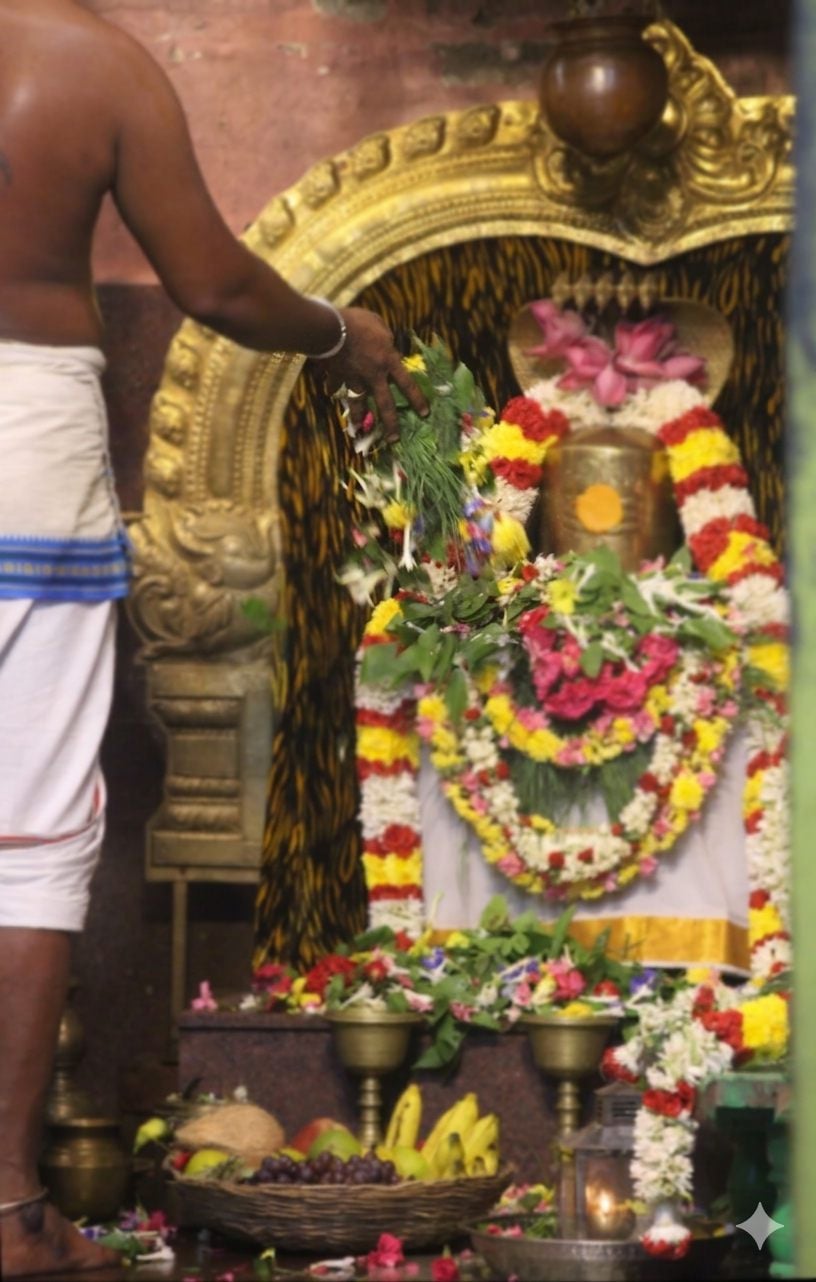
Nandhikeswara Calls Us In!
We decided at last, to walk into the Nandhikeswara temple, which Manivannan Sir from Manimutthumariamman had mentioned a few times. Two younger men are the priests: Sivavijay swami and Sivakadhir swami. Some things we learned: • This temple is the kula-koyil for Dewan Kandappa/Candappa Moudaliar; it is a samadi koyil for Nadu Shanmuga Velayuda Mudaliar [son of Nadu Sidambara Mudaliar, himself a caste chief, agriculturist and interpreter, belonging to the Tondamandala Vellala community, traditionalist and anti-assimilationist, (1845/1846–1908)] • All pujas here done in Tamil. Priests were trained by a Tamil Scholar at SRM college, Chennai • Priest also mentions Dr Sankara Devi who speaks on Pradosham days and other occasions on Saivism at the temple’s invitation. • Karthikai Thiruvathirai: Manakkula Vinayaka comes here in golden ther now and during Masi maham • South facing Iswara, like Dakshinamurti • Siva here is Siddheswarar, Parvati is Siddheswari • A YouTube video on the temple we found.
Read more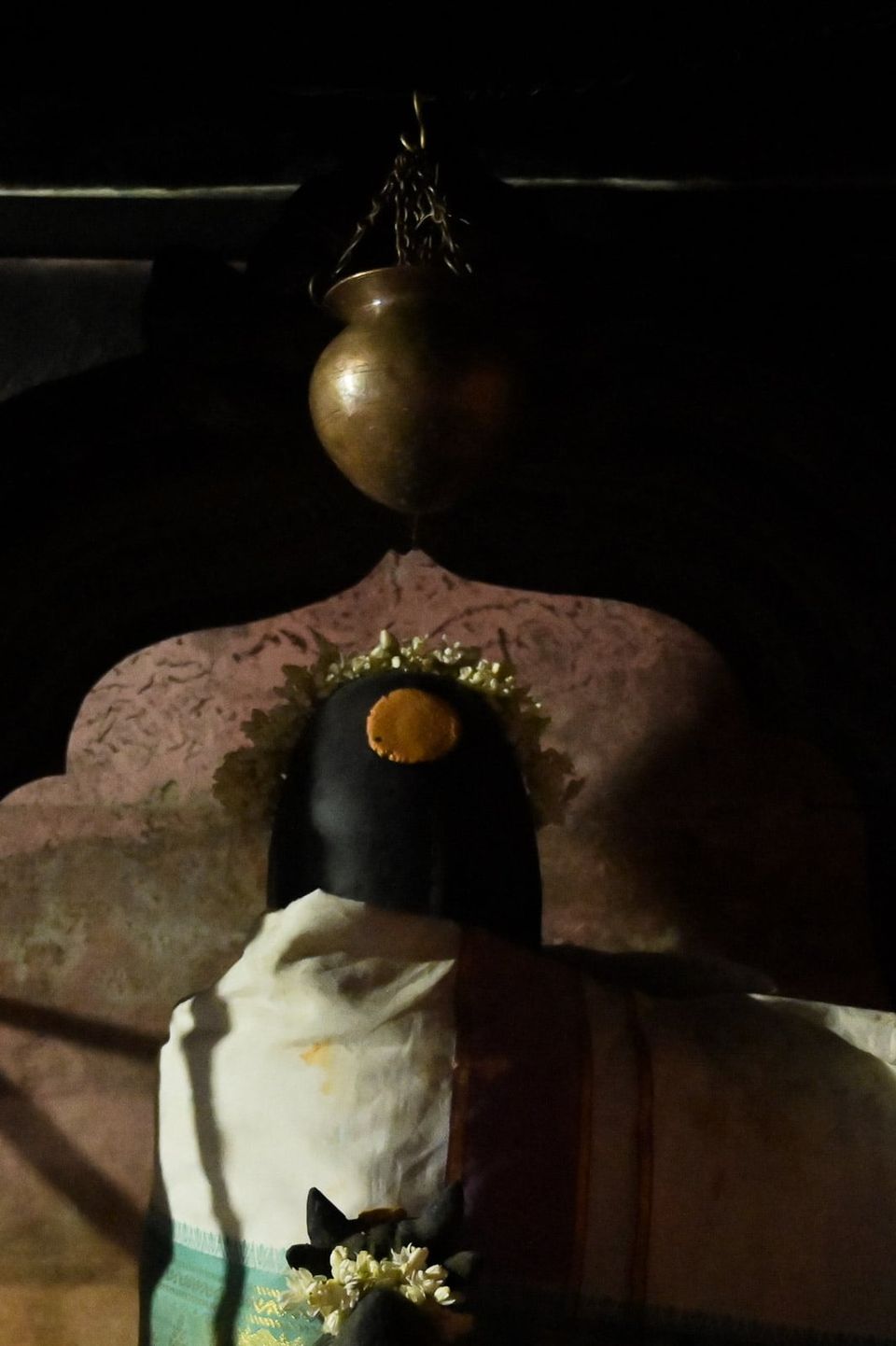
Manakkula Vinayaka Koyil Visit
One of the town’s most important shrines, but apparently less utsavam-centric than others? Seems like there are a lot of “pay if you want” options: pulling the golden or silver ther, doing a Murugan abhishekam etc. This temple is the one with the most shops out front. Most others have just women with small tables selling flowers. Here there is a tender system. The Priest was doing alankaram for the palliyarai murti at about 8:30pm. He never moves out, only Vinayakas Thiru-padam move from there to the main shrine daily. Need to return 9:15pm to see the padam being brought back. In other temples, there is a murti that is taken back and forth (Parvati accompanies on Fridays at Chetty, on Mondays at Vedapuriswara). But here it is His feet. SANKATAHARA CHATURTHI ABHISHEKAM (4 Times) • Morning — 6:30 AM & 11:00 AM • Evening — 4:30 PM & 9:00 PM On Vinayaka Chaturthi, the temple opens very early, and special abhishekam and kalasabhishekam are performed for both the presiding deity and utsavar, using 21 dravyangal or substances For Murugan: no special festivals for him except 10 Sashti days including Soorasamharam. On other days it’s only if someone wishes an abhishekam etc.
Read moreKamakshi Amman's Ritual Calendar
We sit with Neelakantha Gurukkal today to get the full Kamakshi amman ritual calendar and generally understand from him the practices of the temple. He gives us many insights, and seems especially happy with Arun’s presence as a curious young mind asking questions and learning. Most of what he tells us has gone into our ritual calendar for the temple. Some added detail: The Meru Sri Chakram was installed in 1978 at the behest of the Kanchi Periyavar The temple marks a spot on Parvati’s journey – Kamakshi’s penance was done here, here she stands while in Kanchipuram she sits. This is a Vajra shakti peetham, presumably where a piece of Sati’s bone fell (அடி பாகம்/adi, முதுகுப் பாகம்/mudhu). The bones fell in four places: Tiruvottiyur – Tirunindriyur – Tirukkarukavur – Vedapuri. There is often mention of Krishna’s son - Sambali, praying to the lingam that became therefore Sambalisvarar. But this must be a folk /local interpretation because the term “Samba Koyil” has a different, colonial origin: The Jesuit Church of Notre-Dame de la Conception was also called “Saint-Paul Church,” after the fathers of Saint Paul or Paulists’ first seminary in Goa. “St Paul” soon became “San Paukoil” and then “Samba” in local Tamil colloquialism, and the Church complex, including the Vedapuriswara Koyil, would thereafter be loosely referred to as the “Samba Koyil.” In contemporary use, “Samba Koyil” can refer to the old Vedapuriswara or the Jesuit complex beside it or the current Immaculate Concep
Read moreEkadasha Rudrabhishekam and Eka Aandu Vizha
Vedapuriswara Koyil conducts an Ekadasha Rudrabhishekam. The Vedapuriswara Koyil Sirutthonda Nayanar Thirutthonda Sabhai has its Aandu Vizha simultaneously, celebrated in front of the utsava alankara mandapam with recitation of Thiruvasagam all day (Thiruvasagam Muttrotutal). A small puja precedes this, with a figure placed in an unjal (who?). These activities do not appear to be facilitated by the temple priests. As I (Arun) enter around 915am, I’m met with a sea of Iyers. There is a homam in the middle of the mahamandapam, around the Iyers are gathered, chanting. There must be about 35 to 40 of them. I walk to the back and find the bhaktar sabhai aandu vizha thiruvasagam reading going on. Both the homam chants and the thiruvasagam recitations are heard together over the speakers, but they’re not chaotic – there is harmony to it. I was delightfully surprised to find the two main priests performing the homam to be Saiva scholars at the IFP, Thirukumaran and one other whose name I don’t recall. The homam has 21 Kalasas near the altar, which are sprinkled with water and flowers. The homam is complete by 1030am and everybody moves towards the garbhagriha. This is the start of the Ekadasha Rudrabhishekam - dedicated to the eleven forms of Rudra: Kapali, Pingala, Bheema, Virupaksha, Vilohita, Shastra, Ajapaad, Ahirbudhnya, Shambhu, Chand, and Bhava. The abhishekam procedure is unlike anything I’ve seen elsewhere. The accompanying Iyers fill the ardhamandapam, filling the sanctum w
Read more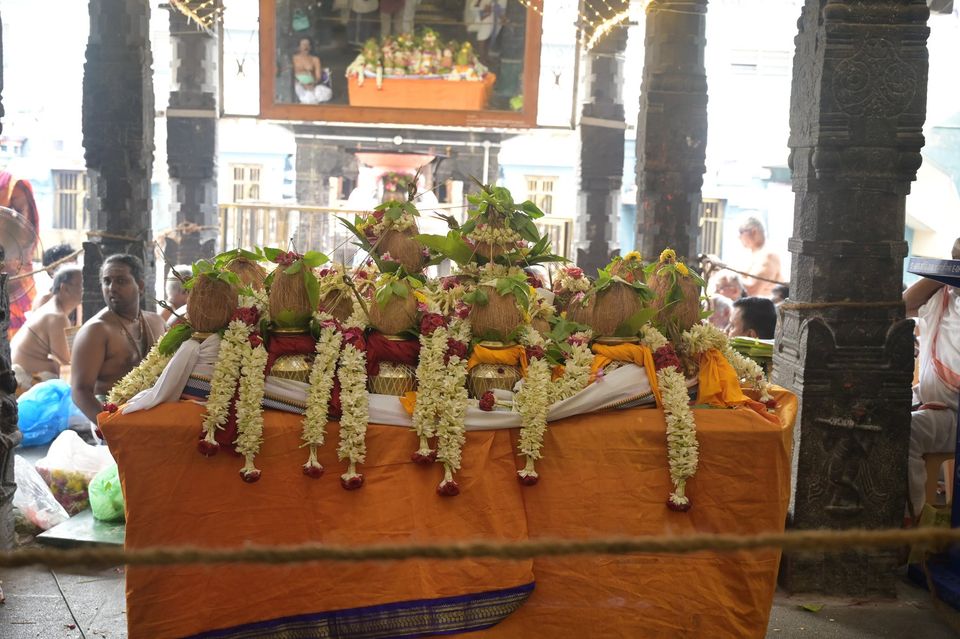
Marking Theipirai Ashtami with Kalkatta Kali Abhishekam
Theipirai Ashtami – 730pm puja for Kalkattha Kali (I suppose in place of Bhairava as an ugra-form). Arun goes for this. Not a very big event. 20 to 25 members are gathered. It begins at 730, and the abhishekam consists of everything. Turmeric water, fruits, paal, thair, podi, chandanam etc. One unique feature, done right at the end, is of kunkuma archanai for Kali while hymns are recited. This happens right before the Deeparadhanai. While the abhishekam is going on for the moola murti, up above the vimana, the tall stucco figure of Kali undergoes avaharanam, for which she is adorned with flowers, candanam and kunkuma. Though the abhishekam and avaharanam begin together, they proceed independently – there is no element of synchronicity. Prasadam given at the end are kesari and puliyotharai.
Read more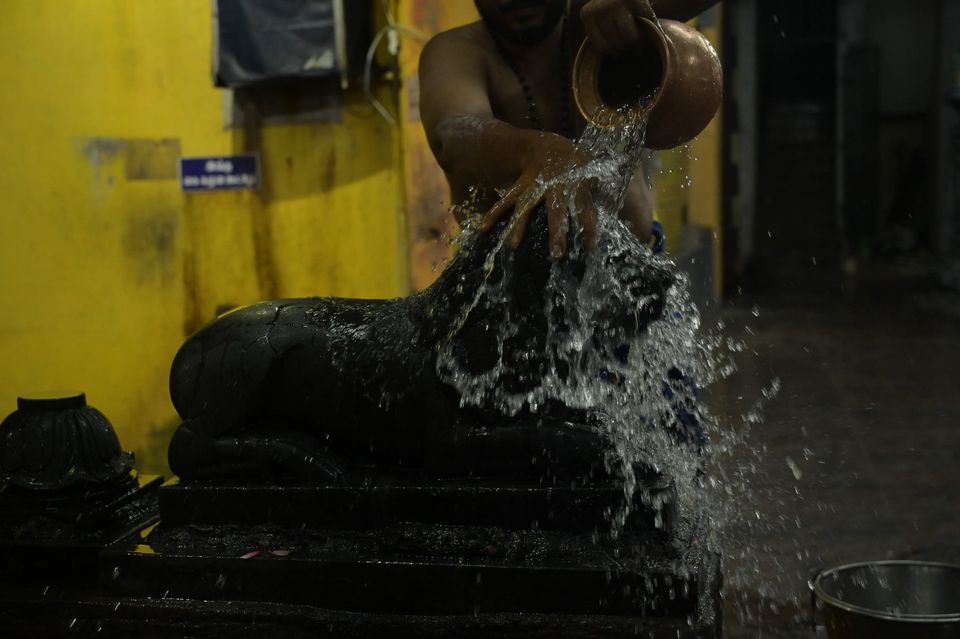
Three rituals for Thiruvonam
There are 3 events going on, amidst some mutterings and mumblings from the priests • Chithirai Thiruvonam, Natarajar Abhishekam – along with Naalvar, Pulikaal Muni and Patanjali. One of 6 annual such events, the most important being Arudra Darshanam • Theipirai Ashtami, Bhairavar abhishekam • Thiruvona Deepam or Shravana Deepam – Thiruvonam is Venkateswara’s birth star. There is a small kalasa puja, followed by the lighting of a large ghee lamp and doing one pradakshina around the temple. Thiruvonam notes: • Chithirai Thiruvonam marks the birth star (Thiruvonam/Shravana nakshatra) of Lord Vishnu falling in the first month of the Tamil solar calendar • Shravana/Aavani Thiruvonam is Vamana Jayanti (ONAM) • Purattasi Thiruvonam is profoundly special for Lord Perumal because it marks the day the Lord manifested on Earth as Lord Venkateswara (Srinivasa) at the Tirumala hills to protect humanity during the Kali Yuga (It’s the last day of the Desikar Utsavam at the big Perumal temple, and day we end up at Thiruvahindrapuram).
Read more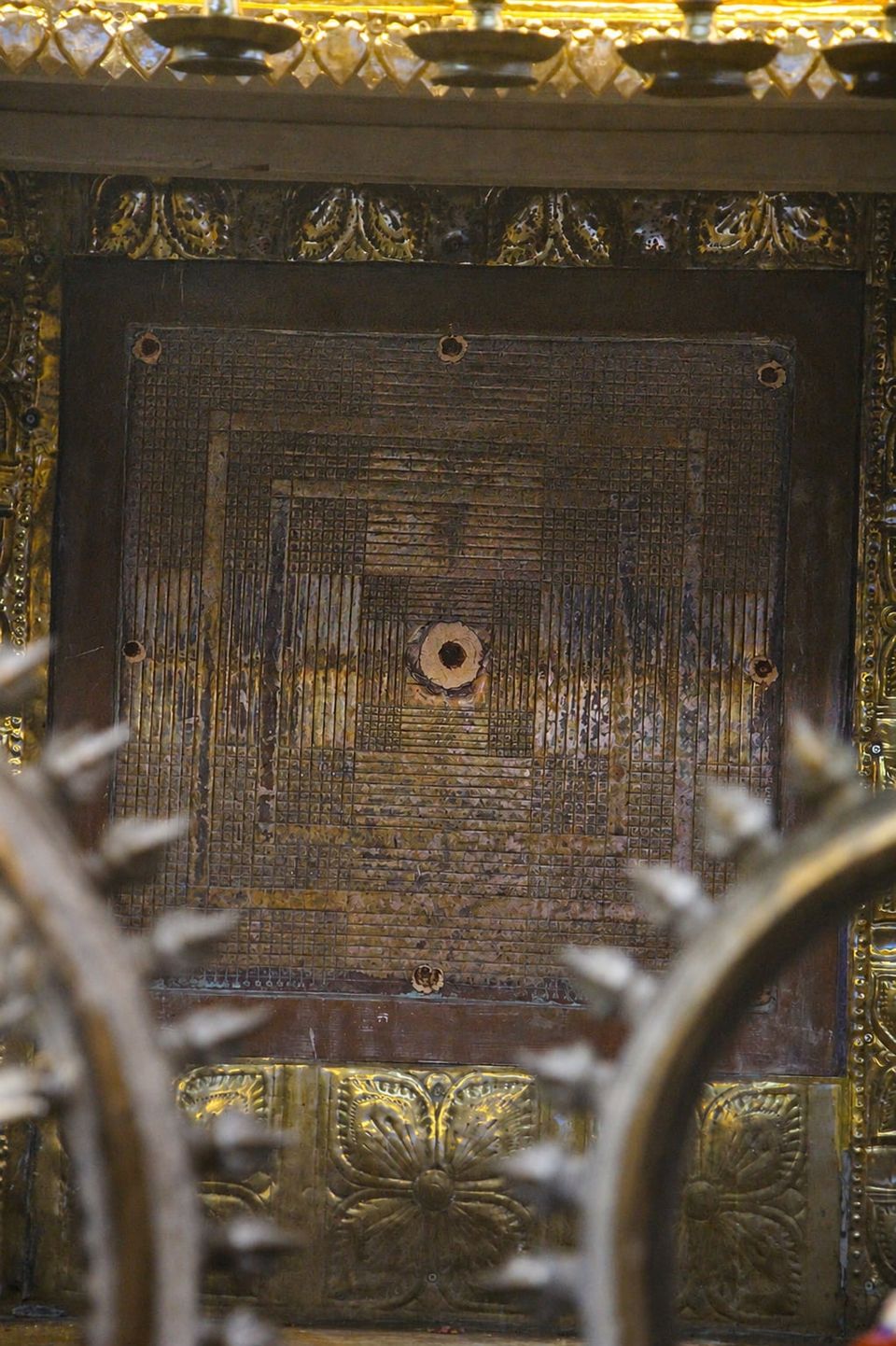
Permissions and Conversations
We met with Srinivasan Sir (Maniyakkarar) and Mannivanan Sir (Manimutthumariamman contact) to get permission and ground rules for work at Siva temple. Sunday is Aandu Vizha for the Siruthonda Nayanar Thiruthonda Sabhai who do Thiruvasagam recitations, all day. They are a separate group we often see at the Nayanmar Sannadhi, and at whose request certain specific pujas are done. There will also be a Rudrabhishekam, and we get a sense of these two events happening in the same time-place but somewhat at odds. We also go back to Mutthumariamman, and continue chatting with Prakash and Narayanaswamy. Hear once again about the 10 generations taking care of the temple (in 2 hereditary lines), the importance of alankara traditions in this temple, the “sisters” of this town (Ellaiamman, Mutthumariamman, Ezhaiamman).
Read moreChetty Koyil Visit, Of Kaalams and Gradations
Kotiswarar swami at Chetty Koyil is sometimes just full of interesting insights. We are asking about puja kaalams, and he explains them this way. He gives us this agamic reference which roughly means: ““O Lord, puja is threefold: uttama, madhyama, and adhama, distinguished according to the number of principal elements of the puja …” ): – in Sivan temples, said Kotiswarar, this is the agama vidhi, how to do puja for Siva, and that follows a series of ritual levels according to the number and elaborateness of the upacaras, offerings, ablutions, etc. This comes close to this 3-fold “evaluation” in the Kamikagama: उत्तमं मध्यमं नीचं त्रिविधं स्यान्मदार्चनम् । केवलैः शुद्धशैवोत्थैर्मन्त्रैरुत्तममुच्यते ॥ uttamam madhyamam nicam trividham syan mad-arcanam | kevalaih suddhasaivotthair mantrair uttamam ucyate || Kamikagama, Uttara-pada 1, verses 75–76 • Usha Kaala: Dawn / early morning. NA • Pratah Kaala/ Kaalasandhi: Morning, within 10am • First vilakku • Abhishekam (no specific order), vastram chaathi, pottu pottu • Kaalasandhi puja naivedyam: sakalam purvam aradhya [having worshipped everything [prescribed]...], Suryan, Vinayaka, ganapati parameswarasya, Parameswaran, parivararchanangal [all in the parivaram], Parvati, Bhairava-Bhairavadhvanisandoha (the “mass” of Bhairava’s resonances or sounds, but why mention these)/ Chandikeswara, then Bali • Sangava Kaala/ Upasandhi: Late morning. NA • Madhyahna/ Ucchi Kaalam, mid-day, when the sun (Kathiravan) is at its Zenith • Abhishekam f
Read moreOne visit at a time
An example of how we have had to gather our information, one ritual, festival, day-time-event at a time. Quick visit to Angalamman Koyil to ask about Agni Nakshatram related temple pujas – Sriram Gurukkal mentioned only Agni nivarthi abhishekam with elaneer and placing butter on Amman’s shoulders (? body?), which happens at the end of the 15 day nakshatram period. Agni Nakshatra Dosha Nivarthi refers to the rituals and prayers performed at the end of the 21-25 day Agni Nakshatram (Kathiri Veyil) period to remove inauspiciousness caused by extreme heat and to seek blessings
Read moreChecking in at Draupadi Amman Koyil
We spent the morning mapping. A quick stop at Draupadi Amman where we learn of Amman alankaram for Chithirai Pournami and the huge vessel of milk used for abhishekam at the start of agni Nakshatram (May 4, Chithirai 21) – which produced the desired cooling effect as it rained a storm the same night!!
Read more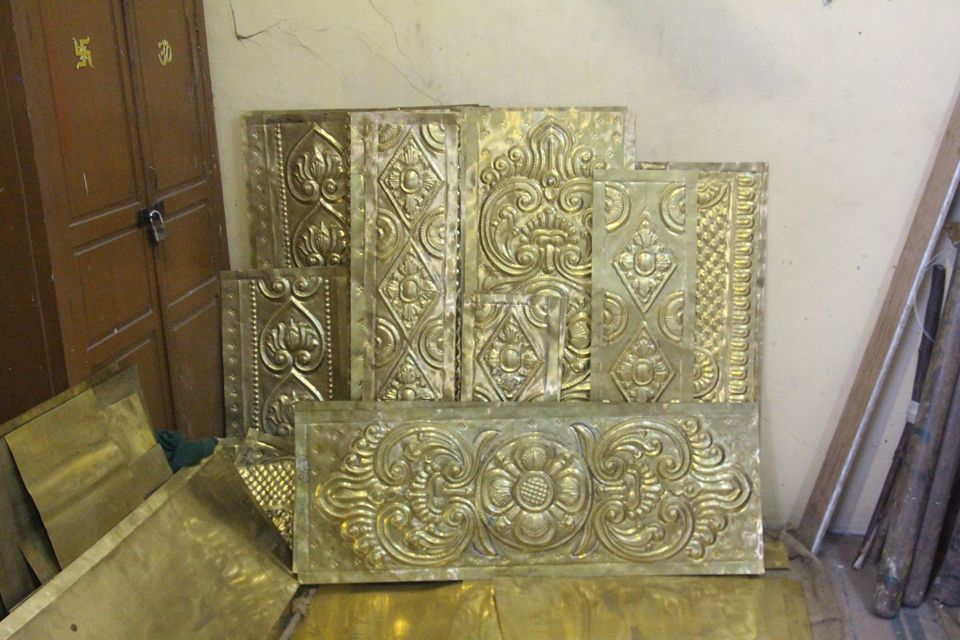
Mapping and diversions
Morning, Deepa di and I do the theruvu-mapping of the east-west streets of Pondy starting from Perumal Koyil street up to the Needarajapaiyar street. Although we also did St. Therese street (where we find a surprise Atti Ranganathar temple and Ramanuja madam) which is beyond, but we missed Thambu Naicker st and Louis Pragassin st.) This is the day we stop by Giri Traders in search of the Chitra Gupta stories book the Kannika Parameswari Iyer mentioned – all gone after Chithirai pournami! It’s a day of miscellaneous conversations. With one of the ladies (attired in blue saris so we know they are appointed temple workers) who hears me singing by the kulam at the back (it’s always remarkable how people in the temple shift agency from themselves to the reigning deity and feel happy to be in his proximity), with one of the younger Bhattacharyas who is usually quiet and reticent, but who advises us to study how Ramanuja and Swami Desikar have “saved” Vaishnavism after the Alvars came and went. He also remarks on the interconnectivity of all the temples–knowing one isn’t enough. This will be a recurring theme, as we’re already finding. He mentions also the position of this temple as Abhimana Sthalam connected to Thirukoilur, Thiruvanthipuram (Thiruvahindrapuram) which are Divya Desams. He spoke again of how the “saving” of Vainavam went hand in hand with the saving of Tamil, of the unity of Vadakalai and Thenkalai in this temple, whereas you don’t see that elsewhere, but he didn’t e
Read moreThulasi Amman's Unjal Utsavam
We go to the Ghousiga Thulasi Mariamman around 930am. The dhvajam is still up. We are told to return around 1030. We also find out that last night was the thiruther – the ther is still outside with all decorations. Among the decorations are maalas of starfruit! We go home and return around 1040 – and the dhvajam is down already!! We spend some more time inside, receiving pinch after pinch of Kunkuma and Vibhuti. Voice-noted the inside prakara walls’ iconography. Arun goes back in the evening around 8pm. The unjal is already up. Around 830pm the deeparadhanai os done – this is very brief, completed within a couple of minutes. The usual divider-barricade outside the Murugan shrine has been removed to make space to stand before the South-facing unjal. There is a rooster vilakku and a peacock vilakku on either sides of the unjal. To the left of Amman, on a fixed stool, stands Pavadarayan. Amman is beautifully adorned with lotuses, flower garlands, as well as a garland of cloves. The pusari refuses to let me take photos or videos, although I’d already asked the Ghouse owners. Eventually the elder Ghouse son (I think that’s who he is) convinced the pusari who did not come to me again. I went to the Ghouse son and apologised for any inconvenience and thanked him for intervening. Met a man who lives nearby. Apparently we missed plenty last night. The thiruther was a big event. He’s shared his footage with me (which is of surprisingly high quality for a mobile). There is Sundal prasad
Read more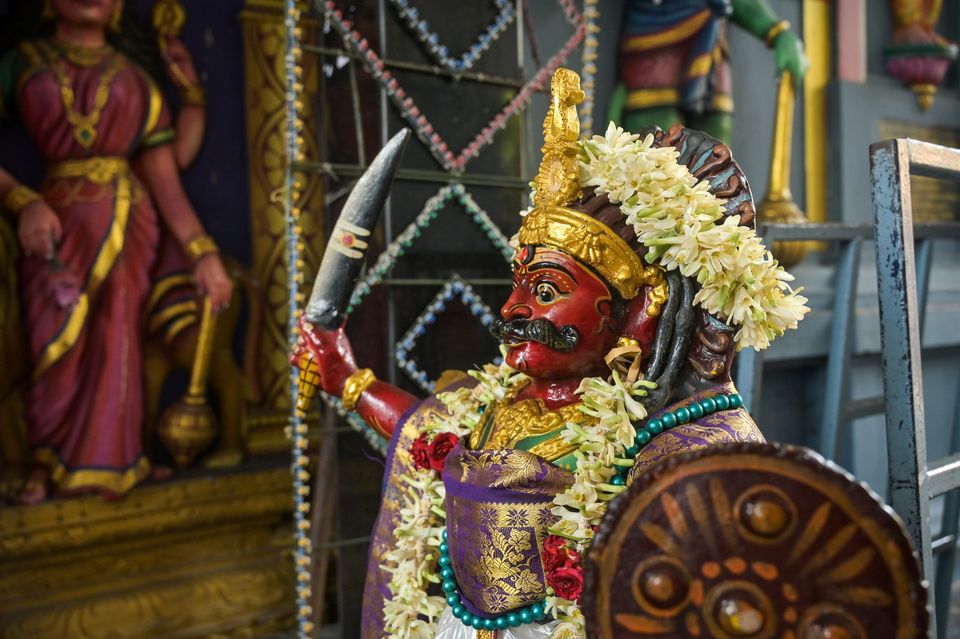
Thulasi Mariamman's Thiruther Vizha
We missed this but if the Temple’s rocking Instagram page is any indication, it was a spectacle and a half. Enough for us to know not to miss it next year. Khadir Mohammed Sir kindly sent us some videos, which we are sharing here with his permission. Clearly it was a massive Chithira Pournami celebration, so close and yet so far!
Read moreChitragupta Puja for Chaitra Pournami
Caitra Sukla Purnima or Chithirai Pournami is among the more important full moon events of the year–because it effectively opens the year. It is “rtumukham” or the mouth of the seasons. ऋतुमुखं वैषा पौर्णमासी संवत्सरस्य, या चैत्री पौर्णमासीति। says the Mimamsasutra of Jaimini (MS 6.5.31) Also in the Sabara-Bhasya, Sabara-bhasyam of Jamini, the earliest surviving and most authoritative commentary on the Purva-Mimamsa Sutras/ system of Vedic hermeneutics. (This specific passage is on the timing of the diksa for the Gavamayana, a year-long sacrificial session. There is a lack of specification (avisesa). When a scriptural injunction mentions a "full moon" without specifying a particular month, the Mimamsa method initially suggests an aniyama (non-restriction), meaning any full moon could theoretically suffice, before specifying Chithirai pournami. We missed the event at Kannika Parameswari, which we learn about later – but this has nothing to do with Chithirai as the mouth of the seasons. It has more to do with Chitragupta–about whom, the Garuda Purana says: तत्सर्वं च परिज्ञाय चित्रगुप्तो निवेदयेत् । चित्रगुप्तस्ततः सर्वं कर्म तस्मै वदत्यथ ॥ tat sarvam ca parijnaya citragupto nivedayet | citraguptas tatah sarvam karma tasmai vadaty atha || “Having ascertained all this, Citragupta reports it; thereafter Citragupta tells him [Yama] all the person's deeds.” (2.18.2) कृतकर्म लिखत्यसौ/ krtakarma likhaty asau/ “He records the deeds that have been done” (2.33.29). And because Chitragup
Read moreThe End of the Davanotsavam
At the conclusion of the Damanotsavam is a veethi ula or street procession. Arun and I watch this a bit together at about 845pm, running from one Chithirai Pournami event to another – 1st time seeing this on Mission st. So there’s one ul-purappadu before leaving for the streets, and one more upon return, followed by the usual Saattrumurai. There are davanam/damana garlands as part of the alankaram, but nothing outstanding or out of the ordinary.
Read more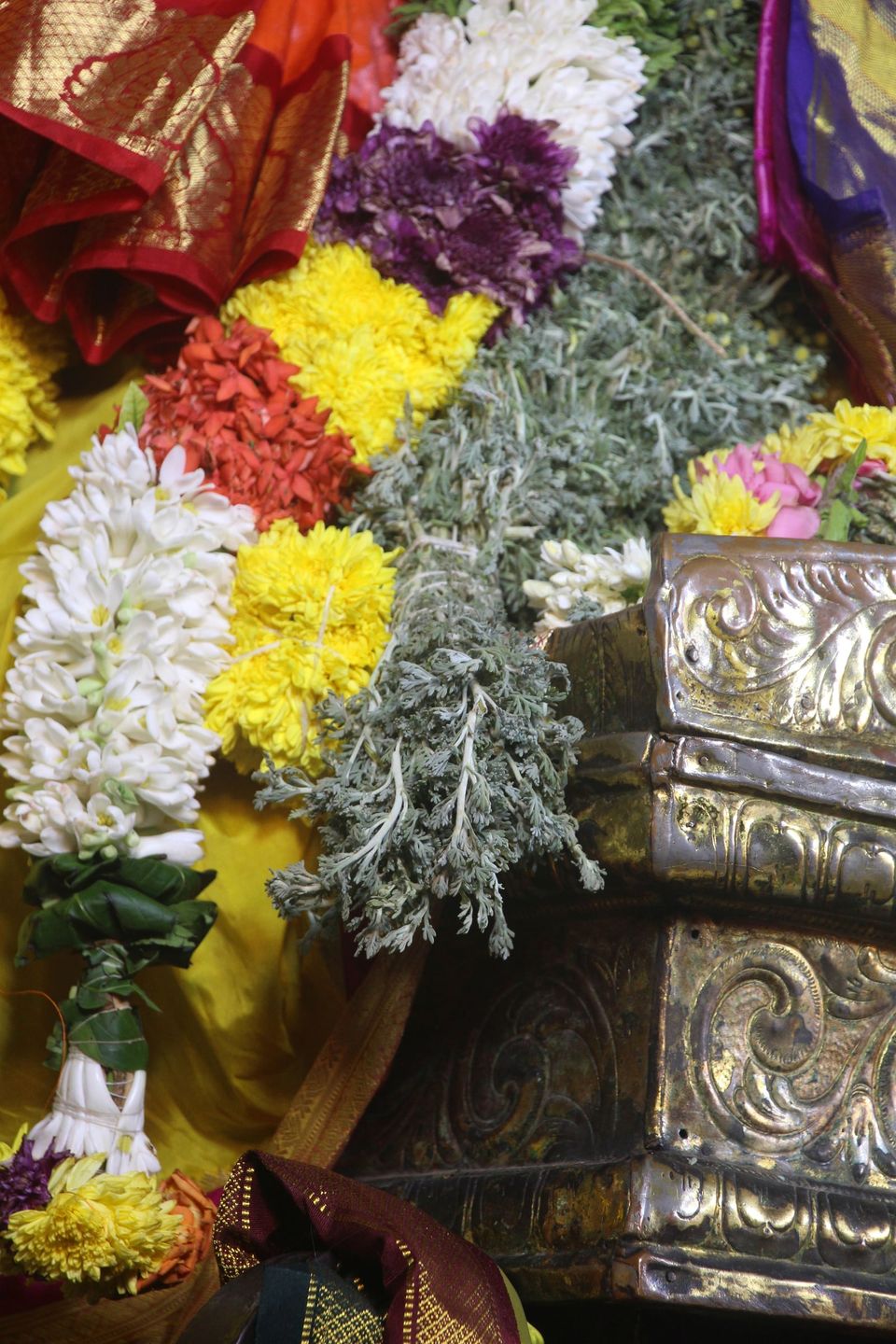
Swinging to the Chithirai Full Moon
Unjal at Mutthumariamman – She was in all white, like the moon! Priests weren’t taking coloured flowers from devotees, white only. A lady helped me get down and held my head (gently) in place so I could see the deeparadhanai – I let another lady and her clearly mentally disabled daughter go in front of me & a man later sought me out and thanked me for that. Over and over I get the feeling that temples are special for all sorts of things, but among them the collective commitment to aspiring, being better versions of ourselves, generally not worrying about the usual social divisions, being equalised by the focus of the place. But this is not a pre-existing condition, more one that has to be actively cultivated in all these ways. So when people make way for each other in realising these goals, it doesn’t go unnoticed or unappreciated. I love this part of being in the temple space. The main priest Jnanavel swami turned off all the lights during deeparadhanai which made it so much more special. He later said that it’s an old practice and “that is aanmeegam!” or “spirituality” which people no longer want – they want to see and feel happy seeing in electric light, so we change with times. There were two pusaris around in addition to Prakash helping out. Amman’s utsavam form was out on the swing. This temple is known for its elaborate amman alankaram traditions, but mostly in the moolasthanam, where Mariamman is in her full form, seated, and usually very simply but stylishly attired
Read more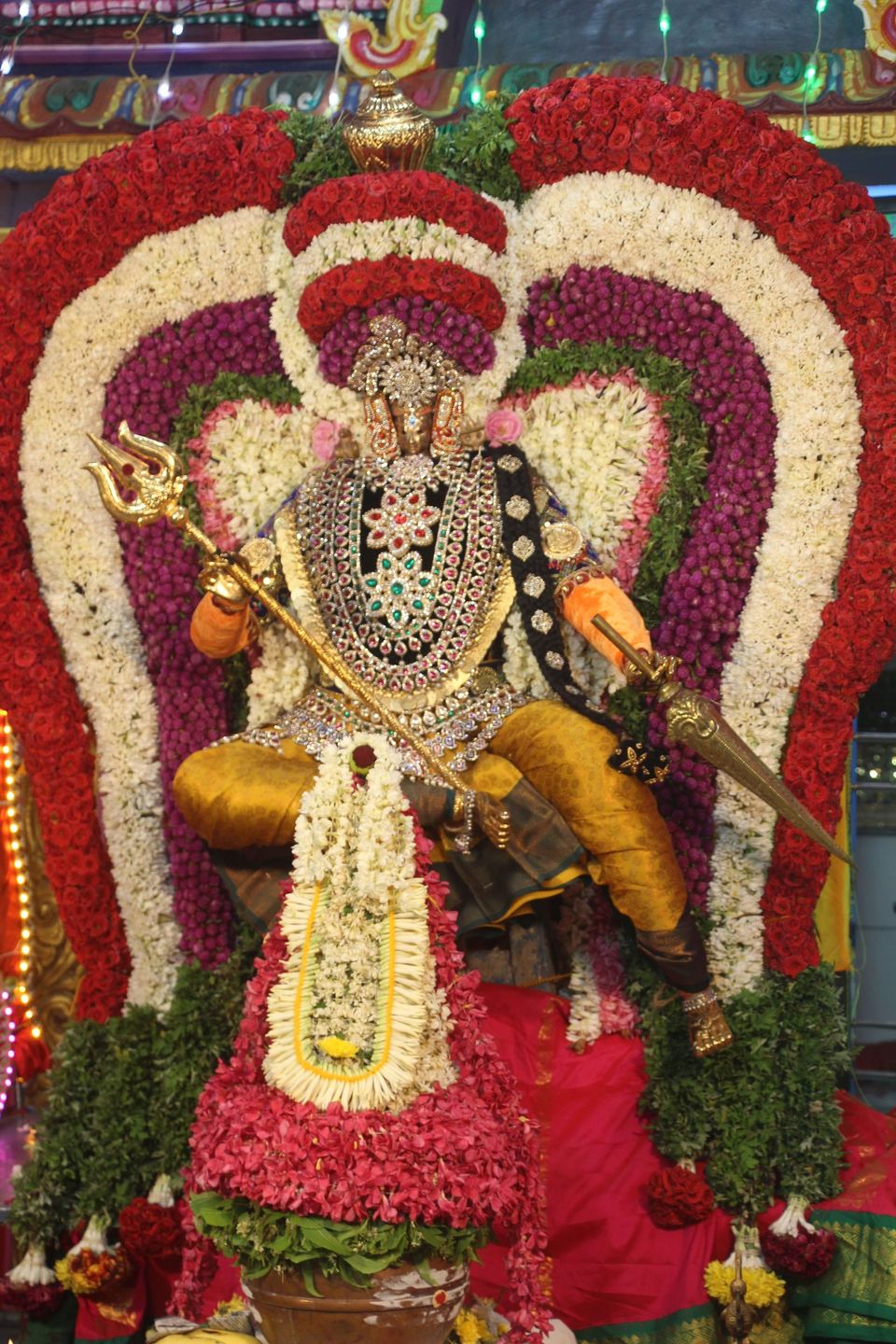
A Most Beautiful Deeparadhanai
The most beautiful Deeparadhanai experience of this morning; rushed here after Perumal Koyil Damanotsavam visit. Not sure what makes it so. The crowd? The manner in which the screen deep within is opened? The absolute stillness there when it is? The flames pointing all in synchronised lines upwards? Whatever it is, it’s magical. Annadanam and all other aspects supported by one family, doing this for the 5th year. A girl I meet later sends me images of the Ther which was built by the Vishwakarma community, and which everyone there has a memory of pulling at night. But because the temple has done a Balalayam in preparation for திருப்பணி / Thiruppani, or renovation, the Rathotsavam is on hold. There are people selling archanai tickets. The Ubhayakara family ask what this new thing is – but apparently it’s a government mandate. To raise money! Some people buy. Tickets are 5rs each. I rushed to Angalamman Koyil to see what was going on – not much at 630pm. No doubt deeparadhanai after. 7-8pm – back at Kamakshi Amman. Similar process to what happened in the morning, including the thundu and food (in dabbas this time) distribution. It was sweltering! Deeparadhanai for Amman, and then for the Utsava murti. I spent long talking to Mageswari who’s uncle is a doctor who maybe is an ubhayakara for some temple event – and whose ayah lives nearby, so she remembers playing in the temple (and a couple of others around), and never sleeping until they saw the ther on the night when it would be
Read more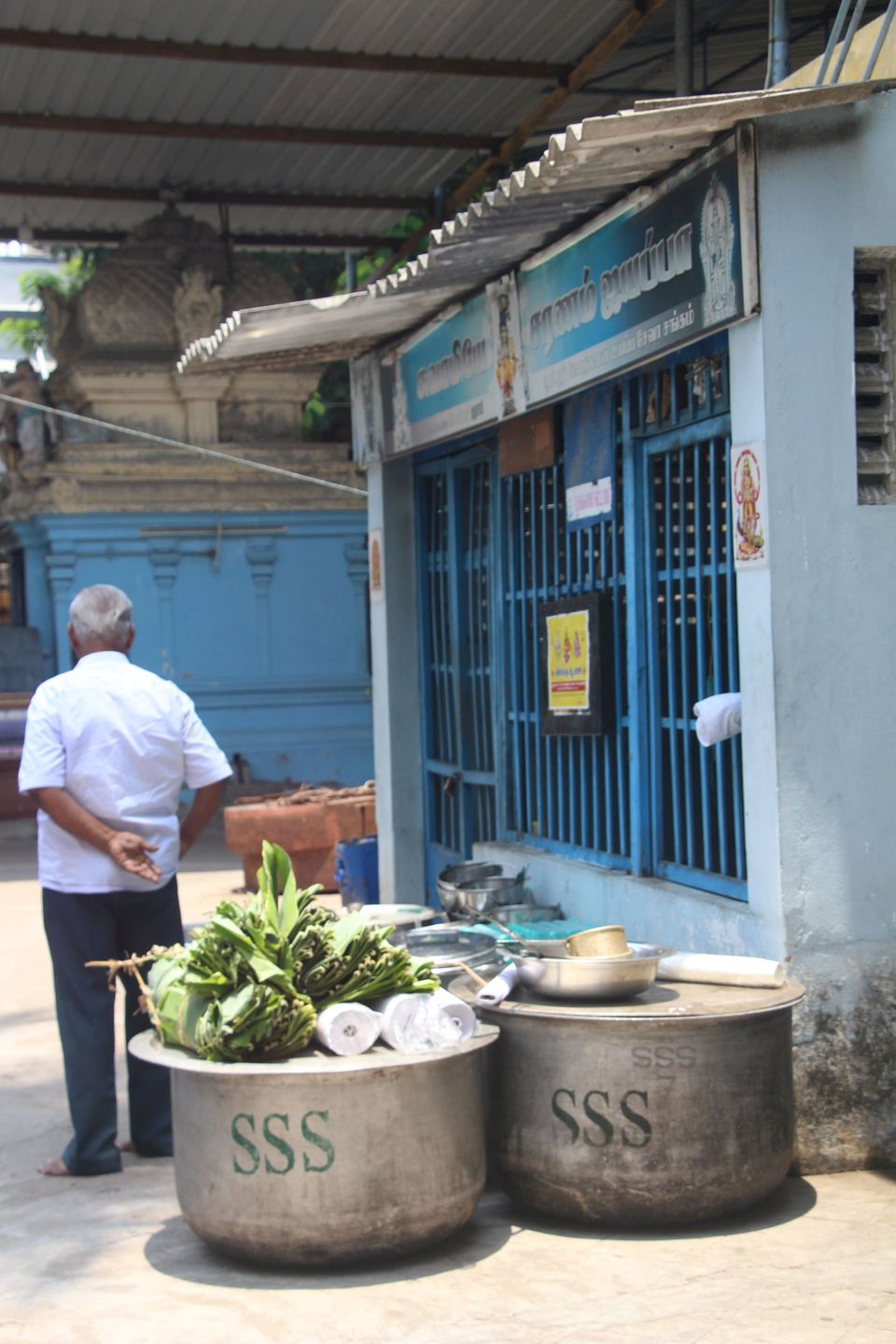
Piles of Davanam for Davanotsavam
We stopped at the Perumal Koyil, to find a homa kaalam for the Davanotsavam on-going. Ramanan bhattacharya was alone in the yagasala, reading verses from a book. Sekar mama had told us (after the Narasimhar abhishekam) that the 1st homam kaalam for the puja would start in the evening–we should have returned for it, as that was the formal beginning of this utsavam. Another priest joins eventually, but there is hardly anyone else around. When he was done, he spoke to us for a little while about the differences between different utsava forms: Brahmotsavam for the well being of the town, Pavitrotsavam for prayaschittam, Damanotsavam for cooling the body of Perumal in this hottest of seasons – each one to create a certain anubhavam/experience and still others to teach, instruct and direct. He spent a lot of time speaking about the “satyam” of different communities – and the practice of measuring paddy in front of Perumal in Srirangam (Nel Alavu or Nel Alavu Sevai) to keep the paddy distributor honest & of the loss of these functions resulting in Brahmins leaving for IT jobs and others claiming the role and function of the barber, washerman etc. I didn’t think this a defence of caste/community divisions as much as an erosion of truths – which the utsavams were meant to reinforce. But we didn’t press him on the Davanotsavam, which we should have because what, really, is the cooling of Perumal’s body with marikozhunthu (there’s a big pile of it in the yagasala) meant to achieve? But
Read moreSrinivasa Narasimha Thirumanjanam
Narasimhar Thirumanjanam at Srinivasa Perumal in the morning – a very beautiful darshanam of Narasimha with the milk flowing on him. “Today is our jayanti celebration, not that of other temples, don’t ask any more questions” says the senior priest who had told us off the other day to someone who enquires. We wanted to see this, so we went, but with no intention of continuing our documentation of this temple, given its apparently contentious priestly and community relations. Didn’t get the greatest feeling from the way the priests were handling people, in any case. If a temple can be a reflection of the unfiltered nature of community life around it, this was a classic instance. We’d only visited a couple of times, and already had a sense of it.
Read moreNarasimha Abhishekam
430pm. Narasimha Jayanti – Shukla Chaturdashi of Chithirai. We also read that Swati is Narasimha’s nakshatram, which falls on May 1 this year. So perhaps tithi takes precedence over nakshatram here. Cleaning and aradhanai of the Narasimha shrine were done yesterday by one bhaktar group for Pradosham (1 murai does it at 530pm, the other at 545pm). Narasimha’s association with Pradosham is interesting – that is the time he appeared to slay Hiranyakashipu which is why his thirumanjanam today is done at this hour. As for the cleaning and aradhanai that happened yesterday on Pradosham day, there seem to be stories connecting Siva and Narasimha – to be read. The temple doors were closed when we stopped by earlier and we didn’t realise the side door was how everyone was getting in! Thirumanjanam for Narasimha followed the pattern of all others – the Ubhayakara Sankalpam, followed by the various abhishekam stages — oil, water, milk, curd panchamrutam (fruits crushed & cut followed by honey), elaneer, then a slow application of sandal and turmeric paste which made the murti look like a small kathakali dancer — first sandal on the body, then turmeric + kunkuma used as an embellishment and to add details on the chest, face, and as an encirclement. The water used to dissolve the last of the sandal-turmeric poured on, then water used to wash again though the paste is collected and distributed as prasadam. At each stage, the deity is offered dhoopam, deepam from the ottru kaal vilakku & th
Read more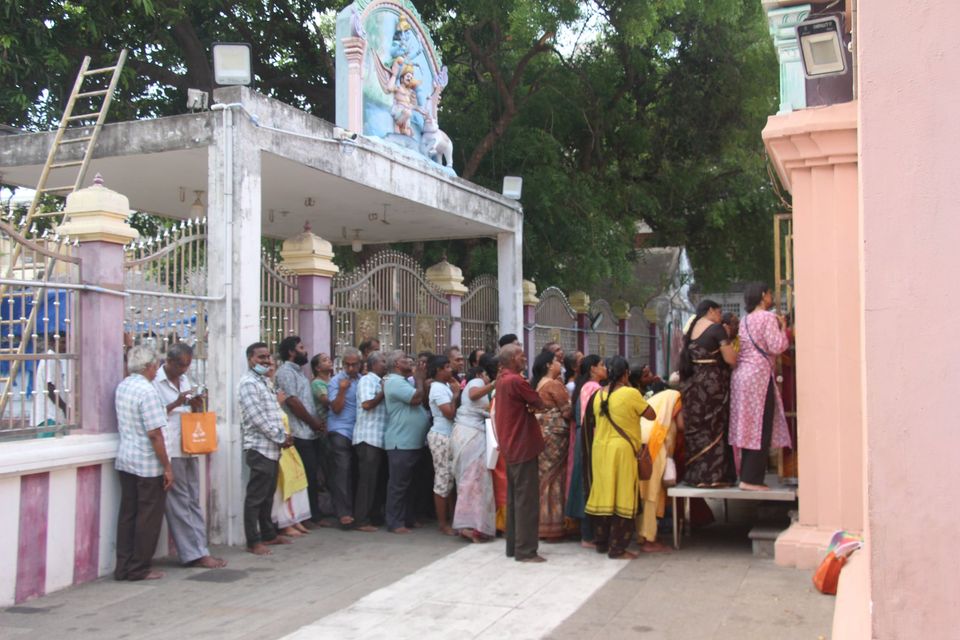
Slowly, slowly at the Perumal Koyil
At the main Perumal Koyil, Naresh Bhattacharya whispers thanks for the photos to us. Narasimha Jayanti puja tomorrow 5pm he says. No photos, no video, he says. We nod–it’s a moolasthanam, so of course. Prasanna is behind a curtain cleaning the Narasimhar shrine & tells us of some pradosham puja today (which Arun never finds), we make our way to the Hanuman shrine where the elderly priest is officiating – he seems chatty, tells us about the connection between the divya desams (Thiruvahindrapuram near Cuddalore and Thirukkoyilur) – Vedanta Desikar came to Thiruvanthipuram & therefore the affinity for him is stronger in this Vadakalai temple. Ramanan Bhattacharya comes by and is at first wary of us, but when he realises our questions are really simple and quite benign, things start mercifully to shift. Why does Hanuman wear a betel leaf malai? Answer: Ashoka vanam, Hanuman comes with “good news” so she pulls off a bunch of betel leaves from the kodi growing on the Ashoka tree and blesses him for it – hence this human offering. He shifts from there to sit on the step near the vasanta mandapam, and we follow and he starts to tell us about the 282 days of utsavams and other events at this temple.
Read moreGetting to know the Srinivasa Perumal Koyil–or not
Conversation with the priest in the main Perumal sannadhi is strange. Old man, never seen him before. Tells us that Narasimha Jayanti is on May 1, gives us patrikai. I ask him politely about whether a different murai is doing the Narasimha puja – “what will you do with that?” he asks me, “Just for my understanding,” I tell him, and he proceeds to give one lecture on how one should keep sights on Perumal and not to the squabbles below (basically). This is the second such about-turn at this temple, confirms my hunch that this is a complex place in the midst of the throes of something and therefore will be risky to try to document. We are leaving, security guard says “how much did you pay him?” and I’m like “why should you ask that?” so he says “only if you pay him, he would talk this much.” I’m laughing and laughing. Where are the priests? They are not here, says the maid. It all seems quite odd. But the speaker playing the Krishna mantras are lovely.
Read moreChetty Koyil Rahu Kaala Durga Puja
3-430 every Tuesday is a Durgai abhishekam at Chetty Koyil, during Rahu kaalam. This is followed at 5 by a Palani Andavar Abhishekam and then of course the Tuesday evening Murugan fete. Naivedyam was milk, panchamrutam, lemon chitrannam, and hot-hot pongal.The navagraha chamber was thrown open during this. The Palani Andavar Abhishekam was to be done by the new priest, Kotiswarar, and with as many supplies but far less fanfare than for Durgambal.
Read more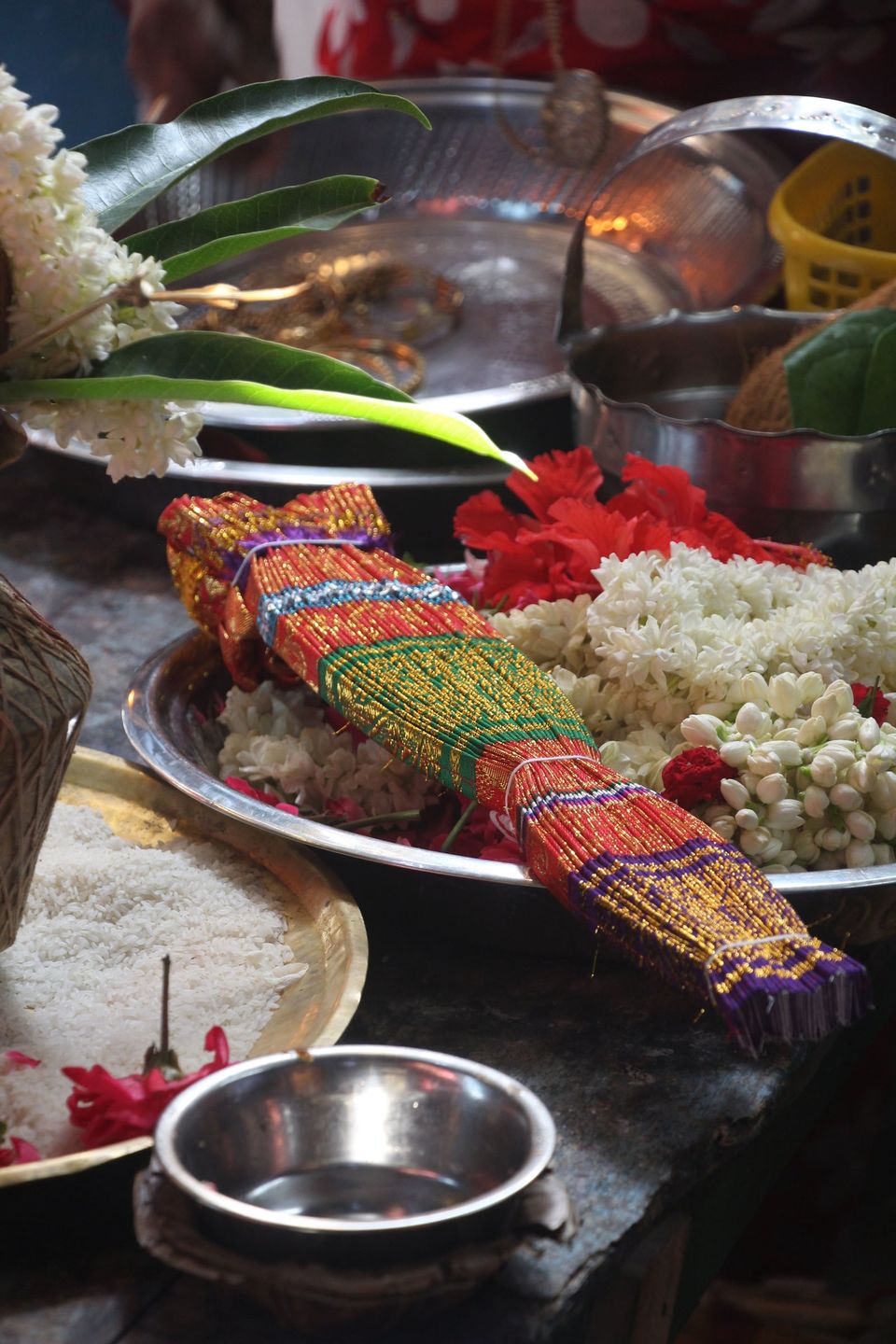
Kamakshi Amman Koyil with Gurukkal and Periyavar
Morning at Kamakshi amman temple. Neelakantha Gurukkal points out the fish imagery on the temple ceiling is the way that the Cholas built structures with signs to read to understand seasons changing: when this fish swims up from the south (after spawning), the rainy season comes to an end and the hot season begins. But no idea why these were on the ceiling of a temple. The Cholas used fish symbols to show conquest of Pandya/Chera territory, but not the yin-yang fish symbol that’s there on the outer pillar (near grill), and not the ones on the ceiling. The Naga knot (naga bandham) I discovered is called a Carric Bend–”a secure, heavy-duty knot primarily used in maritime applications to join two large, stiff ropes or heavy hawsers. It is highly regarded for its strength, inability to jam even under severe load, and ease of untying.” Perhaps this speaks to the Priest’s emphasis on the cholas as ship builders and maritime explorers? Praveen Mohan has written and spoken about these here. From there I got the name “naga bandham” (resonated from the Thiruppugazh நாக பந்த மயூர நமோநம which of course offers salutations to Murugan as the one who rides a peacock which “knots” the snake at its feet). Indeed, the Kamakshi Amman Koyil’s Murugan sannadhi peacock has the most stunning serpent in the naga bandham I’ve ever seen. Other symbols (entrance threshold, ceiling near the main aisle): a four-petalled lotus (Chatura-dala Padma) often associated with the physical realm and the four direc
Read more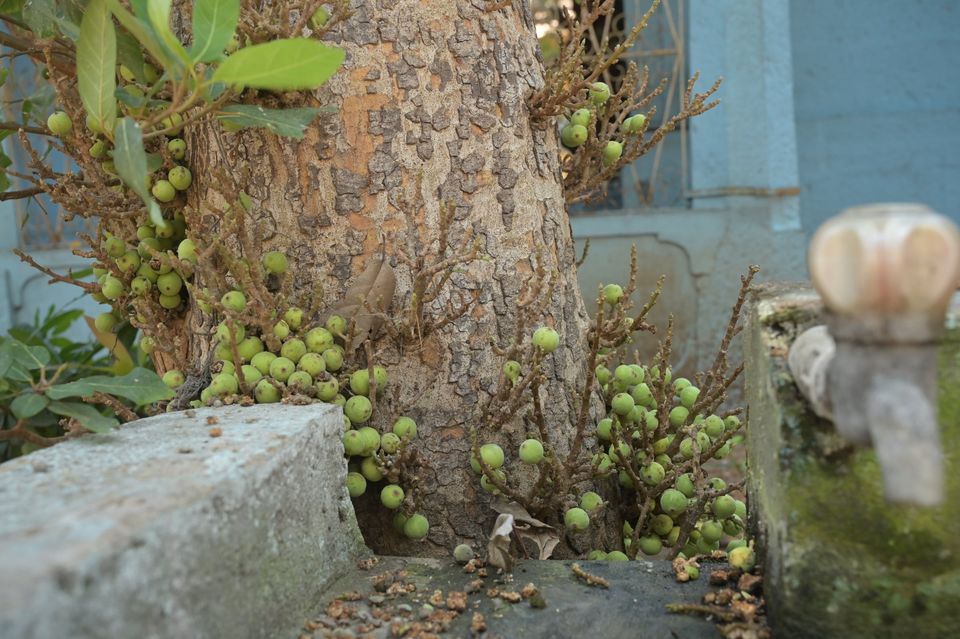
Vasavi Kannika's Jayanti Veethi Ula
Sunday evening. Arun finds the Kannika Parameswari is out on a veethi ula! So we run about and get a few photos – the procession route is long, winding N-S down the main roads and she returns to the temple only around midnight. Kannika Parameswari Jayanti (Vasavi Jayanti) is celebrated annually on the tenth day (Dashami) of the bright fortnight in the Telugu month of Vaisakha. The Iyer seems very happy, garlanding and blessing all those who come to pay respects!
Read more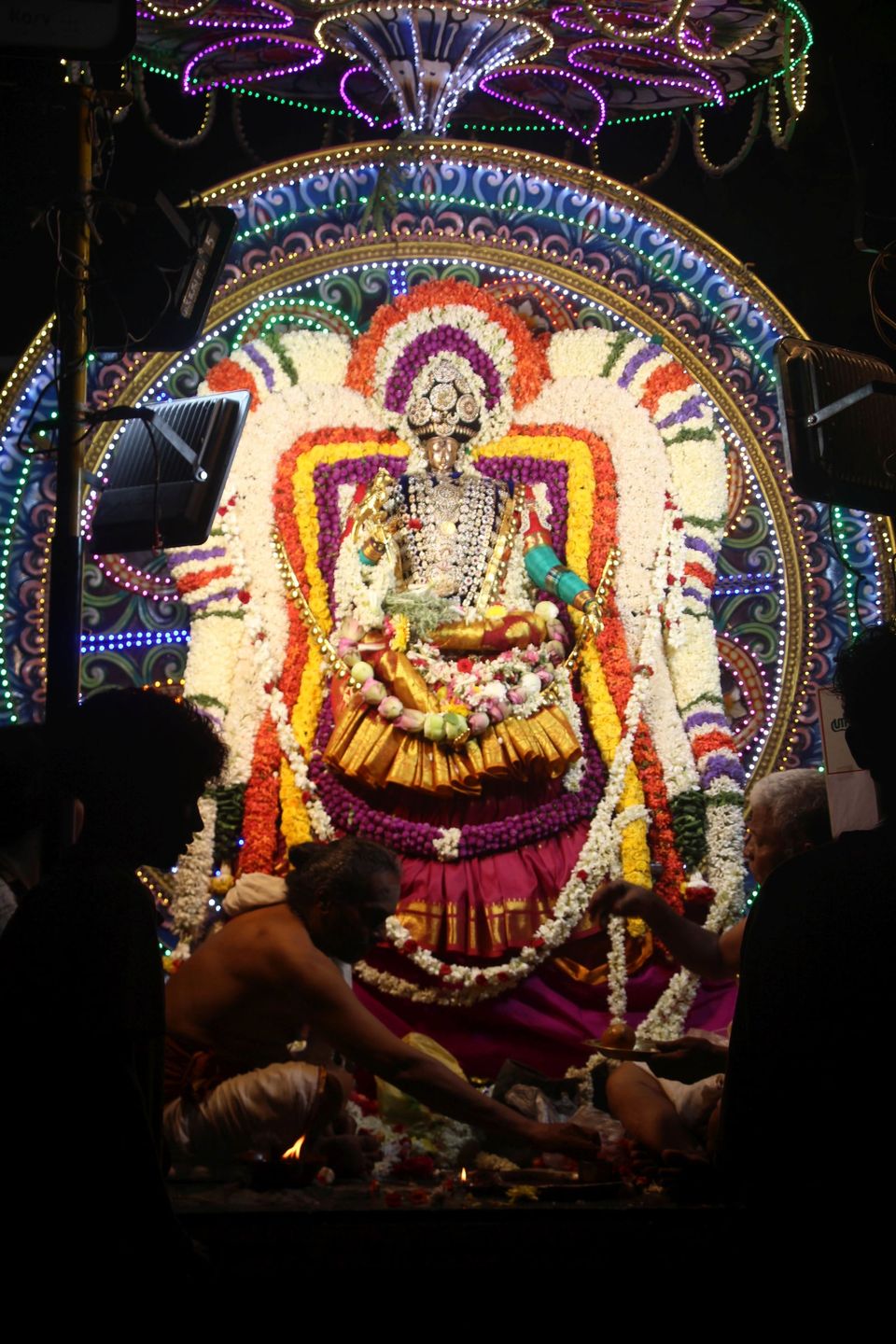
Discovering Kamakshi Amman Koyil
This is a Vishwakarma community temple. Neelakantha Gurukkal introduces us to Senthil, the rooster who’s been at the temple for 13 years! We enquire about meeting another day to discuss history in detail. Priest seems happy to do it. He tells us about the pillars of the Gayatri Mandapam and the motifs on them. How each one pertains to a particular story and that sage Agastya placed them where they are when establishing the Mandapam. He also tells us some stories about Marakkanam, misplaced inscriptions during British-era reconstruction of temples (Villinur inscriptions in Bahour), and about this Kamakshi Amman initially being the Ambal at the old Vedapuriswara Koyil which was destroyed. The priest outside, Natarajan Pusari, a goldsmith by profession, belonging to the Vishwakarma community, responsible for the prakara shrines, performs a Navagraha archanai. Never seen this anywhere else. He seems very dedicated, all his archanais even at other shrines is very thorough, lasting for well over 2 minutes every time. At the Vishwabrahma shrine, he tells us about the Vishwakarma community: black smiths, bronze smiths, woodworkers, shilpis, goldsmiths. The Murugan shrine at the north-west corner of the temple is apparently the oldest shrine here, also brought from the old Vedapuriswara temple. It’s made of pacchai (green) stone. Abhishekam done to it once a year during Panguni Utthiram, and one day before that, he cleans the idol during which one can perceive the green tint of the st
Read moreAngalamman Koyil Ritual Calendar
We sit for an hour or more with the very busy Sriram Gurukkal to understand the annual ritual practices at Angalamman in Angalanagar. He is often interrupted by calls and people coming in with work and requests, but is very patient with us and everyone who comes to him. We often see him in the temple talking to young neighbourhood boys who throng about the place. It is just him and the older Gurukkal managing the Angalamman temple. It appears that they function as much as guides and mentors as priests.
Read moreRamar Purappadu on Punarpoosam
We decide to briefly drop by Varadaraja for the Ramar Purappadu (Punar Poosam nakshatram – birth star of Rama). For once we get to observe a purappadu without the burden of trying to document whatever we see (but we do document it nonetheless though, just with some more laidbackness, while being more present in the experience). And oh is it beautiful. So gracious. He’s going to do 3 rounds of the temple. There will be a saattrumurai etc once the rounds are done. We note just how much commitment and voluntary labour goes into making such a purappadu possible. It’s most often the same devotees, coming time and again to help carry out the procedures. Makes one realise how much personal effort and love goes into making these processions possible.
Read more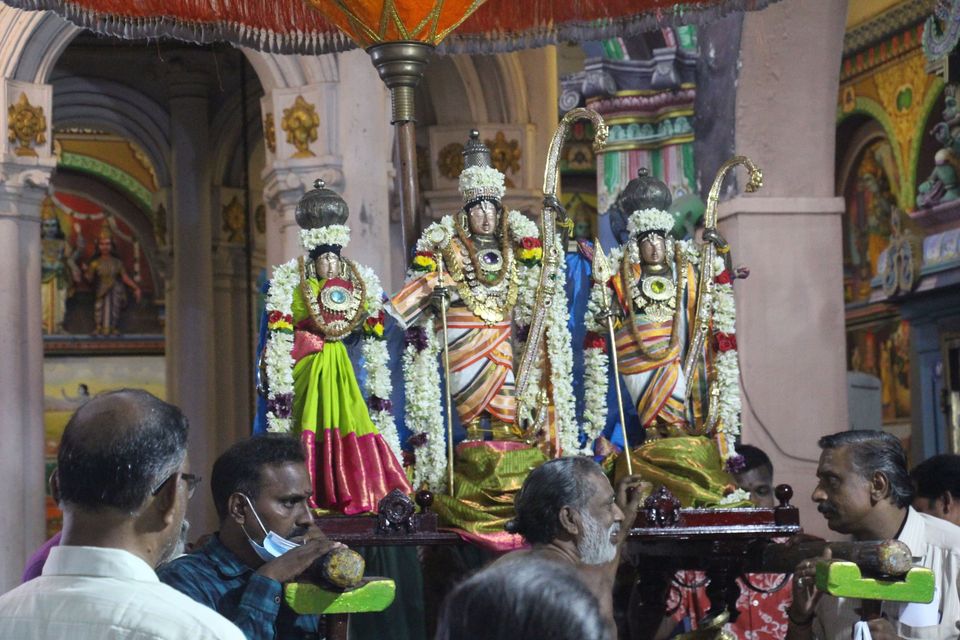
Thulasi Mariamman's Dhvajarohanam
We are delayed at the Draupadi amman temple, but get here just at the right time – there’s a different family sponsoring the event and a small group in attendance. The rites are very Vedic and similar to the Chetty Koyil but simpler and shorter. The flag makes a pradakshina around the temple (which means going through the Ghousiga temple and coming out on the east side) and is hoisted. The kaappu is tied for 3 or 4 people. Prasadam is kesari and chundal. It’s all done by 1130 am. We spend some time talking to a man, who lives a few streets down. He told us this amman was in a well that is still there in the plot just facing/east of the temple itself. Ghouse had a dream about it and had someone get the amman out. He also told us that the Ellaiamman temple was frequented in Rajaraja chola’s time – for the big Villianur Iswaran temple, this was Ellai. The Murugan moolavar was apparently made by the same shilpi who crafted the Thiruvalluvar in Kanyakumari.
Read more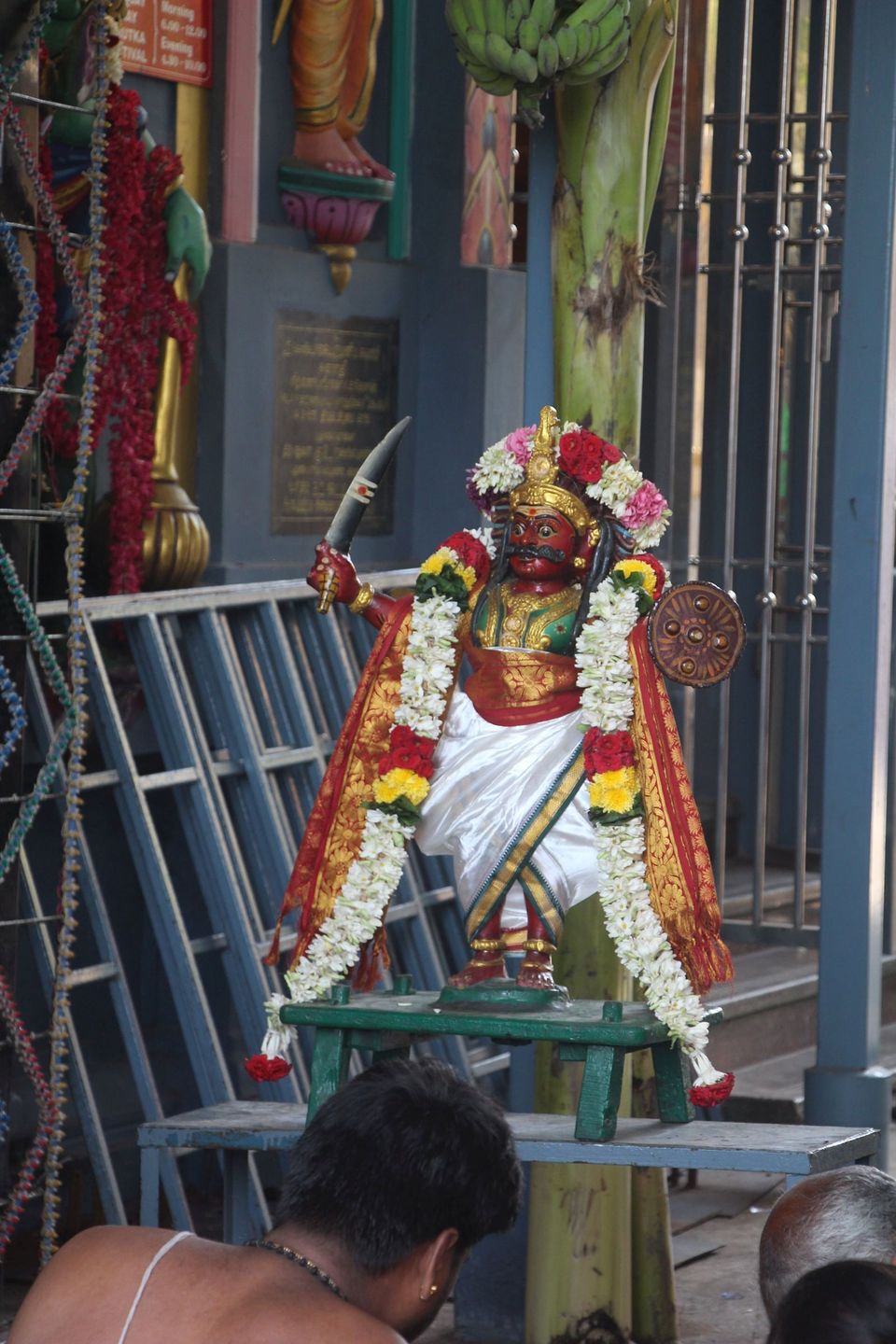
Discovering Draupadi Amman Koyil
Arun pointed out that this is closer than I had thought, so we stopped by there. A deserted place at first, then a lady and her son came by and told us that their family had been taking care of this temple for 11 generations, the son’s name is Parthiban (works at HCL chennai, the family lives nearby in a joint set up), his father used to attend to the temple, now his Periappa (Rangaradjou) does. Photos are in the entry corridor. There are two shrines at the back, on the left is newly built but apparently abandoned, on the right is abandoned with a Mariamman kept outside. The left shrine was built in a way that doesn’t allow a kalasa placement so they’ve left it as is. The wall of the right shrine was a part of a border dispute matter that apparently the other party won, so that, too, remains as it is. The Mariamman is a mis-fit in the temple, was brought by a man who had basically discarded it, but honoured here by the priest as a parivara devata (or part of the family of deities in the temple). There is a small Vinayaka Shrine to the left of Draupadi amman (she is in a garbhagriha, there is an ardha mandapa, and then an open maha mandapam). To her right, facing south is an utsava murti room – wooden or stucco in the outer area, and brass ones inside, including one of Draupadi herself which Rangaradjou swami says is 1200 years old according to some government department and the pockmarks on the head and face apparently bear testament to its age. The parrot is broken off (anot
Read more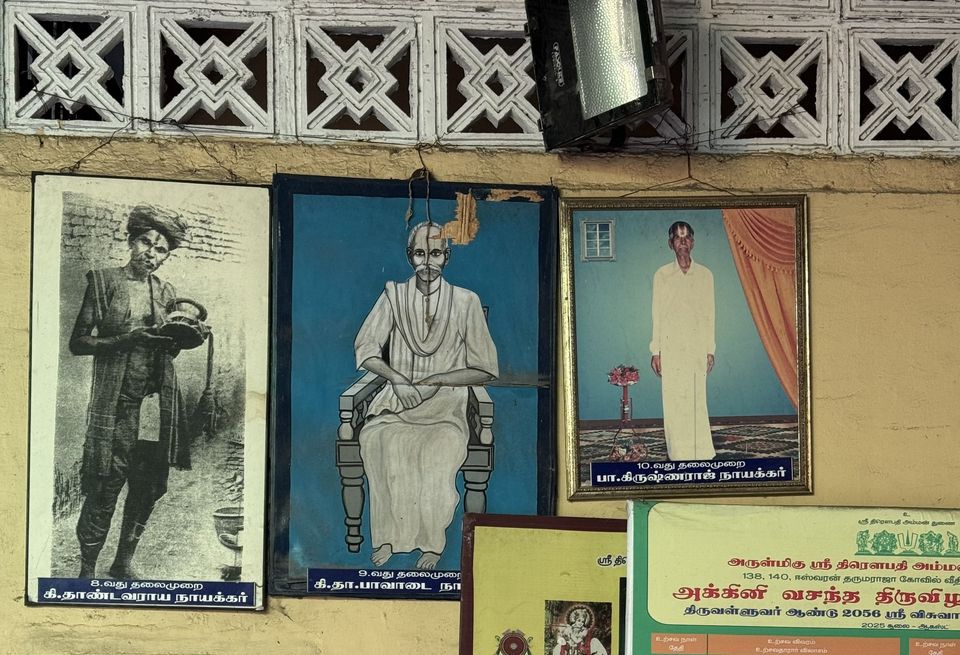
Thulasi Mariamman's Brahmotsavam Begins
9pm. Arun and I make a “quick” stop, catch the end of the homam which is a small affair done on the street which is blocked for this and by the ther and the mooshika vahana. There are 2 musicians, 1 nadaswaram, 1 thavil. Vastu Shanti happens, with the purusha fashioned in grass and dragged around the temple by one of the usual priests normally inside the temple. The Vinayaka purappadu also stopped a block away outside an SBI bank where there’s a single stone covered in manjal. Mrtsangrahanam happened here. There a quick altar set up and a body like figure quickly fashioned with some gravel brought on a plate from the temple. Some flowers and words said over this, deeparadhanai for the pillaiyar and the figure was dismantled and the flowers and sand/gravel returned to the plate. The purappadu continued as usual & we headed home. Tomorrow’s Brahmotsavam starts with the flag raising at 930am.
Read more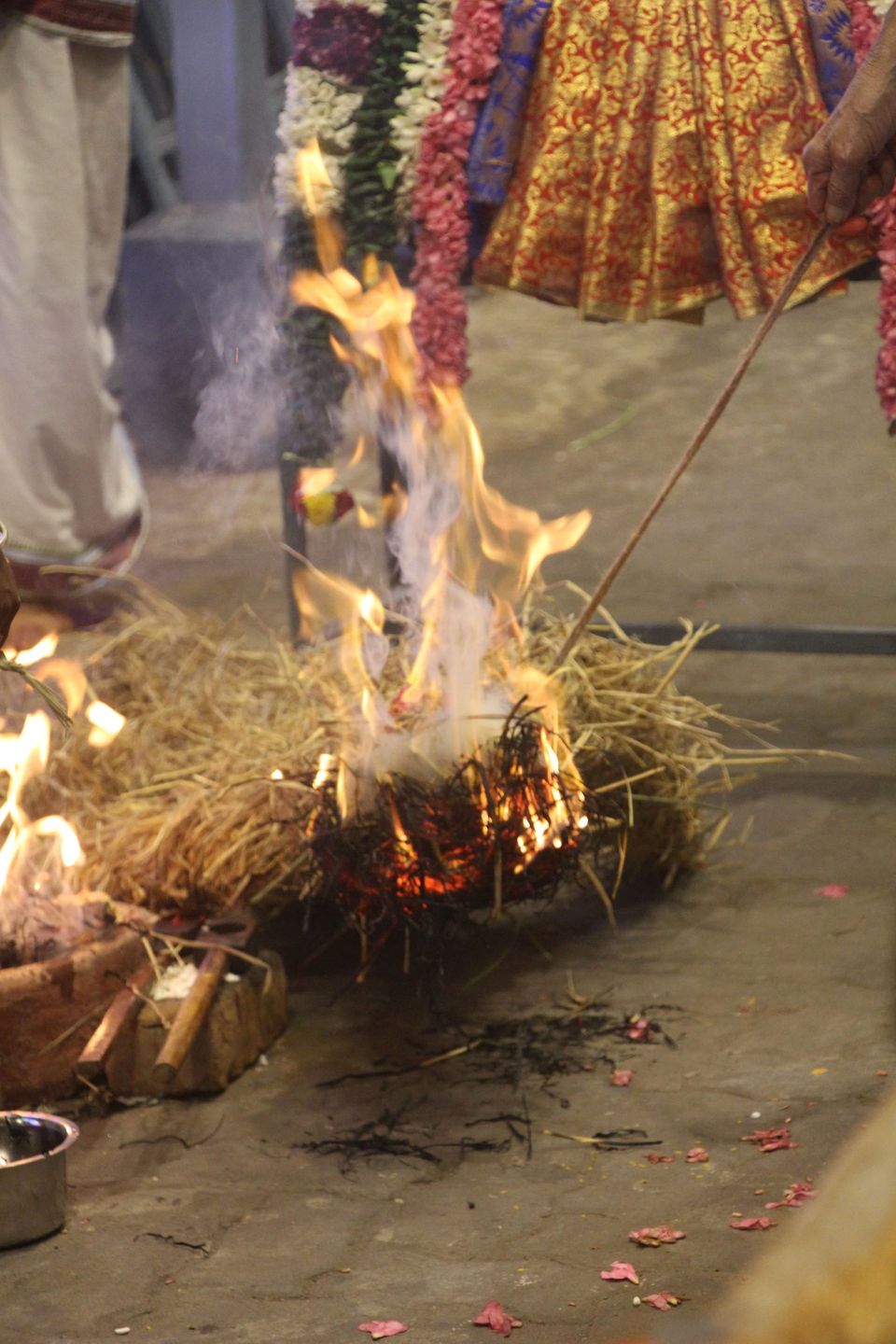
Two Ramanuja Processions in a Day
Mangalsasanam, Thirumanjanam, Perumal-Ramanujar ul-purappadu today, as it’s the closing of this Utsavam. 9am Ramanuja is brought out. Prasad given to all is some fine jaggery crumbs mixed with cashews and raisins. Ramanuja does one ul-purappadu round and enters the moolasthana shrine. Garbhagriha door shut. (The security guard who had been friendly at first made much noise while I (Arun) was taking photos.) At 1030 or so the Thirumanjanam begins. Starts with sankalpam for the ubhayakara family, who are sitting in the inner prakaram doorway area. When the priests ring bells, the nadaswaram starts outside, in the maha mandapa where we’re all seated. Bhattacharya lights the thattu vilakku and the process starts – milk, curd, fruits, honey, elaneer … There is sambrani producing lots of smoke, veiling the moola Perumal inside, who is totally bare for the thirumanjanam. In front of the Perumal is his utsava murti with consorts (partially clothed). In front and to the side of this, facing South, is Ramanuja. Each time the priest shows the dhoop, arati deepam, and then thattu deepam to all the figures. In between each abhishekam step, the deities are washed with water. Perumal utsava murti is garlanded first with tulasi, then with flowers. Such a rich and intense scene. The flames of the deepams and aradhanais visible through the smoke, partially lighting the deities is like some occult dream, shining light on parts of yourself within. It was a very paavam feeling not being able to b
Read more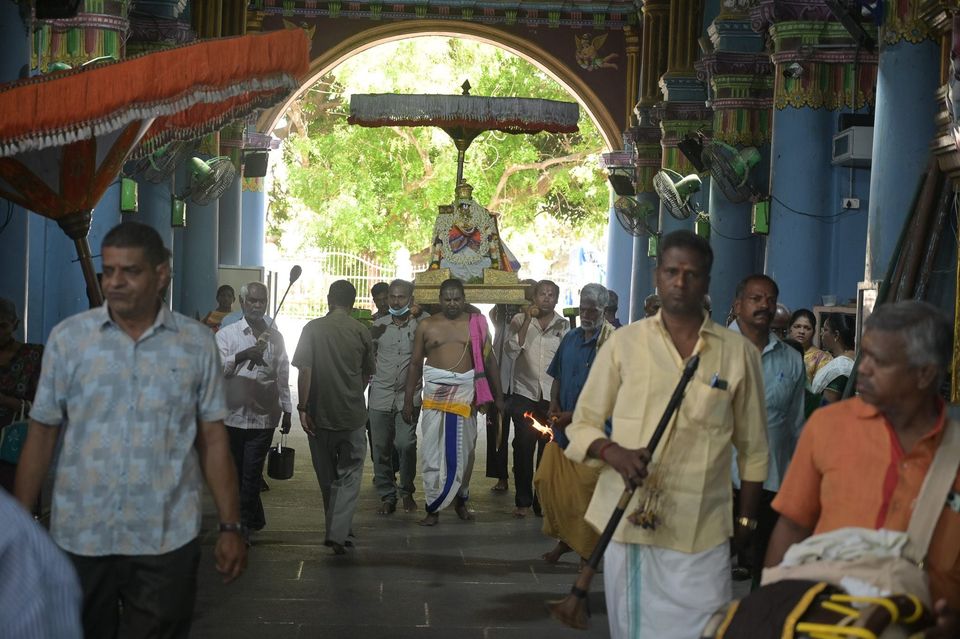
Discovering Lawspet Murugan Koyil (together)
We also make a quick visit to the Lawspet Siva Subramania Swami temple, where Ramanan Gurukkal helps out the main priest (Venkatesan Gurukkal). There is a group of women singing there, led by one Kalyani mami. This temple has an easy laid back atmosphere. Steady stream of devotees, but no special pujas going on at the time we go. Krittikai puja is usually a morning abhishekam to utsavar-Valli-Devasena, and Moolavar and a simple alankaram in the evening followed by deeparadhanai, and a thanga-ther ul-purappadu.
Read more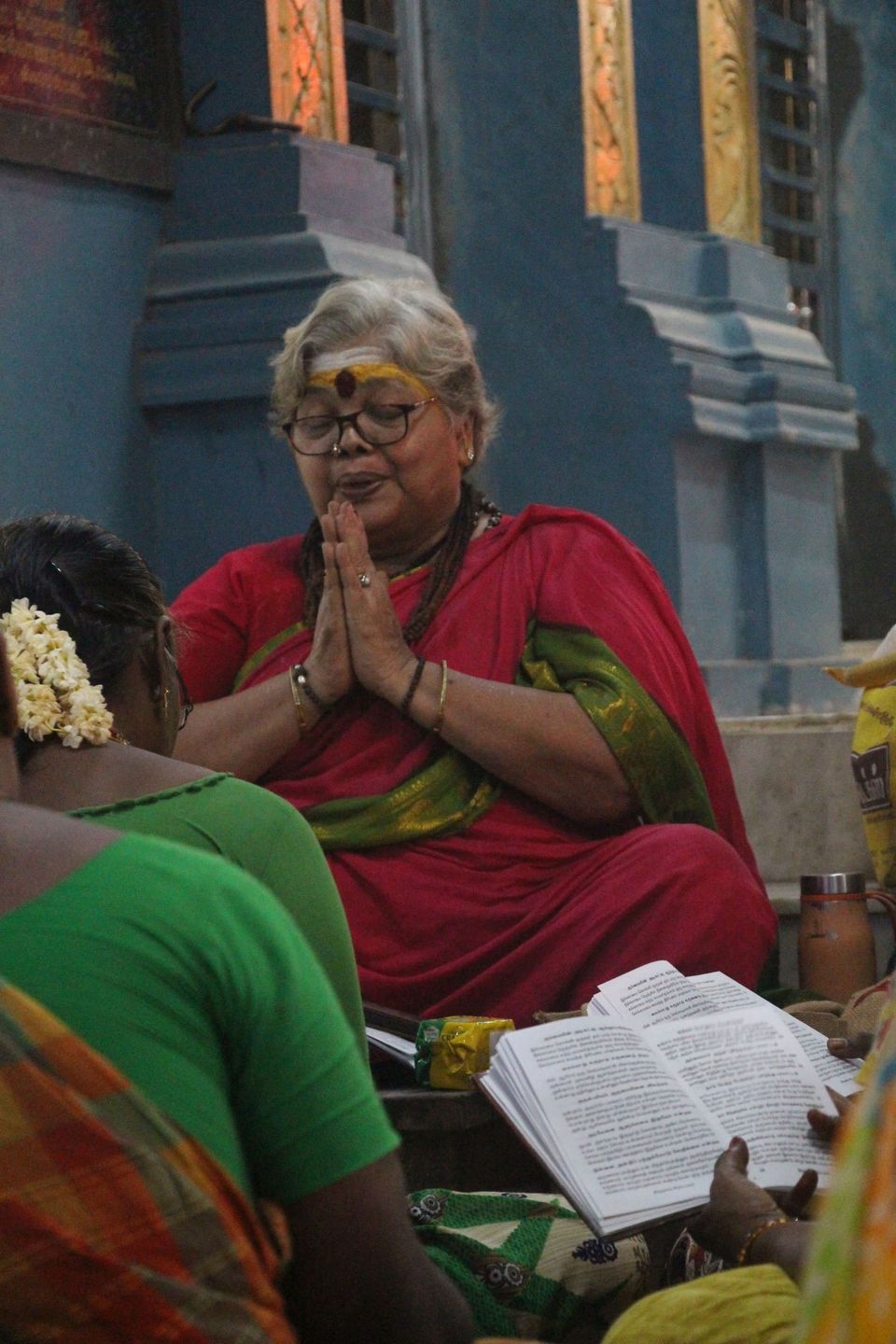
Discovering Ghousiga
We go to Ghousiga Subramaniaswamy shrine around 10. It is a Tuesday, and the temple is packed. The winding queue extends out to the road. We decide to view from outside, and end up getting a good glimpse of Murugan from the East entrance. To the left of the East entrance, is a small Thulasi Mutthumariamman shrine. The shopkeeper woman tells Deepa di that this Amman was submerged in a well that used to be here when she was young. Mohammad Ghouse brought the amman out and installed her there, in a small shrine you once used to need to bend to enter. Only after the temple’s last kumbhabhishekam in 2018 (??), was the room height increased and the Amman shrine becomes what it is now. We see the patrikai for this Amman shrine’s Brahmotsavam, which begins...Tomorrow!!
Read more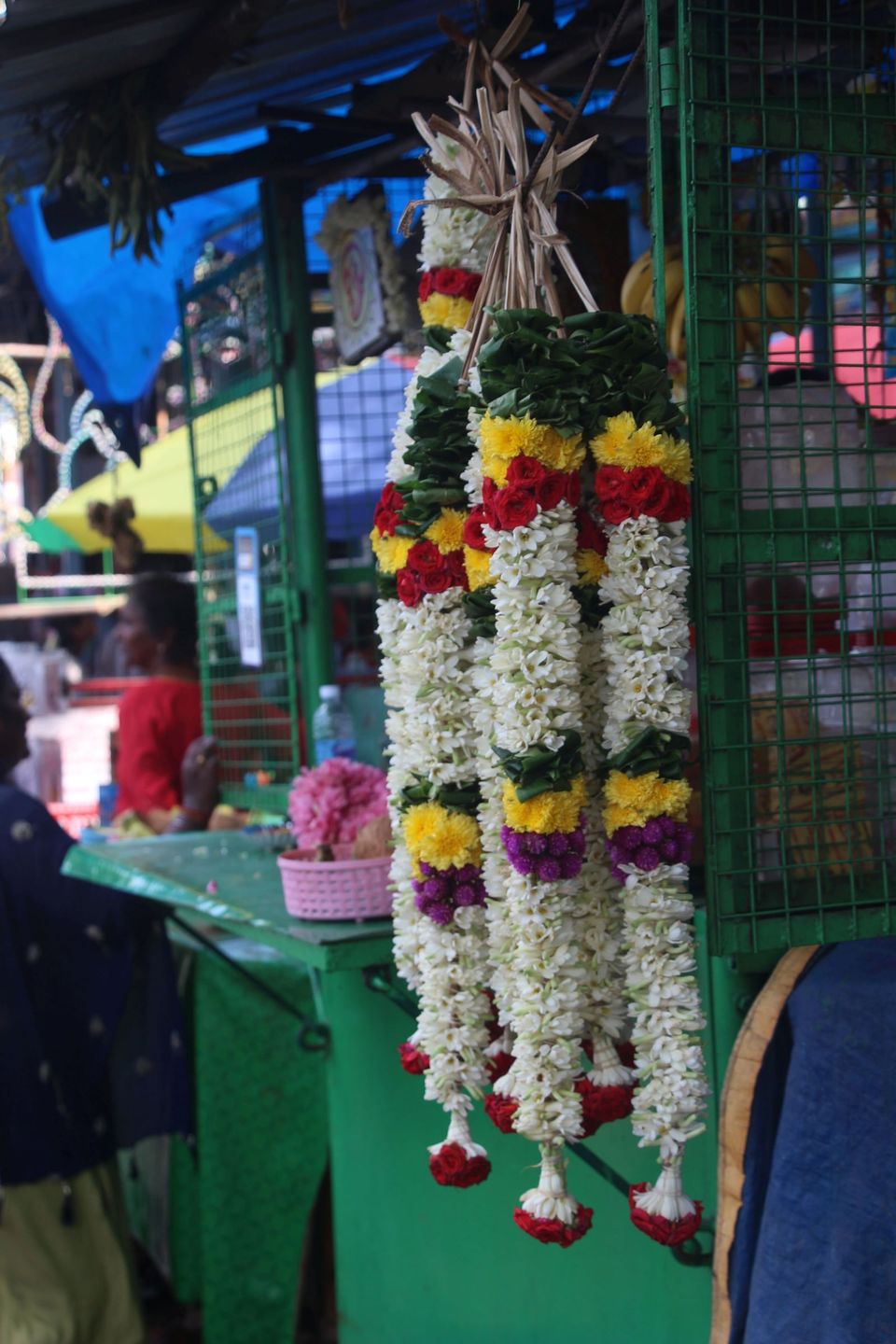
The Keeper of Perumal's Ritual Calendar
Revathi’s father Sekar mama sits with us a long while to explain the temple’s utsavam schedule. He is the man behind the Kodanda Rama Bhaktar group, and in many ways the keeper of Perumal's calendar. He introduces us to the temple’s Maniyakkarar, who attends to both this and the Sivan Koyil since the two temples are managed by a joint administration with a government-appointed EO (Executive Officer) at the helm. He is very helpful and advises us (in effect) to come in as bhaktas. Everyone takes photos, so what’s to stop us from doing the same, in that capacity. We are also introduced to Rajagopala Thathacharya, who is a goldmine of stories, songs, and insights. He is the one who first tells us that this temple draws its lineage from the Thiruvahindrapuram Perumal temple, which is one of the 108 Divya Desams–this temple is its “abhimana sthalam.” Atthi Varada figure in the Nirvagam office. Made for the prior kumbhabhishekam, should have been “released” into a water body, in Saiva temples it’s burned to ash, but here it’s an “adbhutamana” figure and so they’ve kept it with nool malai.
Read morePattusalis and Padmasalis
We’re exploring this temple a little further up MG Road into Muthialpet as a second Perumal shrine to document. This is a Thenkalai temple (the town’s big Perumal temple is Vadakalai). We walk in to 3 weddings in process, thanks Tritiya perhaps (Akshaya Tritiya was yesterday). The Bhattacharya is the same one (of 2) who had performed the Pattabhishekam and Thirukalyanam at the Kannika Parameswari temple; he tells us the younger Bhattacharya is the one permanently here, he has an IT job, but takes care of the temple. We have to come back after 10 days to meet him as he’s busy with a puja at some other Perumal koyil (which one?). Unclear how all this works. In this temple, you can see Vishnu in 3 forms: Standing as Lord Venkateswara, reclining as Lord Ranganatha, and sitting as Lakshmi Narasimha. Their Brahmotsavam is in Thai masam. There are 2 priests, a father and son, who are helpful in giving us this information until I ask about the Satyanarayana puja – which they tell me is done by another group – and when I ask how the responsibilities are split – the father quickly says these are needless questions and we can move on because they have no time to answer. A bit strange how a friendly conversation quickly did an about face. We walked out of there a bit stunned and remarking: “What just happened?” What we did learn was that this temple is also a Chettiar shrine built by the Pattusali community. Originally there was only the Narasimha swami shrine, facing West with an entran
Read moreChetty Koyil Conversations & Krittikai
We go to meet the Gurukkal and Nirvagam head at the Chetty Koyil this evening. Much to learn about how ritual calendars are organised and under what circumstances temples continue to function. We take it for granted that the temple gets rental income from its surrounding properties, but these can be uncertain and precarious sources. The Nirvagam head (Shankarnarayana Chettiar) tells us about the Ayira Vysya community whose temple this is. The community’s origin story is one not unlike that of the Arya Vysyas (whose temple Kannika Parameswari is), and will be recorded in our other notes. The similarity of names is striking, but perhaps a coincidence. Both are prominent merchant groups in Pondicherry. The community and its shrine have been around from colonial times, as we know well from entries in Ananda Rangapillai’s diaries (1736 to 1761), and have played no small role in protecting and ensuring the continuity of Hindu practices in the town. Murtis from the destroyed Vedapuriswara temple were brought here for safekeeping, we have often been told. A unique feature of the Chetty Koyil, as it is commonly known, is that it houses both Siva and Visnu temples in the same complex. Why? Because Chettiars themselves are both Saiva and Vaishnava. (We find something similar at Kannika Parameswari, which pays obeisance to both Rama, Andal etc. as well as deities in the lineage of Siva). After all our conversations, there is a Murugan abhishekam and ul-purappadu to mark Krittikai, around
Read more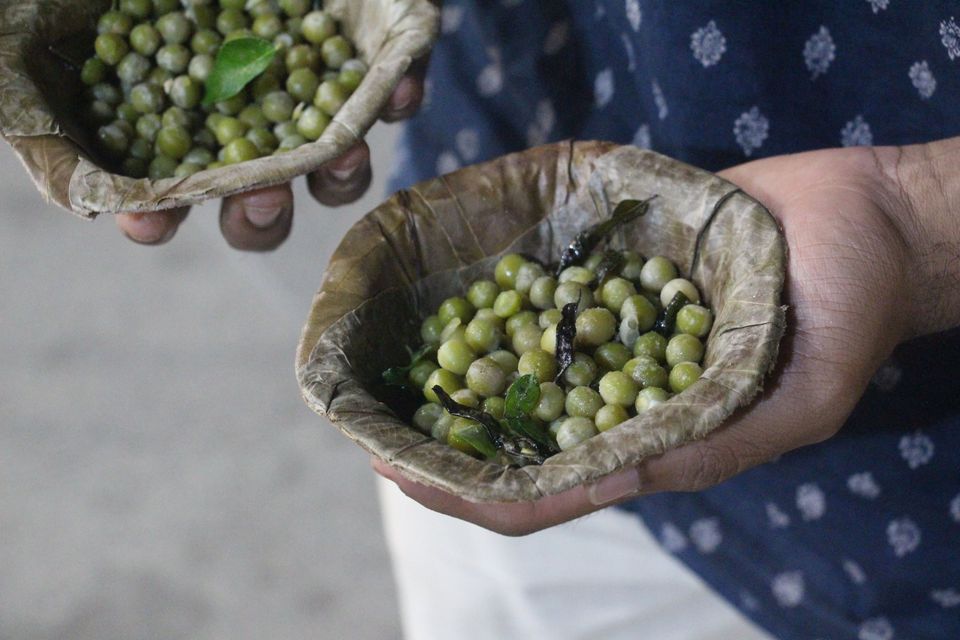
Discovering Siddhi Vinayaka Koyil
Temple seems so new, but the shrine is 300+ years old. We finally managed to chat the priest up a bit. This was the Ezhai Vinayaka temple, land had been encroached by buildings behind, took them 7-8 years to remove the encroachments, and then to raise funds for the current temple. Kumbhabhishekam happened last September, presumably at Chaturthi. The Brahmotsavam is at Chaturthi – Dhvajarohanam on Chaturthi, Avarohanam on Pournami. Temple seems to have a bit of everyone – Ayyappan, Hayagriva, Venkateswara & Garudalvar etc. The Vishnu form was apparently a koshta murti that they did pratishtha for, so kept separately. Ayyappan Sabari malai devotees come here in preparation. One lady who was there comes to sing bhajans. They propitiate all the deities there on the appropriate days (Krittikai etc.). Veethi ula only during Brahmotsavam and Masi Maham. All the deities are small, a foot or so, including the Vinayaka who looks like the Manakkula deity, down to the metal ornamentation of his body and beaten brass cladding in his shrine. Smaller deities have more power, says the priest. The priest mentioned the fact that the 8 year gap had impaired the flow of devotees – people with flower shops nearby have died, regular devotees go elsewhere now, and there’s a need to drum up interest with a YouTube channel or other social media posts. Used to be a temple for all the poor in the area (at the end of MG road), but has since become the Siddhi Vinayaka temple.
Read moreTales of Two Angalammans
Went to the Angalamman Koyil on Chinna Subbaraya street in Pondy town, met Vijayakumar subinspector who told us that on Amavasya Koozh oothara practices are important for Bhadrakali. The utsava murti was out, there had been an unjal utsavam the night before (which was Amavasya). We’re told to come again on Pournami for a similar festival. We are given koozh and then prasadam is a very nice thair saadam with carrot and mango bits. Somehow manage to carry it all around with us. I spend some time talking to a woman near the deepam table, where there are small pooshanis halved, filled with ghee she says, and with a kunkumam-smeared red thiri – they’ve used nool, should be panju for better uptake. People who want something leave these lamps – she says in odd numbers but I only see even. 6 Pooshanis, 2 coconuts (she says should be 9 moodis), and 2 limes inverted to make vilakku. At the Muthialpet Angalamman, there is less crowd. The utsava murti is out here as well, albeit locked behind bars. She is also bedecked because she, too, had an unjal utsavam the night before. Haven’t seen a deity with more arms: four concentric layers! Each extending layer containing more arms than the previous!! Both temples have “Kalkatta Kali” figures, so named because the pratishtha was done in the ‘Calcutta way’. Not sure what that meant though, and no elaboration was offered.
Read more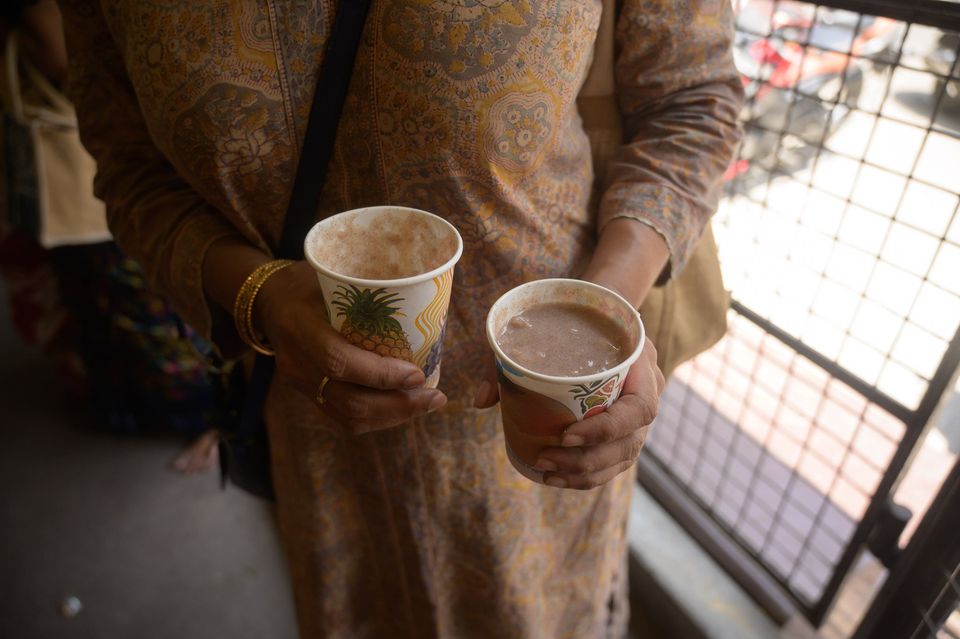
Discovering Ezhai Mariamman Koyil
Morning we go to Ezhai Mariamman down MG Road into Muthialpet, which was mentioned at Mutthumariamman last night, and find it being reconstructed, with the idol tentatively placed in a nearby thatch shack. One of the members of the Nirvagam is there. The Iyer has done abhishekam in the morning and left. He tells us that this is the oldest shrine in Pondicherry (of course!!) and that it is/was a swayambhu murti. He mentioned Sthala Purana or some sort of historical record book that was found behind the goddess, though nothing of where it is now. He also referred to the trio of Ellaiamman, Mutthumariamman, and Ezhaimariamman. Only one veethi ula, during Aadi Masam apart from Masi maham theerthavari. Mentioned how some of the temple land was illegally sold off by one of the administratives, who eventually committed suicide. It will take another two years for the construction, and the Kumbhabhishekam. We don’t know this temple at all, but feel already the hardships in its way to reconstruction. Perhaps this is why any reconstruction and renovation are treated as processes needing blessings and prayers. So much can go wrong. Nirvagam member tells us about the iconographic differences of this idol – she has a third eye and fangs, the features of Siva as well as Amman. Three murtis beautifully arranged in the tentative garbhagriha. Stone figure, Bronze figure, and Atti-wood figure [Ficus racemosa, cluster figs of the sort we saw at the Kamakshi Amman Koyil]. Pradosha murti on the si
Read more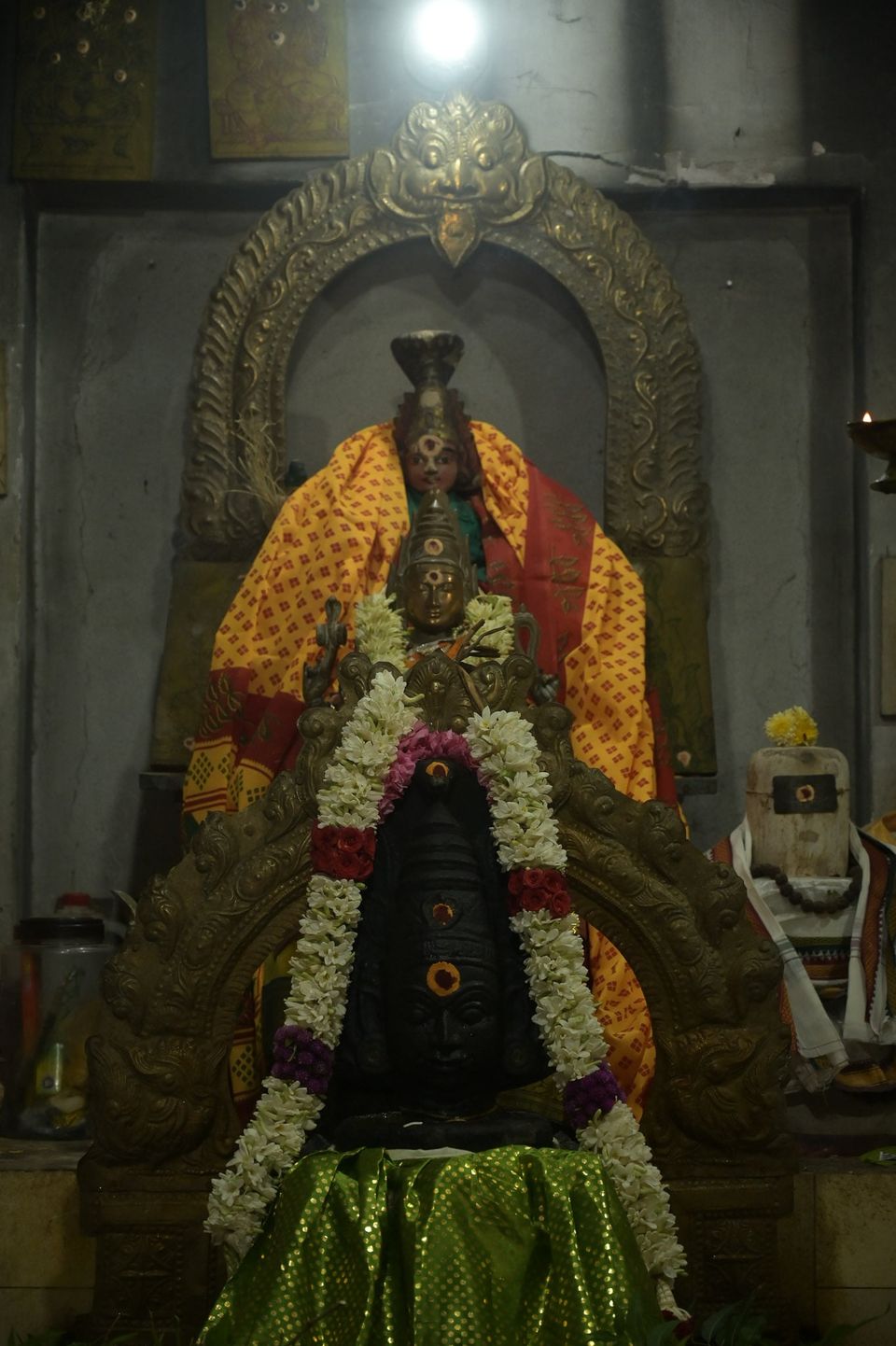
Discovering Mutthumariamman Koyil
Spent a lovely 45 minutes at Mutthumariamman. Met with a young pusari Narayanaswamy who is but a boy studying Tamil at the Pondicherry University, and with Prakash who works at the temple, following after his mother who also used to work here. They tell us enthusiastically about the special alankaram done on Aadi Fridays, when the goddess is adorned with velli ornaments. He showed us pictures of the goddess adorned with fruits all around (Thai masam). And also Chithirai Pournami, when she is adorned with all white. When asked about the Ellai Amman connection, he tells us that there wasn’t any collective veethi ula with all the three ammans together. Instead, three times a year, when Mutthumariamman goes for a veethi ula, she goes up to the ellai (border) of Ellaiamman – this happens till date. They mention the Ezhai Mariamman, Mutthumariamman and Ellai Amman as being a sort of trio. The three veethi ulas are: Masi Maham, Brahmotsavam (Thai Masam), Aandu Vizha (Aavani Masam). For Masi Maham the amman from Melmalayanur (Angalamman) comes down to Pondicherry. On her way, she stops at a Bala Tripura Sundari temple (the one near Irumbai?). She arrives in Pondy one day prior to Masi Maham, and spends that night at Mutthumariamman temple here. After masi maham theerthavari, she returns to Mutthumariamman, and then she has an Unjal Utsavam the same day or the next, when she leaves for the Vedapuriswara temple. There she has an entire veethi ula with Siva. After this, she heads back t
Read moreThe Three Sisters of Pondicherry
So of course we ask the priests at the Kamakshi Amman temple about the Ellaiamman connection, and the story becomes a lot more complex fast. Vedapuriswara, accompanied by Kamakshi amman, would go to Ellaiamman’s temple, all sisters after all, and the three deities would then remain at different places in the town – at the end of the Kamakshi amman road (the priest pointed east), near the lighthouse (as far down as the lighthouse/marina), and then what sounded to me like the end of anna Salai near the botanical garden, so that people from each of these locations could come. The trio would stop for a few hours in each place. This festival was once a 3 day affair. It has since shrunk and dried up considerably, owing in part to the destruction of the Vedapuriswara Koyil and to the ban in Dupleix’s time (the priest says) to processions and temple ceremonies. One room next to the one with Utsava murtis is dedicated to the Balalaya Chithiram or Balalaya Oviyam (etched wooden images of planned temple forms) for the upcoming Kumbhabhishekam. As long as the construction plan is in progress, there will be no Brahmotsavam. The Puducherry Kamakshi Amman is shown standing, and is seen to have a different appearance from the Kanchipuram and Mangadu Kamakshi Ammans (cf. Murugesan’s article on this temple, v1 408)
Read more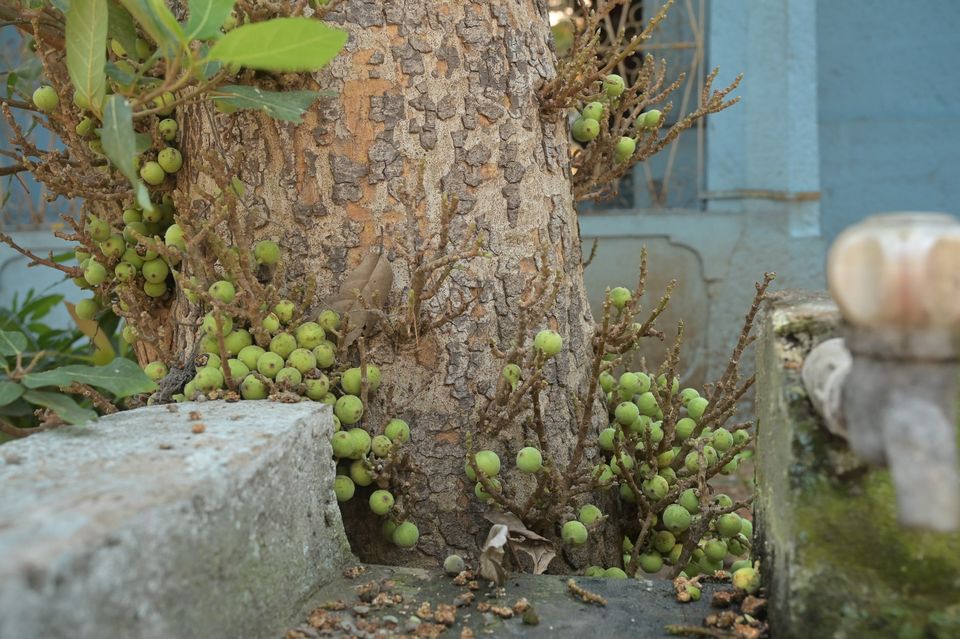
Where is Ellaiamman?
Went in search of the Ellaiamman Koyil off Bussy st. Nearly missed it, because it’s a construction zone now, surrounded largely by Muslim homes. A little surprised by the scope of the expansion, given its location. There are no other major or minor temples in the immediate vicinity. The priest (Sathish Gurukkal) tells us that this was the temple in Pondicherry before there were any others. He tells of a time when the priests of the other major temples in town, Manakkula Vinayaka, Iswaran and others would come here for the kaappu kattudal before starting their Brahmotsavams. He talks also about the Kamakshi Amman and MutthuMaraiamman deities coming to their “Akka” who is Ellaiamman – processions that would bring them here, and then Ellaiamman goes to drop her sisters back (Kamakshi Amman first and then Mutthumariamman). We start to get an idea of the interconnected processional routes of the various temples in Pondicherry town. Kumbhabhishekam scheduled for Aadi masam, but the temple seems nowhere near being ready for that.
Read moreLaksha Deepam at Perumakoyil
Went in the morning, around 1030. Saw preparations for the evening. Stands and trays have been arranged for Deepams to be lit and placed. 44th Anjaneyar Abhishekam for Varsha Pirappu just began. Watched about half of it and left. Remarked that abhishekam items were being used very generously. Apparently this anjaneyar abhishekam tradition began 44 years ago to mimic the same tradition already existing at Thiruvahindrapuram in Cuddalore. A bhaktar used to go there regularly, saw the ceremonial marking and sought to reproduce it here. We went again at 730pm, the Ramanujar utsavam chanting was about to begin (Deepa got chastised for not having a pottu! It had fallen off. Used kunkumam and looked like mahakali for the rest of the evening). 4 priests sat in front of the Ramanujar shrine and chanted from the Prabandham, closing as always with Periyalvar’s “Pallandu pallandu,” which never fails to move: பல்லாண்டு பல்லாண்டு பல்லாயிரத்தாண்டு பலகோடி நூறாயிரம் மல்லாண்ட திண்தோள் மணிவண்ணா! உன் சேவடி செவ்வித் திருக்காப். It is not mere closing but a mangalasasanam, as we will learn—uttering protective blessings for the Lord, expressing the devotee's anxious concern that nothing should befall the Lord's sacred form. We watched people light lamps and mill around the Anjaneyar shrine which was still active (and he looked super smart in embroidered clothes, set amidst so many colourful flowers), spoke to the lady removing leaves from Tulasi bunches who has been here doing this work for 20 year
Read more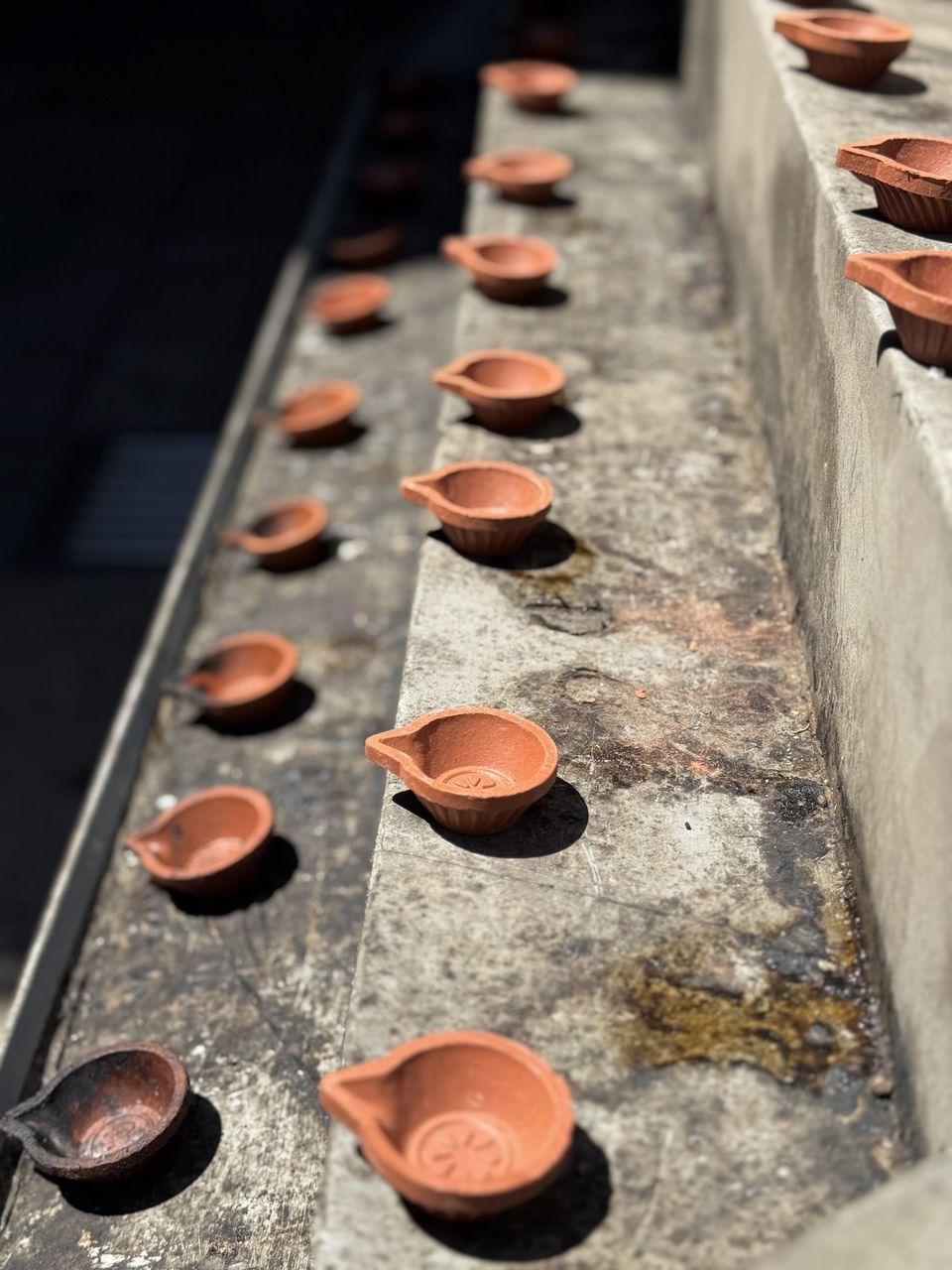
Varsha Pirappu
830am: We are there for the start of the Tamil new year. It’s heartening to see so many younger folks come all nicely dressed to the temple this morning. A pancha murti abhishekam happened – Ganesha, Subrahmanya, Sivan, Ambal, Chandikeswara. Most people present appeared to be connected to the Chettiars, they all took big group photos at the end (incl. Aruna mami). There were groups of girls around all dressed up, I wondered if they were Malayali from PU. They didn’t seem part of the Chetty group. Once the ull-purappadu of Siva and Parvati upon Adhikara nandi was done, we were all sent out and the gopuram doors were shut. Shortly after, they were swung open, revealing to the people (or in our case, re-revealing) the Lord and the Ambal borne by Nandi, through the Gopuram. Perhaps this is the reason to call it “gopura darshanam”?). After Siva was brought out onto the road, puja happened at the Perumal shrine and He was brought out from the temple’s North Entrance (each of the 3 entrances is named for the sannadhi most proximate – the South entrance is Gnanambigai Amman). Perumal, however, had no such dramatic entry onto the roads. Perumal was on Garuda Vahana and Sivan on Adhikara Nandi – the combination is special and not to be seen on other days, the nirvagam head Sankaranarayana Chettiar told us. The two vahanas are in part human, part animal forms and both are silver–they “match” in some sense. Siva and Vishnu with their consorts going around the temple on the new year day I
Read more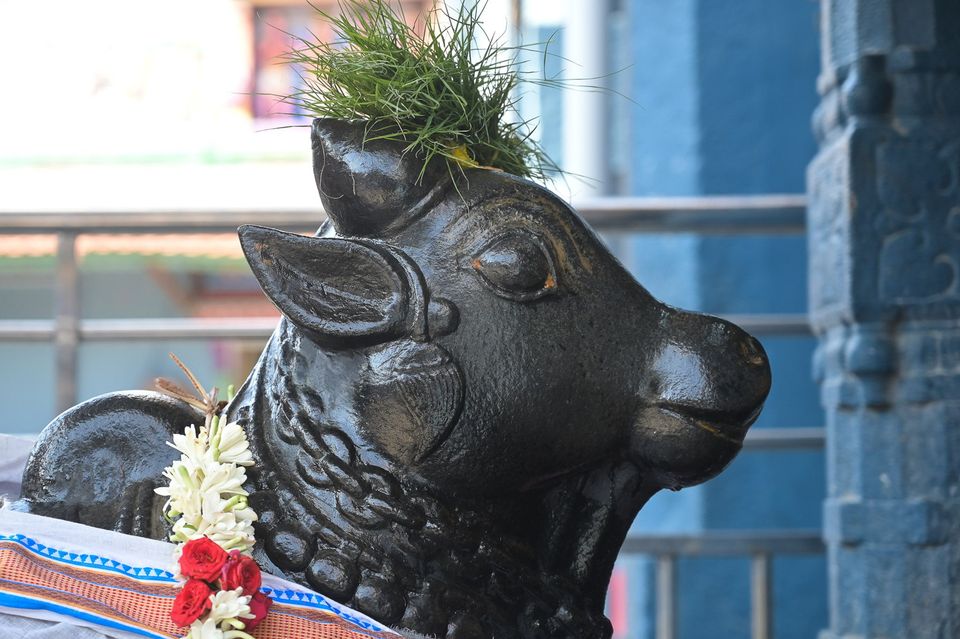
Getting to Know Ritual Cycles
We spend a few hours with the priests (Jayashankar Gurukkal and Sridhar Bhattacharya) of the Chetty Koyil gathering the temple’s practices and annual ritual calendar. It’s a little confusing at moments, partly because we’re learning how the temples keep and time their pujas and utsavams, partly because there is some confusion on what pancha paruvam means in this temple’s practice (there was debate on whether chaturthi gets included in it or not). If the Chetty Koyil follows the model of the Vedapuriswara Koyil, as we soon learn it does, then the Pancha Paruvam are: Masa pirappu (birth of each new month), Pournami (full moon), Amavasya (new moon), Theipirai Ashtami (the 8th day of a waning moon), and the monthly Sivaratri (Chaturdashi of the theipirai period, or Krishna paksha). Ganesan sir asked us to ask about Nityotsavam, but there was no clarity on this. Kotiswarar is new at the Chetty temple, Jayashankar Gurukkal has been there since 2012, Sridhar Bhattacharya at the Perumal temple within the Chetty Koyil complex has been here 20 years, but in no case does there appear to be a very long hereditary line of priests managing either the Sivan or Perumal koyils here. The Perumal Koyil is also relatively new; Kalathiswarar is the truly old deity of this place.
Read moreChetty Koyil's Sunday Night
Aruna Mami has wanted us to take her over to the Chetty Koyil for the usual Bhairavar abhishekam that happens there on Sunday evenings. Kodiswarar Sivacharya is there performing the puja to Bhairava. Most other temples’ Bhairava pujas happen only on Bhairavashtami, but here he cites some relation (how?) to Sharabeshwara (or Sharabha) pujas done on Sundays in the Thirukanji temple (Villianur) and how that practice came here as a result. A woman reciting the Bhairavashtakam nearby asks why he needs to go as far as Thirukanji when Sharabeshwara pujas happen at a temple in Morattandi – a place which is a Siddhar jeevasamadhi. The connection between that and the Chetty koyil practice isn’t clear. The lady says it’s a time when any Ugra Murti (bhairava, Sarabheswara, Durga/Kali) can be propitiated. The 4th kaalam siva abhishekam is going on. We leave for a glass of coconut milk sharbat at the stall outside, next to the one in which that lady makes those excellent paniyaarams.
Read more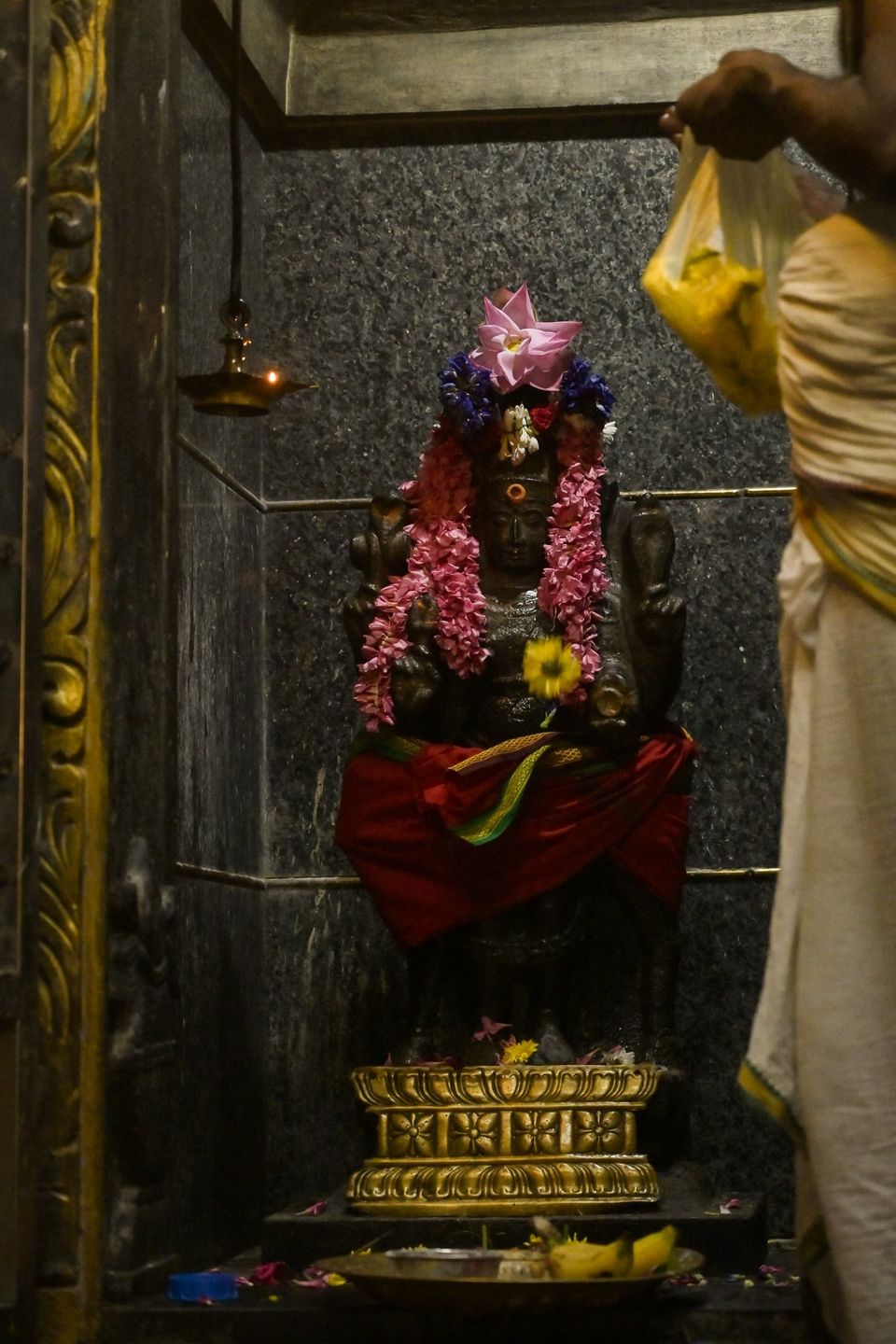
Kodanda Rama's Utsavam ends with Panakam
As we enter the temple, there is a private bhajanai group singing before the Pandarinathar shrine. Apparently they gather here every Sunday from 6 to 7, and it’s open for anyone to join. They come from different parts of town, and on Saturdays, they have longer bhajanai sessions at the Pandarinathar shrines close to their respective homes. Thiruvonam nakshatram today, Perumal’s nakshatram–marks the formal close to the Ramar Utsavam. We go at 7pm. Puja is a simple one, no special alankaram for Rama, simple (gorgeous!) veshti, a few malli malais and a strand of malli tied around his crown – it was the most beautiful. We are told to come back day after tomorrow, April 14 for “Laksha deepam” in the evening – it’s Tamil New year that day. After the puja we sit (Aruna Mami from Chetty koyil is here and keeps a space for me) and everyone gets a leaf. Panakam comes directly in bare hands only, just enough to catch and slurp in reverence. The rest is a simple Kosambari and a thair saadam which is more rice than curd but delicious. Monday, April 13 begins 10 days of the Ramanuja utsavam. Not a moment to spare!
Read more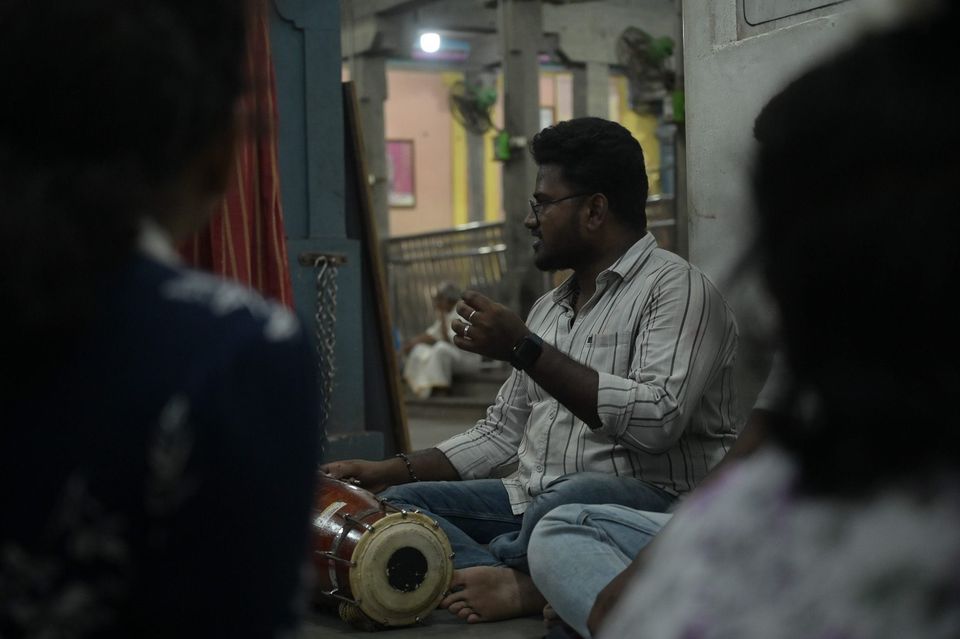
Rama's Unjal Utsavam
Ramar Utsavam penultimate day, Day 24. Arun goes for this. Nadaswaram team already performing as I enter at 730pm. As one enters, to the left of the Dhvajastambha on the prakara, an entire stage has been set up for them. The bell is also being sounded by the same dedicated gentleman Deepa di and I met the other day. Utsava murtis are in their chamber, behind the drawn curtain. The unjal utsavam is to happen in the Vasanta Mandapam on the temple’s north east corner, and it is kept lit. There’s a long queue for the Varadaraja shrine, but as I join and complete my darshan, it seems to be just a regular line, perhaps crowded simply because of the utsavam that is about to begin. I also notice the golden lizards in the ardhamandapa. The circumambulatory path around the garbhagriha is closed on the right. So one can walk past the garbhagriha to the left, but must exit from the opening at the back which faces the Narasimha shrine. Rama comes out soon, and the procession is very festive. The music is slow and sublime, matched by Rama’s gracious swaying advance. He goes around the temple, pausing multiple times for significant durations, lost in the alai of the music. Upon reaching the ardhamandapa he takes some time behind curtains again as he is raised onto the dais and made comfortable upon the unjal. And once his beloved Anjaneya is brought to him, the curtains open and we discover Rama in all his reposed glory. A few moments of magic when the electricity goes off periodically, lea
Read more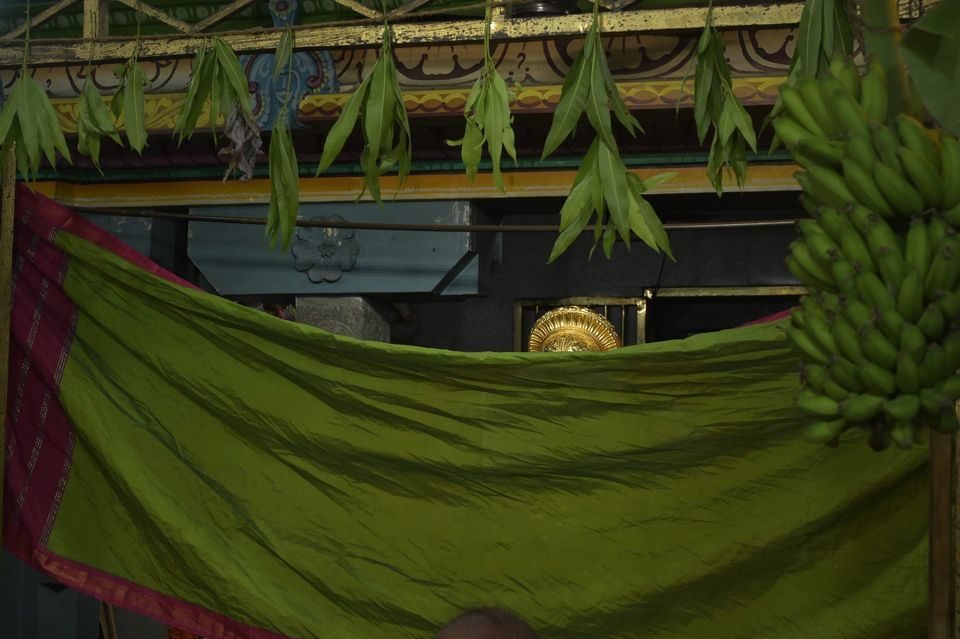
Rama in the Mutthupallakku
Another Vidaiyatri event. Reach at about 730pm. The pallakku is out by the gate. The mutthus of the mutthupallakku are now just painted gemstones, not studded. Maybe the serial lights count? Deeparadhanai followed by the emergence of Rama, regal as ever, from his chamber. Sita and Lakshmana on his sides have mutthus embedded on their necklaces. One round of the temple prakara, and out the gates into the pallakku. Another Deeparadhanai upon mounting followed by a long stay before the temple gates for devotees to seek blessings. This was perhaps the longest pause of the purappadu (though it’s even before the vehicle has purappad[ed]!). Meanwhile the special Nadaswaram team came from (Kolapakkam, SW Chennai). They were sublime. Playing at the front of the pallakku while it stood before the temple. Or maybe we can theorise that the pallakku did not move until the Nadaswaram team finished with their piece which had everyone rapt! This was a concert in the street, no bookings or tickets needed. While this was at the front of the pallakku, another independent bhajanai group appeared at the rear – singing and dancing, and with a vilakku of their own. That was music of an entirely different character and tone. But for the pallakku in between, it would have been discord. People along the way paid as much respect to the nadaswaram players up front as to the bhajanai group at the back–offering money, seeking blessings and generally approaching them with folded hands. Both groups of artis
Read more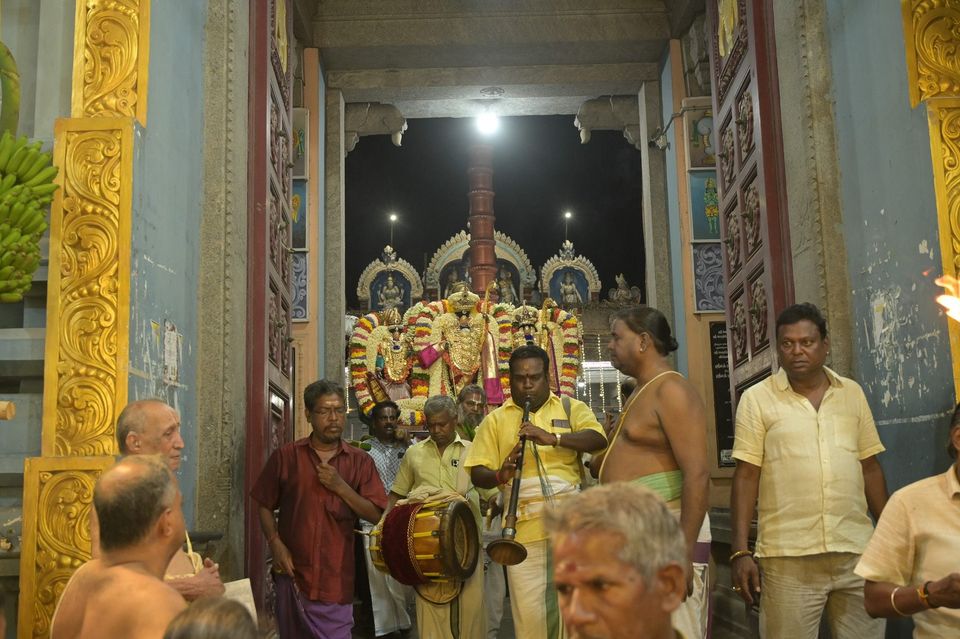
Rama's Theppal Utsavam
Election day in Pondicherry! We’ve been told to come to this utsavam, perhaps because it’s a bit grand and unusual. The more formal parts of the Ramar utsavam over, this is part of the almost-recreational Vidaiyatri. Perumal (the carpenter who has worked at ours) is there, carrying one of the torches–it takes us a minute to place each other, totally out of context. After that, he comes by to make sure I’m ok periodically, and that I know what is going on. The deities (dressed with pointy shoes and jaunty headgear, fabrics clearly from the north somewhere) go around the temple prakaram once, stopping at the main shrines along the way and then placed onto the theppal. Deeparadhanai happens, and then they push off. 9 rounds of the pond total, the first with music, the second with vedam chanting, the third with prabandham chanting, and all the remainder with nadaswaram music. The same players from the Chetty Koyil are here and they do a fine job. They seem to play generally loved and known songs (Dikshitar’s “Akhilandeswari” in Dwijavanthi, composed at the Jambukeswarar Temple in Thiruvanaikaval, located near Tiruchirappalli (Trichy) as goddess Akhilandeswari is the consort of Jambukeswarar; “Aadu Pambe,” by Pambatti Siddhar (or Pambatti Cittar) in Punnagavarali, played at a few speeds, which I very happily posted on Instagram stories with dancing snake emojis). No specific focus on Ramar paattu at all. When the Rama comes back from His outing, the group is carried by several me
Read more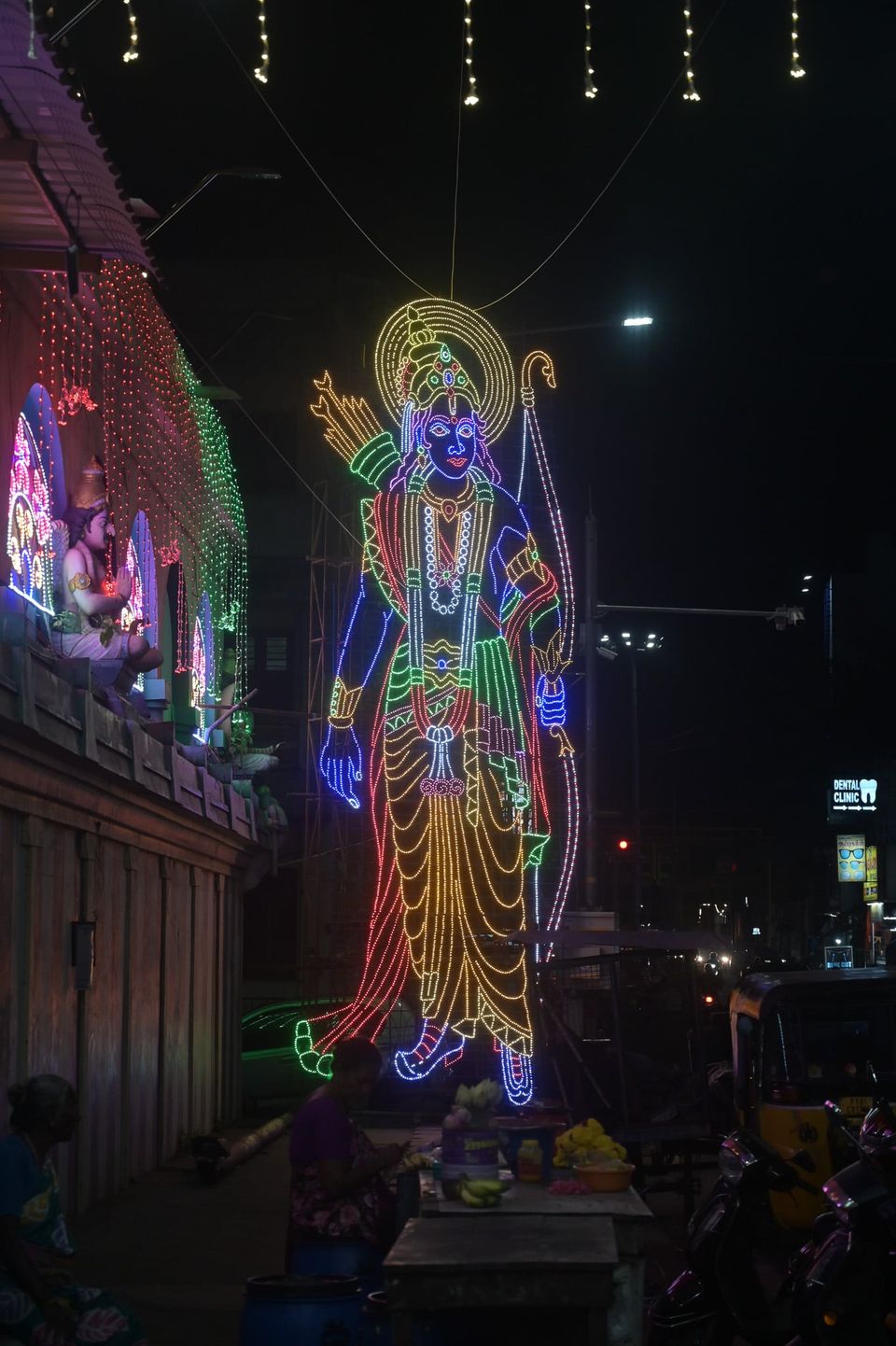
Getting to Know Ritual Routines
1030am when we get there, and there is a Thirumanjanam going on in the Kodandarama shrine. Done simultaneously to both the utsava murtis and the main murtis in the shrine. It’s very beautiful, several have gathered–men inside the enclosure, others sitting on either side outside. The process is the same as we’ve seen elsewhere, except that every time a substance is washed off, there is dhoopam (with dhoopakal), deepam (with kodi vilakku) - thattu vilakku, ie thrice. One of the security guards helps us understand where photography is permitted (though the contradiction of important people taking photos of the moolasthanams and the practice otherwise being forbidden is evident). People are aware of the many contradictions that structure the daily functioning of the temple, but they find ways to make peace–by speaking of the importance of true devotion, God’s attention to us all regardless of status etc. Or at least they say they do!
Read moreWhat a way to enter the Perumal Koyil!
Our introduction to the Varadaraja Perumal Koyil was to find ourselves deep within the Ramar Utsavam, already on-going (it had started on March 19, and would run till April 12). This was already Day 20, almost the end! Ample proof that this work of temple documentation cannot happen by “finishing one temple and then moving to another,” but that all temples need to be followed simultaneously. The methodology we’d need to adopt for this work became clear at this point. We went at 715pm, directly to a mandapa on Shankardas Chettiar street, two roads from the temple towards the Atithi hotel crossroads. This place was once a nandavanam which has now been paved and built over by the family who bequeathed it to the Perumal temple. There’s a 1919 stone inscription indicating who built it. The family’s home remains next door. The elderly man whose family made this donation to the temple now lives in Salem, he claimed to be the 7th generation continuing this tradition. You can see the temple gopuram from the entrance to their mandapa area, a special point of happiness and pride. It was amazing to hear how much these lineage traditions are valued, treated as sacred, and upheld generations later. Normally, utsava murtis from the main temple do not visit peoples’ homes. But this is an exception, which the elders have made arrangements for and the family takes this relationship very seriously. The murtis are brought here, a small puja performed, deeparadhanai, and then koyil prasadam for a
Read more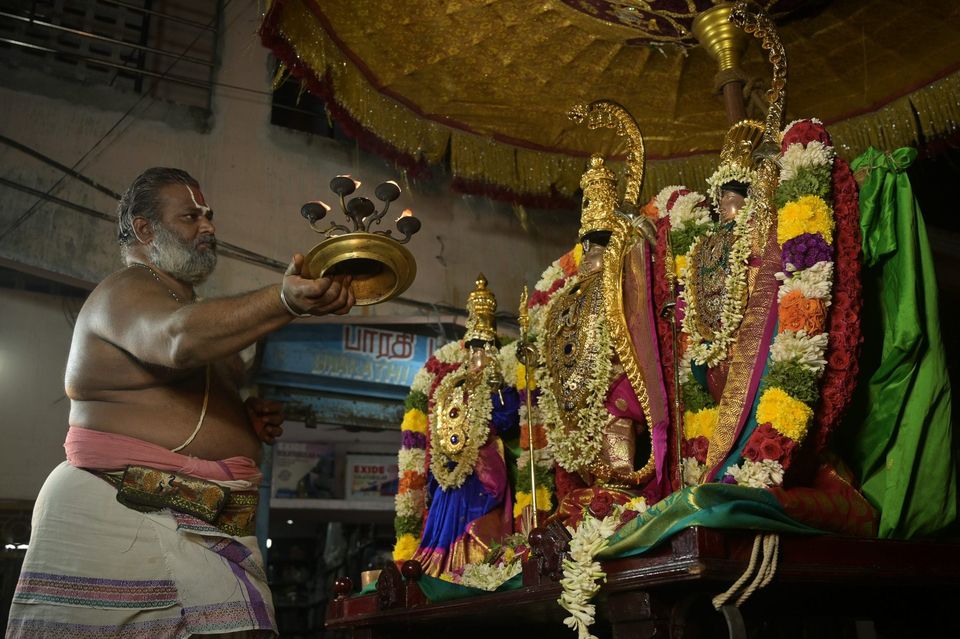
Five Vinayakas on the Street!
The japahomam starts in the morning when I am busy at the Kannika Parameswari Ramar Pattabhishekam, and continues through the afternoon. The event is livestreamed here (Britain Tamil Bhakti). We attend in the evening for the Pancha Murti Vinayaka Veethi ula. The utsavars are all dressed up, 5 vinayaka forms in all. The vandis are ready outside but everyone is waiting on the ubhayakara who must be there, and only then the swamis are taken out around the temple prakaram. Timing given is 7pm, but the swamis don’t come out until 9 (the waiting, the delays), and the procession starts around 930pm (and go up Nehru street, where we follow them, but after that what route?). We go home and return twice in this process. Meantime, the vahana and vandi owners have been around and waiting since 730pm – they’re paid for this work, so they don’t care Everyone works part time, they have day jobs. The man we speak to works at a school in a maintenance role. We speak for long about the part time gig-work like system all around, as being the only way to make things work – from the priests down to the men arranging the carts for street festivals. The Gajavahana is from the Chetty koyil, we learn from the man managing them, that he coordinates 40 temples, and they share these resources between them freely. No cost. If a temple asks, they give. Revathy is the lady manning the shoe stall, she’s from Tirunelveli. Talks to us about the costs of the tenders for the shoe and shop stalls, that people le
Read more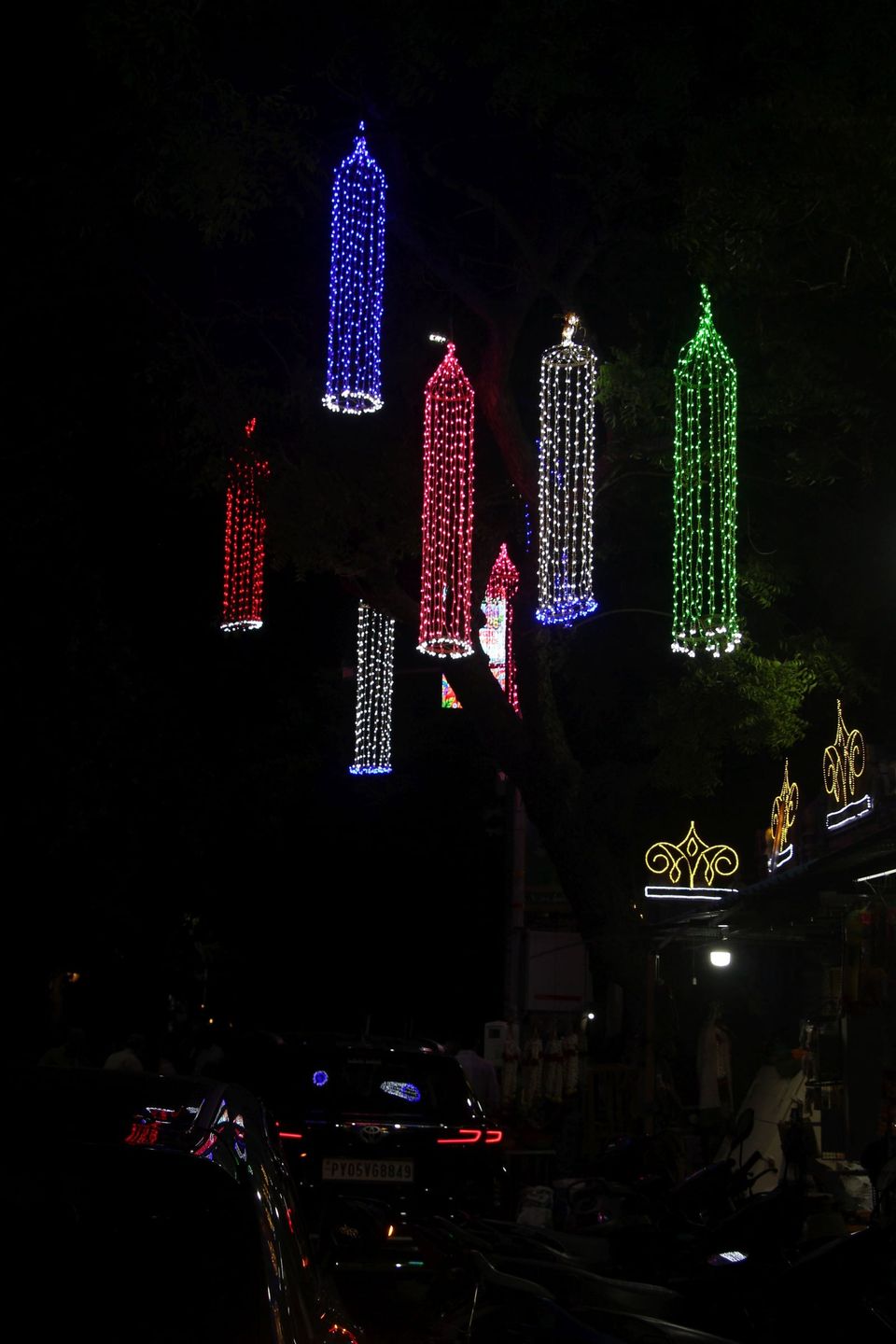
Kannika Parameswari's Ramar Pattabhishekam
Rama Navami and Rama Pattabhisheka Vizha, Day 11. Sri Sita Rama Pattabhishekam & Iravu kaalam Veethi ula Street festival (we missed the latter, a very silly thing as this temple does not do too many such.) The event is 10-about 1pm (though we get there at 9 and Arun leaves at 930 or so). The routine pujas to the main deity have been performed and people are having breakfast when we reach–buttermilk, panagam, pongal, sundal. Two bhattars are there to perform, the main priest acts as helper. The whole attending crowd knows each other, so I stand out very visibly. Nobody seems to mind, but I get asked about my camera, whether I’m Iyer, whether I’m with the media etc. all the time. The ubhayakara are the owner of Ram Silks – he and his brother of Ram Thangamaligai, but I cannot tell who latter is. The ladies present decorate the crown, and I also see them being asked to prepare flowers or help break up the wood pieces used for the homa along the way–these tasks are not reserved for the priests. Nor are they outsourced to teams of professionals, as we’ll see in other temples. There is a homa performed and a long period in between when the priest indicates to the nadaswaram players to play specific ragas, as with the Dhvajarohanam at the Chetty temple. Mahalakshmi Aunty (the one who teaches Annamayya kirtanas, she shows me her book in Tamil) and a few other ladies also sing. The event has the feel of a simple bhajanai mandapam. I’ve to rush home, get my half-prepped lunch together
Read more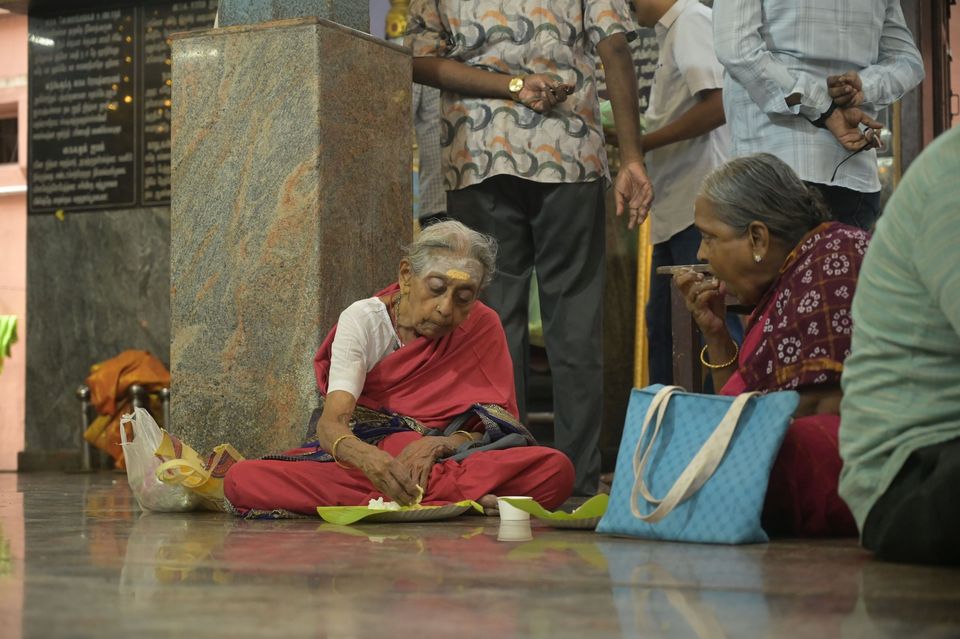
Kannika Parameswari's Ramar Kalyanam
Rama Navami and Rama Pattabhisheka Vizha, Day 10. After Chetty Koyil Shankhabhishekam, a rapidfire blitz visit to Kannika, where the Kalyanam had been on all morning. The day had consisted of: abhishekam, alankaram, deeparadhanai, wedding procession (around the temple prakaram), exchange of garlands, Sankalpam, Vigneswara puja, Thirukalyana homam, Purnahuti. Thirumangalya danam and Prasadam after noon. Entered, took photos from as many angles as I could, got out.
Read more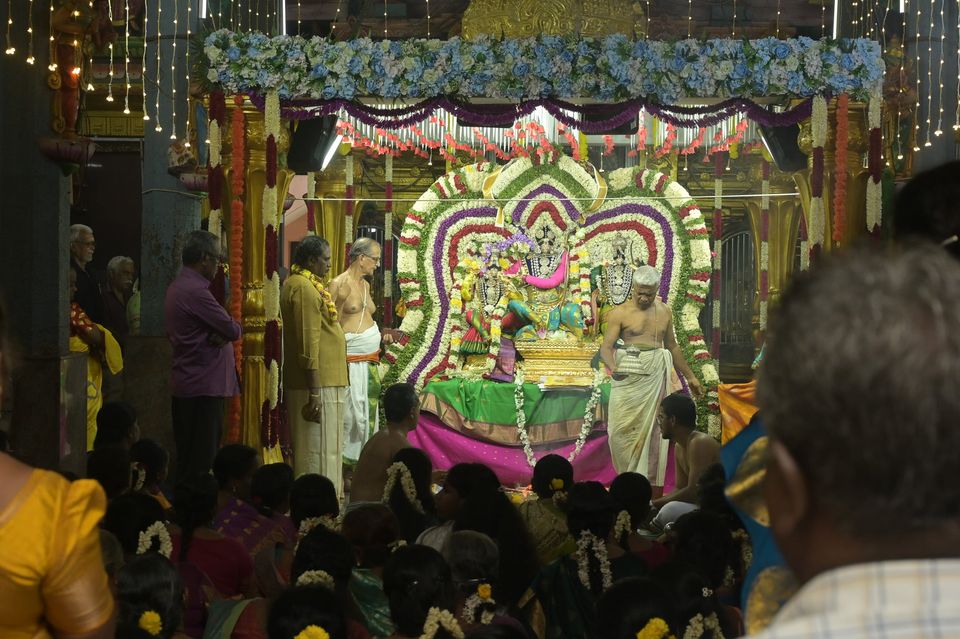
Chetty Koyil's Shankhabhishekam Vidaiyatri
Shankhabhishekam from 9 to noon. Very very beautiful the abhishekam of all the utsava murtis. Completion concludes the Brahmotsavam. Got to sit and have a small chat with Venkatesa Gurukkal, while the abhishekam was still being prepared. The Shankhabhishekam done on the main inner lingam was such a strong experience. Induced a very intimate self-giving. Here is the rough schedule: 919am, Chanting at yagasala, while Shankhas are made ready inside. Preparations on vandi, all utsava murtis loaded and taken to mandapa area. Arranged on elevated benches. Order (left to right): Ganesha, Murugan + consorts, Somaskanda (with Parvati and baby Skanda), the Astramurti, Chandrasekara with Gauri, Gnanambigai + Chandikeswara 935am, Deeparadhanai at Karpaka Vinayaka shrine at back, to start things off 940am, Nadaswaram team playing, seemingly by themselves. 945am, With venkatesa Gurukkal, chatting about how the Shankhabhishekam marks the end of Brahmotsavam and how shankhas bring punyam. 1000am, Moolamurti and Gnanambigai Abhishekam 1024am, Utsava murti abhishekam 1051am, Rosewater waiting in kalasa. All paused. Maybe waiting for shankhas? Plenty of smoke coming from yagasala 1112am, Yagasala gathering, chanting, music. Deeparadhanai – preparations for the Kalasa purappadu. Pori poured into a flat basket, held by thalaivar. Pori handed out to devotees. 1120am, Kalasa purappadu. 2 Kalasas from yagasala loaded onto two priests heads. Pori throwing on them before dhvajastambha. Walking around
Read more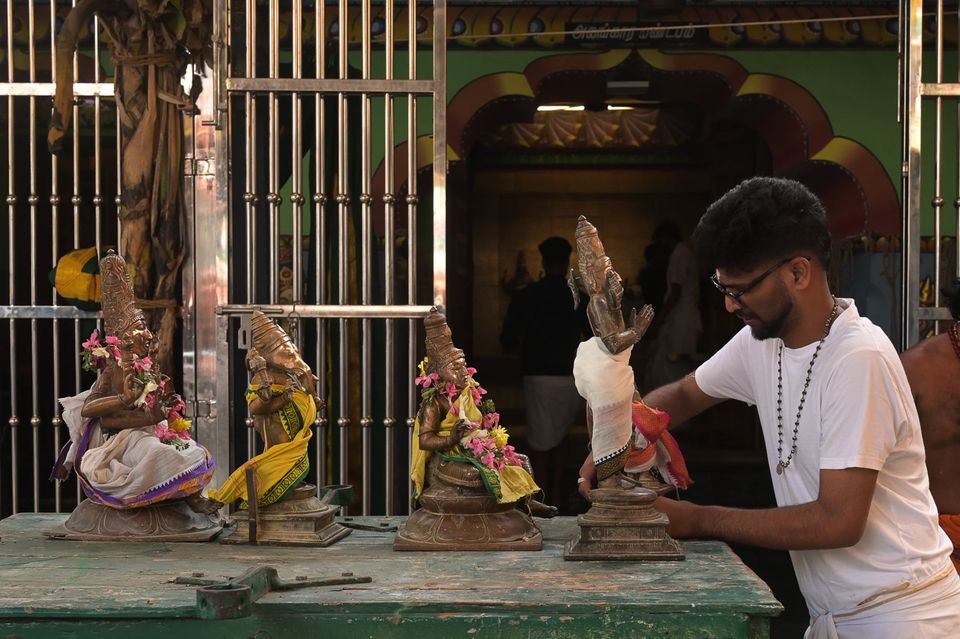
Meeting the Manonmani Family
After a few failed tries, we finally met the Iyer at the Manonmani koyil today. A lady who had been at the Manakkula Vinayaka temple was there also, and recognised me from having talked to the shastrigal at the Murugan shrine there. It will be the first of many such inter-temple encounters. A few people stop by, “because it’s Friday” says the priest, including a large man in white with a BJP pin, who steps out from a car with 2 attendants. I think he said he has a cloth shop somewhere in town. There is a class of struggling priests, as we will soon learn, who are often government employees or former lower-level company workers who perhaps would perform pujas or archaka services at their local functions/ workplace shrines etc. They moonlight in a range of roles, as bus conductors for instance. Their attendance to local shrines is both supplementary income and a hereditary-vocational continuity. They’ve not necessarily received formal training at Pathashalas. One Iyer told us once that you can learn how to do basic alankaram and aradhanais by watching YouTube videos. The Manonmani theruvu koyil as such is run by a family which lives in a building just across (originally Malayalee from Mahe, long-settled here) and which has recently, just before we come with our inquiries, lost a son–the man who used to attend to this temple, to a heart attack. He, too, had been a government employee. His mother talks to us and tells us the temple story. The Manonmani Amman, she says, came from
Read more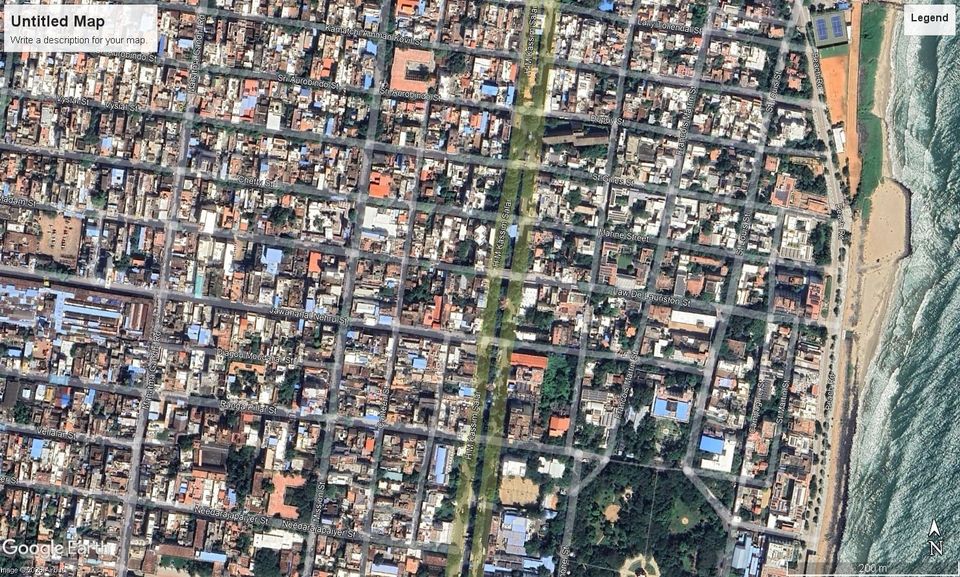
Pancha Murti Unjal Utsavam
By 645pm we are at Chetty Koyil. Unjal Utsavam preparations going on. We remark that it is a more laid back event than the other days. Seems more ceremonial than ritual. Utsava murtis are decorated inside, then brought out and taken to the unjal – a makeshift of multiple wooden benches tied together. All the murtis are properly placed, but Ganesha and Chandikeswara are found to have no space on the unjal. More makeshift solutions ensue, with two little stools tied to the front of these benches to accommodate the lone two. This adjustment delays the ceremony quite a bit. But the Nadaswaram team doesn’t let the delay drop your spirit! We also visited the Varadaraja Perumal shrine there. Noticed that Anjaneya in his side shrine was smeared with butter and fruits! The unjal swinging began. The atmosphere was that of a wedding reception. Gods brought out to sit and swing swing swing, while the nadaswaram troupe play a concert, uninterrupted by the otherwise necessary crescendos which must accompany an aradhanai. They seemed to play an assortment of popular kritis, nothing very unusual. Priests stood around being photographed–it was as though their work is done, and this ceremony allowed them to sit back a little and be acknowledged. We leave after watching awhile.
Read more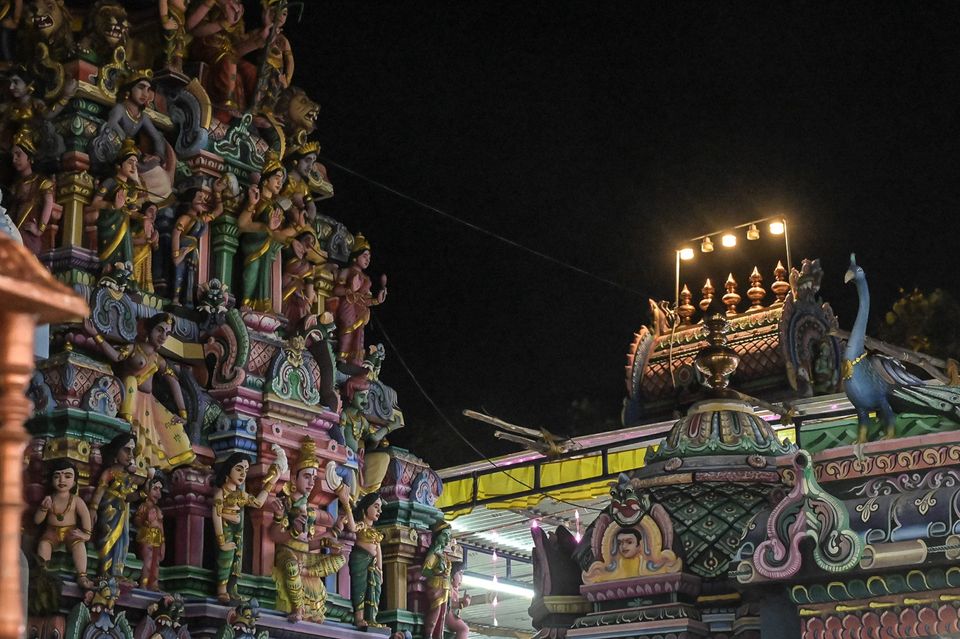
Sahasrashankhabhishekam at Manakkula Vinayaka Koyil
Shankhabhishekam. No photos in this temple, so all we can do is take notes for whatever little we're able to ask the priests. They've a steady stream of work after all. How do they get to the sahasra-shankhas, I wonder. Perhaps by repeating the same process across puja kaalams? 7am second kaalam yaga pujai, Visesha homam Divahuti, Mahapurnahuti, Deeparadhanai, 1030am Yattiradanam, Kalasa purappadu, Moolavar Kalasabhishekam, 1008 Shankhabhishekam and 108 for the Utsavar. Dhoopa-Deepa-Naivedyam, Shodasha Upachara Deeparadhanai. 630pm there’s a dance performance followed by an utsava murti veethi ula. The utsavar was taken around the temple, and on a Veethi Purappadu following that. Livestreamed here.
Read moreA Lone Theerthavari on Panguni Utthiram
It is a full moon (pournami) tonight, so the Chetty Koyil does its Brahmotsavam-associated Theerthavari tody. Not sure why they do it in the sea rather than at kenikulam, or what the specific association of Nataraja is with this culminating cleanse. At any rate, Deepa was in Lawspet, so Arun went for this intense but fulfilling morning. 7am - Procession preparations. Chandrasekara and Uma murtis are in a palanquin, still inside the utsava murti chambers. 728am - The palanquin is brought and placed outside, while preparations are being made all around. Soon the curtain of Natarajar Sannadhi opens and I witness the magic of a Nataraja aradhanai for the first time. 738am - Nataraja and Sivakama Sundari are brought out on shoulders. They process around the temple prakaram, stopping in front of the dhvajastambha to face the sanctum. Completing the ul-purappadu, the divine pair exit the temple towards the temple chariot standing at the entrance, facing north. I was convinced Nataraja would be made to board the ther, because the rite is called the ‘Nataraja Theerthavari after all – I was about to be surprised. Nataraja and Sivakami merely went round the chariot three times, and stood still facing it awhile as though blessing it. The priest dropped incense ash at every wheel and tossed flowers at the chariot, and Nataraja-Sivakami returned to the temple, processing once again around the prakara to get back to their mandapam. Turns out Nataraja only oversees the Nataraja Theerthavari,
Read more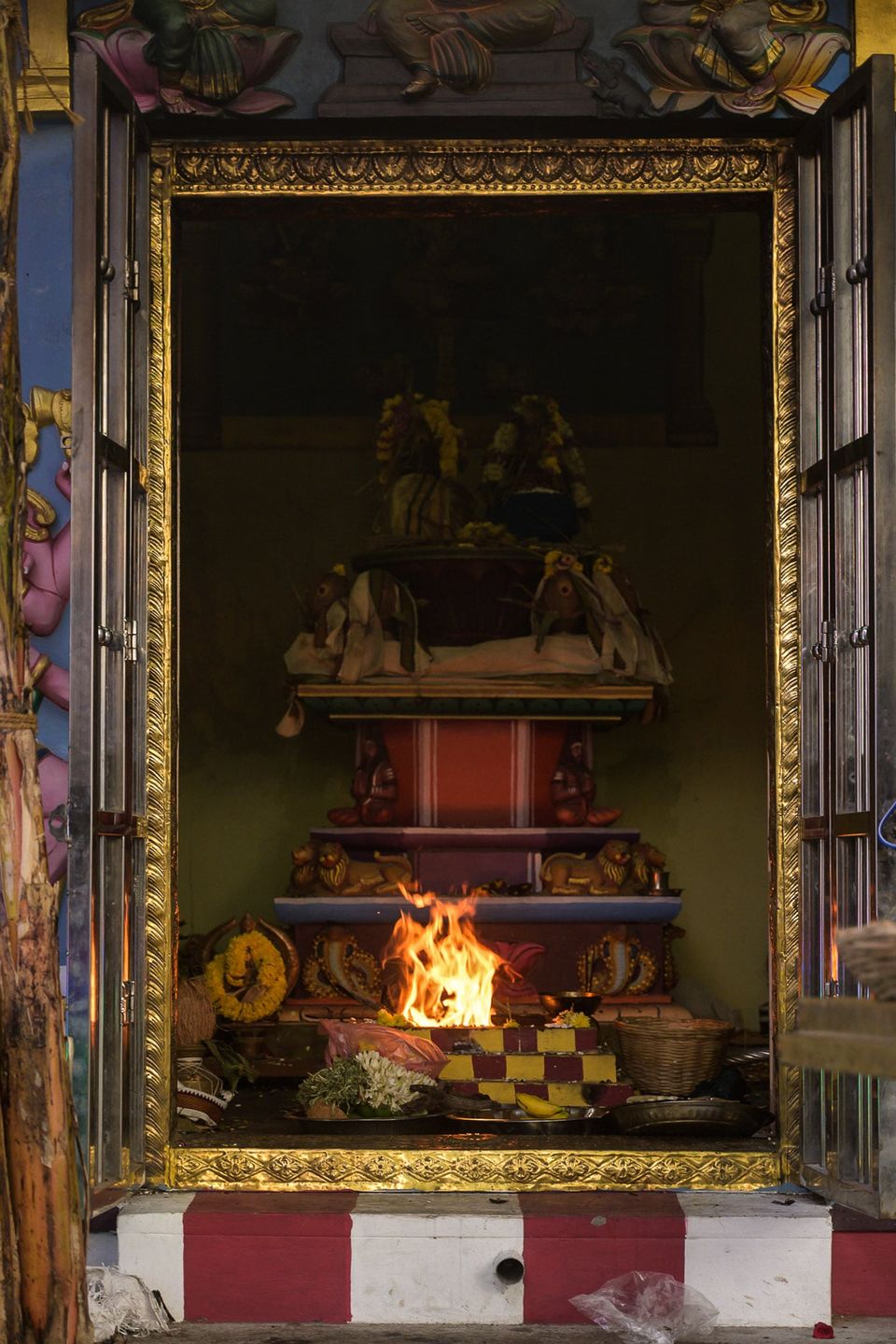
Lawspet, the morning after Panguni Utthiram
Deepa visited the Lawspet Subramania Swami temple in the morning for Panguni Utthiram. It turns out the Murugar Kalyanam happened last night, because the Utthiram Nakshatram began yesterday and ends later today. Ramanan Gurukkal from the Mani Mutthumariamman koyil near Kamban Kalairangam/ Nelru Bazaar is there – he is mostly at this temple and goes to the Mani Mutthumariamman shrine on Fridays for the weekly abhishekam. He speaks of the importance of the Vel and the special pujas that can be done here. The golden chariot which was acquired four years ago is taken around for ul-purappadu on Krittikai, but can also be arranged for personal pujas on request. He makes sure I have prasadam (sundal and kesari) and takes me to the Old Vinayaka who sits beside the main Subramania Swami shrine–into which we could go directly and take all the photos we wanted. The Old Vinayaka was of course the first here, before the place became a Murugan shrine Many women come that day with then-thinai (honey-foxtail millet) maavilakkus, each of which had six dots of kunkumam; this is a traditional offering on all days special to Murugan. Many ladies also offer lamps with panju thiris arranged on betel leaves and so on. There is a steady stream of devotees, moving effortlessly like flowing water, waiting where they need to and doing what they need without bother.
Read more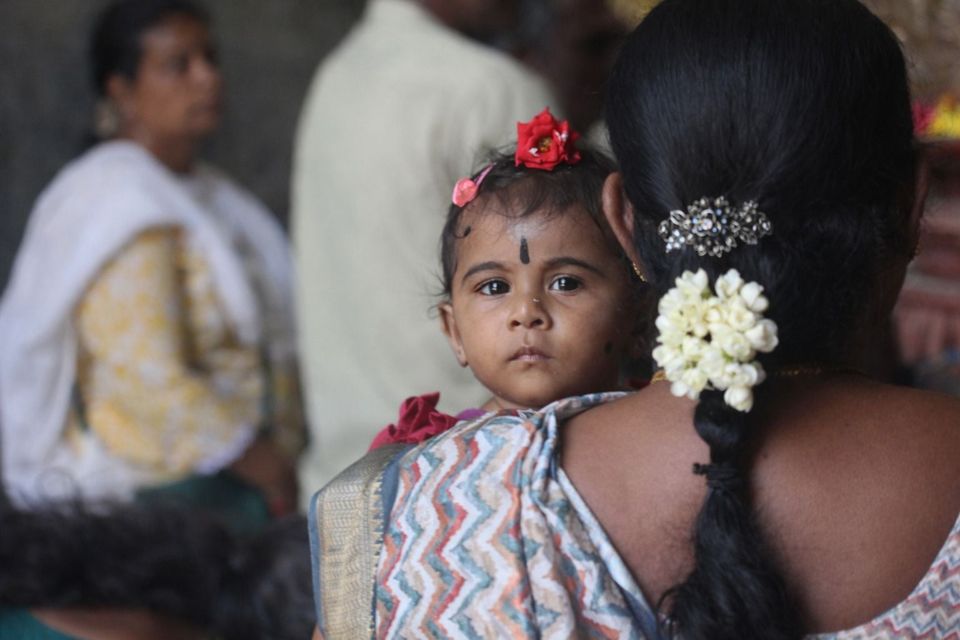
Preparing for the Sahasra Shankhabhishekam
The patrikai mentions: Vigneswara puja, Vastu Shanti, Mrtsangrahanam, Ankurarpanam, Yagasala 1st kaala yaga puja, Purnahuti and Deeparadhanai. 7pm – Just as Arun is about to enter the temple, a host of priests emerge with various thattus and a kalasa. Accompanied by thavil and nadaswaram, they move to the sthalavriksham for an aradhanai. It is a surprise to find the sacred tree in a remote corner, tucked behind the thronging shoe-stand. The host soon goes back into the temple to prepare for the Shankhabhishekam. 712pm – The stage has the usual panca-Vinayakas at the back, with a homa-kundam in the centre. Right behind the homa-kundam, on a platform, are two conches – one beautiful large white conch with a silver-capped tip, and an even larger conch that is entirely covered by a silver kavacham. The other smaller conches are prepared and kept on the right corner of the stage. A small carpet is laid down for the ubhayakara sankalpam in front of the utsava stage. The rest of the crowd is kept behind by barricades. The man sitting for the sankalpam alongside his wife turns out to be the Maintenance Officer of the temple. Holding an orange in one hand and sacred water in the other, the two are made to repeat chants. The sankalpam concludes with the declaration of the Sahasrashankhabhishekam” that is to begin. Simultaneously, there is a puja offered to a mandala on the floor, quite a distance ahead of the ubhayakaras. 730pm – One priest chants various mantras, in sync with which th
Read more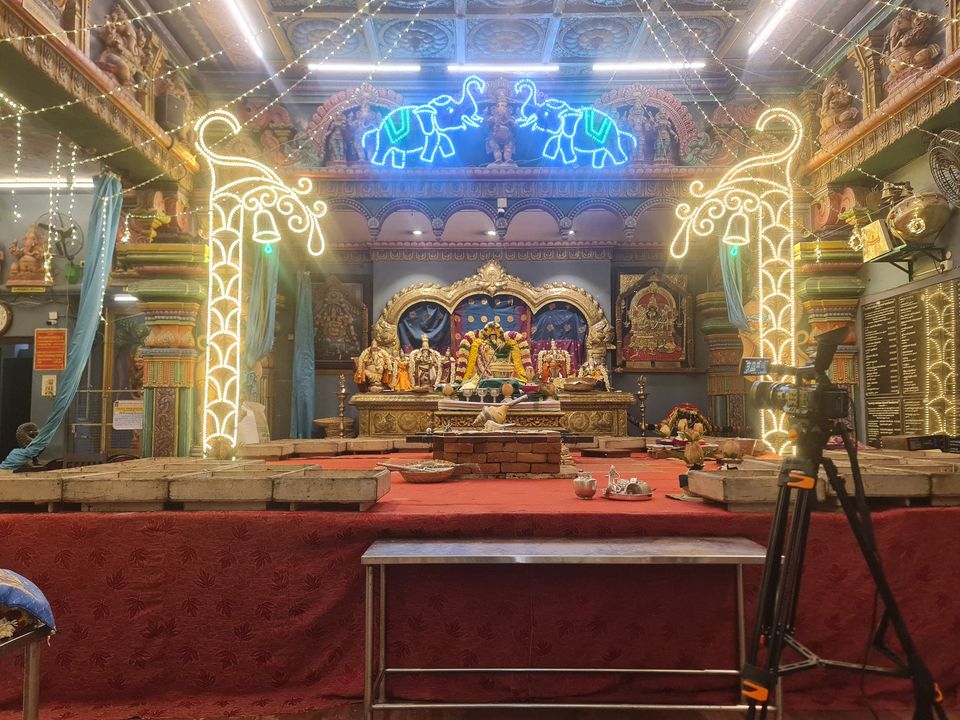
Siddhi Vinayaka (Ezhai Vinayaka) Koyil Visit
This morning, Arun dropped in to the Siddhi Vinayaka temple on MG Road. The priest tells him he was there for the Manakkula Laksharchanai yesterday. The Vinayaka at this temple is said to be 350 years old, while the plethora of prakara shrines around it have come up later. These include: Murugan, Vishnu, Vaidyanatha Sivalinga, a Nataraja hall, Ayyappan, Hayagriva and some other little ones. The ambience is very cosy. The temple celebrates “all events for all the gods”, says the priest – which is a huge undertaking to say the least. The bull vahana was still out in the corridor from yesterday’s Pradosham ul-purappadu.
Read moreOne Morning at Rama's Utsavam
Deepa saw the alankaram and aradhanai of the Rama-Sita-Lakshmana-Hanuman utsava murtis in the morning (having visited once the evening before and sought the permission of the priest to attend the pujas of this Arya Vysya Chetty temple, one of several which are privately run and managed). This was part of the 14-day Ramar Utsavam (Rama Navami and Rama Pattabhisheka Vizha, March 27-April 9). There are 25-30 people present, with the ladies singing the Ramavali and Nama Ramayana. Prasadam is sumptuous with a special serving of buttermilk and panakam. What could the significance of serving these be?
Read moreChetty Koyil Ther Vizha
Panguni Utthiram starts this evening, and today is the Chetty Koyil’s ther vizha or rathotsavam. We catch it on return, Vinayaka with damana at his feet, Murugan on his peacock, Somaskanda in the Ther, Chandrasekara on Vrushabha, and Chandikeswara as always bringing up the rear. The procession comes slowly back to the temple, paused along the way by women with archanai plates in their homes. Most of these homes are older ones, charming to my eye, many in need of renovation. But many of these places have turned into businesses, as the Chetty community grows, prospers, reinvents itself, seeks its futures elsewhere. What will happen to these great processions when everything around is a business, nobody comes with an archanai thattu let alone to see, or when God walks by locked storefronts? I ask this question to Aruna Mami, sitting inside, but it doesn’t go over well. “Be positive,” she said simply. I didn’t argue.
Read more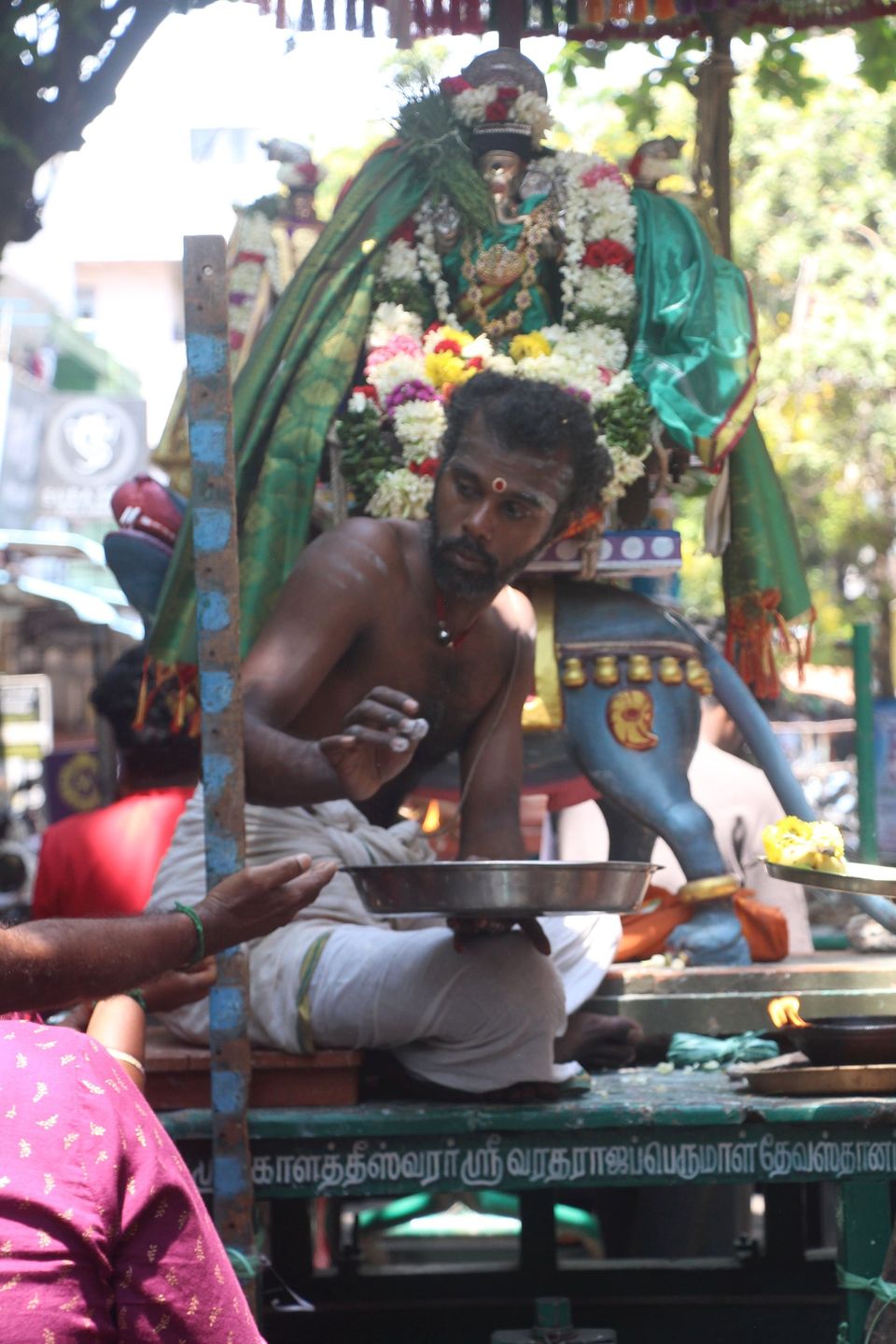
Perumal's Ramar Thirukalyanam
Thirukalyanam, Thiruveethi Purappadu–but we had not started our formal visits to the Perumal Koyil so we didn’t see this part of the utsavam.
Read moreInto the middle of it all
Deepa goes to the Vasavi Kannika Parameswari temple for the first time, to wander around and find out about its festival calendars. She finds herself in the midst of the Ramar Utsavam! It's quiet in the evening though; whatever pujas have happened, happened in the morning. I decide to return for one tomorrow.
Read moreLakshajapa Homam/ Laksharchanai
We go to the Lakshajapa Homam at 7am, which is Ekadina Laksharchanai on the patrikai. They chant the Vinayaka Sahasranamam. There are 2 priests chanting on stage, but on the speakers we distinctly hear 3 voices – a mystery to which never found an answer! We are vaguely aware of a calculation that determines the number of repetitions of the japa, but don’t yet know the precise details of it. The Sahasranamam is chanted multiple times throughout the day, by multiple priests, which increases the total to be equal to hundred-thousand repetitions.
Read moreA Cow for Every Nakshatram
Yearly celebration of the Kumbhabhishekam. The preparatory pujas for this festival started a day before on March 28 (with the Anugnai, Vigneswara puja, Ganapati homam, moolavar abhishekam) and apparently a dance and music performance. This morning was a 27 Nakshatra Gomata puja and Utsavar alankaram. 27 cows—each representing one of the 27 Nakshatras —are brought together simultaneously inside or just outside the temple to receive structured prayers, Laksharchana, and sacred offerings. This is a puja to remove planetary obstacles (Nakshatra Doshas) and bring prosperity and peace. Missed it–we are still learning how to find out about each temple’s rituals and coordinate and plan so we can be there always for the right ones, but we’ve not yet grown into this project enough to keep up–so will have to wait for next year to come again and see what photos we can get. I (Arunaditya) go in the evening around 8pm. There’s bharatnatyam going on, performed by children who will be given certificates for participating there. The priest at the Balamurugan sannadhi explains to me what a Kumbhabhishekam is, and in relation to it what an Aandu Vizha is. The patrikai outside reads “Moolamantra Chaturlaksha Japahoma Peruvizha”, a ritual being done to mark it. He asked me to attend the Lakshajapa Homam the next morning. The way they get to chatur laksha or 4 lakhs is a computation of the number of priests reciting, through a number of puja kaalams. Simply 4 kaalams, 1 priest each would mean 1 la
Read moreDiscovering the Lada Chinnamman Koyil
We’d not appreciated the presence of this temple area so close to home. There’s an inscription outside, with the names of the 5 chettiars who bequeathed the shrine and area to the temple in 1835. Peacocks live here, in the wild areas around the fenced off Keni kulam. Here is where the local rajas (chieftains?) would put shoes on and water their horses. So the temple’s Amman got its name: Lada Chinnamman. Govindarajan from the Chetty Koyil is the Yadava caretaker along with 2 ladies – I think sisters, one of whom is named Sangamitra. They come to sweep, but at various times daily. The biggest problem here is knowing when anyone will come to open the temple. Passers-by are welcome but this place seems unconcerned with drawing crowds in. Govindarajan tells of how his family had land near the big chetty temple, and they gave that to the temple and moved to Saaram. He’s happy he can come back and work in the place where he was born and raised. He takes care of this temple and 2 others – Sundara Vinayaka near the old bus stand, and one other, in addition to Chetty Kovl duties as needed. The “complex” has a main temple to Lada Chinna Amman, who appears to be a Naga goddess–her face form emerges from the body of a hooded serpent. In the ardha mandapa is a mooshika vahana and a spear. Govindarajan couldn’t explain why the mooshika in an Amman temple. On either side of the entrance, stand Sri Vigneswarar and Sri Soundthiravalli as dwarapalakas. Outside in the portico stands Pavadarajan
Read more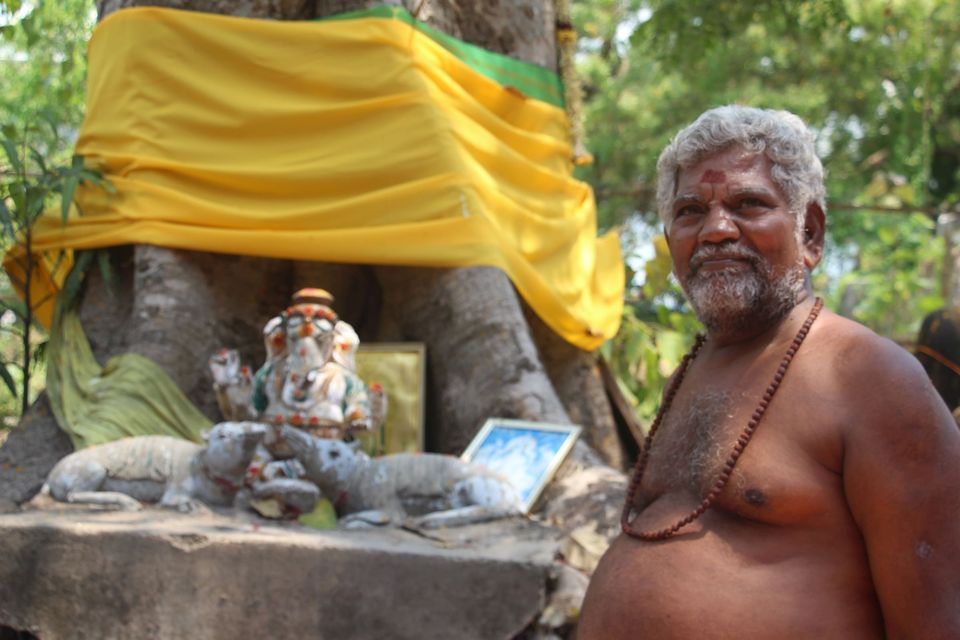
Chetty Koyil's Thirukalyanam
This is Brahmotsavam day 5 (if you count from the Dhvajarohanam, 6 if you count from the Mrtsangrahanam pujas). Thirukalyanams are elaborate affairs. We get to the Chetty Koyil at 8am, and watch the preparations and the emergence of the utsava murtis. Chandrasekara and his consort are seated on Adhikara Nandi. A deeparadhanai happens. And the deities are carried outside the temple for Gopura Darshanam and Veethi purappadu (street procession around the Chetty Koyil). Alankaram for the other deities and other preparations begin around 945am, and we are told these will take time. We watch the priests deftly tying kalasa nool or coloured string around the kalasas (alankaram which represents the naadis or nerves of the divinities that will be invoked in these). Why those colours, those strings? What She wants, I do, replies the priest. It is an explanation we have heard before and will hear many times over–refusing one’s own agency, replacing it with that of the Divine. We go home, and return at 11. The kalyanam follows its usual sequence. Kadir from the Ghousiga Balasubramaniya Swami temple (the “Bhai Koyil”) is in attendance, though we notice this only later in photos. There are men around but the crowd in attendance is largely women. Why do thirukalyanams attract such attention from women? Everyone wants the manja kayar, so there’s a lot of it hung on the arm of the bride. Siva here (Somaskanda really) marries twice, Sati and Parvati are the two consorts. But who precisely they
Read more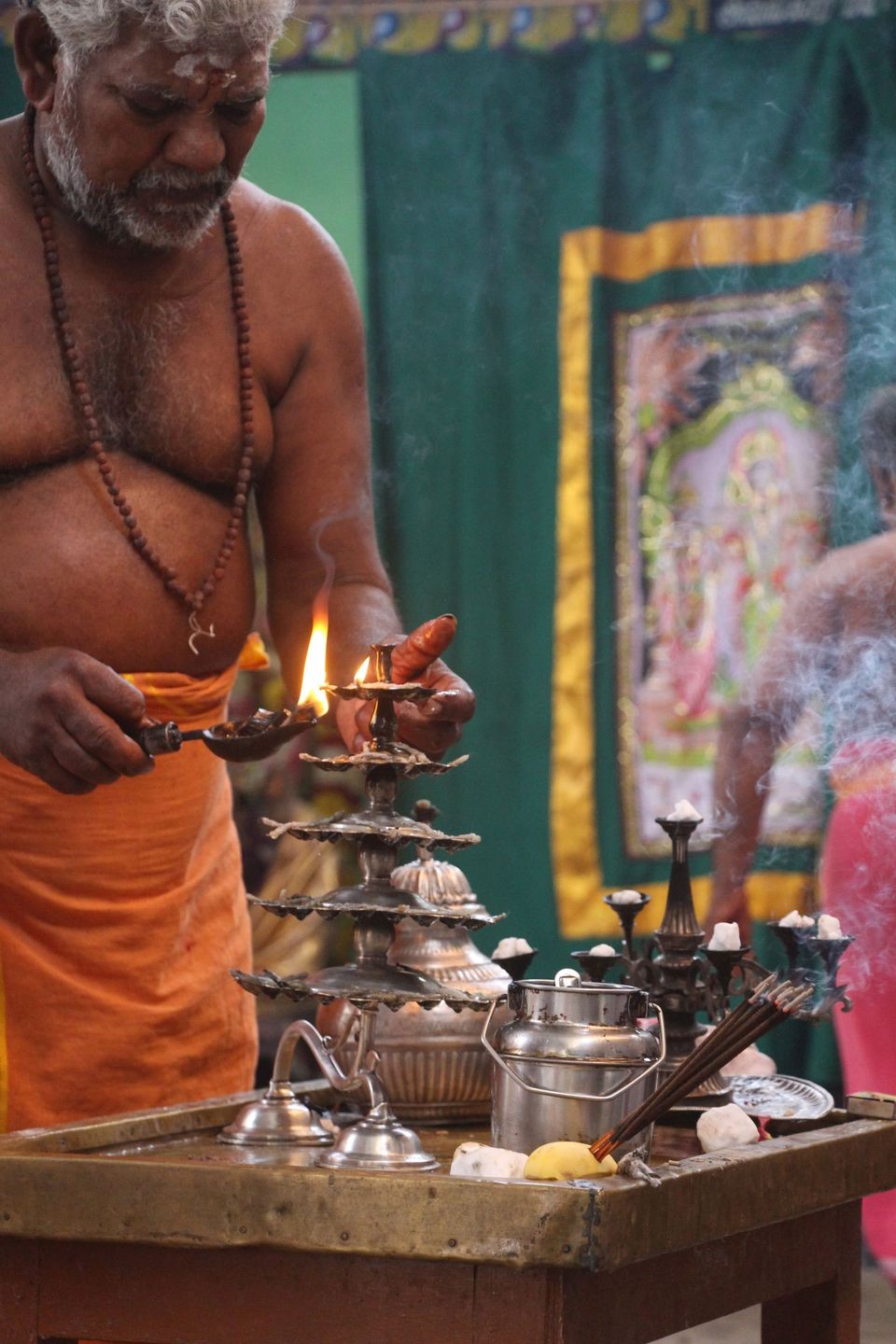
Mayana Kollai or the night of flying vegetables
The Sudukaadu or cemetery is a surprisingly happy place. Families are out, together, clearing, cleaning, decorating the burial areas of their families. A man in the cemetery told me (Deepa) about his wife’s 11-year old grave, which appears to be in an unmarked location but he says it’s there that she was buried. Here the ground is prepared by raising a bed a few inches, then sprinkling water, turmeric water, flowers and floral decorations, a small brick smeared with turmeric and kunkumam and placed as a headstone, lamp, incense. Then banana leaves are laid on top and the deceased person’s favourite food is laid on top. I saw idlis, kozhakattai, sundal, kuzhambu on rice, sweets, fruits, even ice creams and custards. We hadn’t known at all that Hindus have burial practices, and they certainly do not predominate. But there are plenty of graves here, including one of a G. Sankaran (Deepa’s father’s name), born in 1901. A cremation is going on at the beach end of the cemetery. At the other end is the entrance. A “shack” is set up to cover two prone and fearsome mud figures: Vallalaraja and his Queen. They are dead, presumably, which is why this event is taking place in the sudukaadu (“the burning forest”). A large hand impression is on the queen’s belly. People are bringing and piling vegetables at their feet. A sacrificed chicken and a “plate” of offerings is at their heads. Here the stories of Vallalaraja and his destruction intersect with that other great Puranic tale of Siva c
Read more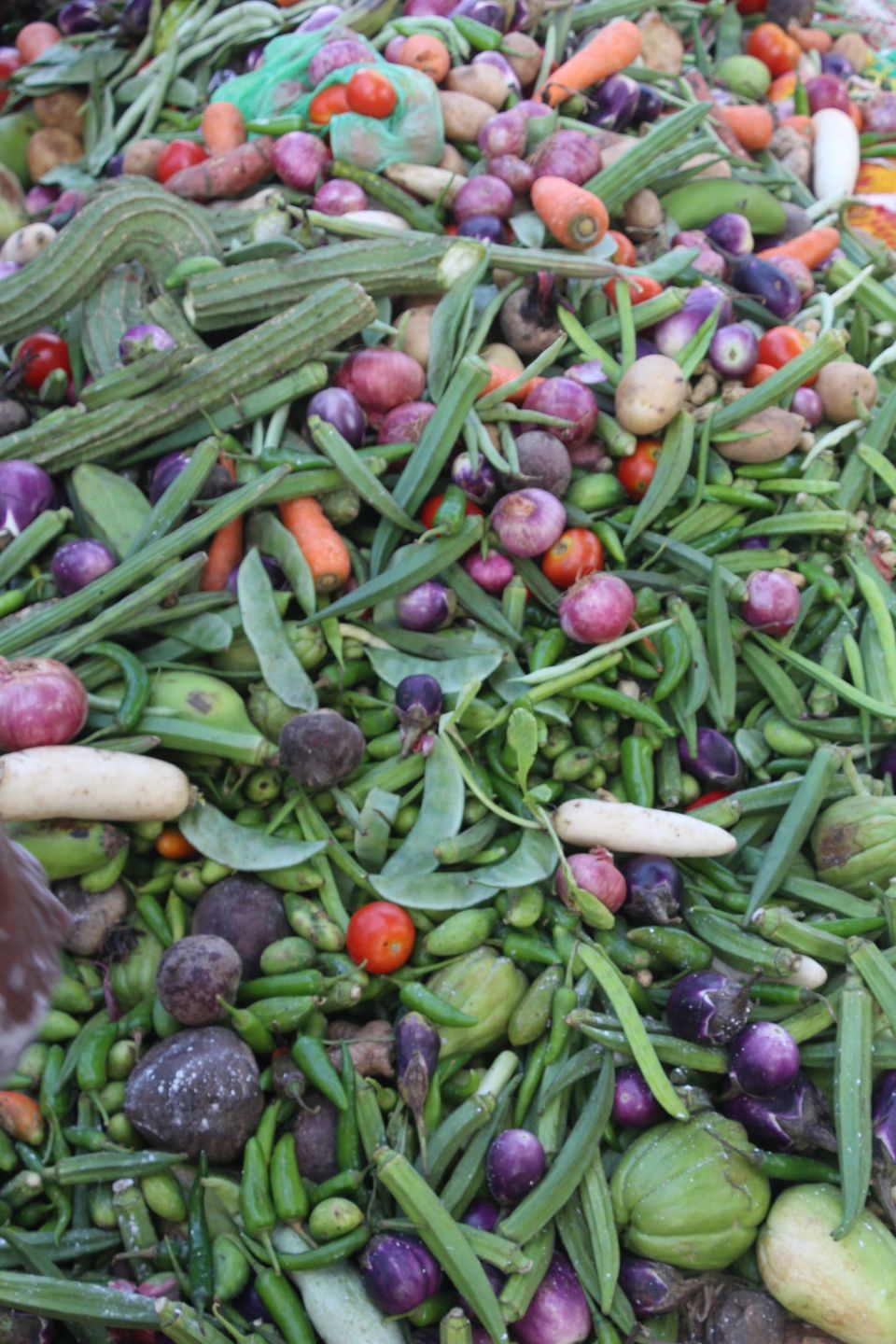
Vallala Kottai, or the Taking of Vallaraja's Fort
Evening, Angalamman. Intense! Outside the Angalamman temple in Angalanagar (Muthialpet, in its larger placement) is a ground on which a massive figure of Vallalaraja’s queen Villalasini or Vallala Kandi as she is called has been shaped in mud and decorated with coloured powders. Her hair is spread wide, almost a halo, and strewn with flower garlands–marigolds, tellingly, which are never used in pujas partly because they are not a native flower, but not just marigolds. She is carrying a child who is Siva (thanks to a boon granted to Vallalaraja in recognition of his penances) and can be born in two forms. If he is born at the right moment and does not touch the ground, his force as a manifestation of Siva will be unstoppable, the cosmos stands to be destabilised. If he does touch the ground, however, it is prophesied (somehow) that the power of his birth will be transferred away from Vallalaraja, and will cause his death and the destruction of his line. Just now the pregnant wife is lying in the ground, birth is imminent. We all know what must happen, but just how is where all the magic of this evening lies. Meantime, camphor lamps are lit and incense and kunkuma offered to the prone figure of the Queen, who is carrying the Siva yet to be born, after all. Policemen are everywhere. This event has, in the past, caused conflict between different Angalamman-worshipping communities in the region, each claiming Her for their own and the rights to conduct the festival in her honour,
Read more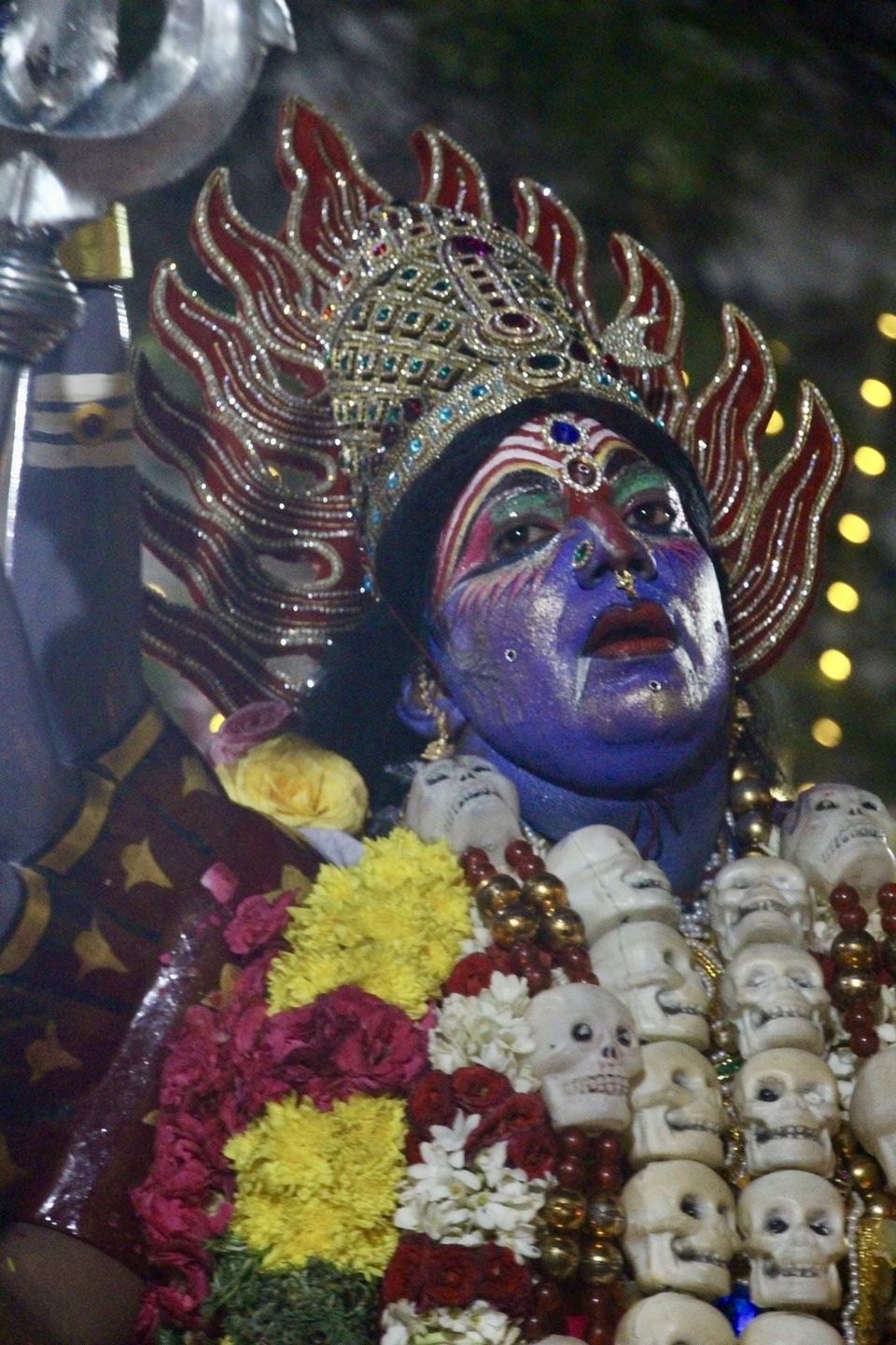
Chetty Koyil's Dhvajarohanam
The day of the Dhvajarohanam, Kodi Yettral or flag raising, marks the formal beginning of the Brahmotsavam itself. The little astra murti–the one that eventually takes a dip in the sea on the Theerthavari day–is kept on a stool to the left of the dhvajastambha, and all archanais and offerings are made to it as well. All other utsava murtis are out, watching the bali offerings and the deeparadhanais. The officiating priest, Venkatesa Gurukkal, directs the mangala vadyam ragas–Shankarabharanam, Sri Ragam etc. He remarks later that this could have gone on for hours, but the event had started late and that required dynamic alterations to keep within the time marked for the flag raising. Shankaranarayana Chettiar carries the kodi around the temple, and then it goes up. It’s Arunaditya’s first day with Sthalam as a project, and we are both very visible with our cameras. Already we are being asked for photos; this is the beginning of a period when our phone contacts will start to grow and names will now be classified based on at which temple we met anyone. A young girl named Manonmani asks for photos and spells her name so we get it right because of its French inflections. She tells us her father was fond of the Manonmani amman nearby so she is named after the Goddess. Indeed, there is a small Manonmani Amman theruvu koyil nearby. We take this as direction to include that small shrine in our list of temples to document.
Read more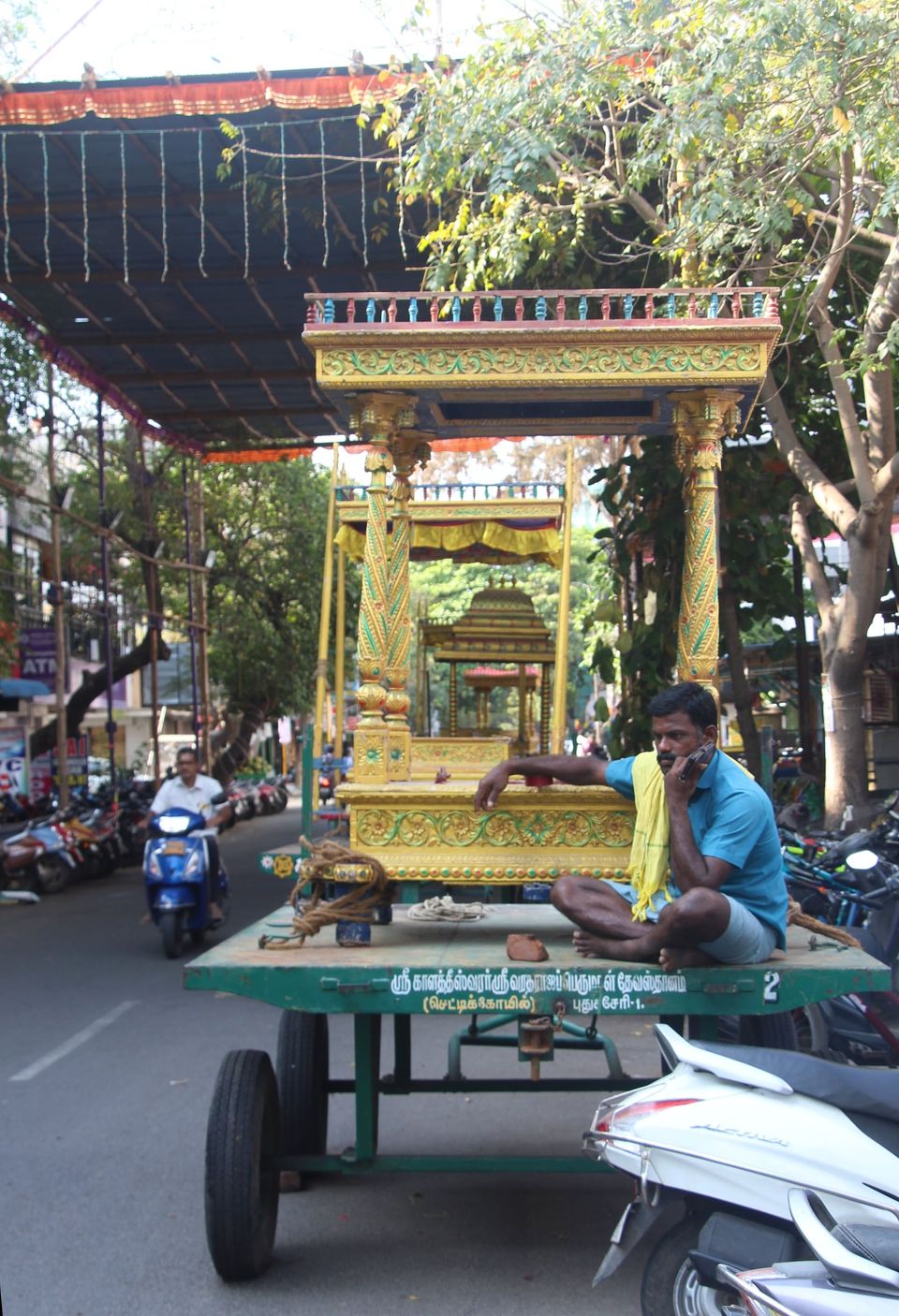
Getting Ready for the Brahmotsavam
We have missed an early morning Manakkula Vinayaka Abhishekam (the Chetty Koyil maintains certain formal, ritual relations with that other important Pondicherry shrine) and a puja at the Lada Chinnamman Koyil (which is the temple’s Amman shrine and kulam – called Keni Kulam – all this is a distance away near the Ramakrishna School on Lally Tollendal/ Iswaran Koyil Street). That evening was the Anugnai (seeking sanction, consent, and blessing), the temple’s own Vigneswara Puja. I believe there’s a Vinayaka purappadu, which goes to Keni kulam, next to the Lada Chinnamman koyil, where the Mrtsangrahanam or the collection of sacred earth happens (Keni Kulam mann eduthal, the patrikai says). Where does the Vastu shanti puja happen? The ankurarpanam or seed-sprouting? Need to make sure we attend this festival next year to be sure. The sequence of pujas which took place is as follows: Manakkula Vinayakar Abhishekam, Lada Chinnamman Puja, Vigneswara Pujai, Anugnai, Vastu Shanti, Mrtsangrahanam, Ankurarpanam.
Read moreFriday Abhishekam at a Theruvu Koyil
I arrive at this temple thanks to Ramanan Gurukkal who tends to the small Pillaiyar in our old building (and goes in the evenings to the Murugan temple in Lawspet–almost an indication that we should go there, too). I want to ask about food, but it appears that the path to food is through ritual and so I submit to that instead, and attend the regular Friday abhishekam that happens here around noon. The temple is a theruvu koyil, a streetside shrine, but it has a sthala vriksha at the back (neem and peepul, bound together), which you access through the tiniest of prakarams. There is a small amman under the tree. Manimutthumariamman is seated here, her full-figured form (not just the head, as elsewhere). There is a lady I will come to know as Kasturi mami, who comes to help prepare the alankarams, draw kolam etc. She does the ubhayam for this ritual, out of gratitude to the Goddess for helping her find food one day at the temple when she needed it (the temple does a regular Annadanam also on Fridays). Now she makes sure that the temple has what it needs to continue this practice, whether she’s around or not. Abhishekam is a simple but complete affair, a crowd slowly gathers. I meet a man who heads a group for Sivaratri preparations at the Vedapuriswara Koyil; he promises to help me make introductions there later. The Nirvagam head is around, too, and very helpful. After the event is over and prasadam and food (which arrives in a truck in a large patram) is distributed (many brin
Read more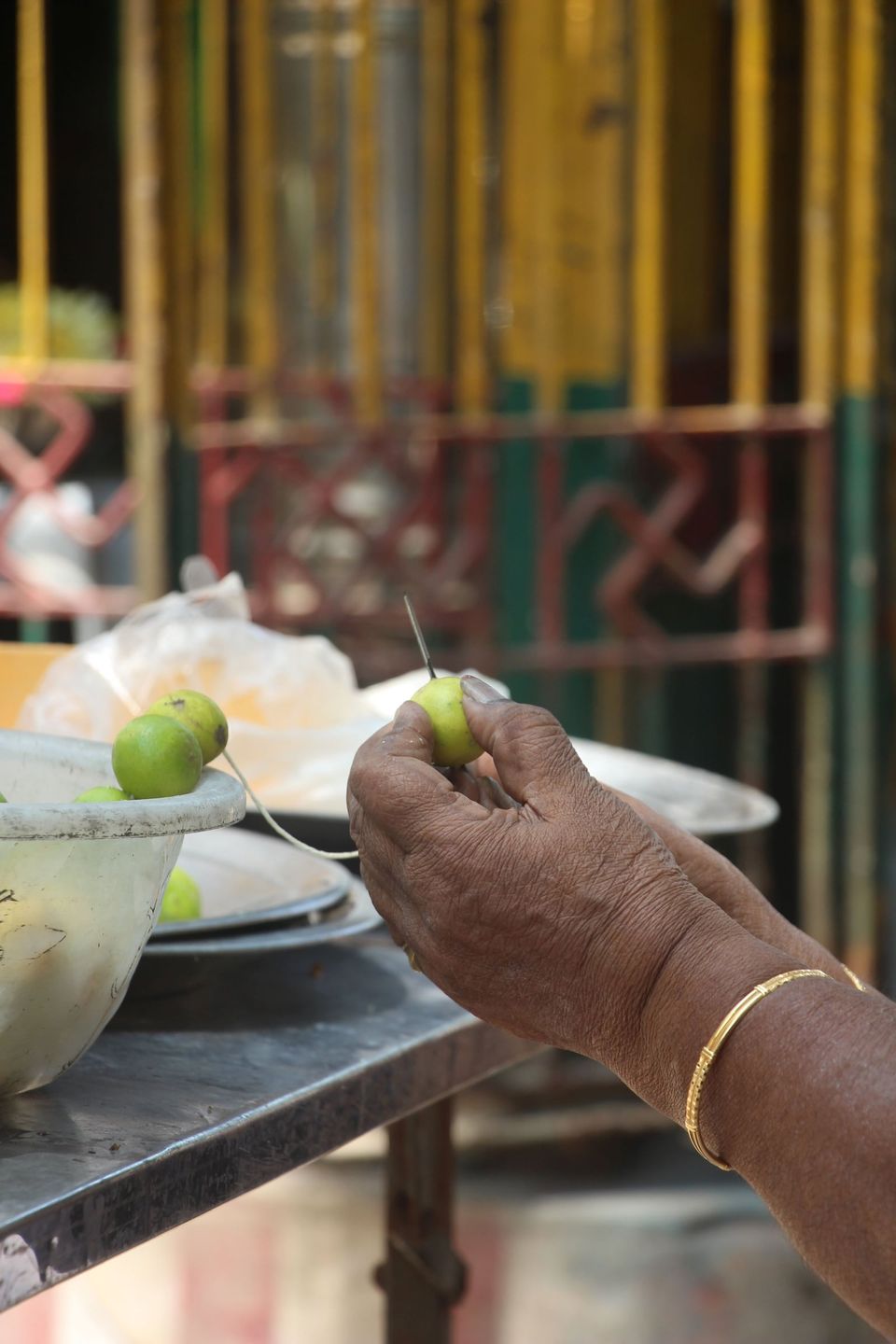
Chetty Koyil: First Visit and Pradosham
We’ve decided, thanks largely to Debbie Wastie being in town with her camera, to go to the Chetty Koyil. Debbie is here to help me photograph Pondicherry’s culinary traditions, which are too often reduced to a Frenchness which truly doesn’t exist here any more, if it ever did at all. But I’m also in search of temple food, food in temples–and what food means in the context of ritual worship, which is a whole other thing (eg: what does it mean for the deity to eat? Why do we place so many edibles on the body of God? What does it mean to feed the hungry fire? What exactly is prasadam? And so on). So Ganesan Sir has requested permission from the Chetty Koyil on Mission Street which have kindly been granted, that morning he makes introductions, and so we get started with a full walk around the prakaram to get a full set of descriptive notes. That evening, Debbie and I return for Pradosham. Sivan, Ambal, and the Vrushabha in his mandapam get full abhishekams. Following this, Pradosha Nayaka and his consort are hoisted onto a silver vrushabha, and taken thrice around the prakaram: a classic ul-purappadu or inside procession. The place gets quite crowded. Many women push the cart holding the processional forms, but there is no singing or recitation during the purappadu. After the final deeparadhanai, everyone sits quietly in two lines facing each other, to await prasadam. This is quite sumptuous: panchamrutam, puttu, kesari, puli-saadam. All photographs of that day are Debbie’s, kind
Read more
The First Great Gathering
There were two ways to go that morning. One pointed right—to the ERC Voices conference taking place at Pondicherry’s Ecole francaise d'Extreme-Orient (EFEO). One pointed left—to the location of the Masi Maham Kadal Theerthavari on the beachfronts of Vaithikuppam, which is where the fisher communities of Pondicherry have long-lived. This is one of three great gatherings that happens on this town’s coastal line (the other two are Aadi Amavasya and Thai Amavasya) but this one falls on pournami, the night of the full moon. The festival gets its name from the coincidence of the full moon (or its closeness) with Maha nakshatram. The Maham of the month of Masi, the great Maham or Mahamaham, or masi Maham as it is colloquially known is the largest and most significant of the three for this reason and because it draws deities from elsewhere too: Senji Ranganathaswamy, Malayanoor Angalamman, Mailam Murugan. Crowds are a hindrance to those who do not participate in this town’s temple traditions, and a draw to those who do because the day offers so many darshans in a single place. To my mind, there was no real choice. I had to go not where Pondicherry’s ritual life was being studied and theorised, but where it was being so richly and elaborately lived. The crowds around me pulled; all I needed to do was to move with them. So, I did. Manish Maheshwari and Inbar Maor were in town and joined me. We followed the paths of the deities who were still beachside (many had come early and left alre
Read more