← Field notes

Tracking Sashti on Pratipada (Muthal Naal) Across Three Temples

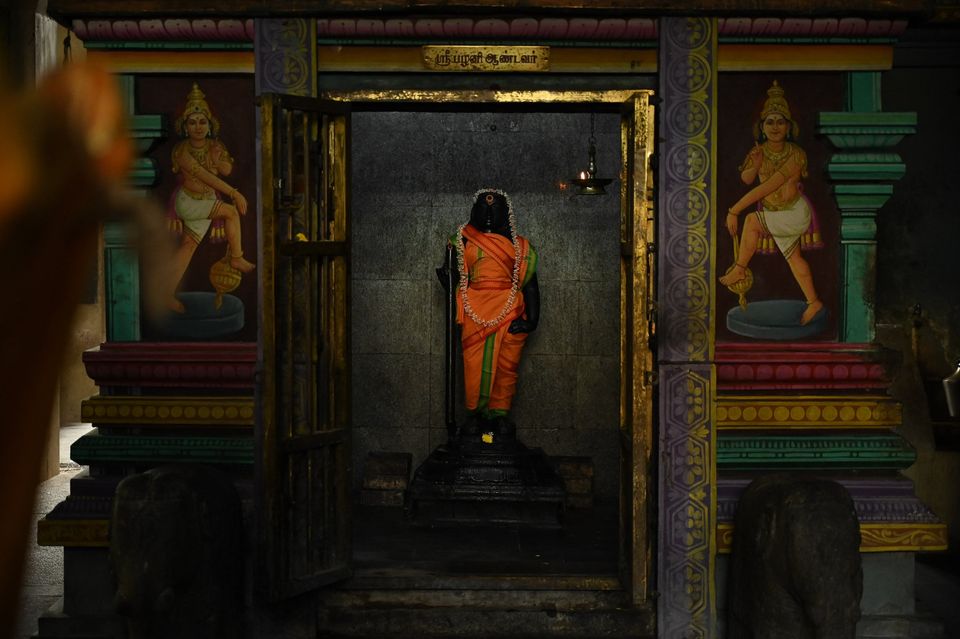
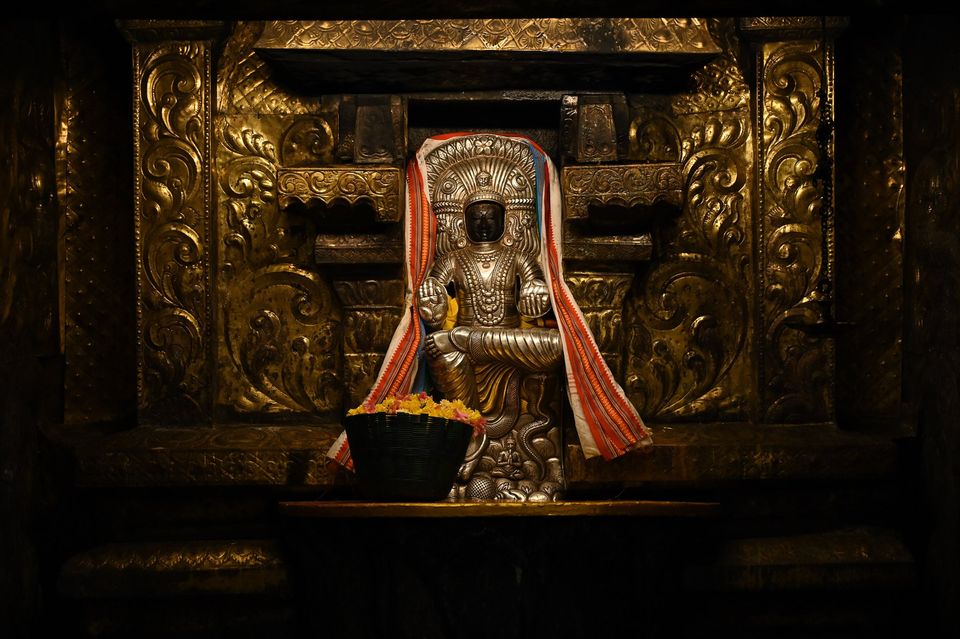
Vedapuriswara has Murugan in three forms: the moolavar at the back, with Valli-Devasena, the Balamurugan in front, and Palani Andavar facing west. In the Chetty temple, Murugan-Valli-Devasena are also in the same position at the back, except it’s Palani Andavar in front where the Balamurugan is at Vedapuriswara. Quite the switch! Both temples do the vel-vanguthal on Day 1 of Sashti, though we don’t make it to the Chetty event as we already have split ourselves between Ghousiga and Lawspet, with a slice of Nandhikeswara in between. Chetty Gurukkal chided us for that later: you could have called and found out the timings, he said.

Nandhikeswara does a 4pm abhishekam and alankaram – but this time not by re-creating Murugan’s face, instead using the thirumeni’s own face and building a surprisingly proportionate form, as is their speciality. Today’s Alankaram is inspired by Thiruparankundram Murugan’s Maharajalilasana, though our temple does not have the left hand form that rests on Murugan’s thigh, so they made it a varada mudra. I rushed there at 820pm, to find the priests closing shop. I got there just in time to take two photos and leave.

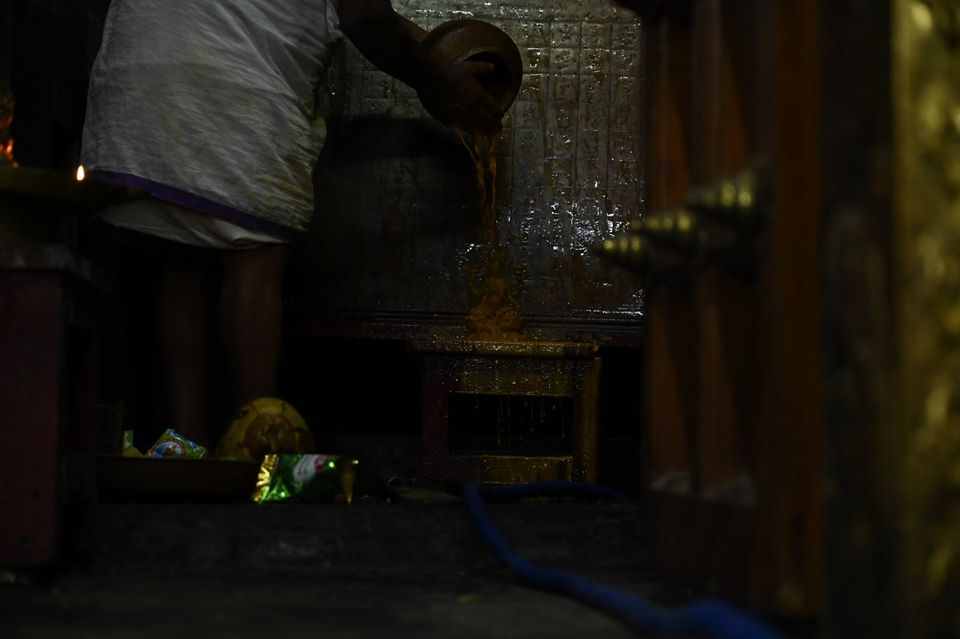
Back to Vedapuriswara. During Sashti, Balamurugan gets an abhishekam each morning, and the Moolavar gets one along with the utsavars in the afternoon. The morning session is accompanied by parayanam (same group that sings outside the Nayanmar mandapam), and Kanda Sashti Kavacham recitation in the evening.

Today is when the Sivan Koyil does the “vel vanguthal” – which means that Murugan gets the Vel or spear from his mother, who is in this case Tripurasundari. So around 730pm, there is a deeparadhanai at the alankara mandapam at the back, then Raja Ganapathi and others are there to carry the deities out. They circle and bring them to face Ambal. After the usual deeparadhanai, curtain closes, opens, Guru mama comes out, goes to the Murugan standing with flowers (everyone touches in participation), does a tiny puja there, curtain closes again, and when it opens there is Kalyana Sundara Gurukkal with a scarf on his head holding up a beautiful ruby-studded vel which he carries with uncommon seriousness and intention while Ayyappan swami faces him walking backwards, splashing chandanam (sandalwood) water like it must be holi in Pondicherry, and someone else throws rose petals. Vel goes to Gurumama, he places it (while I’m struggling to get any useful photos with the jostling crowd, incredibly poor lighting, and of course the chandanam that has now landed on my camera lens).

The energy of this moment is incredible though. Someone right behind me calling out “Vettrivel Muruganukku” – and the whole entire crowd answers, with equal vigour, “Harohara!” It always sounds like “arogara,” it’s loud, but it’s moving, it’s not like anything we’ve heard before. Murugan as Devasenapati commands it, I suppose. But he’s also the god of love, as much as he is of war, and he is the beautiful one (azhagar), and it’s hard not to be in awe.

On to Ghousiga. Murugan alankaram here is always both minimalist in colour and His postures grand–to match the reception he receives here. Pujas follow the usual steps, but everyone waits for the purappadu. Once Murugan is lifted onto the shoulders of the men who carry him for the evening, it’s dance-dance-dance. He responds to the priest’s prayers at the moolasthanam and at the yagasala, rounding and bouncing. When He emerges from the temple’s far right entrance, someone holds a green cloth and swirls it repeatedly. Green is a colour often associated with him–perhaps it’s the peacock, perhaps it’s the sense of his eternal youth and vigour. Then the temple’s men go through their usual motions. Khadir Sir always guides and leads–it’s his temple, after all. His son Farhaan is never far behind, often one of the men carrying. Murugan goes to Thulasi mariamman first – she throws flowers on him, he acknowledges with movement. The nadaswaram players start slow and lift the tempo as the men lift and move Murugan. “Ghousiga, Ghousiga!” is the repeated cry. At some moment, they pause for the angel – a little wooden figure who typically lives at the top of the exterior tin roof, and who operates by some pulley system to swing-swing-swing and eventually by the arc of its own motion, throw flowers on Murugan’s face. It’s a great charmer and crowd pleaser. This happens thrice. The dance continues a bit, Murugan retreats to his vahana. It takes long to set up there, but when he does, the purappadu begins.

I’m not sure how many follow Murugan after this, on his long and difficult route through some of the most crowded and messy of Pondicherry’s market areas. We sometimes catch him on the way. But once he leaves the temple, really the deity is on his own, accompanied only (but always) by Vinayaka, Veerabahu, one of the junior temple priests, the men operating Ghousiga’s trusty red tractor, and the nadaswaram-tavil players of course. And maybe for the Gods as it is for us in this life, those who stay with you after the crowds have gone are really the only ones who matter. And they are enough.

In his calculus of costings, the Draupadi Amman temple priest had once told us of the computations involved in designing their chariot–the weight determines who will be there to pull, and how much they’ll charge. “But people pull the chariot, don’t they?” I had asked. “On the way out, yes, for some time!” was the quick reply. “But who brings the Amman home?” Touche. Their paths are lonely ones, in the end.
More from Vedapuriswara Koyil

Lawspet Murugan Koyil, Vedapuriswara Koyil · Kanda Sashti Vizha Day 7Lawspet Murugan, Vedapuriswara · Kanda Sashti Vizha Day 7

The Sheer Fun of the Old India

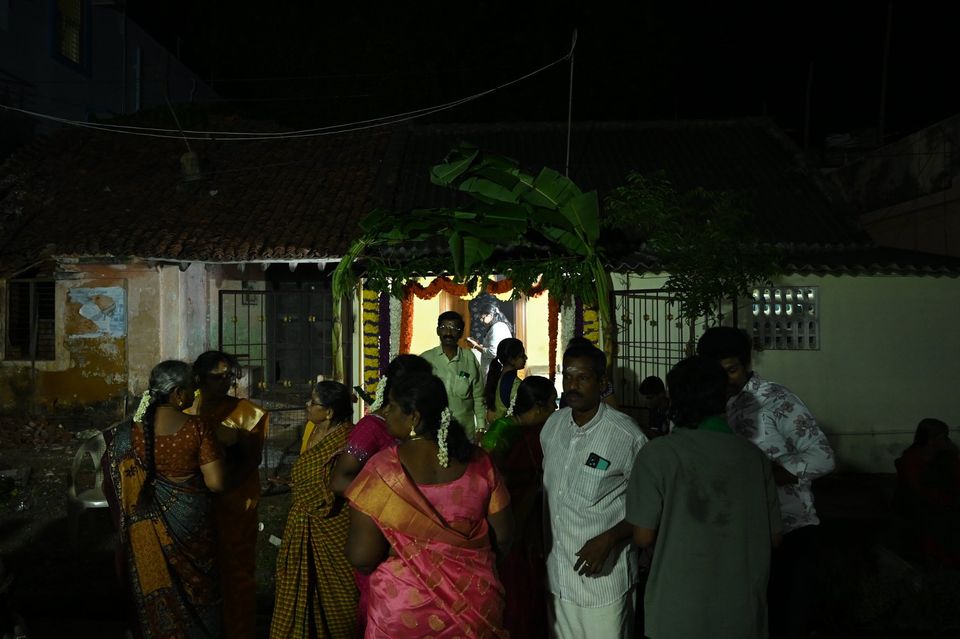
The morning at Lawspet was a panchamurti abhishekam which we couldn’t make it to with all the weddings happening in town, but it happened there late (we were told) and the dhvajavarohanam also happened. One of the gurukkals told us to save our energies for the evening, which we rather gladly did. In the evening, Valli and Devasena (or Devayanai, Devyani), were taken to a house in a nearby street–where the family of Murugan arrived to “see the girl” (ponnu pakkaradu). Having seen and apparently liked them both, the procession carried the brides both back to the temple, coming around the madaveethi as usual. Arun followed them all the way, I met them near the small Vinayaka koyil on the main road where the Samharam had taken place. All the ladies accompanied as is the custom, and they had enlisted all the younger girls, including some very cute looking very young ones to help out. They all stood holding plates and trays filled with fruits and sweet things, weighted according to carrying capacity, the little ones especially looking so pleased to be included and their participation so sought. It was a lovely sight to behold. They waited outside the temple, brides behind them, until the priest’s wife, herself with an infant on her hip, did an arati, poured the red water under the pallakku being borne, and then everyone entered the temple. They went left to the back where the homa kunda and other prep for the wedding was set up. There was barely moving room anywhere in the temple.

Read more
Lawspet Murugan Koyil, Ghousiga Balasubramaniya Koyil, Chetty Koyil, Vedapuriswara Koyil, Angalamman Koyil · Kanda Sashti Vizha Day 6: SashtiLawspet Murugan, Ghousigabala Murugan, Chetty Koyil, Vedapuriswara, Angalamman Muthialpet · Kanda Sashti Vizha Day 6: Sashti

The Greatest Battle of Them All: Soora Samharam

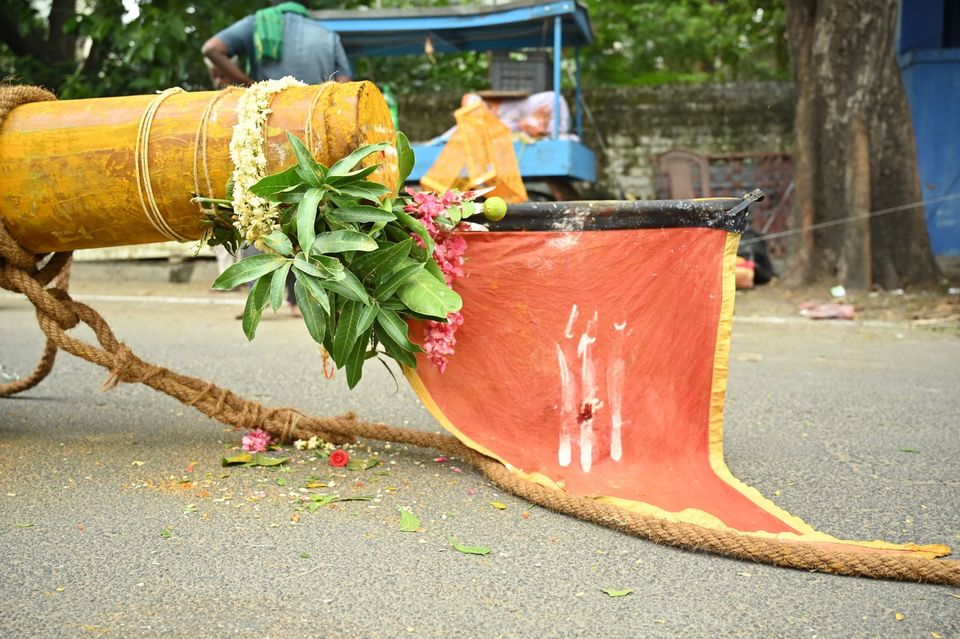
Many temples mark today in some form. Angalamman Koyil does a Murugan Abhishekam and maha deeparadhanai in the morning. Vedapuriswara, anticipating this day, does a 7am-5pm 36-time recitation of the Kanda Sashti Kavacham, on top of the daily 7am Balamurugan abhishekam, and later Murugan abhishekam, evening parayanam. We saw the arrangements made outside the Chetty Koyil for the samharam, and the bells still ringing at 11pm as we passed by en route to Ghousiga, but we have no images of these events. Our morning was spent watching the procession at Lawspet and the raising of the kodi that was the spine of Vajrabahu, on which the Navaveerangal would climb later in the evening to sing songs of Murugan, Siva, and Amman (Parashakti). For being the gigantic spine of an asura, this structure was treated with significant reverences. Turmeric was applied, vibhuti and kunkumam, flowers. A small bell at the head represented Vajrabahu’s skull. Flowers. I was told to be careful not to step on the ropes that would be used by the waiting crane to haul this into position. This sort of reverence had either got to be purification –or acknowledgement of Vajrabahu’s having now become one with Murugan. A smaller wooden piece was first placed in a waiting hole in the road (the hole must always be there, just closed up the rest of the year and opened again for the festival) – the hole was anointed of course, by Sriram Gurukkal, with turmeric water, milk, chandanam and the like. Then the short pole p

Read more
Vedapuriswara Koyil · Sunday Thiruvasagam MuttrothalVedapuriswara · Sunday Thiruvasagam Muttrothal

Bhajanai Sounds from a Shaiva Temple

Had we noticed before just now much the Sunday morning recitations of the Thiruvasagam by the Siruthonda Nayanar Thiruthondu Sabhai can be like the bhajan sessions that we’re more accustomed to hearing from the bhakta groups associated with the Perumal Koyil? Or is it that today there’s a different group, the Vedapuriswara Sivanadiyar Thirukootam that’s running the show? Either way, it’s clear I hadn’t paid attention to just how much like a bhajan group this was. Or how it combined young and old, everyone rapping the rhythms with their karathalam. These groups seem to do what they do regardless of what else might be happening at the temple, or what else the town may be celebrating! A single-minded focus.

Read more
Vedapuriswara Koyil · ThursdayVedapuriswara · Thursday

He Called Us, Early Morning

7am we were there as Ayyappan Swami called us to be, but the palliezhucchi was barely over and the abhishekam was already done! I was instructed to get 2 large lamps, which I dutifully did. Light them! He said, so I did. Quick puja, I’m asked for family names and nakshatrams, and then handed a big bag with yesterday’s malas, still very fresh. (“How did you know it’s my nakshatra naal (Hindu calendar birthday)?” I asked Ayyappan Swami later. He didn’t skip a beat. “I didn’t,” came the instant reply. Gesturing to the garbhagriha: “He told me,” he said). Dakshinamurti is always in velli (silver) kavacham on Thursdays, with black channa malas and a yellow attire. Yellow is associated with Brhaspati, the Guru to the Devas, and with the planet Jupiter (Guru). Dakshinamurti being the supreme Guru, the yellow garment reinforces the association with divine instruction, wisdom and illumined learning. Mutthu called us to see the kulam being cleaned, in anticipation of rains. So we went out back and hung out there for a while with all the ladies in blue looking very picturesque against the neat grey stair rows.

Read more
Kannika Parameswari Koyil, Vedapuriswara Koyil · Poosa NakshatramKannika Parameswari, Vedapuriswara · Poosa Nakshatram

For One, for All

On the day of Poosa Nakshatram, the Kannika temple has a 530pm Kuberan Yantra Abhishekam we’ve long wanted to see. Finally, we made it to this one. Just a single, young ubhayakara there–he or his family owns a jewellery shop, he is both event sponsor and priest’s aid, and he disappears as soon as the puja is done as his shop calls. Poosam nakshatram represents nourishment and flourishing; Kubera represents the guardianship and administration of wealth–I suppose this is why this particular puja is done on this particular day. Thursdays is an evening archanai for this same Kuberan Yantra and its smaller counterpart, sitting on the shelf in the small shrine to the right of Ambal, in which the Yantras are installed. The abhishekam is for Mahalakshmi also, because She grants wealth on Kubera’s command, explains the Iyer. He protects it, but She is the one by whose hand and will it reaches us. The Kubera Yantras both were apparently found on the building site of the temple, sometime before 1921. Kanchi Periyavar is said to have identified them. For a merchant community, this is a significant and meaningful find, so the temple honours the yantra in this way. But for all the other pujas attended by many groups of women and their families, nobody else is around for this one. Puts us in mind of what Thirukumaran once said: no audience is really required, but if the priest does what he is meant to, the whole world will be well. Alankaram is a simple affair, as is the puja. After it is d

Read more
See all field notes →