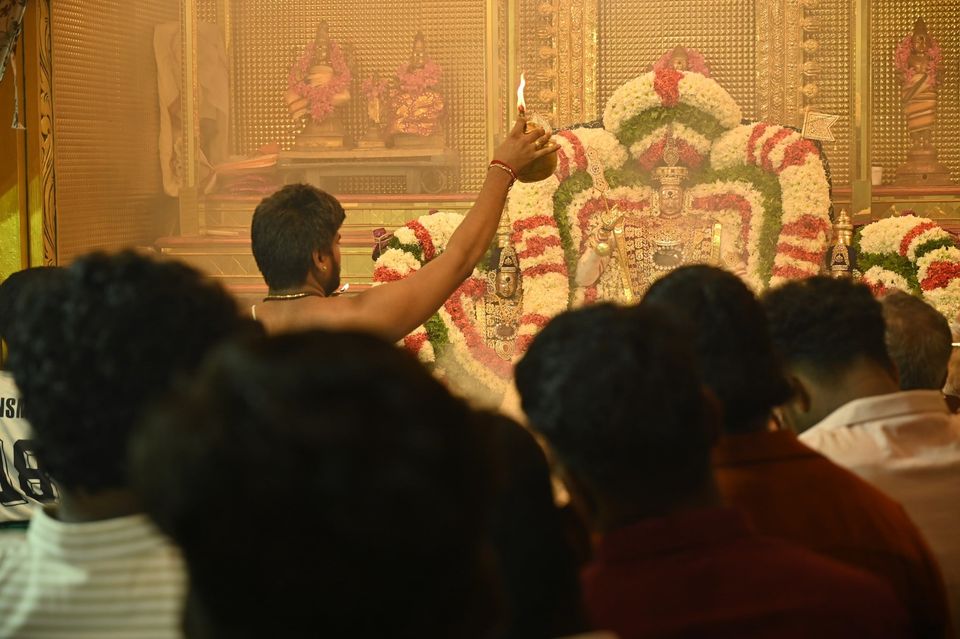
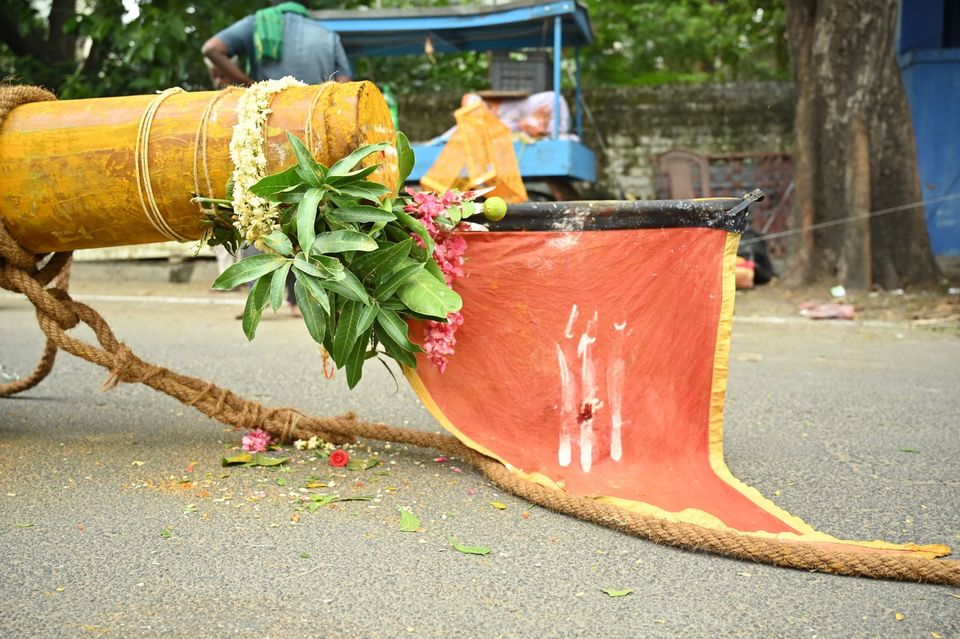
Well, it’s the 10th day but Ghousiga’s Sashti celebrations conclude with the Dhvajavarohanam and Kadal Theerthavari. 830am, morning abhishekam to the moolavar was going on. This is dinapadi, a daily affair. Samhara murti was alongside, as was the astra murti.
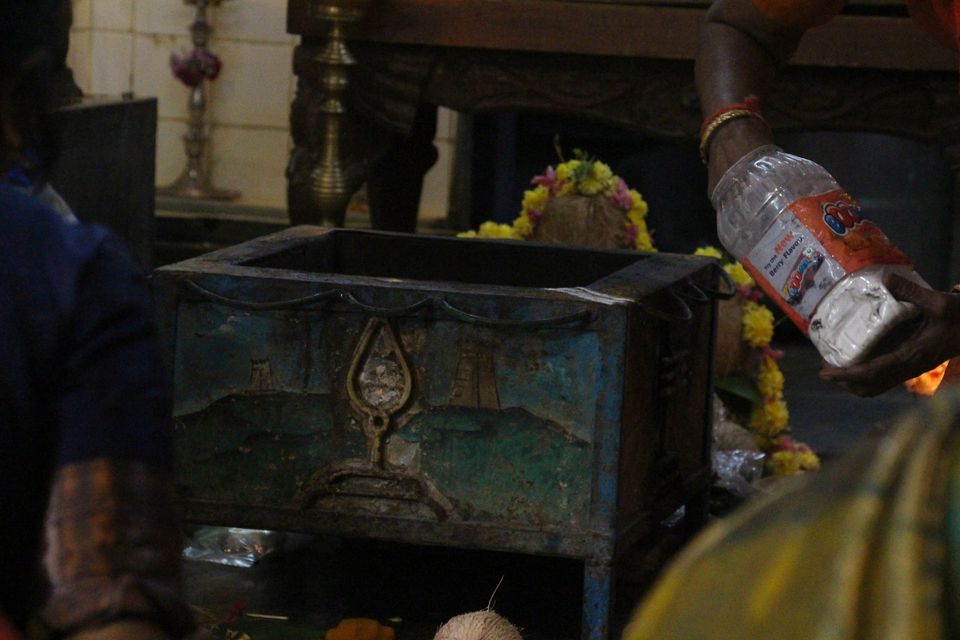
The makeshift yagasala was cleared. Kalasas taken to the main shrine with the thirai closed, for the final parts of the abhishekam. The happily growing sprouts, koorcham, various pavitrams etc. and the remnants of the last (still smoking) homa kundam were overturned and collected in a bag. The yagasala was returned to being a palliyarai.
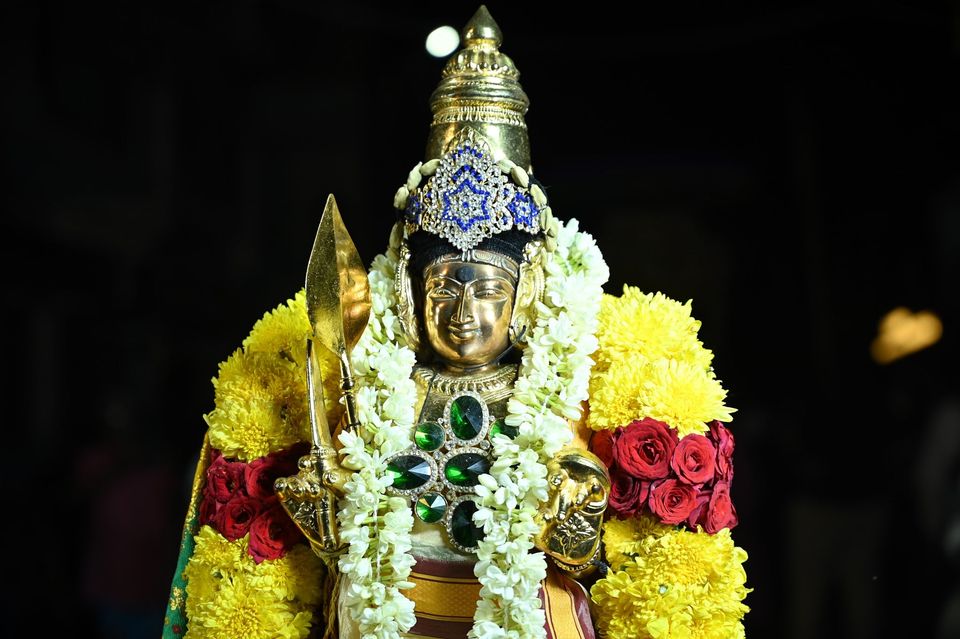
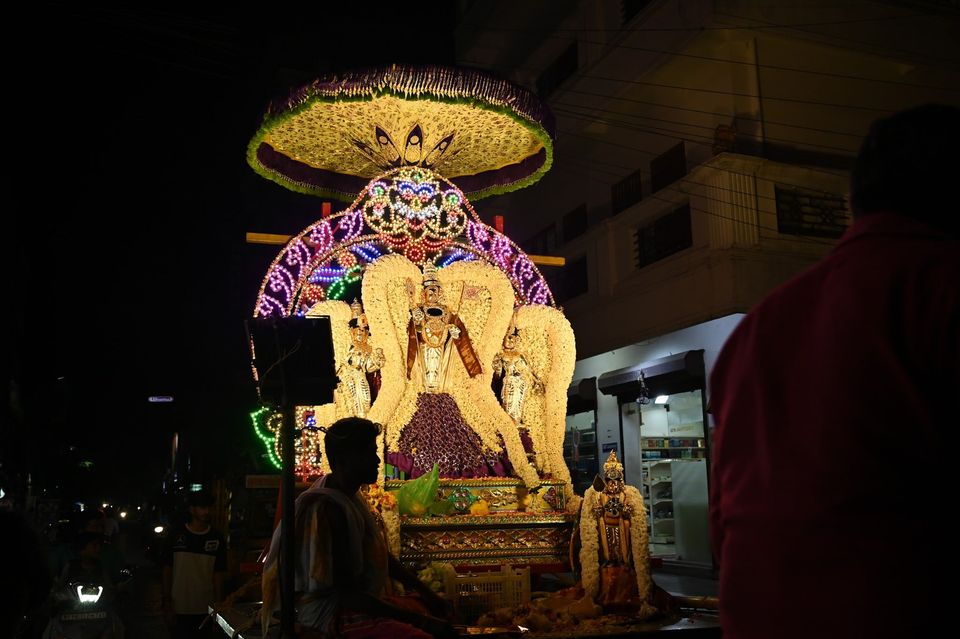
The pradhana murti as one priest had told us, is always the one readied for the morning purappadu the night before – he was behind a screen. I suppose alankaram had happened earlier in the morning, and he was in tiger skin, oddly seeming to be out of proportion until we noticed a tail (!) which made this a puli (tiger) alankaram and very endearing. When the second puja was done here, he was moved along with Vinayaka and Veerabahu to the right of the kodi maram, from where he could watch the avarohanam. That started with the usual ubhayakara sankalpam, prayers to Vigneswara, and then proceeded to remove the kaapu threads tied around all those who had given themselves to the Sashti Vizha, human and animate–the kodi maram itself, the maha bali peetham, Murugan’s peacock, all the ashtadigbalis or 8 surrounding bali peethams, the utsavars themselves, and finally the people who had been the festival’s stalwarts, men and some women, too. Following this, the utsavar was lifted and carried around the temple and out (stops at Moolavar and Thulasi Mariamman as always), and seated on the waiting vandi outside. Vinayaka, Veerabahu, Astra murti followed. We did, too. The thattu vandi was loaded with all the kadal-side abhishekam would need, missing nothing, including prasadam. Small aradhanai happened, coconut went PHAT, and the group set off for the Gandhi thidal on the beachfront promenade.
It’s always so surreal to see these deities carried to the beach which is such a modern environment these days, inviting the curiosities of tourists and other passers-by, interrupting the celebratory remnants of a French colonial and military presence which still appear like clusters of barnacles. This is a very different sort of spilling out here than what happens in the markets where the gods passing is a normal event and everyone knows how to receive them and what to do. Here, they are a curiosity. A black Gandhi on one side, a white Nehru on the other, abhishekam to the astra deva happened here, and the Thulasi Mariamman priest (who had changed from the usual veshti to “beach attire,” in the form of a different waist cloth) carried the murti to the ocean. Khadir Sir was there of course (he’s so very hands on, monitoring and guiding literally everything), as was Rajesh Gurukkal.
It seemed like the group had fun in the water. The man carrying the yagasala and sprout remnants emptied them all into the water and washed them away. I saw flowers floating for a while after. The men stayed longer than most theerthavaris we’ve seen, appearing to wait on waves to really come and cover the priest holding the astra murti. The sea was rough, that might have happened in course, but soon they headed back. Rajesh Gurukkal took the astrar, did a quick alankaram, and puja. Pongal and a very coconuty panchamrutam (best I’ve had in long) were handed out as naivedyam.
Tomorrow is the theppotsavam, come for it, was Khadir Sir’s invitation. They will carry Murugan on skin to the Sivan Koyil kulam at 7pm (6, he said, but it will become 7) where this god of love and war will float and frolic on those waters while we come to watch, of course we will.
Note the photos in this set from the temple foyer, which describe a sweating samhara murti. The legend of Murugan sweating முத்து முத்தாக/ beads of sweat like pearls lives on, like all the droplets of seawater that splashed over him today.