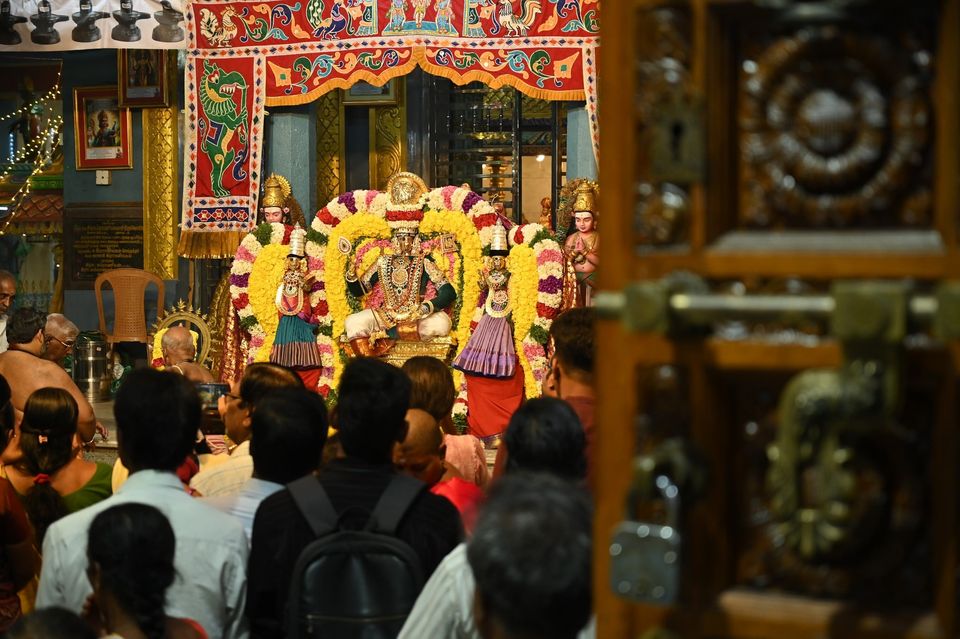
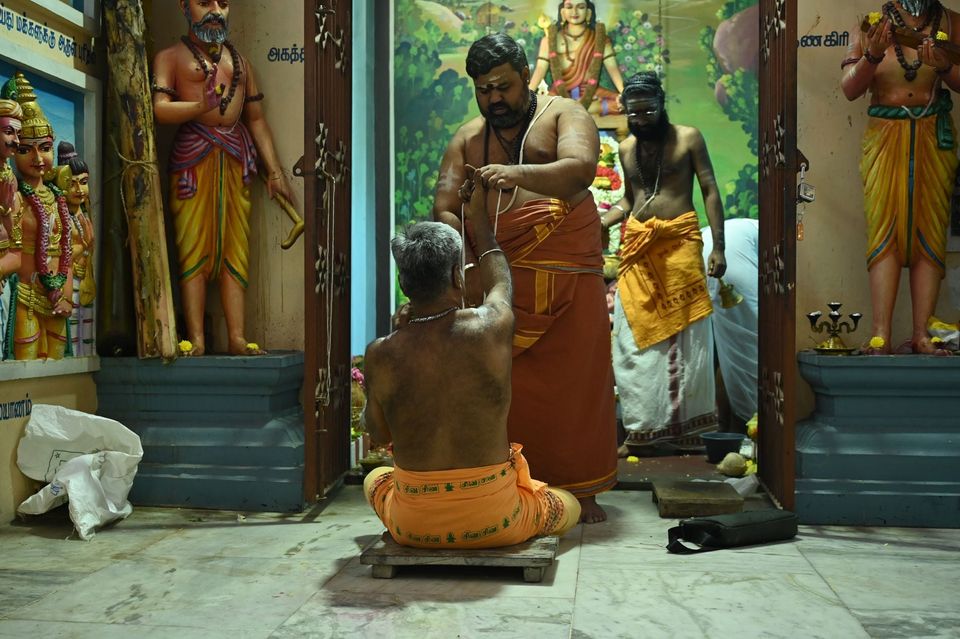
This evening was a mad dash between three temples. Vedapuriswara was to have an unjal utsavam following their Sashti marking. We got there too early (it hadn’t started yet, caught a glimpse of the utsavars still behind curtains) and then too late (it had been over in a blink, staged just near the alankara mandapam in the rear prakaram). Temple was closing by 9 when we reached, all done. Clearly, it had been a smaller-than-usual affair.
Lawspet Murugan was snazzily done up, in contrast. Archways all over with artificial flowers, the sort of backdrops one sees at some wedding receptions and the like. I’m sure it was cheaper to have the decorations done this way, but the shift in aesthetics from the temple’s typical ritual style to this is plain jarring. We’ve not yet in India found a happy aesthetic medium or that price sweet spot that keeps things natural and well-crafted but not ridiculously priced. Folks like Vizha Medai should really look to capture such ground with innovative approaches to floral decoration, the use of common leaves and such. Anyway, there was a dance stage set up on one side, so a bharatanatyam performance was about to begin after the unjal puja.
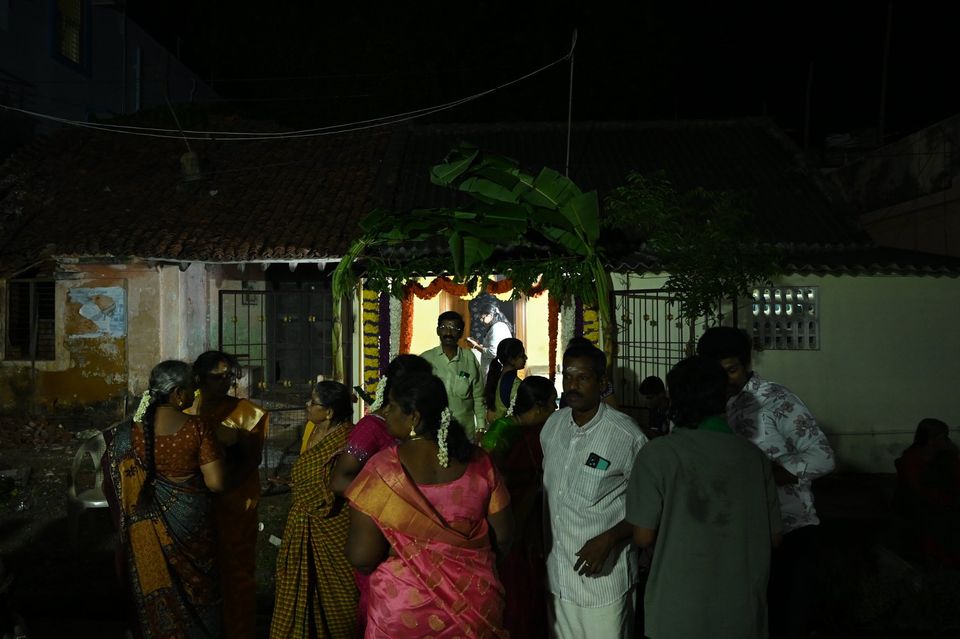
We spoke to Ramanan Gurukkal briefly, congratulating him on the dancing during the Thirukalyanam which had been genuinely enjoyable good fun. He told us that Koothu Paatu (Tamil koothu music) and Magudi Paatu (with the instruments/mimicking the instruments used by snake charmers) are common at wedding events here. Must be a community specific thing.
He also told us about Paalikai mulaippu, which I realised later is nothing but the Sanskrit Ankurarpanam, or sowing of the nava-danyam at the start of major pujas as a sign of fertility and (as Manish may prefer to say) fecundity, mangalyam. Apparently this temple’s Churnotsavam (happens on the same day as the dhvajavarohanam, the day immediately after soora samharam) involves taking some of these sprouts, pounding them in an ural with turmeric and oil, and applying this to the forehead of the moola murti. Aside from taking the sprouts to the ocean for theerthavari, this is the only variant to the conclusion of the puja cycle that starts with the sowing that we have heard about.